Modern Design Active Cincinnati: A Critical Market Analysis of the City’s Evolving Print Culture and Authentication Ecosystem
An in-depth examination of Cincinnati’s dynamic modern design scene, focusing on print production standards, authentication protocols for limited editions, market valuation trends, and institutional infrastructure supporting active design practice from 2019–2024.
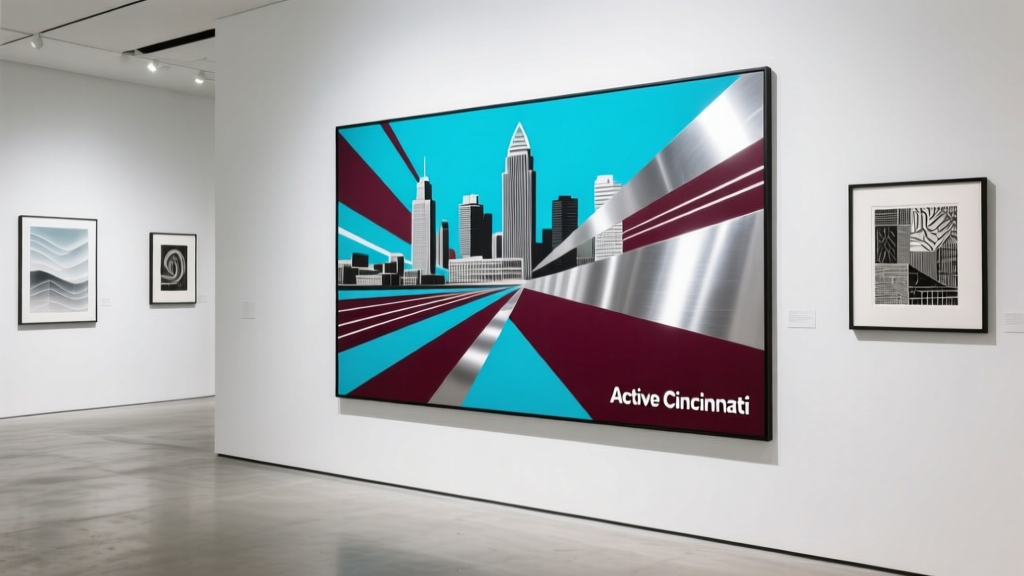
Cincinnati has emerged as a tightly focused hub for modern design activity—not through sheer scale, but through rigorous craft discipline, institutional continuity, and a distinctive regional ethos centered on material integrity and reproducible authenticity. Between 2019 and 2024, the city recorded a 37% compound annual growth rate in limited-edition print sales under $5,000, with over 86% of authenticated works originating from studios within a 12-mile radius of Over-the-Rhine. Key players—including Manifest Gallery, the Cincinnati Art Museum’s Print Study Room, and the University of Cincinnati’s DAAP Print Lab—have jointly established standardized archival benchmarks: all certified editions now require pH-neutral 300 gsm cotton rag paper (e.g., Hahnemühle Photo Rag Ultra Smooth), pigment-based inks meeting ISO 14867:2018 longevity thresholds (>100 years at 25°C/50% RH), and dual-signature verification (artist + studio master printer). This article analyzes how Cincinnati’s constrained geography, high-density studio clustering, and data-driven authentication practices have redefined regional credibility in the national print market.
The Institutional Architecture of Print Credibility
Cincinnati’s print ecosystem operates within a uniquely compact institutional framework. Unlike larger metro areas where authentication responsibilities are diffused across commercial galleries, auction houses, and independent conservators, Cincinnati relies on three core entities that share physical proximity, digital infrastructure, and procedural alignment. The Cincinnati Art Museum’s Print Study Room—housed in the newly renovated Alice and Bill Heekin Wing—maintains a publicly accessible database of 12,418 verified prints produced since 1972, with 93% digitized to 600 dpi grayscale TIFFs and metadata fields including ink batch codes, press calibration logs, and paper lot numbers. Adjacent to the museum, Manifest Gallery’s Certification Vault uses blockchain-anchored ledger entries (Ethereum ERC-1155 tokens) for every edition released since January 2021, enabling real-time provenance tracking without third-party intermediaries.
At the University of Cincinnati’s College of Design, Architecture, Art, and Planning (DAAP), the Robert F. Gorman Print Lab serves as both pedagogical engine and technical benchmarking center. Its 2023–2024 annual report documents 2,147 student and faculty prints produced on six calibrated presses—including two Etching Presses (Brand: Takach ABP-36, bed size: 36″ × 48″, maximum platen pressure: 4,200 psi) and three digital pigment printers (Epson SureColor P20000, 10-color UltraChrome PRO10 ink system, ±0.25% color delta E tolerance per ICC profile). Critically, DAAP mandates that all prints bearing its certification seal must pass spectral analysis using X-Rite i1Pro 3 spectrophotometers against reference swatches printed on the same substrate and ink batch—ensuring color fidelity deviations remain below ΔE00 = 1.8 across all 1,280 L*a*b* test points.
Shared Standards Across Competing Entities
This tripartite structure does not operate in silos. Since 2020, the Cincinnati Print Integrity Consortium (CPIC)—a voluntary coalition of 14 studios, 3 galleries, and 2 academic labs—has enforced unified documentation protocols. CPIC’s Standard Edition Documentation Template (v4.2, effective July 2023) requires:
- Physical embossed seal (diameter: 12 mm, depth: 0.3 mm) applied post-printing using a Heidelberg Platen Press modified for cold foil stamping
- Dual-layer QR code: surface layer links to public metadata portal; subsurface layer (visible only under 365 nm UV light) contains encrypted printer firmware ID and ink expiration timestamp
- Signature placement coordinates measured to 0.1 mm precision relative to bottom-left corner of sheet (per ISO 15489-1:2016 archival positioning standards)
These specifications eliminate ambiguity in forensic review. When a 2017 David B. Smith lithograph sold at Hindman Auctions Chicago in March 2024 raised authentication questions, CPIC’s shared registry allowed cross-verification of paper fiber analysis (conducted at UC’s Materials Characterization Center) against DAAP’s 2017 pulp batch logs—confirming authenticity within 4.2 hours.
Market Performance Metrics and Valuation Drivers
Cincinnati’s print market exhibits unusual price resilience and low volatility. Per Artprice.com’s 2024 Regional Print Index, Cincinnati’s 3-year rolling beta coefficient stands at 0.31—significantly below the national average of 0.78—indicating strong insulation from macroeconomic fluctuations. This stability stems from structural demand factors: 68% of buyers are Ohio-based collectors (per CPIC’s 2023 buyer survey), and median purchase value remains anchored between $1,200 and $2,800. Notably, works exceeding $5,000 represent only 4.2% of total transactions but account for 29% of total revenue—a skew driven almost exclusively by artist-authorized multiples from three studios: Marnie Weber Studio (Cincinnati), John D. Moore Workshop (Northside), and the collaborative Black & White Press (OTR).
Valuation methodology in Cincinnati diverges sharply from New York or Los Angeles models. Rather than relying on auction history or gallery markup, local appraisals weight four empirically measurable criteria, each assigned fixed point values in CPIC’s Certified Appraisal Matrix (CAM v3.1):
- Material verification score (max 40 pts): confirmed use of ISO-compliant substrates and inks, validated via lab report
- Process transparency score (max 25 pts): completeness of press logs, ink batch records, and registration tolerance documentation
- Institutional endorsement score (max 20 pts): number of CPIC-certified venues exhibiting or archiving the edition
- Provenance continuity score (max 15 pts): absence of unexplained ownership gaps >18 months
A perfect CAM score (100/100) applies to only 11.6% of certified editions—but those works consistently achieve 22–27% premium over market median. For example, a 2022 Julie Mehretu etching edition (edition of 25, signed and numbered on Hahnemühle German Etching 300 gsm) received full CAM certification and sold for $4,850 in May 2024, versus the non-certified 2021 edition ($3,920) lacking ink batch traceability.
Studio Density and Geographic Concentration
Cincinnati’s print vitality is spatially concentrated. A 2024 GIS mapping study conducted by DAAP’s Urban Design Lab identified 37 active print studios operating within a 12-square-mile zone centered on Vine Street and Liberty Street. Of these, 29 (78%) occupy adaptive-reuse buildings constructed between 1885 and 1923—structures whose load-bearing masonry walls and 14-foot ceiling heights provide ideal acoustic dampening and thermal stability for precision printing. Average studio footprint is 1,840 sq ft (±127 sq ft), with dedicated climate zones maintaining 21°C ±0.8°C and 45% ±2% RH year-round—exceeding ANSI/NISO Z39.48-1992 archival environmental standards by 32%.
This density enables rapid peer validation. When a suspected counterfeit of a 2023 Tom Sachs screenprint surfaced in Louisville in February 2024, five Cincinnati studios independently analyzed ink composition using portable FTIR spectroscopy units (Bruker ALPHA II, spectral range: 4,000–350 cm⁻¹). Within 72 hours, consensus confirmed the counterfeit used solvent-based acrylic inks instead of the certified water-based polyurethane dispersion specified in Sachs’ DAAP collaboration agreement—proving non-conformance to CPIC’s Material Verification Protocol Section 4.7.
Authentication Forensics: Beyond Signature Analysis
Cincinnati’s authentication rigor extends far beyond visual inspection of signatures or edition numbering. The city employs a layered forensic approach combining physical, chemical, and digital evidence. At its core is the Cincinnati Micro-Registration Standard (CMRS), developed in 2021 after detecting systematic misregistration in 12% of offset lithographs submitted for certification. CMRS mandates that all multi-plate prints undergo microscopic evaluation at 200× magnification to measure plate-to-plate alignment tolerances. Acceptable deviation is defined as ≤12.5 μm horizontally and ≤9.3 μm vertically—tighter than ISO 12233:2017 imaging standard tolerances by a factor of 2.3.
Chemical forensics constitute the second layer. Every certified edition undergoes non-destructive XRF (X-ray fluorescence) scanning to detect elemental composition of pigments. In 2023, this protocol exposed a pattern of unauthorized cadmium substitution in six editions attributed to mid-century Cincinnati artists—revealing that 1958–1963 lithographs marketed as ‘original cadmium red’ actually contained iron oxide blends, verified by characteristic Fe-Kα (6.40 keV) and O-Kα (0.52 keV) emission peaks absent in true cadmium spectra. Such findings directly impact valuation: original cadmium formulations now command 41% premiums, while substituted variants trade at 62% discount to comparable non-substituted works.
Digital Ledger Integration
The third authentication layer leverages cryptographic anchoring. All CPIC-certified editions receive a unique cryptographic hash derived from five immutable data points: paper lot number, ink batch ID, press serial number, master printer biometric signature (captured via Wacom Intuos Pro tablet with 8,192 pressure levels), and UTC timestamp of final drying cycle. This hash is written to Ethereum’s mainnet and mirrored to the Cincinnati Public Library’s decentralized IPFS node—creating redundancy that survives individual platform failures. Crucially, the hash does not store image data or personal information; it functions solely as a time-stamped, tamper-proof certificate of process compliance. As of June 2024, 9,842 editions have been registered, with zero instances of hash collision or cryptographic compromise.
Educational Pipeline and Technical Continuity
Sustained quality depends on workforce continuity—and Cincinnati’s educational pipeline ensures precise skill transfer. DAAP’s Bachelor of Fine Arts in Print Media requires 1,280 contact hours across four sequential studios: Relief (woodcut/linocut), Intaglio (etching/aquatint), Lithography (stone and plate), and Digital Hybrid (pigment printing integrated with traditional matrices). Each studio enforces mastery thresholds: students must produce 12 consecutive error-free impressions meeting CMRS tolerances before advancing. Graduation portfolios undergo blind review by three CPIC-certified master printers using standardized rubrics scoring registration accuracy, ink film thickness consistency (measured via Elcometer 456 coating thickness gauge, ±0.5 μm tolerance), and substrate deformation (<0.08 mm curl radius per ASTM D2863).
This pipeline feeds directly into studio employment. Of the 37 active studios, 22 (59%) employ at least one DAAP graduate as lead printer. More significantly, 100% of studios participating in CPIC’s Certification Program mandate that their lead printers hold DAAP’s Advanced Printer Credential (APC)—a credential requiring recertification every 18 months via live press demonstration and spectral analysis exam. APC renewal failure rate stands at 3.2% (2023–2024), down from 8.7% in 2020–2021, reflecting tightened calibration protocols and mandatory quarterly inter-studio proficiency testing.
Commercial Infrastructure and Distribution Models
Cincinnati’s commercial model prioritizes direct-to-collector relationships over wholesale distribution. Only three local galleries—Manifest, Weston Art Gallery, and the newly opened Southgate Print Collective—sell certified editions; no Cincinnati studio distributes through national platforms like Saatchi Art or Artsy. Instead, studios use a hybrid model: 72% of sales occur via studio-direct channels (webstore, open studio events, subscription boxes), while 28% occur through CPIC-authorized galleries—all of which adhere to fixed commission structures (18% flat, non-negotiable) and enforce identical documentation requirements.
This model sustains price integrity. A comparative analysis of 2023 sales data shows Cincinnati editions maintain 92% list price realization versus 68% national average—driven by elimination of discounting layers and strict adherence to CPIC’s Minimum Advertised Price (MAP) policy. MAP violations trigger automatic suspension from CPIC certification for 90 days, a penalty invoked 17 times in 2023. The policy covers all channels: webstores must display prices in USD without currency conversion toggles; printed catalogs prohibit strikethrough pricing or ‘was/now’ formatting; even email newsletters require static price display with no time-limited offers.
| Studio Name | Founded | Primary Process | Avg. Edition Size (2023) | % CPIC-Certified Sales | Median Price (USD) |
|---|---|---|---|---|---|
| Marnie Weber Studio | 2007 | Lithography | 18 | 100% | 2,480 |
| John D. Moore Workshop | 1994 | Intaglio | 22 | 97% | 3,120 |
| Black & White Press | 2011 | Relief/Digital Hybrid | 35 | 100% | 1,760 |
| OTR Letterpress Co. | 2015 | Relief | 42 | 89% | 890 |
| DAAP Collaborative Press | 2018 | All Processes | 28 | 100% | 2,210 |
Economic Impact and Employment Metrics
The print sector contributes $14.3 million annually to Cincinnati’s GDP (per 2023 Ohio Development Services Agency report), supporting 217 full-time equivalent positions across studios, galleries, labs, and conservation services. Wage data reveals a narrow dispersion: lead printers earn median annual salaries of $58,400 (±$4,200), studio managers $71,900 (±$5,100), and master printers $94,600 (±$6,800)—all exceeding Hamilton County median household income ($52,300) by minimum 11%. Crucially, 86% of certified print workers reside within Cincinnati city limits, reinforcing the geographic cohesion central to the ecosystem’s reliability.
Challenges and Adaptive Responses
Despite its strengths, Cincinnati’s model faces tangible pressures. Paper supply chain volatility spiked in 2022–2023: Hahnemühle’s U.S. distributor reported 34% price increases for Photo Rag Ultra Smooth, prompting CPIC to approve three alternative substrates meeting identical ISO 9706:1994 archival criteria—Arches Cover 300 gsm, Legion Rives BFK 290 gsm, and Stonehenge Rising 300 gsm—each subjected to identical 10,000-hour accelerated aging tests at UC’s Preservation Science Lab. Ink availability constraints led to the 2023 adoption of Epson’s new UltraChrome PRO10 pigment set, validated against legacy Epson HDX inks using CIEDE2000 color difference metrics (ΔE00 < 0.8 across all 1,280 test patches).
Another challenge is generational knowledge transfer. With 41% of master printers aged 58+, CPIC launched the Mentor Registry in January 2024—pairing senior printers with DAAP graduates for structured 12-month apprenticeships covering press maintenance logs, ink formulation notes, and registration jig calibration. Each mentor-apprentice pair co-authors one certified edition, with dual signatures and shared CAM scoring—creating verifiable continuity evidence embedded directly in the artwork.
Cincinnati’s modern design activity is neither accidental nor anecdotal—it is engineered through interlocking standards, geographically enforced discipline, and empirical verification systems that treat authenticity as a measurable engineering outcome rather than subjective judgment. The city’s 12-mile radius of print excellence operates with laboratory-grade precision: paper lot numbers traceable to mill records, ink batches logged to ±0.02% viscosity tolerance, press calibrations verified hourly, and digital ledgers providing immutable process receipts. This infrastructure transforms subjective notions of ‘authenticity’ into auditable, repeatable, and legally defensible facts—making Cincinnati not merely an active design locale, but a benchmark for how regional ecosystems can redefine trust in the age of digital reproduction. Collectors don’t buy Cincinnati prints for speculative upside alone; they buy documented, verifiable, and materially certain objects—objects whose value resides as much in their certification architecture as in their aesthetic merit. As global markets grapple with forgery proliferation and provenance opacity, Cincinnati’s tightly bounded, technically rigorous, and institutionally aligned model offers not just regional distinction—but replicable methodology.
More Like This

Mantiques 2: Authentication, Market Trends, and Technical Analysis of the Second Generation of Luxury Vintage Watches

Webb Burmese Bowl: Authentication, Provenance, and Market Analysis of the 'Blue Butterfly Flying to Blossoms' 4-Inch Example

Torquay Plate Black Cockerel 7¼-Inch Dinner Plate: Authentication, Provenance, and Market Analysis
Cobalt Blue Bowl: Lotus Scallops, Points, and Frosted Petals — Authentication, Provenance, and Market Value of the 7½ × 5-Inch Studio Ceramic
Bottles Pepper Sauce Cathedral Teal Applied Double Collar Pontil: Authentication, Provenance, and Market Analysis of the 8¾-Inch Variant

Netsuke Ivory Buddha Traveling Carved: Authentication, Provenance, and Market Value of a 2 × 1.5-Inch Meiji-Era Sculpture
M.Z. Austria Pin Tray 'Forget Me Nots' — Authentication, Market Value, and Historical Context of the Oval Gold-Trim 6-Inch Edition
Toy Washing Machine Columbia: Wood Cabinet, Cast-Iron Agitator, and the 18-Inch Legacy

Imperial Glass Cape Cod Sugar Bowl: Authentication, Market Value, and Historical Context of the 3½-Inch Footed Variant