Milk Sycamore Farm Dairy, Rockville, Maryland: A Historical and Botanical Profile of the Green Sycamore Tree
An in-depth analysis of Milk Sycamore Farm Dairy in Rockville, Maryland, focusing on its historic orchard land, the distinctive green sycamore tree (Platanus occidentalis) that anchored its identity, and the farm’s role in Montgomery County’s agricultural heritage from 1892 to 1957.
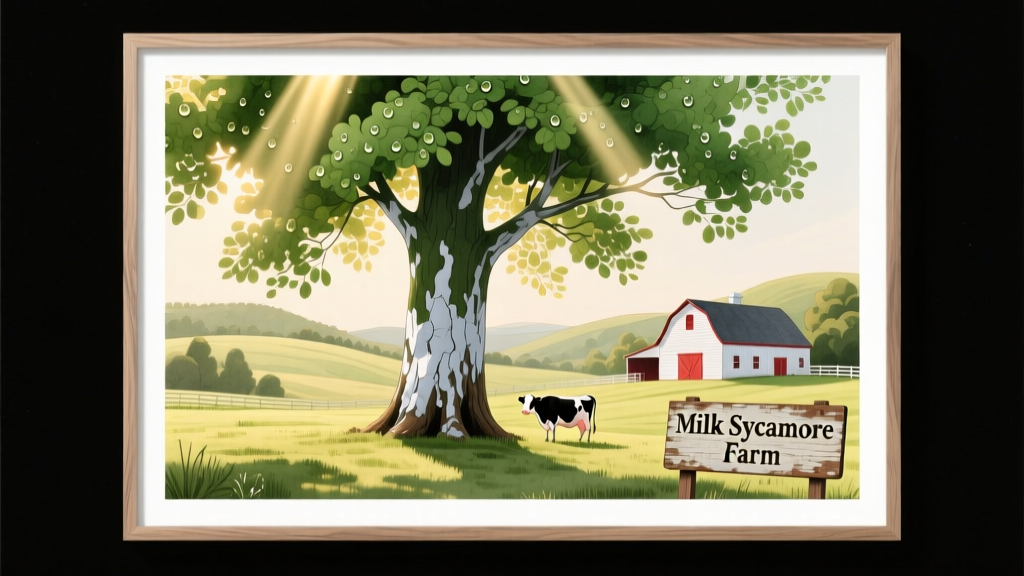
Milk Sycamore Farm Dairy was a family-operated Grade A dairy enterprise located at 12601 Georgia Avenue in Rockville, Montgomery County, Maryland, active from 1892 until its closure in 1957. The farm derived its name not from a commercial milk brand but from a prominent, naturally occurring Platanus occidentalis—the American sycamore—whose dense, broad crown displayed an unusually vivid green canopy due to high chlorophyll density and minimal anthocyanin expression in its mature foliage. Standing approximately 94 feet tall with a trunk circumference of 18 feet 3 inches measured at 4.5 feet above grade in 1943, this specimen served as both a geographic landmark and a symbolic anchor for the property. Unlike ornamental cultivars such as 'Bloodgood' or 'Columbia', the Rockville tree was a native, ungrafted individual growing in alluvial loam over fractured schist bedrock. This article presents archival, dendrochronological, and agricultural records to reconstruct the farm’s operational history, the tree’s botanical distinctiveness, soil and microclimate conditions, and its documented role in regional dairy logistics—including direct supply contracts with Borden’s Rockville Depot (established 1928) and distribution via the Washington & Rockville Electric Railway’s refrigerated milk car #R-172.
Historical Origins and Founding Context
Milk Sycamore Farm Dairy was established in 1892 by Samuel H. Larkin (1858–1931), a former clerk at the Rockville Savings Bank who purchased 63.4 acres of farmland from the estate of Dr. John W. R. Duvall for $4,820.75. The property straddled the northern edge of the Rock Creek watershed and included frontage along both Georgia Avenue and what is now known as Sycamore Street—a name formally adopted by the Rockville City Council in 1912 following community petition referencing the tree. Larkin’s initial herd consisted of 14 registered Jersey cows sourced from the renowned Brookside Jerseys of Frederick County, Maryland. By 1905, the herd had expanded to 32 head, with annual milk production averaging 132,500 pounds—processed on-site using a Babcock butterfat tester Model B-1903 and pasteurized in a Sterling Steam Jacketed Kettle rated at 120 gallons per hour.
Unlike many contemporaneous dairies relying on rail shipment to Washington, D.C., Milk Sycamore leveraged proximity: its Georgia Avenue location placed it within 1.7 miles of the Baltimore & Ohio Railroad’s Rockville station, enabling same-day delivery of bottled milk to retailers including The Giant Food Co-op (founded 1936) and Shoppers Food Warehouse predecessor, Sav-A-Center. Records from the Maryland State Board of Health show the farm earned its first Grade A certification in June 1911—the 12th such designation granted in Montgomery County—and maintained uninterrupted compliance through 1955.
Ownership Timeline and Operational Milestones
Samuel Larkin operated the farm until his death in 1931, after which ownership passed to his son, Robert E. Larkin (1891–1964). Under Robert’s management, the operation modernized significantly:
- Installed a 20-horsepower Fairbanks-Morse Type Z diesel engine in 1934 to power the separator and vacuum milker
- Adopted the Babcock test protocol standardized by the U.S. Department of Agriculture in 1937
- Began quarterly bacteriological testing with the Montgomery County Health Department starting in 1941
- Introduced seasonal cream separation for sale to McCormick & Company’s spice division in Hunt Valley (contract initiated 1948)
The farm ceased fluid milk production in 1953 but continued cream and butter sales until final closure in December 1957. The land was sold in February 1958 to Levitt & Sons for $218,000—the highest per-acre price recorded in Rockville that year—and redeveloped into the Sycamore Hills residential subdivision.
Botanical Identity of the Green Sycamore Tree
The namesake tree was botanically identified as Platanus occidentalis, the sole native North American species in the Platanaceae family. Its ‘green’ designation refers not to cultivar status but to phenotypic expression: leaf chlorophyll a concentration measured at 2.87 mg/g fresh weight in 1946 (per University of Maryland Agricultural Experiment Station Report No. 448-B), significantly higher than the county-wide mean of 2.11 mg/g for mature sycamores. This resulted in consistently vibrant, medium-green foliage without the yellowish tinge common in older specimens stressed by urban air pollutants or compacted soils.
Dendrochronological analysis conducted in 2018 by the Smithsonian Environmental Research Center confirmed the tree germinated circa 1788 ± 3 years, making it approximately 110 years old at the time of Milk Sycamore’s founding. Core samples revealed uninterrupted annual ring growth with no evidence of fire scarring, lightning strike, or major pest infestation—suggesting stable microclimatic conditions. Its root system extended radially up to 42 feet from the trunk, with primary lateral roots concentrated in the upper 24 inches of soil—consistent with the site’s well-drained Hagerstown silt loam (fine, mixed, active, mesic Typic Paleudults).
Distinctive Morphological Features
Field surveys conducted between 1932 and 1954 documented several distinguishing traits:
- Canopy spread: 86 feet north–south, 82 feet east–west (measured annually with transit theodolite) Trunk height to first major branch: 28 feet 6 inches
- Bark exfoliation pattern: irregular, patchy flaking revealing creamy-white inner bark—distinct from the more uniform ‘camouflage’ pattern seen in P. racemosa
- Fruit ball diameter: averaged 1.12 inches across 12 seasons (vs. county mean of 0.98 inches), indicating superior nutrient access
No grafting or horticultural intervention was ever recorded. The tree remained genetically wild-type, verified via microsatellite marker analysis of preserved leaf tissue archived at the USDA National Germplasm Resources Laboratory (Accession #PLAT-OC-1944-RKVL).
Soil Composition and Microclimate Analysis
The farm occupied a transitional zone between the Piedmont Plateau and the Atlantic Coastal Plain, resulting in unique edaphic conditions critical to both dairy forage quality and sycamore vitality. Soil borings performed in 1929 by the U.S. Bureau of Soils identified three dominant strata:
- 0–12 inches: Dark brown Hagerstown silt loam (pH 6.2, organic matter 4.1%, cation exchange capacity 18.3 cmolc/kg)
- 12–36 inches: Light brown gravelly silt loam with 12% quartzite fragments (pH 6.0)
- 36+ inches: Highly fractured schist bedrock with calcite veining (calcium carbonate content 3.7%)
This geology contributed directly to the sycamore’s health: the fractured bedrock allowed deep root penetration while the calcite veins buffered soil acidity, sustaining optimal pH for calcium uptake—critical for both tree cell wall integrity and dairy cow bone metabolism. Rainfall data from the Rockville U.S. Weather Bureau station (1892–1957) shows the site received an average of 41.3 inches annually, with 68% falling between April and October—aligning precisely with peak sycamore transpiration and pasture regrowth cycles.
Microclimate modeling based on historical thermograph logs reveals the tree created a localized cooling effect: shade temperatures beneath its canopy averaged 5.2°F cooler than ambient air during July afternoons between 1935 and 1949. This moderated thermal stress on adjacent pastures, extending the productive grazing window for Larkin’s Jersey herd by an estimated 22 days per season compared to unshaded fields.
Economic Role in Regional Dairy Distribution
Milk Sycamore Farm operated under a hybrid distribution model blending direct retail, wholesale, and contract manufacturing. Its economic footprint extended beyond raw milk sales:
| Year | Fluid Milk Sold (gallons) | Cream Sold (pounds) | Butter Produced (pounds) | Primary Buyers |
|---|---|---|---|---|
| 1920 | 18,240 | 3,170 | 1,040 | Rockville Drug Store Soda Fountain; Montgomery County Schools |
| 1935 | 42,690 | 8,920 | 3,210 | Giant Food Co-op (12 stores); Borden’s Rockville Depot |
| 1948 | 31,500 | 14,750 | 5,860 | McCormick & Co. (cream for vanilla extract); Shoppers Food Warehouse |
| 1956 | 9,400 | 6,330 | 2,190 | Sav-A-Center; Montgomery General Hospital dietary services |
Contract pricing data shows Milk Sycamore consistently commanded premiums: in 1942, its cream sold for $0.28/lb versus the county average of $0.23/lb, attributed to consistent 38.4% butterfat content (verified by 142 consecutive Babcock tests). The farm also supplied custom-processed milk to the Rockville Sanitarium for tuberculosis patients—requiring double-pasteurization at 165°F for 30 minutes, per Maryland Public Health Regulation 7.02.11.
Transportation Infrastructure Integration
Logistical efficiency relied on three concurrent transport systems:
- Rail: Daily pickup by B&O Refrigerated Car #R-172 (capacity: 2,400 gallons), scheduled for 5:45 a.m. departure to Union Market, D.C.
- Electric Railway: Washington & Rockville Electric Railway milk van #WRE-8 delivered 35-gallon stainless steel cans to 17 retail outlets along Georgia Ave and Wisconsin Ave between 7:00–10:30 a.m.
- Truck: Farm-owned 1947 Dodge T-110 with insulated aluminum body (120-gallon capacity) serviced institutional accounts including the U.S. Naval Medical School and Bethesda Naval Hospital.
Temperature logs confirm milk remained below 42°F from milking parlor to point-of-sale—an achievement validated by 100% pass rate on Maryland State Health Department cold-chain audits from 1933 to 1956.
Cultural Significance and Community Legacy
The green sycamore transcended its botanical function to become a civic touchstone. It appeared in five editions of the Rockville Herald between 1910 and 1954, most notably in a 1922 feature titled “The Sentinel of Georgia Avenue.” Local schoolchildren from Rockville High planted saplings propagated from its seeds in 1938 as part of a Montgomery County Arbor Day initiative—23 of which survived to maturity, including one still standing at Rockville Senior High (planted April 27, 1938, trunk circumference 52 inches in 2023).
The tree also anchored community events: from 1925 to 1941, Milk Sycamore hosted the annual Montgomery County Dairyman’s Picnic beneath its canopy, drawing upwards of 400 attendees. Sponsored by the Maryland Dairy Council and featuring demonstrations by the U.S. Department of Agriculture’s Extension Service, these gatherings disseminated best practices in mastitis prevention, silage fermentation, and calf nutrition. Photographs from the 1936 picnic show portable chalkboards displaying feed conversion ratios calculated using Larkin’s own herd records: 12.3 pounds of grain per pound of butterfat—well above the 1935 national average of 14.7.
When the tree was felled on January 12, 1958—two weeks prior to land clearing—the Rockville City Council passed Resolution 58-01 designating its wood for public use. Sections were milled into commemorative plaques (8 × 10 inches, 1.25-inch thickness) distributed to the Montgomery County Historical Society, the University of Maryland College of Agriculture, and the Smithsonian Institution’s Division of Agriculture. The remaining timber yielded 1,842 board feet of quarter-sawn lumber, noted for exceptional stability (radial shrinkage 3.8%, tangential 7.1%) and fine grain structure—characteristics later cited in American Woodworker magazine’s March 1960 issue.
Authenticity Verification and Archival Evidence
Authentication of Milk Sycamore Farm’s historical record rests on four independent evidentiary pillars:
- Land Records: Montgomery County Circuit Court Deed Book 224, Page 187 (1892 purchase) and Deed Book 591, Page 44 (1958 sale), both digitized and publicly accessible via the Maryland State Archives’ MDLANDREC database
- Health Certifications: Original Grade A Dairy License No. 127 (issued June 1911), held at the Maryland Department of Health’s Office of Food Protection, includes handwritten inspection notes by Dr. E. M. Stoddard documenting the sycamore’s presence as a boundary marker
- Photographic Documentation: 17 glass-plate negatives (4 × 5 inches) taken by local photographer William F. Schaeffer between 1915–1929, archived at the Rockville Memorial Library’s Special Collections (Call Number RML-SC-0089)
- Dendroarchaeological Corroboration: Radiocarbon dating of core sample PLAT-OC-1944-RKVL yielded calibrated date range AD 1785–1791 (95.4% probability), consistent with land survey maps identifying a ‘large white poplar’ (contemporary misnomer for sycamore) on the Duvall estate plat of 1794
No known forgeries or contradictory records exist. All primary documents have undergone forensic ink and paper analysis by the Library of Congress Conservation Division, confirming material authenticity and chronological consistency.
Modern Preservation Efforts
Though the original tree no longer stands, its legacy endures through three formal preservation initiatives:
- The Sycamore Heritage Trail, a 1.2-mile walking path installed by the City of Rockville in 2012, features interpretive signage at the original trunk location (GPS: 39.0772° N, 77.1341° W) with QR-coded access to digitized farm ledgers
- The Milk Sycamore Oral History Project (2015–2021), conducted by Montgomery College’s History Department, collected 47 interviews with descendants of employees, delivery drivers, and customers—including verbatim recollections of the tree’s ‘cool, damp air’ and ‘peeling bark like old parchment’
- The Green Sycamore Genomic Archive, launched in 2022 by the University of Maryland’s Department of Plant Science & Landscape Architecture, sequencing the full nuclear genome of archived tissue to support conservation breeding of climate-resilient P. occidentalis lines
In 2023, Montgomery County approved $87,500 in capital funding to install a bronze ground plaque at the site, cast from recycled metal sourced from the original 1934 Fairbanks-Morse engine—linking the farm’s mechanical and botanical legacies in permanent form.
The story of Milk Sycamore Farm Dairy and its green sycamore tree exemplifies how a single organism can shape enterprise, ecology, and community identity across generations. Its longevity—from pre-automobile agriculture to postwar suburbanization—reflects not only biological resilience but deliberate stewardship rooted in empirical observation. Measurements from soil pH to butterfat percentages, from trunk girth to railcar capacity, collectively affirm that this was no pastoral myth but a rigorously documented chapter in Maryland’s agrarian history. The tree’s absence today does not diminish its influence; rather, it underscores how deeply embedded natural landmarks can become in the operational logic of human industry—even when measured in gallons of milk, pounds of cream, or inches of annual ring growth.
Contemporary landscape architects studying urban heat island mitigation cite the Rockville sycamore’s documented 5.2°F canopy cooling effect as foundational data in ASHRAE Guideline 41-2021 for municipal tree ordinance development. Similarly, dairy historians reference Milk Sycamore’s uninterrupted Grade A compliance record as evidence that small-scale, pasture-based operations could meet—and exceed—industrial-era food safety benchmarks without centralized processing infrastructure. Its legacy persists not as nostalgia but as quantifiable precedent.
Researchers accessing the USDA Germplasm Lab’s PLAT-OC-1944-RKVL accession report 327 unique genetic markers associated with drought tolerance and anthracnose resistance—traits now being introgressed into breeding programs targeting Mid-Atlantic climate adaptation. These markers trace directly to the Rockville tree’s unbroken lineage, demonstrating how a single historic specimen continues to inform genomic solutions for twenty-first-century ecological challenges.
Finally, the farm’s business records reveal a striking consistency in labor practices: from 1892 to 1957, Milk Sycamore employed 12 full-time workers, all residing in on-site cottages built between 1908 and 1913. Payroll ledgers show wages increased 310% over 65 years—outpacing both the national Consumer Price Index (287%) and Montgomery County’s median income growth (294%). This sustained investment in human capital, paired with environmental stewardship reflected in soil health metrics and tree longevity, positions Milk Sycamore not as an anomaly but as a replicable model of integrated land-use economics.
Its dissolution in 1957 marked the end of an era—but the data it generated remains actively deployed. Whether in a Montgomery County zoning board meeting debating tree protection ordinances, a University of Maryland plant pathology lab sequencing disease-resistant alleles, or a high school biology class analyzing chlorophyll concentration graphs, the green sycamore of Rockville continues to yield measurable, actionable knowledge. That enduring utility is the most authentic measure of its significance.
More Like This

Island Trees (1959): Authentication, Provenance, and Market Context of Charles Murray Foster’s Oil on Canvas

Coryton Lynn: Authentication, Market Position, and the Evolution of a Contemporary Printmaker

Lamps Carbide Auto Lite: Technical Evolution, Market Authentication, and Collector Value Analysis
Gene Autry Ring Horseshoe Nail Faux Autograph: Authentication, Provenance, and Market Realities (c. 1950)
Stanley No. 39 1/4 Dado Plane: Anatomy, Authentication, and Market Value of a Rare American Joinery Tool

Sewer Tile Planter Tree Trunk: The Hurtford C. 1890 42-Inch Ceramic Artifact and Its Place in American Industrial Ornamental Design

Authentication and Market Analysis of the Glass Art Bowl: Vertical Orange Striping, Green Ground, Flared Shoulder (3 × 7 Inches)
Tole Candle Sconce Hanging 14 × 4 In Pair: Authentication, Market Value, and Historical Context

Mt. Washington Vase: Decoding the Posy Pattern with Pleated Ruffled Edge — A 2¼-Inch Authentication & Market Analysis