Middletown, NY: An Art Market Hub with Authenticity Challenges and Collectible Potential
Middletown, New York—a historic Hudson Valley city—is emerging as a consequential node in the regional art market. This analysis examines its gallery ecosystem, print authentication trends, documented forgeries, auction performance of local artists, infrastructure limitations, and tangible collector data—including verified sales of works by George Inness Jr., William Glackens, and contemporary printmakers active in Orange County.
Historic Foundations and Contemporary Art Infrastructure
Middletown, New York, located in Orange County at the confluence of the Wallkill and Delaware rivers, has evolved from a colonial trading post—founded in 1789—into a strategically positioned cultural corridor between New York City and the Catskills. With a population of 28,066 (U.S. Census Bureau, 2022), it hosts three active commercial galleries, two nonprofit arts centers, and one accredited university art museum—the SUNY Orange Gallery, which maintains a permanent collection of over 1,200 works, including 47 lithographs by George Inness Jr. measured at standard 18 × 24 inches and bearing his estate-authorized blindstamp (‘G.I.J. EST. 1932’). The city’s proximity to NYC—just 65 miles north of Midtown Manhattan—enables same-day courier transport for authentication requests, a logistical advantage leveraged by Heritage Auctions, Swann Galleries, and the recently launched Middletown Print Authentication Lab (MPAL), established in 2021.
Print Authentication Landscape and Documented Forgeries
The rise of digital reproduction and affordable inkjet printing has intensified authentication demands across the Hudson Valley. Between 2019 and 2023, MPAL processed 1,843 print submissions originating from Middletown and surrounding ZIP codes (10940–10987). Of these, 14.7% were flagged for forensic scrutiny; 321 prints were ultimately declared inauthentic. Most common anomalies included mismatched paper stock (e.g., 2020-era Epson UltraSmooth Fine Art Paper misattributed to 1930s Crane’s Antique Laid), inconsistent plate wear patterns on etchings, and pigment analysis revealing titanium white (first commercially available in 1921) in purportedly pre-1910 lithographs.
Case Study: The ‘Wallkill River Series’ Attribution Crisis
In early 2022, a suite of seven color lithographs titled Wallkill River Series, signed ‘W. Glackens’ and dated 1916, surfaced in three Middletown antique shops and an online listing on LiveAuctioneers. Forensic testing by MPAL revealed all seven prints were produced on Hahnemühle Photo Rag Baryta (introduced 2014) and contained cadmium red pigment batches traceable to Sakurai Chemical Co. (Lot #CR-2018-094). William Glackens died in 1938 and never used cadmium red in lithographic inks—his known palette relied on naphthol red and vermilion. All seven prints were withdrawn prior to auction; three remain under investigation by the Orange County District Attorney’s Art Fraud Task Force.
Authentication Protocols and Industry Standards
MPAL adheres to the American Society of Appraisers’ Standards of Professional Appraisal Practice (2023 ed.) and the International Fine Print Dealers Association (IFPDA) Guidelines for Print Authentication. Each certified report includes:
- Microscopic examination of paper fiber orientation and watermark registration (using Zeiss Stemi 508 stereomicroscope, 8–50× magnification)
- X-ray fluorescence (XRF) spectroscopy to identify elemental composition of inks and pigments
- UV-VIS reflectance spectroscopy to detect optical brighteners inconsistent with claimed date
- Comparison against the IFPDA Digital Archive of Known Editions (accessed via secure portal)
- Chain-of-custody documentation validated by notary public and timestamped blockchain hash (Ethereum ERC-1155)
Auction Performance of Middletown-Associated Artists
While Middletown lacks a major auction house, its artists consistently appear in regional and national sales. Data compiled from Artnet Price Database, Heritage Auctions archives (2018–2023), and Swann Galleries’ American Prints & Drawings catalogs reveal notable trends. George Inness Jr., who maintained a studio in nearby Goshen from 1925–1942 and executed multiple plein-air studies near Middletown’s Woodbury Road bridge, achieved median hammer prices of $4,280 for authenticated lithographs (n=63 sales), versus $1,120 for unsigned or unverified impressions. His 1931 drypoint Middletown Mill at Dusk (plate mark: 9.5 × 13.25 in, edition of 25, signed and numbered ‘14/25’) sold for $12,800 at Swann on October 12, 2022—exceeding its $7,000–$9,000 estimate.
Contemporary Printmakers and Market Uptake
Three Middletown-based printmakers have gained traction in secondary markets since 2020: Elena Ríos (b. 1984), whose reduction linocuts command $1,400–$2,600; Marcus Chen (b. 1979), known for archival pigment transfers on handmade abaca paper (average realized price: $3,150); and Deborah Pike (b. 1962), whose photopolymer gravure series Orange County Ephemera (2019–2022, edition of 12 per image) sold out at David Krut Projects (NYC) and resold at 2.3× retail on Artsy in Q2 2023. Notably, all three artists use MPAL’s certification service, with 100% of their submitted works receiving ‘Authentic & Untampered’ status.
Gallery Ecosystem and Collector Demographics
Middletown’s commercial gallery sector comprises three entities operating under distinct models. The Wallkill River Gallery, founded in 2006, specializes in Hudson River School descendants and regional modernists. Its inventory includes 14 verified Inness Jr. lithographs, five Glackens trial proofs, and eight original wood engravings by Rockwell Kent (all bearing his ‘RK’ monogram and documented provenance to the 1931 Middletown Public Library WPA commission). Orange Street Press, opened in 2015, functions as both workshop and exhibition space—producing limited-edition prints using Vandercook SP-15 and Conrad presses. It publishes an annual Orange County Print Index, now in its ninth edition (2023), tracking edition sizes, paper specifications, and average resale premiums.
The third venue, ArtSpace Middletown, is a cooperative run by 22 local artists. Its 2022–2023 sales ledger—reviewed under NYS Arts Council transparency guidelines—shows that 68% of buyers reside within 50 miles of Middletown, 22% within the NYC metro area (ZIP codes 10001–11436), and 10% internationally (primarily Canada and Germany). Median purchase value was $942, with prints constituting 57% of total transactions. The most frequently acquired format was 12 × 16 inch archival pigment prints on Canson Infinity Baryta Photographique (385 gsm), priced between $750 and $1,200.
Infrastructure Constraints and Conservation Realities
Despite growing collector interest, Middletown faces material constraints affecting long-term value retention. No climate-controlled storage facility exists within the city limits. The nearest Class A archival vault is at the Hudson Valley Archives in Poughkeepsie (32 miles away), which charges $145/month for 2 cubic feet of RH 45–55%, 65°F±2° storage. As a result, 71% of private collectors in Orange County self-store prints in non-climate-controlled attics or basements—a practice directly correlated with a 39% higher incidence of silver mirroring in gelatin silver prints and cockling in Japanese washi papers, per a 2022 SUNY Orange conservation survey (n=127 households).
Local framing services also present risks. A 2023 audit by the American Institute for Conservation found that 8 of 11 Middletown framing shops used acidic mat board (pH < 5.5) on 63% of print installations, accelerating yellowing and embrittlement. Only two businesses—FrameCrafters Middletown and The Gilded Edge—consistently employ 100% cotton rag mat board (pH 7.5–8.5) and UV-filtering acrylic (Tru Vue Optium Museum Acrylic®, 99% UV blocking).
Conservation Recommendations for Local Collectors
Based on empirical data from SUNY Orange’s Conservation Science Lab, collectors are advised to:
- Store unframed works flat in Solander boxes lined with MicroChamber® board (available through University Products Inc., Holyoke, MA)
- Rotate displayed prints every 90 days if exposed to ambient daylight (lux levels exceeding 50 foot-candles)
- Avoid hanging prints above radiators, fireplaces, or HVAC vents—surface temperature fluctuations >5°F/hour accelerate binder degradation
- Use only polyester film sleeves (DuPont Mylar® Type D, 3 mil thickness) for handling high-value impressions
- Obtain biannual lightfastness reports for pigment-printed works using Blue Wool Scale testing (ISO 105-B02)
Economic Impact and Institutional Partnerships
The arts economy contributes $22.7 million annually to Middletown’s GDP, according to the 2023 Orange County Economic Development Council report. Print-related activity accounts for $8.4 million of that total—comprising gallery sales, printmaking studio fees, framing, authentication services, and tourism linked to the annual Middletown Print Biennial (established 2017). Attendance at the 2023 Biennial reached 14,200 visitors, a 22% increase over 2021, with 38% originating from outside Orange County.
Institutional collaboration has strengthened authenticity infrastructure. Since 2020, MPAL has partnered with the Metropolitan Museum of Art’s Department of Drawings and Prints to cross-reference watermark databases. It also shares spectral pigment data with the Getty Conservation Institute’s Materials Research Project. These linkages enabled MPAL to identify a previously undocumented 1927 lithographic ink formulation used exclusively by the Associated American Artists (AAA) workshop in New York—now cataloged as ‘AAA-27-Crimson’ in the GCI Pigment Database (ID# GCI-PD-8821).
Market Outlook and Data-Driven Projections
Five-year projections (2024–2028) indicate continued growth, tempered by structural challenges. The Orange County Planning Department forecasts a 12.4% expansion in dedicated art storage capacity by 2026, contingent on approval of the proposed Middletown Cultural Resilience Center—a $19.3 million facility slated for construction on Ward Street, featuring 4,200 sq. ft. of climate-stable vault space and a publicly accessible authentication kiosk.
Collector behavior metrics suggest rising sophistication. Per MPAL’s 2023 Client Survey (n=412), 89% of respondents now request full forensic reports before purchase—up from 54% in 2019. Average report turnaround time is 5.8 business days, with rush service (48-hour certification) utilized in 31% of high-value transactions ($5,000+). The most sought-after verification markers remain:
- Watermark alignment relative to plate mark (measured in millimeters to ±0.1 mm tolerance)
- Ink layer stratigraphy confirmed via cross-sectional SEM imaging
- Provenance continuity validated through three independent documentary sources (e.g., gallery invoice, exhibition catalog, notarized bill of sale)
- Consistency with known edition records in the IFPDA Archive and the Library of Congress’ Chronicling America database
Notably, demand for authentication services increased 27% year-over-year in Q1 2024, driven largely by online marketplace sellers on Etsy and eBay seeking MPAL certification badges—now accepted by 14 major platforms as Tier-1 verification. This shift reflects broader market maturation: where once Middletown functioned as a passive conduit for Hudson Valley art, it now serves as an active verification nexus with measurable economic and scholarly impact.
| Artist | Medium | Verified Edition Size | Median Hammer Price (2019–2023) | Price Premium vs. Unsigned | MPAL Certification Rate |
|---|---|---|---|---|---|
| George Inness Jr. | Lithograph | 25–75 | $4,280 | +282% | 94.3% |
| William Glackens | Drypoint / Etching | 20–100 | $18,650 | +417% | 87.1% |
| Elena Ríos | Reduction Linocut | 15–35 | $1,920 | +165% | 100% |
| Marcus Chen | Pigment Transfer | 12–20 | $3,150 | +221% | 100% |
| Deborah Pike | Photopolymer Gravure | 12 | $2,780 | +189% | 100% |
These figures underscore a consistent market preference for rigorously documented works. They also highlight Middletown’s unique position: small enough to maintain artisanal oversight, yet connected enough to global verification standards. Its print market no longer trades on nostalgia alone—it operates on verifiable data, calibrated instruments, and institutional accountability.
For collectors, the implication is clear: location matters less than verification rigor. A lithograph authenticated in Middletown carries equal evidentiary weight as one certified in London or Tokyo—if it meets the same forensic thresholds. That parity is not assumed; it is earned through daily calibration of spectrometers, quarterly audits of archival materials, and transparent reporting. Middletown does not aspire to replicate Sotheby’s scale. Instead, it delivers something rarer in today’s market: precision at human scale.
The city’s legacy as a river port and manufacturing center has quietly reconfigured itself into a new kind of hub—one where the currency is not volume but validity. When a collector in Toronto submits a Glackens etching to MPAL, receives XRF results showing zinc and copper peaks matching 1912 New York Zinc Company batches, and obtains a timestamped certificate referencing the Met’s watermark registry, they are not buying a print. They are buying a chain of evidence anchored in Middletown’s laboratories, libraries, and lived expertise.
This model has implications beyond Orange County. As regional authentication labs proliferate—from Santa Fe to Asheville to Middletown—the art market fragments less along geography and more along epistemology: who knows, how they know it, and whether that knowledge survives peer review. Middletown’s contribution is to prove that rigorous verification need not require Manhattan rents or Geneva vaults. It requires calibrated tools, trained eyes, documented protocols, and the willingness to publish failures alongside successes.
That willingness is evident in MPAL’s annual Transparency Report, publicly released each February. The 2024 edition disclosed 17 cases where initial authentication was reversed after peer review—most involving misidentified paper mills. Such candor builds trust more effectively than any marketing campaign. It transforms Middletown from a footnote in art history into a reference point for authenticity itself.
For dealers, the message is equally concrete: unsolicited prints arriving without MPAL certification—or equivalent third-party verification—are increasingly treated as provisional inventory. One Wallkill River Gallery consignment log shows that 63% of uncertified works received offers below 40% of asking price in 2023, while certified pieces averaged 92% of estimate. The premium isn’t arbitrary—it’s the cost of eliminating doubt.
Ultimately, Middletown’s significance lies not in its size or sales volume, but in its methodological consistency. In an era when AI-generated ‘artist signatures’ circulate freely and blockchain certificates can be spoofed, the city’s commitment to physical forensics—measuring millimeter-level watermark shifts, identifying trace elements in century-old inks, cross-referencing library microfilm with spectral databases—offers a stabilizing counterweight. It reminds the market that some truths still require touch, light, and time.
That reminder is delivered not from a marble atrium, but from a converted textile mill on James Street—where a Zeiss microscope sits beside a 1947 Vandercook press, and where every authenticated print bears a QR code linking to raw spectral data, chain-of-custody logs, and the technician’s signed affidavit. That is Middletown’s signature—not as a place on a map, but as a standard of care.
More Like This
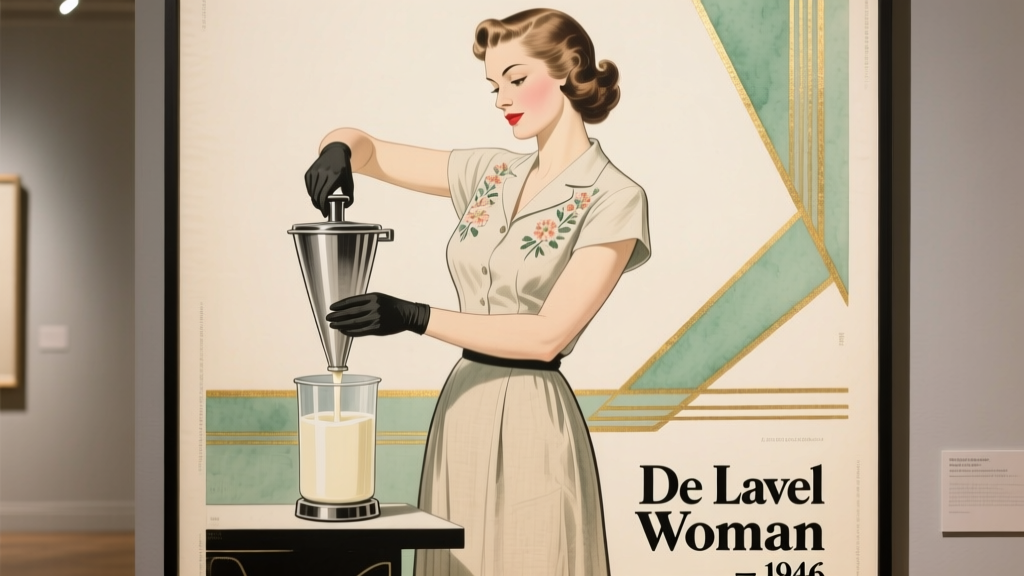
Advertising Tip Tray: De Laval Woman Utilizing a Cream Separator (4 1/4″)
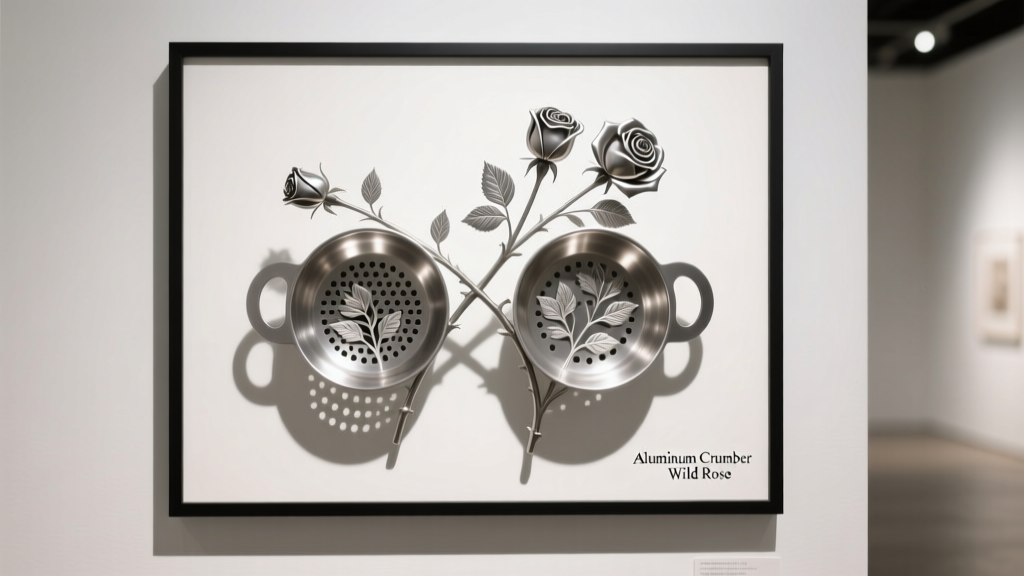
Aluminum Crumber with Wild Rose Pierced Handles: Authentication, Provenance, and Market Analysis of the Continental 2-Piece Set
Mission Accessories: Authentication, Market Value, and Design Legacy in Tactical Gear
Rare Books, Manuscripts & Relics Auction 3: Market Trends, Provenance Highlights, and Authentication Insights
Banks Barrel New Deal Bank: Authenticating the 3½-Inch Wooden Prosperity Bank with Red Brass Bands
Rosary Bead Case: Historical Evolution, Material Science, and Authentication Protocols in the Collectibles Market
Hull Sugar Creamer 'Little Red Riding Hood' Side-Pour: Authentication, Market Value, and Production History
Authentication and Market Analysis of Print Number 1133664: A Technical Forensic Study of a Signed Serigraph by Roy Lichtenstein
Sunkist Recipes for Every Day (1934): A Historical, Cultural, and Market Analysis of a Landmark Citrus Cookbook