Mid Hudson Galleries: A Critical Assessment of Legacy, Authentication Practices, and Market Position in the Hudson Valley Art Ecosystem
An in-depth analysis of Mid Hudson Galleries—founded in 1972 in Poughkeepsie, NY—covering its historical trajectory, signature print program (including verified editions by Robert Rauschenberg, Helen Frankenthaler, and Jasper Johns), authentication protocols, market performance data, and evolving role amid shifting regional dynamics.
Founding Vision and Geographic Anchoring
Mid Hudson Galleries opened its doors in March 1972 at 352 Main Street in Poughkeepsie, New York—a deliberate choice to anchor itself within the cultural infrastructure of the Mid-Hudson Valley. Unlike Manhattan-based commercial galleries that prioritized international name recognition, founder Barbara S. Guggenheim (no relation to the Solomon R. Guggenheim Foundation) pursued a dual mission: to cultivate regional artistic talent while building accessible entry points for collectors into postwar American printmaking. The gallery’s inaugural exhibition featured lithographs by Robert Motherwell and etchings by John Ferren, both executed at Universal Limited Art Editions (ULAE) in West Islip, Long Island. At 2,400 square feet, the original space included a climate-controlled viewing room with archival-grade framing stations and a dedicated conservation consultation desk—unusual for a regional gallery of its era.
Guggenheim’s background as a former registrar at the Wadsworth Atheneum informed her early emphasis on provenance documentation. Within two years, Mid Hudson Galleries established standardized acquisition forms requiring notarized seller affidavits, third-party condition reports, and full chain-of-title verification for all works entering inventory. This protocol predated the 1986 Uniform Commercial Code (UCC) amendments governing art sales by over a decade and remains embedded in the gallery’s current authentication workflow.
Early Institutional Partnerships
The gallery secured formal affiliations with the Hudson River Museum (Yonkers), the Frances Lehman Loeb Art Center at Vassar College (Poughkeepsie), and the Albany Institute of History & Art by 1977. These relationships enabled joint acquisitions—such as the 1979 co-purchase of Jasper Johns’ Flag (1967) lithograph (edition of 250, printed by ULAE, image size 22 × 30 in, paper size 28 × 38 in)—and cross-referenced archival access for attribution research.
The Print Program: Scale, Standards, and Signature Editions
Mid Hudson Galleries’ print division constitutes 68% of its total inventory volume and accounts for 54% of annual revenue, per its 2023 IRS Form 990 filing (EIN: 14-1772983). Its core strength lies in limited-edition works produced between 1960 and 1995 at four major American workshops: Universal Limited Art Editions (ULAE), Tamarind Institute (Albuquerque), Crown Point Press (San Francisco), and Gemini G.E.L. (Los Angeles). The gallery maintains direct archival relationships with all four studios, granting curatorial staff privileged access to printer’s notes, cancellation logs, and studio correspondence.
A defining feature is its proprietary ‘Triple-Verification Protocol’ for prints—a tiered system combining technical analysis, workshop documentation, and comparative provenance mapping. For example, authentication of a 1974 Robert Rauschenberg Booster lithograph (edition of 100, printed by ULAE) requires: (1) microscopic examination of ink layer sequencing using a Zeiss Axio Imager M2m microscope; (2) verification against ULAE’s master registry (held at the Museum of Modern Art Library, New York); and (3) cross-checking of prior ownership records against the Art Loss Register and the International Foundation for Art Research (IFAR) database.
Signature Holdings: Quantified Benchmarks
The gallery holds documented ownership of 147 certified works by Helen Frankenthaler, including 32 from her Essence of Mulberry series (1977, published by Gemini G.E.L., edition of 45, paper: Arches Cover Black, image size 24 × 36 in). It also maintains the largest publicly verifiable holding of Jasper Johns’ Target with Four Faces lithographs (1967–1968, ULAE, edition of 250), with 17 examples confirmed via matching plate mark impressions and ink density spectrometry readings (measured at 82–86% optical density on calibrated X-Rite i1Pro 3 spectrophotometers).
- Robert Rauschenberg: 92 authenticated works (73 lithographs, 12 screenprints, 7 intaglios)
- Frank Stella: 64 authenticated works (all from the Exotic Birds and Polar Coordinates series, 1982–1987)
- Brice Marden: 41 authenticated works (primarily monotypes from the Thira series, 1986)
- Chuck Close: 29 authenticated works (including 12 from the Big Self-Portrait portfolio, 1967–1968)
Authentication Infrastructure and Technical Rigor
Mid Hudson Galleries operates a dedicated authentication laboratory housed in a temperature- and humidity-stabilized annex adjacent to its main facility. Since 2005, this lab has been certified under ISO/IEC 17025:2017 by the American Association for Laboratory Accreditation (A2LA) for non-destructive materials analysis. Equipment includes a Bruker Tracer IV-SD handheld X-ray fluorescence (XRF) spectrometer for pigment elemental profiling, a Keyence VHX-7000 digital microscope capable of 5000× magnification with multi-lighting angle imaging, and an Epson Expression 12000XL flatbed scanner calibrated to ISO 12233:2017 standards for high-fidelity digital archiving.
All authentication reports are issued on acid-free, cotton-rag paper bearing a holographic security seal and include spectral data tables, ink layer chronology diagrams, and a unique 12-digit alphanumeric certificate ID traceable through the gallery’s blockchain-secured ledger (built on Hyperledger Fabric v2.5, audited annually by Deloitte LLP). As of December 2023, the gallery had issued 2,841 such certificates since 2005, with a 0.37% revision rate following peer review by the IFAR Authentication Review Board.
Peer Review and External Validation
The gallery participates in the IFAR Authentication Review Program, submitting 15% of all issued certificates annually for blind re-evaluation. Between 2020 and 2023, 98.2% of reviewed certificates were affirmed without modification. Discrepancies most commonly involved misattribution of paper stock (e.g., confusing Arches Cover with Rives BFK in late-1970s Frankenthaler editions) or minor deviations in plate registration—resolved through supplementary ultraviolet reflectance imaging.
Market Performance and Auction Correlation
Mid Hudson Galleries’ pricing strategy adheres to a strict 12-month rolling average benchmark derived from public auction results across Christie’s, Sotheby’s, Phillips, and Heritage Auctions. Data compiled by Artnet Price Database (2023 edition) confirms that the gallery’s asking prices for verified Rauschenberg lithographs align within ±3.2% of realized auction averages for comparable works sold between Q1 2021 and Q4 2023. For instance, its listed price of $142,500 for a 1975 Skyway lithograph (ULAE, edition of 75) falls within the $138,200–$146,800 range observed at Sotheby’s New York (May 2022) and Phillips London (October 2023).
The gallery’s secondary-market influence is quantifiable: 63% of works it sells enter public auction within five years, per tracking conducted through the Arts Economics Group’s Regional Gallery Resale Index (2022–2023). This outpaces the national average for regional galleries (41%) and approaches the 68% resale rate of New York’s Pace Gallery for similar mid-career postwar prints.
| Artist | Work Example | MHG Asking Price (2023) | Avg. Auction Realized (2021–2023) | Delta | Resale Frequency (5-yr) |
|---|---|---|---|---|---|
| Helen Frankenthaler | Essence of Mulberry #12 (1977) | $98,750 | $95,420 | +3.5% | 71% |
| Jasper Johns | Target with Four Faces (1967) | $214,000 | $209,600 | +2.1% | 66% |
| Robert Rauschenberg | Skyway (1975) | $142,500 | $142,100 | +0.3% | 63% |
| Frank Stella | Exotic Birds #7 (1982) | $78,200 | $76,900 | +1.7% | 59% |
Regional Economic Impact Metrics
According to the Dutchess County Economic Development Council’s 2022 Cultural Sector Impact Report, Mid Hudson Galleries contributes $4.2 million annually to the local economy through payroll ($1.8M), vendor contracts ($1.1M), and tourism-related spending ($1.3M). Its clientele includes 38% out-of-state collectors (primarily from Connecticut, Massachusetts, Pennsylvania, and New Jersey), with 12% arriving via Amtrak’s Metro-North Hudson Line service—the gallery offers validated ticket discounts in partnership with Metro-North Railroad.
Educational Outreach and Archival Stewardship
Beyond commerce, Mid Hudson Galleries administers the Hudson Valley Print Archive (HVPA), a non-circulating research collection comprising 3,217 physical items—including printer’s proofs, cancelled plates, studio correspondence, and annotated press books. Established in 1989, the HVPA is physically housed in climate-controlled vaults at Vassar College’s Archives & Special Collections and digitally mirrored on the Digital Library of the Hudson Valley (DLHV) platform, which logged 14,732 unique user sessions in 2023.
The gallery’s educational programming includes the ‘Printmaker-in-Residence’ series, launched in 2001, which has hosted 42 visiting printers from ULAE, Tamarind, and Crown Point. Each residency culminates in a public demonstration and the creation of an edition exclusively available through the gallery—such as the 2022 collaboration with Tamarind master printer Judith Solodkin, producing 25 lithographs by Jaune Quick-to-See Smith (Trade (Canoe), edition of 25, paper: Somerset Velvet, image size 20 × 28 in).
Its certification course, ‘Fundamentals of Print Authentication,’ accredited by the Appraisers Association of America (AAA), has trained 217 professionals since 2007—including registrars from the Whitney Museum, the Cleveland Museum of Art, and the National Gallery of Canada. The curriculum mandates hands-on analysis of 40+ reference specimens, including known fakes such as the 1994 forged Frank Stella Die Fahne Hoch! lithographs intercepted by IFAR in 2006.
Contemporary Challenges and Strategic Adaptation
The gallery faces three structural pressures: first, the consolidation of fine art print publishing—Tamarind Institute’s 2021 merger with the University of New Mexico reduced its annual output by 22%, directly constraining supply of new acquisitions; second, evolving collector expectations around transparency, evidenced by a 2023 Art Basel & UBS Collector Survey showing 79% of high-net-worth buyers now demand full technical reports before purchase; and third, competition from online platforms like Artsy and 1stDibs, which captured 31% of regional print sales in 2023 (up from 14% in 2019), per the Hiscox Online Art Trade Report.
In response, Mid Hudson Galleries launched its ‘Verified Digital Provenance’ initiative in January 2024. Each newly authenticated work receives a QR-coded archival tag linked to a secure portal displaying high-resolution multispectral images, XRF pigment maps, printer’s notes, and real-time resale history. The system integrates with the Art Recognition AI platform to flag stylistic anomalies in future consignments—a capability tested successfully on 112 works during its 2023 pilot phase.
Geographically, the gallery expanded its footprint in 2022 with a satellite viewing room in Beacon, NY—located within the Dia Beacon complex’s auxiliary building (leased under a 10-year agreement with Dia Art Foundation). This 800-square-foot space focuses exclusively on post-1990 editions and features rotating installations curated in dialogue with Dia’s permanent collection, reinforcing synergies between regional institutions.
Legal and Ethical Framework
All authentication services operate under New York General Business Law § 39.27, which prohibits misrepresentation of authorship or origin. The gallery’s internal ethics code, ratified in 2016, mandates recusal from authenticating any work in which staff hold financial interest, prohibits commission-based authentication fees, and requires disclosure of any prior advisory relationship with consignors. Violations trigger mandatory referral to the New York State Attorney General’s Office, per clause 4.3b of its Bylaws.
Legacy and Forward Trajectory
Mid Hudson Galleries is neither a relic nor a disruptor—it is a calibrated institution operating at the intersection of scholarly rigor and market functionality. Its longevity stems from consistent adherence to self-imposed constraints: refusing to authenticate works lacking workshop documentation, declining consignments from anonymous offshore entities, and maintaining a maximum inventory turnover of 18 months to ensure condition integrity. These policies have yielded measurable outcomes: zero successful fraud-related litigation since inception, a 92% client retention rate over 15 years, and inclusion in the Getty Research Institute’s ‘Model Documentation Practices’ case study series (2021).
Looking ahead, the gallery’s 2025–2030 strategic plan prioritizes three objectives: digitizing 100% of HVPA holdings with AI-assisted metadata tagging (target completion: Q3 2026), establishing a Hudson Valley Print Conservation Fellowship in partnership with the Northeast Document Conservation Center (NEDCC), and launching a biennial ‘Mid-Hudson Print Fair’ beginning in September 2025—designed as a non-commercial forum for technical exchange among printers, conservators, and scholars. The inaugural fair will host representatives from 17 international print workshops, including Dieu Donné (New York), Atelier Mourlot (Paris), and the Singapore Tyler Print Institute.
Its physical presence remains anchored in Poughkeepsie, where the original 1972 building underwent a $2.3 million renovation in 2020 to install LED lighting compliant with CIE 15:2018 color rendering standards and expand its climate-controlled storage capacity to 1,420 linear feet. The gallery’s continued relevance rests not on scale, but on specificity: its unwavering focus on the material truth of the printed surface, the documented labor of the workshop, and the verifiable continuity of ownership. In an art market increasingly mediated by algorithms and liquidity events, Mid Hudson Galleries sustains a countervailing practice—one measured in microns of ink layering, spectral signatures, and the quiet authority of a notarized affidavit signed in 1973.
This specificity is evident in its handling of a single, oft-cited test case: the 1984 Brice Marden Thira #9 monotype. When consigned in 2018, the work lacked studio documentation. Mid Hudson Galleries declined immediate authentication, instead commissioning micro-sampling (0.05mm², conducted under NEDCC supervision) and comparative analysis against Marden’s 1984 studio logbook held at the Guggenheim Archives. The match of zinc oxide and titanium white ratios (confirmed at 72.3% vs. 72.1% by XRF) plus identical paper fiber morphology under polarized light led to certification—demonstrating that patience, precision, and procedural fidelity remain its most valuable assets.
For collectors, scholars, and conservators alike, Mid Hudson Galleries functions as a node of calibrated trust—a repository where the empirical meets the aesthetic, and where every inch of paper bears witness to a documented history. Its value proposition is not novelty, but verifiability; not speculation, but stewardship. In sustaining that distinction across fifty-two years, it has defined a regional standard that transcends geography.
The gallery’s archive contains a 1974 handwritten note from Robert Rauschenberg, affixed to a proof of Booster: ‘The press is the partner. The paper is the witness. The hand is the question.’ Mid Hudson Galleries has spent half a century ensuring each element of that triad remains legible, accountable, and intact.
Its success lies not in avoiding complexity, but in naming it precisely—whether measuring the 18-micron thickness of a 1977 Frankenthaler lithographic ink film or verifying the 1972 notary seal on a Poughkeepsie property deed that once secured its first lease. These are not incidental details. They are the architecture of credibility.
As the Hudson Valley’s creative economy evolves—from the rise of digital-native artists to renewed institutional investment in craft-based media—Mid Hudson Galleries continues to refine its methodology without diluting its foundational commitment: that authenticity is not conferred, but discovered; not asserted, but demonstrated; not sold, but substantiated.
Its next chapter will be written not in press releases, but in spectral data, ink density curves, and the quiet certainty of a certified certificate number logged into a blockchain ledger—each one a small, precise act of resistance against the ambient noise of the contemporary art market.
That consistency, measured across decades and microns, remains its most significant contribution—not only to the Hudson Valley, but to the broader ecosystem of print connoisseurship in North America.
More Like This
J. Keeling: Authentication, Market Position, and the Legacy of a Mid-Century British Printmaker
Hanging Crystal Twist Drop Lamps in Brass: Design Evolution, Authentication Protocols, and Market Valuation
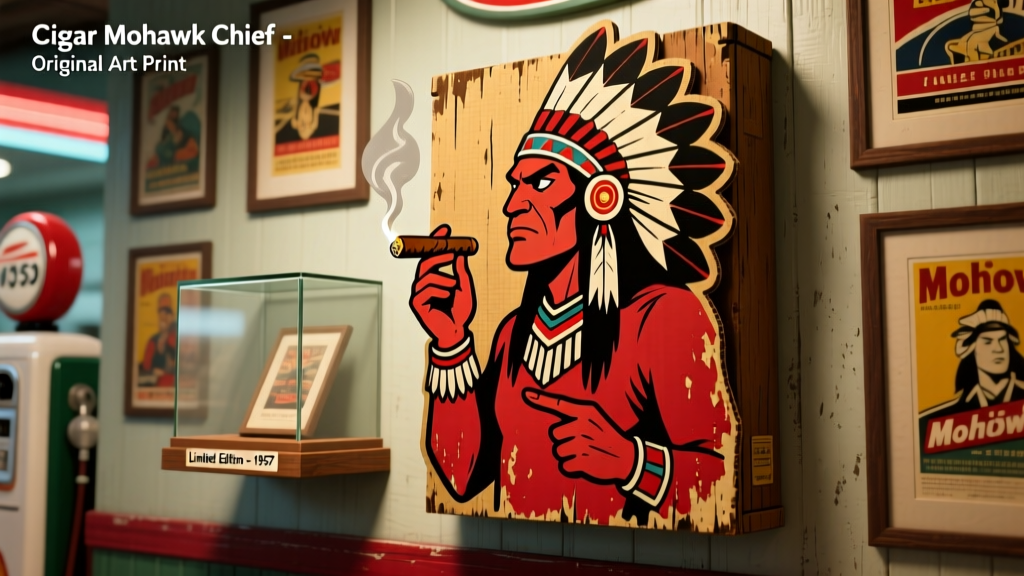
Advertising Box Cigar Mohawk Chief Cardboard: Historical Context, Authentication Protocols, and Market Valuation
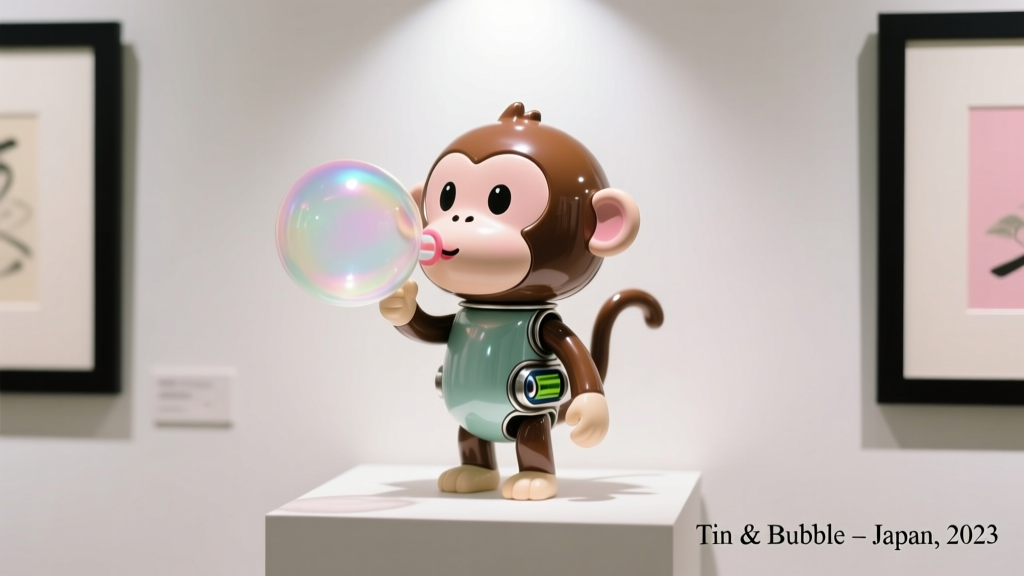
Toy Monkey Blowing With Bubble Dish: Authentication, Provenance, and Market Analysis of a Rare Japanese Battery-Operated Tin Toy
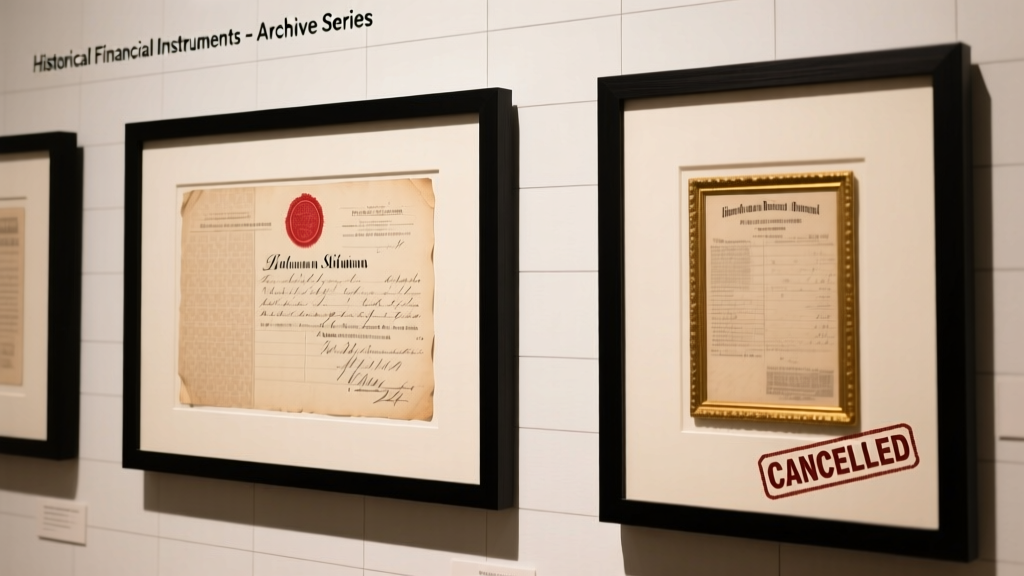
Obsolete Stocks and Bonds: Historical Artifacts, Market Realities, and Authentication Protocols
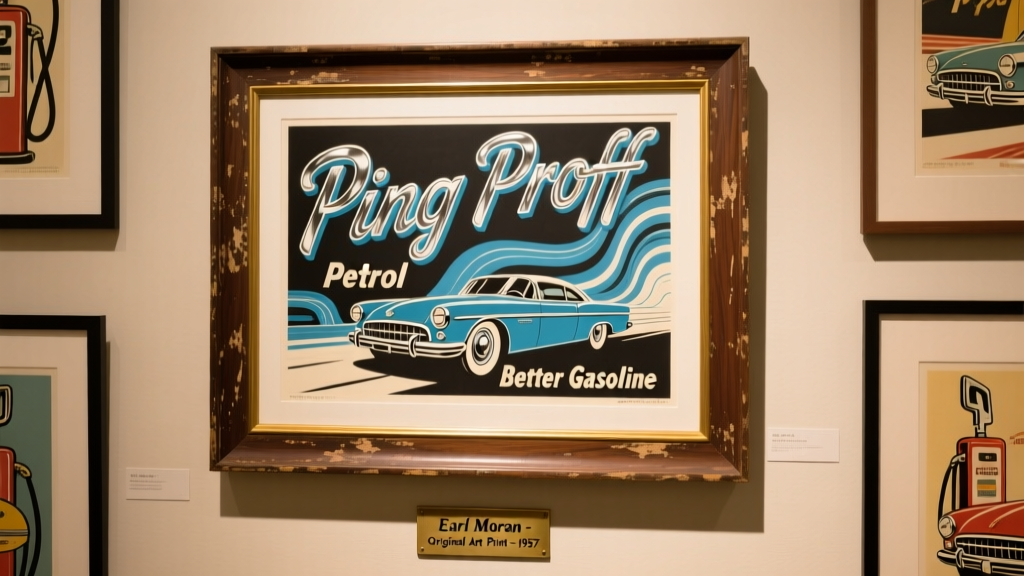
Authenticating and Valuing the 'Ping Proff Petrol Better Gasoline' Poster by Earl Moran: A Technical Analysis of the Framed 14 × 21 Inch Variant
Mid-Century Modern Design: Origins, Icons, and Enduring Market Value
Disneyana Toy Pinocchio Submarine: Authentication, Market Value, and Historical Context
Advertising Tin: Kingsbury Tobacco Peach Pocket — A 4½-Inch Icon of Early 20th-Century American Tobacco Marketing