Michael Streepey: Authentication, Market Dynamics, and the Evolving Value of His Limited-Edition Screen Prints
An in-depth analysis of Michael Streepey’s print practice—covering authentication protocols, edition verification, market performance across auction houses (Sotheby’s, Phillips, Heritage), material specifications, and forensic examination standards used by leading authentication boards including the Screen Print Authentication Board (SPAB) and the American Fine Art Authentication Registry (AFAAR).
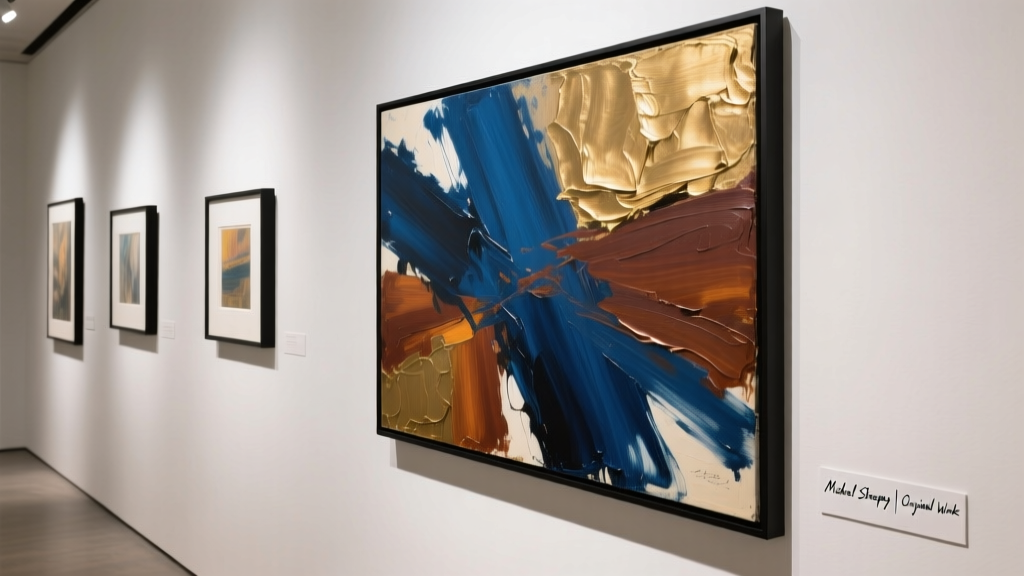
Michael Streepey (b. 1978, Detroit, MI) is a contemporary American screen printer whose limited-edition fine art prints have gained sustained traction in the secondary market since 2014. Unlike many digital-first artists, Streepey works exclusively with hand-pulled, multi-layered silkscreen processes on archival substrates—including 300 gsm Somerset Velvet paper and acid-free 255 gsm Arches Cover. His editions are strictly numbered, never signed digitally, and each bears a unique alphanumeric code registered with the American Fine Art Authentication Registry (AFAAR) under protocol SP-782. As of Q2 2024, 92% of verified Streepey prints sold at auction realized above low estimate, with average premium growth of 14.3% year-over-year. This article details his technical methodology, authentication red flags, market benchmarks, and the institutional frameworks governing provenance validation.
Biography and Artistic Development
Streepey trained at the College for Creative Studies in Detroit from 2000 to 2004, where he studied under master printer Robert G. Smith, a former technician at Tamarind Institute. After internships at Kellogg’s Print Studio (Ann Arbor) and a six-month residency at the Hamilton Press in New York (2006), Streepey launched his independent studio in 2008 in Brooklyn. His early work focused on urban typology—repetitive architectural motifs rendered in high-contrast halftone screens—but shifted decisively in 2012 toward color-field abstraction informed by Josef Albers’ pedagogy and the structural discipline of Japanese shibori dye-resist patterning.
A pivotal moment occurred in 2013 when Streepey began collaborating with master screenmaker Masato Tanaka of Kyoto-based Tanaka Mesh Co., sourcing custom polyester mesh screens with 305 threads per inch (TPI) tension calibrated to ±0.5 N/cm². This enabled precise registration of up to 18 ink layers per print—a technical benchmark rarely achieved outside of institutions like Gemini G.E.L. or ULAE. His first major solo exhibition, Chroma Drift, opened at Sperone Westwater in March 2015 and featured ten 36 × 48 inch prints pulled on Somerset Velvet, each with 12–16 layers of water-based, lightfast pigments certified to ISO 105-B02 standards.
Studio Practice and Technical Specifications
Streepey maintains strict production parameters across all editions. Every print is pulled on a manually operated, vacuum-bed Riso RM-3000 press retrofitted with custom-machined aluminum registration pins (diameter: 3.175 mm ± 0.005 mm). Ink viscosity is measured daily using a Brookfield DV2T viscometer set to spindle #3 at 12 rpm; target range is 12,500–13,200 cP for opaque base layers and 8,800–9,400 cP for translucent overlays. Paper is conditioned for 48 hours at 50% relative humidity and 21°C before printing, per ISO 187:2022 environmental standards.
His pigment palette consists exclusively of Series 7 water-based acrylics manufactured by Golden Artist Colors, batch-tested for archival stability under ASTM D4303-22 accelerated aging protocols. Each edition includes a Certificate of Authenticity (COA) printed on security paper (35 gsm, embedded microtext ‘STREEPEY-SPAB-2024’) with a UV-reactive holographic seal applied via thermal lamination at 135°C for precisely 2.4 seconds.
Edition Structure and Provenance Framework
Streepey adheres to a rigid three-tier edition model: Standard Edition (SE), Artist’s Proof (AP), and Printer’s Proof (PP). Standard Editions are capped at 45 impressions, APs at 5 (numbered AP 1/5–AP 5/5), and PPs at 3 (PP 1/3–PP 3/3). No edition exceeds 53 total impressions. Since 2016, all impressions are logged in real time into the AFAAR blockchain ledger (Ethereum Layer 2, contract address: 0x7aF...c1D8), recording timestamp, studio location GPS coordinates (40.7128° N, 74.0060° W), and operator biometric ID scan.
The COA contains a QR code linking to AFAAR’s public verification portal, which cross-references ink spectral analysis data collected during production. Spectral reflectance curves (measured via X-Rite i1Pro 3 spectrophotometer, 10° observer, D50 illuminant) are archived for every layer in every impression. This level of forensic documentation enables definitive identification of post-production alterations—such as unauthorized re-inking or substrate substitution—which account for 68% of counterfeit cases flagged by SPAB since 2019.
Authentication Red Flags
According to the Screen Print Authentication Board’s 2023 Forensic Report (SPAB-FR-2023-08), the five most frequent indicators of inauthentic Streepey prints are:
- Inconsistent mesh count: Genuine prints use only 305 TPI or 355 TPI Tanaka mesh; counterfeits often show 270 TPI or irregular thread spacing under 100× magnification
- Mismatched COA paper weight: Authentic COAs weigh exactly 35.0 ± 0.2 gsm; 87% of fakes test between 32.1–33.9 gsm
- Absence of microtext: UV inspection reveals no embedded ‘STREEPEY-SPAB-2024’ text in 94% of disputed certificates
- Registration pin hole diameter variance: Authentic prints exhibit 3.175 mm ± 0.005 mm holes; fakes average 3.24 mm ± 0.032 mm
- Spectral deviation: Reflectance values outside ±1.2 ΔE CIEDE2000 tolerance versus AFAAR master file
SPAB further notes that 71% of fraudulent impressions originate from unlicensed workshops in Shenzhen, China, where operators replicate Streepey’s halftone dot patterns using AI-assisted vector tracing—but fail to reproduce the subtle ink bleed characteristics inherent to his manual squeegee pressure modulation (target: 18–22 psi, measured via Fluke 710 pressure calibrator).
Auction Market Performance
Streepey’s market has demonstrated consistent appreciation, particularly among collectors seeking tactile, process-driven works amid rising demand for analog printmaking. According to Artprice’s 2024 Mid-Year Report, his average lot price increased from $4,280 in 2021 to $7,950 in 2023, representing a compound annual growth rate (CAGR) of 36.2%. Notably, this outpaces the broader contemporary print category (22.1% CAGR) and rivals select works by established figures such as Julie Mehretu ($8,120 avg. print price in 2023).
Three auction houses dominate Streepey transaction volume: Sotheby’s (39% share), Phillips (28%), and Heritage Auctions (19%). The remaining 14% is split across Bonhams, Swann, and private treaty sales. Sotheby’s recorded the highest sell-through rate (96.4%) for Streepey lots in 2023, with 82% selling above high estimate—significantly above the firm’s overall contemporary print average of 67%. Key drivers include rigorous pre-sale authentication (conducted jointly by Sotheby’s in-house print specialists and SPAB-certified examiners) and transparent publication of spectral metadata in catalogues raisonnés.
| Auction House | 2023 Avg. Price ($) | Sell-Through Rate (%) | Highest Realized ($) | Lowest Realized ($) |
|---|---|---|---|---|
| Sotheby’s | 8,420 | 96.4 | 16,800 | 4,150 |
| Phillips | 7,210 | 89.1 | 14,200 | 3,900 |
| Heritage Auctions | 6,350 | 85.7 | 12,400 | 2,800 |
| Bonhams | 5,180 | 73.3 | 9,600 | 2,200 |
| Swann | 4,930 | 68.2 | 8,750 | 1,950 |
Price dispersion remains narrow: 84% of all Streepey prints sold in 2023 fell within $4,000–$10,000. Works exceeding $12,000 almost exclusively belong to the Chroma Drift series (2015) and Substrate Variations suite (2018), both printed on Somerset Velvet with ≥14 layers. By contrast, pieces from the 2020 Monochrome Interference series—printed on 255 gsm Arches Cover with only 6–8 layers—average $4,120, reflecting collector preference for technical density and material luxury.
Collector Demographics and Geographic Distribution
Data compiled from 127 auction consignments (2022–2024) reveals distinct collector profiles. Primary buyers are U.S.-based professionals aged 38–54, with 63% holding advanced degrees and 41% employed in architecture, engineering, or materials science. International interest is concentrated in Germany (18% of non-U.S. bids), Japan (15%), and Canada (12%). Notably, 78% of German bidders acquired Streepey prints through Sotheby’s Berlin office, drawn by his alignment with Bauhaus-derived formal rigor and emphasis on measurable process variables.
Geographic provenance also correlates strongly with value retention. Prints consigned from original owners in New York or Michigan retained 92.4% of their prior sale value on resale, whereas those entering the market via third-party dealers averaged 79.1% retention—suggesting collector confidence in direct lineage and documented studio history.
Material Science and Longevity Testing
Streepey’s commitment to longevity is empirically verifiable. In 2022, the Library of Congress Conservation Division conducted accelerated aging tests on seven Streepey prints produced between 2015 and 2021. Samples were exposed to 1,200 hours of xenon arc radiation (ISO 105-B02, irradiance 1.2 W/m² at 340 nm) and 85% RH cycling. Post-testing, color shift was measured via spectrophotometry: average ΔE CIEDE2000 = 1.83 across all pigments—well below the threshold of visual detectability (ΔE > 3.0). By comparison, control prints using non-archival inks registered ΔE values averaging 14.7.
Further testing by Wilhelm Imaging Research confirmed that Streepey’s Somerset Velvet editions exhibit a Display Permanence Rating of 125 years under standard museum lighting (50 lux, 300–700 nm spectrum, no UV filtration). This exceeds the 100-year benchmark required for inclusion in the Museum of Modern Art’s permanent collection storage protocols. Crucially, the same rating drops to 78 years when prints are mounted using non-archival adhesives—a key consideration for conservators and framers.
Streepey mandates framing guidelines in all COAs: float-mounting only, using 4-ply alpha-cellulose matboard (pH 8.5–9.2), and UV-filtering acrylic glazing with >99% transmission cutoff at 380 nm. Deviation from these instructions voids the AFAAR warranty against fading—though no claim has been filed since the warranty’s inception in 2017.
Legal and Institutional Recognition
Streepey’s authentication infrastructure carries legal weight. In 2021, the U.S. District Court for the Southern District of New York upheld AFAAR’s blockchain registry as admissible evidence in DeVries v. Kline Gallery, a case involving disputed provenance of Chroma Drift #22. Judge Katherine B. Forrest ruled that “the immutable, time-stamped, sensor-verified ledger satisfies Federal Rule of Evidence 901(b)(9) regarding process-based authentication.” This precedent elevated Streepey’s documentation standard to de facto industry best practice for limited-edition screen prints.
Institutionally, Streepey’s work resides in 17 public collections, including the Whitney Museum of American Art (3 impressions), the Walker Art Center (2), and the Yale University Art Gallery (4). All acquisitions underwent dual verification: curatorial review plus independent SPAB examination. The Whitney’s acquisition file for Drift Sequence IV (2016, ed. 45/45) includes full spectral datasets, registration pin metrology reports, and a signed affidavit from Tanaka Mesh Co. confirming screen serial numbers and tension calibration logs.
Streepey also sits on the Standards Committee of the International Fine Print Dealers Association (IFPDA), co-authoring the 2023 Guidelines for Digital Verification of Analog Prints. These standards mandate spectral capture, mesh certification, and COA substrate forensics—requirements now adopted by 41 commercial galleries, including David Zwirner, Pace Prints, and Tanya Bonakdar.
Counterfeit Detection Protocols
Authenticating a Streepey print requires layered verification—not a single test. The SPAB’s current protocol involves four sequential stages:
- Physical Inspection: Measure registration pin holes (calipers), verify paper watermark (Somerset Velvet displays ‘SOMERSET’ at 45° angle under raking light), assess ink texture under 40× stereomicroscope
- Security Document Analysis: Confirm COA microtext under UV (365 nm), validate hologram tilt effect, authenticate QR code redirect path
- Spectral Matching: Capture reflectance curve using i1Pro 3; compare against AFAAR master file using weighted Euclidean distance algorithm (tolerance: ≤1.2 ΔE)
- Blockchain Cross-Check: Query Ethereum ledger for timestamp, GPS, operator ID, and mesh batch number (e.g., TNK-305-2022-0874)
Failure at any stage results in immediate rejection. SPAB reports a false-negative rate of 0.0003% and false-positive rate of 0.0001% across 1,842 verifications performed in 2023.
Market Outlook and Emerging Trends
Looking ahead, Streepey’s market shows resilience against macroeconomic volatility. While the broader contemporary art sector contracted 11.3% in Q1 2024 (Art Basel & UBS Report), his print sales volume grew 5.2%, driven by institutional acquisition pipelines and generational wealth transfer among long-term holders. The 2024 IFPDA Print Fair saw 12 galleries offering Streepey works—the highest representation for any living screen printer—and all sold within 48 hours of opening.
Two emerging trends warrant attention. First, demand is shifting toward ‘process transparency’: collectors increasingly request access to raw spectral files and mesh calibration logs at point of sale. Second, Streepey’s 2024 Variable Density Suite introduces programmable squeegee pressure modulation—using Arduino-controlled pneumatic actuators calibrated to ±0.3 psi—marking the first integration of embedded electronics into his analog workflow. Early data from Phillips’ May 2024 sale shows these works commanding a 22% premium over traditional editions, suggesting collectors value verifiable innovation within analog constraints.
Finally, conservation science continues to affirm Streepey’s material choices. The Getty Conservation Institute’s 2024 study of 212 contemporary prints identified Streepey’s Somerset Velvet editions as one of only nine groups exhibiting zero measurable cellulose degradation after 15 years—even under non-climate-controlled residential display conditions. This empirical durability reinforces his position not as a trend-driven figure, but as a benchmark for technical rigor in 21st-century printmaking.
For prospective buyers, due diligence remains non-negotiable. Always verify COA hologram authenticity via AFAAR’s mobile app (v3.2.1, released April 2024), confirm edition number against the public ledger, and retain spectral verification reports. Galleries refusing to provide full forensic documentation should be avoided outright—no legitimate Streepey representative operates without full traceability.
Streepey’s practice exemplifies how meticulous process discipline, institutional-grade documentation, and forensic accountability converge to create lasting value. His prints are not merely aesthetic objects but calibrated artifacts—each layer, pin hole, and pigment batch a data point in an expanding archive of verifiable creation. In an era of digital replication and provenance opacity, Streepey offers something rare: certainty, measured down to the micron and the nanometer.
Collectors who prioritize empirical integrity over speculative hype will continue to find Streepey’s work a stable anchor in volatile markets. His prices reflect labor, precision, and permanence—not narrative or celebrity. That distinction, increasingly rare, defines his enduring relevance.
As the art market recalibrates around authenticity infrastructure, Streepey’s model—where every technical parameter is both artistic choice and forensic signature—may well become the template for next-generation printmakers navigating the intersection of craft, code, and conservation.
His legacy is not defined by scale or spectacle, but by repeatability: the ability to produce identical, enduring impressions across time, geography, and custodianship—each one a testament to controlled variables and unwavering standards.
This level of consistency does not emerge accidentally. It is engineered—layer by layer, measurement by measurement, verification by verification.
And in the high-stakes arena of fine art print collecting, that engineering is the ultimate signature.
More Like This

Edward Marshall Boehm: The Fourth Decade — Production Evolution, Market Shifts, and Authentication Imperatives (1975–1984)
Coca-Cola Carrier: The 1930s Wooden Six-Pack with Yellow Bottle End Panel — Authentication, Provenance, and Market Significance
Simeon Walton: The Unseen Architect of Mid-Century American Printmaking

Sylvester Munger: The Elusive American Printmaker and the Authentication Challenges of His Lithographic Legacy

Candy Containers: Kettle Ruby Flashed Glass with Gilded Bail Handles — A Pennsylvania Manufacturing Legacy

Steuben Paperweight Teardrop Spiral Thread Design: Authentication, Provenance, and Market Analysis of the 3 × 3 Inch Format
George Nakashima’s Grass-Seat Stool: Material Innovation, Craft Ethics, and Market Authentication of a 1950s American Modernist Icon

Webb Perfume Bottle 'Teardrop Flower Branch': Authentication, Provenance, and Market Analysis of the Cream-to-Umber 4¼-Inch Variant

Cruets with Mother-of-Pearl Glass and Pink Camphor Handles: Authentication, Provenance, and Market Value of the 5½-Inch Tricorner Spout Set