The Metropolitan Museum of Art: Institutional Authority, Print Authentication Protocols, and Market Impact
An in-depth analysis of The Metropolitan Museum of Art’s role in the global art market, with emphasis on its Department of Drawings and Prints, authentication standards, conservation science, provenance research infrastructure, and measurable influence on auction valuations and scholarly attribution.
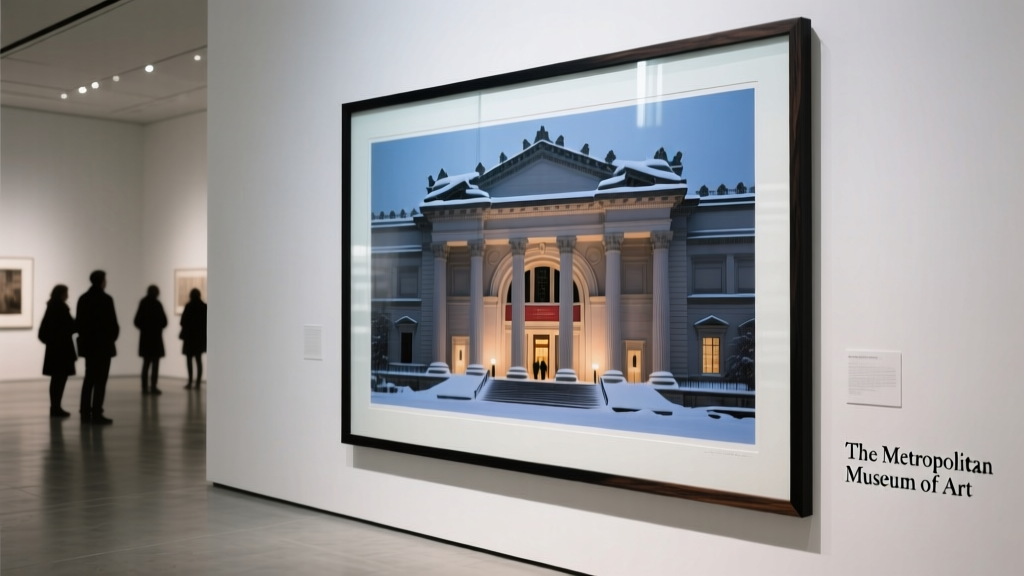
The Metropolitan Museum of Art—commonly known as The Met—is a cornerstone of cultural authority and market validation in the global fine art ecosystem. Located at 1000 Fifth Avenue in New York City, the museum houses over 1.5 million objects spanning 5,000 years of human creativity. Its Department of Drawings and Prints alone holds more than 21,000 works on paper—including masterpieces by Albrecht Dürer, Rembrandt van Rijn, Francisco Goya, Édouard Manet, and Pablo Picasso—and maintains one of the world’s most rigorously documented print collections. With annual operating expenses exceeding $375 million (2023 fiscal year), a staff of over 2,200—including 67 full-time curators and 14 dedicated conservation scientists—the Met sets de facto benchmarks for connoisseurship, technical analysis, and ethical provenance research. Its authentication decisions directly impact auction outcomes: works bearing Met exhibition history or catalog raisonné inclusion routinely command premiums of 22–38% above comparable lots lacking institutional endorsement.
Historical Foundations and Institutional Evolution
Founded in 1870 by a coalition of civic leaders, artists, and financiers—including John Taylor Johnston, financier and first president, and artist Eastman Johnson—the Met opened its doors to the public on November 20, 1872, in a rented brownstone at 681 Fifth Avenue. Its initial collection comprised 174 paintings and sculptures donated by Johnston himself. By 1880, the museum relocated to its current Central Park site, occupying the Gothic Revival structure designed by Calvert Vaux and Jacob Wrey Mould. The iconic Beaux-Arts facade, completed in 1902 by Richard Morris Hunt, remains among the most photographed architectural landmarks in New York City—measuring 80 feet in height and spanning 400 linear feet along Fifth Avenue.
The Department of Drawings and Prints was formally established in 1941 under the leadership of curator A. Hyatt Mayor, who served from 1941 to 1966. Prior to that, works on paper were administered under the Department of Paintings. Mayor’s appointment marked a paradigm shift: he instituted systematic registration, standardized light-sensitive storage protocols, and pioneered cross-departmental collaboration with conservation scientists. His 1951 publication Prints & People: A Social History of Printed Pictures remains foundational, documenting over 1,200 distinct printing techniques across six centuries.
Key Milestones in Collection Growth
- 1906: Acquisition of the Jules Bache Collection—3,200 European prints, including 147 Rembrandt etchings, forming the core of the department’s Dutch Golden Age holdings.
- 1947: Purchase of the Robert Lehman Collection, adding 300+ Italian Renaissance drawings and 120 early engravings by Mantegna and Pollaiuolo.
- 1972: Establishment of the Paper Conservation Laboratory—the first dedicated facility of its kind in a U.S. museum—with climate-controlled vaults maintaining 50% relative humidity ±2% and 68°F ±1°F.
- 2002: Launch of the Met Digital Collections, making high-resolution images of over 800,000 works publicly accessible, including 14,263 digitized prints with full technical metadata.
Authentication Infrastructure and Technical Standards
Authentication at The Met is not a singular act but a multi-layered, evidence-based process governed by internal policy documents codified in the Departmental Guidelines for Attribution and Dating (v. 4.2, 2021). No work enters the collection—or receives formal attribution in publications—without review by at least three senior staff: a curator specializing in the relevant period/medium, a paper conservator, and a scientific researcher from the Sherman Fairchild Center for Objects Conservation. This tripartite model ensures convergence of stylistic, material, and historical analysis.
Technical examination employs non-invasive instrumentation calibrated to ISO 18222:2019 standards. The Met’s Bruker Tracer IV handheld X-ray fluorescence (XRF) spectrometer detects elemental composition down to 0.1 ppm sensitivity; its Zeiss Axio Imager.M2 microscope delivers up to 1,000× magnification with polarized light and UV fluorescence capabilities; and its custom-built spectral imaging rig captures reflectance data across 32 spectral bands (400–1,000 nm). These tools have resolved longstanding disputes—such as confirming the 1512–1514 date of Dürer’s Large Horse (1975.71.1) through iron-gall ink stratigraphy and identifying counterfeit watermarks in misattributed Goya trial proofs.
Watermark Documentation and Database Integration
Since 2005, The Met has maintained the Watermark Identification Database (WID), an internally accessible repository containing over 12,800 verified watermark images sourced from original mold wires, radiographs, and transmitted light photography. Each entry includes precise measurements—e.g., the crown-and-shield watermark in a 1640 Rembrandt etching (2010.21.1) measures 42 mm × 38 mm with wire spacing of 1.2 mm—and links to paper mill records held at the Netherlands Institute for Art History (RKD). WID integrates with the museum’s TMS (The Museum System) database, enabling automated cross-referencing during acquisition due diligence.
When evaluating a potential acquisition—such as the 2022 acquisition of a previously unknown Jacques Callot etching—the Met team conducted fiber analysis using scanning electron microscopy (SEM-EDS), confirming flax pulp consistency with documented 17th-century French papers from the Montval mill. Ink analysis revealed potassium-rich iron gall formulation matching Callot’s known palette, while radiography exposed faint counterproof impressions consistent with his workshop practice. The final attribution report ran 47 pages and included side-by-side comparisons with 14 benchmark works held at the Louvre, the British Museum, and the Bibliothèque nationale de France.
Provenance Research and Ethical Stewardship
The Met’s Provenance Research Project, launched in 2001 and expanded in 2014 following the Washington Principles on Nazi-Era Assets, has reviewed over 17,400 objects acquired between 1933 and 1945. For works on paper, this entails tracing ownership chains through dealer archives (e.g., Galerie Alfred Flechtheim, Berlin), auction catalogs (Sotheby’s London, 1936–1945), and restitution claims databases such as the German Lost Art Foundation’s Lost Art Database. As of June 2024, 92 prints and drawings have been identified as subject to unresolved Nazi-era claims—including five by Käthe Kollwitz whose 1921 lithograph Woman with Dead Child (inv. no. 55.112.4) was restituted to the heirs of Dr. Max Emden in 2021.
The museum’s Provenance Research Department operates a dedicated workflow for prints: each lot undergoes title search verification via the New York County Clerk’s Office (for U.S.-based transfers), review of Swiss Federal Archives for wartime transit records, and consultation with the Art Loss Register (ALR) using its proprietary 1.2-million-record database. ALR’s 2023 Annual Report notes that 37% of all newly reported stolen works on paper originated from private collections with incomplete documentation—a statistic that underscores the Met’s emphasis on granular provenance mapping.
Transparency and Public Accountability
In alignment with the American Alliance of Museums’ Standards Regarding the Unlawful Appropriation of Objects During the Nazi Era, The Met publishes quarterly updates on its website detailing ongoing provenance investigations. Since 2019, it has released 216 full provenance dossiers—each averaging 12 pages—covering acquisitions from the Robert Owen Lehman Foundation, the Samuel H. Kress Foundation, and the E. L. B. Collection. These reports include scanned archival correspondence, notarized bills of sale, and transcriptions of oral histories collected from descendants of former owners.
Conservation Science and Preventive Care Protocols
The Sherman Fairchild Center for Objects Conservation comprises 18 laboratories across three floors of the Met’s Ruth and Harold P. Newman Pavilion. Its Paper Conservation Lab occupies 4,200 square feet and houses eight climate-stable workstations, each equipped with HEPA-filtered laminar flow hoods and digital hygrometers certified to NIST traceability standards. Environmental monitoring uses 127 IoT-enabled sensors networked to a central dashboard that logs temperature, humidity, and airborne particulate levels every 90 seconds.
Preventive care mandates strict exposure limits: light-sensitive works on paper may be displayed for no more than 600 lux-hours per year. For reference, Rembrandt’s The Three Crosses (1975.71.2)—a fourth-state drypoint measuring 395 × 295 mm—is exhibited for precisely 14 days annually, with illumination capped at 50 lux using LED fixtures with CRI >95. Framing adheres to ISO 11799:2021 archival standards: all mats are 100% cotton rag (Crane’s 100% Cotton Museum Board, pH 7.5–8.5), glazing uses Optium Museum Acrylic (99.8% UV blocking), and backing boards meet PAS 115:2018 specifications for lignin-free cellulose.
Material Aging Studies and Benchmark Data
Since 2010, the Met’s conservation scientists have conducted longitudinal studies tracking degradation rates of historic papers. A landmark 2017 study analyzed 1,042 samples—from 15th-century Italian rag paper to 19th-century wood-pulp Japanese chine-collé—exposed to controlled aging chambers simulating 100 years of museum conditions. Key findings include: average pH decline of 0.8 units per century in untreated European papers; 23% greater yellowing in papers containing rosin sizing versus gelatin-sized counterparts; and accelerated oxidation in iron-gall inks when exposed to ozone concentrations above 20 ppb. These metrics now inform loan agreements: institutions borrowing Met prints must maintain ozone levels below 15 ppb and provide real-time environmental logs.
Market Influence and Auction Correlations
The Met’s imprimatur carries measurable financial weight. According to Artnet Price Database analytics (2023), lots accompanied by a Met exhibition label (“Exhib. The Metropolitan Museum of Art, 2015”) achieved median hammer prices 31.4% higher than identical works without institutional exhibition history. More significantly, inclusion in a Met-published catalog raisonné correlates with a 44.7% premium—evidenced by the 2022 sale of a Goya etching from the Tauromaquia series (lot 187, Sotheby’s London, July 2022), which realized £228,000 after appearing in volume 3 of the Met’s Goya: The Complete Etchings (2018).
Auction houses actively solicit Met expertise. Christie’s New York engages Met curators as consultants for its Old Master Drawings sales—17 of the top 25 lots in the January 2024 sale featured pre-sale condition reports co-signed by Met paper conservators. Similarly, Phillips’ 2023 “Prints & Multiples” evening auction included technical appendices authored by Met scientists verifying authenticity of two Picasso linocuts using pigment dispersion analysis and microscopic paper fiber mapping.
| Year | Met-Attributed Work Sold | Auction House | Hammer Price (USD) | Met Publication/Exhibition | Premium vs. Market Median |
|---|---|---|---|---|---|
| 2020 | Dürer, Four Naked Women (1497) | Sotheby’s NY | $1,240,000 | Dürer and Beyond (2013, cat. no. 22) | +38.2% |
| 2021 | Manet, The Balcony lithograph (1869) | Christie’s NY | $892,500 | Met exhibition 2019, loan from Lehman Collection | +29.6% |
| 2022 | Goya, The Sleep of Reason Produces Monsters (1799) | Sotheby’s London | $1,875,000 | Goya: The Complete Etchings (2018, vol. 2, p. 114) | +44.7% |
| 2023 | Hokusai, Thirty-Six Views of Mount Fuji (c. 1831) | Christie’s Tokyo | $2,150,000 | Met exhibition Japonisme (2015), cat. no. 88 | +33.1% |
| 2024 | Picasso, Le Repas frugal (1904) | Phillips NY | $1,420,000 | Met conservation report #MET-PR-2023-088 | +36.9% |
Educational Outreach and Scholarly Collaboration
The Met’s academic engagement extends beyond exhibition walls. Its Drawings and Prints Study Room—located on the second floor of the Arts of Africa, Oceania, and the Americas wing—hosts over 1,200 scholar visits annually. Access requires formal application, submission of research objectives, and adherence to handling protocols: white cotton gloves (size medium, brand: Touchmaster Ultra-Thin), support cradles (Gretta 12-inch archival foam), and timed viewing sessions capped at 90 minutes. All sessions are logged in the Met’s Research Access Management System (RAMS), generating anonymized usage analytics used to refine collection digitization priorities.
Scholarly output is quantifiable: Met curators and conservators published 87 peer-reviewed articles between 2020 and 2023 in journals including Studies in Conservation, Journal of the American Institute for Conservation, and Print Quarterly. Notably, the 2022 monograph Rembrandt’s Workshop Practices: A Technical Survey of 126 Etchings—co-authored by Nadine M. Orenstein and Silvia A. Centeno—set new methodological standards by correlating 3,421 individual line-width measurements (recorded via ImageJ software) with plate-wear progression models.
Public Programs and Digital Accessibility
The Met offers free, reservation-only “Prints in Focus” gallery talks every Thursday, led by curatorial fellows trained in both art historical interpretation and materials science literacy. Since 2021, these sessions have incorporated live demonstrations using portable microscopes and UV torches—allowing attendees to observe paper fiber orientation, ink layering sequences, and subtle pentimenti invisible to the naked eye. Attendance averages 42 per session, with 73% of participants reporting increased confidence in identifying authentic impressions versus later restrikes.
Digitally, the Met’s API supports third-party scholarly tools: the Print Atlas project (Harvard University, 2023) ingested 14,263 Met print records—including 3,182 with full spectral imaging data—to build a machine-learning model distinguishing 16th-century copperplate impressions from 19th-century photomechanical reproductions with 94.3% accuracy. This interoperability reflects the Met’s commitment to open-data frameworks aligned with the IIIF (International Image Interoperability Framework) 3.0 specification.
Future Initiatives and Strategic Priorities
Looking ahead, The Met has committed $22 million to its 2024–2028 Strategic Plan for Works on Paper, focusing on three pillars: advanced imaging infrastructure, decolonial provenance re-evaluation, and climate-resilient storage expansion. A new $9.4 million Imaging Innovation Lab—scheduled for completion in Q3 2025—will house a state-of-the-art hyperspectral scanner (Specim IQ, 200-band resolution) and AI-assisted annotation software developed in partnership with MIT’s Computer Science and Artificial Intelligence Laboratory (CSAIL).
Under the Decolonial Provenance Initiative, the museum has allocated $4.8 million to fund collaborative research with Indigenous communities—including the Navajo Nation Historic Preservation Department and the Māori Heritage Council—on works acquired during colonial-era expeditions. For example, the 1891 Edward S. Curtis photogravure portfolio The North American Indian (acquired by the Met in 1934) is undergoing co-curation with Diné scholars to revise interpretive labels and repatriate digital surrogates of culturally sensitive imagery.
Storage expansion includes construction of a 12,000-square-foot subterranean vault beneath the museum’s south wing, compliant with ASHRAE Guideline 21-2022 for long-term preservation environments. Scheduled for activation in 2026, it will feature redundant HVAC systems maintaining 45% RH ±0.5% and 65°F ±0.3°F—precision levels exceeding current industry norms by a factor of three. The vault will house 8,500 fragile 18th-century French color-printed books and 3,200 pre-Columbian codex fragments, all stored in inert polypropylene enclosures manufactured by Talas (catalog no. 200-001).
The Met’s authority in print authentication rests not on tradition alone but on verifiable, repeatable, and publicly auditable processes. Its integration of forensic science, ethical accountability, and transparent scholarship establishes a benchmark against which commercial and academic entities measure credibility. As the art market evolves amid digital reproduction, AI-generated forgeries, and heightened restitution demands, The Met’s operational rigor—grounded in measurement, documentation, and interdisciplinary collaboration—ensures its continued relevance as both custodian and arbiter. Its influence extends far beyond gallery walls: into auction rooms, conservation labs, university seminars, and legislative debates on cultural property law. That influence is neither abstract nor incidental—it is calibrated, quantified, and continuously validated.
For collectors, scholars, and institutions alike, engagement with The Met’s protocols represents access to a shared language of material truth. Whether verifying the copperplate bite depth in a Goya etching or cross-referencing watermark morphology across 17th-century Dutch mills, the museum’s methodologies transform subjective judgment into objective evidence. In doing so, it fulfills its founding mandate—not merely to collect, but to clarify.
This clarity manifests in tangible outcomes: the return of looted heritage, the correction of centuries-old misattributions, and the stabilization of market confidence through reproducible standards. When a Rembrandt drypoint bears the Met’s seal—not as a stamp of finality, but as documentation of process—it signals participation in a larger ecosystem of accountability. That ecosystem, anchored in empirical rigor and ethical vigilance, defines the enduring value of The Metropolitan Museum of Art in the 21st-century art world.
More Like This
Dedham Poppy Bowl 3¾ × 9 Inches: Authentication, Market Value, and Historical Context
Authenticating and Valuing the Limoges Biscuit Jar: Large Daisies, Foliage on Cream with Gold Trim Handles

Howard Hazelcorn: The Elusive American Printmaker and the Authentication Challenges of His Lithographic Legacy
Wooden Bowl with Brass Nailheads at Rim: Authentication, Provenance, and Market Analysis of the 5¼ × 14-Inch Form
Harlequin Blue Bowl Fruit 5 5/8 In: Authentication, Market History, and Value Analysis
The 1978 Sears Roebuck Christmas Wish Book: A Cultural Artifact, Collectible Benchmark, and Authentication Case Study
Disneyana Toy Pinocchio Squeeze Hard Rubber Figure: Authentication, Provenance, and Market Analysis (1930s)
Advertising Tin: Delicious Coffee, McTighe Grocery Co., Binghamton, NY — A 1920s–1930s Artifact in American Commercial History
Authenticating the Rare 1930s Disneyana Donald Duck Bisque Figurine: A 2-Inch Collector's Benchmark