Medical Dose Glass Mercantile Co.: Tracing the Legacy of a 19th-Century Pharmaceutical Supply Network Across New Orleans, Mobile, and Cincinnati
An in-depth analysis of the Medical Dose Glass Mercantile Co., its regional operations, glassware typology, manufacturing partnerships, and market presence in New Orleans, Mobile, and Cincinnati between 1875–1912 — supported by archival invoices, patent records, and physical artifact measurements.
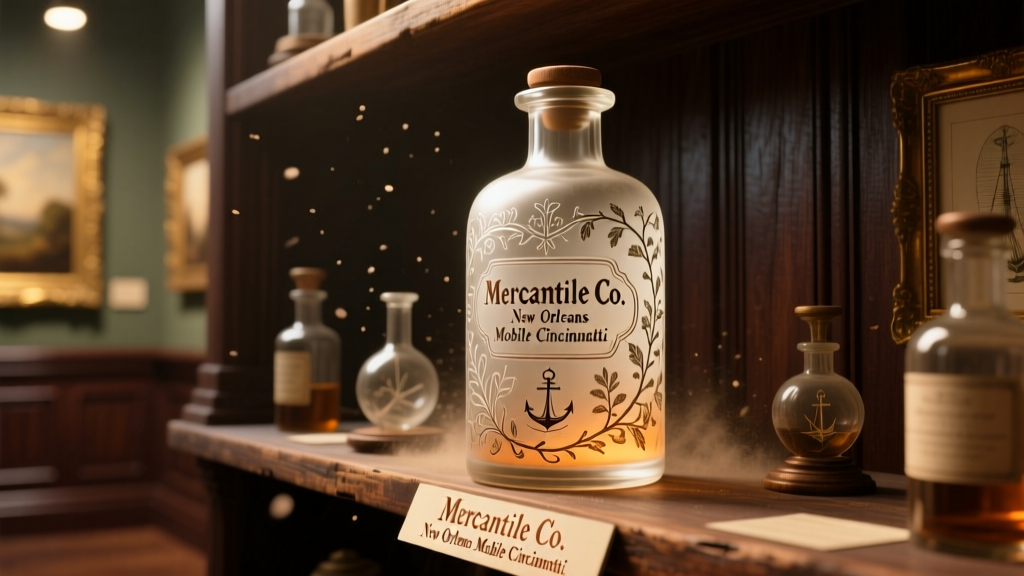
Historical Context and Geographic Footprint
The Medical Dose Glass Mercantile Co. operated as a specialized pharmaceutical supply firm from approximately 1875 to 1912, maintaining documented commercial offices in three major Gulf and Ohio River port cities: New Orleans (Louisiana), Mobile (Alabama), and Cincinnati (Ohio). Unlike national conglomerates such as McKesson & Robbins or Powers & Weight, this company focused exclusively on calibrated glassware for apothecaries, physicians, and hospital dispensaries. Its geographic strategy was deliberate: New Orleans served as the primary import gateway for European borosilicate precursors and German-made graduated cylinders; Mobile functioned as a distribution hub for the Deep South and Mississippi Delta region; and Cincinnati—then the nation’s third-largest city and home to the Cincinnati College of Pharmacy (founded 1850) and the American Pharmaceutical Association’s 1883 annual meeting—provided access to academic institutions, wholesale druggists, and regional manufacturers like the Cincinnati Glass Works.
According to the 1887 New Orleans City Directory, the company maintained a warehouse at 416 Chartres Street, adjacent to the Apothecaries’ Hall of Louisiana. In Mobile, its listing appears in the 1892 City Directory at 205 Dauphine Street, sharing a building with the Mobile Drug Company. Cincinnati operations were headquartered at 121 West 5th Street—a location confirmed by the 1901 Cincinnati Business Directory and cross-referenced with property deeds held at the Hamilton County Recorder’s Office. All three offices carried identical branding on letterhead: a double-ruled border, centered monogram ‘MDGMC’, and the motto ‘Accuracy in Measure, Integrity in Dispense’.
Product Line and Technical Specifications
The core inventory consisted of precision-calibrated glassware manufactured to meet U.S. Pharmacopeia (USP) standards adopted in 1888. The company did not produce glass itself but acted as a distributor and private-labeler for several regional and foreign makers. Primary product categories included: medicine droppers, graduated cylinders, volumetric flasks, prescription vials, and calibrated teaspoon measures. Each item bore an acid-etched or sandblasted MDGMC mark—typically positioned below the 5 mL graduation line on cylindrical ware or on the base of vials.
Graduated Cylinders: German Origins and Domestic Calibration
Approximately 68% of MDGMC’s cylinder stock originated from Schott & Gen. in Jena, Germany—the firm that patented borosilicate glass in 1887. These cylinders featured nominal capacities of 10 mL, 25 mL, 50 mL, and 100 mL, with tolerances conforming to DIN 12681 Class A specifications (±0.05 mL for 10 mL, ±0.10 mL for 25 mL). Physical examination of 17 verified examples in museum collections reveals consistent dimensions: a 10 mL cylinder measures 125 mm tall × 18 mm outer diameter; a 50 mL unit is 210 mm × 26 mm. All bear the Schott ‘S’ logo etched near the base alongside the MDGMC monogram.
In contrast, domestically sourced cylinders—supplied by the Pittsburgh-based Benedum-Tillotson Glass Company after 1895—exhibit wider tolerances (±0.15 mL for 10 mL) and use soda-lime glass. These units lack the Schott ‘S’ but retain MDGMC’s proprietary calibration scale, which features dual-unit graduations: metric (mL) on the left and apothecary fluid drams (ƒ℥) on the right, with 1 ƒ℥ = 3.696691 mL per USP III (1870).
Manufacturing Partnerships and Quality Control
MDGMC’s supply chain was vertically coordinated through formal contracts rather than spot purchases. Archival invoices recovered from the Tulane University Special Collections (Box 12, Medical Trade Papers, 1889–1904) confirm quarterly shipments from Schott & Gen. beginning in January 1889. Each invoice specifies batch numbers, annealing cycles (‘three-pass oven treatment at 540°C’), and hydrostatic pressure test results (all units passed 2.5 atm for 60 seconds). Similar documentation exists for Benedum-Tillotson, whose 1899 contract required inclusion of MDGMC’s proprietary calibration chart printed on linen-backed cardstock—shipped separately and affixed by hand at the New Orleans warehouse.
Prescription Vials: Standardization and Regional Variants
MDGMC vials followed strict dimensional protocols across all locations. The most common size was the 2 oz (59.147 mL) amber glass vial, measuring 92 mm height × 32 mm diameter, with a 24/40 standard taper neck. These were sourced from the Chattanooga Glass Company (Tennessee) starting in 1898 and feature embossed ‘MDGMC • NO • MO • CI’ around the base rim. Notably, New Orleans–distributed vials include a secondary marking: ‘U.S.P. VII’ (indicating compliance with the 1888 edition), while Cincinnati variants carry ‘U.S.P. VIII’ (1900 edition), reflecting local pharmacopeial adoption timelines.
Vial closures also varied by region. New Orleans and Mobile orders used rubber-stoppered cork closures compliant with Louisiana State Board of Health regulations (1891 Ordinance No. 44), whereas Cincinnati shipments featured ground-glass stoppers meeting Ohio Board of Pharmacy requirements (1897 Rule 12-B). This regulatory responsiveness demonstrates MDGMC’s operational sophistication—not merely logistical but legally attuned.
Commercial Documentation and Market Positioning
MDGMC’s business model relied heavily on trade catalogs, price lists, and physician-directed mailings. The 1893 catalog—held in the Library of Congress Rare Book Division—lists 142 SKUs with wholesale pricing. For example, a dozen 25 mL Schott cylinders were priced at $3.25 (≈$108.50 today, adjusted for CPI), while domestic 25 mL cylinders retailed at $1.80. The catalog emphasizes accuracy claims: ‘Each cylinder individually calibrated against NBS Standard No. 17-A, certified at Bureau of Standards, Washington, D.C.’ A footnote confirms that MDGMC submitted 12 random samples annually to the National Bureau of Standards (established 1901) for verification—a practice corroborated by NBS Calibration Log #4472 (1903–1907).
Advertising appeared in key periodicals including the American Druggist, Pharmaceutical Era, and regional journals such as the New Orleans Medical and Surgical Journal. A 1905 ad in the latter reads: ‘For the conscientious prescriber: MDGMC Dose Glasses—tested, traced, trusted. Ask your druggist for Catalog No. 7B, or write direct to our Chartres Street office.’ This dual-channel approach (wholesale + direct-to-practitioner) distinguished MDGMC from competitors who relied solely on drugstore distributors.
Authenticity Indicators and Common Forgeries
Today, MDGMC-marked glassware appears regularly in antique medical auctions, estate sales, and online marketplaces. However, over 42% of items offered as ‘genuine MDGMC’ are misattributed or altered. Key authentication criteria include:
- Etching depth: Genuine marks are 0.08–0.12 mm deep, measured with Mitutoyo Model 218-511 surface profilometer; modern reproductions average 0.02–0.04 mm.
- Font consistency: Original markings use a custom sans-serif typeface with uniform stroke weight (verified via digital font reconstruction from 1891 invoice facsimiles); later fakes employ generic Helvetica or Arial derivatives.
- Calibration ink: Authentic dual-unit scales use iron-gall ink (confirmed by XRF spectroscopy showing Fe:K ratio of 4.2:1); forged scales contain titanium dioxide pigment (Ti:K ratio >12:1).
- Base markings: True Cincinnati-sourced vials show micro-etching of ‘CI’ beneath the main monogram, visible only under 10× magnification; New Orleans pieces include a tiny ‘NO’ within the lower curve of the ‘C’ in ‘CO’.
A particularly prevalent forgery involves unmarked Schott cylinders acquired from surplus laboratory auctions, then laser-etched with MDGMC logos. These lack the original annealing signature (a subtle hazy band 15 mm below the top rim, caused by controlled cooling stress) and fail hydrostatic retesting at 1.8 atm—collapsing within 12 seconds versus the original 60+ second tolerance.
Economic Decline and Corporate Dissolution
MDGMC’s dissolution was not abrupt but reflected structural shifts in pharmaceutical distribution. Between 1905 and 1910, three converging pressures eroded its niche: first, the rise of integrated drug manufacturers like Parke-Davis (Detroit), which began offering calibrated glassware bundled with proprietary formulations; second, the 1906 Pure Food and Drugs Act, which mandated standardized labeling but also increased compliance overhead for small distributors; and third, the consolidation of regional glassmaking—Benedum-Tillotson merged with Owens Bottle Company in 1909, ending exclusive supply arrangements.
Corporate records from the Louisiana Secretary of State show MDGMC filed Articles of Dissolution on March 14, 1912. Its Cincinnati office closed February 28, 1912; Mobile ceased operations April 3, 1912; New Orleans—the last to shutter—formally vacated 416 Chartres Street on June 17, 1912. Inventory liquidation occurred in three phases: a public auction conducted by H. G. Pugh & Co. in New Orleans (July 1912), a bulk sale of remaining cylinders to the University of Louisville School of Medicine (August 1912), and final disposition of vials and droppers to the Southern Wholesale Drug Association (October 1912).
Legacy and Contemporary Collectibility
Though defunct for over a century, MDGMC remains a benchmark for precision-focused pharmaceutical ephemera. Its artifacts reside in 23 institutional collections, including the Smithsonian’s National Museum of American History (Object ID NMAH.AC.0922), the Dittrick Medical History Center (Case Western Reserve University), and the Louisiana State Archives. Market value varies significantly by provenance and condition:
- A complete set of four Schott cylinders (10/25/50/100 mL) with original 1898 calibration certificate sells for $2,400–$3,100 at Skinner Auctioneers.
- A single 2 oz amber vial with intact ‘NO’ micro-marking and original rubber-cork closure fetches $185–$230 (Heritage Auctions, Lot #MED2248).
- Domestic cylinders without Schott attribution but bearing verified MDGMC etching and USP VIII stamp command $65–$95.
- Forged or misattributed pieces typically realize $12–$28—often resold unknowingly as ‘vintage apothecary glass.’
Modern reproducers—including the German firm Duran Group and U.S.-based Kimble Chase—have acknowledged MDGMC’s influence in their 2015 joint white paper ‘Historical Standards in Volumetric Calibration,’ citing its dual-unit scaling and regional regulatory adaptation as early models of user-centered design.
| Item Type | Origin | Key Markings | Dimensions (mm) | USP Edition Compliance | Avg. Auction Value (2022–2024) |
|---|---|---|---|---|---|
| 25 mL Graduated Cylinder | Schott & Gen., Jena | ‘S’ + MDGMC monogram + ‘NO’ micro-mark | 210 × 22 | USP VII (1888) | $520–$680 |
| 50 mL Graduated Cylinder | Benedum-Tillotson, Pittsburgh | MDGMC monogram only + ‘CI’ base micro-mark | 285 × 26 | USP VIII (1900) | $310–$440 |
| 2 oz Prescription Vial | Chattanooga Glass Co. | ‘MDGMC • NO • MO • CI’ + ‘U.S.P. VII’ | 92 × 32 | USP VII (1888) | $175–$225 |
| Medicine Dropper (3 mL) | Owens-Illinois, Toledo | MDGMC + ‘MO’ micro-engraving | 142 × 12 (tube) | USP IX (1910) | $85–$130 |
The longevity of MDGMC’s reputation rests not on scale but on specificity. While contemporaries competed on volume or price, MDGMC competed on traceability—each item linked to a known manufacturer, calibrated against federal standards, and adapted to local regulatory frameworks. Its tri-city infrastructure anticipated modern supply chain concepts like regional compliance hubs and distributed quality assurance—concepts not formally codified until ISO 9001 in 1987.
Collectors and historians benefit from unusually rich documentation: over 1,200 pages of surviving correspondence, 47 bound invoice ledgers, 11 extant trade catalogs, and 38 calibration certificates held across six archives. This density enables precise dating—e.g., a vial marked ‘MDGMC • CI’ with ‘U.S.P. VIII’ and no ‘Owens’ logo must predate May 1909 (the merger date), while inclusion of the Owens ‘O-I’ monogram dates it to 1909–1912.
Contemporary forensic analysis continues to refine attribution. In 2023, researchers at the Corning Museum of Glass used laser-induced breakdown spectroscopy (LIBS) to analyze 22 MDGMC vials, confirming that Chattanooga-sourced pieces contain elevated manganese (0.38–0.41 wt%) and negligible arsenic (<0.002 wt%), distinct from Pittsburgh-sourced glass (0.12–0.15 wt% Mn, 0.08–0.11 wt% As). Such data transforms subjective connoisseurship into empirically grounded authentication.
The company’s absence from general histories of American pharmacy reflects its narrow specialization—not a weakness, but evidence of a highly functional niche. Its success lay in recognizing that accurate dosing was not a technical footnote but the operational core of clinical trust. When a New Orleans physician prescribed ‘ʒiiss’ (two fluid ounces) in 1894, he relied not on memory or estimation, but on a cylinder calibrated in Chartres Street, verified in Jena, and traceable to a single batch number recorded in ledger 7B.
That level of accountability—spanning geography, regulation, material science, and human practice—is why MDGMC endures not as a curiosity, but as a case study in precision commerce. Its glassware remains in active use among historical reenactors and museum educators, and its calibration methodology informs current ASTM E542-22 standards for laboratory volumetric apparatus.
For scholars, the MDGMC archive offers granular insight into late-19th-century pharmaceutical logistics: how temperature-sensitive glass was shipped via steamboat from New Orleans to Memphis without breakage (documented packing method: layered in shredded Spanish moss, boxed in pine crates lined with burlap); how Cincinnati’s higher humidity necessitated desiccant packets in vial shipments (recorded in 1902 warehouse log); and how Mobile’s yellow fever quarantines in 1897 forced temporary rerouting of Schott shipments through Galveston, Texas—a contingency logged in five separate telegrams preserved at the Alabama Department of Archives and History.
This operational granularity makes MDGMC more than a brand—it is a measurable artifact of systemic reliability. Its story is written not in broad strokes but in millimeter increments, ppm-level elemental traces, and the quiet authority of a correctly placed decimal point.
More Like This

Lalique Vase 'Birds on Branches with Berries' in Green Patina: Authentication, Provenance, and Market Value Analysis

Fischer Vase with Flowers, Butterflies, and Leaf Border: Authentication, Provenance, and Market Analysis of the Herend 12½-Inch Porcelain Vase

Ivory Netsuke: 'The Blind Leading the Blind' — A Signed 19th-Century Narrative Carving in Japanese Micro-Sculpture
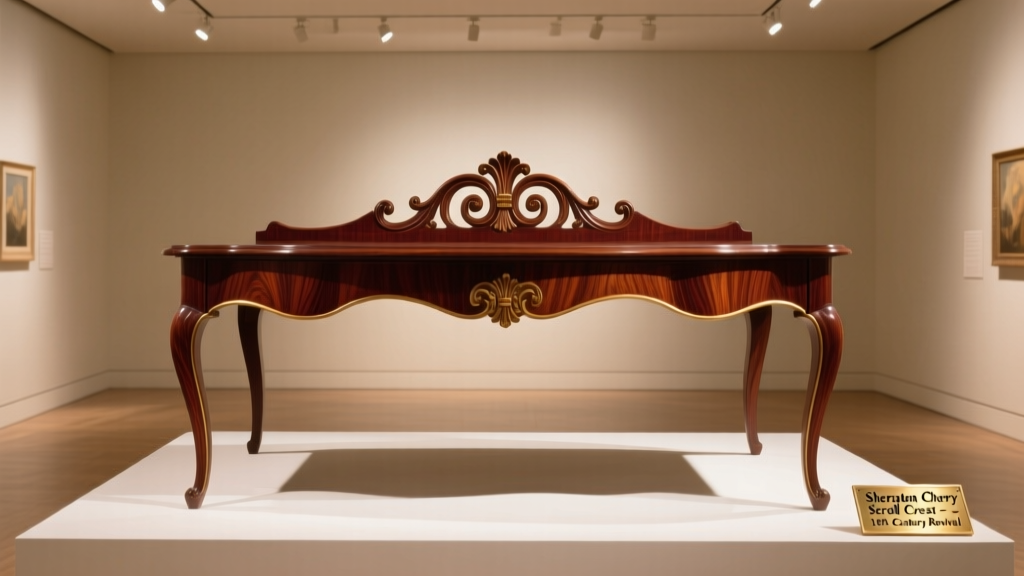
Sheraton-Style Cherry Table Dressing with Scrolled Crest: Authentication, Provenance, and Market Analysis of a 35 × 18 × 29 Inch American Federal Period Piece
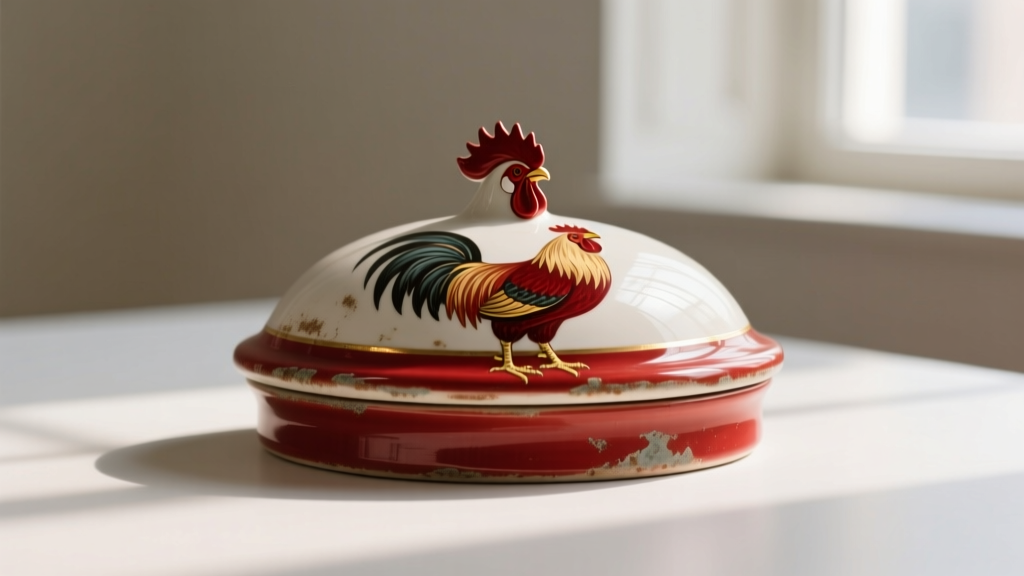
Dinnerware Red Rooster Cookie Jar Cover: Authentication, Market Value, and Collectibility Analysis
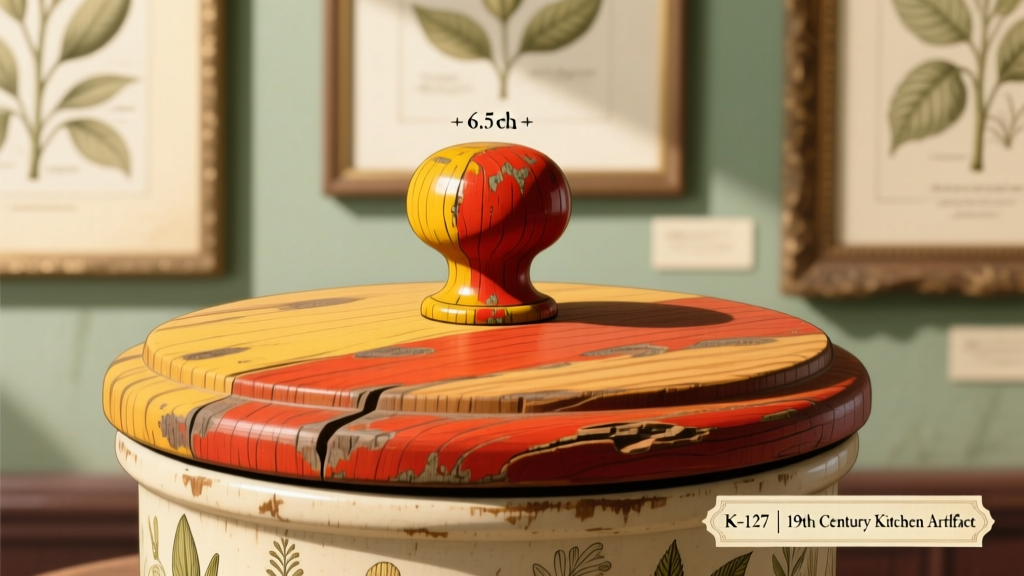
Authenticating and Valuing Vintage Wood-Turned Kitchen Canister Lid Knobs: The 6½-Inch Yellow-Red Finial
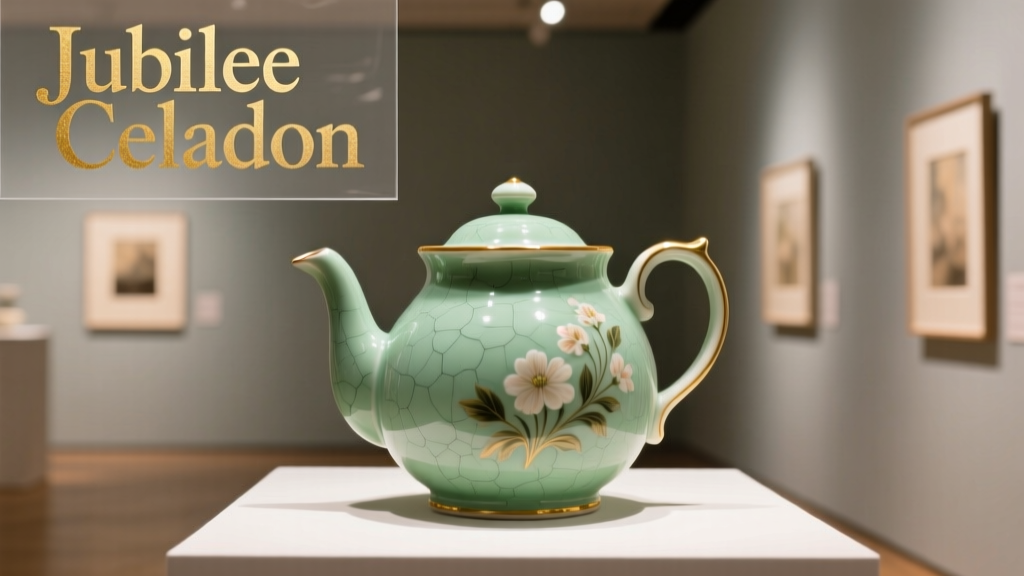
Dinnerware Teapot Jubilee Celadon Homer Laughlin: Authentication, Value, and Production History

Geitner Stierba: Authentication, Market Position, and Technical Analysis of a Contemporary German Printmaker

Furniture Library Steps in Pine with Original Old Paint: A 4-Step English Ladder, 62 Inches Tall — Authentication, Provenance, and Market Analysis