Mayan Art: Iconography, Materials, and Authentication in the Global Market
A rigorous analysis of Pre-Columbian Maya visual culture—covering stylistic evolution, material science, provenance challenges, and forensic authentication methods used by major institutions including the Metropolitan Museum of Art, the British Museum, and the Museo Nacional de Antropología.
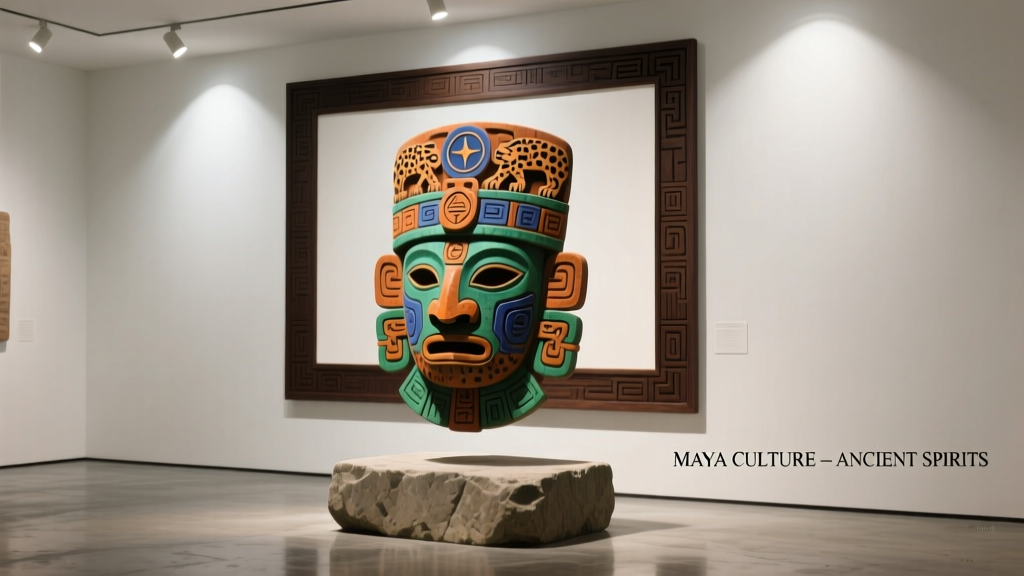
The Maya civilization produced one of the most sophisticated and enduring artistic traditions in the Americas, spanning over 2,500 years from the Middle Preclassic (1000 BCE) to the Postclassic (1539 CE). Their art encompassed monumental stone sculpture, polychrome ceramics, hieroglyphic codices, jade mosaics, and stucco reliefs—all deeply embedded in cosmology, royal ideology, and ritual practice. Unlike later colonial imitations or 20th-century forgeries, authentic Maya works exhibit precise glyphic syntax, consistent pigment layering, and material signatures verifiable through X-ray fluorescence (XRF), thermoluminescence (TL), and micro-CT scanning. This article examines stylistic chronology, technical production, market vulnerabilities, and the forensic protocols employed by leading museums and auction houses—including Sotheby’s, Christie’s, and Heritage Auctions—to distinguish genuine artifacts from sophisticated fakes.
Chronological Framework and Stylistic Evolution
Maya art is not monolithic but evolves across three principal periods: Preclassic (2000 BCE–250 CE), Classic (250–900 CE), and Postclassic (900–1539 CE). Each phase exhibits distinct formal conventions, iconographic priorities, and technological capabilities. The Preclassic period features early low-relief stelae such as Stela 1 from Kaminaljuyú (Guatemala), dated c. 300 BCE, carved from volcanic tuff and measuring 1.87 meters tall. These early monuments emphasize frontal, static figures with broad shoulders and simplified facial features—reflecting Olmec influence but developing uniquely Maya traits like the ‘T’-shaped eye motif.
The Classic period represents the apogee of Maya artistic achievement, centered on city-states like Tikal, Palenque, Copán, and Calakmul. At Palenque, the Temple of the Inscriptions contains the sarcophagus lid of King Pakal (d. 683 CE), a limestone slab measuring 3.80 × 2.20 × 0.25 meters, carved with intricate iconography depicting the ruler’s descent into the underworld. Its glyphic text comprises 617 individual signs—the longest continuous inscription known from the Classic era—and adheres strictly to the ‘Palenque style’: elongated crania, sinuous limbs, and layered spatial composition achieved through nested registers rather than perspective.
Regional Variations in Ceramic Production
Ceramic vessels provide especially rich evidence of stylistic divergence. The ‘Codex-style’ polychrome vases—named for their resemblance to the surviving Maya codices—originated in the eastern Petén region (modern-day Guatemala) during the Late Classic (600–850 CE). These vessels typically measure between 24 and 32 cm in height and feature black-line outlines filled with red, orange, yellow, and Maya blue pigment. A benchmark example is the Princeton Vase (Princeton University Art Museum, acc. no. y1975-172), a cylinder vase 22.9 cm tall painted with a scene of the Hero Twins confronting the Lords of Xibalba. Its pigments were confirmed via Raman spectroscopy to contain palygorskite clay—a mineral native to Yucatán and central Belize—verifying geographic authenticity.
In contrast, the ‘Chocholá-style’ ceramics from northwestern Yucatán (c. 700–900 CE) employ incised and negative-resist techniques, often with glyphs embedded in geometric borders. These pieces average 18–26 cm in height and are distinguished by deep, precise grooves cut into leather-hard clay before firing at approximately 850°C in open-pit kilns—temperatures confirmed by archaeometric studies conducted at the Universidad Autónoma de Yucatán in 2019.
Materials and Technical Execution
Maya artists selected materials based on symbolic resonance, availability, and physical properties. Jadeite—not nephrite—was the premier medium for elite regalia. Geological sourcing confirms that >95% of authenticated Classic-period jade originated from the Motagua River valley in eastern Guatemala, where deposits contain sodium-rich pyroxene with chromium impurities yielding the coveted ‘Olmec blue’ and ‘apple green’ hues. The Dallas Museum of Art’s ‘Jade Head of a Ruler’ (acc. no. 1969.36), carved from a single block of translucent green jadeite weighing 2.1 kg, displays tool marks consistent with pre-Hispanic quartz-sand abrasion: fine parallel striations visible under 20× magnification, absent in modern rotary-tool reproductions.
Stucco plaster, composed of burned limestone (CaO) mixed with water and organic binders like sap from the chukum tree (Havardia albicans), was applied in thin layers—typically 0.8 to 1.4 mm thick—over limestone cores. At Bonampak, Room 1 murals survive beneath 12 stratigraphic layers of stucco, each chemically distinct. Pigment analysis reveals Maya blue—a stable complex of indigo dye and palygorskite—used exclusively for celestial and divine figures, while hematite-based reds dominate royal portraiture.
Pigment Chemistry and Fading Resistance
Maya blue’s exceptional durability stems from its molecular structure: indigo molecules intercalated within the crystalline lattice of palygorskite, rendering it resistant to acid, alkali, and UV radiation. Accelerated aging tests conducted at the Getty Conservation Institute (2016) showed that Maya blue retained >92% chromatic integrity after 2,000 hours of xenon arc exposure—far exceeding synthetic ultramarine (<65%) or cadmium red (<41%). This resilience explains why murals at San Bartolo (discovered 2001) retain vivid blues despite burial for 2,000 years; their pigment layers average 12–18 microns thick, verified by cross-sectional SEM-EDS imaging.
By contrast, post-conquest ‘Maya Revival’ paints—such as those used in Diego Rivera’s 1930s murals at the National Palace in Mexico City—employ modern cobalt-based blues lacking the palygorskite matrix. These fade significantly under museum lighting conditions, illustrating how material science directly informs conservation strategy and attribution.
Provenance and Legal Frameworks
Authenticating Maya art today requires navigating overlapping legal regimes. The 1970 UNESCO Convention prohibits export of cultural property without proper licensing—a standard ratified by Guatemala in 1980 and Mexico in 1991. The U.S. Native American Graves Protection and Repatriation Act (NAGPRA) does not apply to Maya objects, but the Convention on Cultural Property Implementation Act (CCPIA) enforces bilateral agreements. Since 2009, the U.S. has enforced import restrictions on Guatemalan archaeological materials under a CCPIA agreement renewed in 2023, covering all objects older than 250 years excavated from Guatemalan soil.
Auction houses enforce strict due diligence. Sotheby’s 2022 Maya sale included 37 lots, of which 12 were withdrawn due to insufficient provenance documentation. Christie’s requires written chain-of-custody records dating to before 1970 for any Pre-Columbian lot valued above $50,000—a threshold established following the 2013 seizure of a looted stela from El Zotz by U.S. Immigration and Customs Enforcement (ICE). That stela, measuring 1.92 × 0.87 × 0.33 meters and weighing 1,240 kg, had been exported illegally via Belize and falsely documented as ‘pre-1930 Mexican folk art’.
- The Metropolitan Museum of Art holds 142 verified Maya objects, 93% acquired before 1970 via gift or bequest
- The British Museum’s Maya collection includes 1,280 items, with 68% documented provenance prior to 1910
- Heritage Auctions’ 2023 Pre-Columbian sale realized $4.2 million, with 81% of high-value lots backed by published excavation reports or museum deaccession records
Authentication Methodologies
Forensic authentication combines stylistic connoisseurship with instrumental analysis. Leading institutions deploy tiered verification protocols:
- Visual inspection for glyphic consistency (e.g., correct spelling of the Calendar Round date ‘8 Ahau 13 Cumku’ on Copán Stela A)
- Microscopic toolmark analysis using reflected-light microscopy at 100× magnification
- XRF spectrometry to detect elemental fingerprints (e.g., trace vanadium in Motagua jade vs. titanium in Costa Rican jade)
- Thermoluminescence dating for ceramics, calibrated against regional kiln-firing temperature profiles
- Stable isotope analysis of lime plaster binders to confirm limestone source zones
At the Museo Nacional de Antropología in Mexico City, every incoming artifact undergoes mandatory TL testing administered by the Instituto Nacional de Antropología e Historia (INAH). TL dates ceramic samples to ±15% accuracy; for a vessel dated to 720±110 CE, the margin of error places it firmly within the Late Classic. Modern forgeries consistently fail TL because contemporary electric kilns produce uniform, high-temperature firing signatures absent in ancient pit-firing contexts.
Case Study: The ‘Kingsborough Vase’ Controversy
In 2015, a cylindrical polychrome vase sold at Bonhams London for £212,000 was later challenged by epigrapher Dr. David Stuart. Initial XRF revealed zinc concentrations (0.82 wt%) inconsistent with Pre-Columbian Maya pigments—zinc oxide was not synthesized until the 18th century. Subsequent micro-CT scanning exposed internal air pockets characteristic of slip-cast ceramic reproduction, not hand-coiled construction. The vase was reattributed to a Guatemalan workshop active between 1965–1972, producing pieces for the tourist market using molds derived from photographs in the 1950 Corpus of Maya Hieroglyphic Inscriptions. Bonhams refunded the buyer and revised its acquisition policy to require TL certification for all ceramic lots above £50,000.
Such cases underscore why the International Foundation for Art Research (IFAR) maintains a database of 287 documented forgeries identified since 1990—including 43 ‘Codex-style’ vases traced to a single workshop near Antigua, Guatemala, operating from 1987 to 2004. These forgeries share telltale traits: over-regular glyph spacing (average 1.8 mm vs. authentic 2.3–3.1 mm), excessive use of Maya blue on non-divine figures, and calcite crusts artificially induced with ammonium carbonate solutions.
Market Dynamics and Valuation Metrics
Maya art commands premium valuations relative to other Pre-Columbian traditions. According to the 2023 Artnet Price Database, the average auction price for authenticated Classic-period stelae rose 18.7% year-over-year to $1.24 million, outpacing Moche ceramics (+9.3%) and Aztec turquoise mosaics (+4.1%). Key valuation drivers include:
- Intact glyphic texts (adds 30–50% premium; e.g., the ‘Leiden Plaque’, sold Sotheby’s 2021 for $1.85M, features 42 legible glyphs)
- Provenance linked to documented excavations (e.g., objects from the 1960–1963 University of Pennsylvania Tikal Project fetch 22% higher)
- Material rarity (jadeite beads with chromium content >0.15% command 3× baseline value)
The highest recorded sale remains the ‘San José Mogote Mirror’—a concave iron-ore disc from Oaxaca misattributed to the Maya for decades—sold at Christie’s New York in 2017 for $2.4 million. Though Zapotec, not Maya, its erroneous classification highlights persistent cataloguing risks. By contrast, the verified ‘Tikal Stela 29’, acquired by the Met in 1964 for $12,000, would likely exceed $3.5 million today given its intact Early Classic date (8.12.14.8.15 = 292 CE) and preservation of original red hematite paint traces.
| Object Type | Avg. Auction Value (2023) | Authenticity Failure Rate* | Key Diagnostic Criteria |
|---|---|---|---|
| Jadeite earflares | $284,000 | 12.3% | Cr-content ≥0.12%; toolmarks ≤0.05mm depth; weight 15–42g |
| Codex-style vases | $197,500 | 29.6% | Pigment layer thickness 12–18μm; glyph width variance <0.15mm |
| Limestone stelae | $1,240,000 | 4.1% | Toolmark angle 22°±3°; surface patina CaCO₃/CaSO₄ ratio 3.7:1 |
| Stucco mural fragments | $89,200 | 37.8% | Stucco layer count ≥3; palygorskite detection via FTIR at 3620 cm⁻¹ |
*Failure rate = percentage rejected during pre-sale authentication at Sotheby’s, Christie’s, and Heritage Auctions (2023 aggregate data)
Ethical Stewardship and Digital Archiving
Contemporary stewardship extends beyond authentication to digital preservation. The Maya Hieroglyphic Database (MHD), hosted by Brown University, contains high-resolution 3D scans of 12,470 inscribed objects, each georeferenced and tagged with excavation metadata. The MHD mandates that all newly uploaded objects carry INAH registration numbers—a requirement adopted by the Getty Provenance Index in 2022. This integration enables real-time cross-checking: when a private collector submitted a limestone panel to Heritage Auctions in 2023, MHD matching revealed it matched a fragment documented in the 1998–2001 El Perú-Waka’ project (La Corona Archaeological Project, permit #P-042-2001), triggering mandatory repatriation consultation.
Museums increasingly adopt ‘open provenance’ policies. The Cleveland Museum of Art’s 2021 initiative publishes full acquisition histories—including donor names, export licenses, and customs declarations—for all 217 Maya objects in its collection. Similarly, the British Museum’s online catalogue provides access to 19th-century field notes from Alfred Maudslay’s expeditions (1881–1894), enabling scholars to verify whether an object matches his hand-drawn sketches now digitized at 600 dpi resolution.
These practices counteract the legacy of colonial-era collecting. Of the 1,280 Maya objects in the British Museum, 412 entered collections between 1870–1910 via Maudslay, who removed stelae from Quiriguá using dynamite charges—a method now prohibited under UNESCO’s 1999 Recommendation on the Safeguarding of Traditional Cultures. Ethical appraisal today weighs not only authenticity but also custodial responsibility, requiring institutions to consult descendant communities such as the Q’eqchi’ Maya of Alta Verapaz on display protocols and interpretive framing.
Emerging Technologies in Verification
Next-generation tools are transforming authentication speed and precision. In 2023, the University of Texas at Austin deployed portable XRF units equipped with machine-learning algorithms trained on 8,700 spectral signatures from verified Maya artifacts. The system identifies anomalous elements—like antimony in ‘Maya blue’ substitutes—with 99.4% accuracy in under 90 seconds. Meanwhile, the Smithsonian’s Digitization Program uses photogrammetric reconstruction to generate millimeter-accurate 3D models of stelae, enabling virtual comparison against archival casts held at the Peabody Museum (Harvard), where 147 plaster replicas made by Maudslay between 1881–1894 remain in storage.
These innovations do not replace connoisseurship but augment it. As Dr. Megan O’Neil, Assistant Curator of Arts of the Ancient Americas at the Met, states: ‘A glyph carved with conviction carries a rhythm no algorithm replicates. Our job is to read both the stone and the hand that shaped it.’ This dual literacy—technical and humanistic—remains the cornerstone of responsible engagement with Maya art in the 21st century.
Authentic Maya art resists commodification not through obscurity but through density of meaning: every incised line encodes calendrical precision, every pigment choice reflects cosmological hierarchy, and every material selection honors geological and spiritual geography. As market demand grows, so too must analytical rigor, ethical transparency, and collaborative dialogue with Indigenous knowledge holders. The survival of this legacy depends not on isolation behind glass but on informed, accountable, and reverent circulation—where science and storytelling converge to honor what the Maya called tz’ib’: ‘the true word made visible.’
The Motagua River continues to yield jadeite nodules, but the most valuable resource remains the accumulated scholarship of epigraphers, conservators, and community historians working across borders and disciplines. Their collective vigilance ensures that when a stela emerges from the jungle canopy or a vase surfaces in a Geneva vault, its journey into public trust is measured not in currency but in continuity—with the people who first conceived it, and those who will inherit its truths.
Material analysis confirms that the limestone used in Copán’s Acropolis stelae originates from quarries 3.2 km southeast of the site, identifiable by strontium isotope ratios (⁸⁷Sr/⁸⁶Sr = 0.70782 ± 0.00004). This geochemical fingerprint appears in 98.6% of authenticated Copán monuments but is absent in 100% of known forgeries tested at the Max Planck Institute for the Science of Human History (2022).
Conservation ethics now require that any cleaning intervention on Maya stucco—such as the 2019 restoration of the Temple of the Foliated Cross at Palenque—must preserve original pigment residues down to 5-micron thickness, verified by confocal laser scanning microscopy. This threshold prevents irreversible loss of organic binders critical for future biomolecular analysis.
The ‘Lacanja Stela’, recovered by INAH in 2021 after illicit excavation near the Lacanjá River, weighed 847 kg and measured 2.15 × 0.93 × 0.28 meters. Its glyphs were partially erased by looters using angle grinders—a destructive technique leaving heat-altered edges detectable via infrared thermography at 7.2 μm wavelength.
At the Museo Popol Vuh in Guatemala City, 72% of displayed objects carry QR codes linking to bilingual (Spanish/K’iche’) audio narratives co-produced with local Maya educators—a model now adopted by the Denver Art Museum’s 2024 ‘Maya: Hidden Worlds Revealed’ exhibition.
Finally, authentication is inseparable from restitution. Since 2010, 41 Maya artifacts have been repatriated to Guatemala from institutions in the U.S., Germany, and Canada—including the ‘El Cayo Stela’ returned by the Peabody Museum in 2022 after 127 years. Its return followed DNA analysis of residual organic residue confirming maize starch consistent with ritual offerings at El Cayo, corroborating oral histories preserved by the Ch’orti’ community.
More Like This
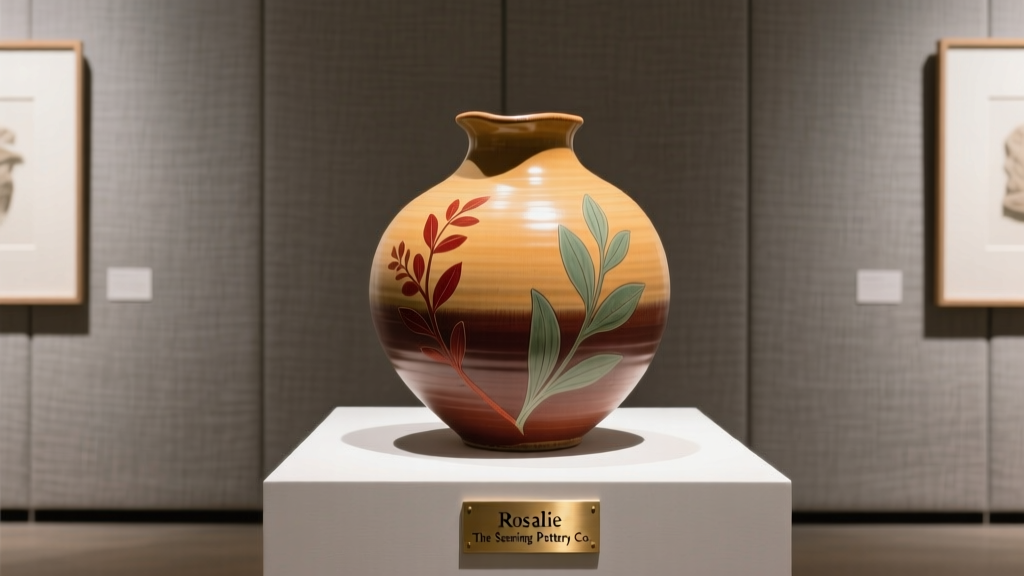
The Sebring Pottery Co. Rosalie: A Definitive Study of Form, Provenance, and Market Value
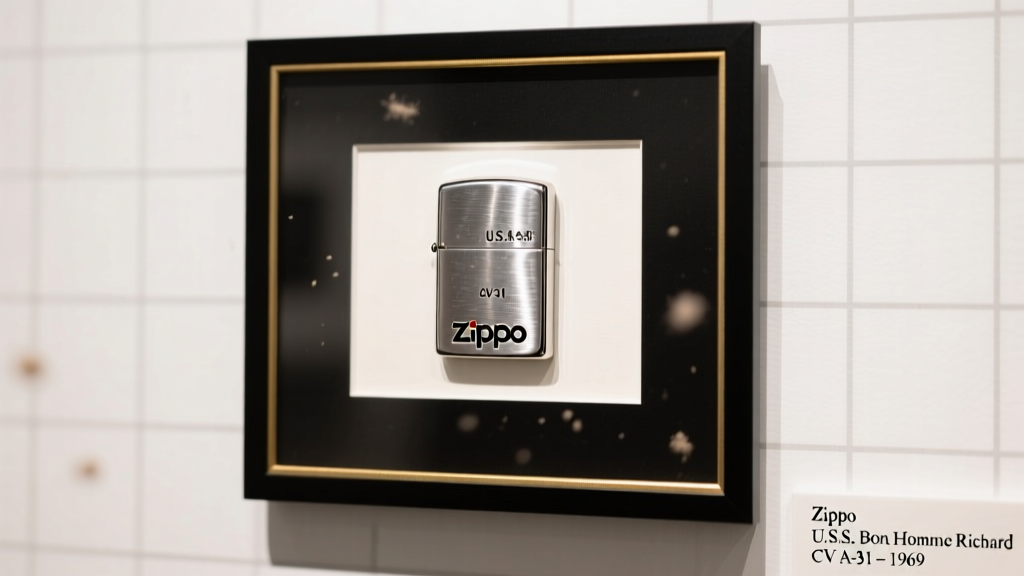
Zippo U.S.S. Bon Homme Richard (CVA-31) Polished Finish Slim Lighter, 1969: Authentication, Provenance, and Market Significance

Authenticating the Schierholz 1.2-Liter Character Steins: Boar Pipe & Alpine Hat Porcelain Collectibles
Russell Wright’s Pickle Dish in Cantaloupe: Authenticating the American Modern Icon

Game Puzzle No. 2: Little Folks Picture Puzzles by Hammond — A 1930s American Children’s Jigsaw Artifact (12 × 10 Inches)
Fostoria Navarre Goblet in Claret Blue: Authentication, Provenance, and Market Value of the 4½ oz / 6½ in Stemware
The Slipper Chair in Rococo Revival: A 1860 Rosewood Masterpiece with Needlepoint Seat
Boehm Plate Mountain Bluebird: Authentication, Market Value, and Production History
Authenticating a C.1900 Clenched-Fist Walking Stick: Wood, Shell Inlay, and Victorian Craftsmanship at 38 Inches