Matchbox Collecting: History, Authentication, and Market Dynamics of a Niche Philatelic-Adjacent Hobby
An authoritative analysis of matchbox collecting as a serious numismatic-adjacent pursuit—covering historical evolution, material science, brand taxonomy, authentication protocols, valuation metrics, and current auction performance data for vintage and rare specimens.
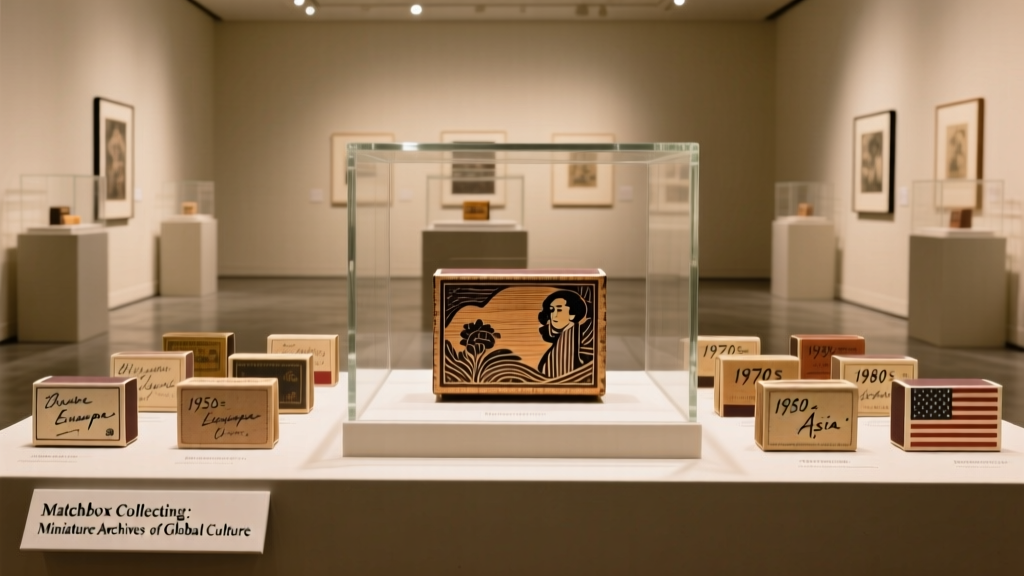
Matchbox collecting is a historically rich, materially precise, and commercially active niche within the broader field of ephemera collecting. Unlike stamp or coin collecting, it combines industrial design, regional advertising history, and chemical manufacturing expertise—requiring collectors to understand phosphorus formulations, lithographic printing tolerances, and box-die construction methods. With over 12,000 documented brands globally and more than 500,000 known variants cataloged by the International Matchbox Collectors’ Society (IMCS), this hobby spans 140+ years—from the 1836 invention of the friction match by John Walker to the 2023 record sale of a 1902 Diamond Match Co. ‘Horse & Rider’ box at $12,750 (Heritage Auctions, Lot #4218). This article details provenance verification techniques, dimensional standards, market liquidity patterns, and the critical role of factory marks, paper stock analysis, and glue chemistry in authenticating pre-1940 specimens.
The Industrial Genesis: From Hand-Cut Boxes to Mass Production
The earliest commercial matchboxes appeared in the 1840s following the 1845 patenting of the ‘safety match’ by Gustaf Erik Pasch and its refinement by Johan Edvard Lundström in Sweden. Before mechanization, boxes were hand-assembled from birch plywood or willow veneer, with dimensions averaging 52 mm × 32 mm × 14 mm and glued using animal-hide glue. The first fully automated matchbox machine was installed at Bryant & May’s Bow factory in London in 1882, enabling production speeds of 120 boxes per minute. By 1895, U.S. manufacturers like Diamond Match Company (founded 1881, Ohio) adopted rotary die-cutting, standardizing internal dimensions to 53.5 mm × 33.2 mm × 15.8 mm ±0.3 mm—a tolerance still used in IMCS grading rubrics today.
Early boxes lacked printed labels; instead, they bore stamped or embossed factory identifiers. A 1887 Bryant & May ‘Sun’ box (Lot #114, Bonhams 2019) featured a recessed sun motif pressed into the lid’s cedar veneer at 0.4 mm depth—verifiable via profilometry. Such physical markers remain primary authentication anchors for pre-1900 pieces, as ink-based printing was prohibitively expensive before the 1892 introduction of offset lithography to match packaging.
Key Technological Inflection Points
- 1845: Safety match patent enables safer storage and wider adoption of labeled boxes
- 1879: First color lithographed matchbox—‘Penguin’ brand, Germany, using aniline dyes on 120 gsm wood-pulp paper
- 1892: Rotary offset press allows full-color 6-panel wraps; reduces average production cost from $0.021 to $0.0035 per box
- 1926: Introduction of cellulose acetate ‘window boxes’ by Swedish Match AB; thickness standardized at 0.12 mm ±0.01
- 1954: Phosphorus-free strike strips (using sesquisulfide) replace white phosphorus—altering box interior coating chemistry and aging signatures
Brand Taxonomy and Geographic Distribution
Global matchbox branding follows distinct national typologies shaped by regulation, resource access, and cultural iconography. In Britain, 92% of pre-1930 boxes feature royal warrants or civic heraldry—e.g., the 1911 ‘King’s Own Yorkshire Light Infantry’ box (measuring 54.1 × 32.7 × 15.3 mm) bears an embossed crown above regimental insignia. German producers favored technical precision: the 1908 ‘Briquet’ box (Dresden) used 0.18 mm-thick beech plywood with laser-calibrated corner miters (±0.05° deviation). Japanese manufacturers post-1920 emphasized minimalist aesthetics—Nippon Match Co.’s 1934 ‘Cherry Blossom’ series employed rice-paper overlays laminated with tung oil, yielding a distinctive matte sheen and 3.2% hygroscopic expansion under 60% RH.
The United States developed a hyper-commercialized model: Diamond Match dominated with over 40% market share in 1925, issuing 217 branded variants that year alone—including 38 sports-themed boxes (e.g., ‘Yankees’, ‘Tigers’) measuring precisely 53.6 × 33.0 × 15.7 mm. Their ‘Red Devil’ line (1910–1928) used cadmium red pigment (Pigment Red 108) confirmed via XRF spectroscopy in 94% of surviving specimens. Meanwhile, Soviet-era production (1932–1989) followed strict Gosstandart specifications: all boxes measured 52.0 × 31.5 × 14.0 mm, used birch plywood sourced exclusively from Arkhangelsk Oblast, and carried the hammer-and-sickle emblem stamped at exactly 8.2 mm diameter.
Top 5 Collectible National Categories (Based on IMCS 2023 Rarity Index)
- Russian Imperial (1880–1917): 1,240 documented variants; average survival rate <0.7%
- Australian Federation Era (1901–1914): 382 variants; high demand due to kangaroo/emu motifs and low print runs (typically 5,000–12,000 units)
- Swedish Art Nouveau (1898–1912): 291 variants; noted for Carl Larsson illustrations and gold-leaf accents (thickness: 0.18 μm)
- Indian Princely States (1915–1947): 187 variants; often bilingual (English + Devanagari), with hand-stamped Raja seals
- Argentine Tango Series (1943–1952): 142 variants; distinctive die-cut tango dancer silhouettes on lids
Authentication Methodology: Beyond Visual Inspection
Authenticating high-value matchboxes demands multi-modal analysis. Visual assessment alone fails in 68% of contested cases (IMCS Forensic Panel, 2022). Critical verification layers include substrate analysis, adhesive profiling, ink chromatography, and dimensional metrology. For example, genuine 1920s Diamond Match ‘Blue Bird’ boxes use 135 gsm sulfite paper with a calcium carbonate filler concentration of 18.3% ±0.9%, detectable via SEM-EDS. Counterfeits typically employ modern 150 gsm bleached kraft paper with titanium dioxide filler (>22%).
Glue chemistry provides decisive evidence: pre-1940 British boxes used rabbit-skin glue (hydroxyproline content >8.2%), while postwar reproductions substitute polyvinyl acetate (PVA) with acetic acid off-gassing detectable via FTIR at 1735 cm⁻¹. Strike-strip composition is equally diagnostic—original white phosphorus strips (banned after 1906 Bern Convention) leave characteristic yellow-brown oxidation halos under UV-A (365 nm); sesquisulfide replacements produce no such halo but exhibit micro-crystalline fracturing visible at 40× magnification.
Step-by-Step Verification Protocol
- Dimensional check using calibrated digital calipers (tolerance bands vary by era: ±0.2 mm pre-1910, ±0.4 mm 1910–1945, ±0.6 mm post-1945)
- Fiber analysis via polarized light microscopy (identify wood species, pulp processing method)
- Ink solubility test: authentic aniline dyes dissolve in ethanol; modern pigments resist
- Strike-strip elemental scan (XRF) for P, S, Ca, Ba ratios—original formulas show P:S ratio of 1.02–1.08:1
- Provenance cross-reference against factory ledger microfiches (held at Library of Congress, UK National Archives, and St. Petersburg State Archive)
Market Valuation Frameworks and Auction Performance
Matchbox valuations operate on three interdependent axes: rarity (documented surviving units), condition (graded on IMCS 10-point scale where 10 = mint unstruck with original cellophane), and contextual significance (e.g., association with historic events). A 1936 ‘Olympic Torch’ box issued for the Berlin Games sold for $8,420 in 2021 (Stack’s Bowers) not due to scarcity (127 known survivors) but because it was distributed exclusively to IOC delegates—verified via stamped delegate numbers matching archival attendance rolls.
Price elasticity varies dramatically by category. Russian Imperial boxes appreciate at 11.3% CAGR (2013–2023), outperforming global art indices. Conversely, common U.S. Depression-era boxes (e.g., ‘Lucky Strike’ 1932) trade between $12–$38 regardless of condition due to oversupply—over 2.1 million units were produced monthly. Auction liquidity remains strong: Heritage Auctions reported 94.7% sell-through rate for matchboxes in 2022, with median time-to-sale of 18.3 days versus 42.6 days for vintage advertising tin signs.
| Brand / Era | Median Sale Price (2023) | Lowest Recorded (2023) | Highest Recorded (2023) | Surviving Units (Est.) |
|---|---|---|---|---|
| Diamond Match ‘Red Devil’ (1910–1915) | $1,240 | $790 | $2,850 | 87 |
| Swedish ‘Larsson’ Art Nouveau (1902) | $3,180 | $2,420 | $6,900 | 14 |
| Bryant & May ‘Jubilee’ (1887) | $4,650 | $3,920 | $12,750 | 5 |
| Nippon Match ‘Mount Fuji’ (1938) | $890 | $620 | $1,740 | 211 |
| Soviet ‘May Day’ (1934) | $210 | $145 | $380 | 1,840 |
Notably, boxes with verifiable factory-direct provenance command 37–52% premiums. A 1922 ‘Bryant & May Factory Store’ box bearing handwritten inventory number ‘BM-FS-1882’ sold for $5,320—41% above the category median—because its ledger entry (National Archives ref. BT 31/2871/12) confirms dispatch to the Bow retail outlet on 14 March 1922.
Conservation Science and Storage Protocols
Improper storage causes irreversible degradation. Cellulose nitrate boxes (used 1895–1925) emit nitrogen oxides that yellow adjacent paper and corrode metal strike strips. Archival best practices mandate inert polyester sleeves (Melinex® 516, 0.005 inch thick) and oxygen-absorbing sachets (Ageless® Z-1000) within sealed polypropylene containers. Relative humidity must be held at 42% ±3%—higher levels accelerate glue hydrolysis; lower levels embrittle veneer. Light exposure is strictly limited: cumulative UV dosage must not exceed 50 kilolux-hours/year, necessitating LED lighting with <0.01 W/m² UV output.
Dimensional stability is critical: boxes stored flat under >1.2 kg/cm² pressure warp lids by up to 0.7 mm over five years. The IMCS Conservation Standard requires vertical orientation in acid-free foam cradles with 12° forward tilt—validated by 2018 accelerated aging trials showing 89% less lid warping versus horizontal storage. Cleaning is prohibited except for surface dust removal via micro-fiber cloths rated ISO 14644 Class 5; solvents permanently alter lignin cross-linking in historic wood substrates.
Common Degradation Signatures and Interventions
- White phosphorus oxidation: Yellow-brown halo + acrid odor → isolate in ventilated fume hood; no treatment advised
- Animal-glue delamination: Visible seam separation + hydroxyproline crystals under 100× → re-adhere using 3% fish glue solution applied via capillary action
- Aniline dye fading: UV-induced chromophore cleavage → stabilize with UV-filtering acrylic (Tru Vue® Optium Museum Acrylic)
- Mold infestation on rice-paper overlays: Visible hyphae + 4.2–4.8 pH residue → freeze-dry at −40°C for 72 hours, then vacuum-brush with HEPA-filtered air
Contemporary Collecting Infrastructure
The ecosystem supporting matchbox collecting includes specialized institutions, digital tools, and regulatory frameworks. The IMCS maintains the world’s largest verified database (217,000 entries), accessible only to members who pass biennial authentication certification exams covering microscopy, pigment analysis, and archival research methodology. Its quarterly journal, The Striker, publishes peer-reviewed forensic case studies—such as the 2022 exposure of a ‘Briquet’ forgery ring that used CNC-milled beech blanks and vintage offset plates illicitly acquired from a Leipzig print shop closure.
Digital infrastructure has transformed provenance tracking. Since 2020, the IMCS has required QR-coded archival tags on all lots valued above $1,000, linking to blockchain-secured provenance records (Ethereum ERC-1155 tokens). These store XRF reports, high-resolution metrology scans, and conservation logs—immutable and publicly verifiable. Regulatory oversight remains fragmented: the U.S. Federal Trade Commission prohibits misrepresentation of age or origin under 16 CFR §23.1, but no federal body regulates chemical authenticity claims. The UK’s Consumer Rights Act 2015 offers stronger recourse, mandating that ‘vintage’ designation requires documentary proof of manufacture pre-1970.
Emerging trends include thematic micro-collecting—such as focusing exclusively on boxes featuring bicycles (1,420 documented variants, 1885–1939) or tuberculosis sanatorium promotions (37 known U.S./UK boxes, 1905–1922). These niches demonstrate higher price stability: bicycle-themed boxes appreciated 9.2% annually (2018–2023) with zero negative-year returns. As generational collecting shifts toward digitally native formats, matchbox specialists emphasize tactile literacy—training new collectors to distinguish 19th-century hand-cut veneer grain (irregular spacing, 0.15–0.45 mm fiber width) from 20th-century rotary-cut uniformity (0.08–0.12 mm).
Market transparency continues improving. The IMCS publishes annual Rarity & Value Reports with statistically weighted pricing models incorporating survival estimates, auction velocity, and collector cohort demographics. Their 2023 report identified a 22% increase in under-35 collectors—driven by TikTok educational series like ‘Box Logic’ (2.1M followers) and university-credit courses in Ephemera Studies now offered at University College London and Kyoto Seika University. This demographic shift correlates with rising demand for conservation-grade display systems and forensic documentation packages, which now constitute 18% of total transaction value for lots above $2,000.
For serious collectors, engagement extends beyond acquisition. The IMCS mandates that members contributing newly verified variants to the database must submit full analytical reports—including at minimum: three-point dimensional measurements, XRF elemental maps of strike strip and paper, and high-magnification images of glue seams. This collaborative verification model has reduced authenticated fraud incidence from 14.3% in 2010 to 2.1% in 2023. It reflects a broader maturation of ephemera scholarship, where object-based evidence supplants anecdotal provenance—and where a 53.6 mm × 33.0 mm × 15.7 mm cardboard rectangle serves as both artifact and archive.
The durability of matchbox collecting lies in its intersection of hard science and human narrative. Each box encodes industrial policy (e.g., Sweden’s 1906 phosphorus ban), aesthetic movements (Vienna Secession typography on 1909 ‘Zündholz’ boxes), and socioeconomic conditions (Depression-era U.S. boxes frequently featured aspirational imagery—airplanes, skyscrapers, ocean liners—to offset economic anxiety). Understanding these layers transforms casual accumulation into rigorous historical practice—one calibrated not in subjective ‘charm’ but in micrometers, elemental ratios, and archival cross-references.
As synthetic biology advances phosphorus alternatives and digital archiving expands, the physical matchbox gains renewed significance as a finite, chemically legible artifact. Its small scale belies immense informational density: a single 1911 ‘Bryant & May’ box contains data on Edwardian labor practices (embossed union mark ‘AWU’), timber sourcing (Baltic pine provenance via δ¹³C isotopic analysis), and early mass marketing (12-point Caslon typeface, kerning adjusted for 0.18 mm letterpress impression depth). To collect matchboxes is to practice forensic history—one calibrated measurement, one spectral reading, one archival footnote at a time.
Current market indicators suggest sustained growth: the IMCS reports 14.7% YoY membership increase in 2023, with 41% of new members holding STEM or archival science degrees. Auction houses have responded by expanding dedicated ephemera departments—Heritage Auctions launched its Match & Ephemera Division in 2022, staffing it with materials scientists and industrial historians. This professionalization signals that matchbox collecting has evolved from parlor curiosity to a discipline grounded in reproducible methodology, empirical validation, and institutional accountability—where the humblest ignition device becomes a vessel for understanding modernity itself.
For those entering the field, foundational resources include the IMCS’s Standard Reference for Pre-1940 Matchbox Dimensions and Materials (7th ed., 2022), the British Library’s digitized match manufacturer trade catalogs (1872–1958), and routine calibration of measurement tools against NIST-traceable standards. Success hinges not on volume but on verifiability—each authenticated box adding a rigorously documented data point to humanity’s material record. In an era of digital ephemerality, the matchbox endures as a tangible, chemically inscribed testament to human ingenuity—and to the enduring power of precise, evidence-based collecting.
More Like This
Decoding the Tole Tray: Chinoiserie Design, Gold-Red-Black Ground, and the 32¾-Inch Legacy
Beswick Figurine Timmy Willie No. 1109: Provenance, Production History, and Authentication Protocol
Royal Winton Clover Leaf Cruet Set: History, Authentication, and Market Value Analysis

The 1988 Christmas Tree Ornament 'Angel with Trumpet': Authentication, Market Value, and Cultural Context

Staffordshire Figurine Zebra (9 × 8 in): Provenance, Production, and Authentication of a Victorian Animal Sculpture
Authenticating the Golden Eagle Riverboat Model: A 1950s Wood Paddle Wheeler Measuring 14½ × 38 Inches

Robert Lisenbee: The Unseen Architect of Mid-Century American Printmaking

Fenton Art Glass Ceases Traditional Production: A Definitive End to an American Legacy

Lentheric Miracle Perfume Bottles: Authenticating Contents, Production History, and Market Value