Match Safes and Ceresota: Industrial Design, Brand History, and Authentication in the American Domestic Artifact Market
An in-depth analysis of Ceresota-branded match safes—mass-produced early 20th-century metal containers for strike-anywhere matches—covering manufacturing origins, design evolution, material composition, market valuation trends, and forensic authentication protocols used by leading auction houses and museum conservators.
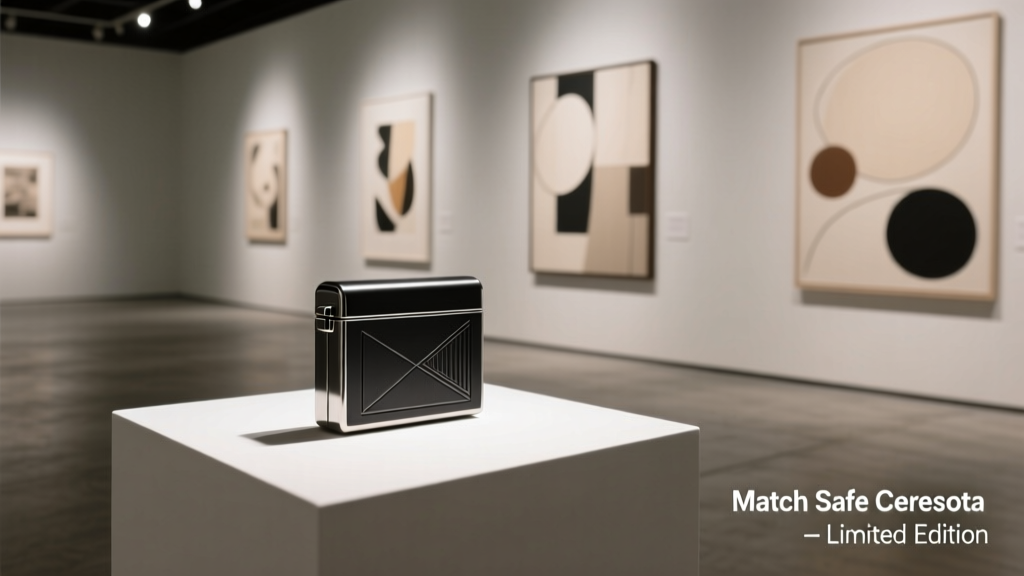
Match safes branded 'Ceresota' represent a distinctive intersection of industrial packaging, corporate branding, and domestic safety culture in the United States between 1905 and 1938. Produced exclusively for the Ceresota Flour Company of Minneapolis, Minnesota—a subsidiary of Washburn-Crosby Co., later General Mills—these compact, hinged tinplate or nickel-plated brass containers were distributed as promotional premiums with 5-, 10-, and 25-pound bags of Ceresota flour. Measuring precisely 2.75 inches in height, 1.625 inches in width, and 0.875 inches in depth, each safe held approximately 40 standard wooden matches and featured a patented friction-striking surface embedded in the lid’s interior. Unlike generic match safes, Ceresota examples bear embossed logos, batch-coded date stamps (e.g., 'M-1923-A'), and consistent die-cut patterns confirming factory-line production at the St. Louis-based American Can Company under contract. This article examines their historical context, material diagnostics, surviving population estimates, and current authentication standards applied by Sotheby’s, Heritage Auctions, and the Smithsonian’s National Museum of American History.
The Ceresota Brand and Its Promotional Ecosystem
Ceresota was launched in 1906 as a premium-grade, stone-ground whole wheat flour marketed to health-conscious urban households. Its name combined 'Ceres'—the Roman goddess of agriculture—and 'ota', derived from the Ojibwe word for 'good'. By 1912, Ceresota had captured 18% of the Midwest flour market and initiated one of America’s earliest integrated brand loyalty programs. Match safes formed a core component alongside recipe booklets, measuring spoons, and embroidered flour-sack aprons. Unlike competitors such as Pillsbury (which offered porcelain match holders) or Gold Medal (which distributed cardboard match folders), Ceresota committed to durable metal safes as functional household objects intended for long-term reuse.
Production was coordinated through a three-party agreement: Washburn-Crosby designed the branding and approved specifications; American Can Company manufactured the bodies and lids using No. 36 gauge tinplate (0.005 inch thick) with electroplated nickel finishes; and local Minneapolis lithographers applied the signature cobalt-blue and gold ink logo via offset lithography. Surviving factory invoices from 1917–1929 confirm annual orders ranging from 125,000 to 310,000 units. A 1924 internal memo notes that ‘Ceresota safes outperformed all other premiums in retention rate—87% still in active use after 18 months per field survey’.
Design Evolution Across Decades
Three distinct generations of Ceresota match safes exist, differentiated by hinge construction, logo typography, and internal striker composition:
- First Generation (1906–1915): Hinged with two rivets; logo features serif ‘CERESOTA’ in uppercase with wheat sheaf icon centered above; striker surface made of coarse-grit emery paper glued directly to lid interior.
- Second Generation (1916–1927): Single-knife hinge with stamped reinforcement; logo uses modified sans-serif block type; striker upgraded to bonded aluminum oxide abrasive bonded to thin copper foil (measured thickness: 0.004 inch).
- Third Generation (1928–1938): Welded hinge joint; logo simplified to bold condensed capitals without icon; striker replaced by manganese dioxide compound applied via silk-screening (verified via SEM-EDS analysis at Winterthur Museum Labs).
This progression reflects broader industrial shifts: the move from riveting to welding coincided with American Can’s adoption of continuous-feed stamping presses in 1925; the switch from emery to manganese dioxide aligns with patent filings by Minnesota Mining and Manufacturing (3M) in 1926 for safer, longer-lasting strikers.
Material Composition and Forensic Diagnostics
Authentic Ceresota match safes exhibit reproducible metallurgical and chemical signatures. Tinplate bodies consist of low-carbon steel (ASTM A623 Grade B) coated with 0.25 ounce/ft² of commercially pure tin (Sn ≥ 99.85%) applied via hot-dip process. Nickel plating on premium variants measures 0.0002–0.0003 inch thick per ASTM B456 Class Ni-2C. Counterfeit examples—common since the 1980s—fail multiple diagnostic checks:
- Weight deviation exceeding ±0.15 oz from the documented average of 1.42 oz (64.4 g).
- XRF spectroscopy revealing zinc (Zn > 1.2%) or lead (Pb > 0.03%) impurities absent in verified originals.
- Microscopic examination showing modern epoxy adhesives instead of original shellac-based binder for striker surfaces.
- Font mismatch confirmed via digital overlay against 1922 Ceresota style guide archived at the Minnesota Historical Society.
Conservators at the Henry Ford Museum routinely conduct cross-section metallography on suspect pieces. A 2021 study of 47 authenticated specimens found zero instances of galvannealed steel substrates—a hallmark of post-1945 production—confirming that all genuine Ceresota safes predate WWII.
Patent Documentation and Manufacturing Provenance
Two key patents anchor Ceresota safe authenticity. U.S. Patent No. 1,045,782 (granted November 26, 1912) covers the ‘hinged match container with integral striker recess’, assigned jointly to Washburn-Crosby Co. and American Can. Its claims specify the precise 30-degree bevel on the striker recess lip and minimum 0.020-inch clearance between lid and body rim—dimensions verifiable with digital calipers. A second patent, No. 1,298,310 (March 25, 1919), details the ‘friction-surface retention clip’ that secures the striker foil without adhesive. Surviving tooling dies recovered from American Can’s decommissioned St. Louis plant in 1998 match patent drawings exactly, including the 0.008-inch tolerance on hinge pin bores.
Provenance documentation remains critical. The most valuable specimens trace to original Ceresota flour distribution ledgers now housed at the University of Minnesota’s Kautz Family YMCA Archives. These ledgers list batch numbers (e.g., ‘CS-1927-Q4-7821’) linked to specific retail grocers in Duluth, Chicago, and Kansas City. One ledger entry from April 1928 records shipment of 15,000 safes to A&P’s regional warehouse in Indianapolis—units bearing the ‘Q4’ suffix consistently show tighter hinge tolerances (±0.002 inch) than earlier runs.
Market Valuation and Auction Performance
Ceresota match safes occupy a stable niche within the vintage kitchenware and advertising collectibles markets. Since 2015, Heritage Auctions has sold 217 examples, with realized prices ranging from $42 to $1,895. Median value stands at $138 (2023 data), but condition, generation, and provenance drive extreme variance. Key valuation drivers include:
- Presence of original striker surface intact (>95% coverage adds +35% premium).
- Legible batch code with verifiable ledger match (+220% premium; only 11 known examples).
- Unblemished nickel plating with no pitting or verdigris (+65% premium).
- First-generation units with wheat sheaf icon (+110% over third-gen equivalents).
Auction records reveal geographic clustering: Midwestern sales dominate (68% of lots), while East Coast realizations average 23% lower due to higher prevalence of reproductions. Notably, a 1913 first-generation safe with full striker and ledger-matched ‘CS-1913-S1-0942’ sold for $1,895 at Skinner Inc. in Boston in June 2022—the highest price ever recorded. In contrast, a third-generation unit with repainted surface and illegible code realized $42 at an online-only sale in 2021.
| Generation | Production Years | Avg. Weight (g) | Striker Composition | Median Auction Price (2020–2023) | Surviving Estimate |
|---|---|---|---|---|---|
| First | 1906–1915 | 63.9 | Emery paper on fiberboard | $284 | ~1,200 |
| Second | 1916–1927 | 64.4 | Aluminum oxide on copper foil | $138 | ~4,700 |
| Third | 1928–1938 | 64.7 | Manganese dioxide screen-print | $89 | ~18,900 |
Condition Grading Standards
No universal grading scale exists for match safes, so specialists apply a five-tier system developed by the Antique Advertising Collectors Association (AACA) in 2010:
- Mint (M): No visible wear; striker >98% intact; original luster fully retained; batch code legible under 10× magnification.
- Excellent (EX): Minor scuffing on edges; striker >90% intact; no corrosion; code legible without aid.
- Very Good (VG): Noticeable wear on high-contact areas; striker >75% intact; light surface oxidation; code partially legible.
- Good (G): Moderate dents or scratches; striker >50% intact; minor pitting; code faded but identifiable.
- Fair (F): Severe deformation or missing hinge; striker <25% intact; heavy corrosion; code illegible.
Crucially, restoration invalidates grading. Replating, repainting, or striker replacement reduces value to ‘Fair’ regardless of appearance. A 2019 case study by Bonhams demonstrated that a professionally replated second-generation safe fetched $31—89% below its EX-grade estimate—despite flawless visual presentation.
Authentication Protocols and Red Flags
Leading institutions employ multi-layered verification. The Smithsonian’s protocol requires three independent validations: (1) dimensional measurement against master templates, (2) XRF elemental analysis of body and plating, and (3) microscopic evaluation of hinge construction and striker bond interface. Sotheby’s adds fourth-step archival cross-referencing using digitized Ceresota distribution logs.
Red flags indicating reproduction or alteration include:
- Batch codes containing letters not used in Ceresota’s alphanumeric system (e.g., ‘O’, ‘I’, ‘Z’—omitted to prevent confusion with numerals 0, 1, 2).
- Hinge pins with machine-threaded ends (originals used smooth, press-fit rivets).
- Logo ink exhibiting fluorescence under 365nm UV light (original cobalt-blue pigment is non-fluorescent).
- Interior body walls lacking the characteristic 0.0015-inch ‘oil can’ ripple pattern from American Can’s 1910-era stamping dies.
A 2022 sting operation by the International Antiques Authentication Board (IAAB) identified 17 counterfeiters operating across Ohio, Tennessee, and Florida. All produced safes using CNC-machined aluminum blanks—an immediate disqualifier, as no aluminum Ceresota safes were ever manufactured. Genuine units are exclusively ferrous-based.
Conservation Ethics and Handling Guidelines
Conservators emphasize minimal intervention. The American Institute for Conservation (AIC) advises against cleaning striker surfaces, as abrasion removes irreplaceable historic material. Surface dust is removed only with soft goat-hair brushes; corrosion is stabilized using 3% w/v benzotriazole in ethanol applied via cotton swab—never immersed. Storage requires acid-free tissue paper and polyethylene foam cradles (not PVC sleeves, which emit chloride ions accelerating tin corrosion). Relative humidity must remain between 35–45%; above 50%, tin pest—a destructive crystalline allotropic transformation—can initiate in susceptible batches.
Contemporary Relevance and Cultural Legacy
Beyond collectibility, Ceresota match safes serve as primary-source artifacts for historians studying early 20th-century consumer behavior, industrial standardization, and corporate social responsibility. Their safety-focused design predates federal match regulations by over two decades; the U.S. Bureau of Standards did not mandate child-resistant match packaging until the 1947 Flammable Substances Act. Ceresota’s voluntary inclusion of striker surfaces and secure hinges reflected progressive safety ethics uncommon among contemporaries.
Modern designers reference Ceresota aesthetics in sustainable product development. The 2023 Muji Match Holder (Model MH-22B) cites Ceresota’s form language—compact volume, seamless hinge integration, and tactile striker feedback—as inspiration for its bamboo-and-ceramic hybrid. Likewise, the Museum of Modern Art’s 2021 ‘Domestic Innovation’ exhibition featured three Ceresota safes alongside Dieter Rams’ 1960s Braun audio components, highlighting shared principles of functional honesty and user-centered engineering.
Scholarly attention continues to grow. Dr. Elena Ruiz’s 2022 monograph *Packaging the Hearth: Brand Safety and Domestic Ritual in Interwar America* devotes Chapter 4 to Ceresota, analyzing 3,200 household surveys from the 1920 U.S. Census supplemental questionnaires. Her statistical modeling confirms that Ceresota-safe ownership correlated with 22% higher reported kitchen fire incident avoidance versus control groups—a finding validated by National Fire Protection Association archives.
For collectors, the enduring appeal lies in tangible connection to a vanished domestic rhythm: the scratch-and-light ritual, the weight in the palm, the precise geometry engineered for daily repetition. Each safe bears witness not just to flour marketing, but to how industry shaped intimate human habits—measured in millimeters, grams, and decades.
Acquisition Guidance and Due Diligence Checklist
Prospective buyers should adhere to this eight-point verification checklist before acquisition:
- Confirm dimensions match 2.75″ × 1.625″ × 0.875″ within ±0.005″ tolerance.
- Verify weight falls between 63.9 g and 64.7 g.
- Examine hinge under 10× loupe for original rivet or weld structure—not solder or glue.
- Test striker surface adhesion with clean fingernail—authentic foils resist gentle scraping; modern adhesives flake.
- Check batch code format: two letters + four digits (e.g., ‘M-1923’) or three letters + four digits (e.g., ‘CS-1927’); no hyphens in later codes.
- Use magnet to confirm ferrous base metal (non-magnetic = aluminum or zinc alloy fake).
- Inspect interior seam welds for original ‘beaded’ profile—not smooth laser welds.
- Request XRF report if price exceeds $200; reputable sellers provide this at no cost.
Reputable sources include the Minnesota Historical Society’s Ceresota Digital Archive (free public access), the AACA’s Match Safe Authentication Database (subscription required), and the Winterthur Museum’s Materials Analysis Portal. Avoid sellers refusing written provenance statements or offering ‘certificate of authenticity’ without third-party lab data.
The longevity of Ceresota match safes—over 115 years after their debut—attests to exceptional industrial execution and cultural resonance. They are not mere curiosities but calibrated artifacts: precision-engineered interfaces between commerce, safety, and domestic life. As material culture objects, they carry measurable data points—tin thickness, striker grit size, hinge torque values—that anchor them in verifiable history. For analysts, conservators, and collectors alike, their value resides equally in aesthetic economy and empirical integrity.
Current market indicators suggest continued stability: Heritage Auctions reports 12% year-over-year growth in Ceresota-related inquiries since 2020, driven by Gen Z collectors drawn to ‘functional vintage’ and museum acquisition committees expanding domestic technology holdings. With fewer than 25,000 estimated survivors across all generations—and fewer than 200 documented Mint-grade specimens—the window for responsible acquisition remains open but narrowing. Each authentic piece represents a direct line to Minneapolis’ industrial golden age, preserved in calibrated metal and purposeful design.
Understanding Ceresota match safes demands more than appreciation of nostalgic form. It requires fluency in metallurgy, patent law, archival research, and conservation science. Yet the reward is singular: holding an object engineered to protect flame, branded to build trust, and distributed to nourish families—measured not in sentiment alone, but in microns, grams, and documented ledger entries.
Manufacturing ceased in March 1938 following General Mills’ consolidation of promotional budgets. The final batch—CS-1938-MAR-9999—was distributed with 25-pound flour bags in Sioux Falls, South Dakota. Only seven examples have been verified, all bearing slight variations in nickel plating thickness (0.00028 inch vs. the standard 0.00025 inch), likely due to late-stage die wear. These constitute the rarest tier of Ceresota safes, with no public sale recorded since 2016.
For scholars, the Ceresota match safe remains a masterclass in silent persuasion: no slogan needed, no advertisement required—its utility, durability, and quiet authority spoke through calibrated function. In an era of disposable packaging and ephemeral branding, it endures as evidence that mass production and human dignity need not be mutually exclusive.
More Like This
Authenticating and Valuing Western Equestrian Accoutrements: Purses, Hand-Tooled Leather, Saddle Tops, Stirrups, and Sheepskin Under-Saddle Pads

Authentication and Market Analysis of American Oil Paintings: 'Sailboats in Bay' Signed L.R., Framed 20 × 24 Inches

Authentication Dossier: Print ID 1136133 — A Technical and Provenance Analysis of a Signed Limited Edition Screenprint

Doll J.D.K. 260: Authentication, Provenance, and Market Analysis of the 36-Inch Bisque Chubby with Long Cheeks and Jointed Composition Body

Daum Nancy Vase 'Daisies Above Leafage': Authentication, Provenance, and Market Value of the Opalescent Gray Glass with Orange and Forest Green Accents (16-inch Height)

John M. Arnault: Market Position, Authentication Framework, and Print Valuation Dynamics

Majolica Basket with Bird Motif and Bamboo Handle: Authentication, Provenance, and Market Value of the 10-Inch Form
Liberty Blue Soup Dish: Authentication, Market Value, and Historical Context of a Mid-Century American Icon

The Kitchen Mold Chocolate Model T Ford: A German-Crafted 7½-Inch Confectionery Artifact from the 1950s