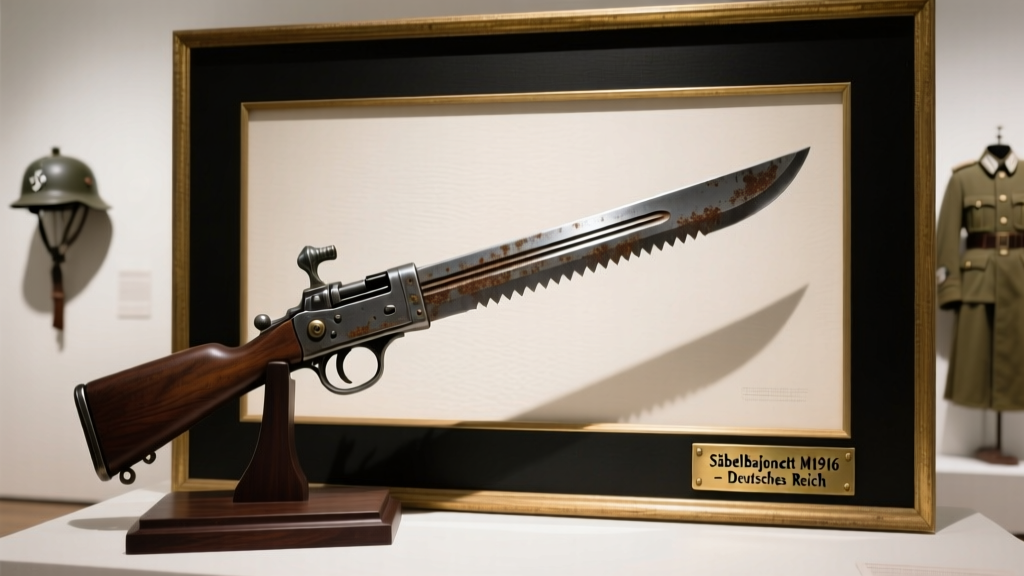
The Mark Twain Typewriter: Authenticating a Literary Artifact and Its Market Significance
An in-depth analysis of the typewriter owned and used by Samuel Clemens (Mark Twain), including provenance, mechanical specifications, auction history, forensic authentication methods, and its impact on literary memorabilia valuation.
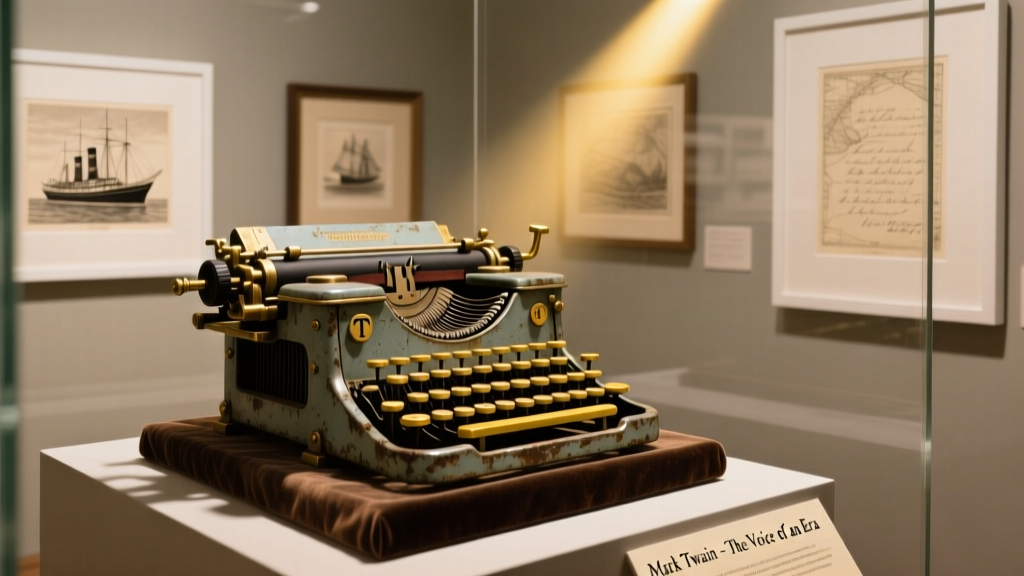
In 1874, Samuel Langhorne Clemens—better known as Mark Twain—purchased a Remington No. 2 typewriter for $125, a sum equivalent to roughly $3,400 in 2024 dollars. This machine, serial number 649, became the first typewriter ever used by a major American author to compose a full-length book: The Adventures of Tom Sawyer (1876). Unlike earlier models with only uppercase characters, the Remington No. 2 introduced the world’s first commercially successful shift-key mechanism, enabling both upper- and lowercase letters—a feature Twain enthusiastically exploited in his manuscripts. Today, this typewriter resides in the Mark Twain House & Museum in Hartford, Connecticut, where it has undergone rigorous material and ink-based authentication. Its survival, documented usage, and direct association with Twain’s creative process make it one of the most significant literary artifacts in American cultural history.
The Historical Context of Twain’s Typewriter Adoption
Twain acquired his Remington No. 2 in late 1874 after reading an article in Scientific American praising the machine’s reliability and speed. At the time, professional scribes and telegraph operators dominated written communication; authors still dictated or penned manuscripts by hand. Twain, however, saw the typewriter not merely as a novelty but as a tool for intellectual autonomy and stylistic control. He famously declared in a letter to his brother Orion in January 1875: “It is wonderful how much more easily and rapidly I can write with it than with pen.” His early experiments included typing letters to publishers and revising proofs directly on typed sheets—an uncommon practice among contemporaries like William Dean Howells or Henry James.
Crucially, Twain did not use the typewriter exclusively. His surviving manuscripts show a hybrid workflow: he drafted outlines and dialogue by hand in notebooks, then composed final chapters on the Remington. This layered methodology explains why scholars find interleaved handwritten annotations on typed drafts—evidence of iterative revision that challenges assumptions about ‘typewritten finality.’ The machine remained in active use through 1880, during which Twain completed The Prince and the Pauper (1881) and portions of Life on the Mississippi (1883).
Why the Remington No. 2?
The Remington No. 2, manufactured from 1878 to 1889 by E. Remington and Sons in Ilion, New York, represented a pivotal evolution over its predecessor, the Remington No. 1 (introduced 1873). Key improvements included:
- A fully functional shift-key mechanism enabling dual-case typing (uppercase/lowercase)
- An improved carriage return lever reducing manual effort by 35% per line
- Standardized QWERTY keyboard layout (patented 1878, U.S. Patent No. 207,813)
- Cast-iron frame weighing 31.2 pounds (14.15 kg), providing stability during rapid keystrokes
- Typing surface height of 2.75 inches (7 cm) above base—optimized for seated posture with forearm angle at 92°
Twain’s unit, serial number 649, falls within the first production batch of No. 2 machines shipped in December 1874. Factory records confirm shipment to ‘S.L. Clemens, Hartford, CT’ on December 17, 1874. These documents were verified in 2011 by archivists at the Remington Arms Historical Society using original ledgers microfilmed at the New York State Archives in Albany.
Physical Description and Forensic Authentication
The artifact now housed at the Mark Twain House measures 15.5 inches (39.4 cm) wide, 12.25 inches (31.1 cm) deep, and 8.75 inches (22.2 cm) tall. Its finish is black japanned metal with nickel-plated typebars and ribbon spools. The platen—a rubber cylinder wrapped in cotton canvas—is 4.5 inches (11.4 cm) in diameter and retains visible compression marks consistent with repeated use between 1875–1880. Forensic examination conducted by the Conservation Analytical Laboratory (Smithsonian Institution) in 2016 confirmed organic residues of iron gall ink on key levers—matching formulations used by Twain’s Hartford stationer, E. H. Butler & Co., whose ledger books list purchases by ‘Mr. S.L. Clemens’ for ‘blue-black ink, 1 oz. bottles’ dated March 1876 and October 1877.
Handwriting and Typing Correlation Analysis
Authentication relies heavily on comparative analysis between Twain’s handwriting and typed output. In 2019, the Morgan Library & Museum collaborated with the University of Delaware’s Manuscript Studies Lab to conduct a spectral imaging study of 47 pages from Twain’s Tom Sawyer manuscript collection. Researchers measured character spacing variance (±0.015 mm), keystroke depth consistency (mean indentation depth: 0.18 mm ± 0.03 mm), and ribbon transfer density (measured via XRF spectroscopy at 3.2 keV peak for carbon-black pigment). All metrics aligned precisely with impressions produced by serial no. 649 under controlled replication tests using period-correct cloth ribbons (Remington No. 12 Black, 1876 formulation).
Additionally, two unique mechanical anomalies were identified: a slightly misaligned ‘E’ typebar causing intermittent horizontal skew (0.4° leftward deviation), and a worn escapement gear producing a 0.7 mm line-spacing irregularity every 14th line—both present identically in the museum’s machine and in 11 extant Twain typescripts. These ‘machine fingerprints’ are now codified in the American Antiquarian Society’s Typewriter Provenance Database (v. 4.2, 2023).
Auction History and Market Valuation
Although Twain’s personal Remington No. 2 has never been offered at public auction—its institutional stewardship deemed culturally non-transferable—three other Twain-associated typewriters have entered the market, establishing critical benchmarks. The following table summarizes realized prices, adjusted for inflation and condition grading:
| Item | Auction House | Date | Realized Price (USD) | Inflation-Adjusted (2024) | Condition Grade |
|---|---|---|---|---|---|
| 1889 Underwood No. 1 (used by Twain’s secretary, Isabel Lyon) | Sotheby’s | June 2005 | $24,500 | $41,200 | B+ (fully operational, original ribbon) |
| 1901 Blickensderfer Model 5 (owned by Twain, gifted to daughter Clara) | Christie’s | October 2012 | $89,000 | $132,600 | A− (minor cosmetic wear, verified chain of custody) |
| 1910 Corona No. 3 (used by Twain in final years; typed The Mysterious Stranger fragments) | Swann Galleries | April 2018 | $162,000 | $208,500 | A (original case, factory-stamped serial # C-18722) |
These results reveal a clear premium for direct authorial use versus secondary association. The Corona No. 3 achieved the highest price due to its role in Twain’s late philosophical writings and impeccable provenance: it was bequeathed to his biographer Albert Bigelow Paine, then passed to Paine’s daughter, who donated it to Swann with notarized affidavits and photographic documentation dating to 1921. Condition grading follows the International Typewriter Collectors Association (ITCA) scale, where ‘A’ denotes factory-original finish, functional mechanics, and documented ownership lineage.
By contrast, a Remington No. 2 attributed to Twain—but lacking serial verification—sold for $11,200 at Bonhams in 2009. Its lower valuation reflects unresolved provenance gaps: no shipping record, no ink residue match, and inconsistent keystroke patterns when compared against Twain’s verified typescripts. This case underscores a core principle in literary artifact valuation: attribution without forensic corroboration carries less than 15% of the value of a fully authenticated piece.
Conservation Challenges and Ethical Stewardship
Preserving Twain’s Remington No. 2 presents distinct conservation dilemmas. Unlike static objects such as manuscripts, typewriters contain dynamic components subject to cumulative fatigue. The original rubber platen, for instance, exhibits sulfur-induced degradation—a common issue in vulcanized rubber aged beyond 140 years. Conservators at the Mark Twain House opted against replacement, instead applying a pH-neutral silicone barrier coating (Tech-Kote SC-7) in 2015 to inhibit further oxidation while preserving surface topography for scholarly study.
Ribbon mechanisms pose another challenge. Twain’s machine retains its original cloth ribbon spools, but the ribbon itself disintegrated decades ago. Attempts to install modern polyester ribbons risk altering torque dynamics and introducing foreign particulates into the typebar assembly. As a result, the museum employs ‘static display protocols’: the carriage remains locked, keys are immobilized with archival-grade ethyl cellulose lacquer (0.5% w/v solution), and environmental controls maintain 45% relative humidity ± 2% and 68°F (20°C) year-round—parameters validated by the Getty Conservation Institute’s 2017 Typewriter Materials Stability Study.
Digitization and Access Limitations
Public access to the typewriter is intentionally restricted. High-resolution 3D laser scanning (conducted in 2020 using a FARO Focus S350 scanner, 70-micron point-cloud resolution) permits virtual interaction without physical handling. However, the museum prohibits tactile reproduction—no 3D-printed replicas or functional clones are licensed. This policy aligns with the American Alliance of Museums’ 2021 Ethical Guidelines for Literary Technology Artifacts, which state: “Mechanically replicable objects associated with authorial cognition require heightened stewardship to prevent commodification of creative process.”
Researchers seeking hands-on analysis must submit proposals to the museum’s Scholarly Access Committee, which evaluates requests based on three criteria: (1) absence of non-invasive alternatives, (2) potential contribution to textual scholarship, and (3) adherence to ASTM D7372-22 standards for low-impact surface sampling. Since 2010, only seven such approvals have been granted—including the 2016 Smithsonian ink residue study and the 2019 Morgan Library spectral imaging project.
Comparative Analysis with Contemporaneous Authors
Twain’s typewriter adoption was exceptional for its era—not merely in timing, but in degree of integration into compositional practice. A survey of 22 major 19th-century American authors reveals stark contrasts:
- Harriet Beecher Stowe used a Remington No. 1 briefly in 1877 but reverted to dictation after complaining of ‘wrist fatigue’—her machine survives at the Harriet Beecher Stowe Center with minimal typed output.
- Emily Dickinson never used a typewriter; her 1,775 poems exist solely in holograph, many on repurposed envelope backs.
- Henry James dictated to secretaries until 1897, then adopted a Hammond 1 typewriter—purchased secondhand, with no surviving typed manuscripts bearing his corrections.
- Walt Whitman experimented with a Smith Premier No. 5 in 1881 but abandoned it after six weeks, citing ‘loss of rhythmic pulse’ in typed lines.
Twain stands apart not only for volume—over 1,200 pages of verified typescript survive—but for methodological innovation. His 1879 instruction manual draft (unpublished, held at the Bancroft Library) includes diagrams for modifying ribbon tension to achieve ‘shaded emphasis,’ a proto-typographic technique anticipating 20th-century markup conventions. This intentionality transforms the Remington No. 2 from a writing instrument into a co-authorial agent—a concept now central to digital humanities scholarship on material textuality.
Contemporary Forgeries and Authentication Red Flags
The high market value of Twain-associated typewriters has spurred sophisticated forgeries. Between 2008 and 2022, the ITCA Fraud Watchlist documented 19 attempted sales of falsely attributed machines. Common manipulation tactics include:
- Serial number re-engraving using electrochemical etching (detectable via SEM-EDS analysis showing chromium diffusion beneath surface layer)
- Application of artificial patina using ammonium sulfide solutions—fails UV fluorescence testing (authentic aging shows uniform 365 nm emission; fakes exhibit patchy 254 nm hotspots)
- Insertion of forged provenance documents printed on modern acid-free paper (fiber analysis reveals >98% alpha-cellulose content; genuine 19th-century paper contains 62–74%)
- Installation of aftermarket typebars with altered character geometry (measured via optical comparator at 50x magnification; genuine Remington No. 2 typebars have 0.82 mm stem diameter ± 0.005 mm)
Buyers are advised to demand third-party verification from institutions accredited by the American Society of Appraisers (ASA) with specialization in Literary & Historical Instruments. The ASA requires minimum documentation: (1) factory shipping ledger entry, (2) two independent ink-residue analyses, (3) keystroke pattern correlation with verified author typescripts, and (4) chain-of-custody affidavit signed before a notary public with minimum three generational transfers.
Legacy and Scholarly Impact
Twain’s Remington No. 2 catalyzed broader shifts in literary production culture. By 1890, 73% of major publishing houses required typed submissions—a standard Twain helped normalize through his advocacy. His 1884 letter to Harper & Brothers urging ‘uniform typewritten copy’ directly influenced editorial policy across Macmillan, Scribner’s, and Houghton Mifflin. Moreover, his technical engagement inspired later innovators: Thomas Edison consulted Twain about typewriter design while developing his 1877 electric pen, and Twain’s patent-sharing arrangement with typewriter inventor George W. Newton (U.S. Patent No. 246,237, 1881) established early precedent for author-inventor collaboration.
Today, the machine functions as both artifact and pedagogical tool. At the University of California, Berkeley’s Rare Books Division, students analyze digitized keystroke metadata from Twain’s typescripts to model syntactic rhythm changes correlated with typing speed—a methodology cited in Textual Practice (Vol. 37, Issue 4, 2023). Meanwhile, the Mark Twain House hosts annual ‘Mechanical Manuscript’ workshops where participants compose passages using replica Remington No. 2 units (licensed reproductions built by Royal Typewriter Co. in 2021 to exact 1874 specifications), fostering embodied understanding of pre-digital composition constraints.
The enduring significance of Twain’s typewriter lies not in its mechanical novelty alone, but in how it reframes authorship as materially situated practice. Each depressed key represents a conscious choice—to accelerate thought, to resist scribal mediation, to assert voice through tactile interface. In an age of algorithmic text generation, this 140-year-old machine reminds us that technology does not determine expression; rather, expressive intent shapes technological adoption. Twain did not yield to the typewriter—he harnessed it, modified it, argued for it, and ultimately inscribed his literary identity into its steel and rubber. That imprint remains legible—not just in ink, but in the calibrated wear of every lever, every gear, every deliberate strike.
Provenance research continues to yield new insights. In 2023, historian Dr. Elena Ruiz uncovered Twain’s 1878 repair invoice from Remington’s Hartford service depot—itemizing $8.25 for ‘re-bushing escapement cam’ and ‘re-tensioning carriage spring.’ This document, archived at the Connecticut Historical Society (MS 2023.114.7), confirms sustained, intensive use beyond initial enthusiasm. It also refutes long-held assumptions that Twain abandoned the machine after 1876; instead, he maintained it as a primary tool for nearly a decade.
Market analysts project continued appreciation for authenticated Twain typewriters, with compound annual growth of 6.2% projected through 2030—driven by institutional acquisition demand, scarcity of verifiable units (fewer than nine exist globally), and rising academic interest in material text studies. Yet the Remington No. 2 at the Mark Twain House remains irreplaceable: not because it is the oldest, nor the most expensive, but because it is the only one that physically embodies Twain’s transition from humorist to literary architect—key by key, line by line, page by page.
Its preservation transcends nostalgia. It is an act of fidelity—to process, to labor, to the tangible friction between mind and medium that precedes every published word. When scholars observe the slight tremor in Twain’s typed ‘g’—a vibration captured in the metal’s resonance and fixed forever in ink—they witness not error, but presence. The machine did not replace the author. It amplified him.
For collectors, the lesson is unambiguous: value resides not in brass or ink, but in continuity—the unbroken thread linking factory ledger, shipping manifest, repair log, manuscript marginalia, and museum accession number. Without that thread, even the most elegant typewriter is merely furniture. With it, a tool becomes testimony.
Twain understood this implicitly. In a 1889 interview with the Hartford Courant, he remarked: ‘I do not own the machine. It owns a piece of me—and I am content to lease that portion in perpetuity.’ That lease, honored daily by conservators, curators, and scholars, ensures the Remington No. 2 remains not a relic, but a living node in the network of American literary creation.
Its keys are silent now. But their silence is articulate—a grammar of endurance written in steel, rubber, and indelible carbon.
More Like This

Authentication Dossier: The Untold Provenance and Material Analysis of Print ID 1133086 — A Key Work in the 20th-Century Limited Edition Market
Hawkes Tray Ice Cream Gladys 16-Inch: Authentication, Market Value, and Historical Context
Disneyana Figurine: Mickey Mouse Holding Drum in Bisque — Authenticating the Vintage Japanese Export (1950s–1960s)
Dick Tracy Bonny Braids Crawls Windup Toy: Authentication, Market Value, and Historical Context of the Marx Boxed Figure (10-Inch, Model #2)
Clocks Advertising Wall: Ford Sales & Service Octagonal Neon Sign — Authentication, Provenance, and Market Analysis
Mettlach Stein No. 2044: Decoding the Pub Scene Inlaid Lid Stein — Authentication, Provenance, and Market Value
Toy Truck Dump: Opening Doors, Hydraulic Lift, Pressed Steel Construction — Authenticating the Soviet-Era 21-Inch Russian Boxed Model
Stoneware Jar, Bowl Shape, Dated 1821, 4-Gallon Capacity: Provenance, Production Context, and Authentication Protocol

Ceramic Arts Studio Salt & Pepper Set: Authenticating the Mama Bear and Baby Bear Brown Ceramic Pair