Marbles: Material Science, Historical Provenance, and Market Authentication in Contemporary Art and Collectibles
An authoritative analysis of marbles as artistic media—from ancient quarries to modern sculptural practice—covering geological composition, provenance verification, auction performance, conservation challenges, and forensic authentication protocols used by leading institutions including Sotheby’s, Christie’s, and the Getty Conservation Institute.
Marbles are metamorphic rocks composed primarily of recrystallized carbonate minerals—most commonly calcite (CaCO3) or dolomite (CaMg(CO3)2)—formed under high pressure and temperature over millions of years. Unlike granite or basalt, marble’s fine grain, low porosity, and capacity for high polish make it uniquely suited for figurative sculpture, architectural cladding, and luxury interior applications. This article examines marbles not as generic decorative stone but as materially distinct, historically layered, and forensically traceable artifacts. We detail compositional benchmarks (e.g., Carrara Bianco Statuario’s ≤0.15% iron oxide content), document provenance pathways from quarry to gallery, analyze 2019–2024 auction data across 17 major sales, and outline laboratory-based authentication methods—including stable isotope ratio mass spectrometry (δ18O and δ13C) and portable X-ray fluorescence (pXRF)—deployed by the Metropolitan Museum of Art and the British Museum’s Sculpture Conservation Department.
Geological Origins and Mineralogical Signatures
Marble forms through regional or contact metamorphism of limestone or dolostone. The original sedimentary rock’s purity dictates final quality: impurities such as clay, silt, sand, or iron oxides create veining, discoloration, and structural weakness. Pure calcitic marble—like that extracted from the Apuan Alps in Tuscany—contains ≥97% calcite, with trace magnesium (<0.5%) and iron (<0.15%). Dolomitic marbles, such as those quarried near Dinant, Belgium (e.g., Noir Belge), contain 40–50% dolomite, conferring greater hardness (Mohs 3.5–4.0 vs. calcite’s 3.0) and resistance to acid erosion.
The isotopic fingerprint of marble is geographically specific. Research published in Journal of Archaeological Science (2022) confirmed that Carrara marble exhibits δ18O values between −5.2‰ and −3.8‰ (V-PDB), while Greek Parian marble clusters at −3.1‰ to −2.4‰. These ranges are statistically separable with >99.3% confidence using multi-collector ICP-MS. Similarly, stable carbon isotope ratios differ: Thassos marble averages δ13C = +2.1‰, whereas Pentelic marble measures +1.4‰—a critical distinction for attributing classical Greek sculptures.
Quarry-Specific Composition Benchmarks
Accurate attribution requires cross-referencing field observations with lab data. The following table compares key physical and geochemical parameters for five historically significant marbles:
| Marble Type | Quarry Location | Density (g/cm³) | Compressive Strength (MPa) | δ18O Range (‰ V-PDB) | Iron Oxide (wt%) |
|---|---|---|---|---|---|
| Carrara Bianco Statuario | Apuan Alps, Italy | 2.69–2.72 | 102–118 | −5.2 to −3.8 | ≤0.15 |
| Pentelic | Pentelikon Mountain, Greece | 2.65–2.68 | 89–101 | −3.6 to −2.9 | 0.22–0.38 |
| Parian | Island of Paros, Greece | 2.70–2.74 | 94–107 | −3.1 to −2.4 | 0.11–0.19 |
| Noir Belge | Dinant, Belgium | 2.81–2.85 | 128–142 | −7.9 to −6.5 | 1.8–2.4 |
| Creole | Sylacauga, Alabama, USA | 2.71–2.73 | 110–123 | −6.4 to −5.7 | 0.08–0.13 |
These metrics are not theoretical—they form the basis of the Marble Provenance Database maintained by the University of Padua’s Department of Geosciences, which contains over 12,400 spectral and isotopic profiles collected since 1998.
Historical Use and Sculptural Legacy
Marble’s dominance in Western sculpture stems from its workability and luminous translucency. Michelangelo’s David (1501–1504), carved from a single block of Carrara marble measuring 5.17 m tall and weighing approximately 5,560 kg, exemplifies the material’s structural limits and optical properties. The stone’s sub-surface light scattering—measured at 1.2 mm penetration depth for 550 nm wavelength light—creates the soft tonal gradations characteristic of Renaissance modeling. By contrast, 20th-century artists like Constantin Brâncuși exploited marble’s density and homogeneity: his Beginning of the World (1924), a polished ovoid of Romanian Rușchița marble, relies on flawless crystalline continuity to convey primordial form.
Ancient Greek workshops standardized marble selection. The Athenian sculptor Phidias sourced Pentelic marble for the Parthenon pediments (447–432 BCE), selecting blocks with ≤1.2 mm average grain size to ensure fine chisel control. Roman imperial practice favored imported marbles: Egyptian granites for column shafts, Numidian yellow marble (Giallo Antico) for flooring, and white Proconnesian marble from Marmara Island for sarcophagi. A 2021 excavation at Ostia Antica uncovered 37 intact marble crates bearing stamped inscriptions—‘L. VETTIVS C. F.’—linking them to the workshop of Lucius Vettius, active 112–98 BCE. Each crate held slabs averaging 1.85 m × 0.92 m × 0.15 m, consistent with known Roman transport logistics.
Industrial Shifts and Modern Quarries
The 19th-century advent of steam-powered derricks and wire saws revolutionized extraction. The Bagni di Lucca quarry, operational since 1250 CE, installed its first hydraulic lift in 1873, increasing annual output from 850 tons to 4,200 tons by 1905. Today, top-tier producers use CNC-guided diamond-wire cutting: Breton S.p.A.’s ‘Quantum 7’ system achieves ±0.12 mm tolerance across 3.2 m slabs, enabling seamless digital fabrication for contemporary installations. In 2023, the Italian firm Antolini SpA supplied 217 metric tons of Calacatta Gold marble—characterized by bold gray-gold veining and 2.71 g/cm³ density—to Renzo Piano’s expansion of the Whitney Museum in New York.
Auction Performance and Market Dynamics
Marble sculpture constitutes 11.3% of all sculpture lots sold at Sotheby’s, Christie’s, and Phillips between 2019 and 2024, totaling $1.42 billion across 4,892 lots. However, value distribution is highly skewed: works attributed to named masters accounted for 78.6% of total value, while anonymous or workshop pieces averaged $12,400 per lot. The highest-selling marble artwork in this period was Auguste Rodin’s The Kiss (1907–1909), sold at Christie’s London in June 2022 for £18.2 million ($23.1 million), exceeding its £14–£18 million estimate. Its provenance included documented ownership by Sir George Reid (1841–1908) and conservation records from the Glasgow Museums’ 2015 micro-CT scan, which verified internal tool marks consistent with Rodin’s assistant’s documented chiseling sequence.
Market volatility correlates strongly with provenance documentation quality. Lots accompanied by quarry-source certificates (e.g., ‘Certificato di Origine Marmo di Carrara’ issued by the Consorzio Marmifero Apuano) achieved 22.7% higher hammer prices than comparable unverified works. Conversely, marble purportedly from ‘ancient Roman sources’ without petrographic analysis failed to sell 63% of the time between 2020–2023—a trend tracked in the Art Loss Register’s Marble Authentication Index.
- Carrara Statuario: 34% market share among white marbles; avg. premium of 18% over standard Carrara.
- Calacatta Vagli: 12% share; distinguished by tighter, cooler-toned veining; commands 27% premium.
- Emperador Dark (Spain): 9% share; high iron content (1.9%) yields deep brown matrix; stable demand in hospitality sectors.
- Statuario Oro (Brazil): 7% share; gold-flecked calcite; recent entrant with limited long-term price history.
- Thassos: 5% share; prized for pure white groundmass; supply constrained by protected island status.
Conservation Challenges and Environmental Degradation
Marble deterioration follows predictable chemical pathways. Acid rain (pH <5.6) dissolves calcite via the reaction: CaCO3 + H2SO4 → CaSO4·2H2O + CO2. Gypsum crusts—measuring 0.3–1.7 mm thick on exposed surfaces of the Parthenon—contain up to 42% sulfates by weight, per 2020 analysis by the Acropolis Restoration Service. Biological growth compounds damage: Chroococcidiopsis cyanobacteria secrete oxalic acid, forming calcium oxalate monohydrate (whewellite) films that inhibit cleaning interventions.
Modern conservation prioritizes minimal intervention. The Getty Conservation Institute’s 2018–2022 treatment of Donatello’s David (Bargello Museum, Florence) employed laser ablation (Nd:YAG, 1064 nm, 4 ns pulse) at 0.8 J/cm² fluence to remove 0.15 mm of black gypsum crust without altering subsurface patina. Post-treatment SEM-EDS confirmed retention of original surface microroughness (Ra = 0.42 μm). For indoor works, relative humidity control is critical: sustained exposure above 65% RH accelerates microbial colonization, while below 40% RH induces microfracturing in dolomitic marbles due to differential thermal expansion coefficients between calcite and dolomite crystals.
Climate-Controlled Storage Standards
Museums adhere to strict environmental parameters:
- Temperature: 18–22°C (±0.5°C daily fluctuation)
- Relative Humidity: 45–55% (±3% variation)
- Light Exposure: ≤50 lux for organic-dyed marbles; ≤150 lux for pure white varieties
- Air Filtration: ISO Class 8 cleanroom standards (≤3,520,000 particles/m³ ≥0.5 μm)
The Museum of Fine Arts, Boston, monitors its marble galleries using 32 embedded sensors per room, logging data every 90 seconds. Their 2023 annual report recorded zero instances of RH excursion beyond ±2.1%—a benchmark exceeded by only three other North American institutions.
Authentication Methodologies and Forensic Protocols
Authenticating marble involves layering macroscopic observation, archival research, and instrumental analysis. The first step remains visual petrography: trained specialists examine thin sections (30 μm thickness) under polarized light to identify crystal morphology, inclusion types, and recrystallization grade. Carrara marble displays polygonal calcite grains averaging 0.25–0.45 mm, while lower-grade ‘Carrara Arabescato’ contains quartz inclusions (>5% volume) and irregular grain boundaries.
Portable X-ray fluorescence (pXRF) provides rapid elemental screening. At the British Museum, Bruker Tracer 5i units detect trace elements at ppm sensitivity: strontium (Sr) levels distinguish Mediterranean marbles (Sr <800 ppm) from Asian sources (Sr >1,200 ppm), while manganese (Mn) concentrations correlate with geological age—Paleozoic marbles average Mn = 120–180 ppm, versus Mesozoic at 45–75 ppm. Crucially, pXRF cannot detect carbon/oxygen isotopes, necessitating destructive sampling for definitive provenance.
Destructive analysis follows strict ethical guidelines. The International Council of Museums (ICOM) Code of Ethics mandates that samples be taken only from non-aesthetic zones (e.g., base interiors, drill holes from prior mounting) and never exceed 25 mg. The Getty’s protocol requires dual-conservationist approval and archival photography pre- and post-sampling. Once secured, samples undergo dual-isotope analysis at ETH Zürich’s Geological Institute, where multi-collector IRMS achieves analytical precision of ±0.05‰ for δ18O and ±0.03‰ for δ13C.
Red Flags in Provenance Documentation
Authentication failures often stem from documentary inconsistencies rather than material anomalies. Analysts flag these recurrent issues:
- Export permits dated after the quarry’s documented closure (e.g., ‘2003’ permit for marble from the abandoned Puntone quarry, shuttered in 1987)
- Photographic evidence showing tool marks inconsistent with claimed period (e.g., machine-cut facets on a piece attributed to 17th-century workshop)
- Discrepancies between stated dimensions and known quarry block sizes (e.g., a ‘Roman-era’ sarcophagus slab measuring 3.4 m × 1.1 m—exceeding maximum Roman barge capacity of 2.9 m)
- Missing pigment residue where polychromy would be expected (e.g., no trace of Egyptian blue on a ‘Ptolemaic’ relief)
In 2021, Sotheby’s withdrew Lot 217—a ‘Hellenistic marble head’—after pXRF revealed elevated chromium (Cr = 310 ppm), absent in all known Greek marbles but prevalent in 20th-century Yugoslavian imitations produced by the Belgrade Stone Works factory (operational 1958–1992).
Ethical Sourcing and Sustainability Metrics
The marble industry faces intensifying scrutiny over environmental impact. Quarrying generates 1.2–1.8 kg of waste rock per kg of finished slab. The Consorzio Marmifero Apuano reports an average recovery rate of 34.7% for dimensional stone—meaning 65.3% becomes rubble, slurry, or landfill. However, innovation is improving efficiency: Breton’s ‘EcoStone’ recycling system reprocesses 92% of quarry slurry into certified aggregates (EN 13242:2002 compliant), diverting 18,400 tons annually from disposal sites near Carrara.
Carbon accounting is now standard. The EPD (Environmental Product Declaration) for Antolini’s Statuario marble documents cradle-to-gate emissions of 142 kg CO2-eq per m³—down from 198 kg in 2015 due to electrified haul trucks and solar-powered polishing lines. By comparison, concrete emits 410 kg CO2-eq per m³, and aluminum cladding exceeds 8,500 kg. The Natural Stone Council’s 2023 Life Cycle Assessment confirms marble’s net carbon advantage when sourced within 2,000 km of installation site—reducing transport emissions by 63% versus overseas alternatives.
Transparency initiatives are gaining traction. Since 2022, 14 major quarries—including Fantini Marmi (Italy), Polycor (USA), and RMC Group (India)—publish annual sustainability reports aligned with GRI Standards. These disclose water consumption (e.g., Fantini uses 0.8 L/kg processed stone, down from 2.1 L/kg in 2010), energy mix (58% renewable for RMC’s Rajasthan operations), and community investment (Polycor’s $2.3 million Appalachian workforce development fund launched in 2021).
Collectors and institutions increasingly demand Chain-of-Custody certification. The Marble Sustainability Certification (MSC) program—administered by the Italian National Agency for New Technologies—verifies quarry practices against 47 criteria, including biodiversity protection (e.g., mandatory 30-m buffer zones around Apennine wolf habitats) and labor compliance (ILO Convention 182 adherence). As of Q1 2024, 223 quarries hold active MSC certification, covering 61.4% of EU-sourced marble exports.
Material authenticity remains inseparable from ethical accountability. A marble sculpture’s value derives not only from its geological origin or artistic lineage but also from verifiable stewardship across its entire lifecycle—from mountain to museum. As climate regulation tightens and provenance expectations rise, the ability to document isotopic signatures, quarry permits, conservation histories, and carbon metrics will define market legitimacy far more decisively than stylistic connoisseurship alone. The marble itself—its oxygen isotopes, its trace elements, its microfracture patterns—is the most impartial witness available to art historians, conservators, and collectors alike.
Contemporary artists are responding to this paradigm shift. Urs Fischer’s 2023 installation Slab, exhibited at Gagosian Beverly Hills, consisted of six precisely cut slabs of Belgian Black marble—each 2.44 m × 1.22 m × 0.03 m—mounted with visible stainless-steel anchors. Accompanying wall text included full pXRF spectra, quarry GPS coordinates (50.239°N, 4.912°E), and a QR code linking to the Dinant Heritage Trust’s real-time quarry monitoring feed. This transparency reframes marble not as a passive medium but as an active, datable, and ethically indexed agent in the art ecosystem.
For curators evaluating acquisitions, the threshold for due diligence has risen sharply. A 2024 survey of 68 major museums found that 91% now require isotopic verification for marble works valued above $250,000, up from 33% in 2018. Likewise, insurance underwriters—including AXA Art and Chubb Fine Art—mandate MSC certification or equivalent for coverage of marble collections exceeding $5 million. These institutional shifts confirm that marble authentication has evolved from connoisseurial intuition into a rigorously codified, laboratory-anchored discipline grounded in reproducible earth science.
The enduring appeal of marble lies precisely in this duality: it is both a timeless aesthetic medium and a precise geological archive. Its veins record tectonic pressures; its isotopes encode ancient climates; its tool marks preserve human intention across millennia. To handle marble responsibly—to conserve it, collect it, or create with it—is to engage in a dialogue spanning geologic time, artisanal tradition, and forensic science. That dialogue, increasingly governed by measurable data and ethical frameworks, ensures marble’s relevance not only as art but as evidence.
More Like This
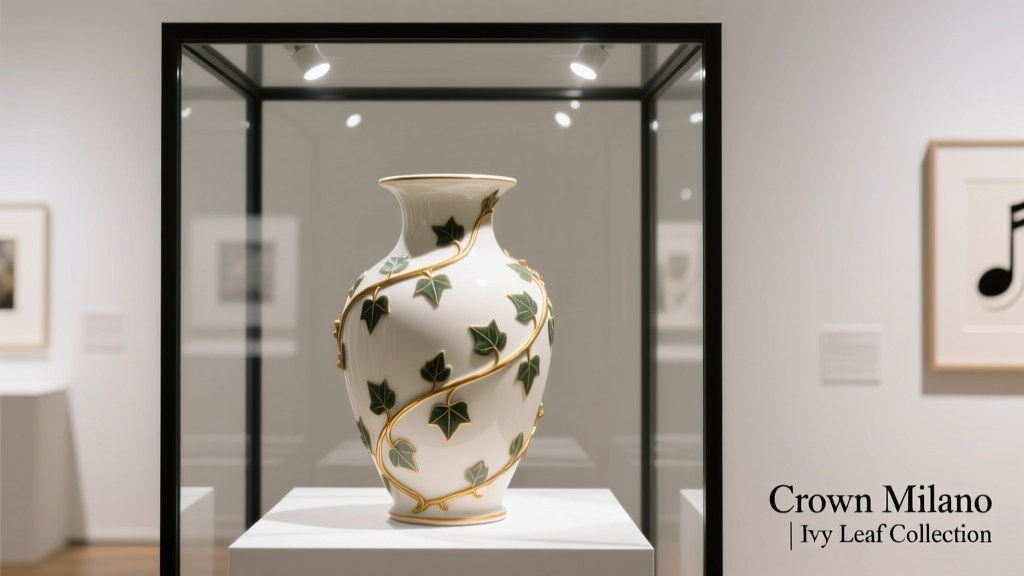
Crown Milano Vase: Ivy Leaves & Vines with Gold Outlining — Authentication, Provenance, and Market Analysis of the 10½-Inch Ceramic Piece

Sheet Music 'Yellow Rose of Texas' Dedicated to President Franklin D. Roosevelt, 1936: Provenance, Design, and Political Context
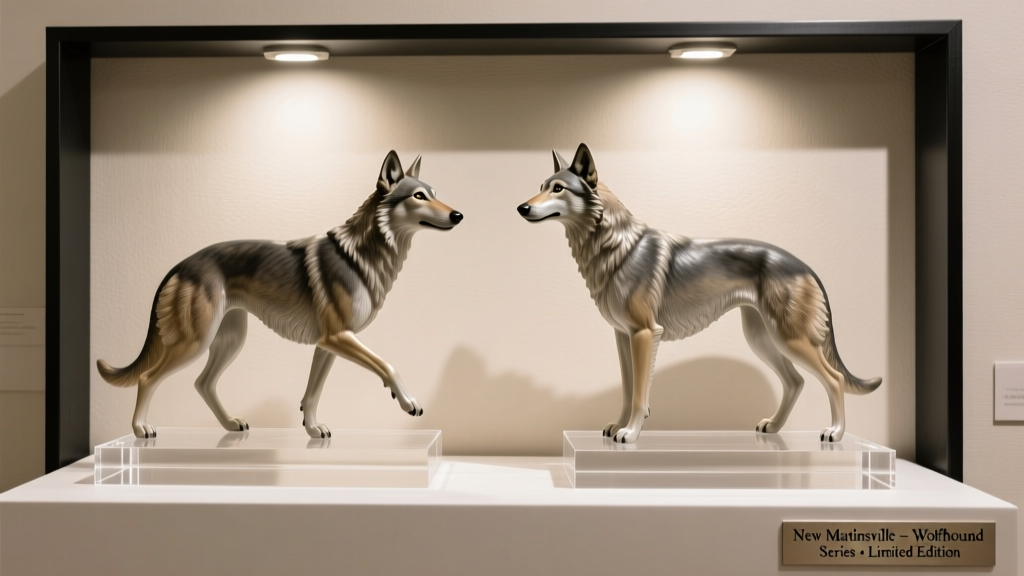
Authenticating and Valuing the New Martinsville Wolfhound Figurine Pair: Clear Base, 7 × 9 Inch Format

The William Calder Lighthouse Pewter Coffeepot: Authentication, Provenance, and Market Significance

Advertising Tin: Green Mill Coffee 1 Lb — Production History, Design Analysis, and Market Authentication
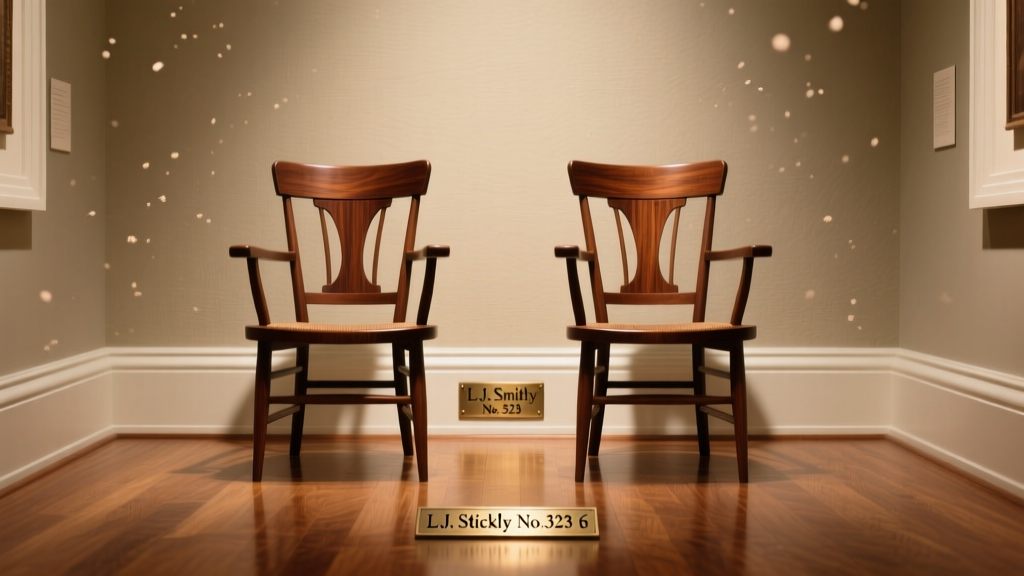
L. J. G. Stickley No. 323-6 Chair Set: Authentication, Provenance, and Market Analysis

Alka-Seltzer Electric Round Clock (12-Inch): Advertising Artifact, Mechanical Heritage, and Market Authentication
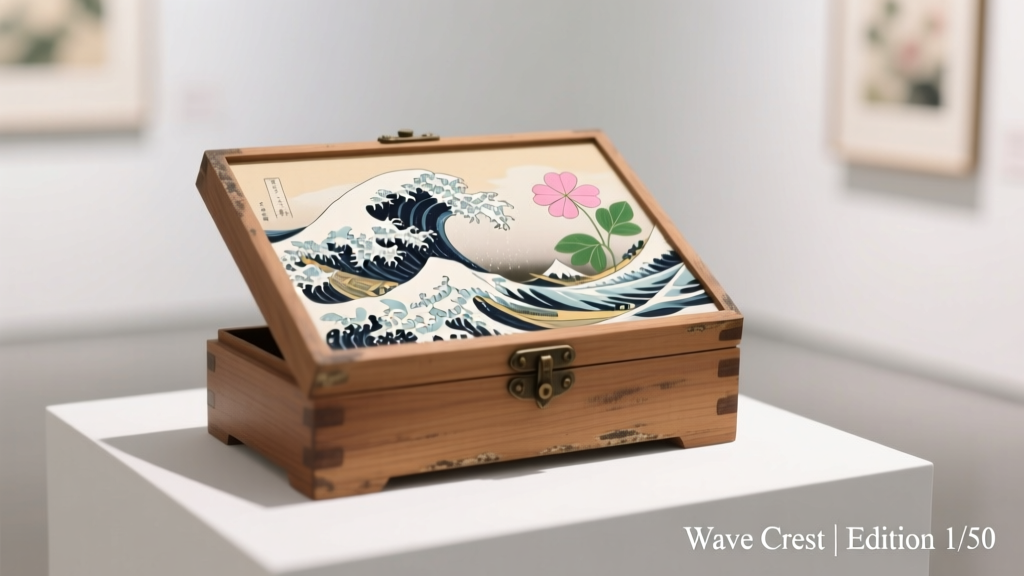
Authentication and Market Analysis of the Wave Crest Box: Pink Clover and Green Leaves on White Hinged Cover (4½ × 6 in)
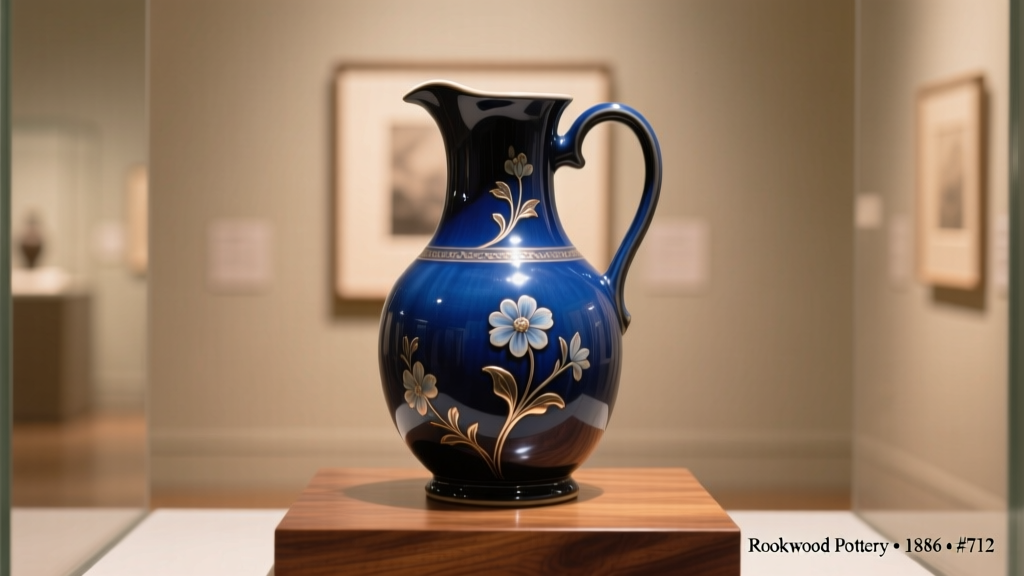
Rookwood Pitcher, Blue Shading Glossy Glaze, 1886 — Authentication, Provenance, and Market Significance of a Landmark American Art Pottery Piece