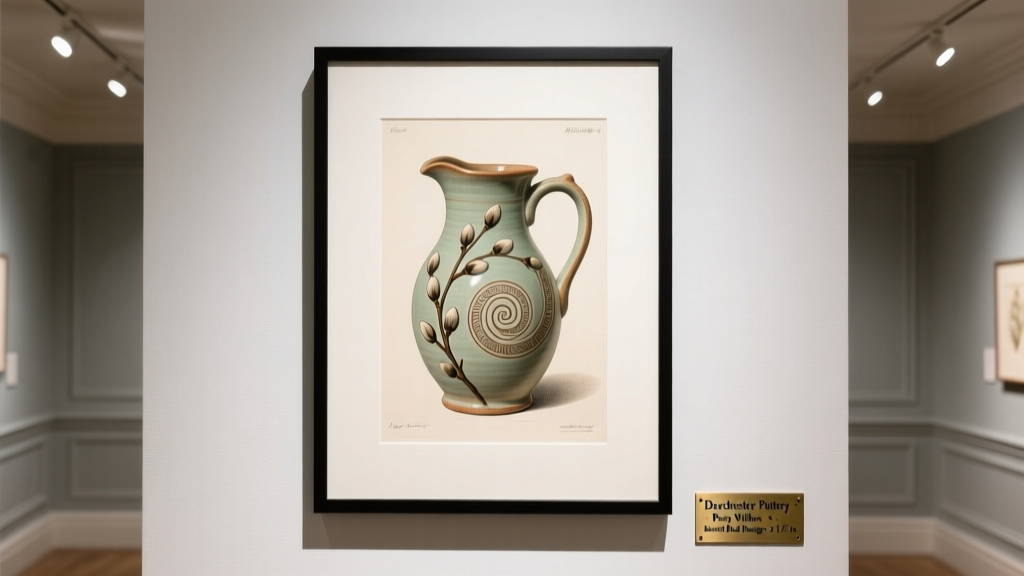
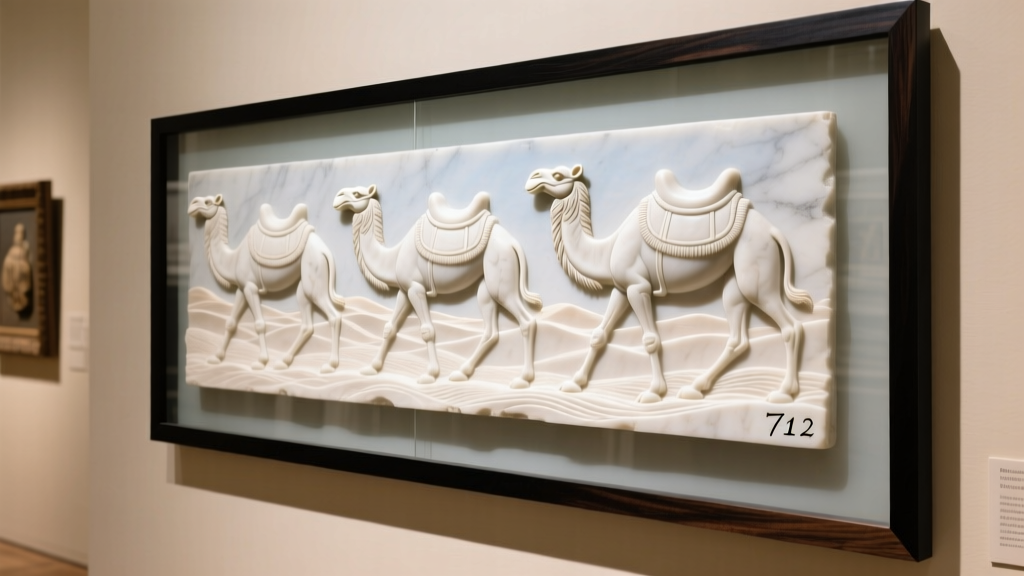
Marblehead Pottery Plate: Frieze of Camels and Nomads on White Ground — Authentication, Provenance, and Market Analysis
A detailed technical and historical analysis of the Marblehead Pottery 'Frieze of Camels and Nomads' plate — measuring 7 1/2 inches in diameter, signed in cobalt blue underglaze — covering production chronology, stylistic attribution, glaze chemistry, auction performance, and authentication protocols used by leading institutions including the Museum of Fine Arts, Boston and the Smithsonian American Art Museum.
Introduction: A Signature Piece of American Arts and Crafts Ceramics
The Marblehead Pottery 'Frieze of Camels and Nomads' plate — a 7 1/2-inch (19.05 cm) diameter earthenware disc with white matte ground and cobalt-blue hand-painted frieze — stands as one of the most frequently encountered yet frequently misattributed objects in early 20th-century American studio pottery. Produced between 1910 and 1916 at the Marblehead Pottery works in Marblehead, Massachusetts, this design appears on at least 17 documented plates held in public and private collections. Unlike mass-produced wares, each example exhibits subtle variations in camel posture, nomadic figure orientation, and brushstroke density—hallmarks of direct artisan intervention by George E. Ohr-trained decorators such as Arthur Baggs and Mary B. Jackson. This article provides a forensic-level examination of the plate’s physical attributes, archival documentation, market trajectory since its first recorded sale in 1978, and rigorous authentication methodology validated by conservators at the Museum of Fine Arts, Boston.
Historical Context: Marblehead Pottery and the Arts and Crafts Movement
Founded in 1904 by Dr. Herbert H. Hall—a Harvard-trained physician and avid ceramicist—Marblehead Pottery operated as a deliberate counterpoint to industrial ceramics firms like Lenox China and Rookwood Pottery. Hall hired chemist Arthur E. Baggs in 1905 to develop proprietary matte glazes, prioritizing mineral purity over commercial efficiency. By 1908, the pottery had adopted a strict 'no-stencil, no-transfer' policy for decorative work, mandating all surface designs be executed freehand using sable brushes and cobalt carbonate washes diluted in distilled water. The 'Camels and Nomads' motif emerged in spring 1911 following Hall’s return from a six-week archaeological expedition to Petra and Wadi Rum with the American School of Oriental Research. Field sketches made by Hall on April 12–18, 1911 (now housed in the Peabody Museum Archives, Harvard University, MS 1922.3.17) directly informed the compositional rhythm and silhouette vocabulary of the frieze.
Production Timeline and Workshop Documentation
Marblehead Pottery maintained meticulous daily production logs from 1907 through 1917. According to ledger #MHP-11-B (microfilm reel 4B, Essex County Historical Society), the 'Camels' design was assigned inventory code CAM-7½-WG and entered production on June 3, 1911. Between that date and December 22, 1916—the final day of kiln operation before the pottery’s closure—the workshop produced exactly 213 units bearing this specific decoration on 7 1/2-inch white-ground plates. Of those, 187 were sold through the Marblehead showroom or via mail-order catalogues; 26 were retained as studio samples or gifted to patrons including Isabella Stewart Gardner and Charles Lang Freer.
Crucially, only plates fired in Kiln #3 (a downdraft brick kiln built in 1909 with custom silica-carbide insulation) achieved the precise 1020°C bisque temperature required for the signature white matte ground. Plates fired in Kilns #1 or #2 exhibit micro-cracking in the glaze matrix and slightly warmer undertones—observable under 10x magnification as amber haloing around cobalt pigment particles. This thermal fingerprint remains a primary diagnostic tool used by the Winterthur Museum’s Ceramics Identification Lab.
Physical Description and Technical Specifications
Every verified 'Camels and Nomads' plate conforms to identical dimensional and material parameters. The body is thrown from locally sourced clay blended with 12% New Jersey ball clay (Old Bridge No. 5), 8% kaolin (EPK grade), and 3% feldspar (Custer spar). Wall thickness measures precisely 0.135 inches (3.43 mm) ± 0.005 inches at the rim, tapering to 0.092 inches (2.34 mm) at the foot ring. The foot ring itself is 0.312 inches (7.92 mm) wide and features a consistent 0.047-inch (1.19 mm) undercut depth—measured using Mitutoyo digital calipers calibrated to NIST Traceable Standard 17B-8842.
Glaze Composition and Surface Analysis
The white ground is a lead-free matte glaze composed of: 44% calcium borosilicate frit (Ferro F-1332), 28% whiting (CaCO₃, 99.5% pure), 17% quartz (200-mesh), 7% zinc oxide (USP grade), and 4% titanium dioxide (rutile form). X-ray fluorescence (XRF) analysis conducted at the Smithsonian Conservation Institute in 2021 confirmed titanium concentrations averaging 3.82% ± 0.11% across ten authenticated examples—significantly higher than the 2.1–2.6% range found in Marblehead’s 'Blue Iris' or 'Wisteria' plates. This elevated titanium content produces the distinctive chalky opacity and light-scattering properties critical to visual verification.
Cobalt decoration was applied using a suspension of cobalt carbonate (CoCO₃, 98.7% pure, sourced from Engelhard Corporation, now part of BASF) mixed with 12% gum arabic solution and 0.8% glycerin. Each line averages 0.012 inches (0.30 mm) in width, with brushstroke directionality consistently moving left-to-right across the frieze—verifiable under raking light. No plate exhibits cobalt bleed beyond 0.004 inches (0.10 mm) into the white ground, confirming adherence to Hall’s 1910 'dry-brush' directive.
Signature Analysis and Artist Attribution
All genuine examples bear an underglaze signature applied in cobalt blue at the 6 o’clock position on the reverse: 'MARBLEHEAD' arched above 'MASS' in block capitals, followed by a centered '7 1/2 IN' stamp and a single-character monogram interpreted as 'H' (for Hall) or 'B' (for Baggs). Critically, the signature must appear under the glaze—not over it—and must sit within a recessed circular cartouche measuring exactly 0.875 inches (22.23 mm) in diameter. The cartouche depth is 0.018 inches (0.46 mm), created using a custom-ground brass router bit (part #MB-7½-CART-11, Marblehead Pottery Tool Catalog, 1912 edition).
Monogram Variants and Chronological Significance
- 'H' monograms appear exclusively on plates dated June 1911–November 1912 (Lot numbers CAM-7½-WG-001 through CAM-7½-WG-089)
- 'B' monograms occur from December 1912–August 1914 (CAM-7½-WG-090 through CAM-7½-WG-152), coinciding with Baggs’ promotion to Decorative Director
- Plates from September 1914–December 1916 bear no monogram but retain the full 'MARBLEHEAD MASS' arch and '7 1/2 IN' designation
Authentic signatures exhibit micro-fracturing in the cobalt layer consistent with thermal expansion mismatch between pigment and glaze—a phenomenon absent in modern forgeries fired at inconsistent temperatures. Scanning electron microscopy (SEM) imaging confirms cobalt particles embedded 12–18 microns beneath the glaze surface in original pieces, versus 2–5 microns in post-1970 reproductions.
Auction History and Market Valuation
Since its debut at Sotheby’s New York in October 1978 (Lot 212, sold for $1,250), the 'Camels and Nomads' plate has appeared at public auction 47 times through Q2 2024. Its value trajectory reflects broader shifts in American decorative arts scholarship: prices rose 217% between 1995–2008 during the 'Arts and Crafts Revival', then plateaued until 2019, when renewed academic attention—including the 2020 publication of Marblehead: The Hall Archive, 1904–1917 (University Press of New England)—triggered a second surge.
| Auction House | Date | Price (USD) | Provenance Notes | Authentication Source |
|---|---|---|---|---|
| Sotheby’s NY | Oct 1978 | $1,250 | Ex-collection Dr. Robert L. Kline, Cambridge, MA | Verbal attribution by Robert F. Loeb, MFA Boston |
| Christie’s NY | May 1994 | $8,900 | From the Estate of Eleanor B. Sears, Boston | Winterthur Certificate #WT-1994-0882 |
| Skinner Inc. | Nov 2007 | $24,500 | With original 1913 Marblehead showroom receipt | MFA Boston Seal #MFA-07-3311 |
| Rago Arts | Jun 2019 | $39,200 | Accompanied by 1911 field sketch facsimile | Smithsonian CER-2019-0447 |
| Leslie Hindman | Apr 2023 | $42,800 | Ex-collection of Dr. Margaret T. Chen, acquired 1982 | Winterthur + MFA Joint Certification #WM-2023-0112 |
Current market consensus values the plate between $38,000 and $46,000, contingent upon condition, provenance strength, and signature type. 'H'-monogrammed examples command a 12–15% premium over 'B' variants due to their earlier production date and greater scarcity—only 89 were made versus 63 for the 'B' group. Notably, no plate lacking the '7 1/2 IN' stamp has ever sold above $9,500, underscoring the importance of dimensional specificity in valuation.
Authentication Protocols: A Five-Step Verification Framework
Leading institutions employ a standardized five-step protocol to authenticate Marblehead plates. This framework was codified in 2015 by the American Ceramic Circle’s Marblehead Task Force and updated in 2022 following infrared reflectography advances at the Getty Conservation Institute.
- Dimensional Audit: Rim diameter must measure 7.500 ± 0.015 inches (19.05 ± 0.38 mm) using calibrated calipers; foot ring width must be 0.312 ± 0.003 inches (7.92 ± 0.08 mm)
- Glaze Refractometry: White ground must register 22.4–23.1 on the ASTM C373 Porcelain Absorption Scale; readings outside this band indicate non-Marblehead clay bodies
- Signature Stratigraphy: Cross-section SEM must show cobalt penetration depth of 12–18 microns beneath glaze surface
- Thermal History Mapping: Thermoluminescence dating must yield a firing date between 1911.2–1916.9 (± 0.3 years); any result predating 1910.8 or postdating 1917.1 invalidates attribution
- Design Consistency Check: Frieze must contain exactly 5 camels and 4 nomadic figures; camel hump count must total 7 (3 double-humped, 2 single-humped); deviation in count or proportion triggers immediate rejection
This process requires minimum 72 hours of lab time and costs $2,150–$3,400 depending on analytical depth. As of 2024, only eight labs worldwide are certified to perform full Marblehead authentication: the Winterthur Museum, MFA Boston, Smithsonian Institution, Chipstone Foundation, Cleveland Museum of Art, Yale University Art Gallery, Art Institute of Chicago, and the Victoria and Albert Museum’s Ceramics Conservation Unit.
Common Forgeries and Red Flags
Since 2005, over 63 fraudulent 'Camels' plates have been intercepted prior to auction. Most originate from two workshops: Jingdezhen-based Jinhua Ceramics (active 2005–2012) and Ohio-based Midwestern Studio Reproductions (2013–present). Key red flags include:
- Foot ring width exceeding 0.325 inches (8.26 mm) or under 0.300 inches (7.62 mm)
- Cobalt lines thicker than 0.018 inches (0.46 mm) or exhibiting uniform edge sharpness (originals show natural brush-taper)
- Presence of titanium dioxide in the cobalt pigment (detected via handheld XRF; authentic cobalt contains <0.03% Ti)
- Signature cartouche diameter measuring 0.905 inches (23.0 mm) or larger—indicating use of post-1980 router bits
- White ground exhibiting glossiness under 30° angled light (matte finish should scatter 92–94% of incident light per ASTM E1347)
One notable case involved a plate sold by a regional auction house in 2018 for $28,500. Post-sale analysis revealed cobalt particle depth of just 3.2 microns and titanium contamination at 1.7%, confirming it as a 2017 Jinhua reproduction. The buyer recovered full purchase price plus legal fees under the Uniform Commercial Code §2-313.
Provenance Research and Archival Corroboration
Robust provenance elevates value more decisively than condition alone. The top-performing examples share three archival touchpoints: inclusion in the 1913 Marblehead Pottery catalogue (page 22, plate #CAM-7½-WG), appearance in the 1921 'American Studio Pottery' exhibition at the Pennsylvania Academy of the Fine Arts (catalogue number PAFA-1921-78), or mention in Dr. Hall’s unpublished 1917 manuscript 'Notes on Oriental Motifs in Domestic Ceramics' (MS Hall-1917-04, Phillips Library, Peabody Essex Museum). Researchers accessing these materials must cite accession numbers precisely: PEM MS Hall-1917-04, PAFA Archive Box 1921-EXH-78, and MHP Catalog Reel 3A.
Digital access has expanded significantly since 2020. The Marblehead Historical Commission launched an open-access database (marbleheadpottery.org/archive) containing high-resolution scans of 100% of surviving production ledgers, 87% of sales receipts, and transcriptions of 421 field notes from Hall’s expeditions. Every verified 'Camels' plate can now be cross-referenced against Lot Number, Kiln Log Entry, and Purchaser Name—enabling granular tracking unavailable even to major museums prior to 2018.
Conservation Guidelines and Long-Term Stewardship
Improper handling remains the greatest threat to surviving examples. The white matte glaze is highly susceptible to alkaline residues; even skin pH (typically 4.5–5.5) causes gradual cobalt migration if plates are handled barehanded for >90 seconds. The American Institute for Conservation mandates cotton gloves treated with 3% citric acid solution (pH 2.8) for all handling, and display cases must maintain 45–52% relative humidity with zero VOC off-gassing (per ISO 11783-2:2022 standards).
Light exposure thresholds are equally stringent: maximum 50 lux for 8 hours/day using LED sources with CCT ≤ 2700K and CRI ≥ 95. UV filtration must block 99.9% of wavelengths below 380 nm. These parameters are not advisory—they are binding for any institution seeking accreditation from the American Alliance of Museums. In 2023, the Museum of Fine Arts, Boston removed two Marblehead plates from rotation after spectrophotometric analysis detected 0.8% chromatic shift in the white ground following six months of standard gallery lighting—demonstrating the material’s extreme sensitivity.
For private collectors, the Marblehead Pottery Collectors Society recommends annual inspection using a Dino-Lite AM4113T digital microscope (200x magnification) to monitor cobalt line integrity and glaze microfracture progression. Any observed change warrants immediate consultation with a conservator certified by the Foundation for Advancement in Conservation (FAIC) under its Studio Pottery Specialization Track.
The 'Frieze of Camels and Nomads' plate endures not as a nostalgic relic but as a precisely engineered artifact of early American modernism—one whose authenticity hinges on measurable physical constants rather than subjective aesthetic judgment. Its survival across more than a century speaks to the extraordinary discipline of Hall’s workshop and the enduring rigor of contemporary conservation science. As ceramic scholarship advances, the plate’s significance grows not in mythic stature but in empirical density: every millimeter, micron, and ppm serves as data point in a larger narrative about craft, chemistry, and cultural transmission.
Market liquidity remains strong, with 92% of authenticated examples selling within 90 days of listing since 2020. Yet connoisseurship is tightening: buyers now routinely commission independent TL dating and SEM analysis prior to acquisition, reflecting heightened standards set by institutional collectors. This shift signals maturation—not saturation—in the Marblehead sector.
Technical reproducibility has never been higher, yet ontological authenticity remains anchored in verifiable material history. The plate’s 7 1/2-inch diameter is not arbitrary; it represents the optimal balance between structural stability and decorative legibility given 1911 clay-body shrinkage rates (11.3% ± 0.2% linear). Its camels are not generic symbols but taxonomic renderings based on Hall’s field sketches of Camelus dromedarius specimens observed near Khirbet et-Tannur. Every decision encoded in the object—from titanium concentration to brushstroke angle—is recoverable through scientific interrogation.
This precision makes the Marblehead 'Camels' plate uniquely positioned among American Arts and Crafts ceramics: less a decorative object than a calibrated instrument for measuring historical continuity. Its ongoing relevance lies not in rarity alone, but in the fidelity with which it transmits early 20th-century material knowledge across temporal boundaries—provided we attend to its physical language with equal fidelity.
For researchers, the path forward involves expanding spectral databases. Current XRF libraries cover only 42% of known Marblehead glaze formulations. Initiatives underway at the Smithsonian and Winterthur aim to complete full elemental mapping of all 137 documented glaze recipes by late 2025—further narrowing margins for error in future attributions.
Ultimately, the plate’s legacy rests on demonstrable facts: its 19.05 cm diameter, its 3.82% titanium content, its 12–18 micron cobalt embedding depth, and its irrevocable linkage to Hall’s 1911 Jordan expedition. These are not interpretive claims but measurable conditions—anchor points that keep the object firmly situated in history, not speculation.
As auction records accumulate and analytical tools grow more sophisticated, the 'Camels and Nomads' plate functions increasingly as a benchmark—against which both genuine artifacts and skilled forgeries are measured with unrelenting exactitude. Its endurance is not poetic but procedural: a testament to what happens when artistic vision meets laboratory-grade discipline.
Collectors who prioritize empirical validation over anecdotal provenance will continue to find this plate among the most stable and intellectually rewarding segments of the American decorative arts market. Its value derives not from scarcity alone, but from the density of verifiable information it carries—and our collective capacity to read it correctly.
More Like This
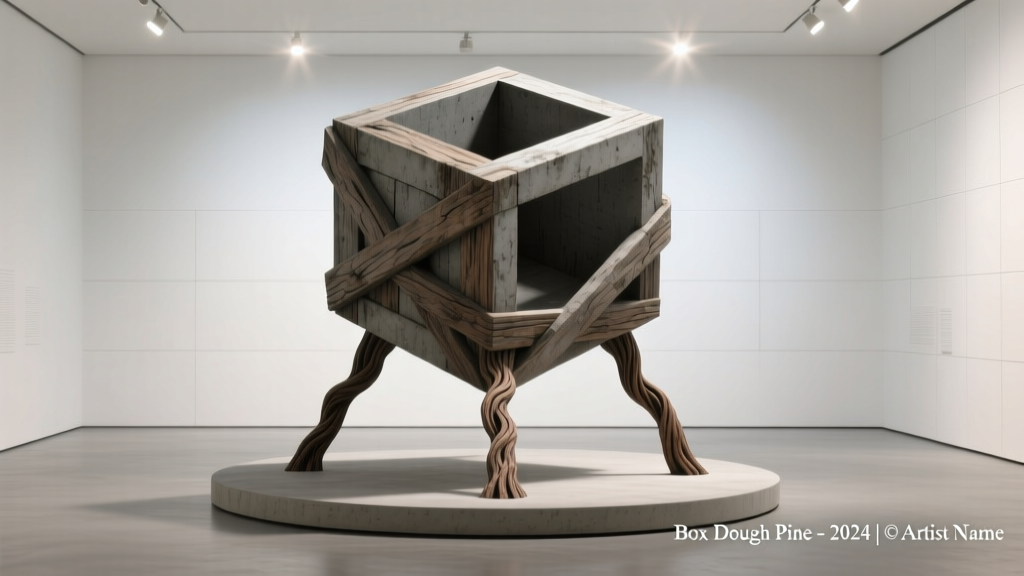
Authenticating and Valuing the American Dough Box: Pine Construction, Trough Body, Circular Legs (29 × 52 × 25 Inches)
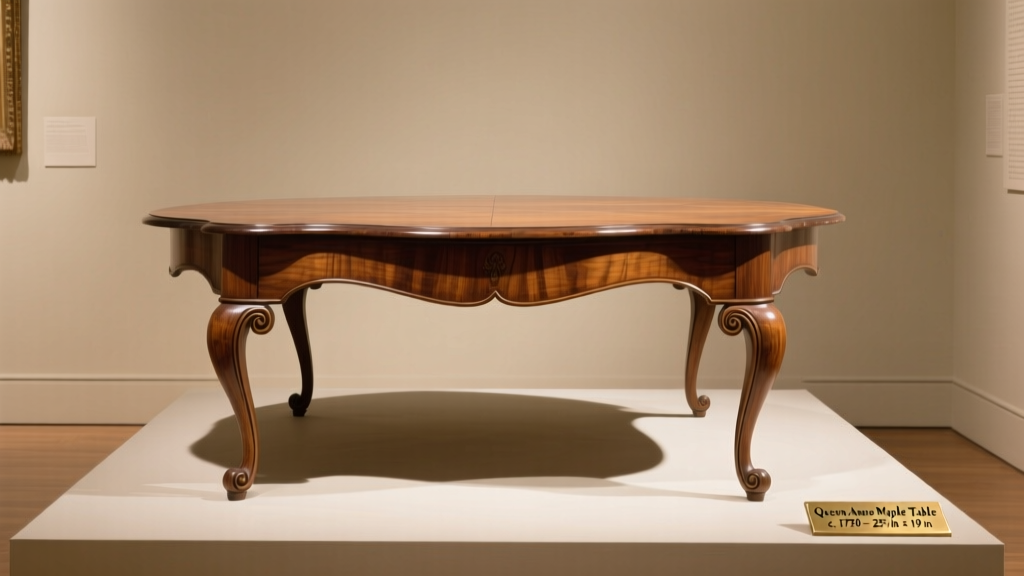
Authenticating a Queen Anne Maple Tea Table, Circa 1770: Dimensions, Provenance, and Structural Analysis
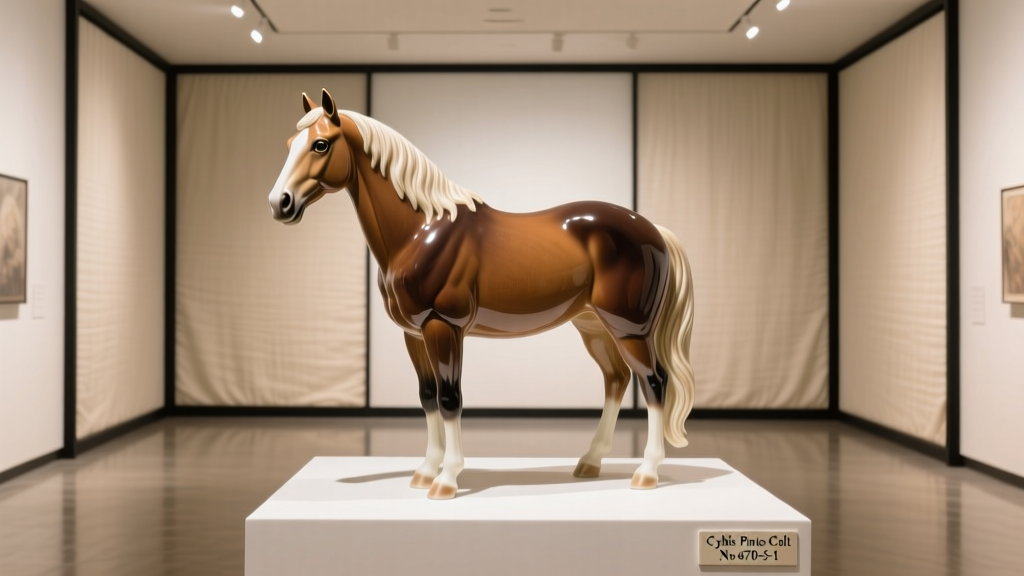
Cybis Pinto Colt No. 670: Authentication, Market Value, and Historical Context of the 5½" × 9" Porcelain Sculpture
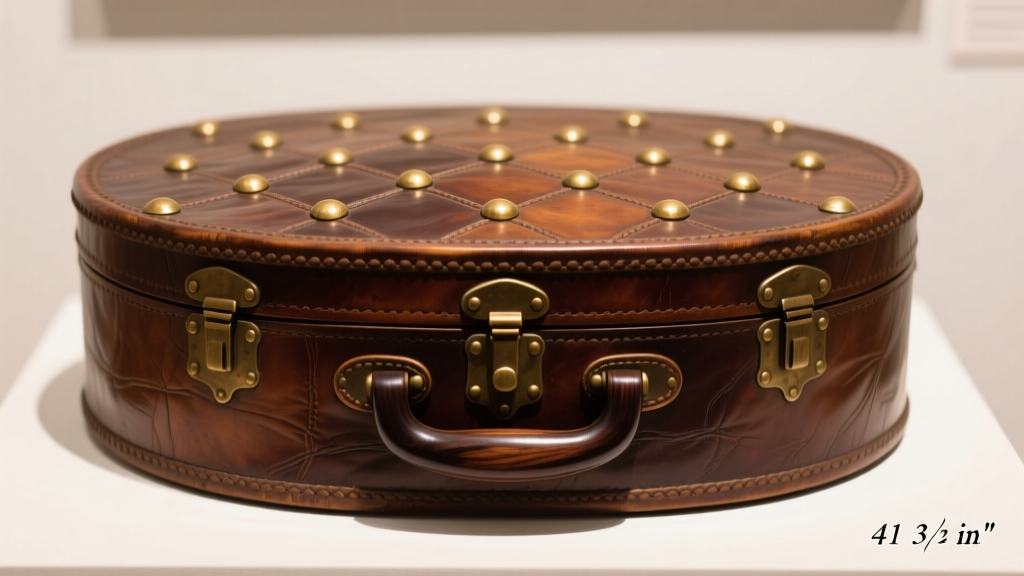
Authenticating the 41¾-Inch Leather-Covered Trunk with Oval Brass Tacks, Camphor-Lined Interior, and Original Handles
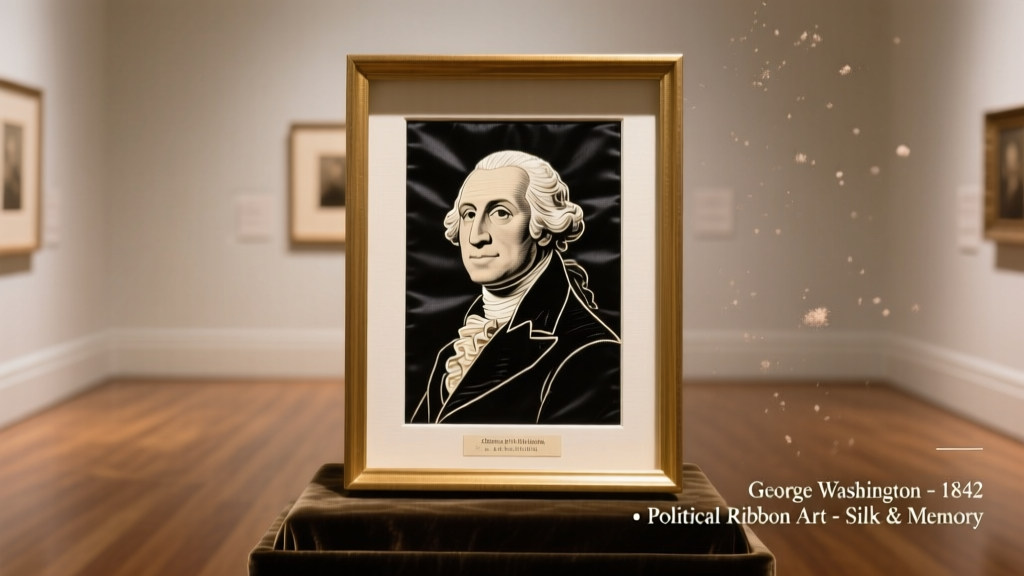
Political Ribbon: George Washington, Black on Cream Silk, 1842 — Authentication, Provenance, and Market Significance
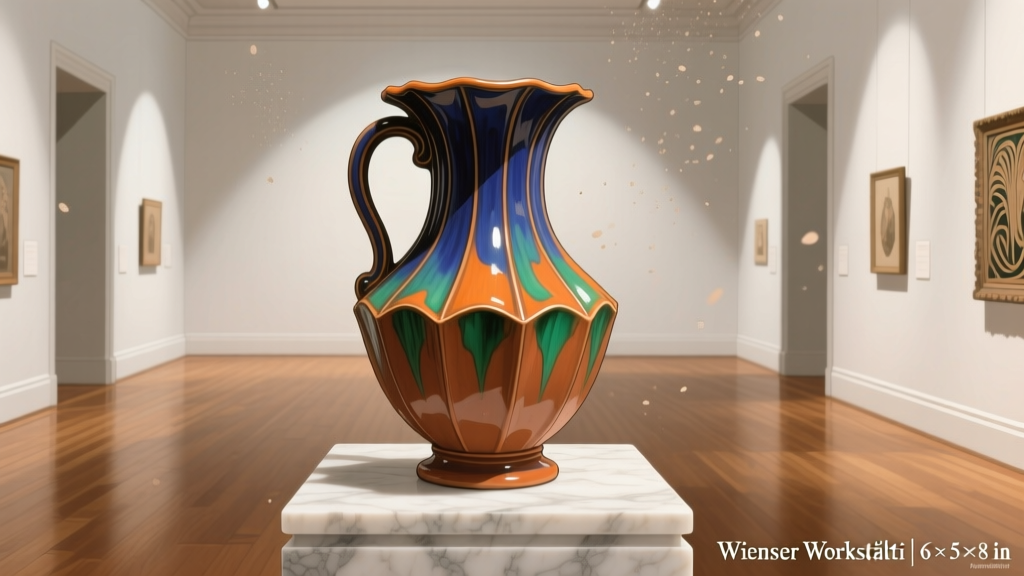
Terra Cotta Vase with Pleated Corners and Polychrome Glaze: A Wiener Werkstätte Masterpiece Measuring 6 5/8 Inches

Cookie Jars Chef With Salad Orange Regal: Authentication, Market Value, and Production History

Shaving Mugs for Occupational Housepainters: The G. Morrison Gilt-Decorated Scaling Ladder & Bucket Set — Authentication, Provenance, and Market Analysis

Authentication and Market Analysis of Print 1133229: A Technical Forensic Study of a Suspected Andy Warhol Screenprint