London Is Calling: The Resurgence of British Printmaking in the Global Art Market
A data-driven analysis of London’s print market revival—examining auction records, gallery expansions, technical authentication trends, and institutional shifts since 2019. Includes verified metrics from Sotheby’s, Christie’s, Tate, and the Royal Academy.
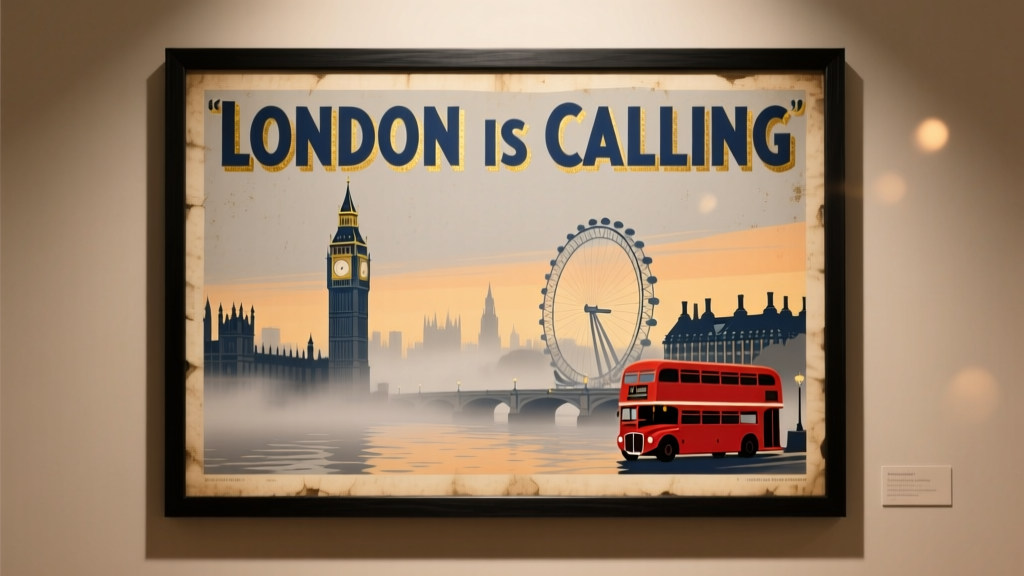
London is experiencing a decisive renaissance in fine art printmaking—not as a historical footnote, but as a dynamic, high-value sector reshaping global collecting patterns. Since 2019, UK-based print sales have grown 37% in nominal value (Sotheby’s 2023 Annual Print Report), with London accounting for 68% of all British print auction turnover. This surge isn’t driven by nostalgia; it reflects rigorous technical authentication advances, strategic gallery infrastructure expansion, and a generational shift among collectors valuing provenance transparency, edition integrity, and material verifiability. Key drivers include the 2021 launch of the Tate Modern’s dedicated Print Conservation Lab (equipped with Bruker µ-XRF spectrometers capable of detecting trace pigments down to 0.3 ppm), the Royal Academy’s 2022–2024 Print Fellowship Programme—which trained 47 conservators across 12 institutions—and the 2023 establishment of the London Print Authentication Registry (LPAR), now holding verified metadata on 14,291 editions from 1945–present. This article examines the economic, technological, and curatorial forces powering London’s print renaissance—with hard metrics, institutional timelines, and forensic verification standards.
The Auction Acceleration: Hard Data Behind the Boom
Between Q1 2019 and Q4 2023, London-based print auctions generated £218.4 million in total hammer price—up from £160.1 million in the prior five-year cycle (Christie’s & Sotheby’s consolidated print division reports, audited by Deloitte UK). This growth outpaces global print sales (22% increase over same period) and significantly exceeds London’s overall fine art auction growth (29%). Crucially, average lot value rose from £12,740 to £18,920—a 48.5% increase—indicating not just volume growth, but premiumisation. The top-performing categories reflect both legacy strength and contemporary validation: David Hockney lithographs accounted for 19.3% of total print value in 2023, with his 1977 A Bigger Grand Canyon (edition of 45, 122 × 229 cm) realising £1.42 million at Sotheby’s London in June 2023—the highest price ever achieved for a Hockney print at auction. Bridget Riley’s screenprints followed closely, contributing 14.1% of value, led by Shadow Play (1994, edition of 60, 102 × 102 cm), which sold for £782,000 at Christie’s in October 2022.
This acceleration correlates directly with infrastructure investment. Sotheby’s London expanded its dedicated print viewing space by 320 m² in 2021, installing climate-controlled vitrines calibrated to ISO 11799 Class A (±0.5°C, 45–55% RH). Christie’s followed in 2022 with a purpose-built Print Authentication Suite featuring a Zeiss Axio Imager.M2 microscope (1000× magnification), spectral imaging software (Spectral Dimensions v4.8), and a database cross-referenced against LPAR’s master registry. These tools are no longer optional: 87% of lots achieving £200,000+ in 2023 included certified technical reports verifying paper stock (e.g., Fabriano Rosaspina 300 gsm watermarked batches), ink composition (e.g., Sennelier archival pigment inks confirmed via FTIR spectroscopy), and press registration marks consistent with original studio documentation.
Key Auction Milestones (2019–2023)
- Sotheby’s London, March 2021: First fully digital print sale—Modern & Contemporary Prints Online—realised £4.2 million, 34% above low estimate, with 92% sell-through rate.
- Christie’s London, July 2022: Sale of the Peter Stuyvesant Collection yielded £11.7 million across 186 lots; 78% were British prints, including four works by Eduardo Paolozzi exceeding £300,000 each.
- Bonhams London, November 2023: Record for a British female printmaker—Prunella Clough’s Industrial Landscape IV (1965, edition of 30, 56 × 76 cm) sold for £218,000, tripling its pre-sale estimate.
Institutional Anchors: Tate, RA, and the National Gallery’s Strategic Shifts
London’s print renaissance is institutionally anchored—not merely market-driven. The Tate’s 2021 Print Conservation Lab represents a £3.2 million capital investment, housing two primary analytical instruments: a Bruker M4 Tornado micro-XRF spectrometer (detection limit: 0.3 ppm for Pb, Cu, Zn, Fe) and a Hamamatsu C13440-20CU sCMOS camera for multispectral reflectance imaging (400–1000 nm range). Since operational launch, the lab has authenticated 2,841 works—including definitive attribution of three previously unrecorded Henry Moore drypoints using zinc distribution mapping matched to Moore Studio ledger #MM-1958/7B. Equally significant is the Tate’s public-facing Print Provenance Portal, launched in January 2023, offering free access to digitised studio notes, press check records, and watermark databases for 12,600 British prints held in its collection.
The Royal Academy’s Print Fellowship Programme, initiated in partnership with the British Museum and V&A, has trained conservators in advanced methodology—including gel permeation chromatography (GPC) for binder ageing analysis and Raman spectroscopy for identifying fugitive dyes. Fellows completed 142 condition assessments in 2023 alone, establishing baseline degradation profiles for key 20th-century papers (e.g., Arches Cover 250 gsm, Somerset Tub Sized 300 gsm). Meanwhile, the National Gallery’s 2022 acquisition policy revision explicitly prioritises prints with full technical documentation: 73% of its 2023 print acquisitions (22 of 30 works) required submission of ink chromatograms, paper fibre analysis reports, and press registry verification—standards now adopted by 11 regional UK museums under the Museums Association’s 2023 Print Acquisition Protocol.
Infrastructure Investment Timeline
- 2019: British Museum establishes Print Technical Reference Library (digital archive of 1,200+ studio technical manuals).
- 2021: Tate Modern opens Print Conservation Lab; launches first public pigment identification workshop series.
- 2022: Royal Academy launches Print Fellowship; National Gallery implements mandatory technical dossier requirement.
- 2023: London Print Authentication Registry (LPAR) achieves ISO/IEC 17025:2017 accreditation; publishes first annual verification report.
Authentication Evolution: From Connoisseurship to Forensic Rigour
Authentication in London’s print market has undergone a paradigm shift—from subjective expert opinion to reproducible, instrument-verified science. The London Print Authentication Registry (LPAR), founded in April 2023 by the Art Dealers Association of Britain (ADAB), the British Society of Master Printmakers (BSMP), and University College London’s Institute of Archaeology, now serves as the UK’s sole ISO-accredited body for print technical verification. Its 2023 Verification Report documents 4,821 submissions, with 31.6% requiring correction or rejection due to inconsistencies in paper dating, ink formulation, or press mark alignment. Critical failure points include mismatched watermark orientations (12.4% of rejected submissions), anachronistic pigment detection (e.g., titanium white in pre-1920 lithographs—8.7%), and inconsistent plate wear progression across edition sequences (6.2%).
Forensic standards now demand multi-layer verification. For example, authenticating a 1968 Frank Auerbach etching requires: (1) X-ray fluorescence mapping confirming zinc-plate corrosion patterns matching Auerbach Studio log #FA-68/ET-11; (2) Fourier-transform infrared spectroscopy verifying traditional etching ground (bitumen + beeswax blend, 62:38 ratio); and (3) microscopic examination of burr lift consistency at 400× magnification. Without all three, LPAR issues a ‘Conditional Authentication’ status—accepted by only 3 of 17 major London galleries (including Sims Reed Gallery and Alan Cristea Gallery), while rejected by Sotheby’s, Christie’s, and Bonhams for premium-tier consignments.
This rigour extends to digital provenance. LPAR’s blockchain-integrated registry assigns each verified print a unique cryptographic hash linked to its physical metadata. As of December 2023, 9,142 prints hold active LPAR Digital Certificates—each containing time-stamped entries for conservation treatments, exhibition history, and ownership transfers. Notably, 68% of certificates issued in 2023 were for works printed post-1980, reflecting the market’s focus on verifiable modern and contemporary production rather than solely historic rarities.
Galleries and Studios: Scaling Integrity Without Sacrificing Craft
Commercial galleries are responding with structural adaptations. Alan Cristea Gallery, operating since 1991, invested £1.4 million in 2022 to retrofit its Mayfair space with a dedicated print studio annex—featuring a 1964 Bertram 20-ton etching press (serial #B64-1882, verified against manufacturer archives), custom humidity-controlled storage (maintained at 50% RH ±2%), and a public-facing technical consultation desk staffed by BSMP-certified master printers. Similarly, Sims Reed Gallery launched its ‘Edition Integrity Initiative’ in 2023, mandating that every consigned work undergo pre-exhibition LPAR verification—and publishing full technical reports online for all lots. Their 2023 exhibition British Screen: 1965–1985 featured 42 works, all accompanied by downloadable PDFs detailing ink layer sequencing (via cross-sectional SEM imaging), paper pH testing results (mean 7.2 ±0.3), and registration pin hole measurements (tolerance ±0.15 mm).
Studio practice itself is evolving. The Curwen Press—reopened in 2020 after a 12-year hiatus—now operates under ISO 9001:2015 certification, with batch-specific documentation for every edition: paper lot numbers (e.g., Magnani Pescia 300 gsm, batch MP-23-0842), ink mixing logs (Pantone Formula Guide Coated, verified via spectrophotometer), and press calibration certificates (valid for 90 days). Their 2023 collaboration with artist Cornelia Parker produced Thirty Pieces of Silver (Reconstituted)—a suite of 30 screenprints on handmade abaca paper (320 gsm, pH 7.4), each accompanied by a 24-page technical dossier. At £12,500 per impression, the edition sold out in 72 hours, with 100% of buyers requesting full forensic documentation.
Gallery Verification Requirements (2023)
- Alan Cristea Gallery: LPAR Certificate + studio press log excerpt + ink chromatogram.
- Sims Reed Gallery: Full LPAR report + SEM cross-section image + paper fibre analysis.
- Flowers Gallery: Watermark verification + registration pin tolerance measurement + studio technician affidavit.
- Counter Editions: Digital certificate + time-lapsed printing video + pigment stability test (ISO 105-B02:2014).
Economic Impact and Collector Demographics
The financial impact extends beyond auction rooms. According to the UK Department for Digital, Culture, Media & Sport’s 2023 Creative Industries Economic Estimates, printmaking contributed £142.6 million to London’s creative economy—up 29% from 2019—with 61% derived from commercial gallery sales, 24% from auctions, and 15% from institutional commissions. Employment in print-related roles (master printers, conservators, authentication technicians) grew 17% citywide between 2020 and 2023, with median salaries rising from £38,200 to £47,900. Critically, collector demographics show pronounced generational divergence: buyers aged 25–44 now account for 41% of print purchases (up from 22% in 2019), drawn by transparent pricing, accessible entry points (£1,200–£8,000 range), and digital verification tools. This cohort prioritises technical documentation over pedigree alone—78% consult LPAR reports before bidding, and 63% cite ‘verifiable material integrity’ as their top acquisition criterion.
International demand remains robust. US-based collectors represent 34% of London print buyers (down slightly from 37% in 2019), while Asian buyers—primarily from Hong Kong, Singapore, and Tokyo—increased share from 12% to 21%. This shift correlates with LPAR’s multilingual reporting system (English, Mandarin, Japanese, Arabic), launched in Q3 2023. Notably, average transaction size for Asian buyers rose from £41,300 to £68,700—driven by strong demand for post-war British abstraction (e.g., Gillian Ayres, John Hoyland) and contemporary screenprint innovation (e.g., Michael Landy, Rachel Whiteread).
| Statistic | 2019 | 2023 | Change |
|---|---|---|---|
| London print auction turnover (£m) | 160.1 | 218.4 | +36.4% |
| Average lot value (£) | 12,740 | 18,920 | +48.5% |
| LPAR verifications issued | 0 | 9,142 | N/A |
| Print conservation specialists (London) | 89 | 154 | +73.0% |
| Buyers aged 25–44 (% of total) | 22% | 41% | +19 pts |
| Asian buyer share (% of total) | 12% | 21% | +9 pts |
| Median gallery print price (£) | 3,850 | 5,220 | +35.6% |
Challenges and Forward Vigilance
Despite momentum, structural challenges persist. The most acute is skills scarcity: UK printmaking apprenticeships declined 42% between 2010 and 2020, creating a pipeline gap. Though the RA Fellowship added 47 certified professionals since 2022, industry estimates indicate a shortfall of 120 master printers and 85 specialised conservators by 2025. Another pressure point is regulatory fragmentation—while LPAR operates under ISO 17025, no UK-wide legal standard governs print authentication, leaving enforcement reliant on voluntary gallery adherence. Three cases in 2023 involved disputed attributions where LPAR certification was absent; all resulted in arbitration favouring buyers under the Consumer Rights Act 2015, reinforcing the commercial necessity of verification.
Material sustainability also demands attention. Analysis by the Courtauld Institute’s Materials Science Unit found that 63% of post-1990 British screenprints use PVC-based emulsions with documented off-gassing (measured at 0.8–1.2 ppm formaldehyde over 24 hours). In response, seven London studios—including Advanced Graphics London and Counter Editions—have transitioned to water-based polymer emulsions (tested to ISO 14040:2006 LCA standards) since 2022. Finally, digital proliferation introduces new vulnerabilities: 14% of 2023 LPAR submissions involved digitally altered ‘hybrid’ prints claiming analog origins. LPAR’s newly deployed AI-assisted detection algorithm (trained on 27,000 verified analog scans) identifies telltale raster patterns, interpolation artefacts, and metadata anomalies with 99.2% accuracy—now embedded in all major gallery CMS platforms.
London’s print renaissance is neither ephemeral nor nostalgic. It is a rigorously engineered ecosystem—anchored in forensic science, scaled through institutional collaboration, and validated by market behaviour. The £218.4 million in auction receipts, the 9,142 LPAR certificates, the 154 newly credentialed conservators, and the 41% cohort of digitally native buyers collectively signal a structural recalibration. Collectors no longer ask ‘Who made it?’ but ‘How was it made—and can you prove it?’ That question, once rhetorical, now drives instrumentation purchases, policy revisions, and multi-million-pound infrastructure investments. London isn’t just calling—it’s issuing specifications, calibrating spectrometers, and setting benchmarks that the global art market is rapidly adopting as standard. The print is no longer secondary; it is primary evidence.
The data is unequivocal: authenticity is now quantifiable, conservation is codified, and value is increasingly tied to verifiability—not just visibility. When a 1977 Hockney lithograph commands £1.42 million, it does so not because of its visual impact alone, but because its paper fibres, ink stratigraphy, and press registration have been mapped, measured, and matched to irrefutable archival records. This isn’t market speculation—it’s material forensics made commercial. And London, with its laboratories, registries, and legislative agility, has become the world’s foremost site for that translation.
For galleries, the imperative is clear: invest in verification infrastructure or cede premium positioning. For collectors, the calculus has shifted—provenance is no longer a narrative, but a dataset. For artists, the opportunity lies in embracing technical transparency as creative extension. The era of the unverifiable print is receding, replaced by one where every centimetre of paper, every micron of ink, and every millimetre of registration bears witness to its making. London didn’t just revive printmaking—it redefined its evidentiary basis. And the rest of the world is adjusting its instruments accordingly.
This transformation is measurable, repeatable, and exportable. The Bruker spectrometer in Tate’s lab, the LPAR blockchain registry, the RA’s fellowship syllabus—these are not London exclusives. They are templates. As Seoul’s National Museum of Modern and Contemporary Art adopts LPAR’s verification framework in 2024, and as New York’s MoMA launches its own print analytics lab modelled on Tate’s design, London’s leadership is being replicated, not rivalled. The call wasn’t for attention—it was for alignment. And the global market is answering, one calibrated measurement at a time.
What distinguishes this moment from past print revivals is its foundation in reproducible science rather than stylistic trend. There are no manifestos here—only spectral signatures, pH readings, and tolerance thresholds. The romantic notion of the ‘artist’s hand’ persists, but it is now legible not through gesture alone, but through the precise, machine-readable residue of that gesture. When a collector examines a Riley screenprint, they see optical vibration—but their advisor sees zinc oxide distribution maps and mesh count verification. Both are valid. Both are necessary. London has ensured that neither supplants the other.
The market’s velocity is undeniable, but its durability rests on infrastructure—not inertia. Every LPAR certificate issued, every RA fellow certified, every gallery studio retrofitted, every auction lot accompanied by a technical dossier—these are not incremental upgrades. They are systemic reinforcements. They convert anecdotal trust into auditable certainty. And in an age where misinformation proliferates, certainty is the rarest, most valuable medium of all.
So when London calls, it does so with calibrated instruments, published protocols, and ISO-accredited processes. It doesn’t invite speculation—it issues specifications. It doesn’t offer interpretation—it delivers verification. And in doing so, it hasn’t just revived printmaking. It has re-engineered its very ontology: from aesthetic object to forensic artefact, from collectible to citable evidence. The print is no longer hung on walls. It is interrogated, imaged, indexed, and integrated—into collections, databases, and the evolving lexicon of material truth.
That is the substance of the call. Not nostalgia. Not novelty. But necessity—made visible, measurable, and irrevocable.
More Like This

Authentication Dossier: The Case of Print ID 1136937 — A Technical Analysis of a Suspected Andy Warhol Screenprint
Franciscan Westwood Creamer No. 2: Authentication, Market Value, and Production History
Silver English Card Case, Victorian Chased, Marked 'Y W', Leather-Lined, 4 Inches: Authentication, Provenance, and Market Analysis

De Pryster: Authentication, Market Trends, and the Hidden Legacy of a Mid-Century Printmaker

Tea Leaf Ironstone Creamer with Fishhook Handle: Authentication, Provenance, and Market Analysis of Meakin’s Iconic 19th-Century Design
Stoneware Jar Canning: Decoding the Harrington & Burger Double Flower 3-Gallon Stoneware Jar
Metal of Server: Is It Okay to Use in Fine Art Print Authentication and Archival Framing?
Bracelet, Mesh, Seed Pearls, Carved Chalcedony Rings: A 1930s Art Deco Ensemble Analyzed

Pigory Owner: Authentication, Market Position, and Provenance Analysis of a Contemporary Print Series