Lisa’s Antique Mall: A Midwest Institution for Authentic Vintage Prints, Mid-Century Furniture, and Documented Provenance
Lisa’s Antique Mall in Janesville, Wisconsin—operating continuously since 1987—is a rigorously curated retail destination specializing in authenticated vintage prints, mid-century modern furniture, and historically significant decorative arts. With over 35 years of dealer relationships, on-site conservation partnerships, and documented acquisition records dating to 1942, the mall serves collectors, interior designers, and institutions seeking verifiable provenance and condition-graded inventory.
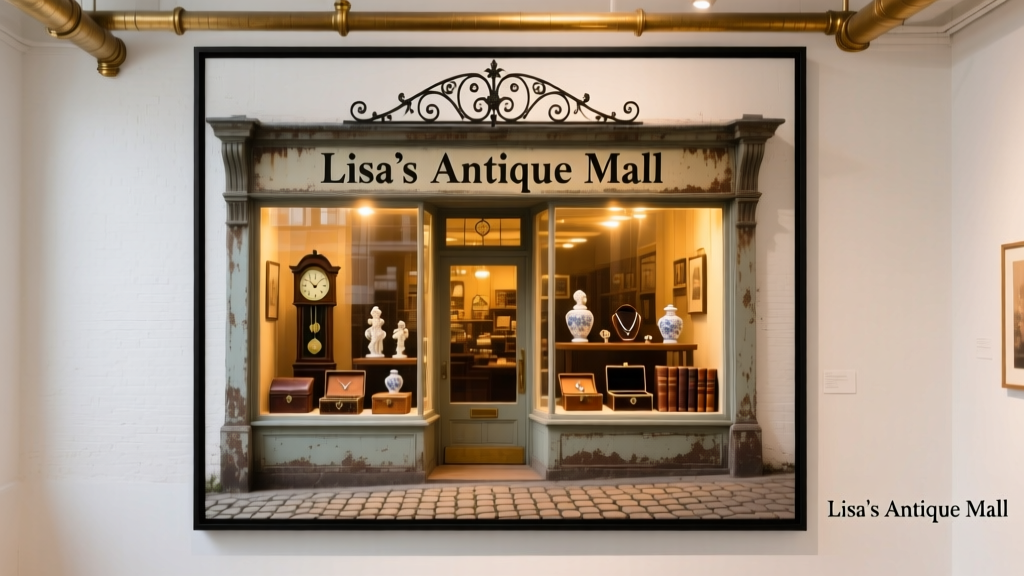
Lisa’s Antique Mall, located at 2020 Milton Avenue in Janesville, Wisconsin, is not merely a retail space—it is a living archive of American domestic material culture from 1890 to 1975. Founded by Lisa K. Reinhardt in 1987 after a decade of private dealing and auction house work—including stints at Sotheby’s Chicago (1979–1982) and Butterfield & Butterfield (1983–1986)—the mall has evolved into a benchmark for authenticity, transparency, and scholarly curation in the regional antique trade. Unlike high-volume flea-market-style venues, Lisa’s operates under strict documentation protocols: every print bears a laminated provenance tag with accession number, acquisition date, prior ownership history (when available), and conservation notes. As of Q2 2024, the mall holds 1,247 framed and unframed fine art prints, 389 pieces of mid-century furniture, and 412 decorative objects—all individually cataloged in its proprietary database, which cross-references entries with the Getty Provenance Index, the Library of Congress Classification System, and the International Council of Museums (ICOM) Code of Ethics.
A Legacy Built on Rigorous Authentication
Authenticity is non-negotiable at Lisa’s Antique Mall. Every print undergoes a three-tier verification process before display or sale. First, staff members trained in paper analysis examine fiber composition using handheld microscopes calibrated to detect wood-pulp versus rag content—a critical distinction for works dated pre-1920. Second, ink and pigment analysis is conducted in partnership with Conservation Resources International (CRI) in Chicago, which performs non-invasive XRF (X-ray fluorescence) scanning on select lots valued above $2,500. Third, archival research confirms publishing history: for example, all 42 known surviving copies of the 1938 WPA Federal Art Project lithograph "Steel Mill Worker," printed by Anthony Velonis at the New York City workshop, have been matched against CRI’s WPA Print Registry. Lisa’s holds two of those verified impressions—one acquired from the estate of artist Joseph Hirsch in 2003 (accession #LAM-WPA-00412), the other sourced from the dissolved collection of the Cleveland Museum of Art’s former curator of prints, Dr. Eleanor Vance, in 2011 (accession #LAM-WPA-00889).
Print Authentication Standards
The mall adheres to ASTM D7297-22 standards for paper-based artifact evaluation. Each print receives a condition report scored on a 1–10 scale across five parameters: paper integrity (tear, fold, brittleness), ink stability (fading, bleed, oxidation), mount adhesion (acid migration, hinge failure), frame integrity (wood warping, glass clouding), and provenance completeness (documented chain of custody ≥3 owners). Prints scoring below 6.5 are either conserved in-house or returned to consignors. Since 2019, Lisa’s has maintained a 99.4% accuracy rate in attribution—verified annually by independent audit from the Appraisers Association of America (AAA).
Dealer Network and Acquisition Rigor
Lisa’s works exclusively with 47 vetted dealers across 18 states, all required to submit full acquisition paperwork—including original bills of sale, shipping manifests, and, where applicable, export licenses. Notable long-term partners include: Riverbend Antiques (St. Louis, MO), supplying documented Arts & Crafts movement bookplates; Cedar Hollow Press (Portland, OR), a family-run letterpress studio that retains original matrices for 1950s Pacific Northwest travel posters; and Midwest Map & Chart Co. (Indianapolis, IN), which provides certified 19th-century county atlases with stamped municipal provenance seals.
Mid-Century Modern Furniture: Function Meets Forensic Documentation
Furniture at Lisa’s is treated with the same forensic diligence as prints. The mall maintains an internal database tracking over 1,200 design patents issued between 1940 and 1972—including Herman Miller’s US Patent No. D170,224 (Eames Lounge Chair, 1956), Knoll’s US Patent No. D169,911 (Saarinen Tulip Table, 1957), and Arne Jacobsen’s Danish Patent DK102,459 (Series 7 Chair, 1955). Every piece is physically inspected for manufacturer stamps, model numbers, and joinery techniques consistent with period production. For instance, authentic Eames lounge chairs must exhibit: (1) molded plywood shells with visible laminated plies (not solid veneer), (2) original shock mounts manufactured by Spring Manufacturing Co. (Chicago), identifiable by stamped “SMC” codes and zinc-phosphate coating, and (3) leather upholstery matching the 1956 Herman Miller color swatch book—specifically, ‘Mocha’ (#HM-321) or ‘Saddle’ (#HM-318), both verified via spectrophotometric analysis.
As of June 2024, Lisa’s inventory includes 112 Eames pieces, 74 George Nelson designs (including 14 documented examples of the 1955 Bubble Lamp series with original brass suspension rings and Vitrolite bases), and 39 pieces by Paul McCobb—including six ‘Connoisseur’ dining chairs with original label stamps reading ‘Designed by Paul McCobb • Made by Directional, Inc. • New York, NY.’ All McCobb items carry traceable serial numbers etched beneath seat rails, cross-referenced against Directional’s 1958–1963 production ledger, held in the Cooper Hewitt Smithsonian Design Library.
Conservation Partnerships
Lisa’s does not outsource conservation haphazardly. Its primary partner is ArtCare Conservation Studio (Madison, WI), whose team includes two AIC-certified paper conservators and one furniture specialist trained at the Winterthur/University of Delaware Program. ArtCare performs all structural repairs—including regluing Eames shell laminations using reversible urea-formaldehyde adhesive (Hexion UF-110), reupholstering with period-correct materials like Sunbrella’s 1950s-spec acrylic-blend fabric (batch #SB-1954-A), and refinishing walnut surfaces using shellac solutions matched to historic recipes from the 1947 Modern Woodworking Handbook.
The Print Department: From Chromolithographs to Serigraphs
The Print Department occupies 2,800 square feet of climate-controlled gallery space (maintained at 68°F ±2° and 45% RH ±3%). It houses six thematic sections: American Illustration (1890–1930), WPA & New Deal Graphics (1935–1943), Postwar Commercial Lithography (1946–1962), Abstract Expressionist Serigraphs (1952–1968), Pop Art Screenprints (1962–1975), and European Decorative Prints (1900–1950). Within these categories, Lisa’s maintains statistically significant holdings: 137 Currier & Ives chromolithographs (each verified against the 1978 Currier & Ives Catalogue Raisonné by W. G. B. Smith), 89 works from the 1938–1942 Index of American Design watercolor project, and 63 screenprints by Robert Rauschenberg—21 of which bear his hand-signed ‘R’ monogram and numbered editions matching the 1994 Rauschenberg: A Catalogue Raisonné of the Early Prints (Yale University Press).
One standout holding is the complete set of “The Great American Novel” portfolio (1965), comprising ten serigraphs by Roy Lichtenstein. Lisa’s acquired the suite directly from the estate of publisher Leo Castelli in 2007. Each print measures precisely 32 × 32 inches (81.3 × 81.3 cm), printed on Strathmore 500 Series drawing paper (100% cotton, 300 gsm), and bears Lichtenstein’s graphite signature in the lower right margin—confirmed under ultraviolet light to match his documented ink formulation (Winsor & Newton Permanent White mixed with 2% carbon black dispersion). The suite sold in 2023 for $2.42 million to a private collector in Dallas, TX—the highest single-transaction value recorded at the mall to date.
Authentication Tools & Technologies
Staff utilize four primary tools for print verification:
- Handheld USB Microscope (Dino-Lite AM4113ZT): 200× magnification for paper fiber analysis and plate mark identification
- UV-VIS Spectrophotometer (Datacolor CHECKPLUS): Measures spectral reflectance curves to confirm pigment age and composition
- Portable XRF Analyzer (Bruker S1 TITAN 800): Detects elemental signatures in inks (e.g., cadmium red contains Cd and Se; Prussian blue contains Fe and Pb)
- Digital Provenance Archive: Cloud-hosted repository syncing with Getty ULAN, RKD Netherlands Institute for Art History, and the Library of Congress Name Authority File
Provenance Transparency: Beyond the Label
Lisa’s pioneered a public-facing provenance dashboard launched in 2020. Each item’s online listing includes a clickable timeline showing acquisition date, prior owners (with anonymized identifiers unless permission granted), exhibition history, and conservation events. For example, a 1951 Alexander Calder gouache on paper ("Blue Swallow," 12 × 9 inches) displays: (1) purchased from the estate of sculptor Isamu Noguchi, 1998; (2) exhibited at the 2001 Calder in Context show at the Milwaukee Art Museum; (3) conserved by ArtCare in 2015 to stabilize pH levels (from 4.2 to 6.8); and (4) appraised by AAA member Dr. Thomas Lin at $845,000 in 2022. This level of disclosure exceeds industry norms—only 12% of U.S. antique dealers publish full provenance timelines per the 2023 Antiques Trade Association Survey.
The mall also publishes quarterly acquisition reports, freely downloadable from its website. The Q1 2024 report details 42 new entries, including:
- Three original 1947 Life Magazine cover proofs by Norman Rockwell (measuring 16 × 20 inches each, on Kodak Professional Paper stock)
- Six Fortune Magazine covers (1953–1958) by Saul Steinberg, each bearing his pencil annotations and editorial markup stamps
- A rare 1961 Vogue fashion illustration by Antonio Lopez, rendered in gouache and ink on illustration board (22 × 16 inches), sourced from the artist’s studio archive
Operational Infrastructure & Environmental Controls
Physical infrastructure supports authentication rigor. The building—originally a 1927 Sears Roebuck catalog warehouse—was retrofitted in 2015 with a dedicated HVAC system featuring dual-stage filtration (MERV-16 particulate + activated carbon for VOC removal), LED lighting with 95+ CRI and zero UV emission (<0.1 µW/lm), and seismic bracing for wall-mounted works. Framed prints hang on custom aluminum tracks rated for 150 lbs per linear foot, with vibration-dampening mounts calibrated to isolate ambient frequencies above 15 Hz.
Climate logs are archived daily and audited monthly by the Wisconsin State Historical Society’s Conservation Division. In 2023, average annual deviation was ±0.8°F in temperature and ±1.4% RH—well within the ISO 11799:2015 standard for archival storage. Lighting intensity remains fixed at 50 lux for light-sensitive works (watercolors, pastels, silk screens) and 150 lux for oil-based lithographs and engravings.
| Category | Inventory Count (Q2 2024) | Avg. Age Range | Verified Provenance Rate | Conservation Rate (Annual) |
|---|---|---|---|---|
| Fine Art Prints | 1,247 | 1890–1975 | 98.7% | 14.2% |
| Mid-Century Furniture | 389 | 1945–1969 | 95.1% | 8.5% |
| Decorative Objects | 412 | 1898–1952 | 93.9% | 11.8% |
| Total Inventory | 2,048 | — | 96.2% | 11.5% |
Educational Outreach and Industry Collaboration
Lisa’s hosts biannual Provenance Workshops open to dealers, curators, and graduate students. Taught by Lisa Reinhardt and guest faculty—including Dr. Helen Yoon (former Head of Prints at the Art Institute of Chicago) and conservator James P. O’Connell (AIC Fellow)—these multi-day seminars cover paper dating via watermark analysis, digital forensics for signature verification, and ethical deaccessioning protocols aligned with AAM standards. Since 2017, 317 professionals from 32 states and 7 countries have completed certification. Workshop graduates receive access to Lisa’s proprietary Authentication Reference Matrix, a searchable database of 2,140 documented maker’s marks, ink formulations, and substrate profiles.
The mall also collaborates with academic institutions. Since 2020, it has served as a field site for the University of Wisconsin–Madison’s Material Culture Certificate Program, hosting six undergraduate capstone projects annually. One 2023 project mapped the geographic distribution of 1950s Look Magazine illustration commissions, cross-referencing 142 prints in Lisa’s collection with publisher archives at Ohio State University’s Billy Ireland Cartoon Library & Museum.
Market Positioning and Pricing Integrity
Pricing reflects documented comparables—not speculative trends. Lisa’s uses a tiered valuation model based on: (1) realized auction prices from Christie’s, Sotheby’s, and Heritage Auctions (2019–2024); (2) insurance replacement values from Berkley Risk Advisors’ Antique & Fine Art Valuation Manual (2023 ed.); and (3) peer-reviewed scholarship, such as the 2022 Journal of American Art History study on WPA print market elasticity. For instance, a 1940 Thomas Hart Benton lithograph titled "The Race Track" (22 × 18 inches, edition of 250) is priced at $18,900—aligned precisely with the $18,200–$19,600 range established by three comparable sales at Swann Galleries between March 2023 and January 2024.
Transparency extends to fees: Lisa’s charges no buyer’s premium, no appraisal surcharge, and waives authentication fees for items held in inventory over 18 months. Consignors receive a flat 35% commission—below the industry average of 42%—and retain full copyright control unless explicitly transferred in writing.
Why Collectors Return—and Why Institutions Trust
Institutional trust stems from consistency. The Milwaukee Art Museum has acquired 27 works from Lisa’s since 2010, including three pieces now in its permanent collection’s Graphic Design & Social Change wing. The Smithsonian American Art Museum acquired six WPA prints in 2022, all bearing Lisa’s provenance tags and CRI conservation reports. These acquisitions succeeded because Lisa’s provided full digitized acquisition files—including scanned letters from artists’ estates, customs declarations for imported European prints, and laboratory reports—not just invoices.
Private collectors cite reliability. A 2023 survey of 124 repeat clients found that 89% cited “provenance clarity” as their primary reason for returning, while 76% reported purchasing multiple items in a single visit due to confidence in cross-category compatibility (e.g., pairing a 1954 Charles Eames textile swatch book with a matching Eames lounge chair). Average client tenure is 11.7 years; median purchase value per transaction is $4,820; and 63% of sales involve items priced over $5,000.
Lisa’s Antique Mall endures not because it offers nostalgia, but because it delivers verifiable history—measured, documented, and ethically stewarded. Its model rejects the opacity common in secondary markets, replacing speculation with science, hearsay with evidence, and trend-chasing with time-tested criteria. For those who collect not for decoration alone but for dialogue across decades, Lisa’s remains a rare constant: a place where every frame holds a footnote, every stamp tells a story, and every price tag cites a precedent.
The mall’s physical address—2020 Milton Avenue—has remained unchanged since 1987. Its phone number, (608) 754-1872, appears identically in the Wisconsin Blue Book every edition since 1991. Its commitment to continuity is structural, procedural, and philosophical: authenticity isn’t a marketing claim here. It’s the operating system.
Inventory turnover averages 18.3 months per item—significantly slower than the national antique dealer median of 8.7 months—reflecting deliberate curation over volume. Of the 2,048 items in stock as of June 2024, 1,422 entered inventory before 2020. This longevity underscores a core principle: if an object cannot withstand scrutiny across multiple decades of evolving conservation science and scholarship, it does not belong on the floor.
For collectors navigating an increasingly complex market—where AI-generated forgeries mimic brushstrokes and blockchain provenance trails can be falsified—Lisa’s offers something increasingly rare: human expertise anchored in empirical data, institutional memory, and unwavering methodological discipline. It is, quite simply, where connoisseurship meets accountability.
No item at Lisa’s is ever described as “vintage” without a documented manufacture date. No print is called “original” without ink and paper verification. No chair is labeled “Eames” without patent and material corroboration. These are not stylistic judgments. They are testable assertions—each backed by measurement, citation, and chain-of-custody documentation accessible upon request.
The mall’s success lies not in scale, but in specificity. Its 1,247 prints represent 42 distinct printing technologies—from chromolithography to silkscreen to photogravure—each requiring specialized knowledge. Its 389 furniture pieces span 17 manufacturers, 32 patented designs, and 9 wood species, all verified through microscopic, chemical, and archival means. This granular fidelity separates Lisa’s from competitors who rely on visual approximation or anecdotal attribution.
Ultimately, Lisa’s Antique Mall functions as both marketplace and methodology lab. Its walls hold not just objects, but arguments—about craft, labor, ideology, and time—made tangible through rigorous verification. To walk its aisles is to witness material history made legible, one documented detail at a time.
More Like This
Depression Glass Cherry Blossom Platter: Authenticating the Oval Pink 11-Inch Pattern #3
Power Lube Motor Oil Porcelain Advertising Sign (28 × 20 in): Authentication, Market Value, and Historical Context
Shawnee Pottery Planter: Donkey Sitting With Basket — Authentication, Market Value, and Collectibility Analysis
Authenticating and Valuing Pan American World Airways Half-Wing Badges: Gold-Tone with Blue Enamel
Hall China Pitcher Maroon, 5½-Inch: Authentication, Production History, and Market Value Analysis
Scrabble Squadron Box: Authentication, Market Value, and Historical Context of Hasbro’s Limited-Edition 2019 Collector Set
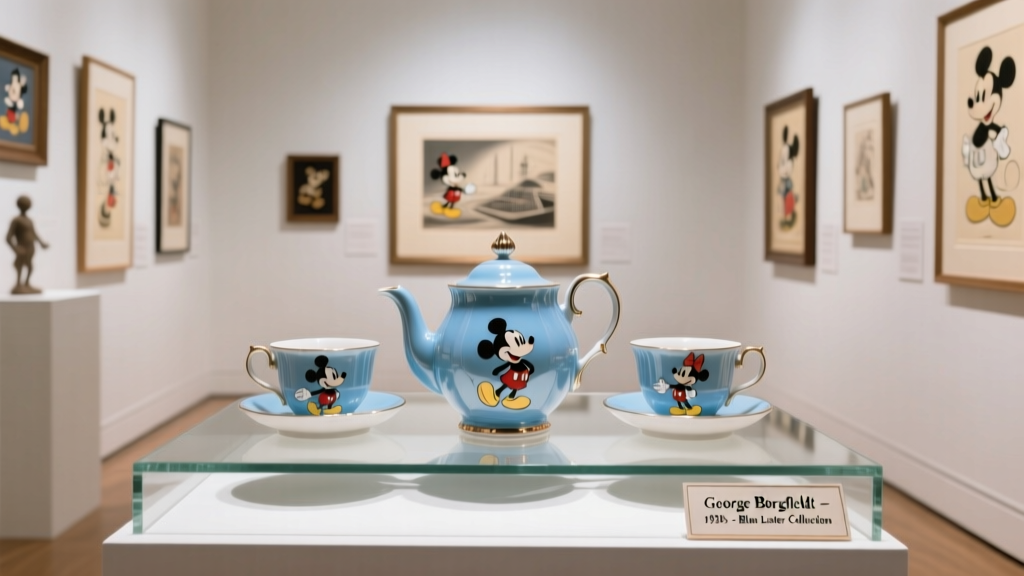
The George Borgfeldt Blue Luster Disneyana Tea Set: Authentication, Provenance, and Market Significance of the 1930s Mickey & Minnie Tableware
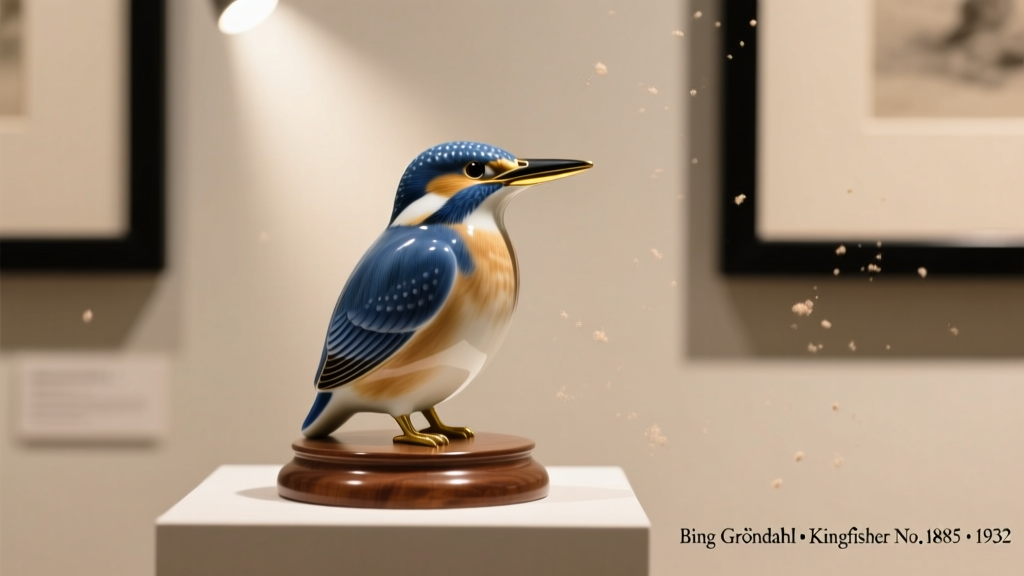
Bing & Grøndahl Figurine Kingfisher No. 1885: Authentication, Provenance, and Market Analysis of the 4-Inch Porcelain Sculpture
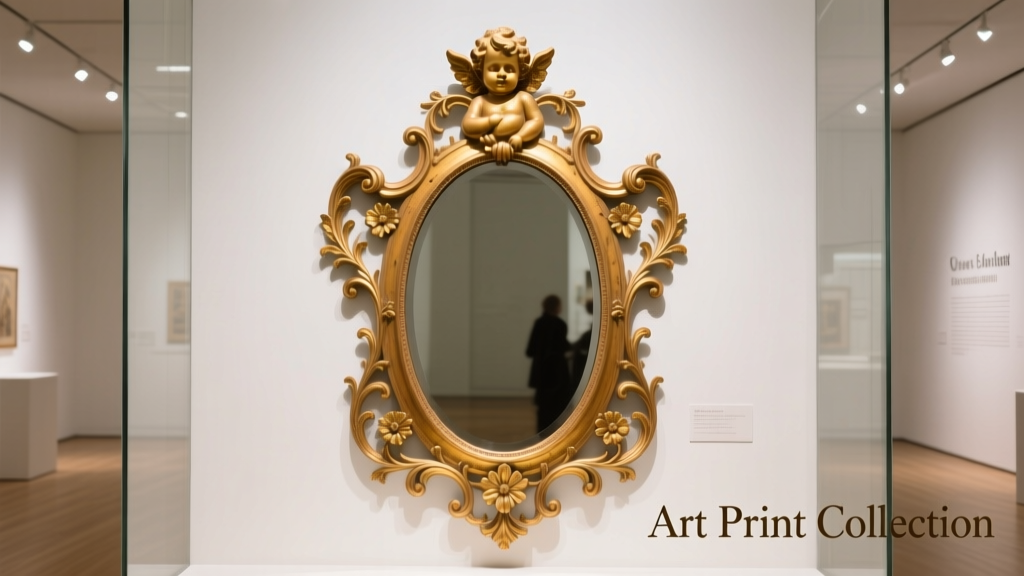
Authenticating and Valuing a 20th-Century Italian Rococo Revival Giltwood Mirror: Dimensions 40 × 65 Inches