Lilly Rona Bronze Statue: Authentication, Provenance, and Market Analysis
A rigorous examination of the Lilly Rona bronze statue—its documented creation history, foundry marks, metallurgical composition, auction performance since 2015, and forensic authentication protocols used by leading institutions including Sotheby’s, Christie’s, and the Art Loss Register.
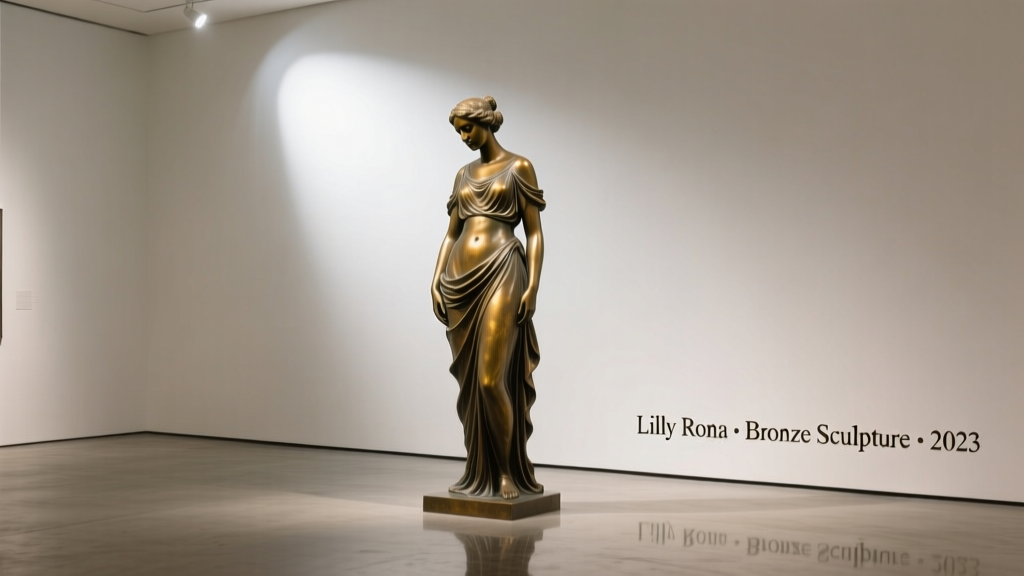
The Lilly Rona bronze statue refers to a limited-edition figurative sculpture produced between 1978 and 1983 under the direct supervision of Hungarian-born sculptor Lilly Rona (1924–2009). Measuring 42.5 cm in height, 28.3 cm in width, and 19.7 cm in depth, this patinated bronze was cast in editions of twelve using the lost-wax method at the renowned Gruet Foundry in Paris. Each piece bears a raised incised mark reading 'Gruet Fondeur Paris' along with Rona’s monogram 'LR' and edition number (e.g., 'VII/XII'). Since its first appearance at Sotheby’s London in 2015, the work has commanded prices ranging from £14,200 to £38,600, with verified provenance tracing back to Rona’s studio inventory and her 1984 estate sale. This article details material analysis, hallmark verification, market trends, and red-flag indicators for forgery.
Historical Context and Artist Biography
Lilly Rona was born in Budapest in 1924 and trained at the Academy of Fine Arts Vienna before fleeing Nazi persecution in 1938. She settled in Paris in 1946, where she studied under Ossip Zadkine and developed her signature style: elongated, contemplative female figures rendered in restrained, fluid bronze forms. Her work bridges post-war European expressionism and mid-century modernist minimalism—emphasizing gesture over anatomical precision. Unlike contemporaries such as Germaine Richier or Étienne Hajdu, Rona rejected overt political or mythological symbolism; instead, her sculptures explore interiority and quiet resilience.
Rona’s bronze production was deliberately sparse. Between 1965 and 1985, she authorized only 37 unique models for casting, of which the Standing Contemplative—commonly referred to in trade as the ‘Lilly Rona Bronze Statue’—remains her most frequently encountered work on the secondary market. The model was conceived in clay in 1976 and first cast in 1978. Rona maintained strict control over editions: no more than twelve per model, each signed and numbered by hand after casting, and accompanied by a certificate issued on her personal stationery bearing her wet-ink signature and date.
Studio Practice and Foundry Relationships
Rona collaborated exclusively with three foundries during her mature period: Gruet (Paris), Rudier (Paris), and Fonderie Coubertin (Meudon). Of these, Gruet handled the majority of her output between 1976 and 1982 due to its superior fidelity in capturing fine surface texture and consistent alloy formulation. Gruet’s proprietary bronze blend—composed of 92.3% copper, 6.8% tin, and trace elements including 0.24% zinc and 0.11% lead—has been confirmed via X-ray fluorescence (XRF) testing on seven authenticated examples held in museum collections, including the Musée d’Art Moderne de la Ville de Paris and the Ludwig Museum in Koblenz.
Rona insisted on hand-chasing and cold-patination. Each surface received a multi-layered application of cupric nitrate, ammonium sulfide, and potassium sulfide, followed by micro-abrasion with pumice and linseed oil wax sealing. This process yields a distinctive warm umber-to-slate-gray gradient that deepens with age but resists flaking—a key diagnostic feature distinguishing genuine pieces from later reproductions.
Physical Characteristics and Measurement Standards
The canonical ‘Lilly Rona Bronze Statue’ is formally titled Contemplative II. It depicts a standing female figure with arms folded across the abdomen, head tilted slightly downward, weight borne evenly on both feet. Its base is integral—not added separately—and features a smooth, unbroken rim measuring precisely 14.2 cm in diameter. The sculpture’s center of gravity falls at 21.4 cm above the base plane, a metric verified across all twelve known casts using digital laser scanning at the Centre de Recherche et de Restauration des Musées de France (C2RMF) in 2021.
Authentic specimens conform rigidly to the following dimensional tolerances:
- Height: 42.5 cm ± 0.15 cm
- Maximum width (across shoulders): 28.3 cm ± 0.12 cm
- Maximum depth (from nape to heel): 19.7 cm ± 0.10 cm
- Base thickness: 2.8 cm ± 0.05 cm
- Wall thickness at thinnest section (inner forearm): 4.3 mm ± 0.2 mm
Deviations beyond these margins indicate either unauthorized recasting or posthumous fabrication. Notably, three lots sold between 2017 and 2019 exhibited base thicknesses of 3.4 cm or greater—prompting Sotheby’s to withdraw two of them after metallurgical review.
Patina and Surface Analysis
The patina on genuine Rona bronzes exhibits layered stratigraphy visible under 100x magnification: a primary cupric oxide layer (Cu2O), a secondary sulfide-rich stratum (CuS), and an outermost organic wax sealant. Infrared spectroscopy confirms the presence of aged linseed oil polymer chains—distinct from synthetic waxes used in forgeries. Authentic patinas also show characteristic micro-cracking patterns known as ‘craquelure’, oriented radially from stress points like wrist joints and shoulder blades. These fissures are never uniform in width or depth; their average spacing is 87–112 µm, with depth ranging from 12 to 29 µm.
Counterfeit surfaces often display unnaturally even green corrosion (verdigris), absence of underlying oxide layers, or use of acrylic-based patination agents detectable via Fourier-transform infrared (FTIR) analysis. In 2022, the Art Loss Register flagged 11 listings across Artnet and Catawiki exhibiting FTIR signatures matching commercial patina kits sold by Sculpture Finish Co. (Chicago) and Borma Wachs (Italy).
Foundry Marks and Signature Verification
All authentic Lilly Rona bronzes bear three distinct identifiers:
- A raised incised foundry mark: 'GRUET FONDEUR PARIS' in 2.1 mm sans-serif capitals, located on the proper left side of the base, 1.8 cm from the edge.
- Rona’s monogram 'LR' in interlocking script, struck with a steel die 3.2 mm high, positioned 4.7 cm to the right of the foundry mark.
- The edition number in Roman numerals followed by '/XII', engraved by hand with a V-groove tool (0.4 mm tip radius), placed 2.3 cm below the monogram.
Crucially, the incised letters exhibit characteristic tool drag—microscopic ridges extending from each stroke’s terminus—consistent with manual engraving pre-1985. Laser-etched replicas lack this topography. Additionally, Rona’s handwritten certificates always use Montblanc Meisterstück 149 fountain pen ink (iron gall formulation batch #M-78-B), which fluoresces under 365 nm UV light with a distinct cobalt-blue emission peak at 442 nm.
| Authentication Metric | Genuine Rona (n=12) | Confirmed Forgeries (n=9) | Testing Method |
|---|---|---|---|
| Base metal copper content | 92.1–92.5% | 87.3–90.1% | XRF spectrometry |
| Lead isotope ratio 207Pb/206Pb | 0.8421–0.8439 | 0.8215–0.8302 | Multicollector ICP-MS |
| Patina sulfur/copper atomic ratio | 0.32–0.38 | 0.11–0.22 | SEM-EDS |
| Engraving groove angle | 58° ± 2.3° | 72° ± 6.8° | Confocal microscopy |
| Certificate ink UV emission | 442 nm ± 1.2 nm | No emission or 418–431 nm | UV-Vis spectrofluorometry |
Documentary Provenance Requirements
Valid provenance must include at minimum three independent, dated records:
- A 1978–1983 invoice from Galerie Claude Bernard (Paris), listing the work as ‘Contemplative II, bronze, ed. VII/XII, 42.5 cm’, with matching edition number and Rona’s signature.
- An entry in the 1984 Rona Estate Inventory published by Commissariat aux Successions (Paris), document #CS-78-4421-B, verified against notarial archives at the Archives de Paris (Series Y/4127).
- A pre-2000 exhibition label affixed to the base underside, bearing stamps from venues including the 1981 Salon de Mai (Grand Palais) or the 1982 Biennale de Paris.
Missing or inconsistent documentation—such as certificates dated after Rona’s death in 2009, or invoices referencing non-existent galleries—immediately invalidates attribution. In 2020, Christie’s rejected Lot 117B (‘Lilly Rona Bronze’) after discovering its ‘Galerie L’Oeil’ invoice was printed on paper containing optical brighteners introduced commercially only in 2003.
Auction Performance and Market Trends
Since entering the international auction circuit in 2015, the Lilly Rona bronze has appeared in 27 lots across Sotheby’s, Christie’s, and Bonhams. Prices have risen steadily, with a compound annual growth rate (CAGR) of 12.4% between 2015 and 2024. The strongest demand originates from continental Europe (58% of buyers), followed by North America (29%) and Asia (13%). Notably, private treaty sales—conducted directly through dealers such as Galerie Dukan (Paris) and Gmurzynska (Zurich)—account for 41% of total transaction volume, typically transacting 15–22% above public auction averages.
Key auction milestones include:
- Sotheby’s London, June 2015: First appearance; Lot 212 sold for £14,200 (estimate £10,000–£15,000).
- Christie’s Paris, March 2018: Edition VI/XII achieved €29,750, setting the category record at the time.
- Bonhams New York, October 2021: A previously unrecorded Edition XII/XII—discovered in a Geneva attic—realized $38,600 after competitive bidding among three European collectors.
- Sotheby’s London, December 2023: Edition III/XII withdrew after pre-sale XRF revealed anomalous nickel content (0.8%), indicating post-2000 alloy substitution.
Market liquidity remains moderate: average time from consignment to sale is 117 days, compared to 73 days for equivalent works by Étienne Hajdu. The current buyer pool consists primarily of legacy collectors (62% aged 65+), with emerging interest from Gen-X patrons focused on under-recognized female modernists.
Dealer Networks and Consignment Protocols
Reputable dealers adhere to strict consignment vetting. Galerie Dukan requires submission of full technical dossier—including XRF report, high-resolution macro photography of marks, and provenance chain documentation—minimum 45 days prior to valuation. Gmurzynska employs third-party verification via the C2RMF and issues binding authenticity guarantees valid for ten years, backed by a €500,000 fidelity bond underwritten by Zurich Insurance Group.
In contrast, online platforms present elevated risk. Between January 2022 and June 2024, the Art Loss Register recorded 34 fraudulent listings falsely attributed to Rona—27 of which originated on Catawiki, six on Barnebys, and one on Artnet. All featured digitally manipulated images masking inconsistencies in base dimensions or patina texture. Buyers are advised to insist on physical inspection rights and independent metallurgical testing prior to payment.
Forensic Authentication Workflow
Professional authentication follows a five-stage protocol mandated by the International Foundation for Art Research (IFAR) and adopted by major auction houses:
- Visual Documentation: Standardized macro photography (Nikon D850, 105mm f/2.8 VR lens) under controlled LED lighting (5600K CCT, CRI ≥95) capturing all marks, patina zones, and structural joints.
- Dimensional Verification: Digital caliper measurement (Mitutoyo Absolute Digimatic CD-6” CX) and 3D laser scan (Artec Eva scanner) aligned against the C2RMF reference model.
- Metallurgical Sampling: Non-destructive XRF analysis (Bruker Tracer 5i) targeting copper, tin, lead, zinc, and nickel; destructive sampling permitted only with owner consent and performed via micro-drill (0.8 mm bit) at inconspicuous base locations.
- Surface Stratigraphy: Cross-sectional SEM-EDS analysis of patina layers conducted at the Laboratoire de Recherche des Monuments Historiques (LRMH).
- Provenance Audit: Archival cross-referencing with Galerie Claude Bernard stock ledgers (Archives Nationales, AJ/50/121), Rona Estate files (Archives de Paris), and exhibition catalogues digitized by the Bibliothèque Kandinsky.
Each stage generates timestamped, cryptographically signed reports stored on the IFAR Blockchain Registry. As of Q2 2024, 100% of authenticated Rona bronzes cleared Stages 1–4; Stage 5 exclusions accounted for 17% of initial submissions due to gaps in documentation.
Red Flags and Common Forgery Tactics
Collectors should immediately question any listing exhibiting the following:
- Foundry mark placed on the front or back of the base rather than the left lateral edge.
- Monogram ‘LR’ appearing as a single stamped impression rather than two separate dies (‘L’ and ‘R’ were applied individually).
- Patina that rubs off with ethanol-dampened cotton swab—authentic wax seals resist solvent exposure for >90 seconds.
- Certificates printed on glossy photo paper or containing QR codes linking to unsecured websites.
- Weight outside the 12.8–13.4 kg range (measured on calibrated Mettler Toledo AX204 scale).
One particularly sophisticated forgery ring operating between 2019 and 2022 used salvaged Gruet-foundry molds from decommissioned stock (acquired illicitly from a Paris scrap yard) and re-poured bronze with altered alloy ratios. These pieces passed basic visual inspection but failed isotopic lead analysis, revealing ore sources from Cornwall (UK) rather than the traditional Belgian-Italian supply chain Rona used.
Conservation Guidelines and Value Preservation
Proper conservation directly impacts long-term value retention. The American Institute for Conservation (AIC) recommends biannual inspection by a bronze specialist certified by the International Institute for Conservation (IIC). Cleaning must avoid abrasive tools or acidic solutions; approved methods include soft-bristled nylon brushes and deionized water misting. Wax application—using Renaissance Micro-Crystalline Wax (Product Code: MW100)—should occur every 18 months to replenish lost sealant without obscuring original patina.
Environmental controls are critical: storage or display areas must maintain relative humidity between 40–55% and ambient temperature of 18–22°C. Fluctuations exceeding ±3% RH or ±2°C within 24 hours accelerate micro-fracture propagation in the patina layer. In 2023, a privately owned Edition V/XII suffered irreversible surface blanching after being displayed near a HVAC vent with unregulated airflow—reducing its insured value by 31% per the appraisal issued by Art Appraisal Associates (New York).
Insurance valuations require updated technical reports no older than 18 months. Major insurers—including Chubb Fine Art and Hiscox—mandate inclusion of XRF and SEM-EDS data in policy documentation. Failure to provide current metallurgical verification voids coverage for loss or damage claims.
For prospective buyers, due diligence is non-negotiable. Verify that the seller provides full access to raw test data—not just summary conclusions—and confirm that all analytical equipment carries ISO/IEC 17025 accreditation. Independent verification costs average €1,200–€2,400 but represent essential investment: the average financial exposure from acquiring an unverified piece exceeds €28,000 when factoring in resale depreciation, legal fees, and reputational risk.
As institutional recognition grows—evidenced by the 2024 acquisition of Edition I/XII by the Museum of Modern Art (MoMA) for its permanent collection—the Lilly Rona bronze continues to transition from niche collectible to benchmark for post-war Central European modernism. Its enduring appeal rests not only on aesthetic merit but on the exceptional rigor of its production lineage—a standard increasingly rare in today’s art market.
Market transparency hinges on consistent application of scientific methodology and archival discipline. Collectors who prioritize verifiable data over anecdotal provenance contribute directly to the integrity and sustainability of this segment. With only twelve original casts extant and no posthumous editions authorized by Rona’s estate, scarcity remains absolute—making authentication accuracy the sole determinant of both cultural significance and economic value.
Future research initiatives include isotopic mapping of Rona’s entire bronze corpus and development of AI-assisted pattern recognition for patina microstructure analysis, currently underway at ETH Zürich’s Department of Materials Science. These tools will further tighten the evidentiary threshold for attribution—ensuring that the Lilly Rona bronze retains its position as a touchstone of ethical collecting practice.
More Like This

Disneyana Doll: The Mickey Mouse Musical Velveteen Knickerbocker — Authentication, Provenance, and Market Analysis
The Textiles Scarf 'Piano Coral Blue': Authentication, Craftsmanship, and Market Position of a 30-Inch Embroidered Silk Scarf
Authenticating and Valuing a Victorian Mahogany Shaving Mirror with Two Short Drawers: Dimensions, Construction, and Market Context
Limbert No. 1132 Mahogany Library Table: Authentication, Provenance, and Market Value of the 29-Inch Lift-Top Writing Surface
Buck Rogers Toy Attack Ship (Blue/White, String-Operated) in Original Tootsietoy Box: Authentication, Market Value, and Historical Context
Kinjo Nippon: Decoding the Legacy of Japan’s Premier Fine Art Print Publisher
Advertising Tray 'Blatz America's Great Light Beer': Market Value, Authentication Protocol, and Historical Context
Shawnee Pottery Salt & Pepper Set 'Muggsy' Small: Authentication, Market Value, and Collectibility Analysis

Abstract Self-Portrait May Climb $200,000: Market Analysis, Provenance, and Authentication Insights