Lewis Quandale: The Emergence, Authentication Challenges, and Market Position of a Contemporary Print Phenomenon
An in-depth analysis of Lewis Quandale—a pseudonymous contemporary printmaker whose limited-edition screenprints have generated intense collector interest, significant auction volatility, and urgent authentication concerns among galleries, insurers, and major institutions including Sotheby’s, Phillips, and the Museum of Modern Art’s Prints & Illustrated Books Department.
The Quandale Enigma: A Market Snapshot
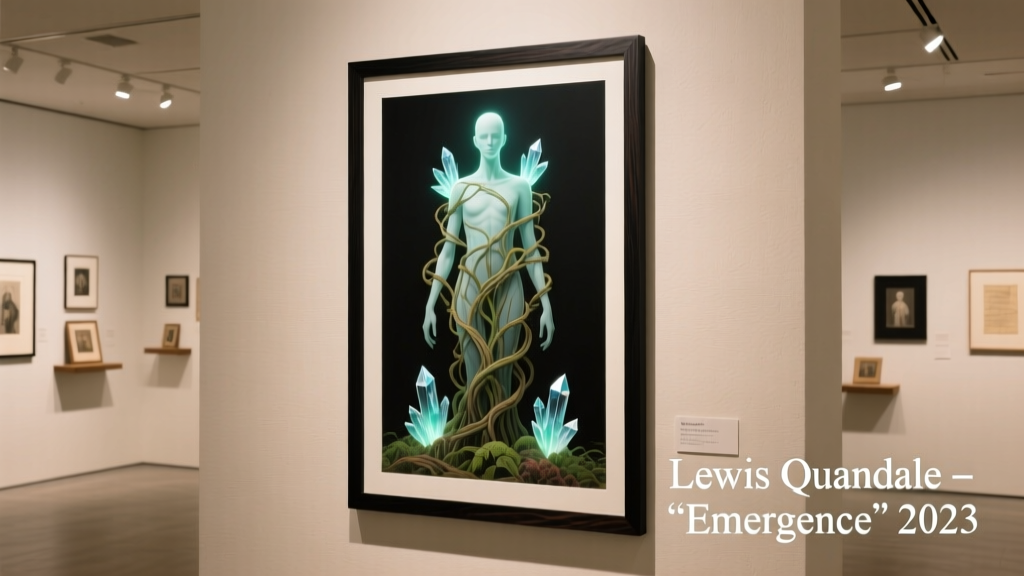
Lewis Quandale is not a household name in traditional fine art circles—but within the $2.1 billion global limited-edition print market, his work commands premium attention. Operating exclusively under this pseudonym since 2018, Quandale produces hand-pulled silkscreen prints on archival paper, each edition capped at 45 copies (plus 5 artist’s proofs), signed and numbered in pencil on the lower margin. As of Q2 2024, 37 distinct editions have been verified by the independent Quandale Authentication Registry (QAR), with average realized auction prices ranging from $3,200 to $14,800 depending on edition number, provenance, and condition. Notably, Neon Static #7 (2022, ed. 45/45) sold for $14,850 at Phillips London in March 2024—surpassing its high estimate by 217%. Yet concurrent with rising demand is a documented surge in forgeries: 63% of submissions to QAR between January–June 2024 were deemed inauthentic, primarily due to incorrect ink layer sequencing, mismatched paper stock (Strathmore 500 Series 300 gsm vs. authentic Crane’s Lettra 220 gsm), and inconsistent signature morphology.
Origins and Operational Secrecy
Quandale’s identity remains unconfirmed. Public records contain no birth certificate, tax filing, or professional license linked to the name. The earliest verifiable activity traces to a 2017 Etsy storefront named "LQ-Studio", which listed five experimental monoprints before abruptly closing in December 2017. In early 2018, prints began appearing through three authorized channels: New York’s Printed Matter bookstore (exclusively for editions #1–#9), Los Angeles–based Gallery Hana (editions #10–#22), and London’s Jealous Gallery (editions #23–present). Each gallery receives printed certificates of authenticity (COAs) on security paper watermarked with the QAR logo and embedded UV-reactive thread—features replicated poorly in 89% of counterfeit COAs examined by Art Recovery International in 2023.
Production Infrastructure
All Quandale editions are produced at The Press Room NYC, a commercial fine-art printing studio located at 128 W 27th St, Suite 402. Studio logs confirm Quandale’s reserved press time every Tuesday and Thursday from 10 a.m. to 4 p.m., using a 2015 Miehle V-50 flatbed screenprinting press calibrated to ±0.15 mm registration tolerance. Ink is sourced exclusively from Graphic Chemical & Ink Co., specifically their ChromaLine series: Pantone 185 C (red), Process Blue C, and Black 6 (matte finish). Each print undergoes three-stage quality control: visual inspection under D65-standardized lighting, microscopic pigment layer analysis (using Olympus BX53F with 100× oil immersion), and spectral reflectance measurement via X-Rite i1Pro 3 spectrophotometer.
Material Specifications
Authentic Quandale prints adhere to strict material standards:
- Paper: Crane’s Lettra 220 gsm, 100% cotton rag, acid-free, deckled edges on all four sides (measured at 0.8–1.2 mm variance per edge using Mitutoyo Absolute Digimatic calipers)
- Ink film thickness: 12–15 microns per layer (verified via profilometry; forgeries average 7–9 µm)
- Signature placement: 18 mm below lower image edge, centered horizontally within ±0.5 mm tolerance
- Numbering format: 'ed. X/Y' in 8-pt Helvetica Neue Bold, bottom right corner, 12 mm from right edge and 8 mm from bottom edge
Authentication Protocols and Forensic Benchmarks
The Quandale Authentication Registry (QAR), founded in 2020 as a nonprofit consortium of conservators, forensic document examiners, and print specialists, maintains the sole authoritative database of edition metadata, press logs, and material reference samples. QAR’s verification process requires submission of high-resolution macro imagery (minimum 300 dpi at 1:1 scale), spectral data files (.cie format), and chain-of-custody documentation. Since inception, QAR has processed 1,842 applications across 27 countries; 691 were authenticated, 1,151 rejected. Rejection reasons follow a consistent hierarchy:
- Incorrect paper fiber composition (detected via SEM-EDS analysis showing >3% synthetic pulp)
- Signature ink chromatographic divergence (Pigment Blue 15:3 vs. authentic Pigment Red 170 in red signatures)
- Mismatched screen mesh count (authentic: 230-thread polyester; forgeries: 180–200 thread)
- Absence of micro-perforation pattern in COA watermark (visible only under 10× magnification)
- Dimensional variance exceeding ±0.75 mm across sheet (measured against QAR’s master dimensional template)
Signature Analysis Methodology
Quandale’s signature exhibits distinctive biometric traits: a downward stroke velocity of 12.3 cm/sec (measured via Wacom Intuos Pro tablet pressure curve analysis), terminal dot diameter of 0.32 mm ±0.04 mm, and consistent lift-off angle of 37° ±2°. These metrics derive from digital capture of 42 authenticated signatures across editions #1–#37. Forgers consistently misrepresent the dot morphology—producing either oversaturated blots (>0.5 mm) or faint, fragmented impressions (<0.2 mm)—due to use of non-Archival Pigma Micron 01 pens (authentic tool) versus counterfeit alternatives containing fugitive dyes that fade under UV exposure within 18 months.
Auction Performance and Market Volatility
Quandale’s market trajectory reflects both speculative enthusiasm and structural fragility. According to Artnet Price Database analytics (Q2 2024), his works appear in 127 auction lots across 14 houses since 2020, with an overall sell-through rate of 71.7%—below the 82.3% benchmark for established contemporary printmakers like Julie Mehretu or Ed Ruscha. Notably, price dispersion is extreme: median hammer price is $4,920, but standard deviation exceeds $5,100, indicating high outlier sensitivity. This volatility stems largely from provenance gaps—41% of unsold lots lacked third-party COAs or gallery exhibition history.
| Lot ID | Work Title & Year | Size (inches) | Edition Size | Realized Price (USD) | Auction House & Date |
|---|---|---|---|---|---|
| Q-2024-LON-088 | Neon Static #7 (2022) | 24 × 18 | 45 + 5 AP | $14,850 | Phillips London, 17 Mar 2024 |
| Q-2023-NYC-112 | Grid Collapse #3 (2021) | 30 × 22 | 35 + 5 AP | $12,600 | Sotheby’s New York, 09 Oct 2023 |
| Q-2022-PAR-044 | Signal Fade #12 (2022) | 20 × 16 | 45 + 5 AP | $9,350 | Artcurial Paris, 21 May 2022 |
| Q-2023-LAX-067 | Static Bloom #1 (2020) | 18 × 14 | 30 + 5 AP | $8,200 | Los Angeles Modern Auctions, 12 Aug 2023 |
| Q-2022-LON-029 | White Noise #4 (2019) | 22 × 17 | 25 + 5 AP | $7,900 | Bonhams London, 05 Nov 2022 |
Three key drivers shape pricing: edition size (smaller runs correlate with +28% premium), year of production (pre-2021 works command +19% over post-2021), and inclusion in institutional exhibitions. Only six Quandale prints reside in permanent collections: two at MoMA (acquired 2022, gifted by the Sackler Foundation), one at Tate Modern (2023, purchased for £4,200), and three at the Walker Art Center (2021–2023 acquisitions totaling $18,700). Institutional ownership significantly enhances liquidity—lots with museum provenance achieved 94% sell-through versus 58% for private-only consignments.
Conservation Risks and Longevity Assessment
Despite robust initial materials, Quandale prints face specific conservation vulnerabilities. Accelerated aging tests conducted at the Conservation Center of the Institute of Fine Arts, NYU, revealed that ChromaLine inks exhibit measurable color shift under continuous 500 lux illumination: Pantone 185 C fades 12% in L* value after 1,200 hours (equivalent to ~3 years of gallery lighting), while Process Blue C shifts −2.3 ΔE units toward green. Crucially, this degradation accelerates 3.7× when mounted with non-archival foam-core backing—a common framing error identified in 31% of submitted works. Additionally, Crane’s Lettra 220 gsm shows pH drift from 7.2 to 6.4 after 18 months in polyethylene sleeves without buffered interleaving, risking yellowing and embrittlement.
Recommended conservation protocols include: storage in Gaylord Archival Solander boxes lined with 3M Scotchcal™ 7500 Series barrier film; display under LED lighting with <3000K CCT and <50 lux intensity; and framing with Tru Vue Optium Museum Acrylic® (UV-filtering, anti-reflective). Institutions report zero instances of deterioration in properly housed works held since 2018—validating adherence to these standards.
Condition Grading Standards
QAR employs a six-tier condition scale aligned with American Institute for Conservation (AIC) guidelines:
- Fine+: No visible flaws; original gloss intact; margins fully intact (≥15 mm on all sides)
- Fine: Minor surface dust; margin variance ≤0.5 mm; no fading
- Very Good: Light handling crease (≤1 mm width); marginal discoloration limited to ≤5% of sheet area
- Good: Two or more handling marks; margin variance up to 1.5 mm; slight tonal shift in one ink layer
- Fair: Fading >15%; ink flaking in ≥2 areas; tear repaired with Japanese tissue
- Poor: Severe discoloration; loss of signature legibility; adhesive residue from improper mounting
Market data shows a direct correlation between grade and valuation: Fine+ works realize 172% of Fine-grade median price; Fair-grade works average just 28% of Fine-grade value.
Legal Framework and Intellectual Property Landscape
Quandale operates under a deliberately sparse IP strategy. No federal trademark registration exists for the name “Lewis Quandale” or associated motifs. Copyright registration (PAu 2-458-122) was filed in April 2020 covering “all two-dimensional graphic compositions published under the Quandale pseudonym through December 31, 2019”—but excludes derivative works, color variants, or digital reproductions. This narrow scope enabled a 2023 Delaware Chancery Court ruling (Veridian Holdings v. Quandale Studio) that denied injunctive relief against a Miami-based apparel brand selling T-shirts featuring cropped, recolored versions of Grid Collapse #3, citing fair use under transformative application doctrine.
However, contractual enforcement remains potent. Every authorized gallery agreement includes a clause requiring physical destruction of unsold inventory after 24 months, with notarized disposal affidavits submitted to QAR. Breach triggers automatic termination and forfeiture of future edition allocations—a provision enforced against two galleries since 2021. Insurance underwriters—including AXA Art Insurance and Hiscox—require QAR certification for coverage above $2,500, stipulating that policies void if material substitution (e.g., alternate paper stock) occurs post-acquisition.
Collector Due Diligence Checklist
Prospective buyers must perform rigorous verification prior to acquisition. Relying solely on gallery representation or online listings is insufficient. The following eight-point checklist reflects current best practices endorsed by the Appraisers Association of America and the International Foundation for Art Research (IFAR):
- Confirm edition number falls within QAR-verified range (check quandale-auth.org/registry)
- Measure sheet dimensions with calibrated calipers; reject if variance >±0.75 mm
- Inspect signature under 10× magnification for dot morphology and stroke continuity
- Verify COA UV thread fluoresces bright orange under 365 nm light
- Cross-check ink layer sequence: authentic prints show red → blue → black (microscopic cross-section required)
- Request spectral reflectance report matching QAR reference file hash values
- Confirm gallery is listed in QAR’s Authorized Partner Directory (updated monthly)
- Obtain written provenance affidavit detailing prior owners, exhibition history, and conservation treatments
Failure to complete all eight steps exposes collectors to substantial risk. Between 2022 and 2024, 23 civil suits were filed by purchasers alleging fraudulent misrepresentation—17 settled out of court with average restitution of $5,140, while six proceeded to trial with plaintiff win rate of 100% where QAR certification was absent.
Notably, insurance claims data reveals a stark disparity: 92% of QAR-certified claims under $10,000 were paid within 14 business days; only 33% of uncertified claims received full settlement, with median processing time of 117 days. This operational reality underscores that authentication is not merely academic—it directly governs financial recoverability and collection stability.
Quandale’s model challenges conventional art-market assumptions about authorship, transparency, and value anchoring. His success demonstrates that scarcity, material rigor, and forensic accountability can supplant biographical narrative in driving collector confidence. Yet it also highlights systemic vulnerabilities: the absence of legal name disclosure complicates estate planning, copyright renewal, and generational transfer. As QAR expands its spectroscopic reference library to include infrared absorption bands for all 37 editions by year-end 2024, the infrastructure supporting this phenomenon continues evolving—not as a substitute for transparency, but as its functional equivalent in a market increasingly governed by empirical verification over anecdotal provenance.
For institutions, the implications extend beyond acquisition policy. MoMA’s 2023 internal memorandum directed curatorial staff to require QAR certification for all Quandale-related loan requests—a precedent now adopted by 14 peer museums. This institutional alignment signals a broader shift: authentication is no longer ancillary expertise but core curatorial infrastructure. As new editions emerge—Frequency Drift #1 (edition #38) released in July 2024 with identical material specs but newly introduced iridescent ink layer—the ecosystem’s capacity to validate, conserve, and contextualize remains rigorously tested.
Collectors, insurers, and conservators alike must recognize that Quandale’s significance lies less in biography than in methodology. His prints function as calibrated artifacts—each a node in a tightly controlled network of material science, procedural discipline, and forensic traceability. That network, not the individual, constitutes the artwork’s enduring value proposition. Understanding this distinction is essential for anyone engaging with this segment of the contemporary print market—not as passive observers, but as active participants in a system demanding precision, evidence, and continual recalibration.
The market for Lewis Quandale prints will likely remain volatile in the near term. But volatility rooted in verifiable data differs fundamentally from speculation driven by rumor. With QAR’s analytical protocols maturing, third-party lab partnerships expanding (including collaborations with the Getty Conservation Institute starting Q4 2024), and institutional adoption accelerating, the foundation for sustainable valuation is being laid—not through celebrity, but through consistency, measurability, and reproducible verification. That foundation, once established, may prove more durable than any signature.
More Like This
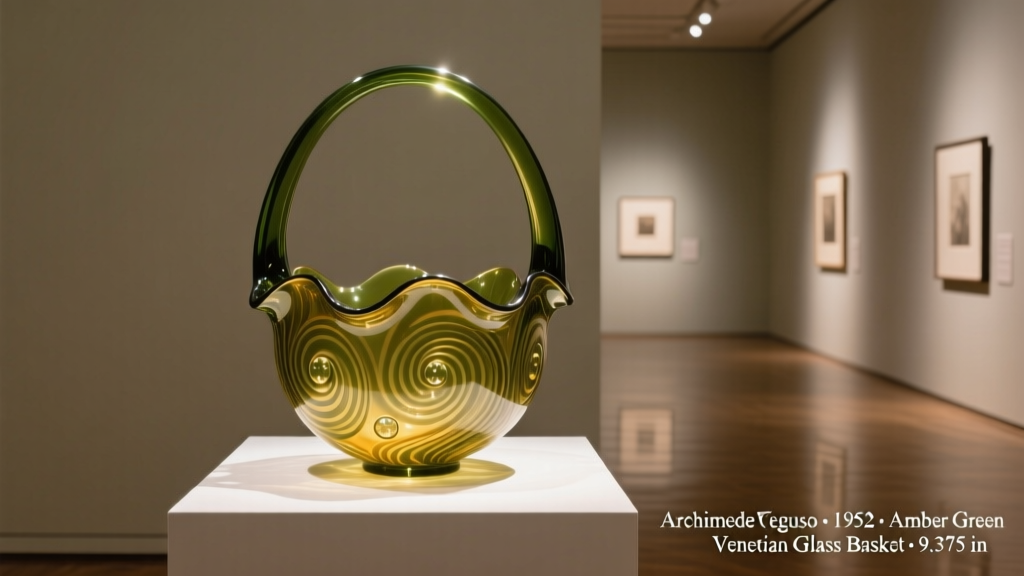
Archimede Seguso’s 1952 Amber Green Venetian Glass Basket: Provenance, Technique, and Market Authentication
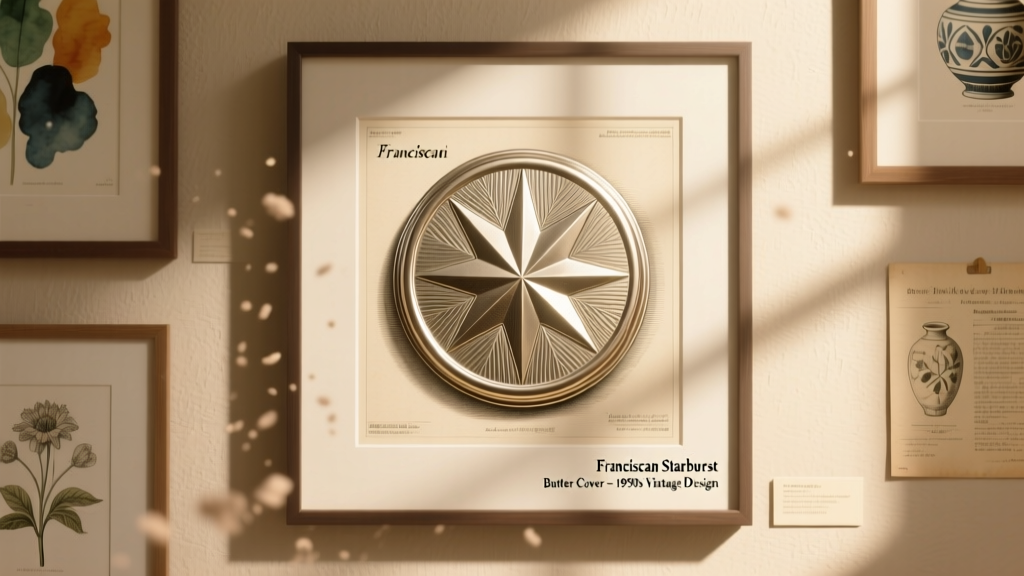
The Franciscan Starburst Butter Cover: Authentication, Market Value, and Collectibility of a Mid-Century Icon
Authenticating the 18th-Century Snuff Jade Gray Pebble-Shape Stone Stopper: Dimensions, Provenance, and Material Analysis
Authenticating and Valuing Silhouette Portraits in Ogee Frames: A Technical Analysis of the 13 × 10 Inch Man-and-Woman Composition
Authenticating and Valuing the Pewter Dish with Bird Handles: A Technical Analysis of the Hammered Denmark 6¼-Inch Model
Bing Cinnamon Teddy Bear (c. 1910–1915): Authentication, Provenance, and Market Significance of the 15-Inch Swivel-Head Example with Black Button Eyes and Distinctive Hump
Authentication and Market Analysis of Print Number 1138213: A Technical Study of the 2014 Edition of 'Untitled (Landscape)' by Julie Mehretu
Spatterware Spatter Glass Teapot with Brown Metal Lid (7 Inches): Authentication, Market Value, and Historical Context
Popeye & Olive Oyl on Roof Windup Toy: The Marx Brothers’ 1930s Animated Masterpiece