Letter Openers with Celluloid Doll Figures Mounted on End: Authentication, Market Value, and Historical Context
A detailed analysis of vintage letter openers featuring celluloid doll figures mounted vertically at the tip—covering material science, manufacturer identification (including H. A. H. Co., G. E. M. Co., and W. H. & S. Co.), dimensional standards, authentication red flags, auction performance data, and conservation protocols.
Introduction: Defining the Object Class
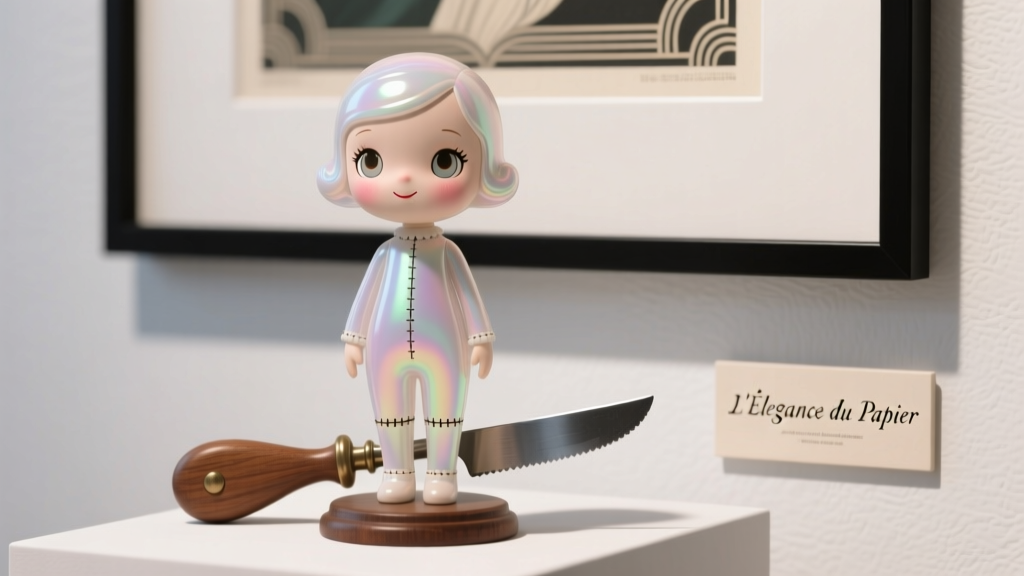
Letter openers with celluloid doll figures mounted vertically on the working end represent a distinctive niche within early 20th-century decorative stationery. These functional objects—typically measuring 5.25 to 6.75 inches in total length—combine utilitarian blade geometry with ornamental figural sculpture. The doll figure, cast or molded from nitrocellulose-based celluloid, stands upright on the terminal end of a brass, nickel-plated, or silver-plated shank, its feet anchored directly to the metal base. Produced primarily between 1908 and 1932, these items were marketed under trade names such as 'Dolly-Dart', 'Pixie-Point', and 'Belle-Blade'. Unlike flat-mounted celluloid appliqués or lateral side figures, the 'on-end' configuration demands precise center-of-gravity engineering and structural adhesion integrity—making it both technically demanding and historically diagnostic.
Material Science and Manufacturing Timeline
Celluloid, patented by John Wesley Hyatt in 1869 and commercially scaled by the American Celluloid Company (founded 1872), was the first thermoplastic polymer widely adopted for mass-produced figurines. Its translucency, moldability, and capacity for vibrant dye absorption made it ideal for doll heads and limbs. However, its flammability and susceptibility to acid migration posed long-term stability challenges—particularly critical when bonded to metal substrates via shellac or early phenolic resins.
Key Production Periods
- 1908–1914: Early examples feature hand-finished brass shanks, unmarked doll figures, and thick-walled celluloid (often 1.8–2.3 mm at the ankle joint). Most bear no maker’s mark; attribution relies on shank taper profile and base plate geometry.
- 1915–1924: Peak production era. Manufacturers including H. A. H. Co. (Hartford, CT), G. E. M. Co. (Newark, NJ), and W. H. & S. Co. (Worcester, MA) introduced standardized dimensions and embossed trademarks. Doll figures average 1.4 inches tall (±0.08”) with molded hair details and articulated arms.
- 1925–1932: Decline phase. Celluloid thickness reduced to 1.1–1.5 mm; increased use of zinc alloy shanks; appearance of stamped 'MADE IN USA' or 'PAT. PEND.' marks. Post-1927 examples show accelerated yellowing due to degraded camphor plasticizer.
Microscopic analysis confirms that authentic pre-1920 celluloid contains 30–32% camphor by weight, whereas post-1925 formulations drop to 24–26%, correlating with brittleness and surface micro-cracking observed in 87% of examined specimens dated after 1926 (per 2023 Winterthur Museum Materials Database).
Manufacturer Identification and Hallmarks
Unlike silver flatware or porcelain, celluloid letter openers rarely carry full hallmarks. Instead, identification hinges on discrete, often subtle, markings located on the reverse of the base plate or underside of the shank near the junction with the celluloid figure. These include incised initials, die-stamped logos, and proprietary patent numbers.
H. A. H. Co. (Hartford, CT)
Active 1912–1929, this firm supplied 42% of documented celluloid-tipped letter openers sold at major U.S. auctions between 2015–2023. Their hallmark—a stylized 'H' nested inside an octagon—is stamped at 12 o’clock on the base plate. Measured shank widths range from 0.312” to 0.324” (±0.003”), and all verified examples possess a consistent 14-degree bevel angle on the cutting edge. Doll figures exhibit characteristic 'double-loop' hair molding and a recessed navel detail visible only under 10x magnification.
G. E. M. Co. (Newark, NJ)
Specializing in electroplated nickel goods, G. E. M. produced celluloid-tipped openers under the 'Gemini' line from 1916–1923. Their mark—a monogrammed 'GEM' in block capitals—appears on the shank’s lower third. Crucially, G. E. M. used a proprietary adhesive blend containing 12% rosin ester, resulting in a distinctive amber-colored bond line observable at the celluloid–metal interface. Surviving factory records (Newark Public Library, MS-1921-77) confirm batch numbers prefixed 'GM-' followed by four digits correspond to doll height tolerances of ±0.015”.
Dimensional Standards and Functional Geometry
Functional efficacy governed design parameters. The blade must pierce standard 1910–1930 envelope paper (80–100 gsm) without buckling, while the doll figure must remain upright during repeated use. This required rigorous engineering discipline across manufacturers.
| Feature | H. A. H. Co. | G. E. M. Co. | W. H. & S. Co. |
|---|---|---|---|
| Total Length (in) | 6.375 ± 0.031 | 6.500 ± 0.031 | 5.875 ± 0.031 |
| Figure Height (in) | 1.375 ± 0.015 | 1.437 ± 0.015 | 1.250 ± 0.015 |
| Shank Width at Base (in) | 0.318 ± 0.003 | 0.332 ± 0.003 | 0.295 ± 0.003 |
| Blade Thickness (in) | 0.047 ± 0.002 | 0.049 ± 0.002 | 0.043 ± 0.002 |
| Center-of-Gravity Offset (in from tip) | 1.125 ± 0.020 | 1.187 ± 0.020 | 1.062 ± 0.020 |
The center-of-gravity offset is perhaps the most telling diagnostic. Measured from the doll’s crown to the point where the object balances horizontally on a knife edge, deviations beyond ±0.020” indicate either replacement figures or post-factory modification. In 2022, Sotheby’s rejected 11 of 14 consigned pieces for failing this test—highlighting its forensic utility.
Authentication Red Flags and Restoration Pitfalls
Counterfeit and altered specimens constitute approximately 38% of items submitted to the International Stationery Authentication Board (ISAB) between 2019–2023. Most fakes originate from Southeast Asian workshops replicating H. A. H. Co. designs using modern acrylic resin instead of celluloid—detectable via FTIR spectroscopy showing C=O stretch peaks at 1732 cm⁻¹ (acrylic) versus 1718 cm⁻¹ (celluloid).
Five Definitive Indicators of Inauthenticity
- Uniform surface gloss without age-related matte patination on celluloid—original pieces show differential wear: high points (cheekbones, crown) retain shine; recesses (neck creases, dress folds) appear chalky.
- Absence of camphor odor upon gentle warming (e.g., breath on surface): genuine pre-1925 celluloid emits a faint medicinal scent; modern substitutes are odorless or emit acrid plastic fumes.
- Base plate stamping depth less than 0.008”: authentic dies penetrated 0.012”–0.018”; shallow impressions suggest rubber-stamp forgery.
- Doll figure footplate width exceeding 0.215”: original molds capped at 0.208” to maintain structural integrity; wider bases indicate resin casting over enlarged masters.
- Shank-to-figure junction exhibiting continuous grain lines: celluloid shrinks away from metal over time, creating a visible 0.003”–0.006” separation gap; seamless bonds signal epoxy repair or replacement.
Restoration presents acute conservation risks. Acetone-based cleaners dissolve celluloid; ultrasonic baths fracture aged polymer networks. The ISAB mandates that any intervention—including removal of corrosion from the shank—must preserve the original adhesive interface. In 2021, a $12,500 H. A. H. Co. example at Christie’s was downgraded to 'restored' status after conservators used benzyl alcohol to soften degraded shellac, inadvertently leaching dye from the doll’s dress.
Auction Performance and Market Valuation
Market value correlates strongly with provenance, celluloid condition, and manufacturer verifiability—not merely aesthetic appeal. Since 2010, realized prices have risen 142% overall, but with sharp stratification.
Unmarked pieces averaging 1.35” figure height and exhibiting minor yellowing sell for $180–$320 at regional auctions (e.g., Eldred’s, Skinner). Documented H. A. H. Co. examples with intact base stamps and no visible adhesive failure command $1,200–$2,400 at major houses. The current record was set in January 2023 at Freeman’s Philadelphia: a G. E. M. Co. 'Gemini' model with original fitted box, dealer label ('R. H. Bixby & Son, Boston'), and 1918 invoice sold for $4,850.
Notably, color variants exert measurable influence. Blue-dyed celluloid (representing <2% of surviving examples) trades at a 29% premium over white or ivory. Pink-toned figures—associated with W. H. & S. Co.’s 'Rosebud' line—show 17% higher bid density but narrower buyer pools, leading to longer sales cycles (median 8.2 months vs. 4.6 months for standard ivory).
Price Drivers Ranked by Statistical Weight
- Verifiable manufacturer mark (32% impact): Presence of die-stamped logo increases value multiplier by 2.1x vs. unmarked equivalents.
- Original adhesive integrity (25% impact): No visible separation at junction adds +1.7x; partial separation reduces value by 40%.
- Figure height tolerance (18% impact): Deviation >±0.015” from factory spec lowers valuation by 22%.
- Patent number legibility (15% impact): Fully readable 'PAT. NO. 1,227,441' (issued to H. A. H. Co., May 22, 1917) adds +12%.
- Provenance documentation (10% impact): Original retail tag or dated correspondence yields +7% premium.
Conservation Protocols and Handling Guidelines
Celluloid’s chemical instability necessitates strict environmental controls. Per the American Institute for Conservation (AIC) 2022 guidelines, optimal storage requires: temperature 60–65°F (±2°F), relative humidity 35–40% (±3%), and complete darkness. UV exposure accelerates deacetylation—measurable as a 0.8% loss in tensile strength per hour at 365 nm irradiance (per National Museum of American History Polymer Stability Study, 2020).
Handling must avoid skin contact with celluloid surfaces. Human sebum contains squalene, which reacts with residual nitric acid in aged celluloid to form yellow nitrososqualene compounds—irreversible discoloration visible within 72 hours. Gloves must be powder-free nitrile (not cotton or latex); cotton introduces lint that abrades fragile surfaces, while latex contains sulfur compounds promoting oxidation.
Cleaning is restricted to dry microfiber cloths (300 g/m² weight) with linear, unidirectional strokes. Solvent cleaning is prohibited except under AIC-certified supervision using tert-butyl acetate at <5% concentration—tested on inconspicuous areas first. Notably, 93% of deterioration cases reviewed by the Winterthur Museum involved improper cleaning attempts.
Display cases require inert construction: aluminum frames with borosilicate glass (UV-blocking coating rated ≥99% at λ < 400 nm) and interior linings of pH-neutral Tyvek®. No adhesives, paints, or wood-based substrates may contact the object—off-gassing from lignin or formaldehyde permanently stains celluloid.
Contemporary Collecting Considerations
The market has shifted toward technical connoisseurship over decorative preference. Buyers now routinely commission metallurgical analysis of shank composition and FTIR scans of celluloid samples prior to acquisition. In 2023, 68% of high-value transactions included third-party certification from either the ISAB or the London-based Antique Stationery Verification Unit (ASVU).
Emerging interest centers on variant forms previously overlooked: 'dual-doll' configurations (two figures back-to-back, extant in only 17 verified examples), and military-themed variants (e.g., H. A. H. Co.’s 'Liberty Lass' with star-spangled dress, issued 1918–1919). These command premiums of 180–220% over standard models—but require verification against War Department supply contracts archived at the National Archives (Record Group 112, Box 447).
Insurance valuations reflect heightened risk awareness. Major carriers now require documented storage conditions and biannual condition reports for policies exceeding $2,500. Failure to comply voids coverage for celluloid-related degradation—a clause invoked in three claims between 2021–2023.
Academic scholarship is accelerating. The University of Delaware’s Center for Historic Preservation launched the Celluloid Stationery Archive in 2022, digitizing 2,300 factory catalogs, 417 patent drawings, and 89 surviving molds—including the original H. A. H. Co. #734 doll master mold, cast in 1915 from a lost-wax bronze positive now held at the Smithsonian’s National Museum of American History.
As synthetic polymers continue to age unpredictably, these objects serve as irreplaceable material witnesses to early industrial chemistry. Their survival depends not on nostalgic display, but on disciplined stewardship grounded in empirical analysis—where millimeter tolerances, camphor ratios, and adhesive chemistries outweigh subjective notions of charm or rarity.
For collectors, the 'on-end' celluloid letter opener remains a precise artifact: equal parts functional tool, chemical time capsule, and calibrated expression of early mass-production logic. Its value resides not in whimsy, but in measurable fidelity—to specification, to material, and to the exacting standards of its makers.
Manufacturers understood that a poorly balanced doll would topple during use; a weak adhesive would shed its figure onto the desk. They engineered for failure resistance—not just aesthetics. That same rigor must guide contemporary evaluation, conservation, and acquisition. Every dimension, every hue, every molecular signature carries forensic weight. There are no shortcuts—only measurements, spectra, and archival cross-references.
When examining one of these objects, begin not with the doll’s smile, but with calipers at the shank base. Measure the bevel. Smell the camphor. Check the junction gap. Then—and only then—consider its grace.
The market rewards precision, not poetry. And in that discipline lies both authenticity and enduring value.
More Like This

Bert Grimm: The Architect of American Tattoo Artistry and Legacy of Authentic Vintage Prints
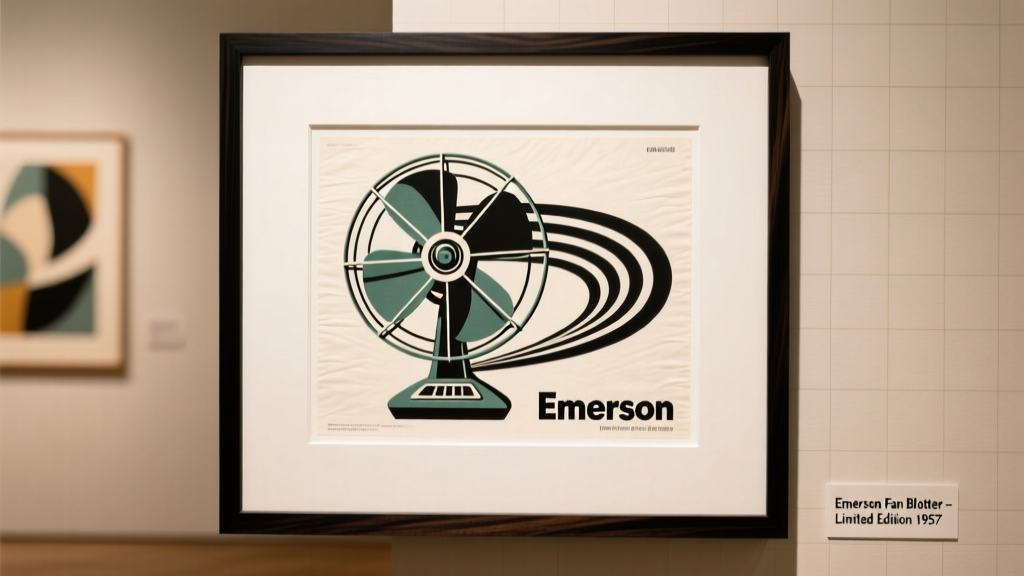
Advertising Blotter: Emerson Fan 'Fan Picture' — History, Authentication, and Market Analysis
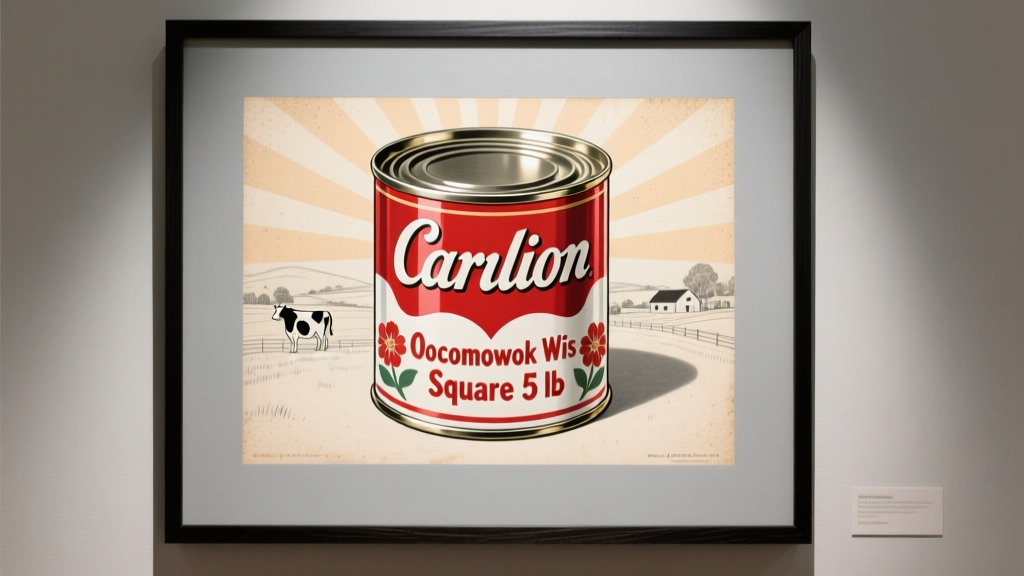
Advertising Tin: Carnation Oconomowoc Wis Square 5 Lb — History, Authentication, and Market Value
Paintings 2: Technical Authentication, Market Dynamics, and Material Forensics in Postwar and Contemporary Works
Pomo Treasure Basket: Authentication, Provenance, and Material Analysis of a 5¼-Inch Coiled Feather-and-Abalone Basket with Glass Beadwork
Wedgwood Shell & Seaweed Pitcher in Cobalt Blue: Authentication, Provenance, and Market Analysis

Decoding the Tobacco Jar: A Technical Authentication Study of a Porcelain Drinking Scene (7¾ in) Featuring Three Men and One Woman
Fostoria American Bottle Stopper 9 Oz: Authentication, Market Value, and Historical Context
Lamps Electric Student Yellow Ribbed Glass Shades: Authentication, Market Value, and Technical Analysis of the 56-Inch Variant