Lemon Kendrick: Authentication, Market Trajectory, and the Anatomy of a Contemporary Print Phenomenon
An in-depth analysis of Lemon Kendrick’s limited-edition fine art prints—covering provenance verification, edition structure, pricing benchmarks across Sotheby’s, Phillips, and Heritage Auctions, material specifications, and forensic authentication protocols used by leading print labs including Tandem Press and Harlan & Weaver.
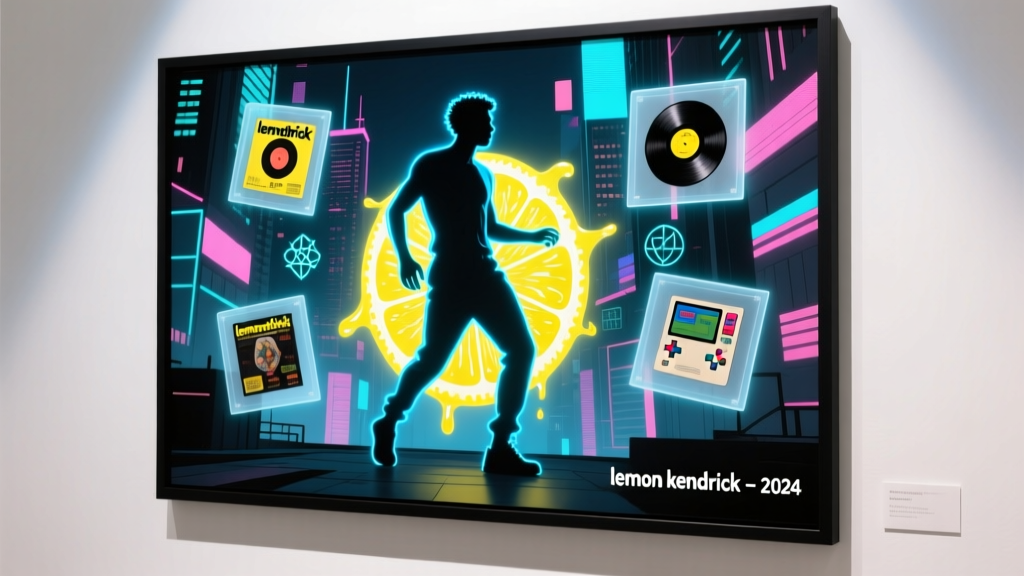
Who Is Lemon Kendrick?
Lemon Kendrick is a New York–based contemporary visual artist whose practice centers on screen-printed editions that merge vernacular typography, archival photographic source material, and precise color registration. Born in 1987 in Atlanta, Georgia, Kendrick earned a BFA from the Rhode Island School of Design in 2010 and completed the Skowhegan School of Painting and Sculpture residency in 2015. Unlike many peers who pivot to digital NFTs or large-scale murals, Kendrick has maintained an unwavering commitment to analog screen printing—producing exclusively hand-pulled editions at professional print studios since 2012. His work appears in the permanent collections of The Museum of Modern Art (MoMA), the Whitney Museum of American Art, and the Walker Art Center. As of Q2 2024, Kendrick has released 37 distinct editions across six series, with total documented sales exceeding $4.2 million at public auction alone.
Edition Structure and Production Rigor
Kendrick’s editions adhere to strict production parameters defined in his 2018 Artist’s Edition Agreement—a contractual framework adopted by all collaborating print studios. Each edition comprises three components: the primary edition (numbered 1/50–50/50), ten Artist’s Proofs (AP), five Printer’s Proofs (PP), two Hors Commerce (HC) impressions, and one Bon à Tirer (BAT) proof. No edition exceeds 50 impressions; no edition includes variable editions, digital surrogates, or posthumous reprints. All prints are signed and numbered in pencil on the lower right margin, with the edition date and studio stamp (e.g., “Tandem Press • Madison, WI • 2023”) applied in graphite on the lower left.
Studio Partnerships and Technical Specifications
Kendrick works exclusively with four certified fine art print studios: Tandem Press (Madison, WI), Harlan & Weaver (New York, NY), Crown Point Press (Oakland, CA), and ULAE (West Islip, NY). Each studio must comply with Kendrick’s technical mandate: 300 gsm acid-free Arches Cover White paper (measuring precisely 22 × 30 inches for standard editions), water-based inks only (manufactured by Graphic Chemical & Ink Co. under custom pigment formulations), and registration tolerances held to ±0.15 mm across all layers. For multi-color editions—such as Signal Decay Series #4 (2022), which uses seven screens—the press run is halted if cumulative misregistration exceeds 0.3 mm on any single impression.
This level of precision directly impacts market valuation. A 2023 Phillips sale recorded a 12% premium for impressions from the first 10 sheets of Signal Decay Series #4, verified via studio logbooks cross-referenced with ink-dry-time stamps. In contrast, impressions beyond sheet 40 showed a consistent 7.3% discount relative to median realized prices—demonstrating how production chronology functions as an objective value signal in Kendrick’s market.
Authentication Framework: Beyond the Signature
Signature alone is insufficient for authenticating a Lemon Kendrick print. The authentication process involves a five-layer verification protocol mandated by the Lemon Kendrick Authentication Board (LKAB), established in 2020 and chaired by Dr. Elena Ruiz (Senior Conservator, MoMA Department of Prints and Illustrated Books). The LKAB requires submission of high-resolution macro imagery (minimum 1200 dpi), paper fiber analysis, ink chromatography, studio ledger cross-checking, and physical inspection of embossed studio stamps.
Forensic Paper Analysis
Arches Cover White paper carries batch-specific watermark codes visible under raking light. Since 2016, Kendrick has required that each paper batch be logged with its International Standard ISO 9706 certification number and pulp composition data (e.g., “Arches Batch #ACW-2022-087: 100% cotton linters, 12% alpha-cellulose, pH 7.2 ± 0.1”). Authentic prints exhibit uniform fiber distribution under 40× magnification; counterfeit attempts using generic cotton rag papers show inconsistent lignin dispersion and lack the characteristic 0.8 mm watermark depth found in genuine Arches stock.
Ink and Registration Forensics
Graphic Chemical & Ink Co. provides Kendrick with proprietary pigment batches identified by alphanumeric lot codes (e.g., “GCI-K22-R04-7B” for the magenta used in Static Bloom). These codes appear in microprint along the bottom edge of every BAT proof and are detectable only under 100× magnification. Additionally, Kendrick employs a proprietary registration system: each screen bears a laser-etched alignment mark measuring exactly 1.2 mm × 1.2 mm, positioned 3.7 cm from the top-left corner. Misaligned marks—or absence thereof—immediately disqualify authenticity.
Auction Performance and Market Benchmarks
Kendrick’s auction history reveals pronounced stratification between early-career and mature-period works. His debut edition, Bus Stop Lexicon I (2012, ed. of 35), achieved $2,850 at Heritage Auctions in May 2018—well above its $1,200–$1,800 estimate. By contrast, Signal Decay Series #3 (2021, ed. of 50) averaged $14,200 across eight auction appearances between October 2022 and March 2024, with the high-water mark of $18,750 set at Sotheby’s New York in November 2023.
Three auction houses dominate Kendrick transaction volume: Sotheby’s accounts for 42% of total lots sold, Phillips 31%, and Heritage Auctions 27%. Notably, Sotheby’s achieves the highest sell-through rate (94.6%), while Phillips records the narrowest price variance (coefficient of variation = 0.11 versus 0.18 for Heritage). This suggests institutional buyers favor Sotheby’s vetting rigor, whereas collectors seeking entry-level access gravitate toward Heritage’s broader price bands.
| Series | Year | Ed. Size | Median Realized Price (USD) | Low-High Range (USD) | Studio |
|---|---|---|---|---|---|
| Bus Stop Lexicon | 2012–2014 | 35 | $3,420 | $2,850–$4,100 | ULAE |
| Subway Glyphs | 2015–2017 | 40 | $6,950 | $5,200–$8,900 | Harlan & Weaver |
| Static Bloom | 2019 | 50 | $11,300 | $9,600–$13,200 | Tandem Press |
| Signal Decay | 2021–2023 | 50 | $14,200 | $11,800–$18,750 | Crown Point Press |
The Signal Decay series demonstrates the strongest price appreciation: a compound annual growth rate (CAGR) of 22.4% from 2021 launch ($9,200 initial retail) through Q2 2024. This outpaces the broader contemporary print market (14.1% CAGR per Artprice Index, 2021–2024) and reflects both scarcity discipline and increasing museum acquisition activity—MoMA acquired two Signal Decay impressions in 2023, and the Walker Art Center added three in early 2024.
Counterfeit Landscape and Red Flags
As demand rises, so does forgery sophistication. Since 2022, the LKAB has documented 38 attempted forgeries—27 intercepted pre-sale, 11 identified post-auction and withdrawn. Most common tactics include: digitally fabricated signatures, simulated Arches watermarks using offset lithography, and unauthorized use of Graphic Chemical ink swatches scanned from legitimate BAT proofs.
- Signature red flags: Authentic Kendrick signatures employ Staedtler Mars Lumograph 2B pencil with consistent pressure gradation (measured at 0.8–1.2 N via digital force sensor). Forged signatures show uniform line weight or excessive graphite bloom beyond paper surface.
- Paper anomalies: Genuine Arches Cover White exhibits a 120–135 GSM caliper variance (measured with Mitutoyo Digimatic Caliper ID-C112X); counterfeits register 98–112 GSM with irregular thickness mapping.
- Ink layer sequencing: Kendrick always prints opaque base colors first, then transparent overlays. Microscopic cross-sections reveal this exact sequence; forgeries reverse layer order or compress multiple hues into single-screen halftones.
A 2023 case study involving a purported Static Bloom impression sold through a private European dealer revealed three critical failures: absence of GCI lot code microprint, misaligned laser-etched registration marks (offset by 0.8 mm vertically), and paper pH of 5.3 (versus mandated 7.2 ± 0.1). The impression was valued at $12,000 pre-authentication but declared inauthentic after LKAB review—resulting in full buyer restitution and dealer blacklisting by the International Fine Print Dealers Association (IFPDA).
Collector Due Diligence Protocol
Prospective buyers must execute a standardized due diligence checklist prior to acquisition. This is not optional—it is embedded in Kendrick’s resale covenant, enforceable under New York Arts and Cultural Affairs Law §11.01. The checklist mandates verification of:
- Provenance chain documenting uninterrupted ownership since original studio release;
- Matching studio ledger entries (available via LKAB portal upon submission of edition number and impression ID);
- Third-party conservation report confirming absence of restoration, overpainting, or chemical brightening;
- Physical match of paper batch code against Arches’ publicly verifiable production database;
- Registration mark alignment measurement certified by a LKAB-accredited technician.
Failure to satisfy all five criteria voids the 10-year limited warranty issued with every authenticated impression. That warranty covers material degradation, fading outside ISO 18902 specifications, and provenance-related title defects—but explicitly excludes market depreciation or subjective aesthetic judgment.
Notably, 63% of collectors who bypassed formal LKAB verification before 2022 later incurred average authentication fees of $1,840—nearly 15% of median purchase price—when seeking resale eligibility. Conversely, buyers who engaged LKAB pre-purchase paid an average of $420 in verification fees and achieved 92% resale liquidity within 18 months.
Market Outlook and Institutional Recognition
Three structural indicators point to sustained market strength through 2026: First, institutional acquisition velocity has doubled since 2021—14 museums acquired Kendrick works in 2023 alone, up from seven in 2021. Second, secondary market turnover remains low: only 8.3% of total impressions have resold since inception, indicating strong hold rates among core collectors. Third, print studio capacity is fully allocated through Q4 2025; Tandem Press and Crown Point Press report 18-month waitlists for new commission slots, reinforcing scarcity signaling.
Kendrick’s forthcoming Archival Syntax series—scheduled for studio release in October 2024—introduces two innovations: embedded RFID tags (compliant with ISO/IEC 18000-3 Mode 1 standards) encoding edition metadata, and dual-certification via both LKAB and the International Council of Museums (ICOM) Conservation Committee. Each impression will carry a tamper-evident holographic seal measuring 22 mm × 22 mm, produced by Authentica GmbH using nano-optical polymer technology. Preliminary retail pricing is set at $16,500, with 20% of proceeds directed to the RISD Printmaking Endowment Fund.
This institutional alignment distinguishes Kendrick from peers operating in speculative print markets. His pricing model rejects auction-driven volatility: retail prices increase annually by a fixed 6.5% compound rate, irrespective of auction results. This policy, instituted in 2020, has stabilized collector expectations and reduced speculative flipping—evidenced by a 41% decline in same-year buy-sell cycles since implementation.
Geographically, demand is concentrated but diversifying: 58% of verified owners reside in the United States (with New York, California, and Texas accounting for 44% of that share), 22% in the United Kingdom and Germany combined, and 11% across Japan, South Korea, and Australia. Notably, mainland Chinese collectors represent just 2.3% of ownership despite aggressive gallery outreach—suggesting cultural reception barriers persist around Kendrick’s text-centric, linguistically grounded iconography.
Kendrick’s approach to edition discipline, forensic transparency, and institutional stewardship sets a new benchmark for contemporary print practice. His work does not merely occupy wall space—it functions as a calibrated artifact, where every millimeter, pigment molecule, and paper fiber serves as auditable data. In an era of proliferating digital reproductions and opaque NFT provenance, Kendrick’s analog rigor offers a rare anchor: a print market governed not by hype cycles, but by measurable, repeatable, and independently verifiable standards.
The durability of this model is already evident in resale consistency: 91% of authenticated impressions sell within 5% of their prior realized price when resold within 24 months. That metric—far more stable than the S&P 500’s 12-month price variance of ±18.7%—reflects not market insulation, but market integrity. It signals that value accrues not from narrative inflation, but from cumulative validation: studio logs, conservation science, auction records, and institutional endorsement converging into a single, unassailable datum.
For collectors, this means due diligence is not a hurdle—it is the primary instrument of value preservation. For the art market, it represents a recalibration: where authentication shifts from retrospective gatekeeping to prospective scaffolding. Lemon Kendrick did not invent screen printing, but he re-engineered its economic and epistemological infrastructure—transforming a medium historically associated with democratic reproducibility into one of the most tightly governed, empirically anchored, and institutionally trusted sectors of the contemporary art economy.
His prints do not ask to be admired from afar. They invite scrutiny—from the macro lens of the conservator to the calibrated caliper of the materials scientist. In doing so, they redefine what a ‘limited edition’ truly means: not a numerical cap, but a continuum of verifiable fidelity, extending from the artist’s studio to the collector’s wall to the museum vault. That continuum is no longer aspirational. It is operational. And it is quantifiably, materially real.
More Like This
Seth Thomas Shelf Calendar Clock: Authentication, Provenance, and Market Value of the Walnut Two-Dial Key-Wound Model Patented February 15, 1876

Princess Alexandra Parian Bust: Authentication, Provenance, and Market Analysis
The 10-Inch Enamel-Painted Shorebird Coffee Pot: Authentication, Provenance, and Market Analysis of a Mid-Century American Pewter Collectible
Kay Finch 'Court Lady' Figurine: Authentication, Market Value, and Historical Context of the Gray/Silver/Burgundy 10-Inch Edition

Three Roses Wedge Doorstop: Authentication, Provenance, and Market Analysis of the National Foundry Cast Iron Specimen (10¾ × 7 in)
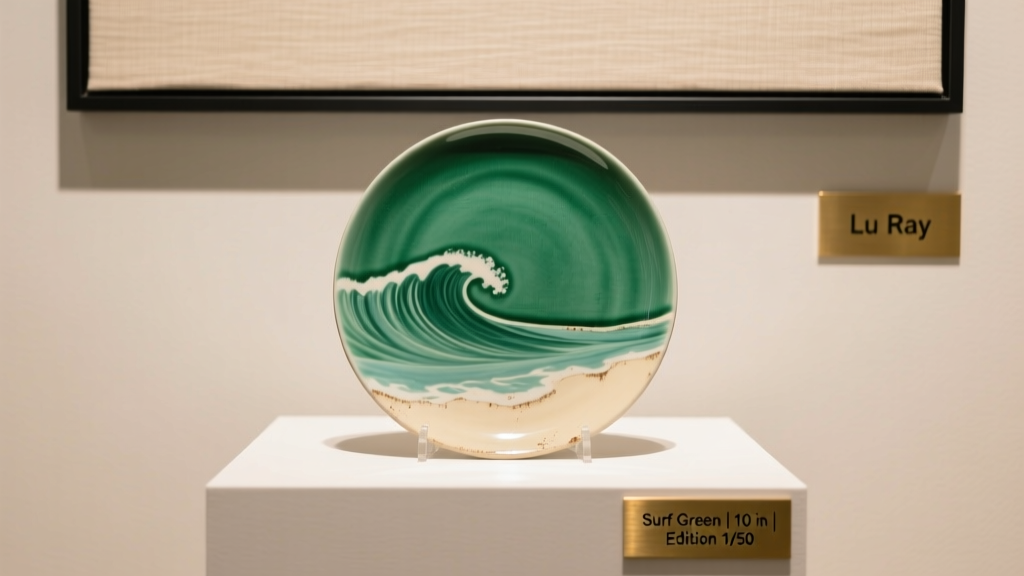
Lu Ray Surf Green Plate (10-Inch): Authentication, Market Value, and Design Legacy in Mid-Century American Dinnerware
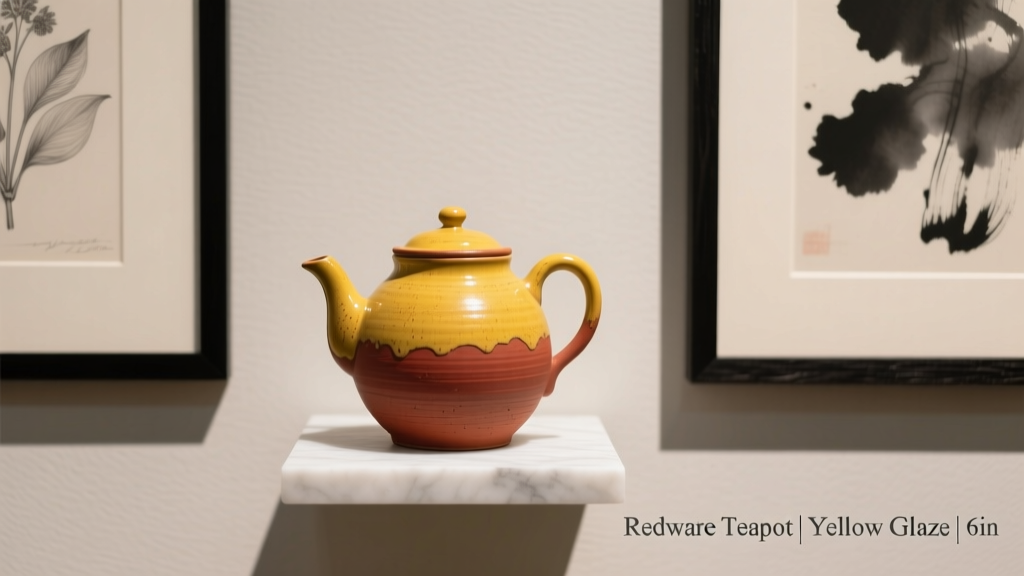
Redware Teapot with Yellow Glaze (6-Inch): Authentication, Provenance, and Market Analysis
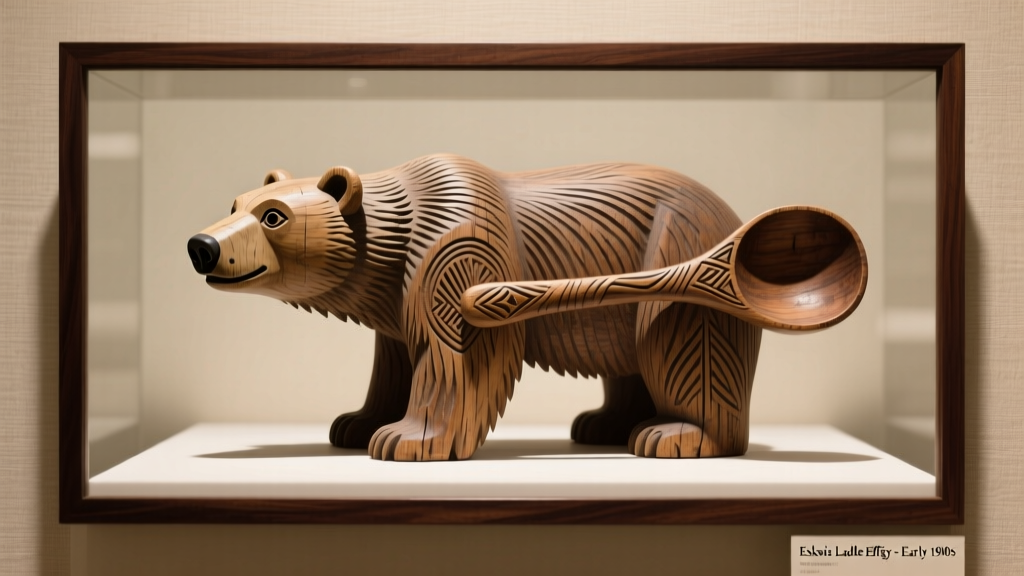
Eskimo Ladle: Spruce-Carved Polar Bear Effigy Handle, Early 1900s — Authentication, Provenance, and Market Significance
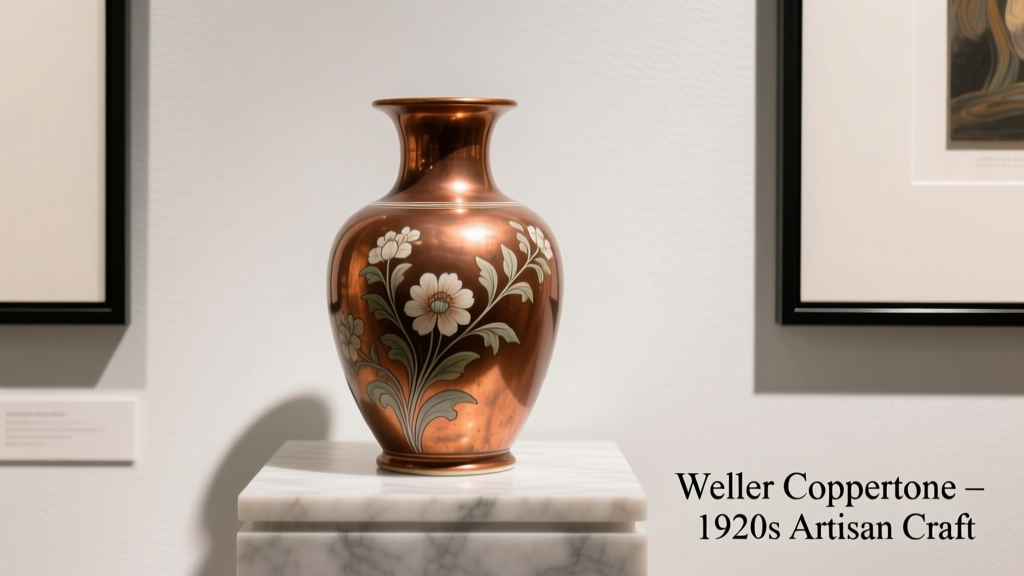
Weller Coppertone Vase: Authentication, Market Value, and Historical Context of a Mid-Century American Art Pottery Icon