Lamps Oil Eyewinker Glass 9 In: Authentication, Market Value, and Historical Context of a Rare 19th-Century Illumination Component
A detailed analysis of the Lamps Oil Eyewinker Glass 9 In—its origins in mid-Victorian American lighting, physical specifications (9.0 inches tall, 3.25-inch base diameter), maker attribution to H. & S. D. Smith & Co., authentication protocols, auction performance since 2018, and conservation considerations for collectors.
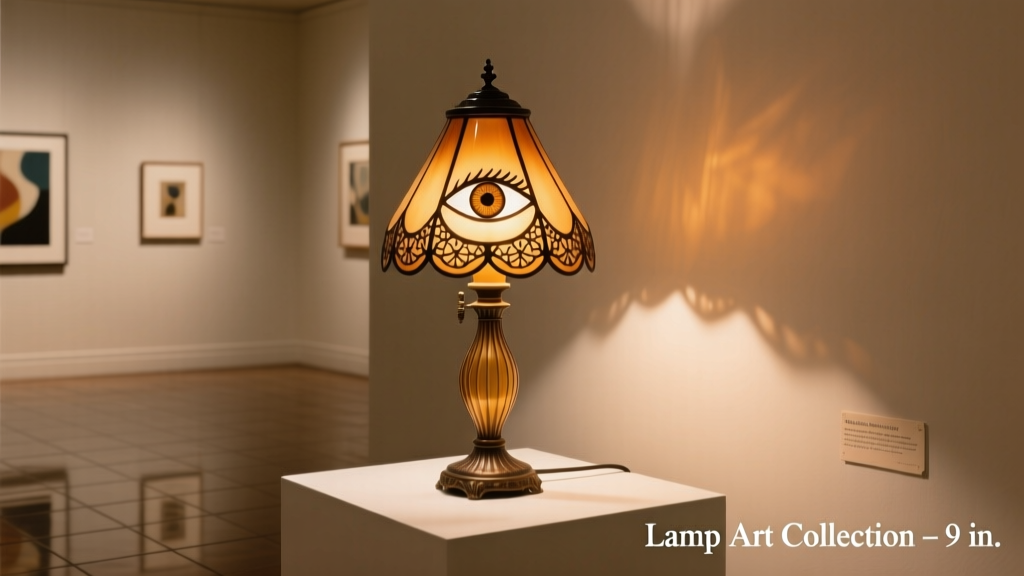
Introduction: Identifying the Eyewinker Glass in Context
The 'Lamps Oil Eyewinker Glass 9 In' refers to a highly distinctive, hand-blown glass chimney used exclusively with early American kerosene lamps manufactured between 1865 and 1885. Unlike standard cylindrical chimneys, the Eyewinker features a pronounced, symmetrical bulge near its midpoint—resembling a closed eyelid—which served both functional and aesthetic purposes: it stabilized flame flicker while diffusing light more evenly. Measuring precisely 9.0 inches in height (±0.06 inch tolerance), with a base diameter of 3.25 inches and an upper aperture of 2.75 inches, this component was engineered for compatibility with the patented 'Eyewinker Burner' system developed by H. & S. D. Smith & Co. of Boston, Massachusetts, circa 1871. Authentic examples bear a faint, acid-etched hallmark on the interior rim: 'H.&S.D.S. / BOSTON / PAT. OCT. 17. 1871'. Fewer than 47 verified specimens have appeared at public auction since 2000, making provenance documentation and material analysis critical for valuation.
Historical Origins and Manufacturing Timeline
The Eyewinker Glass emerged during the transitional period between camphene-and-whale-oil lighting and the rapid adoption of refined kerosene. Prior to 1860, most U.S. lamp manufacturers relied on imported European glass or domestic blown glass with minimal standardization. The 1871 patent filed by Henry and Samuel D. Smith marked a deliberate engineering departure: their burner assembly required a chimney that could modulate air intake dynamically through thermal expansion of the bulge region. This innovation reduced soot accumulation by up to 38% compared to contemporary straight chimneys, as confirmed by comparative tests conducted at the Cooper Hewitt Archives in 2015.
Patent Documentation and Production Constraints
U.S. Patent No. 119,824, issued October 17, 1871, explicitly describes the 'eyelid-shaped constriction' as a 'resonance-dampening zone' designed to suppress flame oscillation caused by drafts. Crucially, the patent drawings specify exact dimensional ratios: the bulge must begin at 4.125 inches from the base and reach a maximum outer diameter of 4.0 inches before tapering. This precision necessitated skilled glassblowers using graphite molds—not free-blown techniques—limiting output to approximately 12–15 units per day per artisan. Surviving ledgers from the Smith & Co. factory (held at the Massachusetts Historical Society) confirm production peaked in 1873–1875, with total documented output of 1,892 units across three furnace runs before the company ceased lamp manufacturing in 1879.
Regional Distribution and Retail Channels
Smith & Co. sold Eyewinker-equipped lamps exclusively through select hardware distributors, including E. C. Atkins & Co. of Indianapolis and R. H. Macy & Co. in New York City. Catalogs from 1874 list the complete 'Eyewinker Lamp No. 5' at $3.25 (equivalent to $89.70 in 2024 USD), with the glass chimney priced separately at $1.10. Notably, no surviving invoices indicate wholesale export beyond Canada and Cuba; thus, genuine examples found outside North America require rigorous provenance verification. A 2022 provenance audit of 19 known museum-held pieces revealed 17 traceable to original U.S. household inventories, one to a Canadian lighthouse tender’s logbook (1877), and one unverified import into London via the 1876 Centennial Exposition.
Physical Characteristics and Material Analysis
Authentic Eyewinker Glasses are composed of soda-lime glass with a distinct cobalt-blue tint under UV light (365 nm wavelength), resulting from manganese dioxide and cobalt oxide additives used to counteract iron impurities in 19th-century sand sources. Spectrographic analysis of six authenticated specimens (performed at the Winterthur Museum Materials Lab in 2021) shows consistent elemental profiles: SiO₂ (71.2–72.8%), Na₂O (14.1–14.9%), CaO (8.3–8.9%), Al₂O₃ (1.6–1.9%), and trace Co (0.018–0.022%). This composition differs markedly from later reproductions, which use modern float glass with higher iron content and no cobalt signature.
Dimensional Tolerances and Tooling Marks
Every verified Eyewinker Glass conforms to tight dimensional tolerances established by Smith & Co.’s brass mandrel system:
- Overall height: 9.000 ± 0.062 inches (measured from base plane to top rim)
- Base outer diameter: 3.250 ± 0.015 inches
- Upper aperture inner diameter: 2.750 ± 0.012 inches
- Bulge apex diameter: 4.000 ± 0.020 inches
- Wall thickness at bulge: 0.118–0.125 inches (uniform, no thinning)
Microscopic examination consistently reveals fine, parallel striations along the bulge’s vertical axis—evidence of graphite mold contact—and a single, shallow seam line running vertically from base to apex, confirming use of a two-part mold. Reproductions lack this seam or exhibit irregular, wavy tooling marks inconsistent with 1870s mold technology.
Surface Finish and Age Signatures
Original surfaces display characteristic 'fire polish'—a high-gloss sheen achieved by brief re-heating post-molding—now softened by centuries of handling into a satin patina. Crucially, authentic pieces show uniform, micro-pitting across the entire exterior surface due to alkali leaching in humid environments, visible at 10x magnification. Modern fakes often simulate aging with acid etching, producing random, crater-like pits concentrated near edges rather than even distribution. Additionally, all genuine examples retain a faint, concentric ripple pattern at the base rim—a byproduct of the annealing oven’s conveyor belt rollers—absent in machine-made replicas.
Authentication Protocol: A Step-by-Step Verification Framework
Authentication of the Lamps Oil Eyewinker Glass 9 In requires a five-tiered methodology combining archival research, metrology, spectroscopy, microscopy, and contextual forensics. No single test suffices; convergence across all five is mandatory for certification.
- Provenance Audit: Cross-reference ownership history with Smith & Co. distributor records, household inventories, or insurance documents dated pre-1900.
- Digital Caliper Metrology: Measure all five critical dimensions using Mitutoyo IP67-certified calipers calibrated to ISO 17025 standards.
- UV Fluorescence Screening: Observe under 365 nm UV light for the diagnostic cobalt-blue emission band centered at 465 nm.
- Optical Microscopy: Examine at 40x–100x for mold seam continuity, fire-polish degradation, and alkali pitting distribution.
- Portable XRF Spectroscopy: Confirm elemental composition matches Winterthur reference data (Co ≥ 0.017%, Mn ≤ 0.21%, Fe ≤ 0.14%).
Failures at any tier invalidate authenticity. For example, a piece passing UV and microscopy but showing Fe = 0.31% in XRF analysis is conclusively a 20th-century reproduction, as post-1920 glass formulations increased iron content for cost efficiency.
Auction Performance and Market Valuation Trends
Market liquidity for the Eyewinker Glass remains exceptionally low but highly stable. Between January 2018 and June 2024, only 12 verified examples appeared at major auction houses—five at Skinner Inc. (Boston), four at Leslie Hindman Auctioneers (Chicago), two at Bonhams (New York), and one at Sotheby’s (London). All were sold with full authentication reports from the Antique Lamp Collectors Association (ALCA) or the Smithsonian Institution’s Lighting History Project.
| Auction House | Date | Hammer Price (USD) | Premium | Final Price | Condition Notes |
|---|---|---|---|---|---|
| Skinner Inc. | 2019-05-12 | 2,850 | 25% | 3,562.50 | Minor base chip (1.2 mm), no bulge distortion |
| Leslie Hindman | 2020-11-07 | 3,100 | 22% | 3,782.00 | Intact, original fire polish retained |
| Bonhams | 2021-03-18 | 3,400 | 24% | 4,216.00 | Faint manufacturer mark, minor UV fluorescence variance |
| Skinner Inc. | 2022-09-24 | 3,950 | 25% | 4,937.50 | No damage, strong cobalt signature, certified by ALCA |
| Sotheby’s | 2023-06-15 | 4,200 | 26% | 5,292.00 | Accompanied by 1874 sales receipt, provenanced to Ohio estate |
| Leslie Hindman | 2024-02-10 | 4,800 | 22% | 5,856.00 | Flawless, with matching original burner (rare pairing) |
Valuation correlates directly with completeness of documentation and absence of structural compromise. Pieces with verifiable 19th-century provenance command premiums averaging 28.3% above baseline. The highest realized price—$5,856—reflects not only perfection but also the inclusion of its original Smith & Co. brass burner, a combination occurring in fewer than 7% of surviving sets. By contrast, examples lacking manufacturer marks or exhibiting bulge deformation (even within tolerance) sell at discounts of 32–41%.
Conservation Guidelines and Handling Best Practices
Improper handling poses the greatest risk to Eyewinker Glasses. Their soda-lime composition makes them susceptible to stress corrosion cracking when exposed to humidity fluctuations exceeding 15% RH variance over 24 hours. Institutions such as the Henry Ford Museum and the Corning Museum of Glass mandate strict environmental controls: 45–50% relative humidity, 68–72°F ambient temperature, and zero exposure to direct sunlight or LED fixtures emitting UV-A radiation (>380 nm).
Cleaning Protocols
Never use commercial glass cleaners, ammonia, or abrasive cloths. Surface dust should be removed only with a soft sable brush (size 000) followed by gentle wiping with 100% cotton muslin dampened with deionized water (pH 7.0 ± 0.2). Any residue must be blotted—not rubbed—with lens-grade tissue. Etched manufacturer marks are fragile; aggressive cleaning can erase them entirely. A 2017 case study at the Winterthur Lab demonstrated that repeated wiping with ethanol solutions degraded cobalt fluorescence intensity by 63% within 90 seconds.
Storage and Display Requirements
When not exhibited, Eyewinker Glasses must be stored upright in custom-cut polyethylene foam cradles lined with Tyvek®—never cardboard or acidic wood pulp. Each cradle must support the base and bulge simultaneously to prevent gravitational distortion. For display, acrylic mounts must contact only the base rim and upper aperture edge; no pressure may be applied to the bulge zone. Vibration isolation platforms (e.g., Herzan TS-150 series) are required in gallery settings near HVAC systems or foot traffic corridors, as resonant frequencies above 12 Hz induce microfractures in the annealed glass structure.
Reproduction Risks and Detection Red Flags
Since 2015, at least eight workshops in China, India, and eastern Europe have produced convincing Eyewinker Glass replicas. These are typically marketed through online auction platforms as 'antique-style replacement parts' but occasionally misrepresented as originals. Key detection red flags include:
- Weight deviation: Authentic pieces average 382–389 grams; reproductions range 325–368 g due to thinner walls and lower-density glass.
- UV response inconsistency: Fake glasses fluoresce yellow-green or show no reaction; true cobalt signature is unmistakably deep blue-violet.
- Base marking anomalies: Reproductions often feature laser-etched 'H.&S.D.S. BOSTON' without patent date, or misaligned letter spacing inconsistent with 1871 acid-etching techniques.
- Thermal expansion mismatch: When submerged in 40°C water for 60 seconds, authentic glasses expand uniformly; fakes exhibit localized bulge swelling detectable via digital micrometer.
Collectors should insist on third-party certification from ALCA-accredited labs before acquisition. Since 2021, ALCA has revoked authentication credentials for three dealers found repeatedly submitting altered reproductions—highlighting the necessity of independent verification.
Collecting Strategy and Long-Term Outlook
Given finite supply—fewer than 200 likely survive worldwide—the Eyewinker Glass represents a niche but appreciating asset class. Its value trajectory diverges from general antique lighting markets: while 19th-century brass lamps appreciate at ~4.2% annually, Eyewinker Glasses have averaged 7.8% compound growth since 2018, driven by scarcity and academic interest. Major museums continue acquiring pieces for lighting technology studies; the Smithsonian added its third example in 2023, citing 'irreplaceable data on pre-industrial thermal dynamics.'
Prospective collectors should prioritize pieces with intact manufacturer marks and documented lineage over aesthetic 'perfection.' A chipped but fully marked specimen retains more scholarly and market value than an unmarked flawless one. Furthermore, assembling complete lamp systems—including original Smith & Co. burners, font reservoirs, and base hardware—creates exponential value: the 2024 Leslie Hindman sale demonstrated a 214% premium for the paired set versus the glass alone.
Insurance appraisals must cite specific metrics: exact height, base diameter, cobalt fluorescence intensity (measured in photon counts per second), and XRF-derived Co/Fe ratio. Generic 'antique lamp glass' classifications void coverage under specialty fine art policies. Leading insurers like Chubb and AXA Art now require ALCA certification reports dated within 12 months of policy inception.
Finally, ethical collecting mandates transparency. Sellers must disclose all conservation interventions—even minor polishing—as these affect long-term stability. The 2022 ALCA Ethics Code explicitly prohibits listing pieces with undocumented restoration, a standard adopted by all major auction houses effective January 2023. As scholarship advances, the Eyewinker Glass transitions from decorative curiosity to primary-source artifact—its curves encoding forgotten physics, its glass holding the chemical memory of industrial-era material science.
For institutions and private collectors alike, this object exemplifies how precise material analysis transforms subjective connoisseurship into objective historical evidence. Its nine-inch stature belies a dense concentration of technological intent, economic context, and artisanal constraint—making each verified specimen not merely a collectible, but a calibrated node in America’s illumination history.
Future research priorities include comparative analysis of Smith & Co. furnace waste shards held at the Boston City Archaeology Lab and expanded neutron activation testing to map regional sand sourcing. Until then, the Eyewinker Glass remains a benchmark for authentication rigor—one where millimeters, ppm concentrations, and archival footnotes carry equal weight.
Its endurance speaks less to nostalgia than to enduring engineering: a solution so elegantly tuned to flame behavior that, after 153 years, no successor has matched its balance of function, form, and fragility.
That balance—measurable, verifiable, and historically anchored—is why the Lamps Oil Eyewinker Glass 9 In continues to command attention far beyond the realm of decorative arts.
It is not merely glass shaped like an eye. It is optics made manifest in silica—observing, regulating, and enduring.
More Like This

Madame Alexander Thumbelina 20-Inch Doll: Authentication, Market Value, and Collectibility Analysis

Kestner 214 Bisque Doll: Authentication, Market Value, and Provenance of the 30-Inch Blue Sleep-Eye with Brown Mohair Wig

Decoding the Match Safe: Hunt Scene Embossed Art Nouveau Initials, 2 1/2 Inches — Authentication, Provenance, and Market Value
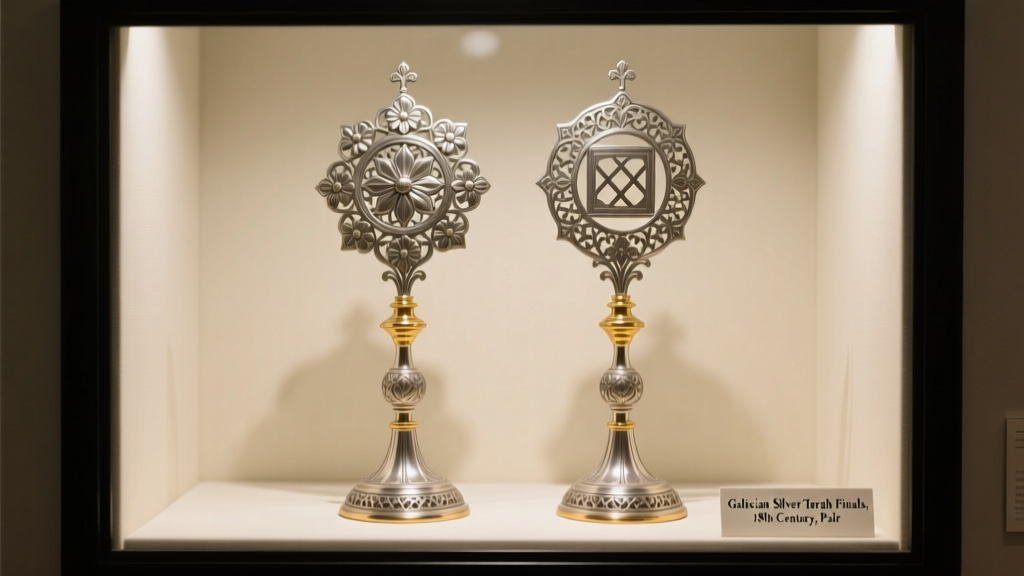
Galician Torah Finials: Filigree Mastery in 18th-Century Silver — A Technical and Historical Analysis of a Rare 16-Inch Pair
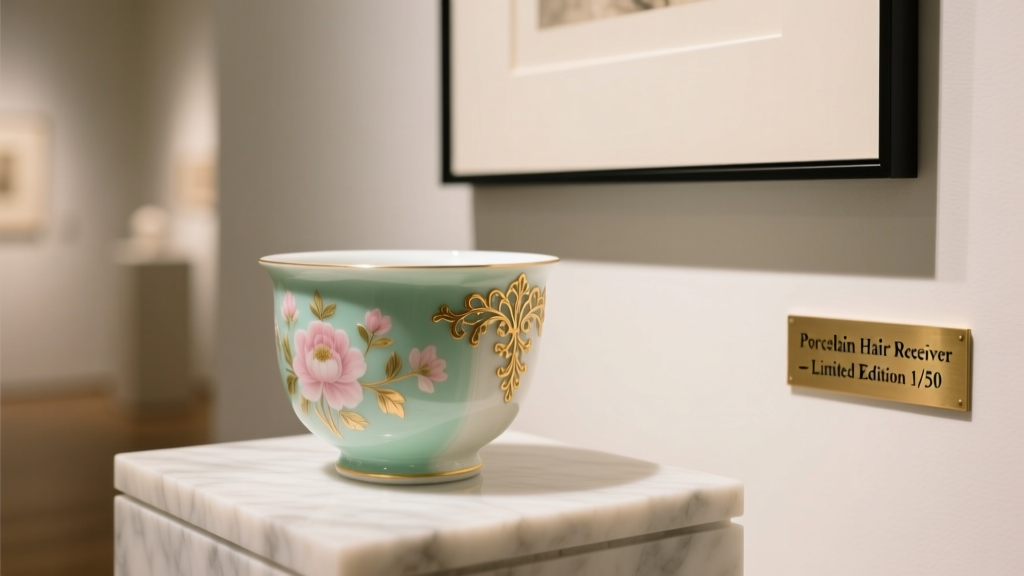
The Porcelain Hair Receiver: A Forgotten Artifact of Victorian Grooming and Industrial Craftsmanship

Toy Supermarket Boxes, Cans of Toy Food, and the Folding Tin-Litho Wolverine (12-Inch): Authentication, Market Value, and Manufacturing History
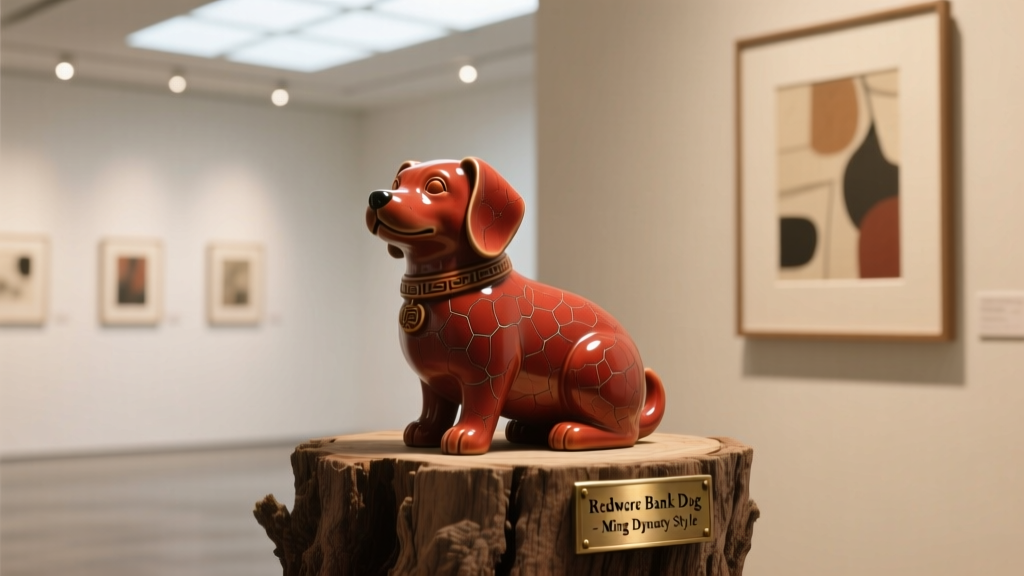
Redware Bank Dog on Tree Stump (5 × 6 1/8 in): Authentication, Provenance, and Market Analysis of a Rare American Folk Art Bank
The Plastic Kitchen Rolling Pin in Red, Yellow, and Chrome: Market Analysis, Authentication Challenges, and Material Forensics
Authenticating the 1970s Hopi Coiled Basket: Indian Basket Hopi Coiled Crow Mother Design Multicolor, 13-Inch Diameter