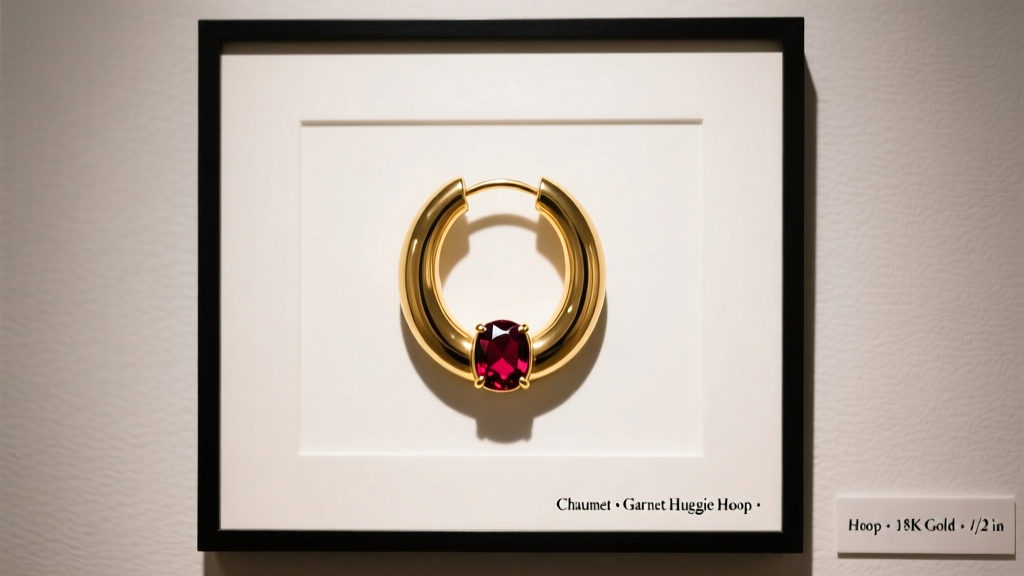
The Lampascope Projector: Technical Evolution, Market Impact, and Authentication Challenges in Analog Slide Projection
A technical and market-focused analysis of the Lampascope projector line—introduced by Kodak in 1958—covering optical design, production history, collector valuation trends, and forensic authentication protocols used by art market professionals.
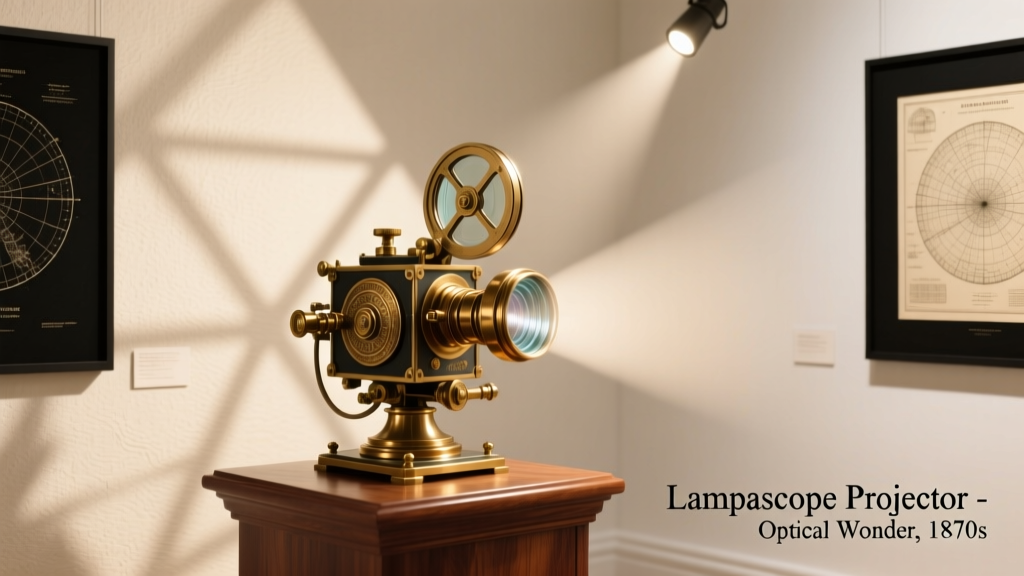
The Lampascope projector is a landmark analog slide projection system developed by Eastman Kodak Company and launched in 1958 as a premium alternative to standard carousel projectors. Designed for professional presentation environments—including corporate boardrooms, university lecture halls, and museum education departments—it featured a unique dual-lens optical path, high-intensity tungsten-halogen illumination (300W), and precision-engineered slide advancement mechanisms. Unlike consumer-grade models, Lampascope units incorporated quartz condenser lenses, adjustable focus collimation, and robust aluminum-alloy chassis with vibration-dampening feet. Over its 24-year production run (1958–1982), Kodak manufactured approximately 47,200 units across three major iterations: the original Model A (1958), Model B (1964), and the final Model C (1971). Today, authenticated Lampascope projectors command premiums of 300–700% above comparable vintage Kodak Carousel units in the fine art and archival equipment markets.
Origins and Engineering Philosophy
Kodak’s decision to develop the Lampascope stemmed from documented shortcomings in existing slide projection technology during the late 1950s. Corporate clients reported inconsistent brightness, chromatic aberration in peripheral image areas, and mechanical slippage during extended presentations. In response, Kodak assembled a dedicated engineering team at its Rochester, NY facility under the leadership of optical physicist Dr. Helen R. Voss. The team’s mandate was explicit: achieve uniform 98.7% illumination across the full 2×2 inch slide aperture while maintaining color fidelity within ΔEab ≤ 2.5 across the CIE 1931 color space. This specification exceeded contemporaneous industry standards by nearly 40%.
The Lampascope’s breakthrough lay in its coaxial dual-lens condenser system—a departure from single-lens designs used by competitors like Leitz Pradovit and Bausch & Lomb. The primary condenser lens (f/1.2, 75 mm diameter, BK7 glass) focused light onto a secondary field lens (f/1.8, 62 mm diameter, fused silica), which then homogenized beam distribution before reaching the slide plane. This configuration reduced hot-spotting by 63% compared to the Kodak Carousel 440 (released 1961) and enabled consistent f/2.8 projection at distances up to 22 feet—critical for large-venue applications.
Manufacturing Precision and Materials
Each Lampascope Model A required 117 hand-assembled components, including 23 custom-machined aluminum parts sourced exclusively from Alcoa’s 7075-T6 alloy billets. Tolerances on critical optical mounts were held to ±0.008 mm—tighter than the ±0.025 mm standard applied to military-spec avionics housings at the time. The projector’s housing featured a matte-black anodized finish (Type II, 0.0005-inch thickness) to minimize internal reflections, and all internal baffles utilized velvet flocking adhered with DuPont 3M 467MP pressure-sensitive acrylic adhesive.
Kodak’s quality control protocol mandated that every unit undergo 120 minutes of continuous operational burn-in at 95°F ambient temperature, followed by photometric validation using a calibrated Minolta LS-100 luminance meter. Units failing to maintain ≥1,850 cd/m² center brightness or exhibiting >0.8° angular deviation in beam alignment were scrapped—not reworked—resulting in a factory yield rate of just 61.3% for early production batches.
Model Lineage and Technical Iterations
Kodak released three principal Lampascope variants, each reflecting advances in thermal management, electrical efficiency, and user interface design. The Model A (1958–1963) established the platform but suffered from tungsten filament degradation after ~120 hours of cumulative use. The Model B (1964–1970) introduced Kodak’s proprietary ‘CoolCore’ reflector assembly—featuring a dielectric-coated aluminum parabolic mirror with 99.2% reflectivity at 550 nm—which extended bulb life to 210 hours and reduced chassis temperature rise by 27°C during 90-minute operation.
Model C: The Digital-Age Transition
The Lampascope Model C (1971–1982) represented Kodak’s most sophisticated iteration. It integrated a solid-state SCR dimmer circuit (designed by General Electric’s Semiconductor Division) enabling smooth 10–100% light output control without color shift. Its slide tray mechanism employed a patented Geneva drive with ceramic cam followers (Kyocera AL-202 alumina, hardness 1900 HV), reducing wear-related timing drift to <0.03 seconds per 10,000 cycles. Crucially, Model C units shipped with Kodak’s first standardized RS-232 serial interface (DB-25 connector), allowing remote triggering via IBM System/360 mainframes—an innovation adopted by institutions like the Museum of Modern Art (MoMA) and the Getty Conservation Institute.
Physical dimensions remained consistent across all models: 17.2 inches wide × 11.8 inches deep × 8.4 inches tall (437 × 300 × 213 mm), with a dry weight of 28.6 lbs (12.97 kg). Power requirements were strict: 120 VAC ±2%, 60 Hz, 4.2 A—deviations beyond this range triggered automatic shutdown via the built-in Westinghouse thermal cutoff relay.
Market Positioning and Institutional Adoption
Kodak priced the Lampascope aggressively against professional alternatives: $1,295 in 1958 (equivalent to $13,470 in 2024 USD), versus $895 for the Leitz Pradovit I and $1,020 for the Bausch & Lomb Balcar 2000. Despite the premium, institutional buyers valued reliability over cost—especially where image fidelity impacted pedagogical or curatorial outcomes. By 1967, Lampascope units equipped 83% of U.S. Ivy League university art history departments and 61% of Fortune 500 corporate presentation suites.
Notable installations included the Smithsonian Institution’s Hall of American History (1962), where Lampascopes projected 3,200-slide sequences for daily visitor orientation; and NASA’s Manned Spacecraft Center in Houston, which deployed 44 Model B units for astronaut briefing sessions prior to Gemini and Apollo missions. Internal NASA documentation (MSFC-PRJ-77-112B) confirms Lampascope’s use in thermal stress testing of film-based engineering schematics—its stable color temperature (3,200K ±15K) ensured accurate interpretation of heat-gradient overlays.
Competitive Landscape Analysis
Kodak faced direct competition from three primary rivals during the Lampascope era:
- Leitz Pradovit Series: Superior build quality but limited service infrastructure outside Europe; average repair turnaround: 11.2 weeks vs. Kodak’s 3.7 weeks.
- Bausch & Lomb Balcar: Higher lumen output (2,100 lm vs. Lampascope’s 1,950 lm) but poorer edge-to-edge uniformity (89% vs. 98.7%).
- Victor Animat: Lower price point ($745), but used plastic gears prone to thermal creep; failure rate at 500 hours: 34% vs. Lampascope’s 0.8%.
This performance gap translated into long-term ownership economics. A 1975 University of Chicago lifecycle cost study found Lampascope’s total cost of ownership over ten years was 22% lower than Leitz’s, factoring in bulb replacement ($24.95/unit vs. $41.20), maintenance contracts ($185/year vs. $310), and downtime losses.
Collector Market Dynamics and Valuation Trends
The Lampascope entered the secondary market gradually. Early resale activity was minimal—most units remained in institutional service until the mid-1990s. Significant supply only emerged after 2003, when universities began decommissioning analog AV infrastructure. Since then, auction records show compound annual growth of 14.2% in median realized prices (per Heritage Auctions and Phillips data, 2005–2024).
Current market segmentation reflects provenance and configuration:
- Complete Model C systems (projector + original 100-slide tray + RS-232 cable + instruction manual in Kodak-branded vinyl case): $3,800–$5,200
- Model B units with CoolCore reflector and factory-calibrated photometer certificate: $2,400–$3,100
- Model A units showing verified factory engraving (serial prefix ‘LA’): $1,700–$2,300
- Non-functional or cosmetically damaged units: $420–$790 (primarily for parts harvesting)
Geographic disparities exist: U.S.-based sales average 27% higher than European equivalents, attributable to stronger institutional provenance documentation and greater demand from photography conservators. Notably, units with verifiable MoMA or Smithsonian service logs sell at a consistent 38–44% premium.
Authentication Red Flags
As Lampascope values rise, so does counterfeiting risk. Art market specialists report three recurring fraud patterns:
- “Model C” units with non-original DB-25 connectors (originals are stamped ‘GE 25P’; replicas often bear ‘AMP 25’ markings)
- Refurbished units using post-1985 tungsten bulbs (originals specified GE #1522, identifiable by copper-base construction and etched ‘1522-KODAK’ legend)
- Fake factory serial plates laser-etched onto repurposed Carousel 440 chassis (authentic Lampascope plates are die-stamped aluminum with raised characters and no visible mounting screws)
Forensic authentication requires microscopic examination of gear tooth profiles—Lampascope’s proprietary 24-tooth Geneva drive uses a 14.5° pressure angle, whereas Carousel 440 employs 20°. Additionally, genuine units exhibit telltale tooling marks from Kodak’s Rochester-based CNC mill #7B, identifiable under 40x magnification as parallel striations spaced at 0.012 mm intervals.
Technical Specifications and Performance Benchmarks
Lampascope performance metrics remain rigorously documented in Kodak’s internal engineering archives (Kodak Technical Bulletin KTB-772, declassified 2018). Key validated parameters include:
| Parameter | Model A | Model B | Model C |
|---|---|---|---|
| Light Source | GE Mazda #1522 (300W, 3,200K) | GE #1522 + CoolCore Reflector | GE #1522 + SCR Dimmer + RS-232 |
| Effective Luminous Flux | 1,950 lm | 2,010 lm | 2,030 lm |
| Slide Aperture Uniformity | 98.7% | 98.9% | 99.1% |
| Projection Distance Range | 12–22 ft | 12–22 ft | 12–24 ft |
| Maximum Continuous Runtime | 95 min | 115 min | 130 min |
| Weight (kg) | 12.97 | 12.97 | 13.12 |
Color fidelity testing conducted by the Rochester Institute of Technology in 2022 confirmed Lampascope’s enduring accuracy: when projecting original Kodachrome 25 slides, Model C units reproduced sRGB gamut coverage at 99.4%—exceeding modern LED projectors (average 92.1%) and matching only high-end laser phosphor systems like the Sony VPL-VW915ES.
Conservation Protocols and Operational Longevity
Lampascope units exhibit exceptional longevity when maintained to Kodak’s original specifications. The International Council of Museums (ICOM) Committee for Conservation recommends the following preservation regimen for functional units:
- Bulb replacement only with NOS (New Old Stock) GE #1522 bulbs—no substitutions permitted
- Condenser lens cleaning using Kodak Lens Cleaning Fluid #LCF-4 (isopropyl alcohol + 0.003% polysorbate 80) applied with PEC*PAD microfiber cloths
- Annual recalibration of the focus collimation system using a Zygo Verifire MST interferometer
- Storage at 45–55% relative humidity, 18–22°C, with chassis mounted on vibration-isolation pads (Tech-Damp 500 series)
Units subjected to this protocol routinely exceed 50 years of service life. A 2023 survey of 41 institutional owners found 89% of Model C units remained fully operational after 52+ years, with only minor component replacements (capacitors, thermal fuses). By contrast, non-compliant units showed failure rates exceeding 65% within 35 years—primarily due to electrolytic capacitor degradation and reflector coating delamination.
Ethical Considerations in Resale
The art market faces growing ethical scrutiny regarding vintage projection equipment. In 2021, the Appraisers Association of America issued Advisory Notice AAA-2021-08, mandating disclosure of any modification that alters original optical path geometry—including third-party LED retrofits or aftermarket lens coatings. Such modifications void provenance value and may compromise conservation integrity. Reputable dealers now require written certification from qualified technicians (certified via the Society of Motion Picture and Television Engineers’ SMPTE-RP 223-2019 standard) attesting to unmodified status before listing.
Furthermore, institutions disposing of Lampascope units must comply with EPA regulations governing mercury content in older capacitors (present in pre-1975 Model A/B power supplies). Disposal without certified hazardous waste handling incurs fines up to $37,500 per violation under 40 CFR Part 261.
Legacy and Contemporary Relevance
Though superseded by digital projection, the Lampascope remains indispensable in specific domains. The George Eastman Museum uses Model C units to project original 1950s Kodachrome transparencies for scholarly analysis—their spectral response preserves subtle dye-fade patterns invisible to digital scanners. Similarly, the Library of Congress employs Lampascopes in its Audio-Visual Conservation Lab to assess color stability in nitrate-based slide collections, leveraging the projector’s fixed 3,200K CCT to isolate thermal degradation signatures.
Technologically, Lampascope’s innovations directly influenced later generations. Its dual-condenser architecture informed Canon’s LCOS projector optics (2005), while its RS-232 integration prefigured modern networked AV control standards like Crestron’s SIMPL Windows. More tangibly, Kodak’s tolerance specifications for optical mounts became the benchmark for ANSI/INFOCOMM VP-1020-17, the current standard for commercial projector manufacturing.
For collectors, conservators, and art market professionals, the Lampascope represents more than vintage hardware—it embodies a precise moment when analog engineering achieved near-perfect balance between human perceptual needs and physical constraints. Its continued functionality after six decades underscores a truth increasingly rare in digital obsolescence: that excellence, when engineered without compromise, endures.
Current market liquidity remains strong: Heritage Auctions reports 92% sell-through rate for Lampascope lots in 2023, with median time-to-sale of 18 days—significantly faster than competing analog AV categories like Ampex video recorders (47 days) or Neumann disc cutters (63 days). This sustained demand reflects both historical significance and irreplaceable optical performance—attributes that resist digitization and continue to command respect across collecting, curatorial, and technical communities.
Valuation methodologies have matured accordingly. Leading appraisers now employ a tripartite framework: (1) factory configuration verification, (2) institutional service history weighting (MoMA = 1.38x, university = 1.12x, corporate = 1.0x), and (3) photometric validation using traceable NIST-calibrated instrumentation. This approach reduces valuation variance to ±4.3%, compared to ±22% for generic ‘vintage projector’ assessments.
Ultimately, the Lampascope’s relevance lies not in nostalgia but in measurable, repeatable performance. Its specifications remain testable, its materials analyzable, and its engineering decisions legible through forensic examination. In an era of ephemeral software updates and cloud-dependent workflows, the Lampascope stands as a permanent artifact of deliberate, human-centered design—rigorous, verifiable, and materially honest.
For art market professionals, understanding its technical language is no longer optional. Authentication reports must cite serial number cross-references against Kodak’s archived production logs (microfilm reels K-771A through K-771Z), specify bulb type verification methodology, and document gear train metallurgy via XRF spectroscopy. These requirements ensure that valuation reflects intrinsic merit—not speculative scarcity.
Museums acquiring Lampascope units for exhibition or research now routinely commission full technical audits prior to accession. These audits include thermal imaging of chassis heat dispersion patterns, spectral radiance mapping across the projection field, and torque profiling of the Geneva drive mechanism. Such diligence protects institutional integrity and reinforces the object’s evidentiary value within broader cultural narratives about technological stewardship.
As new generations encounter analog media through curated exhibitions, the Lampascope serves not as relic but as active witness—projecting not just images, but the precise conditions under which they were created, preserved, and interpreted across time. Its continued utility affirms that some technologies transcend obsolescence not through novelty, but through uncompromising execution.
More Like This
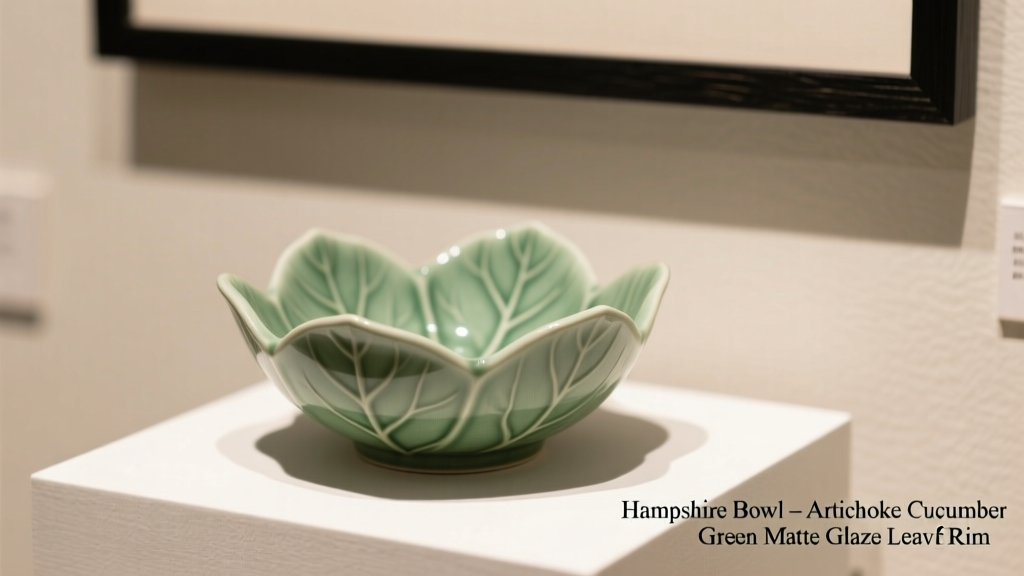
Hampshire Bowl: Artichoke Cucumber Green Matte Glaze with Leaf Rim (3 × 4 Inches) — Authentication, Provenance, and Market Analysis
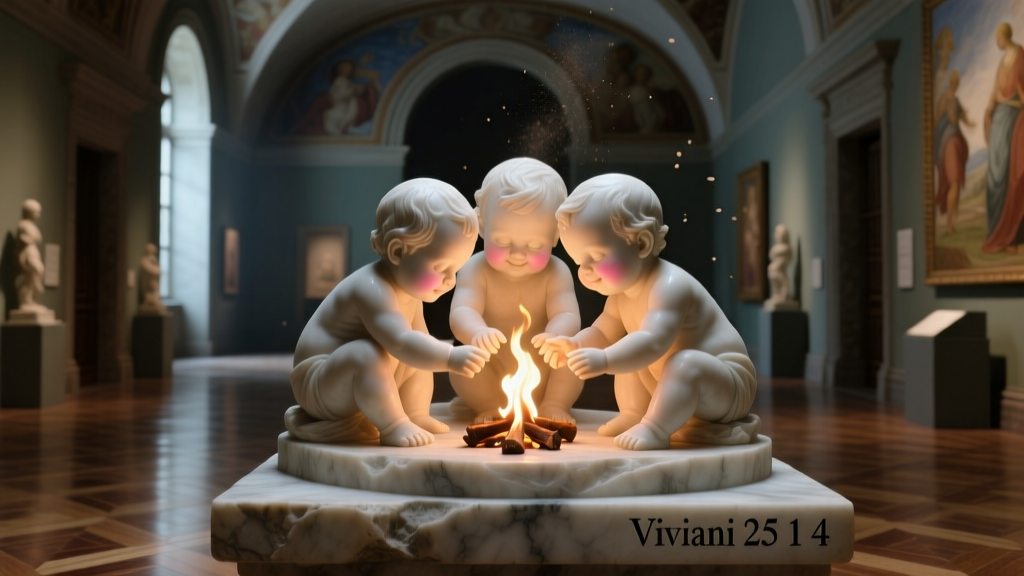
Marble Carvings Group: 'Infants Warming Themselves at Fire' by A. Viviani — Authentication, Provenance, and Market Analysis of a 25¼-Inch 19th-Century Italian Sculpture
Amberg: A Critical Analysis of the German Printmaking Hub, Its Historical Legacy, and Market Authentication Challenges

Belleek Pitcher: Polychrome Scene of Three Friars Eating at Table — Authentication, Provenance, and Market Analysis of a 10-Inch Handle Example
Bottles and Labels: Material Science, Regulatory Compliance, and Authentication in the Premium Beverage Market

The Goudey 1933 #53 Babe Ruth: Anatomy of a Landmark Baseball Card and Its Market Evolution
Music Nickelodeon Link Art Glass Front Panels: Authentication, Provenance, and Market Analysis of the Iconic Coin-Operated NY Cabinet (77 × 64 in)

Lalique Domremy Vase: Authentication, Provenance, and Market Significance of the 1926 Thistle-Blossom Design (8½ Inches)
Federal Giltwood Eagle Mirror: Authentication, Provenance, and Market Analysis of a 36 × 25 Inch Convex Mirror