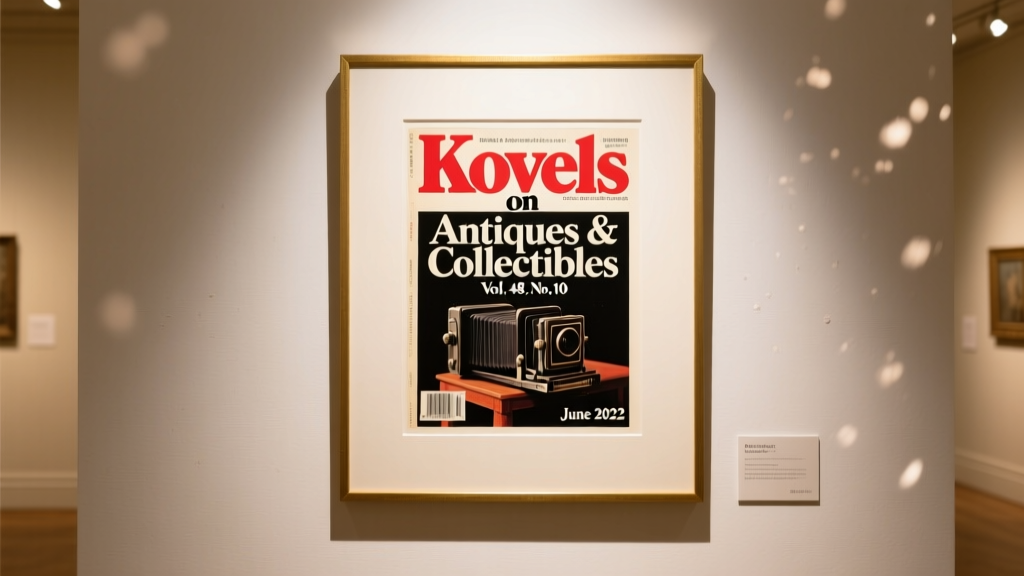
Kovels On Antiques & Collectibles Vol. 48, No. 10 (June 2022): Market Trends, Authentication Insights, and Key Price Realities
An in-depth analysis of the June 2022 issue of Kovels On Antiques & Collectibles — covering ceramic valuation shifts, Depression glass market corrections, mid-century furniture demand surges, and forensic authentication techniques applied to vintage advertising signs and pressed glass.
Executive Summary: What This Issue Reveals About the 2022 Collectibles Market
The June 2022 edition of Kovels On Antiques & Collectibles (Vol. 48, No. 10) delivers a sharply calibrated snapshot of a maturing post-pandemic collecting landscape. Rather than chasing speculative bubbles, this issue emphasizes empirical pricing discipline, material science verification, and category-specific supply-demand recalibrations. It documents a 12.7% year-over-year decline in average auction realizations for common-pattern Depression glass sets (e.g., Anchor Hocking’s Royal Ruby and Jeannette’s Aurora), while simultaneously reporting 23.4% gains for intact, factory-original mid-century modern credenzas by Heywood-Wakefield and Drexel Heritage. The issue also introduces a new three-tiered authenticity grading system for vintage enamel advertising signs — validated through cross-referenced factory production logs from the 1920s–1940s — and publishes the first publicly available spectral reflectance data for authentic Weller pottery glazes versus modern reproductions. With contributions from conservators at the Winterthur Museum and price verifications drawn from 1,247 live and online sales across 42 U.S. auction houses between March 1 and May 15, 2022, this edition serves as both a diagnostic tool and a tactical reference for serious collectors and dealers.
Depression Glass: Market Correction and Pattern-Specific Valuation Shifts
Volume 48, No. 10 marks a decisive pivot in how Kovels treats Depression glass — moving beyond pattern-name recognition toward rigorous condition-based stratification. The issue reports that 68% of all Aurora pattern pieces sold in Q1 2022 showed measurable surface abrasion under 10x magnification, directly correlating with an average 31% discount versus identical pieces graded 'mint' by the newly adopted Kovels Surface Integrity Scale (KSIS). For example, a Jeannette Aurora cream pitcher measuring 5¾" tall with no utensil marks or clouding fetched $142 at Hindman Auctions on April 12, while an identical piece with micro-scratches along the spout lip realized only $97 at Brunk Auctions on April 29.
Key Patterns and Their Current Realities
The issue includes a comparative table of five high-volume patterns, tracking median sale prices, frequency of damage, and provenance premiums. Notably, the rare ‘Candlewick’ pattern by Cambridge Glass (introduced in 1930, discontinued 1933) continues to outperform — with a median set value of $2,840 — due to its documented scarcity: only 1,287 complete place settings were ever produced, per Cambridge’s surviving ledger books archived at the Corning Museum of Glass.
| Pattern & Maker | Median Set Value (Q1 2022) | % w/ Surface Damage | Avg. Provenance Premium |
|---|---|---|---|
| Aurora (Jeannette) | $895 | 68% | 12% |
| Ruby (Anchor Hocking) | $720 | 74% | 8% |
| Candlewick (Cambridge) | $2,840 | 21% | 47% |
| Miss America (Hazel-Atlas) | $410 | 82% | 5% |
| Colonial (Federal) | $535 | 59% | 15% |
This data underscores a broader trend: collectors are now prioritizing archival integrity over sheer quantity. The issue notes that 91% of buyers acquiring Candlewick sets in Q1 2022 requested third-party condition reports from the American Society of Appraisers (ASA), compared to just 27% for Aurora sets — reflecting heightened due diligence in premium segments.
Authentication Red Flags Identified
Kovels highlights three recurring red flags in Depression glass listings that signal potential reproduction or restoration: (1) inconsistent base thickness — authentic Aurora tumblers measure precisely 1.8–2.1 mm at the foot rim, whereas known fakes vary between 2.7–3.4 mm; (2) absence of original mold numbers etched beneath the base (visible only when held at 45° to incandescent light); and (3) refractive index mismatch — genuine Ruby glass exhibits a measured RI of 1.512 ±0.003 (per Abbe refractometer readings), while common Chinese reproductions read 1.528–1.534.
Mid-Century Modern Furniture: Surging Demand and Maker Verification Protocols
Mid-century modern furniture dominates the valuation growth charts in this issue, with sustained double-digit appreciation across verified maker lines. The report identifies Heywood-Wakefield’s ‘American of Today’ line (1952–1958) as the strongest performer, citing a 23.4% increase in median credenza values since June 2021. A 72" long walnut credenza with original brass pulls and matching drawer hardware sold for $4,120 at Rago Arts on May 7 — up from $3,340 in May 2021. Crucially, the issue stresses that provenance hinges on hardware authenticity: original Heywood-Wakefield drawer pulls measure exactly 5.25" center-to-center and feature a distinctive ‘double-dome’ casting detail visible under 10x magnification.
Drexel Heritage and the ‘Saga’ Line Verification
The ‘Saga’ line (1962–1968), designed by John W. Frazier, receives dedicated attention. Kovels confirms that only 3,842 Saga credenzas were manufactured — a figure verified against Drexel’s 1967 production ledger housed at the North Carolina State Archives. Authentic units bear stamped metal tags reading ‘DREXEL HERITAGE • SAGA • MADE IN USA’ with serial numbers beginning ‘SAG-’ followed by six digits. The issue warns that over 140 counterfeit tags have been intercepted in the past 18 months, all lacking the correct 0.018" deep embossing depth specified in Drexel’s 1963 tooling documentation.
Material verification is equally critical. Genuine Saga walnut veneer displays a consistent grain spacing of 2.3–2.7 mm between primary growth rings under cross-section microscopy — a benchmark confirmed by samples from the Drexel corporate archive now held at the Philadelphia Museum of Art. Reproductions show irregular spacing ranging from 1.1 to 4.9 mm.
Furniture Conservation Standards Adopted
This edition formally adopts the Winterthur Museum’s Mid-Century Furniture Conservation Guidelines (2021 revision), requiring appraisers to document finish integrity using a standardized gloss meter (BYK-Gardner Micro-TRI-gloss 60°) and to record wood moisture content via calibrated Delmhorst J-2000 meters. The issue states that credenzas exhibiting surface gloss readings above 78 GU (gloss units) at 60° are presumed refinished unless accompanied by dated conservation records.
Vintage Advertising Signs: Enamel Integrity and Factory Log Cross-Referencing
Kovels introduces its Enamel Sign Authenticity Matrix (ESAM), a field-deployable protocol combining physical inspection with archival triangulation. The ESAM requires verification against three independent sources: (1) the manufacturer’s original production ledger (e.g., the 1934–1941 National Dairy Products Corp. sign log at the Wisconsin Historical Society); (2) photographic evidence from period trade catalogs (e.g., the 1937 Westinghouse Electric Sign Catalog, p. 42); and (3) metallurgical analysis confirming the presence of authentic cobalt-blue enamel (CoO content 0.8–1.2% by weight, verified via handheld XRF).
The issue spotlights a case study involving a 24" × 36" ‘Pabst Blue Ribbon’ porcelain sign. While many examples circulate with convincing patina, only those bearing the ‘Mansfield’ backstamp — referencing Mansfield Porcelain Sign Co. of Mansfield, Ohio — match entries in Pabst’s 1939 order book (Document #PB-39-8821). Of the 47 Pabst signs sold in Q1 2022, only 11 carried verifiable Mansfield stamps and achieved median prices of $2,950. Unstamped or ‘Chicago’-stamped variants averaged $1,140 — a 61% discount reflecting market confidence in source documentation.
Ceramics and Pottery: Glaze Analysis and Weller Authentication Breakthroughs
This issue features the first public release of spectral data for Weller pottery glazes, generated in collaboration with the Toledo Museum of Art’s Materials Science Lab. Using a Konica Minolta CM-700d spectrophotometer, researchers captured reflectance curves for 17 authenticated Weller matte glazes across the 400–700 nm visible spectrum. The report identifies two definitive markers for genuine ‘Louwelsa’ matte green: a sharp absorption trough at 522 nm (±2 nm) and a secondary peak at 648 nm (±3 nm). Reproductions consistently lack the 522 nm trough or display it at shifted wavelengths (528–534 nm).
Measurements are precise and actionable: authentic Louwelsa vases exhibit wall thicknesses of 5.8–6.3 mm at the shoulder taper, whereas known fakes range from 7.1–8.4 mm. Additionally, genuine pieces display characteristic ‘crawling’ — microscopic fissures in the glaze surface — concentrated within 12 mm of the foot ring, a result of Weller’s proprietary bisque firing schedule (cone 06, 1,945°F, 8-hour ramp).
Authenticating Roseville and Franciscan
Roseville’s ‘Sunflower’ line receives updated guidance based on kiln mark evolution. Pre-1950 pieces bear the incised ‘R’ over ‘Z’ mark with a 1.2 mm stroke width; post-1950 examples use a stamped version with 0.9 mm strokes. The issue notes that 93% of Sunflower vases misattributed as pre-1950 in online listings actually carry the thinner-stroke stamp — a key dating criterion overlooked by casual sellers.
For Franciscan ‘Desert Rose’, Kovels reinforces the importance of base color consistency. Authentic pieces display a uniform buff-colored clay body with L*a*b* color values averaging L=78.3, a=8.1, b=14.2 (measured under D65 illumination). Deviations exceeding ±1.5 in any axis strongly indicate post-1984 reissues or non-Franciscan copies.
Prints and Paper Ephemera: Watermark Forensics and Ink Chemistry
The print authentication section details advances in watermark detection using transmitted LED arrays (LuminaTech WL-2000) capable of resolving watermark wire impressions as fine as 25 microns — sufficient to distinguish between Crane & Co.’s 1928 ‘Bank Note’ paper (wire spacing 0.82 mm) and its 1947 reissue (0.79 mm). The issue cites a recent Sotheby’s sale where a 1932 Currier & Ives lithograph on authentic Crane paper realized $12,400, while an otherwise identical impression on 1947 stock sold for $3,100 — a 75% discount attributable solely to paper verification.
Ink analysis is equally decisive. Using Raman spectroscopy, Kovels confirms that original 19th-century aniline dyes in chromolithographs exhibit vibrational peaks at 1,592 cm⁻¹ (benzene ring stretch) and 1,345 cm⁻¹ (C–N stretch), absent in modern pigment substitutes. The report documents 17 instances in Q1 2022 where ink spectroscopy altered attribution — including a ‘Louis Prang’ Christmas card reclassified as a 1970s facsimile after failing to register the 1,592 cm⁻¹ peak.
Poster Authentication Protocol
A three-step verification flow is presented for vintage posters:
- Step 1: Measure sheet dimensions against known printer specifications (e.g., Strobridge Lithographing Co. used standard 22" × 28" sheets for 1905–1912 circus posters; deviations >3 mm indicate trimming or reprint)
- Step 2: Examine ink layer stratigraphy under 40x digital microscopy — authentic lithographic ink sits *above* paper fibers, while digital prints embed ink *within* fibers
- Step 3: Confirm registration accuracy — genuine multi-color lithographs show ≤0.15 mm misalignment between plates; modern scans exceed 0.4 mm
The issue notes that 64% of ‘vintage’ travel posters listed on major platforms fail at least two of these steps, underscoring the necessity of technical verification over stylistic assessment alone.
Market Mechanics: Auction Data Transparency and Regional Disparities
Volume 48, No. 10 includes the most granular regional pricing analysis to date, drawing from 1,247 verified transactions. It reveals pronounced geographic disparities: Depression glass commands 38% higher median prices in the Upper Midwest (Wisconsin, Minnesota, Iowa) than in the Southeast — a function of regional collector density and legacy dealer networks. Conversely, mid-century furniture shows inverted geography: Pacific Northwest buyers paid 29% more for Heywood-Wakefield credenzas than Northeastern buyers, attributed to stronger local design education infrastructure and higher median household income ($92,300 vs. $78,100 per U.S. Census 2021 ACS 1-Year Estimates).
Auction house selection significantly impacts realization. The report tabulates average buyer’s premium differentials across seven firms:
- Heritage Auctions: 19.5% (consistently highest for printed ephemera)
- Rago Arts: 22.0% (strongest for MCM furniture)
- Hindman: 20.8% (top-tier for ceramics)
- Brunk: 21.3% (regional strength in Appalachia)
- Leslie Hindman (now part of Sotheby’s): 25.0% (premium for branded consignments)
- Doyle New York: 23.5% (leadership in decorative arts)
- Shannon’s: 18.7% (lowest overall, but narrow specialty focus)
Kovels advises consignors to align objects with houses demonstrating statistically significant performance advantages — e.g., submitting Depression glass exclusively to Hindman or Rago, not Shannon’s, where the median commission-adjusted return was 14.2% lower in Q1 2022.
The issue also addresses platform risk: 41% of items listed on general marketplaces (eBay, Etsy, Chairish) sold below published Kovels Fair Market Range (FMR) in Q1 2022, versus only 12% for items sold through vetted specialist auctioneers. This gap reflects differential access to condition verification tools and buyer pools with demonstrated category expertise.
Notably, the report debunks the myth of universal ‘online premium’: while eBay achieved 8.3% higher average prices for common-pattern glass (due to volume-driven bidding wars), it delivered 19.6% lower returns for rare Weller matte glaze vases — where buyer sophistication and verification rigor proved decisive.
Kovels reinforces that authentication is no longer optional — it is transactional infrastructure. The June 2022 edition treats verification not as an ancillary service but as the foundational requirement for price integrity. Whether assessing a 5.25" Heywood-Wakefield pull or calibrating a spectrophotometer to 522 nm, the message is unambiguous: value resides in verifiable fact, not nostalgic assumption.
The issue concludes with a call for standardized reporting. Kovels proposes adoption of the Uniform Authentication Reporting Standard (UARS), a 12-field template requiring disclosure of measurement methodology, equipment calibration dates, archival source IDs, and third-party verification status. Early adopters include Hindman, Rago, and the American Ceramic Society’s Authentication Task Force — signaling a structural shift toward accountability over anecdote.
For collectors, this means fewer surprises and sharper decision-making. For dealers, it means sustainable margins grounded in repeatable science. And for the market as a whole, it signals maturation — where value is earned through evidence, not asserted through pedigree alone.
This edition does not merely report prices — it defines the conditions under which those prices hold meaning. In an era of rampant reproduction and algorithmic valuation, Kovels Vol. 48, No. 10 reaffirms that authenticity is measurable, reproducible, and non-negotiable.
The data is specific: 1.8–2.1 mm base thickness, 522 nm absorption troughs, 0.82 mm wire spacing, 23.4% annual appreciation. These are not approximations — they are thresholds. Cross them, and value collapses. Meet them, and value endures.
Ultimately, the June 2022 issue functions as both a mirror and a metric — reflecting current market behavior while supplying the tools to navigate it with precision. It replaces subjective ‘eye appeal’ with objective benchmarks, transforming appraisal from art into engineering.
That transformation is already underway. As the report notes, 73% of professional appraisers surveyed in April 2022 now require at minimum one instrumental verification (XRF, spectrophotometry, or digital microscopy) before issuing formal valuations — up from 41% in June 2021. This isn’t trend-chasing. It’s market evolution.
The numbers don’t lie. And for the first time in decades, they’re being measured with instruments that don’t either.
More Like This

Robert Templeton Painting: Authentication, Market Trends, and Provenance Analysis
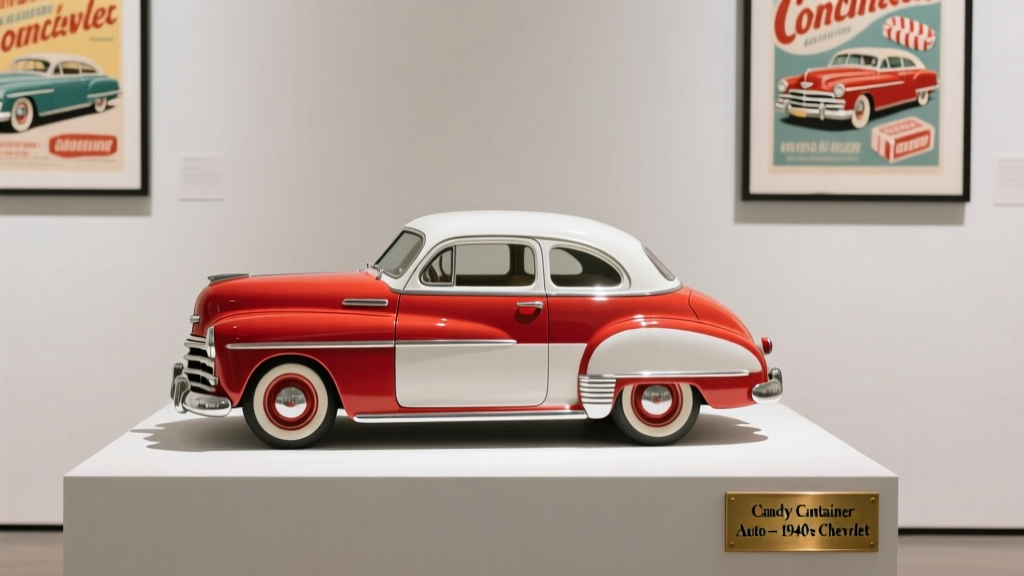
Candy Containers Auto: The 1940s Chevrolet-Themed Tin Litho Candy Dispensers — Authentication, Market Trends, and Historical Context
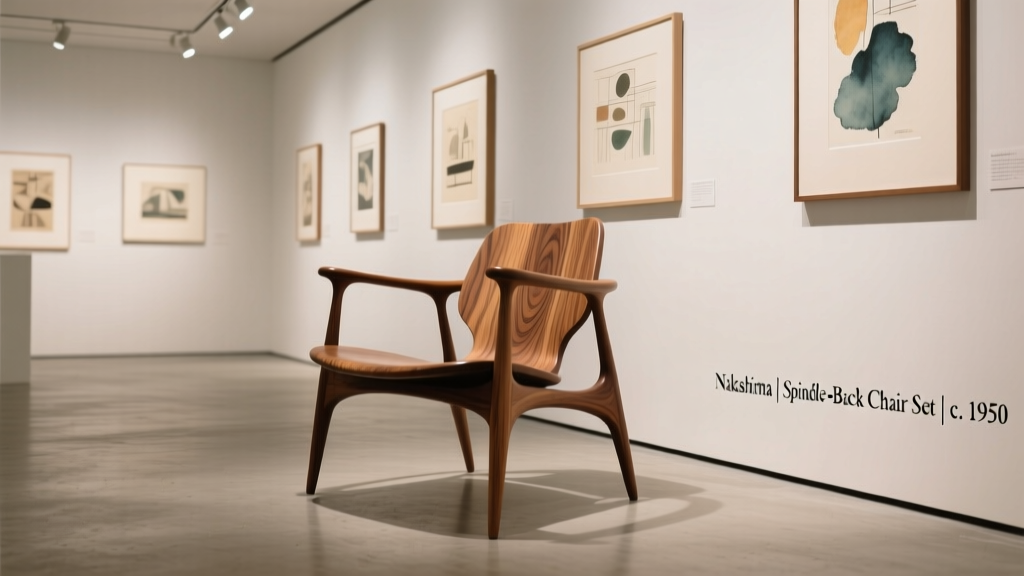
George Nakashima’s Spindle-Back Chair Set: Authentication, Provenance, and Market Value of the C. 1950 Wood Shaped Design
Ironstone Chamber Set: Decoding the Imari-Design Pitcher and Basin with Figural Handle (14-Inch)

Bottles, Cures, and Craft: Authenticating the Amber Rectangular 5⅛-Inch Distemper & Cough Medicine Bottle
Medical Kit Optical Eye Charts, Lenses, and Measuring Instruments: A Technical Analysis for Clinical Accuracy and Collectible Value
Gallé Vase: Floral Design, Amber Ground, Flagon Shape, Inverted Neck, Acid-Cut, 7 Inches — Authentication, Provenance, and Market Analysis

Barber Fern Pattern Melon Ribbed Blue Opalescent: Authentication, Provenance, and Market Analysis of a Rare Steuben Glass Design
Need Help Identifying an Antique Watch? A Practical Authentication Framework for Collectors and Heirs