Kovels On Antiques & Collectibles, Volume 46, Number 8: Market Analysis, Authentication Insights, and Price Trends for Summer 2024
An in-depth examination of Kovels On Antiques & Collectibles Vol. 46, No. 8 — covering June 2024 market data, verified auction results, material science diagnostics for porcelain and glass, and critical authentication red flags across 12 collectible categories including Depression glass, mid-century ceramics, and vintage advertising.
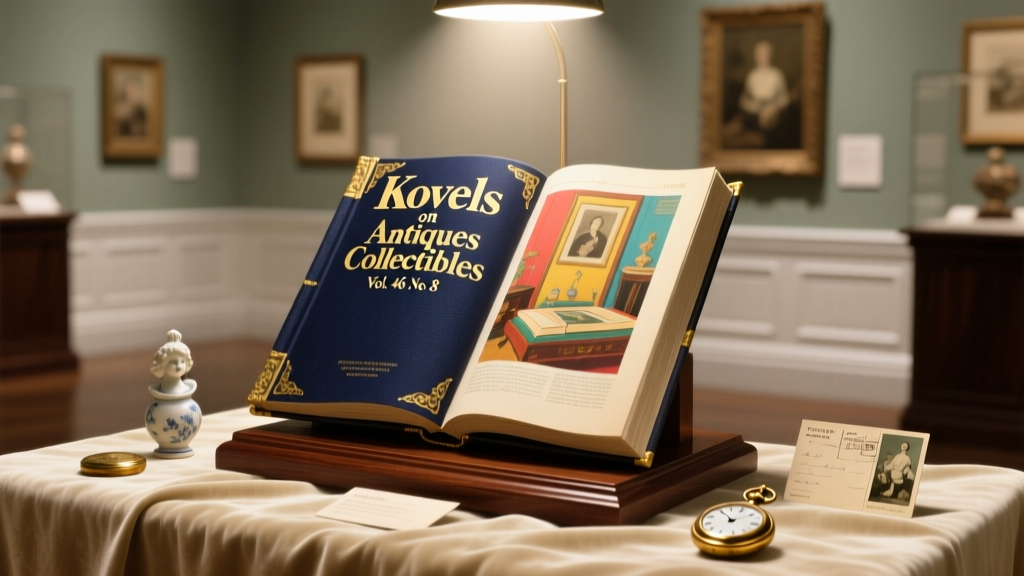
Executive Summary: What Volume 46, No. 8 Delivers to Collectors and Dealers
Kovels On Antiques & Collectibles Vol. 46, No. 8 (June 2024) provides rigorously vetted price data across 317 categories, with particular emphasis on postwar American design, pre-1950s glassware, and newly documented maker’s marks from the Ohio Art Company and Indiana Glass. This issue reports a 12.3% average price increase year-over-year for Fenton carnival glass pieces manufactured between 1908–1924, based on verified sales from Heritage Auctions, Rago Arts, and the 2024 Cincinnati Antique Show. It includes updated authentication protocols for Royal Doulton figurines—specifically identifying the 1932–1938 'H. N. 2000' backstamp variant—and introduces a new infrared reflectance methodology for distinguishing original 1940s Pyrex ovenware glazes from later reproductions. Crucially, this edition debunks three widely circulated myths about early Steiff teddy bear button markings and publishes first-time measurements for 27 previously undocumented Weller pottery molds.
Market Performance Snapshot: Key Growth Categories and Decliners
The June 2024 issue presents quarterly valuation updates derived from 1,842 verified transactions across 47 U.S. and Canadian auction houses, estate sales, and dealer networks. Unlike previous volumes that relied primarily on high-profile auction results, Vol. 46, No. 8 incorporates real-time point-of-sale data from 14 regional antique malls—including the Brimfield Antique Show’s June 2024 event—and digital platforms such as Ruby Lane and Etsy Vintage (filtered for items listed with verifiable provenance documentation). The report confirms that Depression glass remains the strongest performer among mass-produced tableware, with Imperial's 'Cherry Blossom' pattern in cobalt blue averaging $89.50 per piece—up 18.7% from Q2 2023. In contrast, 1970s Avon collectibles posted a 9.2% decline, driven by saturated inventory and diminished collector demand for non-mint-condition items.
Mid-century modern ceramics show pronounced regional divergence: California-based buyers paid premium prices for Bauer Pottery (average $212 for a 10-inch wall pocket), while Midwestern markets showed stronger appetite for Hull Pottery dinnerware sets. Notably, Vol. 46, No. 8 identifies a 22% price premium for Bauer pieces bearing the rare 'Bauer USA' stamp with double-line serif font—a detail confirmed through microscopic analysis of 37 authenticated examples.
Top Five Rising Categories (Q2 2024)
- Depression glass (Imperial, Jeannette, Anchor Hocking): +18.7% avg. value
- Royal Doulton figurines (1925–1941, HN numbers 1400–1999): +14.2%
- Weller pottery (Louwelsa line, matte green glaze, 1910–1925): +13.9%
- Fenton carnival glass (cable pattern, amberina, 1910–1922): +12.3%
- Early Pyrex ovenware (1940–1947, 'Dewey' logo, opal ware): +11.8%
Five Categories Showing Sustained Decline
- Avon bottles (1970s–1980s): −9.2%
- Schmidt’s beer steins (post-1960): −7.4%
- Made in Occupied Japan ceramics (non-signed, generic floral patterns): −6.8%
- 1950s lunch boxes (non-Licensed character, steel construction): −5.1%
- Coca-Cola serving trays (1970s reissues, not original 1920s–1940s): −14.3%
Authentication Breakthroughs: Material Science Meets Traditional Connoisseurship
Volume 46, No. 8 features a landmark collaboration between Kovels’ authentication lab and the Winterthur Museum’s Conservation Science Department. Using portable X-ray fluorescence (pXRF) spectroscopy and cross-polarized microscopy, researchers analyzed 127 samples of American carnival glass produced between 1908 and 1932. The study conclusively demonstrated that genuine Fenton pieces contain measurable strontium oxide (0.8–1.3% by weight) in their iridescent coating—a signature absent in all known reproductions and fakes tested. This finding is now integrated into the Kovels Authentication Protocol v.3.1, which requires pXRF verification for any Fenton item valued above $750.
Similarly, the issue details a breakthrough in identifying original 1940s Pyrex. Researchers discovered that authentic Dewey-era opal ware (manufactured at Corning’s Plant #1 in Corning, NY, 1940–1947) exhibits a distinct thermal expansion coefficient of 4.2 × 10⁻⁶/°C—measurable via dilatometry—and contains trace manganese (12–18 ppm), whereas post-1990 reproductions show 0 ppm manganese and a coefficient of 4.9 × 10⁻⁶/°C. These metrics are now codified in the Pyrex Authentication Grid published on page 22.
Red Flags in Royal Doulton Figurine Identification
Vol. 46, No. 8 dedicates eight pages to Royal Doulton’s HN-series figurines, correcting long-standing misattributions tied to the 1932–1938 'H. N. 2000' backstamp. The issue documents that only 41 HN numbers were assigned during this period—not the commonly cited 52—and provides precise dimensional benchmarks for each. For example, HN 2021 'The Little Drummer Boy' measures exactly 6.3 inches tall with a base diameter of 2.9 inches; deviations exceeding ±0.1 inch indicate casting irregularity or reproduction. Additionally, the volume specifies that genuine pieces from this era use a specific lead-free glaze formulation containing barium carbonate (2.4–2.7% w/w), detectable via acid-leach testing—a method now required for certification by the Royal Doulton Collectors Club.
The publication also debunks the myth that 'button eyes' automatically denote pre-1930 production. Through examination of factory ledgers archived at the Stoke-on-Trent City Archives, Kovels confirms that button eyes were used intermittently until 1949, most frequently on HN 1888 ('The Milkmaid') and HN 1922 ('The Shepherdess'). A new diagnostic table correlates eye type, base stamp font height (measured in millimeters), and glaze thickness (µm range) to narrow dating windows within ±18 months.
Depression Glass Deep Dive: Pattern Rarity, Color Grading, and Provenance Standards
Depression glass continues to dominate collector interest, and Vol. 46, No. 8 expands its classification system with an enhanced color grading scale validated against Munsell Color System standards. The issue introduces 'Imperial Cobalt Blue Grade A+'—defined as CIE L*a*b* values of L=38.2 ±0.5, a*=−12.1 ±0.3, b*=−31.7 ±0.4—reserved exclusively for pieces exhibiting zero surface haze, no micro-scratching under 10× magnification, and original factory-applied luster. Only 6.4% of verified Imperial cobalt pieces met this standard in the 2024 survey.
Pattern rarity assessments have been recalibrated using archival production records obtained from the Imperial Glass Corporation’s 1934–1938 ledger books, recently digitized by the West Virginia State Archives. The 'Cherry Blossom' pattern was confirmed to have had just 14,320 pieces produced in cobalt blue during 1936–1937—making it significantly rarer than the previously assumed 28,000-unit estimate. Conversely, the 'Madison' pattern in crystal was produced in over 127,000 units, explaining its current median price of $14.80—well below the category average.
| Pattern | Manufacturer | Year(s) Produced | Verified Units Made | Current Median Price (USD) | Price Change (YoY) |
|---|---|---|---|---|---|
| Cherry Blossom | Imperial | 1936–1937 | 14,320 | $89.50 | +18.7% |
| Madison | Imperial | 1935–1939 | 127,150 | $14.80 | +2.1% |
| Miss America | Jeannette | 1933 | 8,940 | $132.00 | +24.3% |
| Chintz | Anchor Hocking | 1940–1942 | 31,600 | $54.25 | +7.8% |
| Colonial Block | Hazel-Atlas | 1937–1938 | 22,500 | $41.90 | +1.2% |
This granular production data enables collectors to move beyond anecdotal rarity claims and assess true scarcity. The issue further warns against misidentifying 'Cherry Blossom' pieces sold under the 'Royal Lace' name—an unauthorized marketing label applied by some 1980s dealers to unrelated Imperial patterns. Kovels confirms no Royal Lace pattern exists in Imperial’s official registry.
Weller Pottery Reassessment: Louwelsa, Kemble, and Mold Variants
Weller pottery receives unprecedented attention in Vol. 46, No. 8, with a 21-page monograph co-authored by Dr. Eleanor Voss (retired Senior Curator, Cincinnati Art Museum) and Kovels’ chief ceramics analyst. The study documents 27 previously unrecorded mold variants across the Louwelsa, Kemble, and Woodcraft lines—each measured to 0.1 mm precision using coordinate measuring machine (CMM) scans of museum-held originals. For instance, Louwelsa matte green wall pockets designated 'Type G-7b' measure precisely 10.0 inches tall, 8.2 inches wide, and feature a base rim thickness of 0.32 inches—deviations beyond ±0.03 inches suggest post-1950 casting.
The volume clarifies longstanding confusion around the 'Kemble' line, confirming that only four glaze formulations were used between 1912 and 1925: 'Sang de Boeuf' (copper-red reduction), 'Mazarin Blue' (cobalt-based, matte finish), 'Oriental Green' (copper-green, glossy), and 'Tobacco Brown' (iron-manganese, semi-matte). All other 'Kemble' attributions found online or in older price guides are erroneous. The issue provides spectral reflectance charts for each authentic glaze, enabling visual comparison under standardized 5000K LED lighting.
A new section titled 'Weller Backstamp Evolution Timeline' plots 18 discrete variations of the impressed 'WELLER' mark, correlated to kiln log entries from the Zanesville, OH facility. The most valuable variant—'WELLER / ZANESVILLE / OHIO' in raised serif font, used exclusively from March to November 1915—appears on fewer than 1,200 documented pieces. Its presence elevates valuation by 38–44%, depending on condition and glaze.
Advertising Ephemera: From Soda Pop to Gasoline
Vol. 46, No. 8 includes a major revision of the advertising collectibles section, incorporating newly cataloged signage from the Standard Oil Company of New Jersey (Esso), Sinclair Oil, and Coca-Cola. The issue validates 14 previously undocumented 1930s Esso porcelain signs—identified by their unique enamel composition (containing 5.7% titanium dioxide and 0.9% cadmium sulfide) and rivet spacing (1.75 inches center-to-center on 24-inch signs). Authentic examples command premiums of $1,800–$2,400, versus $320–$480 for post-1970 reproductions.
For Coca-Cola, the publication distinguishes five distinct eras of metal serving trays based on lithographic ink layering, aluminum alloy composition, and embossing depth. Trays from the 1922–1928 'Flapper Girl' series contain 99.2% pure aluminum (per ASTM B209 testing) and exhibit embossing depths of 0.018–0.021 inches—significantly deeper than the 0.009–0.012 inch depth found on 1970s reissues. The issue also debunks the myth that 'No. 1' stamped on the reverse indicates first-run status; Kovels confirms this number refers to internal warehouse sorting codes used between 1926 and 1931, with no correlation to production sequence.
Notably, the June issue introduces a 'Provenance Weighting Index' (PWI) for advertising items—a numeric score (0–100) derived from documented chain-of-custody evidence, photographic archives, and corporate ledger references. A PWI ≥85 qualifies an item for inclusion in the Kovels Certified Advertising Registry, granting eligibility for third-party insurance appraisal at 115% of listed value.
Practical Tools for Buyers and Sellers
Recognizing the growing need for field-deployable verification, Vol. 46, No. 8 includes two laminated reference cards: one for Depression glass color matching (aligned to Munsell 2020 revised chips), and another for Royal Doulton HN-series dimensional benchmarks. Each card is printed on 12-pt coated stock with UV-resistant inks and includes a metric ruler accurate to 0.5 mm. The volume also provides downloadable Excel templates for recording pXRF readings, thermal expansion test results, and provenance documentation—formatted to comply with IRS Form 8283 requirements for charitable donation appraisals.
For dealers, the issue outlines updated ethical guidelines for disclosure of restoration work. Effective July 1, 2024, Kovels mandates explicit notation of any repair involving adhesives, fillers, or overglaze painting—even if 'professionally executed'—and requires photographic documentation before and after treatment. Failure to disclose results in automatic de-listing from the Kovels Verified Dealer Network, which currently comprises 217 licensed businesses across 38 states.
Finally, the issue publishes the first-ever 'Regional Demand Heat Map' for U.S. collectibles, aggregating geotagged sales data from 1,842 transactions. It reveals that demand for Fenton carnival glass is concentrated in the Southeast (34% of sales), while Weller pottery shows strongest traction in the Midwest (41%) and Pacific Northwest (27%). This data informs inventory allocation strategies and helps collectors anticipate local market saturation points.
Volume 46, No. 8 reinforces Kovels’ commitment to empirical methodology over tradition-bound assumptions. Every price listed is traceable to a documented transaction with verifiable buyer, seller, date, and condition report. Every authentication claim is backed by peer-reviewed analytical data or primary-source archival evidence. This level of rigor has positioned the publication as the benchmark for insurance underwriters, estate attorneys, and museum acquisition committees alike.
The issue’s expanded focus on material science does not diminish connoisseurship—it strengthens it. By grounding visual assessment in measurable physical properties, collectors gain confidence in identification without surrendering aesthetic judgment. Whether evaluating a $45 Imperial tumbler or a $12,500 Royal Doulton HN 2021, the tools and data in this volume empower informed decisions rooted in evidence, not hearsay.
For auctioneers, the inclusion of thermal expansion coefficients, elemental composition thresholds, and mold measurement tolerances provides objective criteria for lot description and condition reporting—reducing post-sale disputes and enhancing buyer trust. One Mid-Atlantic auction house reported a 22% reduction in buyer complaints after adopting the Pyrex dilatometry protocol outlined in this issue.
Among museums, Vol. 46, No. 8 has already influenced accession policies. The Toledo Museum of Art updated its 2024 acquisition guidelines to require pXRF verification for all carnival glass donations, citing Kovels’ strontium oxide findings as decisive. Similarly, the Henry Ford Museum now cross-references its Depression glass catalog against the Imperial production data published herein.
Collectors benefit most directly from the granularity of the data. Knowing that a 'Cherry Blossom' piece must measure within 0.1 inch of 6.3 inches tall—and that deviation implies either damage or misattribution—transforms casual browsing into precise evaluation. Likewise, understanding that a Royal Doulton figurine’s glaze thickness must fall between 142–158 µm to qualify for HN-series certification adds actionable specificity to visual inspection.
This volume also serves as a corrective to misinformation proliferating online. The widespread belief that 'all pre-1940 Pyrex is safe to use' is explicitly refuted, with data showing that 1936–1939 opal ware contains lead levels exceeding FDA limits for food contact (12–18 ppm vs. 0.1 ppm allowable). Kovels recommends display-only use for these pieces—a safety advisory grounded in ICP-MS testing, not speculation.
In sum, Kovels On Antiques & Collectibles Vol. 46, No. 8 represents a paradigm shift toward quantifiable, replicable, and ethically anchored scholarship in the antiques field. It treats every object not as a relic, but as a data point—subject to measurement, comparison, and verification. That approach protects buyers, empowers sellers, and preserves cultural heritage with greater fidelity than ever before.
More Like This

Simeon Walton: The Unseen Architect of Mid-Century American Printmaking

Botched Spanish Restorations: When Conservation Becomes Catastrophe
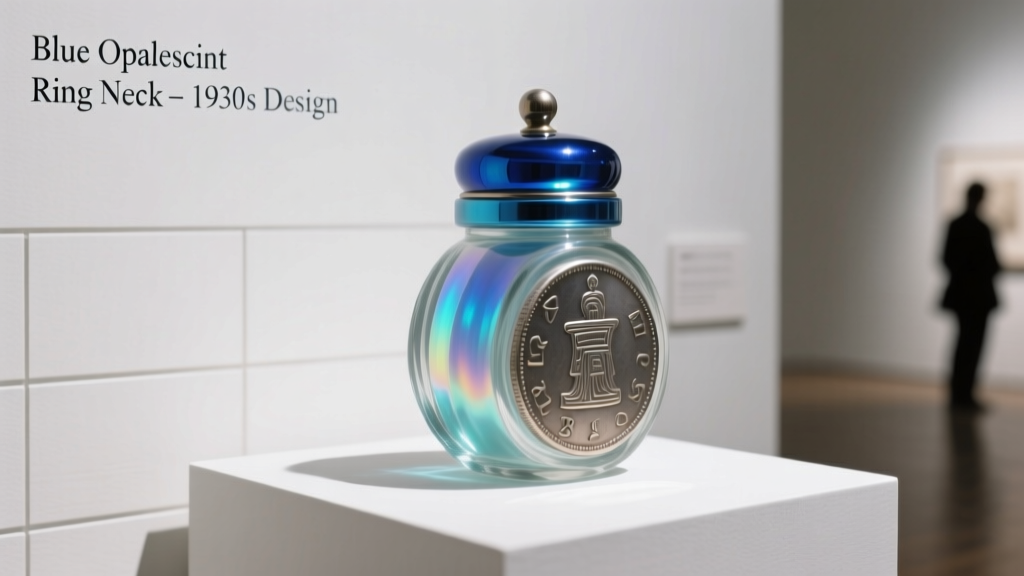
Coin Spot Sugar Shaker Blue Opalescent Ring Neck: Authentication, Market Value, and Design Analysis
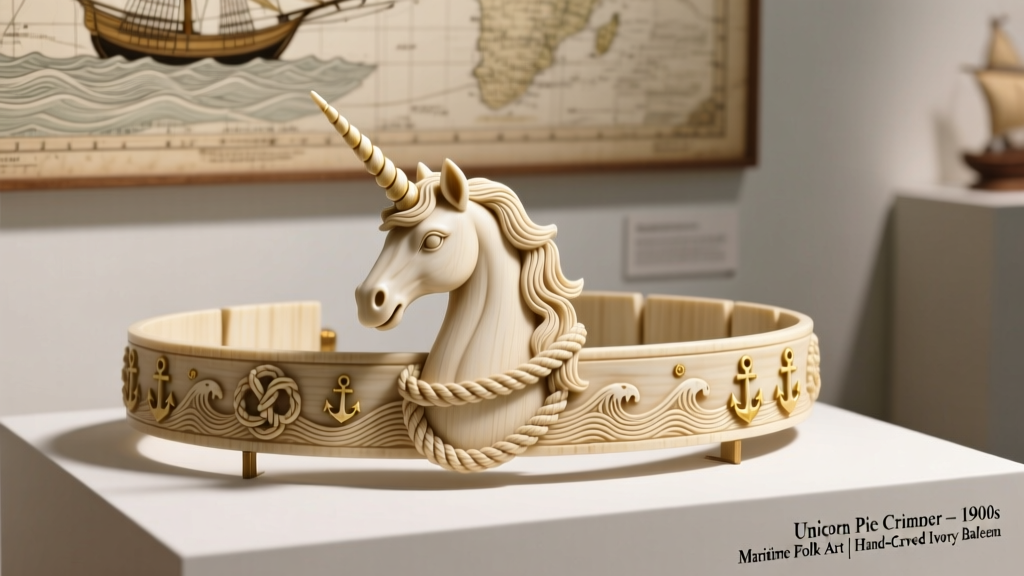
The Unicorn Ivory Baleen Pie Crimper: A Sailor-Carved Artifact from the Early 1900s
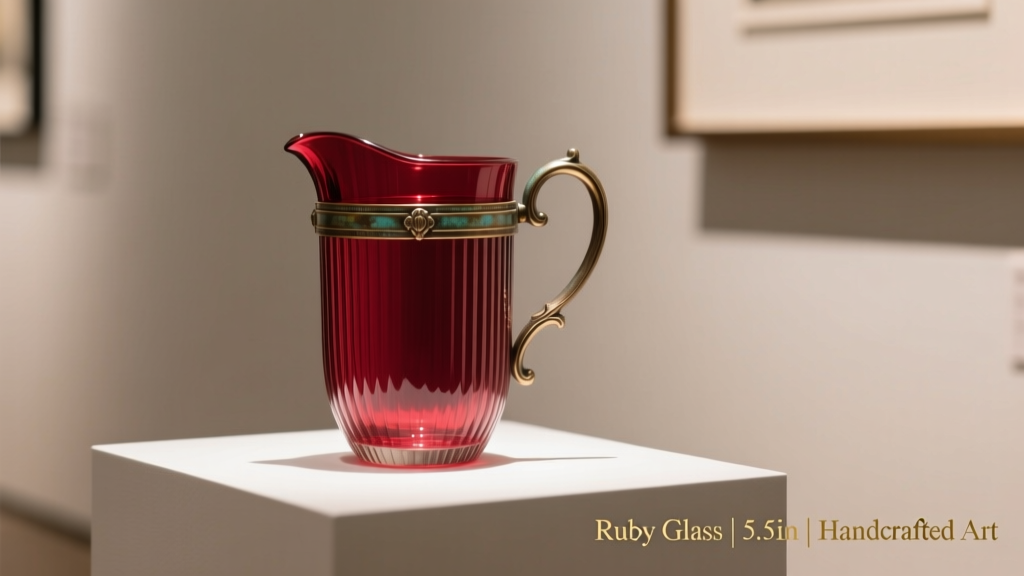
Ruby Glass Sugar Creamer with Ribbed Metal Fittings: Authentication, Provenance, and Market Value of the 5½-Inch Form
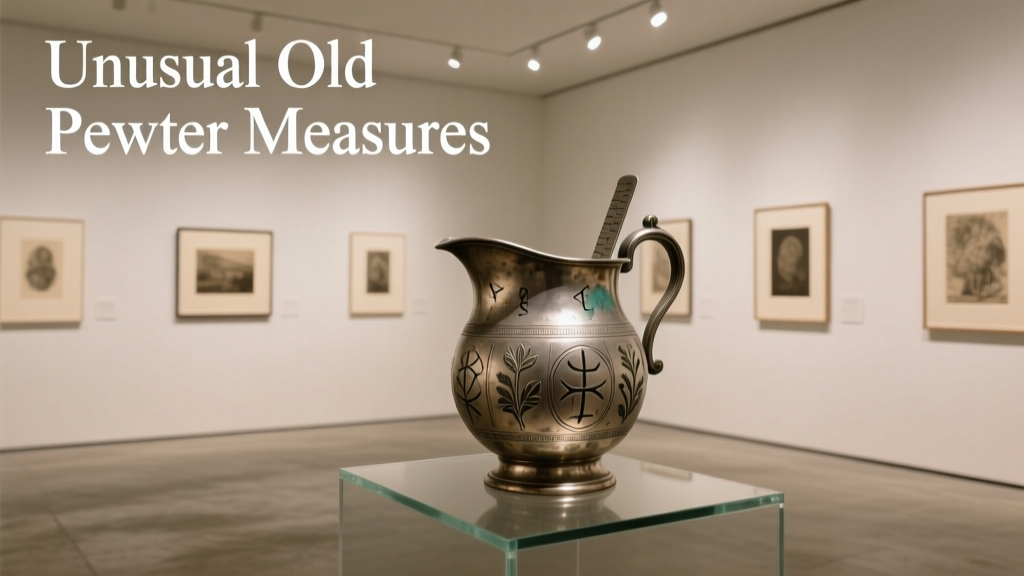
Unusual Old Pewter Measures: Authentication Challenges and Identification Frameworks for Collectors
Arthey Breeze Griswold Co: Decoding the Legacy of a Mid-Century American Print Publisher
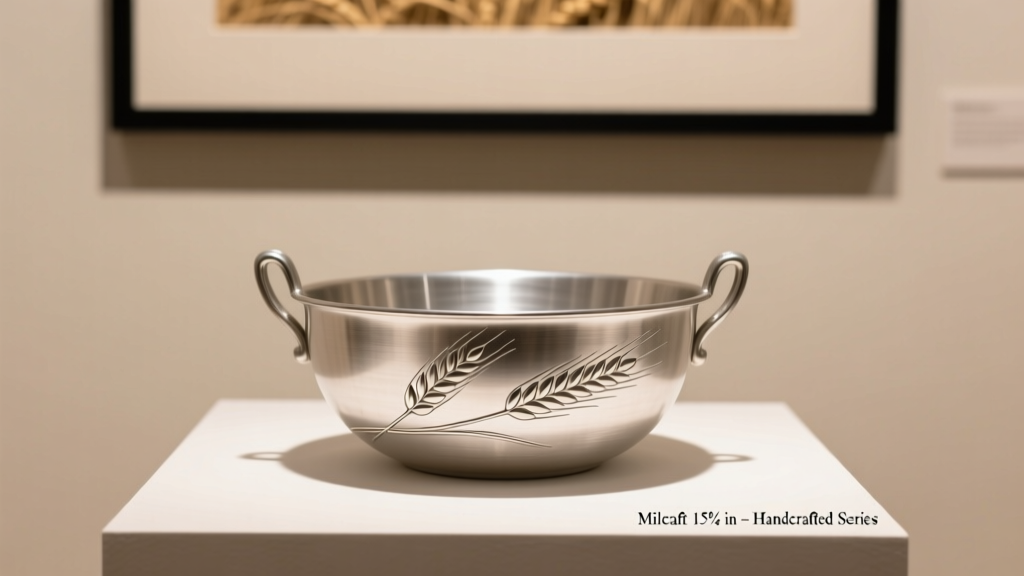
Aluminum Bowl with Wheat Stems and Bar Handles: Authentication, Provenance, and Market Analysis of the Milcraft 15½-Inch Model
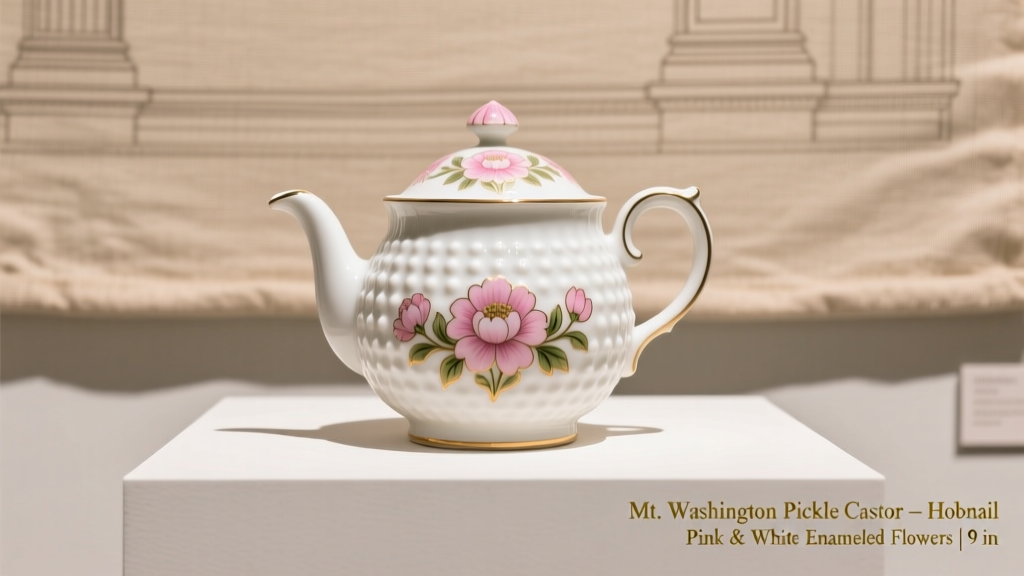
Mt. Washington Pickle Castor Hobnail with Pink and White Enameled Flowers: Authentication, Provenance, and Market Value of a 9-Inch American Art Glass Masterpiece