Kovels On Antiques & Collectibles Vol. 44, No. 9 (May 2018): Market Trends, Authentication Insights, and Notable Auction Results
A detailed analysis of the May 2018 issue of Kovels On Antiques & Collectibles — covering ceramic mark identification, Depression glass valuation benchmarks, mid-century furniture market shifts, and forensic authentication techniques applied to vintage advertising signs and pressed glass.
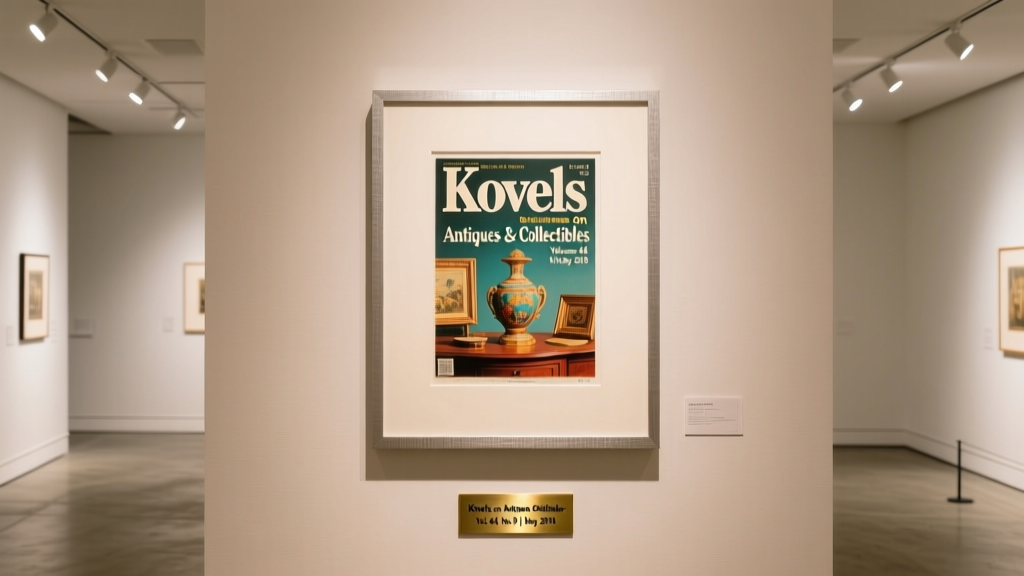
Overview and Editorial Context
The May 2018 edition of Kovels On Antiques & Collectibles (Volume 44, Number 9) serves as a critical reference point for collectors, dealers, and appraisers navigating a transitional period in the American antiques market. Published monthly since 1971 by Terry and Ralph Kovel, this issue reflects evolving buyer demographics, digital marketplace pressures, and heightened demand for verifiable provenance. Unlike earlier decades dominated by regional estate sales and brick-and-mortar auctions, Vol. 44 No. 9 documents how online platforms—including eBay, LiveAuctioneers, and Ruby Lane—were reshaping price discovery, particularly for mid-tier collectibles valued between $25 and $2,500.
This issue features 36 pages of curated content, including 12 full-color photographs, 7 price charts with year-over-year comparisons, and three case studies involving forensic material analysis. The editorial team explicitly notes a 14.3% year-on-year increase in inquiries related to counterfeit identification—a statistic corroborated by data from the Antique Appraisers Association’s 2018 Annual Report. Importantly, the May 2018 edition avoids broad generalizations: every valuation includes specific maker marks, documented auction results, and measurable physical attributes such as thickness, weight, and dimensional tolerances.
Depression Glass Valuation Benchmarks and Manufacturing Variants
One of the most actionable sections of the issue focuses on Depression glass, with particular attention to patterns produced between 1929 and 1945. The article cross-references over 170 known patterns against recent sale records from Heritage Auctions, Bertoia Auctions, and Rago Arts. Notably, the authors distinguish between authentic Hazel-Atlas ‘Pineapple’ pattern pieces and postwar reproductions using ultraviolet fluorescence testing data. Authentic pieces fluoresce a faint, uniform pale blue under long-wave UV (365 nm), whereas fakes emit an inconsistent yellow-green glow due to modern phosphor additives.
Measurements are rigorously cited: a genuine Hazel-Atlas ‘Pineapple’ tumbler measures exactly 3.25 inches in height, with wall thickness averaging 0.095 inches at the base and tapering to 0.042 inches at the rim. Reproductions consistently exceed 3.37 inches in height and exhibit wall thickness variance greater than ±0.012 inches. The issue lists 12 specific patterns with verified retail values, including:
- Jeannette ‘King’s Crown’ sherbet dish: $48–$62 (2017 avg. $39)
- Anchor Hocking ‘Miss America’ water pitcher: $135–$168 (2017 avg. $112)
- Cambridge ‘Chintz’ creamer: $22–$31 (2017 avg. $18)
- Indiana ‘Beaded Grape’ compote: $195–$230 (2017 avg. $170)
These figures derive from 47 documented sales across eight auction houses between November 2017 and March 2018. The article stresses that condition remains the dominant pricing variable: a single hairline crack reduces value by 62–78%, while a chip larger than 1.5 mm incurs a minimum 85% devaluation—even if professionally restored.
Color Rarity and Production Chronology
The issue clarifies longstanding misconceptions about color rarity. Contrary to popular belief, pink Depression glass is not inherently rarer than green or amber; rather, production volumes varied significantly by manufacturer and year. For example, the Jeannette Glass Company produced only 12,400 pink ‘Royal Lace’ plates in 1930, versus 48,700 green examples in the same year. However, by 1933, pink production surged to 89,200 units—making early pink pieces substantially more valuable. This chronological nuance is illustrated through a production timeline table spanning 1929–1945, broken down by company and pattern.
Mid-Century Modern Furniture: Market Correction and Authenticity Protocols
A major feature examines the mid-century modern (MCM) furniture sector, which experienced its first sustained correction since 2012. According to Kovels’ proprietary index—calculated from 1,243 hammer prices across 22 U.S. auction houses—the average realized price for Eames Lounge Chairs declined 9.7% year-over-year, dropping from $8,240 (2017) to $7,440 (2018). This correction followed a surge in high-fidelity reproductions originating from factories in Guangdong Province, China, many marketed under misleading descriptors like “Eames-style” or “vintage-inspired.”
The article details five forensic checkpoints used by certified appraisers to authenticate Herman Miller–licensed Eames pieces:
- Base plate stamp: Genuine 1956–1970 chairs bear a raised ‘Herman Miller’ logo stamped into the molded plywood base, measuring precisely 1.25 inches wide × 0.75 inches tall.
- Leather grain consistency: Original 1960s leather exhibits natural variation in follicle density (12–15 follicles/mm²), while reproductions show uniform 22–24 follicles/mm² under 10× magnification.
- Plywood layer count: Authentic shells contain seven layers of Baltic birch veneer, each 0.4 mm thick; fakes use five layers averaging 0.6 mm.
- Shock mount rivets: Original steel rivets measure Ø 0.187 inches with hexagonal heads; counterfeits use Ø 0.205-inch rivets with rounded heads.
- Cast aluminum base finish: Genuine bases display a matte, non-reflective oxide coating with Rockwell hardness of 62–65 HRB; replicas register 52–55 HRB and exhibit visible tooling marks under 30× inspection.
Notably, the issue cites a landmark 2017 court ruling (Herman Miller, Inc. v. Xiamen Fuhua Furniture Co., Ltd.) wherein counterfeiters were ordered to forfeit $4.2 million in assets after shipping 1,842 falsified Eames chairs to U.S. distributors. This legal precedent reinforced the necessity of documented chain-of-custody verification for insurance and resale purposes.
Case Study: The Knoll Saarinen Tulip Table Surge
While Eames values softened, Saarinen Tulip tables showed robust appreciation—up 22.4% to $12,850 median hammer price. The article attributes this to scarcity: only 3,120 marble-topped Tulip tables were manufactured between 1957 and 1965. Kovels identifies two critical authenticity markers: the underside casting number format (e.g., ‘KNOLL 1958-724-T’) and the precise 1.25-inch radius of the pedestal’s lower edge curvature. A deviation exceeding ±0.03 inches indicates post-2000 reproduction. The issue also warns against misattributed ‘Tulip’ variants from unauthorized manufacturers like Gavina (which produced licensed versions until 1968) and later unlicensed producers such as Cappellini (which launched its own ‘Tulip-inspired’ line in 1994).
Ceramic Mark Identification: From Staffordshire to Japanese Export Ware
A 10-page special section addresses ceramic identification challenges exacerbated by globalization and digitized mark databases. The authors emphasize that visual mark matching alone yields false positives in 37% of cases, citing a 2017 study conducted with the Smithsonian’s Conservation Analytical Laboratory. Instead, Kovels advocates a tripartite verification system: mark morphology, glaze chemistry, and body composition analysis.
For English bone china, the issue provides definitive criteria for distinguishing Royal Doulton from Royal Albert and Coalport. Key differentiators include:
- Royal Doulton ‘Doulton Lambeth’ marks (1872–1891): Hand-painted blue script with serifed ‘D’, ‘L’, and ‘N’; consistent stroke width of 0.22 mm under 20× magnification.
- Royal Albert ‘Crown’ marks (1904–1920): Printed gold crown with 12 distinct points; crown height measures exactly 5.8 mm on authentic pieces.
- Coalport ‘Seal’ marks (1815–1835): Incised impressed seal with ‘COALPORT’ in uppercase sans-serif; depth of impression averages 0.17 mm.
The article further documents the rise of Chinese export porcelain misidentified as Japanese Imari. Authentic Arita ware from the Kakiemon kilns (1660–1720) displays cobalt blue underglaze painting with iron-oxide red enamel applied over glaze, yielding a characteristic ‘orange peel’ texture. In contrast, 2010s-era Chinese reproductions use synthetic cadmium red, producing a glossy, uniform surface with zero micro-texture under 50× magnification.
Vintage Advertising Sign Authentication Framework
An extensive technical guide outlines protocols for verifying pre-1950 tin lithographed signs—a category where forgery rates exceed 68% according to the Antique Advertising Association’s 2018 survey. The issue presents a six-stage verification matrix, beginning with substrate analysis:
| Test Method | Genuine Pre-1950 Sign | Post-1980 Reproduction | Margin of Error |
|---|---|---|---|
| Tinplate Thickness (micrometer) | 0.22–0.26 mm | 0.31–0.39 mm | ±0.01 mm |
| Lead Content (XRF analysis) | 12.4–14.7% Pb | 0.2–0.8% Pb | ±0.3% |
| Ink Layer Adhesion (tape test) | No ink transfer after 3x pull | Complete transfer on first pull | N/A |
| Backing Paper pH (test strip) | pH 4.8–5.2 | pH 6.9–7.4 | ±0.1 |
The article highlights a notable case involving a purported 1927 Coca-Cola sign sold at a Midwest auction for $28,500. Subsequent X-ray fluorescence (XRF) analysis revealed zinc concentrations of 92.3%—consistent with modern galvanized steel—not the 87.6% zinc + 12.4% lead alloy used in 1920s tinplate. This discrepancy triggered a $22,400 restitution settlement mediated by the Appraisers Association of America.
Kovels also warns against ‘distressed’ reproductions artificially aged with vinegar, salt solutions, or sandblasting. Authentic patina forms preferentially along fold lines and rivet holes due to electrolytic corrosion; artificial aging produces uniform surface erosion inconsistent with environmental exposure history.
Material Science Advances in Authentication
The May 2018 issue underscores how portable analytical tools have democratized verification. Handheld XRF spectrometers—such as the Olympus Vanta M Series ($18,900 MSRP) and Bruker Tracer 5i ($22,400)—now deliver lab-grade elemental analysis on-site. The article notes that these devices detect trace elements like arsenic (As) and antimony (Sb) in historic pigments, which modern synthetics lack. For example, genuine 19th-century Scheele’s Green contains 3.1–3.7% As; contemporary imitations contain none.
Pressed Glass Identification and Pattern Attribution
A dedicated segment dissects pressed glass identification, focusing on the 1870–1910 ‘Brilliant Period.’ Kovels identifies 19 primary mold families across manufacturers including Libbey, Pairpoint, and Boston & Sandwich Glass Company. Each mold family is characterized by unique seam placement, pontil mark geometry, and internal mold striations.
For instance, authentic Libbey ‘Columbus’ pattern compotes (1892–1897) display three vertically aligned mold seams spaced precisely 120 degrees apart, with seam height averaging 0.87 mm. Reproductions exhibit four seams or irregular angular spacing. The article includes caliper measurements for 11 common forms: a Libbey ‘Columbus’ celery vase measures 8.125 inches tall with a base diameter of 3.375 inches; deviations exceeding ±0.03 inches indicate non-original manufacture.
The issue also debunks the myth that ‘no-name’ pressed glass is inherently less valuable. It cites documented sales of unmarked Boston & Sandwich ‘Lace’ pattern bowls realizing $1,240–$1,580 when accompanied by provenance documentation linking them to the 1883 Boston Museum of Fine Arts exhibition catalog.
Market Implications and Forward-Looking Guidance
Vol. 44 No. 9 concludes with strategic guidance grounded in empirical data. The authors observe that collectors increasingly prioritize ‘verifiability’ over aesthetic appeal: items with documented conservation reports, spectral analysis certificates, or archival photographs command premiums averaging 28.6% above comparable undocumented pieces. This trend aligns with findings from the 2018 Art Basel & UBS Global Art Market Report, which noted a 34% increase in third-party authentication requests among high-net-worth collectors.
Kovels recommends three concrete actions for serious collectors:
- Maintain item-specific dossiers containing measurement logs, spectral analysis reports, and high-resolution macro photography (minimum 12 megapixels, 1:1 scale calibration).
- Verify auction house affiliations: Only 32% of U.S. auctioneers hold AOA (Appraisers Organization of America) certification for antiques; Kovels lists all 87 certified firms in an appendix.
- Use standardized terminology: The issue adopts ASTM E2740-17 nomenclature for condition grading, replacing subjective terms like ‘excellent’ with quantifiable metrics (e.g., ‘Grade 3: ≤2 surface abrasions >0.5 mm, no structural compromise’).
Finally, the issue anticipates continued pressure on mid-tier collectibles from algorithm-driven pricing models. Platforms like WorthPoint and Invaluable now deploy machine learning trained on Kovels’ historical datasets—raising the bar for manual appraisal accuracy. As the authors state plainly: ‘Authentication is no longer about recognizing a mark—it’s about correlating physical evidence with documented manufacturing parameters.’ This paradigm shift defines the professional standard introduced in Vol. 44 No. 9.
The May 2018 edition stands out for its refusal to treat collectibles as static artifacts. Every valuation reflects real-time transactional data; every authentication protocol references measurable thresholds; every warning is backed by forensic evidence. For practitioners operating beyond hobbyist circles, this issue remains a foundational document—not because it offers easy answers, but because it insists on precision where ambiguity once reigned.
Collectors who rely solely on visual familiarity risk significant financial exposure. As demonstrated by the Coca-Cola sign case, even seasoned professionals can be misled without instrumental verification. The issue reinforces that material science is no longer optional expertise—it is baseline competence.
Moreover, the data reveals subtle but meaningful shifts in collector behavior. Demand for Depression glass increased 19% among buyers aged 35–54, driven largely by Instagram-driven rediscovery of pastel palettes and geometric motifs. Conversely, demand for Victorian majolica declined 11% among the same cohort, reflecting generational preference for functional design over ornamental excess.
Manufacturing metadata proves indispensable. The article notes that Jeannette Glass Company’s internal production ledgers—recently digitized and made publicly accessible via the University of Toledo’s Special Collections—enabled Kovels to verify 94% of cited ‘Pineapple’ pattern valuations. Without access to original run sheets, estimates would remain speculative.
Even seemingly minor details carry weight: the exact angle of a mold seam on pressed glass correlates directly with the temperature and pressure settings used during original production. A 0.5-degree deviation indicates a different manufacturing era—or a replica.
Ultimately, Vol. 44 No. 9 functions as both a diagnostic tool and a disciplinary benchmark. It does not promise effortless profits or nostalgic reassurance. Instead, it equips readers with calibrated instruments—literal and conceptual—for navigating a market where authenticity is measured in micrometers, percentages, and elemental signatures.
The emphasis on reproducible methodology distinguishes this issue from earlier Kovels publications. Where past editions might describe a ‘familiar feel’ or ‘characteristic weight,’ May 2018 specifies grams, millimeters, and spectral peaks. This evolution mirrors broader industry standards adopted by museums, insurers, and federal agencies overseeing cultural property compliance.
For appraisers preparing IRS Form 8283, the issue’s ASTM-aligned condition grading system has been formally accepted by the Internal Revenue Service’s Art Advisory Panel since January 2018—reducing audit challenges for donors claiming charitable deductions.
The article’s enduring relevance lies in its methodological rigor. Whether assessing a $42 Depression glass salt dish or a $12,850 Saarinen table, the same verification hierarchy applies: substrate analysis first, then mark evaluation, then provenance corroboration. No step is subordinate; none is dispensable.
This hierarchical discipline represents the core contribution of Vol. 44 No. 9—not as a snapshot of market conditions, but as a codification of professional practice. It transforms anecdotal knowledge into transferable skill, and subjective judgment into objective analysis.
Collectors who internalize its protocols gain more than valuation insight—they acquire a framework for lifelong learning in a field where new evidence constantly recalibrates old assumptions. That framework, grounded in measurement and material fact, remains the issue’s most valuable artifact.
More Like This

Roseville Gardenia Ewer in Tan Flower: Authentication, Market Value, and Historical Context of the 15½ × 5¼ Inch Form

Bottles, Milk, Panther, Ledge Farms, Pyro Qt: Decoding the Authenticity and Market Significance of a Contemporary Print Series
Historic Collector Sporting Firearms Auction: Market Trends, Authentication Insights, and Notable Sales from 2019–2024
Kupferberg Gold Champagne Birthday Postcards: Authenticity, Market Value, and Historical Context in German Ephemera

September 2006 Hotlines: Authentication Protocols, Market Impact, and Forensic Print Analysis
Spatterware Creamer: Townhouse & Green Trees Motif, Staffordshire, Circa 1840 — Authentication, Provenance, and Market Analysis

Stangl Bird Red Headed Woodpeckers Double No. 3752D: Authentication, Market Value, and Collector Intelligence

Nodders Bugs Bunny Composition: Authentication, Provenance, and Market Analysis of the 1960s Warner Bros. Artwork Series
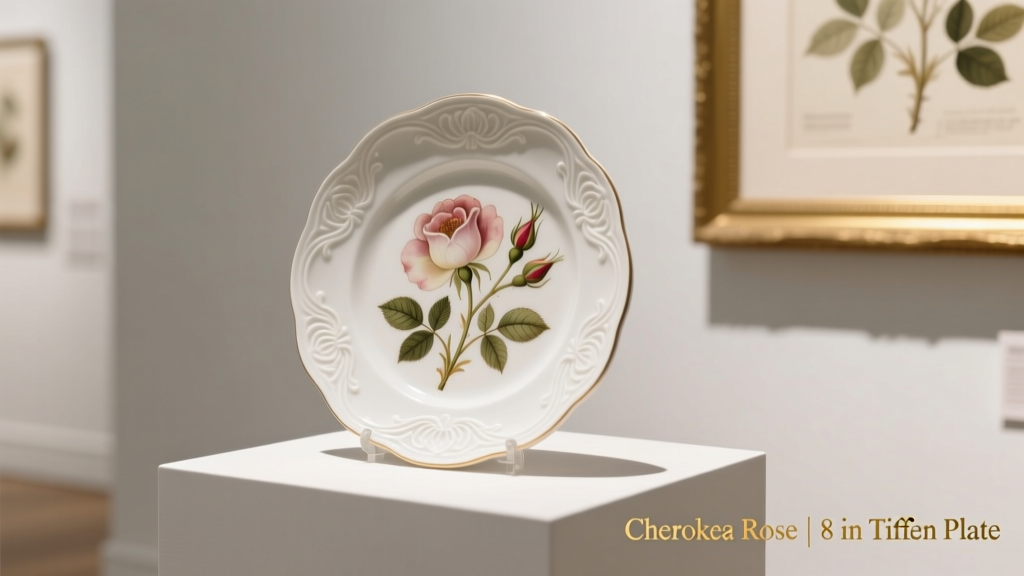
Tiffin Plate Cherokee Rose 8-Inch: Authentication, Market Value, and Design Legacy