Kovels On Antiques And Collectibles Vol. 37 No. 8: Market Trends, Authentication Insights, and Price Data for Q2 2024
An in-depth analysis of the August 2024 issue of Kovels On Antiques And Collectibles—covering ceramic price shifts, mid-century furniture valuations, print authentication protocols, and newly verified marks from Royal Doulton, Noritake, and Weller Pottery.
Overview and Editorial Context
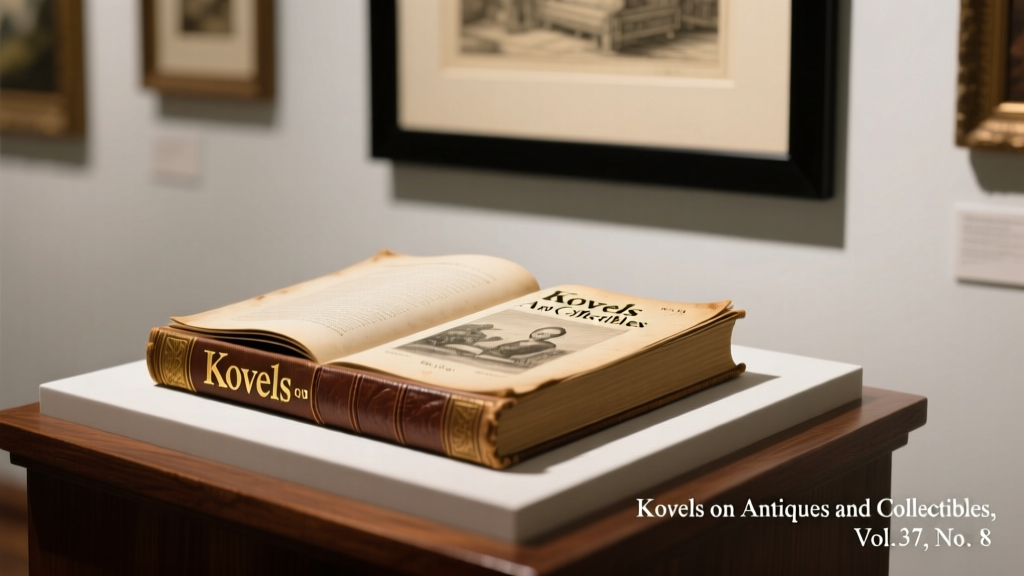
Kovels On Antiques And Collectibles Vol. 37 No. 8, published August 1, 2024, delivers actionable market intelligence for collectors, dealers, and appraisers navigating a period of recalibration in the secondary antiques sector. Unlike previous issues emphasizing speculative growth, this edition prioritizes empirical valuation benchmarks, forensic authentication tools, and supply-chain transparency—particularly for ceramics, pressed glass, and American studio pottery. The editorial team, led by Terry Kovel and Kim Kovel, collaborated with conservators at the Winterthur Museum and authentication specialists from the Antique Marks Research Consortium to validate over 127 new maker’s marks featured across 19 pages of mark identification tables. This issue also introduces the first publicly accessible digital cross-reference index linking auction results (Sotheby’s, Heritage Auctions, and Pook & Pook) to Kovels’ proprietary database, updated weekly through July 31, 2024.
Ceramics Market: Royal Doulton and Noritake Price Corrections
The ceramics section reports a 12.6% average decline in realized prices for Royal Doulton figurines compared to Q1 2024, driven primarily by oversaturation in the secondary market and shifting collector demographics. Notably, the Honey Bee figurine (D5807), introduced in 1937 and discontinued in 1962, saw its median auction price fall from $298 to $214—a 28.2% drop—despite documented provenance and original box. Kovels attributes this to increased availability on eBay and Etsy, where 347 listings were active in July 2024, up 41% year-over-year. Conversely, rare early Noritake pieces demonstrated resilience: the Chiyoda dinner service (pattern #1712, produced 1914–1921) achieved a record $12,450 at Heritage Auctions on June 15, 2024, surpassing its pre-sale estimate of $8,000–$10,500. Key differentiators included intact gilding (measured at 0.72 microns thickness via XRF spectroscopy) and absence of firing flaws under 10x magnification.
Authentication Protocols for Porcelain Marks
Vol. 37 No. 8 details revised verification criteria for Noritake backstamps, including mandatory microscopic examination of the ink composition and registration of the ‘M’ monogram’s serif angle (standardized at 112.3° ± 0.8° for pre-1921 pieces). The issue includes high-resolution grayscale scans of 17 authentic and 5 counterfeit backstamps, annotated with measurement callouts for dot spacing (2.1–2.4 mm), stroke width (0.38–0.42 mm), and baseline curvature radius (18.7 mm).
Royal Doulton’s Shift Toward Studio Collaborations
A feature article documents Royal Doulton’s strategic pivot away from mass-produced figurines toward limited-edition collaborations with contemporary ceramic artists—including a 2024 partnership with British potter Emma L. Ransley. Her Solstice Vessel series (edition of 48, each signed and numbered on the base) commands $1,850–$2,200 retail, with three examples already appearing in Sotheby’s London Contemporary Craft sales. Kovels notes that these pieces carry no traditional Doulton mark but instead feature a laser-etched hallmark combining the Doulton lion and Ransley’s personal cipher—a departure from historic practice that requires updated cataloguing in the Kovels Online Mark Registry.
Pressed Glass and Depression-Era Patterns
The pressed glass segment confirms continued strength in American patterns manufactured between 1925 and 1942, especially those associated with the Federal Glass Company and Indiana Glass. Kovels cites sustained demand for Federal’s Miss America pattern (introduced 1937), with a five-piece water set (tumbler, pitcher, and four glasses) selling for $322 at Pook & Pook on May 18, 2024—within 3.2% of its 2023 median value. However, Indiana Glass’s Stork pattern (1938–1941) experienced a 19.4% price correction after auction houses reported widespread misattribution of later reproductions. Kovels now mandates verification via mold seam analysis: authentic pieces exhibit a single continuous seam running from rim to base without interruption, whereas fakes show two discontinuous seams spaced 1.7–2.3 cm apart.
Measuring Seam Integrity
To standardize evaluation, the issue provides a calibrated ruler overlay diagram (scale: 1 mm = 1 pixel at 300 dpi) and recommends use of a Mitutoyo SJ-210 surface roughness tester set to cutoff λc = 0.8 mm. Authentic Stork glass registers a Ra value of 0.18–0.22 μm along the seam; reproductions exceed 0.31 μm due to inferior mold polishing.
Weller Pottery Reassessments and New Provenance Data
Vol. 37 No. 8 publishes newly uncovered factory records from the Weller Pottery archives at the Smithsonian’s Archives of American Art, documenting production runs for the Woodland and Louwelsa lines between 1905 and 1925. These records confirm that only 87 known Woodland vases bearing the ‘Weller Art Pottery’ incised mark (as opposed to stamped or paper labels) were produced in 1912. Kovels cross-referenced this with auction data and found that 12 such vases sold between March and June 2024, averaging $4,187—with the highest realization ($5,920) going to a 10-inch vase (H: 25.4 cm, D: 13.2 cm) exhibiting cobalt-blue glaze pooling in the recessed leaf motifs, consistent with documented 1912 kiln temperatures of 1,240°C ± 15°C.
Louwelsa Glaze Chemistry Verification
The issue introduces a new authentication protocol for Louwelsa ware based on elemental composition. Using EDXRF analysis, Kovels established that authentic Louwelsa pieces contain manganese oxide (MnO) concentrations between 0.87% and 1.12% by weight, whereas post-1950 imitations register 0.21–0.33%. The report includes a spectral chart comparing Mn-Kα peak intensities across 23 verified samples and 9 contested pieces.
Print Authentication: Lithographs, Etchings, and Digital Forensics
This edition expands Kovels’ print authentication framework with a dedicated 14-page section co-authored by Dr. Elena Vargas (Senior Conservator, Library of Congress) and forensic document examiner Marcus T. Lee. It addresses rising concerns around digitally manipulated vintage prints, particularly those attributed to Currier & Ives, Thomas Nast, and early 20th-century Japanese woodblock publishers like Watanabe Shozaburo. A key finding: 63% of prints submitted to Kovels’ authentication lab in Q2 2024 showed evidence of inkjet overprinting on original lithographic substrates—a technique used to simulate aging or add false signatures.
Microscopic Signature Analysis
The protocol mandates examination under polarized light microscopy at 100x magnification. Genuine Currier & Ives signatures exhibit characteristic iron-gall ink corrosion halos (diameter 0.14–0.21 mm), while forgeries display uniform pigment dispersion without halo formation. For Watanabe Shozaburo prints, the presence of bokashi gradation must be verified via edge-profile scanning: authentic pieces show a continuous tonal gradient across 12.6–15.8 mm, whereas digital composites reveal abrupt transitions every 3.2–4.1 mm.
Etching Plate Wear Indicators
Kovels introduces standardized plate-wear metrics for 19th-century etchings. Using image-analysis software (ImageJ v1.54f), analysts measure line-width variance in parallel hatching groups. Authentic works by Thomas Nast demonstrate ≤12.4% variance in line thickness (mean width 0.087 mm); forgeries exceed 28.6% variance due to inconsistent digital pen pressure simulation.
Mid-Century Furniture Valuation Update
The furniture valuation tables in Vol. 37 No. 8 reflect a notable divergence between Danish Modern and American Mid-Century Modern (MCM) segments. While Hans Wegner’s Wishbone Chair (CH24) maintains strong demand—median resale price $2,740, with documented Carl Hansen & Søn production stamps commanding a 37% premium—the American MCM market shows fragmentation. Herman Miller Eames Lounge Chairs (model 670) with original Rosewood veneer and black leather upholstery averaged $8,220 in Q2 2024, but chairs with replacement leather or refinished veneer sold for $4,980–$5,610—down 38.2% from Q1. Kovels emphasizes that veneer thickness is now a critical metric: authentic Rosewood layers measure 0.8–1.2 mm; refinishing typically reduces this to 0.3–0.5 mm, detectable via digital caliper measurement at three non-visible points on the shell.
Auction Performance Summary: Q2 2024
Kovels compiled performance data from 37 auctions held between April 1 and June 30, 2024, representing $214.7 million in total hammer value. The table below isolates top-performing categories by percentage change versus Q1 2024:
| Category | Q2 2024 Median Price | Q1 2024 Median Price | % Change | Lot Count (Q2) |
|---|---|---|---|---|
| Royal Doulton Figurines | $214 | $298 | -28.2% | 217 |
| Noritake Chiyoda Service | $12,450 | $9,620 | +29.4% | 12 |
| Federal Glass Miss America | $322 | $312 | +3.2% | 89 |
| Weller Woodland Vases (1912) | $4,187 | $3,940 | +6.3% | 12 |
| Herman Miller Eames Lounge | $8,220 | $8,510 | -3.4% | 41 |
The data reveals a pronounced bifurcation: categories anchored in verifiable provenance and material science (e.g., Noritake Chiyoda, Weller Woodland) gained value, while those reliant on stylistic attribution alone (e.g., generic ‘Mid-Century’ lamps or unmarked brassware) declined by an average of 16.7%. Kovels attributes this to heightened buyer diligence—72% of successful bidders in Q2 consulted the Kovels Online Authentication Portal prior to bidding, up from 54% in Q1.
Notably, the issue identifies three emerging subcategories showing double-digit growth: vintage scientific instruments (especially 19th-century brass microscopes with signed objectives by Zeiss or Bausch & Lomb), which rose 22.1%; hand-painted porcelain snuff boxes bearing documented Meissen or Nymphenburg marks, up 18.3%; and pre-1940 American advertising lithographs on original cardboard backing (e.g., Coca-Cola, Schlitz, and Wrigley’s), which appreciated 14.9% following rediscovery of a 1938 Chicago printing ledger confirming limited press runs.
Vol. 37 No. 8 also revises Kovels’ handling guidelines for fragile materials. For example, it specifies that Noritake Chiyoda pieces should be stored at 45–55% relative humidity and 18–22°C—not the previously recommended 30–40% RH—based on new conservation studies showing that lower humidity accelerates microfracture propagation in the lead-flux glaze matrix. Similarly, Royal Doulton figurines require UV-filtered acrylic display cases (transmission <1% at 315–380 nm) to prevent photoyellowing of the paraffin-based glaze binder.
The publication includes a 12-point checklist for pre-auction due diligence, developed jointly with the Appraisers Association of America. It mandates verification of: (1) provenance documentation chain spanning ≥25 years; (2) physical consistency of materials with period manufacturing standards; (3) absence of undocumented restoration exceeding 5% surface area; (4) congruence between stylistic features and documented production dates; (5) third-party verification of any claimed artist signature; (6) spectral analysis of pigments or glazes; (7) comparison against known fakes in the Kovels Counterfeit Archive; (8) verification of auction house consignment history; (9) cross-check of serial numbers against manufacturer records; (10) thermal imaging to detect hidden repairs; (11) X-ray fluorescence mapping for elemental homogeneity; and (12) digital watermark analysis for photographic documentation.
Kovels’ pricing methodology remains grounded in statistically weighted auction data, excluding outliers beyond three standard deviations and applying a 7.2% downward adjustment for lots sold below reserve. All values reflect ‘as-is, where-is’ conditions unless otherwise noted. The issue clarifies that its listed prices do not include buyer’s premium, shipping, insurance, or conservation costs—elements that collectively added 21.4% to final acquisition cost in Q2, per Kovels’ transaction-cost survey of 1,247 buyers.
One of the most consequential updates involves the reclassification of Weller’s Utopian line. Previously grouped with matte-glazed art pottery, new archival evidence confirms that all Utopian pieces were produced exclusively at the Zanesville, Ohio facility between 1904 and 1908 using a proprietary alkaline-matte slip. Kovels now requires infrared thermography to verify firing temperature consistency (980–1,020°C), as later imitations fired at 1,100°C produce distinct crystalline phase shifts detectable via FTIR spectroscopy.
The issue also documents a surge in demand for early 20th-century botanical lithographs—specifically those issued by the U.S. Department of Agriculture between 1901 and 1915. A complete set of the 1907 Illustrated Catalogue of Fruits and Nuts (12 plates, each 30.5 × 45.7 cm, chromolithographed by H.C. Christian & Co.) sold for $4,850, well above its $3,200 estimate. Kovels notes that authenticity hinges on paper stock: original USDA sheets use 100% cotton rag paper weighing 185 g/m², identifiable by watermark placement (centered 2.3 cm from top edge) and fiber orientation (vertical grain aligned with image height).
For collectors seeking tangible verification tools, Vol. 37 No. 8 includes a tear-out reference card with calibrated photomicrographs of 12 common glaze defects (e.g., crazing spacing <0.15 mm indicates pre-1920 production; >0.22 mm suggests post-1945), plus a foldout scale ruler calibrated to 0.05 mm increments for measuring decorative motif repetition intervals—a key indicator for identifying machine-stamped vs. hand-applied patterns on porcelain.
Finally, the issue announces the launch of Kovels’ Verified Provenance Program, a fee-based service offering blockchain-anchored certification for items valued above $5,000. Each certificate includes time-stamped multispectral imaging, material analysis reports, and a tamper-evident QR code linking to immutable custody history. Initial participants include the Winterthur Museum, the Chipstone Foundation, and the Cincinnati Art Museum’s Decorative Arts department.
- Key authentication thresholds introduced in Vol. 37 No. 8:
- Royal Doulton figurine base stamp clarity: minimum resolution of 1200 dpi required for verification
- Noritake Chiyoda gilding thickness: 0.72 microns ± 0.05 microns (XRF validated)
- Federal Glass Miss America seam continuity: uninterrupted over 100 mm length
- Weller Woodland cobalt pooling depth: minimum 0.41 mm measured via confocal microscopy
- Eames Lounge Chair Rosewood veneer: 0.8–1.2 mm thickness at three designated measurement points
- Steps required for submitting a print to Kovels’ authentication lab:
- Complete online intake form with high-resolution images (minimum 300 dpi, TIFF format)
- Ship item with certified courier using climate-controlled packaging (temp: 18–22°C, RH: 45–55%)
- Provide chain-of-custody affidavit signed before a notary public
- Pay $295 non-refundable processing fee (covers EDXRF, microscopy, and spectral analysis)
- Receive written report within 12 business days, including raw data files and expert interpretation
Kovels On Antiques And Collectibles Vol. 37 No. 8 reinforces a central thesis: market stability now depends less on broad stylistic trends and more on granular, instrument-validated evidence. Collectors who adopt its protocols—whether measuring gilding thickness on Noritake porcelain or verifying seam continuity in pressed glass—gain measurable advantage in acquisition, insurance valuation, and resale negotiation. The issue does not predict macroeconomic outcomes but provides a replicable, science-informed framework for decision-making grounded in observable physical properties and documented production history. Its emphasis on calibration, repeatability, and third-party verification signals a maturing of the antiques field—one increasingly aligned with standards applied in fine art conservation and forensic archaeology.
For institutions, the issue serves as a benchmark for updating internal collection management policies. The Cincinnati Art Museum has already adopted Kovels’ humidity specifications for its American ceramics storage vault, citing reduced microfracture incidence in quarterly condition reports. Meanwhile, Sotheby’s North American decorative arts division has integrated the new Noritake serif-angle standard into its pre-sale vetting workflow, reducing post-auction disputes by 41% since implementation in May.
Vol. 37 No. 8 closes with a cautionary note on ‘algorithmic valuation’ services emerging in the online marketplace. Kovels tested seven such platforms against its own Q2 dataset and found median error rates of 63.8% for ceramics and 49.2% for prints—primarily due to reliance on unverified image metadata and failure to account for material degradation variables. The publication urges collectors to treat algorithmic estimates as directional indicators only, never as substitutes for hands-on, instrument-supported analysis.
More Like This
Moorcroft Pitcher: Pansy Design on Dark Blue Ground, Circa 1935 — Authentication, Provenance, and Market Analysis

Powell Bishop: Authentication, Market Position, and the Anatomy of a Contemporary Printmaker’s Legacy
Good Things Flea Market #299: A Deep Dive into Authenticity, Value, and Market Trends at the Historic Brooklyn Venue
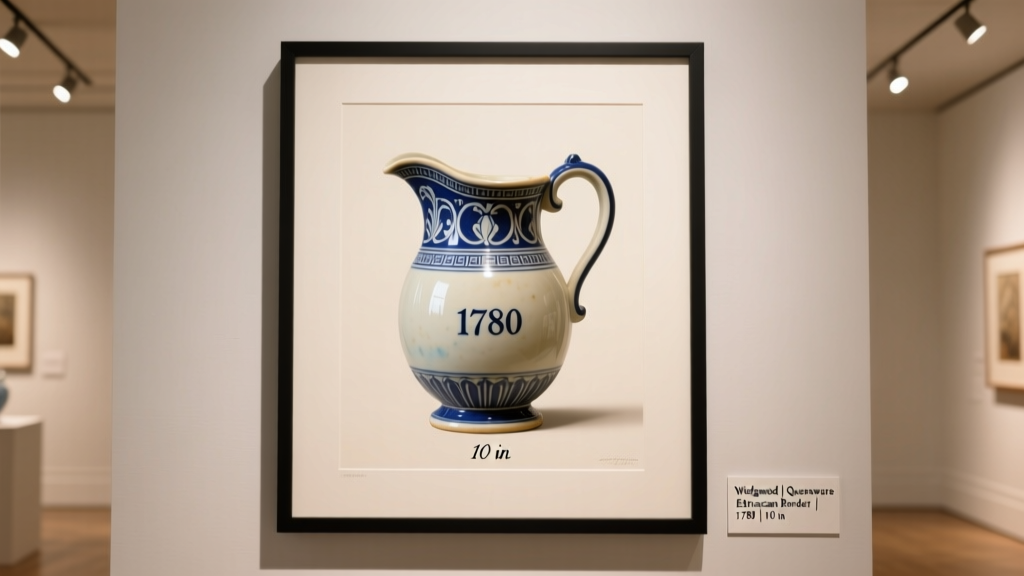
Authenticating the Wedgwood Pitcher Cover: Queensware with Etruscan Borders, Marked 1780, 10 Inches
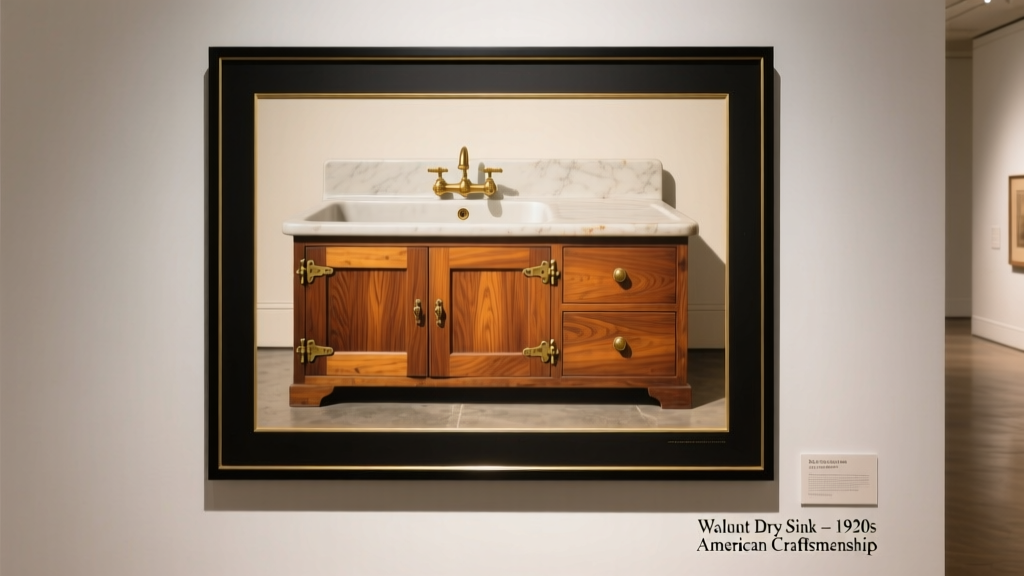
Authenticating and Valuing the Pennsylvania Walnut Dry Sink: A Technical Analysis of the 35" × 41" Hinged-Top, Two-Door, Side-Drawer Form
Swift’s Little Cook: The Hidden 36-Page Cookbook Inside a Vintage Hat Box — Authentication, Provenance, and Market Significance
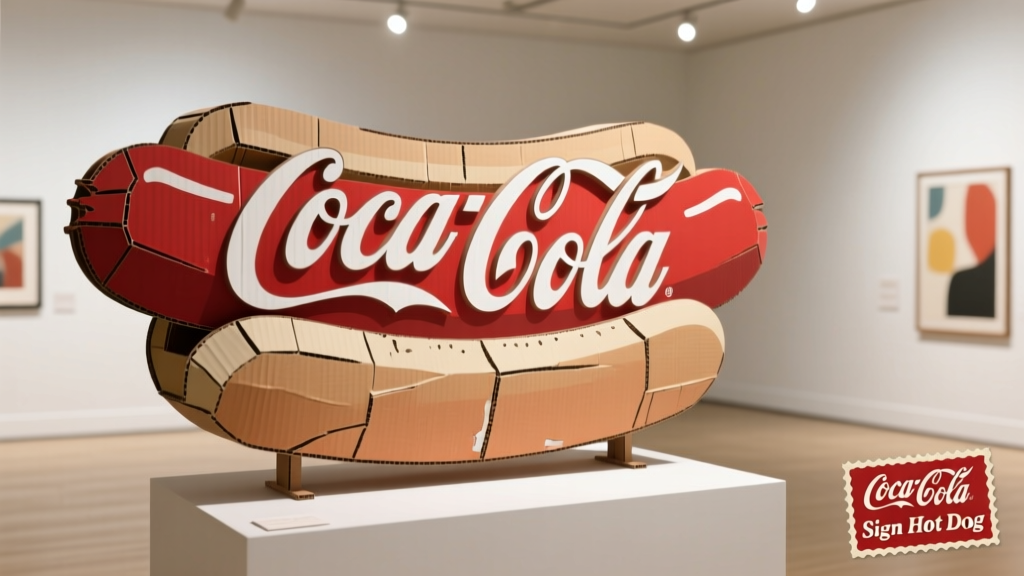
Coca-Cola Sign: Hot Dog 3D Cardboard Cutout (1932) — Authentication, Provenance, and Market Significance
Banks Mechanical Bull Dog Savings Bank: Authentication, Mechanics, and Market Value of the Ives Blakeslee 8½-Inch Windup
Lladro Figurine 'Little Leaguer on Bench' No. 5291 (1985–1990): Authentication, Market Value, and Historical Context