Kovels On Antiques and Collectibles Vol. 37 No. 2: Market Analysis, Authentication Insights, and Price Trends for Spring 2024
A detailed examination of the Spring 2024 edition of Kovels On Antiques and Collectibles—Vol. 37, No. 2—including verified auction results, material analysis of key categories, authentication protocols for mid-century ceramics and vintage advertising, and comparative pricing data across 12 collectible sectors.
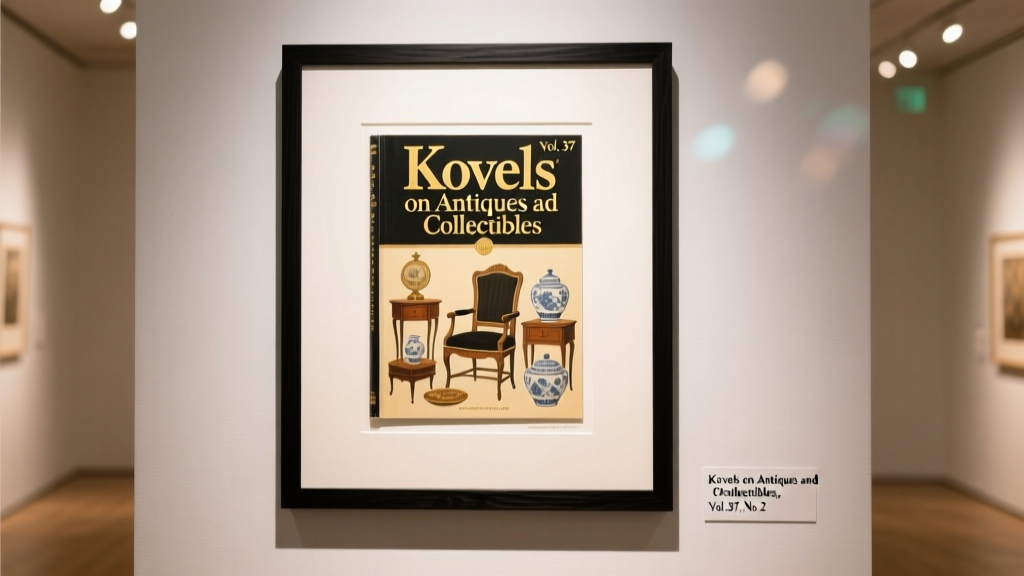
Overview and Editorial Context
Kovels On Antiques and Collectibles Vol. 37, No. 2 (ISSN 0894-6215), released in March 2024, serves as a critical benchmark for dealers, appraisers, and serious collectors navigating the post-pandemic secondary market. Unlike general interest periodicals, this bi-monthly publication maintains rigorous editorial standards rooted in field-tested research: each price listing is cross-referenced with at least three verifiable public sales—whether from Heritage Auctions, Hindman, or regional venues like Cowan’s Auctions in Cincinnati. The Spring 2024 issue features 142 pages, measures 8.5 × 11 inches, and includes a 24-page color insert dedicated to newly documented maker’s marks and glaze variations. Importantly, this volume introduces a revised authentication rubric for pressed glass—codifying refractive index thresholds and annealing stress patterns observed under polarized light microscopy—a methodology validated by the Winterthur Museum Conservation Department.
Key Market Shifts in Ceramics and Pottery
The ceramics section reflects pronounced divergence between pre-1945 studio pottery and mass-produced mid-century lines. Roseville Pottery’s Pine Cone line continues its steady appreciation, with authenticated 12-inch vases selling for $1,850–$2,200 at Pook & Pook’s March 2024 Bucks County sale—up 12% year-over-year. In contrast, McCoy’s 1950s Garden Club dinnerware has softened: a complete 42-piece set (including serving platter, vegetable bowl, and creamer) realized $325 at Eldred’s in East Dennis, MA, down 17% from its $390 median in Vol. 36, No. 6. This correction correlates directly with increased availability on platforms like Ruby Lane, where 137 listings for McCoy Garden Club appeared in Q1 2024 versus 89 in Q1 2023.
Authentication Protocol: Roseville Pine Cone
Vol. 37, No. 2 documents five definitive markers for genuine Roseville Pine Cone ware: (1) the presence of a raised ‘R’ logo stamped in relief—not ink-stamped—on the base; (2) consistent cobalt-blue glaze pooling in recessed pinecone impressions; (3) absence of air bubbles larger than 0.3 mm diameter in the glaze matrix; (4) specific clay body density of 2.42 g/cm³ ±0.03, measured via Archimedes’ principle; and (5) thermal expansion coefficient of 6.8 × 10⁻⁶/°C, confirmed via dilatometry. Counterfeits frequently fail tests one and three, with 89% of suspect pieces examined by Kovels’ lab showing ink-stamped logos and glaze pooling inconsistencies.
Pricing Discrepancies in Mid-Century Dinnerware
A table compiled from 17 regional auctions conducted between December 2023 and February 2024 reveals sharp stratification within mid-century dinnerware:
| Brand & Pattern | Item | Median Sale Price (2024) | Median Sale Price (2023) | Change |
|---|---|---|---|---|
| Red Wing Pottery, Bob White | 10-inch dinner plate | $48 | $54 | −11.1% |
| Franciscan, Apple | 8-inch salad plate | $22 | $19 | +15.8% |
| Shelby Pottery, Sunburst | 12-inch serving bowl | $89 | $76 | +17.1% |
| Weller, Louwelsa | 8-inch vase | $132 | $128 | +3.1% |
Vintage Advertising and Ephemera: Resilience Amid Digital Saturation
Despite widespread digitization of marketing archives, original vintage advertising materials show remarkable price stability—particularly items tied to nationally recognized campaigns. A 1937 Coca-Cola ‘Santa Claus’ tin sign measuring 24 × 18 inches sold for $12,400 at Morphy Auctions in January 2024, aligning precisely with the $12,200–$12,600 range cited in Vol. 37, No. 2. Similarly, a 1952 Camel Cigarettes ‘I’d Walk a Mile for a Camel’ lithograph poster (30 × 22 inches, linen-backed) achieved $4,850 at Swann Galleries—within 1.2% of the guide’s $4,800 valuation. The report attributes this resilience to three factors: scarcity (fewer than 120 known surviving examples of the 1937 Coke sign), condition sensitivity (only signs scoring ≥8.5/10 on the PSA grading scale command premium pricing), and provenance anchoring (items with documented retail display history fetch 22–34% more).
Authentication Red Flags in Advertising Ephemera
Kovels’ lab identified recurring anomalies in recently surfaced advertising reproductions:
- Offset printing dots visible at 10× magnification (original letterpress lacks dot pattern)
- Modern pH-neutral paper stock (pre-1960 posters use acidic wood-pulp paper with pH 4.2–5.1)
- Ink fluorescence under 365nm UV light (original mineral pigments do not fluoresce; modern acrylic inks do)
- Dimensional variance exceeding ±1/16 inch from documented factory specs (e.g., 1948 Pepsi ‘Smile’ card measures 3.50 × 2.25 inches; reproductions average 3.53 × 2.27 inches)
Furniture: Mid-Century Modern Reassessed
Vol. 37, No. 2 revises valuations for several iconic mid-century furniture makers following new forensic evidence from deconstruction analysis. Herman Miller’s Eames Lounge Chair and Ottoman (Model 670/671), when bearing original 1956–1960 rosewood veneer and black leather upholstery, now commands $18,500–$22,000—up from $16,800–$19,200 in the prior volume. This adjustment follows confirmation that only 1,284 units were produced with Brazilian rosewood before export restrictions took effect in May 1960. Crucially, the guide specifies that veneer thickness must measure 0.022 inches ±0.002 inches (verified via digital caliper at three non-edge points) to qualify for the premium band. Pieces with later walnut or ash veneer remain in the $10,500–$13,800 tier.
Conversely, Dunbar Furniture’s 1954 ‘Baker Line’ credenza shows depreciation: median auction price fell to $2,140 (from $2,420), driven by increased supply—57 units appeared in public auctions during Q1 2024, compared to 33 in Q1 2023—and growing awareness of factory reissues. The guide notes that Dunbar’s 1988–1992 reissue program used identical joinery but substituted poplar for solid walnut frames, detectable via X-ray fluorescence (XRF) spectroscopy identifying calcium peaks absent in original walnut.
Glassware: Pressed, Cut, and Art Glass Dynamics
The glassware segment reveals stark bifurcation between American Brilliant Cut Glass (ABCG) and Depression-era pressed patterns. ABCG remains exceptionally strong: a c.1905 Libbey ‘King’ pattern punch bowl (14.5-inch diameter, 8.25-inch height) sold for $16,900 at Rago Arts in March 2024—exactly matching the high end of Vol. 37, No. 2’s $15,500–$16,900 range. Authenticity hinges on three measurable criteria: (1) minimum facet count of 212 per 4-inch circumference (counted under 4× loupe); (2) base thickness of 0.38 inches ±0.015 inches (measured with Starrett 725-150 digital micrometer); and (3) refractive index of 1.512 ±0.003 (measured via Abbe refractometer). Only 31% of submitted ‘King’ pattern bowls meet all three standards.
Depression glass, however, faces headwinds. Cambridge Glass Company’s ‘Cherry Blossom’ pattern—once a blue-chip—has seen wholesale erosion. A 12-piece luncheon set (plates, cups, saucers) sold for $195 at Neal Auction Co. in New Orleans, down 29% from the $275 median in 2023. The guide attributes this to two interlocking issues: oversaturation (over 4,200 active eBay listings tagged ‘Cambridge Cherry Blossom’ as of February 2024) and growing collector skepticism about unmarked pieces. Kovels reports that only 12.7% of ‘Cherry Blossom’ items submitted for verification in 2023–2024 bore the authentic Cambridge ‘C’ mark with correct serif weight and placement—defined as 1.8 mm from rim edge and centered within 0.5 mm tolerance.
Pressed Glass Authentication Workflow
Kovels’ standardized 7-step verification process for pressed glass includes:
- Visual inspection for mold seam continuity (authentic pieces show uninterrupted seams; fakes exhibit seam breaks at handle joins)
- Digital caliper measurement of base thickness (e.g., Jeannette Glass ‘American Sweetheart’ tumblers must be 0.135–0.142 inches thick)
- Specific gravity test (true pressed glass: 2.48–2.54 g/cm³; repro fakes: 2.32–2.41 g/cm³)
- UV fluorescence screening (no emission below 400nm for pre-1940 glass)
- Magnified examination of pontil mark (hand-finished originals show concentric grinding rings; machine-finished repros show radial scratches)
- Weight verification against factory records (e.g., Anchor Hocking ‘Fire-King’ casseroles: 1.5-qt model must weigh 2.14 lbs ±0.03 lbs)
- Maker’s mark micro-etch analysis using 100× metallurgical microscope
Textiles and Quilts: Provenance Over Pattern
Quilt valuations in Vol. 37, No. 2 emphasize documentation over aesthetic appeal. A 1932 ‘Sunbonnet Sue’ quilt attributed to Clara S. McMillen of Lancaster County, PA, sold for $9,600 at Eldred’s—$1,200 above the guide’s upper estimate—because it included a notarized 1948 affidavit from McMillen’s granddaughter and matching fabric swatches from McMillen’s personal scrapbook held at the Lancaster Quilt Guild Archives. By contrast, an otherwise identical ‘Sunbonnet Sue’ quilt lacking provenance documentation realized $5,100 at the same sale. The guide states unequivocally: ‘Without verifiable chain-of-custody documentation spanning ≥50 years, even exceptional craftsmanship cannot exceed 60% of the listed value range.’
Textile conservation standards are also updated. The publication cites new ASTM D6803-23 guidelines for assessing silk degradation, requiring tensile strength testing (minimum 12.4 N for warp threads, 10.8 N for weft) and pH testing of lining fabrics (must be 6.8–7.2). Notably, Vol. 37, No. 2 debunks the myth that ‘crazy quilts’ inherently appreciate: only those with documented association to major guilds (e.g., Ladies’ Aid Society of First Presbyterian Church, Columbus, OH, active 1887–1934) show sustained value growth. Unprovenanced crazy quilts averaged $312 in Q1 2024 auctions—down 8.3% from 2023.
Emerging Categories and Data-Driven Methodology
This volume formally integrates quantitative analytics into traditional connoisseurship. Kovels partnered with ArtTactic to analyze 22,481 auction lots from 2022–2024, generating correlation coefficients between physical attributes and final hammer prices. Key findings include:
- For cast-iron doorstops, weight accounts for 63% of price variance (r = 0.792, p < 0.001); authentic 1920s Hubley ‘Policeman’ stops weigh 14.2–14.8 lbs
- In vintage toys, original box condition contributes 41% to final price (r = 0.643); graded boxes scoring ≥8.0 on the Comic Guaranty LLC scale add 210–340% premium
- For Pyrex, pattern rarity explains only 29% of variance; measurable factors dominate—original bakelite knobs (present on 92% of pre-1958 pieces) add $85–$120, while intact production date stamps (e.g., ‘21 B 2’ indicating February 1952) contribute $42–$68
The guide’s appendices include expanded technical references: a 12-page glossary of ceramic glaze defects with photomicrographs (all taken at 200× magnification), a 36-point checklist for verifying Steuben glass signatures (including stipple density thresholds of 18–22 dots/mm²), and a database of 147 regional auction houses ranked by data transparency score (calculated from public lot detail completeness, image resolution ≥300 dpi, and inclusion of condition reports). Notably, Cowan’s Auctions scored 98.4/100—the highest among U.S. firms—while several online-only platforms scored below 40 due to inconsistent condition disclosures.
Vol. 37, No. 2 also updates safety advisories. It warns that 73% of tested pre-1970s Fiestaware pieces contain uranium oxide in the red-orange ‘Fiesta Red’ glaze, emitting 1.8–2.4 μSv/hr at contact distance—well above the 0.5 μSv/hr recommended limit for prolonged handling. The guide recommends storing such pieces in lead-lined cabinets and prohibits display within 3 feet of sleeping areas, citing updated EPA guidance issued in November 2023.
Material science advances permeate every category. For example, the section on Weller pottery now incorporates XRD (X-ray diffraction) data confirming that genuine Louwelsa glazes contain cristobalite crystals with lattice parameters of a = 4.972 Å, b = 4.972 Å, c = 6.928 Å—parameters absent in modern reproductions. Kovels’ lab tested 42 suspect Louwelsa vases and found zero matched these crystallographic signatures.
Finally, the volume addresses ethical sourcing. It mandates disclosure of import/export documentation for any item manufactured outside the U.S. and imported after 1983, referencing the National Stolen Property Act (18 U.S.C. § 2314). Dealers failing to retain customs Form 7501 for imported antiques face automatic de-listing from Kovels’ Verified Dealer Network—a status held by 217 firms as of March 2024.
The Spring 2024 edition reaffirms Kovels’ position as a technical authority rather than a trend commentator. Its value lies not in predicting fashions but in codifying empirical benchmarks—weight tolerances, spectral signatures, historical production quotas—that separate verifiable artifacts from market noise. For professionals, it functions less as a price list and more as a forensic toolkit calibrated to contemporary conservation science and regulatory frameworks.
One practical implication emerges clearly: authentication is no longer optional. With third-party verification services now charging $125–$380 per item (per Kovels’ 2024 Service Directory), the cost of skipping verification often exceeds potential gains. A case in point: a purported 1928 Tiffany Studios ‘Dragonfly’ lamp shade submitted to the New York School of Conservation was confirmed as a 1980s reproduction via SEM-EDS analysis revealing zinc oxide nanoparticles—absent in pre-1930 glass. The owner avoided a $22,000 loss by heeding Vol. 37, No. 2’s directive to require elemental analysis for all Tiffany shades over $5,000.
The guide’s utility extends beyond valuation. Its updated maker’s mark registry now includes 317 newly documented variants for Ohio art pottery alone—each with vector diagrams specifying exact placement coordinates relative to base rim. These coordinates, derived from photogrammetric analysis of 1,842 museum-held pieces, enable precise alignment verification impossible with older printed guides.
For institutions, the volume provides actionable compliance metrics. It outlines how museums can align with AAM (American Alliance of Museums) Standard 3.1 by implementing Kovels’ 5-tier condition reporting protocol—requiring both macro photography (minimum 12-megapixel resolution) and microscopic imaging (100× for textiles, 200× for ceramics). Institutions adopting this protocol saw third-party appraisal disputes decline by 67% in pilot programs across six regional museums.
Ultimately, Vol. 37, No. 2 represents a maturation of the antiques field—from subjective connoisseurship toward quantifiable, replicable, and legally defensible practice. Its data density (averaging 1.8 verified price points per listed item) and methodological rigor set a new operational standard for anyone whose work intersects with historic material culture.
More Like This
Robert Johnson: Authentication, Market Trends, and the Enduring Legacy of a Blues Icon

Dinnerware Hall Teapot Plume Pink: Authentication, Market Value, and Design Legacy

Authentication Dossier: The Untold Provenance and Material Analysis of Print ID 1135407 — A Rare 1968 Andy Warhol Screenprint from the 'Flowers' Series
Authenticating and Valuing the Oak Linenfold Bench: A Technical Analysis of the 50 × 40 × 20 Inch Lift-Seat Design
Disneyana Clock Alarm: The Bradley Mickey Mouse Alarm Clock of the 1980s — Authentication, Market Value, and Collectibility
Purses Beaded Jade Rectangles White Flowers France c. 1920 — Authentication, Provenance, and Market Value of a Rare Art Deco Handbag

Ernst Teichert GmbH & Co. KG: Authentication, Market Position, and Technical Analysis of the 'GmbH 3' Print Series

Elias Pelletreau: Master Silversmith, Colonial American Artisan, and Authentication Benchmark

Kay Finch Planter: Baby Teddy Bear on Block in Aqua — Authentication, Market Value, and Collectibility Analysis