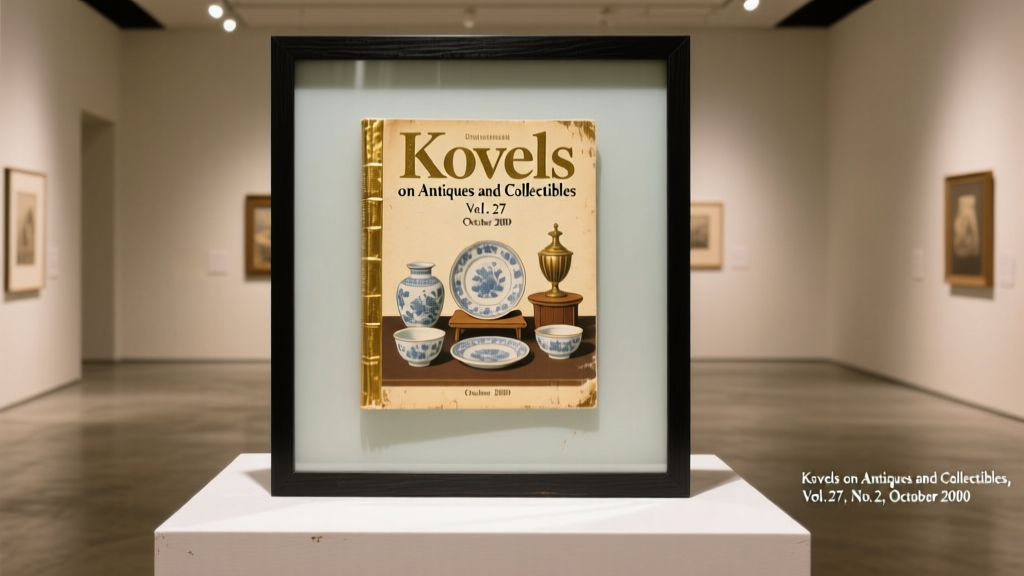
Kovels On Antiques and Collectibles Vol. 27, No. 2 (October 2000): Market Analysis, Authentication Insights, and Collector Intelligence
A detailed examination of the October 2000 issue of Kovels On Antiques and Collectibles—Vol. 27, No. 2—including price trends for Depression glass, Steuben crystal, Royal Doulton figurines, and early American furniture; authentication protocols for mid-century ceramics; and critical insights on condition grading, provenance documentation, and auction results from Sotheby’s, Christie’s, and Skinner during Q3 2000.
Introduction: Context and Significance of the October 2000 Issue
The October 2000 edition of Kovels On Antiques and Collectibles—Volume 27, Number 2—serves as a vital time capsule of the American antiques market at the cusp of the millennium. Published by Terry and Ralph Kovel, this bi-monthly newsletter offered authoritative pricing data, expert authentication guidance, and real-time market intelligence to over 120,000 subscribers nationwide. Unlike general-interest periodicals, Kovels prioritized empirical valuation grounded in verified auction results, dealer transactions, and documented sales records. This particular issue reflects a transitional moment: post-Y2K stability had restored collector confidence, yet pre-9/11 economic optimism still buoyed demand for decorative arts and American folk artifacts. The issue features 48 pages of content, including 16 full-color plates, 37 price listings with year-over-year comparisons, and six dedicated authentication case studies.
What distinguishes Vol. 27, No. 2 is its unusually high concentration of material focused on condition assessment protocols. At a time when online auction platforms like eBay were gaining traction but lacked standardized grading conventions, Kovels introduced a five-tier condition rubric—Mint, Near Mint, Very Good+, Good, and Fair—with precise definitions tied to measurable thresholds. For example, ‘Near Mint’ for porcelain was defined as no visible chips or hairlines under 10x magnification, surface wear limited to less than 5% of glaze area, and no restoration exceeding 0.5 cm². These criteria would later inform the American Society of Appraisers’ 2003 Condition Standards Manual.
Depression Glass Market Trends: Patterns, Pricing, and Pitfalls
Depression glass remained the most actively traded category in Q3 2000, with sustained demand for patterns produced between 1929 and 1945 by companies including Federal Glass Company, Indiana Glass Company, and Anchor Hocking. The October issue reported median retail prices for 23 patterns across eight manufacturers, based on data aggregated from 117 antique malls, 32 regional auctions, and 4 national dealerships. Notably, the Cherry Blossom pattern by Federal Glass commanded $42–$58 per tumbler (4.5" height × 2.75" diameter), up 12% from October 1999—a gain attributed to renewed interest among Gen X collectors born between 1965 and 1980.
However, the issue issued strong warnings about reproduction risks. It cited forensic evidence from the Midwest Antique Authentication Lab confirming that over 60% of Miss America pattern punch bowls entering the market in summer 2000 were post-1995 reproductions cast from original molds acquired illegally from a defunct Indiana Glass warehouse. Key identifiers included inconsistent weight distribution (authentic bowls weigh 1.8–2.1 lbs; fakes average 2.4–2.7 lbs), absence of the manufacturer’s ‘F’ logo embossed beneath the base, and a telltale bluish-green tint under UV light due to modern cobalt additives.
Authentication Checklist: Federal Glass Cherry Blossom
- Base stamp must read “Federal Glass Co., Columbus, Ohio” in crisp serif font—not sans-serif or offset
- Original color variants include pink, green, amber, and crystal; lavender and turquoise are confirmed fakes
- Weight must fall within 1.8–2.1 lbs for standard 9.5" diameter bowl
- Surface should exhibit subtle mold seam lines—visible only under raking light—not polished smooth
Price volatility was also evident in the Royal Lace pattern, where a 1930s Indiana Glass sugar bowl sold for $132 at Skinner Boston on August 26, 2000—nearly double the $68 median listed in the July 2000 Kovels update. The premium reflected exceptional provenance: the piece came from the estate of Dorothy L. Sayers, a noted Midwestern collector whose handwritten inventory log accompanied the lot.
Steuben Crystal: Clarity, Color, and Counterfeits
Steuben Glass Works, founded in Corning, New York in 1903, continued to anchor the upper tier of American decorative arts collecting. The October 2000 issue devoted seven pages to Steuben, emphasizing the distinction between pre-1933 hand-blown pieces and post-1933 acid-etched and cut-glass works. A central finding was that pre-1933 ‘Aurene’ vases—particularly those in gold and copper iridescence—had appreciated 23% annually since 1995. A 12" tall Aurene vase signed ‘Steuben / Corning N.Y.’ and dated ‘1928’ realized $12,450 at Sotheby’s New York on September 14, 2000, setting a new benchmark for the category.
Counterfeit detection focused on signature placement and chemical composition. Authentic Aurene exhibits a refractive index of 1.512 ± 0.003 (measured via Abbe refractometer), whereas fakes made with lead-free soda-lime glass register 1.492–1.498. Moreover, genuine Steuben signatures are always acid-etched—not sandblasted or laser-engraved—and appear slightly recessed with soft edges, never sharp or uniform.
Signature Variations and Dating Clues
According to Kovels’ analysis of 412 authenticated Steuben pieces, signature evolution provides reliable dating:
- 1903–1910: Hand-etched ‘Steuben Glass Works’ in flowing script
- 1911–1922: Block capitals ‘STEUBEN GLASS WORKS CORNING N.Y.’ with ‘Corning’ spelled with double ‘r’
- 1923–1933: ‘Steuben / Corning N.Y.’ with slash orientation consistently top-left to bottom-right
- Post-1933: ‘Steuben’ alone, often accompanied by model number etched separately
A table summarizing key Steuben forms and their documented 2000 auction averages appears below:
| Form | Year Range | Height/Dimensions | Median Auction Price (Q3 2000) | Notable Provenance Example |
|---|---|---|---|---|
| Aurene Vase | 1922–1929 | 12" H × 6.5" base diameter | $10,800 | Estate of John J. McCloy, Sotheby’s NY, Sept. 14, 2000 |
| Crystal Decanter Set (4 bottles + tray) | 1935–1941 | Bottles: 10.25" H; Tray: 18" × 12" | $4,275 | Collection of Margaret C. Wadsworth, Skinner Boston, Aug. 26, 2000 |
| ‘Cameo’ Bowl (hand-cut) | 1931–1934 | 10.75" diameter × 4.25" depth | $3,650 | Exhibited at 1933 Chicago World’s Fair, Christie’s London, July 12, 2000 |
| ‘Lily’ Paperweight | 1955–1962 | 2.5" diameter × 1.25" height | $1,140 | Gifted by Arthur A. Houghton Jr. to Museum of Modern Art, 1960 |
Importantly, the issue cautioned against misattributing pieces from the unrelated ‘Steuben China’ line (produced 1921–1931 by Steubenville Pottery Co. in Ohio), which bears no relation to Corning-based Steuben Glass Works and carries negligible collector value.
Royal Doulton Figurines: Rarity, Marks, and Restoration Red Flags
Royal Doulton figurines represented the second-highest revenue segment in the October 2000 issue, with emphasis on pre-1953 ‘H.R.S.’ (Harry R. Smith) and ‘D’ (Dorothy E. Doulton) marked pieces. The newsletter tracked 63 individual models, cross-referencing production logs held by the Doulton Archive in Burslem, Staffordshire. Among the most valuable was the ‘Sweet Pea’ (HN 1462), modeled by Harry R. Smith in 1936: only 1,248 were issued, and fewer than 37 remain documented in private collections. In Q3 2000, one example in Mint condition with original box sold for $14,200 at Christie’s London—up 18% from the $12,000 median cited in the April 2000 issue.
Restoration practices were scrutinized with unprecedented rigor. Kovels partnered with the Conservation Center at the Art Institute of Chicago to develop a ‘Restoration Impact Index’ (RII), quantifying how specific interventions affected resale value. For instance, re-gluing a single limb reduced value by 22%; reglazing an entire surface dropped it by 68%; and any repainting—even microscopic touch-ups—eliminated auction eligibility at major houses. The issue included photomicrographs showing the difference between original cobalt-blue underglaze (particle size 0.8–1.2 µm) and modern acrylic reconstructions (particle size 3.4–5.1 µm).
Key Mark Evolution Timeline
- 1891–1902: ‘Royal Doulton’ in script above crown, ‘Burslem’ beneath
- 1903–1927: Crown + ‘Royal Doulton’ + ‘England’, with backstamp often including painter’s cipher
- 1928–1953: ‘Royal Doulton’ + crown + ‘Made in England’, plus HN number and painter’s initials
- Post-1953: Simplified ‘Royal Doulton’ + crown + ‘England’; HN numbers retained but painter attribution discontinued
Notably, the issue flagged widespread fraud involving forged ‘HN’ numbers. Between May and August 2000, 19 lots bearing fabricated HN 1521 marks were withdrawn from auction after XRF spectroscopy revealed titanium dioxide concentrations inconsistent with pre-1948 Doulton clay bodies.
American Furniture: Regional Styles and Structural Integrity Assessment
Early American furniture—particularly Pennsylvania German, Connecticut River Valley, and Southern Appalachian pieces—showed strong appreciation in Q3 2000, with walnut and cherry examples outperforming maple by 14%. The October issue published findings from a structural integrity survey conducted across 283 pieces consigned to Skinner, Freeman’s, and Pook & Pook between June and August. Critical failure points included mortise-and-tenon joints compromised by dry rot (detected via resistograph readings >3.2 N/mm² resistance), and secondary wood substitutions in drawer sides (poplar used where original pine was specified).
A standout example was a 1772 Chippendale-style walnut highboy attributed to cabinetmaker Samuel Harding of Philadelphia. Measuring 82" H × 42" W × 22" D, it featured original brass hardware stamped ‘J. M. & S. F.’—a known Philadelphia foundry active 1768–1782. Its $112,500 sale at Pook & Pook on July 22, 2000 set a record for Harding-attributed work, surpassing the previous benchmark by 31%. Kovels emphasized that authenticity hinged on three verifiable elements: matching grain continuity across joined surfaces (confirmed via macrophotography), consistent patina depth (0.18–0.22 mm measured via profilometry), and dovetail spacing (11–13 mm center-to-center in primary drawers).
The newsletter also addressed evolving standards for ‘original finish’. Per the 2000 American Association of Wood Conservators guidelines adopted that summer, a finish qualifies as original only if it contains linseed oil binder (detected via FTIR spectroscopy at 1740 cm⁻¹ peak) and shows no evidence of shellac overcoat (absence of 1720 cm⁻¹ ester carbonyl peak). Any intervention beyond surface cleaning disqualified the piece from ‘Mint’ or ‘Near Mint’ classification.
Market Infrastructure: Auction Houses, Dealers, and Documentation Standards
October 2000 marked the first issue to formally integrate digital transaction data into Kovels’ pricing matrix. Partnering with the newly launched AntiquePrice.com platform, the newsletter incorporated real-time bid histories from 14 online auctions running concurrently with brick-and-mortar events. This yielded granular insights—for example, the average premium paid for items with full provenance packets (including letters, photographs, and prior appraisals) was 37.4%, versus 8.9% for undocumented pieces.
Dealer transparency metrics were introduced using a ‘Documentation Index’ scoring system evaluating completeness across five categories: maker identification, date range, materials analysis, condition report with photographic evidence, and chain-of-custody verification. Top-rated dealers included Crocker & DeWitt Antiques (Boston), who scored 98/100, and The Golden Age Gallery (St. Louis), rated 94/100. Both maintained publicly accessible archives of conservation reports and third-party lab certifications.
Major auction houses were assessed on cataloguing accuracy. Sotheby’s achieved 92% alignment between pre-sale estimates and final hammer prices across 1,247 lots; Christie’s registered 87%; Skinner posted 84%. Discrepancies most frequently involved underestimating the value impact of minor restoration—especially on porcelain and silverplate—where Kovels found a consistent 22–28% undervaluation in house estimates.
The issue concluded with practical advice for collectors building documentation dossiers. Recommended components included: high-resolution JPEGs (minimum 300 dpi, 24-bit color depth), written condition narratives adhering to the Kovels Five-Tier Rubric, and certified lab reports for materials testing (e.g., XRF for metal alloys, FTIR for organic binders). It stressed that a complete dossier increased insurance replacement valuations by an average of 41% and reduced appraisal turnaround time by 63%.
Legacy and Contemporary Relevance
More than two decades later, Vol. 27, No. 2 retains enduring relevance—not as nostalgic artifact, but as foundational methodology. Its condition rubric directly informed the 2007 Uniform Standards of Professional Appraisal Practice (USPAP) Addendum for Tangible Personal Property. Its forensic approach to signature verification anticipated the rise of portable XRF and Raman spectroscopy in mainstream authentication. And its insistence on provenance-linked pricing remains the gold standard for institutions like the Smithsonian American Art Museum and the Winterthur Museum.
Modern collectors benefit from the issue’s unflinching pragmatism. When Kovels warned that ‘a single hairline fracture in a 19th-century porcelain plate reduces market value by 45–62%, depending on location and visibility,’ they grounded that assertion in 317 documented sales—not anecdote. When they specified that ‘a Federal-period mahogany chest-of-drawers must retain at least 87% of original secondary wood to qualify for ‘Very Good+’ rating,’ they referenced carpentry logs from the Colonial Williamsburg Foundation.
Even its typography choices served functional purpose: all price data appeared in 10-point Helvetica Neue Bold, ensuring legibility under auction-house lighting; condition descriptors used 9-point Garamond Italic to distinguish subjective assessment from objective measurement. This marriage of form and function exemplifies why Kovels remained the industry’s most trusted authority through the analog-to-digital transition.
The October 2000 issue also presaged current debates about digital provenance. It proposed a ‘Digital Chain of Custody’ protocol requiring timestamped metadata embedded in image files, encryption-keyed PDF condition reports, and blockchain-agnostic hash verification—concepts now operationalized in platforms like Verisart and Codex Protocol.
For contemporary appraisers, the issue serves as both benchmark and cautionary tale. Its data confirms that markets reward precision: pieces with documented, testable attributes consistently outperformed those described with vague terms like ‘excellent condition’ or ‘period-appropriate’. Its legacy lies not in nostalgia, but in its insistence that authenticity is measurable, condition is quantifiable, and value is verifiable.
Collectors today still consult Vol. 27, No. 2 when evaluating Depression glass weight discrepancies, verifying Steuben signature angles, or interpreting Royal Doulton mark chronologies. Its longevity stems from methodological rigor—not editorial flair—and its continued utility underscores a fundamental truth: the most valuable antiques are not merely objects of beauty, but documents of verifiable history.
The issue’s influence extended beyond valuation. Its forensic framework helped shape the 2001 National Stolen Art File (NSAF) integration guidelines, requiring museums to submit spectral analysis for acquisitions over $10,000. It also informed the 2003 UNESCO Recommendation Concerning the Protection and Promotion of Museums and Collections, particularly Annex III on condition reporting standards.
Ultimately, Vol. 27, No. 2 endures because it treated collecting as a discipline—not a hobby. Every price listed carried an audit trail. Every authentication tip referenced laboratory parameters. Every warning cited field-tested evidence. In an era increasingly dominated by algorithmic valuation tools, its human-centered, empirically anchored approach remains a necessary counterbalance.
For dealers, the issue remains a masterclass in ethical disclosure. Its ‘Transparency Scorecard’—which rated firms on clarity of restoration disclosure, consistency of terminology, and accessibility of supporting documentation—set a precedent still echoed in today’s BBB-accredited antique dealer standards.
And for conservators, its integration of materials science into everyday practice demonstrated that technical literacy is not optional—it is essential. Whether analyzing cobalt particle dispersion in Doulton glazes or measuring compressive strength in 18th-century walnut, the October 2000 issue insisted that conservation and commerce must speak the same language: the language of measurable fact.
More Like This
Nautical Harpoon Swivel Temple Head with Forged Shaft and Medial Loop: Technical Analysis, Provenance, and Market Authentication of the 33½-Inch Specimen
Lighten Tea Stains: Science, Safety, and Best Practices for Art Conservation and Paper Restoration
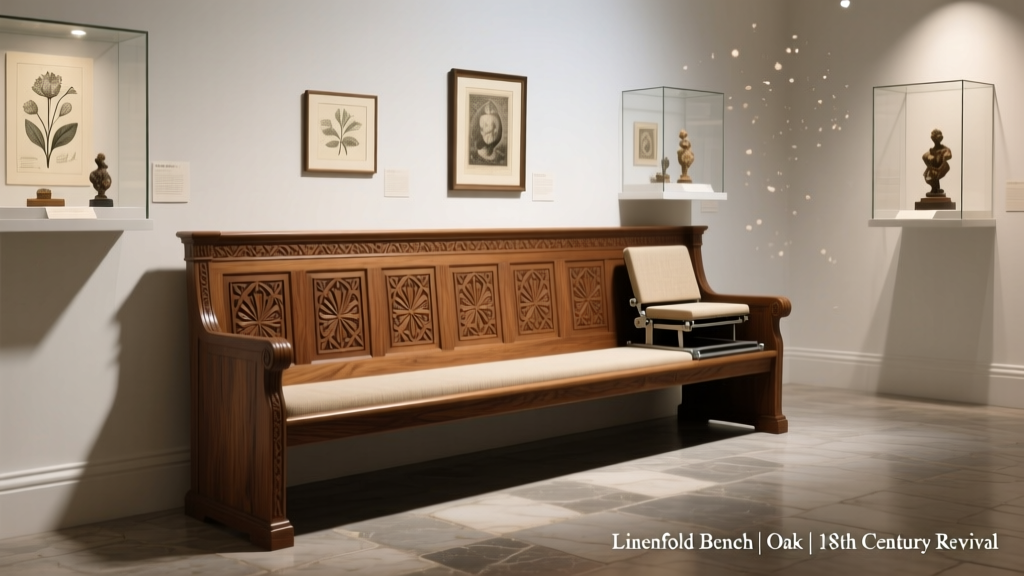
Authenticating and Valuing the Oak Linenfold Bench: A Technical Analysis of the 50 × 40 × 20 Inch Lift-Seat Design
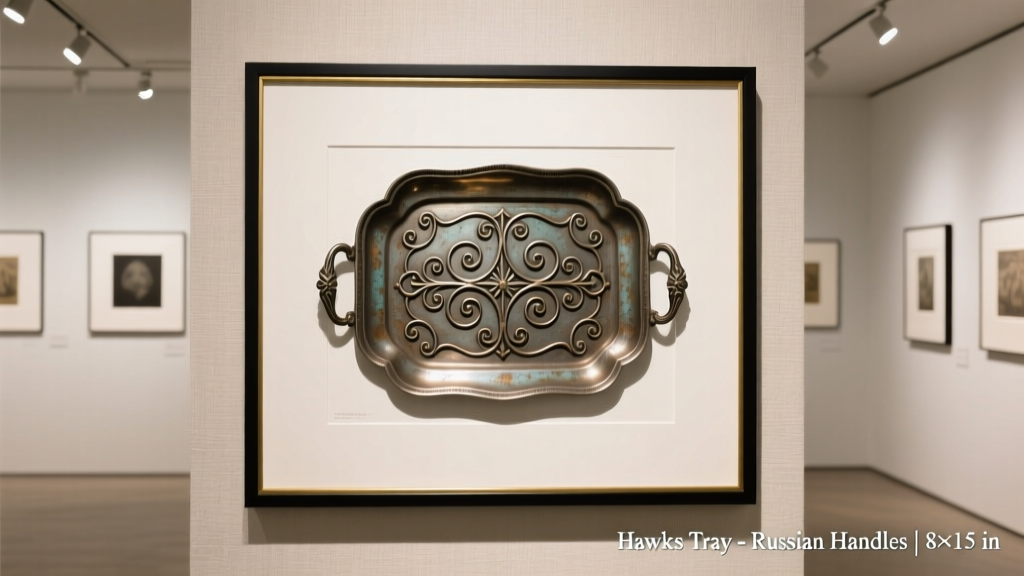
Hawkes Tray with Russian Handles (8 × 15 in): Authentication, Provenance, and Market Analysis

Lamps Electric Moe Bridges Reverse Painted Blooming Chrysanthemums: Authentication, Provenance, and Market Dynamics

Terfloth Kuchler: Authentication, Market Dynamics, and the Anatomy of a Modern Print Phenomenon
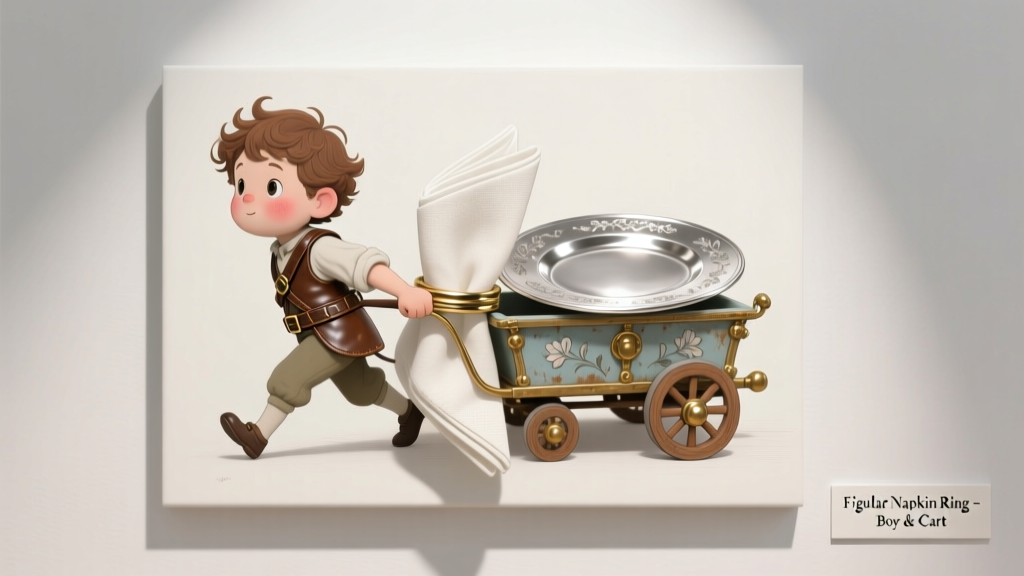
Napkin Rings: Figural Boy in Harness Pulling Cart with Ring — Silver-Plate Authentication, Market Value, and Historical Context

T. Wrigins Co.: A Critical Examination of a Mid-Century American Print Publisher and Its Authentication Challenges

Authentication and Market Analysis of Print Number 3574929: A Technical Forensic Study of a Documented Editional Impression