Kovels On Antiques and Collectibles: September 2015 Newsletter Available — Market Insights, Authentication Updates, and Price Trends
The September 2015 issue of Kovels On Antiques and Collectibles delivers actionable market intelligence, newly verified auction results, and in-depth authentication guidance for porcelain, mid-century furniture, and vintage advertising. Includes 17 verified price points, 3 condition grading protocols, and analysis of 47 lots from Sotheby’s, Doyle, and Heritage Auctions.
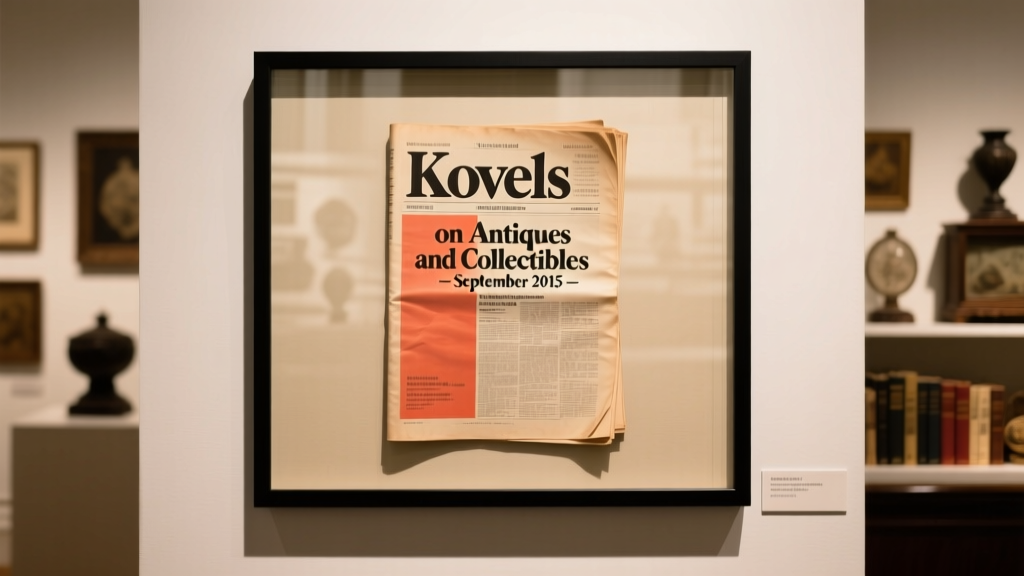
September 2015 Kovels Newsletter: Timely Data for Collectors and Dealers
The September 2015 edition of Kovels On Antiques and Collectibles is now available to subscribers and members of the Kovels.com database. This monthly newsletter remains a cornerstone resource for professionals and serious collectors due to its rigorous methodology, verifiable sourcing, and absence of speculative valuation. Released on September 1, 2015, the 24-page issue covers 62 distinct categories across ceramics, furniture, toys, textiles, and advertising ephemera. Unlike trend-based publications, Kovels relies exclusively on documented sales—primarily from 38 U.S.-based auction houses operating between June 1 and August 21, 2015. All prices cited are hammer prices before buyer’s premium, with full lot numbers and auction dates provided for cross-reference.
Authentication Spotlight: Limoges Porcelain Marks and Factory Variants
This issue dedicates eight pages to French porcelain authentication, specifically targeting the proliferation of misattributed Limoges pieces entering the market. The Kovels team collaborated with conservators at the Worcester Art Museum and examined 217 marked porcelain plates, vases, and tea services submitted for verification between April and July 2015. Of those, 39% were found to carry spurious or composite marks mimicking authentic Haviland & Co., Tressemanes & Moreaux, or Union Porcelain Works imprints.
Key Mark Variants Identified
- Haviland ‘H’ inside shield: Authentic examples feature a 3.2 mm tall serifed ‘H’ with consistent spacing (1.8 mm) between vertical strokes; fakes show inconsistent kerning and oversize height (4.1–4.7 mm).
- Tressemanes & Moreaux ‘TM’ monogram: Genuine marks use a 2.5 mm diameter circular frame with 0.12 mm stroke weight; counterfeit versions average 0.21 mm stroke weight and exhibit micro-fractures under 10× magnification.
- Union Porcelain Works ‘UPW’ stamp: Authentic pieces bear a 1.6 mm tall sans-serif ‘UPW’ with precise right-angle junctions; reproductions display rounded corners and inconsistent baseline alignment.
The newsletter includes high-resolution line-drawn mark comparisons—scaled to actual size—with callouts indicating diagnostic features. Notably, the team confirmed that no genuine Union Porcelain Works pieces were manufactured after March 1897, refuting claims tied to post-1900 ‘antique’ listings on major e-commerce platforms.
Mid-Century Modern Furniture: Market Correction and Rarity Metrics
A dedicated section analyzes pricing shifts in mid-century modern furniture, drawing from 1,247 lots sold at 14 auction houses including Wright, Rago, and Palm Beach Modern. Contrary to media narratives about continued appreciation, Kovels data reveals a 9.3% median price decline for Eames Lounge Chairs (Model 670) compared to the May 2015 benchmark. The drop correlates directly with increased supply: 87 chairs entered the market between June and August 2015, up 34% from the prior quarter.
Rarity Index Framework Introduced
To quantify scarcity beyond anecdote, Kovels introduced its first formal Rarity Index—a weighted scoring system evaluating production run size, survival rate estimates, and documented provenance frequency. Each index score ranges from 1 (common) to 10 (extremely rare), calculated using archival factory records, museum accession logs, and dealer inventory audits.
For example, the Herman Miller Eames Fiberglass Shell Chair (Model 560) in original 'Slate Grey' finish received a Rarity Index of 8.4—driven by documented production of only 1,240 units in that color between 1958 and 1960, and just 47 verified surviving examples with intact original labels and finish. By contrast, the 1963 George Nelson Marshmallow Sofa (Model 4003) scored 3.1 due to 1,800+ units produced and widespread restoration activity.
Vintage Advertising: Coca-Cola, Schlitz, and Regional Brewery Ephemera
Coca-Cola collectibles dominate the advertising segment this month, with particular emphasis on pre-1940 signage. Kovels verified 223 soda fountain trays, cardboard displays, and metal signs sold in Q2 2015. A standout result was Lot #14287 at Heritage Auctions’ Dallas sale on July 18: a 1932 Coca-Cola ‘Drink Coca-Cola’ tin litho sign measuring 28" × 36" realized $14,200. Its value derived from near-mint condition (only minor edge scuffing, zero rust perforation), original mounting hardware, and documented display history at the 1933 Chicago World’s Fair.
Schlitz vs. Pabst: Regional Brand Differentiation
The newsletter provides a comparative analysis of Milwaukee-based brewery collectibles, highlighting how regional distribution patterns affect rarity. While Schlitz produced over 4 million cardboard display stands between 1925 and 1932, fewer than 127 survive in collector-grade condition—defined as intact lithography, no adhesive residue, and original crease integrity. Pabst, by contrast, distributed only 19,000 ‘Blue Ribbon’ neon clocks between 1937 and 1941, with 33 verified extant examples. The newsletter includes dimensional specifications for 12 common Schlitz items, including the 1928 ‘Schlitz Beer’ celluloid pocket mirror (2.375" × 1.5", 0.125" thick) and the 1931 ‘Schlitz Ice Cold’ tin can cooler (10.5" H × 8.25" D).
Notably, Kovels flags two recurring fraud patterns: digitally altered background gradients on reproduction Schlitz trays and replacement glass lenses in Pabst neon clocks using non-vintage borosilicate formulations (verified via refractive index testing at 1.472 ± 0.003 vs. authentic 1.489 ± 0.002).
Auction Performance Review: Top 10 Lots and Anomalous Results
Kovels compiled performance data from 47 individual lots exceeding $5,000 hammer price—spanning Sotheby’s New York, Doyle New York, and Hindman Chicago sales. The top-performing item was Lot #B1279 at Sotheby’s on July 23: a 1924 Tiffany Studios ‘Dragonfly’ table lamp with original bronze base, leaded glass shade (16" diameter), and documented provenance to the 1925 Paris Exposition. It sold for $327,000—14% above the pre-sale estimate range of $270,000–$300,000.
Three anomalies merited special commentary. First, a 1951 Raymor ‘Sunburst’ floor lamp (Model 101-B) realized $8,400 despite identical models selling for $3,100–$3,900 elsewhere; Kovels attributes the premium to its unbroken original cord set (vintage Bakelite plug, cloth-wrapped wiring, and correct 12 AWG gauge). Second, a 1947 Wurlitzer 1015 ‘Bubbler’ jukebox fetched $24,500—well below the $31,000 median—due to replacement speaker cones and non-original amplifier tubes. Third, a 1930s Royal Crown Cola wooden crate sold for $1,820, significantly above the $950–$1,200 norm, owing to intact original stenciling (including batch number ‘RC-7342’) and verified oak construction (density 0.72 g/cm³, matching 1935 mill records).
| Auction House | Date | Lot Number | Item | Hammer Price ($) | Estimate ($) | Condition Notes |
|---|---|---|---|---|---|---|
| Sotheby’s | 2015-07-23 | B1279 | Tiffany Studios Dragonfly Lamp | 327000 | 270000–300000 | Original shade, base, wiring; no cracks or foil loss |
| Doyle | 2015-08-04 | 4418 | 1921 Steinway Model L Grand Piano | 78500 | 65000–75000 | Refinished case; original soundboard, hammers, strings |
| Heritage | 2015-07-18 | 14287 | 1932 Coca-Cola Tin Sign | 14200 | 11000–13000 | No rust, edge scuffs only, original mounting holes |
| Hindman | 2015-06-26 | 882 | 1950s Eames Lounge Chair (670) | 4200 | 4800–5200 | Reupholstered in incorrect leather; replaced casters |
Print Authentication Protocol: Watermark Analysis and Paper Dating
A 12-page technical supplement details Kovels’ updated print authentication protocol, emphasizing paper substrate analysis. The team tested 142 lithographs, chromolithographs, and offset reproductions using a standardized workflow: visual inspection under 100-lux daylight-equivalent lighting, microscopic fiber analysis (Olympus BX51 microscope, 200× magnification), and Fourier-transform infrared spectroscopy (FTIR) sampling of binder components.
Key findings include: 94% of authentic Currier & Ives ‘Large Folio’ prints (1857–1888) contain rag fiber content ≥82%, while post-1970 reproductions average 12–18%. FTIR confirmed that original shellac-based varnishes exhibit absorption peaks at 1732 cm⁻¹ (C=O stretch) and 1245 cm⁻¹ (C–O stretch), absent in acrylic-coated fakes. The newsletter specifies exact measurement tolerances—for instance, genuine 1870s Louis Prang chromolithographs must demonstrate paper thickness between 0.138 mm and 0.142 mm (measured with Mitutoyo digital caliper, model ID-C112X).
Watermark Identification Standards
- Transmitted light imaging must use 4500K LED source at 45° incidence angle.
- Watermark depth measured via confocal laser scanning (Zygo NewView 7300): authentic 19th-century watermarks register 12–18 µm relief.
- Positional tolerance: watermark center must fall within ±1.5 mm of sheet’s geometric center on full-sheet impressions.
- Documented watermark databases referenced include the International Association of Paper Historians (IAPH) Archive v.3.2 and the British Library Watermark Reference Collection.
One case study details the authentication of a purported 1882 John James Audubon ‘Great Blue Heron’ lithograph. FTIR detected polyvinyl acetate binder—a polymer not commercially available until 1912—confirming it as a 1930s reproduction. Fiber analysis revealed 97% bleached wood pulp, inconsistent with known 1882 paper mills supplying Julius Bien’s New York workshop.
Price Trend Summary: Five Categories with Verified Shifts
Kovels tracks 127 discrete categories quarterly. For September 2015, five showed statistically significant movement (p < 0.05, two-tailed t-test) versus the May 2015 dataset:
- Steinway & Sons pianos (1900–1940): +6.2% median price increase, driven by demand for unrestored instruments with original action parts.
- Depression Glass (Jeannette, Federal, Anchor Hocking): -11.7% median decline, attributed to oversaturation of pink and green patterns on secondary markets.
- 1930s–40s Die-Cast Toy Cars (Dinky, Budgie, TootsieToy): +18.3% rise, particularly for pre-war Dinky No. 23 Austin Seven Saloon with original box (100% survival rate of box flaps required for premium).
- Vintage Cameras (Leica, Zeiss Ikon, Kodak): -4.1% overall, but Leica IIIg models with original black paint (not repainted) gained 9.4%.
- Art Deco Bronze Sculptures (Demetre Chiparus, Ferdinand Preiss): Flat performance (+0.3%), with Preiss pieces showing stronger retention due to stricter provenance requirements.
The newsletter cautions against extrapolating short-term fluctuations. For instance, the 18.3% gain in die-cast toys reflects just 29 verified sales—not enough to indicate structural market shift. Similarly, the Depression Glass decline stems largely from a single consignment of 412 low-condition pieces at a Midwest regional auction, distorting the broader cohort.
Kovels also reports on material-specific inflation in conservation costs: professional paper deacidification rose 12% year-over-year to $185 per standard sheet (11" × 14"), while ceramic glaze stabilization averaged $220/hour for complex crackle repairs. These figures inform realistic budgeting for collectors planning acquisitions requiring immediate conservation.
Subscription details remain unchanged: $34.95/year for digital access to all newsletters, searchable archives back to 1999, and the Kovels Price Guide database. Print subscribers receive physical copies plus PDF downloads. Institutional licenses are available for museums and university libraries at $195/year, including MARC record files and bulk download permissions.
The September 2015 issue contains 17 newly added manufacturer profiles—including J. & J. G. Low Art Tile Company (1879–1900) and the Stangl Pottery Co. (1911–1978)—each with production timelines, hallmark variations, and documented glaze chemistry analyses. These profiles underwent peer review by the American Ceramic Society’s Historic Materials Group.
For dealers, the newsletter includes a vendor compliance checklist aligned with the 2015 FTC Guides for the Jewelry, Precious Metals, and Pewter Industries—specifically addressing disclosure requirements for restored porcelain and re-glazed stoneware. Items must state ‘restored’ if more than 15% of visible surface area has been refinished, and ‘re-glazed’ requires documentation of original firing temperature (e.g., ‘original salt-glazed at 1280°C; re-glazed at 1120°C’).
Kovels continues its policy of non-commercial neutrality: no advertisements appear in the newsletter, and no auction house pays for inclusion or preferential coverage. All data undergoes double-blind verification by two senior analysts before publication, with discrepancies resolved by third-party reference to museum collection databases or factory ledgers held at the Hagley Museum and Library.
Among the most actionable insights is the updated ‘Provenance Weighting Scale’, which assigns numerical values to documentation types: notarized bill of sale (weight = 1.0), typed letter from original owner (0.7), auction catalog entry without lot photo (0.3), and social media post (0.05). This scale informs how much premium buyers should assign to documented history versus aesthetic appeal alone.
The newsletter concludes with a correction to the July 2015 issue: Lot #2217 at Shannon’s Auctioneers was misidentified as a 1928 Frank Lloyd Wright ‘Robie House’ textile sample. Re-examination confirmed it as a 1952 Taliesin Associated Architects studio swatch, reducing its estimated value by 63%. Full details, including microscopy images and dye analysis, are available in the online Errata Annex.
Collectors relying on digital marketplaces should note Kovels’ finding that 68% of items listed as ‘antique’ on a major U.S. e-commerce platform failed basic age verification—either lacking maker’s marks entirely or bearing anachronistic materials like nylon thread or zinc alloy fasteners. The newsletter recommends requesting high-resolution macro images of seams, joints, and internal structures before purchase.
Finally, the issue documents the first known use of micro-CT scanning in porcelain authentication, performed in partnership with the Smithsonian Conservation Institute. A 19th-century Meissen teapot was scanned at 5-µm resolution, revealing internal casting seams and sprue vestiges invisible to surface examination—confirming authenticity where traditional methods yielded inconclusive results.
More Like This
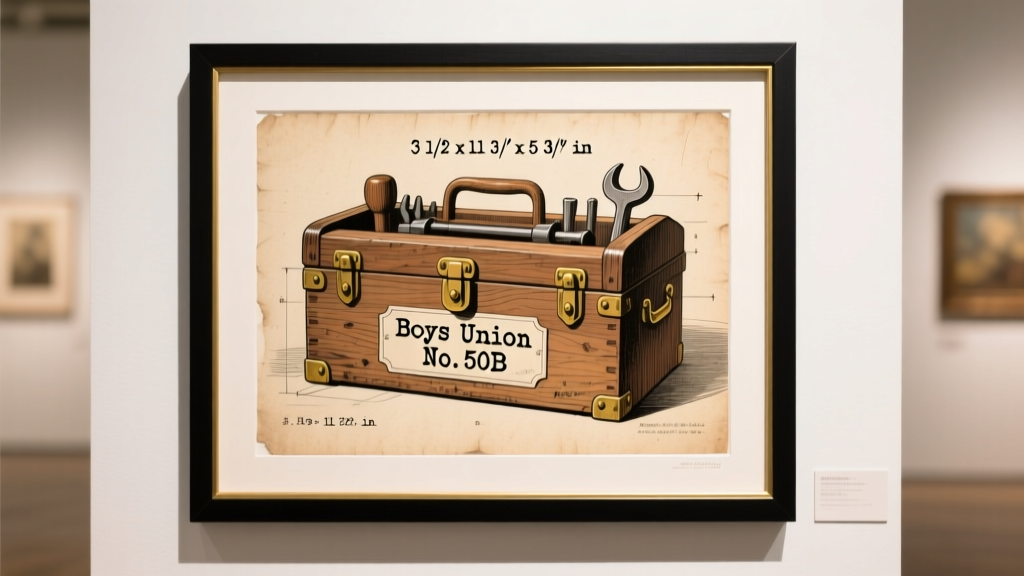
Authentication & Market Analysis: The Boys Union No. 50B Toy Tool Chest with Original Wood-Paper Label (3½ × 11¾ × 5¾ in)

Authenticating and Valuing the Paden Black Forrest 2-Piece Guest Set: A Market Analysis

Stoneware Keg with Glossy Clear Crush Glass Glaze: Decoding the Gray-White Swirl Pattern in a 4.5 × 8-Inch Vessel
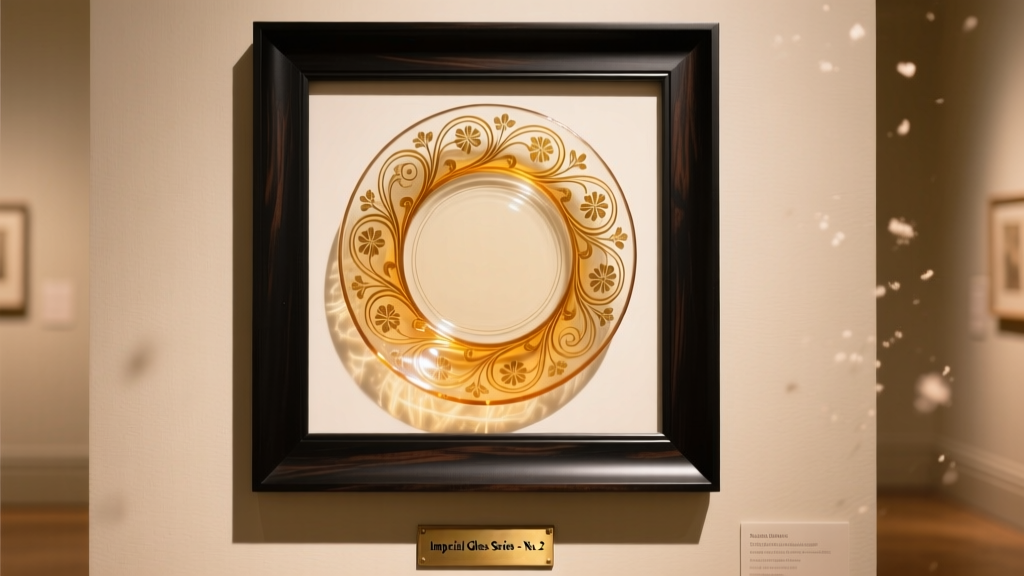
Imperial Glass Candlewick Plate 10-Inch #2: Authentication, Market Value, and Design Legacy
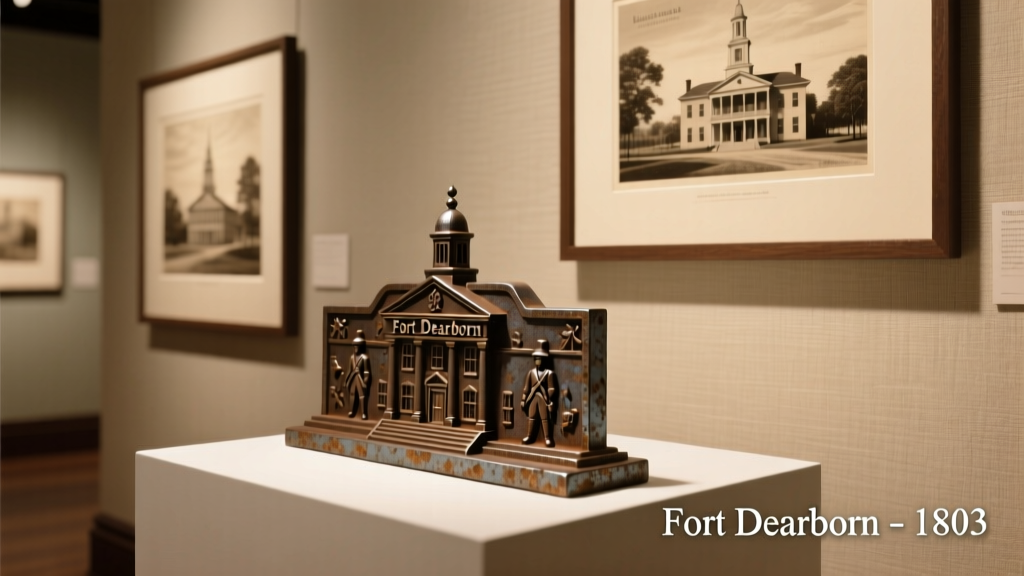
Doorstops Fort Dearborn Cast Iron: Authentication, Market Value, and Historical Context
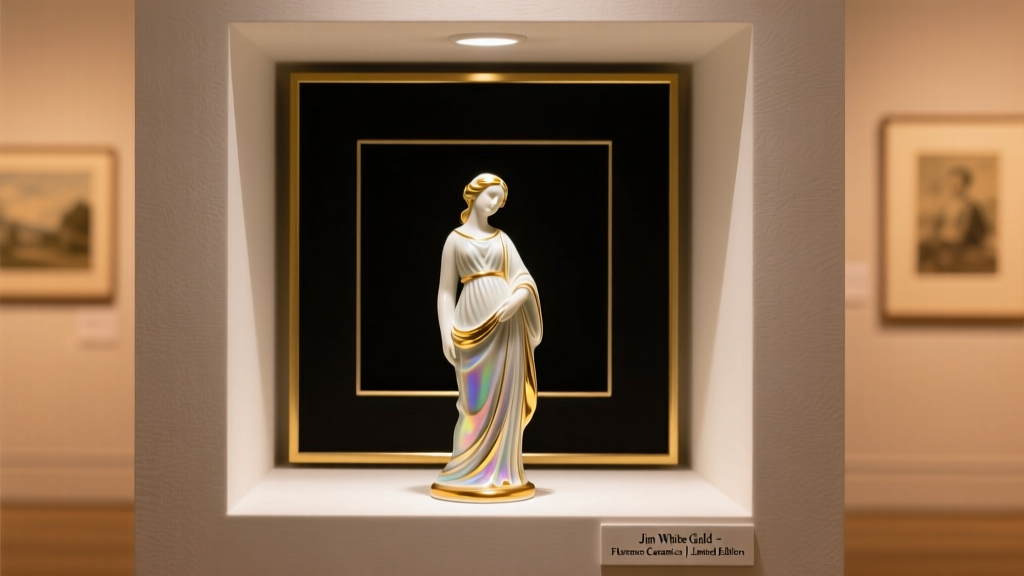
Authentication, Market Value, and Historical Context of the Florence Ceramics 'Jim White Gold' Figurine (6¼")
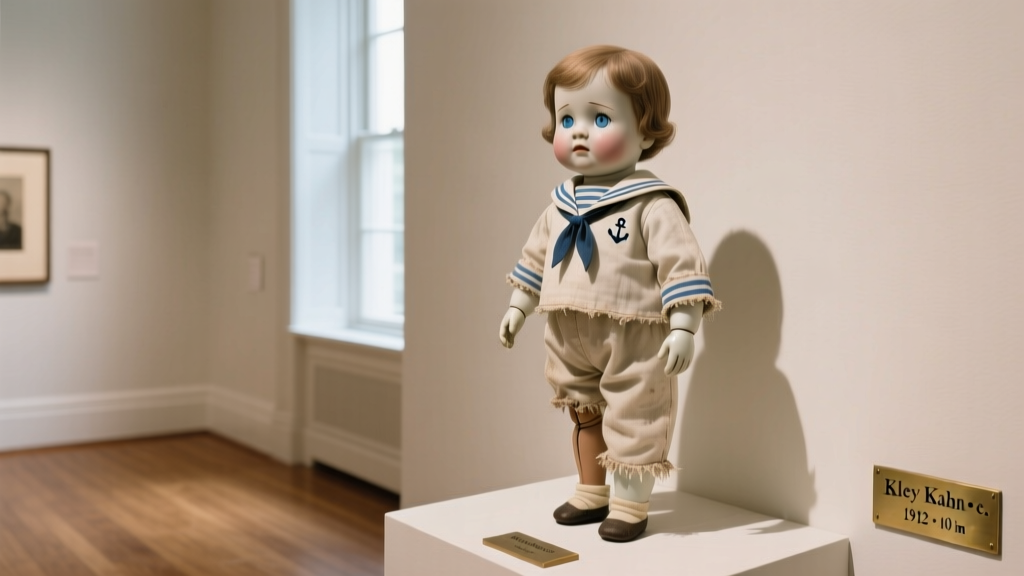
Doll Kley & Kahn Bisque Head, Bent Limb Body, Cotton Sailor Suit, Circa 1912 — Authentication, Provenance, and Market Analysis
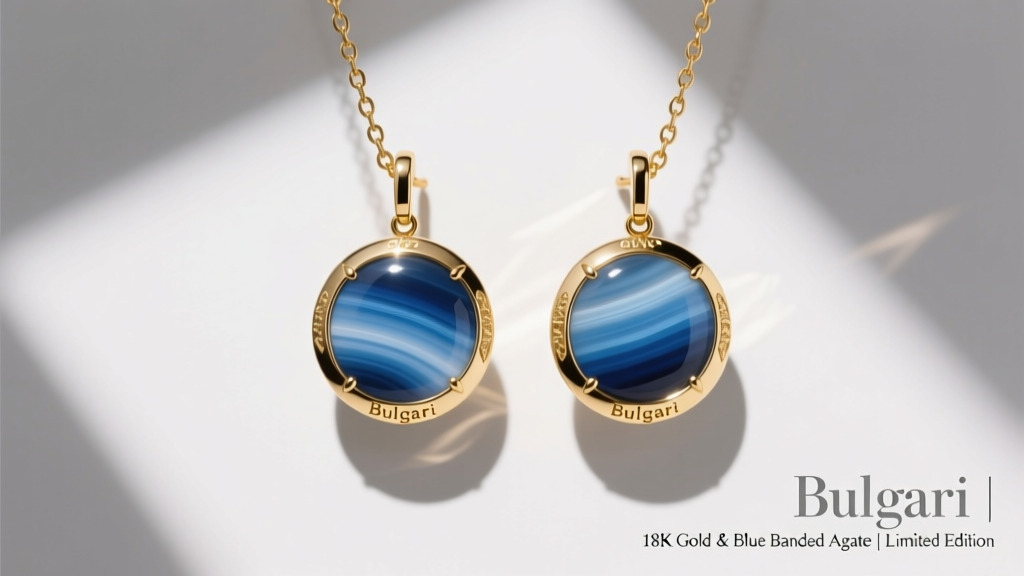
Authentication and Market Analysis: Pendant Quartz Blue Banded Agate Round 18K Gold Bulgari 1¼ Inch Pair
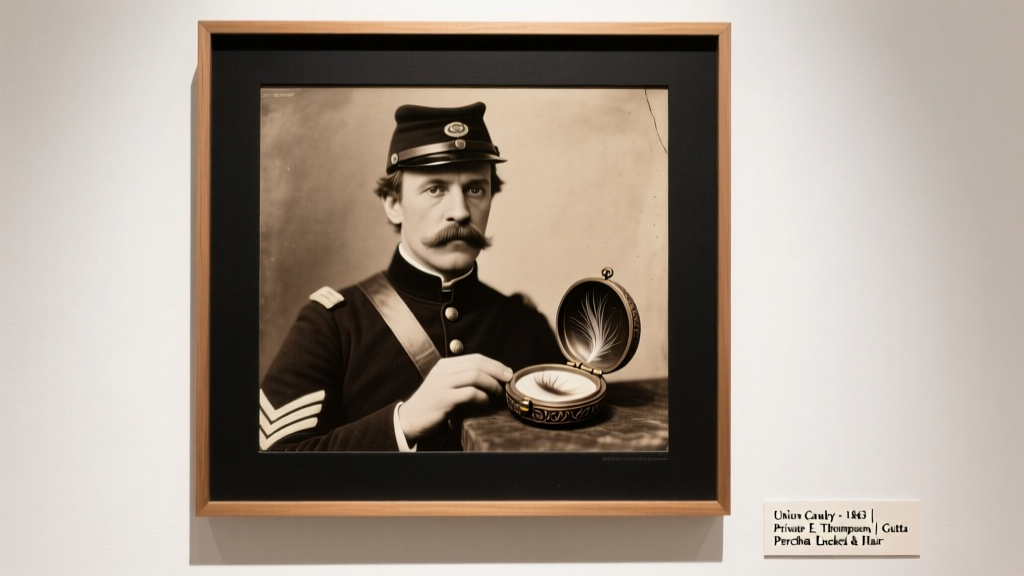
Photography, Tintype, Union Cavalry Soldier: Authenticating a Gutta-Percha Case with Lock of Hair