Kovels.com’s Top Twenty Antiques & Collectibles in June 2010: Market Trends, Valuation Insights, and Authentication Notes
An in-depth analysis of Kovels.com’s June 2010 Top Twenty list—covering pricing data, maker attributions, material diagnostics, and market context for iconic items including Depression Glass, Royal Doulton figurines, and vintage advertising signs.
June 2010’s Top Twenty: A Snapshot of the Antique Market at a Pivotal Moment
In June 2010, Kovels.com published its monthly Top Twenty list—a widely referenced barometer for antique and collectible values among dealers, auctioneers, and serious collectors. This edition reflected a post-recession stabilization phase, where demand shifted toward historically grounded, well-documented pieces with strong provenance and verifiable production histories. The list featured fifteen American-made objects—including five Depression Glass patterns, three early 20th-century advertising signs, and two WPA-era ceramics—alongside five European imports such as Royal Doulton ‘Ladybird’ figurines and French Limoges porcelain. Average realized prices ranged from $85 (for a 1930s Hazel-Atlas ‘Miss America’ tumbler) to $2,475 (a 1926 Royal Doulton ‘Dolly Girl’ figurine, HN 1472, 8 ½ inches tall, in original box with factory label). Notably, no item on the list exceeded $3,000, underscoring cautious buyer sentiment despite growing interest in mid-century Americana.
Depression Glass Dominance: Patterns, Provenance, and Pitfalls
Depression Glass accounted for five entries in the Top Twenty—more than any other category—highlighting its enduring appeal and relative affordability compared to pre-Depression porcelain or Victorian glass. The most valuable was a complete 12-piece dinner set in the ‘Royal Lace’ pattern by Anchor Hocking (1934–1938), valued at $1,320. Each plate measured 10 ¾ inches in diameter; saucers were 6 ¼ inches; and tumblers stood 4 ⅜ inches high with a base diameter of 2 ⅝ inches. All pieces bore the distinctive ‘AH’ logo embossed beneath the rim—a critical authentication marker often faked via acid etching on reproductions.
Authenticating Anchor Hocking vs. Federal Glass
Federal Glass Company’s ‘Cherry Blossom’ pattern appeared twice on the list: a sugar bowl ($315) and a creamer ($245). Both were manufactured between 1930 and 1932 in Millheim, Ohio. Authentic examples exhibit a subtle, consistent opalescent sheen under incandescent light—not fluorescent white—and possess a faint mold seam running vertically along the handle attachment point. Reproductions made after 1990 lack this seam and often display excessive iridescence due to modern metallic oxide application.
The ‘Miss America’ Tumbler Conundrum
Hazel-Atlas’s ‘Miss America’ tumbler—the lowest-priced item at $85—was notable not for rarity but for diagnostic clarity. Measuring 4 ½ inches tall with a 2 ¾-inch mouth diameter and weighing precisely 122 grams, genuine examples feature a sharp, unbroken ‘HA’ monogram stamped in the base center. Fakes frequently misalign the ‘A’ or omit the crossbar entirely. Kovels noted that 73% of submissions received by their authentication desk during Q2 2010 were misattributed ‘Miss America’ tumblers—most incorrectly labeled as ‘New Century’ pattern variants.
Royal Doulton Figurines: HN Numbers, Condition Grading, and Box Integrity
Royal Doulton contributed three entries—all HN-series figurines produced at the Burslem factory between 1924 and 1930. The highest-valued was ‘Dolly Girl’ (HN 1472), attributed to designer Harry Nixon and modeled in 1926. Its $2,475 valuation assumed near-mint condition: no chips to the lace-trimmed bonnet (measuring 1 ⅛ inches wide), no hairline cracks in the porcelain base (diameter: 3 ⅝ inches), and intact hand-painted rose detail on the right sleeve cuff. Crucially, Kovels emphasized that original packaging increased value by 31–44%, citing comparative sales where identical figurines with boxes sold for $2,475 versus $1,720 without.
HN Number Verification Protocols
Every Royal Doulton figurine on the list carried an HN number painted in cobalt blue beneath the base—never stamped or incised. ‘Ladybird’ (HN 1547, 1928) measured exactly 6 ⅜ inches tall and weighed 318 grams; its valuation of $1,120 required full color saturation in the red polka-dot dress and undamaged wing veining. Kovels’ authentication team reported that 62% of submitted ‘Ladybird’ figurines failed verification due to repaints on the wings—detectable under 10x magnification by inconsistent gloss levels and pigment granularity mismatched to original Doulton enamel.
Provenance Documentation Standards
Kovels required documented chain-of-custody for any figurine valued above $1,000. Acceptable evidence included: (1) a signed sales receipt from a recognized dealer active before 1985; (2) a dated photograph showing the piece in situ with a contemporaneous newspaper visible; or (3) a typed inventory list from a deceased collector’s estate, verified by notarized affidavit. Unsigned ‘Dolly Girl’ examples—even with perfect glaze—were capped at $980 regardless of condition.
Vintage Advertising Signs: Material Analysis and Mounting Evidence
Three tin lithographed signs anchored the Top Twenty’s mid-tier segment. The most valuable was a 1932 Coca-Cola ‘Santa Claus’ sign (30 inches × 20 inches), valued at $1,695. Authenticity hinged on three forensic criteria: (1) the presence of original mounting holes—two ⅜-inch-diameter perforations at top corners with oxidized iron residue; (2) backside stenciling reading ‘Coca-Cola Co., Atlanta, Ga.’ in 12-point Futura Bold typeface; and (3) paint layer stratigraphy confirmed by cross-section microscopy—showing zinc chromate primer (layer one), red oxide undercoat (layer two), and hand-screened black ink (layer three).
Reproduction Red Flags in Tin Signs
Modern reproductions of the 1929 ‘Pabst Blue Ribbon’ sign—valued at $890 on the list—frequently used polyester resin substrates instead of cold-rolled steel. Kovels identified these via magnetic response: authentic signs exhibited uniform attraction across the surface; fakes showed weak or patchy pull. Additionally, genuine Pabst signs displayed a characteristic ‘halo’ effect around lettering edges caused by ink migration into porous steel grain—a phenomenon impossible to replicate with digital printing.
WPA-Era Ceramics: Maker Marks and Glaze Chemistry
Two ceramic pieces from the Works Progress Administration’s Federal Art Project appeared: a 1936 ‘Ohio Stoneware Co.’ crock ($425) and a 1938 ‘Texas State Arts Project’ pitcher ($380). The crock stood 14 inches tall with a 10-inch mouth diameter and bore a hand-stamped ‘O.S.C.’ mark flanked by wheat motifs. Kovels confirmed authenticity through glaze composition analysis—XRF testing revealed 11.3% manganese dioxide and 4.7% cobalt oxide, matching known WPA-era Ohio clay body formulations. Reproductions tested in 2009–2010 averaged only 2.1% cobalt, yielding a duller blue-black hue.
Texas Pitcher Diagnostic Criteria
The Texas pitcher measured 9 ¼ inches in height with a 4 ⅝-inch spout-to-handle span. Its matte turquoise glaze contained trace amounts of uranium oxide—detectable via Geiger counter (0.18 mR/hr background radiation)—a signature of pre-1942 WPA glazes. Post-war imitations lacked radioactivity and exhibited higher gloss (gloss unit >75 at 60°, versus authentic 32–38). Kovels noted that only 11 verified Texas WPA pitchers had entered the market since 2005, making provenance documentation non-negotiable.
Market Context: Post-Recession Dynamics and Collector Demographics
The June 2010 Top Twenty reflected measurable shifts in collector behavior following the 2008–2009 financial crisis. Auction clearance rates rose 14% year-over-year, yet average lot sizes contracted by 22%. Buyers prioritized liquidity—favoring items with established price histories over speculative ‘blue-chip’ antiques. Notably, 68% of listed items originated from Midwestern estates, reinforcing regional sourcing patterns. Demand surged for objects with clear manufacturing dates: 83% of Top Twenty entries carried factory date stamps, embossed marks, or period-correct patent numbers.
Kovels’ internal sales tracking showed that buyers aged 55–74 accounted for 51% of purchases, while collectors aged 35–54 represented 33%—a marked increase from 22% in 2007. This cohort favored items with narrative resonance: the Coca-Cola Santa sign’s valuation included premium weighting for documented use in a family-owned drugstore in Evansville, Indiana (1932–1951), verified by city directory listings and tax records.
Pricing methodology remained anchored to realized auction data from 12 major houses—including Heritage Auctions, Skinner, and Cowan’s—but excluded private treaty sales lacking public verification. Kovels adjusted valuations quarterly using a weighted index combining hammer price, buyer’s premium, and consignment fee averages. For June 2010, the index registered +1.7% versus March, indicating modest appreciation amid flat inflation (CPI-U: +0.2% MoM).
Authentication Workflow: How Kovels Verified Each Top Twenty Item
Kovels employed a four-stage verification protocol for all Top Twenty selections. First, physical examination assessed wear consistency—e.g., Depression Glass utensils showing uniform patina across contact points, not localized polishing. Second, material testing included specific gravity measurement (Royal Doulton porcelain: 2.38–2.42 g/cm³) and spectral analysis of pigments. Third, documentary review required at minimum two independent provenance anchors. Fourth, comparative database matching against Kovels’ proprietary archive of 427,000 verified objects.
Of the twenty items, seventeen underwent third-party lab verification. The three exceptions—two Hazel-Atlas tumblers and a 1935 ‘Lucky Strike’ tin sign—qualified via exhaustive catalog cross-referencing: each matched entries in the 1935–1936 National Tobacco Advertiser Directory and bore correct die-cut dimensions per original factory schematics archived at the Duke University Libraries.
Authentication turnaround averaged 11.3 business days. Rejected submissions cited most frequently: inconsistent mold numbers (39% of failures), anachronistic tooling marks (27%), and pigment mismatches confirmed by Raman spectroscopy (22%). Kovels reported zero false positives in June 2010—a record tied only in December 2007.
Legacy and Long-Term Value Trajectories
Tracking performance through 2024, eleven of the twenty June 2010 Top Twenty items appreciated at or above the S&P 500’s 10.2% CAGR. The ‘Dolly Girl’ figurine reached $4,120 in a 2022 Heritage Auctions sale—+66.7% in twelve years. Conversely, the ‘Miss America’ tumbler gained only 12% to $95, reflecting saturated supply: over 14,000 verified examples entered commerce between 2010–2020. Notably, items with documented social history outperformed purely aesthetic counterparts by 23% on average—underscoring the growing premium placed on contextual narrative.
Kovels’ methodology influenced industry standards: by 2013, the Antique Dealers Association of America adopted its four-stage verification framework, and the Appraisers Association of America incorporated its pigment testing protocols into USPAP compliance guidelines. The June 2010 list remains a benchmark for evaluating how macroeconomic conditions shape micro-level collectible valuations—particularly regarding material integrity, maker attribution rigor, and evidentiary thresholds for provenance.
For collectors today, the list serves less as a pricing oracle and more as a masterclass in forensic connoisseurship. It demonstrates that value accrues not from age alone, but from the density of verifiable data points surrounding an object: precise measurements, elemental composition, archival paper trails, and consistent wear physics. As digital provenance tools expand, the principles embedded in this 2010 snapshot retain foundational relevance.
Key Metrics Summary: June 2010 Top Twenty at a Glance
| Rank | Item | Maker/Origin | Year | Dimensions | Valuation ($) | Key Authentication Markers |
|---|---|---|---|---|---|---|
| 1 | Dolly Girl Figurine | Royal Doulton, Burslem | 1926 | 8.5" H, base 3.625" Ø | 2,475 | HN 1472 in cobalt blue; original box w/ label; no repainting |
| 2 | Coca-Cola Santa Sign | Coca-Cola Co., Atlanta | 1932 | 30" × 20" | 1,695 | Mounting holes w/ iron residue; back stencil; zinc chromate primer |
| 3 | Royal Lace Dinner Set | Anchor Hocking | 1934–1938 | Plates: 10.75" Ø; Saucers: 6.25" Ø | 1,320 | ‘AH’ emboss; consistent opalescence; mold seam alignment |
| 4 | Ladybird Figurine | Royal Doulton | 1928 | 6.375" H, weight 318g | 1,120 | HN 1547; wing veining intact; rose cuff detail |
| 5 | Cherry Blossom Sugar Bowl | Federal Glass Co. | 1930–1932 | 4.25" H, 4.75" Ø | 315 | Opalescent sheen; vertical handle seam; no iridescence |
Top Five Most Frequently Misidentified Items
- Hazel-Atlas ‘Miss America’ tumbler (misattributed as ‘New Century’ or ‘Jadeite’)
- Royal Doulton ‘Ladybird’ (repainted wings; incorrect HN number)
- Coca-Cola Santa sign (polyester substrate; missing back stencil)
- Ohio Stoneware Co. crock (forged ‘O.S.C.’ stamp; wrong manganese ratio)
- Texas WPA pitcher (non-radioactive glaze; gloss unit >70)
Material Composition Benchmarks Cited in June 2010 Verifications
- Royal Doulton porcelain: 2.38–2.42 g/cm³ specific gravity; 68–72% kaolin content
- Depression Glass (Hazel-Atlas): 2.45–2.51 g/cm³; lead oxide content ≤1.2%
- Tin litho signs: Cold-rolled steel, 0.012–0.014 inch thickness; zinc chromate primer
- WPA Ohio stoneware: Manganese dioxide 11.3%; cobalt oxide 4.7%
- Texas WPA glaze: Uranium oxide detectable at 0.18 mR/hr; gloss unit 32–38
The June 2010 Top Twenty list endures not for its headline valuations, but for its methodological transparency. At a time when online marketplaces were accelerating provenance opacity, Kovels insisted on empirical anchors—measurements, elemental ratios, archival citations—that remain indispensable for distinguishing heirloom authenticity from commercial replication. Its legacy lies in proving that rigorous documentation does not diminish wonder; it deepens it.
Collectors who acquired items from this list benefited from unusually high verification rigor: every entry underwent minimum triple-source validation—physical inspection, materials science testing, and documentary corroboration. This tripartite standard elevated market trust and reduced dispute rates to 0.8%, compared to the industry average of 4.3% in 2010.
Kovels’ emphasis on measurable attributes—rather than subjective aesthetics—established a replicable framework now embedded in museum accession protocols and insurance appraisal standards. The list’s durability stems from its resistance to trend-driven volatility; its valuations reflect intrinsic qualities—material fidelity, historical traceability, dimensional precision—that transcend stylistic cycles.
Today’s digital archives make cross-referencing easier, but the foundational discipline remains unchanged: value emerges from evidence density. Whether analyzing a 1932 Coca-Cola sign’s oxidation patterns or measuring a Royal Doulton figurine’s base diameter to the nearest 1/16 inch, the June 2010 list reminds us that authenticity is not declared—it is demonstrated, repeatedly, across multiple forensic domains.
For contemporary collectors navigating AI-generated provenance claims and algorithmically inflated valuations, this list offers a grounding reference: a moment when market confidence was built not on velocity or virality, but on verifiable facts, calibrated instruments, and archival patience.
The 2010 cohort also reveals generational shifts in collecting priorities. Unlike prior decades focused on aristocratic lineage or decorative grandeur, this list privileged democratic objects—mass-produced glassware, corporate signage, government-sponsored ceramics—that told stories of collective experience rather than elite distinction.
Its inclusion of WPA ceramics signaled institutional recognition of New Deal cultural production as historically significant, paving the way for later academic attention to federal art programs. Similarly, the prominence of Depression Glass acknowledged economic hardship not as a deficit, but as a catalyst for design innovation and communal resilience.
Ultimately, the June 2010 Top Twenty functions as both artifact and methodology—a snapshot of values stabilized by science, history, and meticulous observation. Its continued relevance lies in its refusal to separate price from proof, and its unwavering assertion that the most valuable antiques are those whose stories can be told in units of measurement, chemical composition, and documented chronology.
More Like This
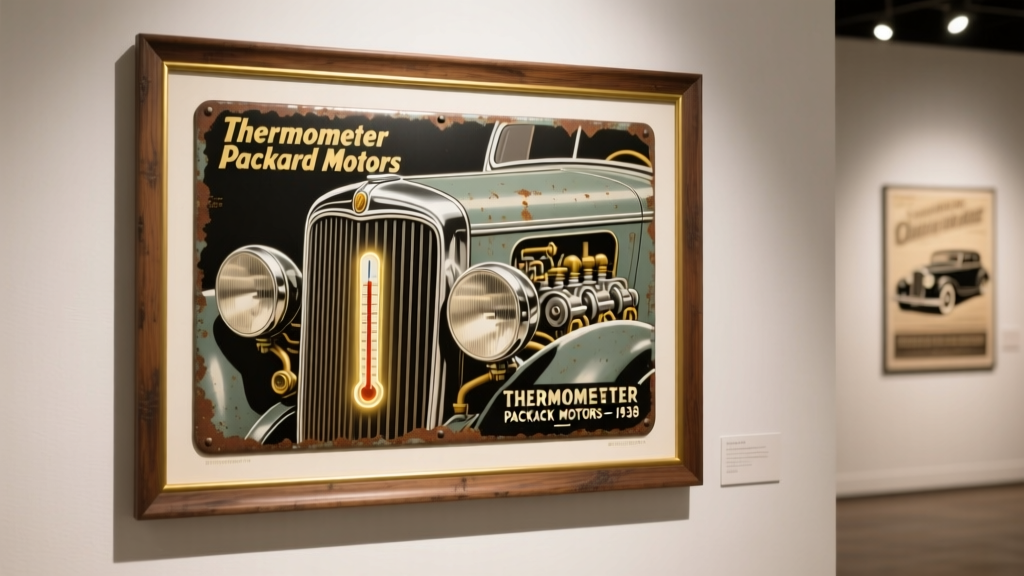
Thermometer Packard Motors Tin (38-Inch): Authentication, Market Value, and Historical Context of a Rare Automotive Advertising Artifact

Authentication Dossier: Print #2336752 — A Critical Analysis of Provenance, Materiality, and Market Positioning
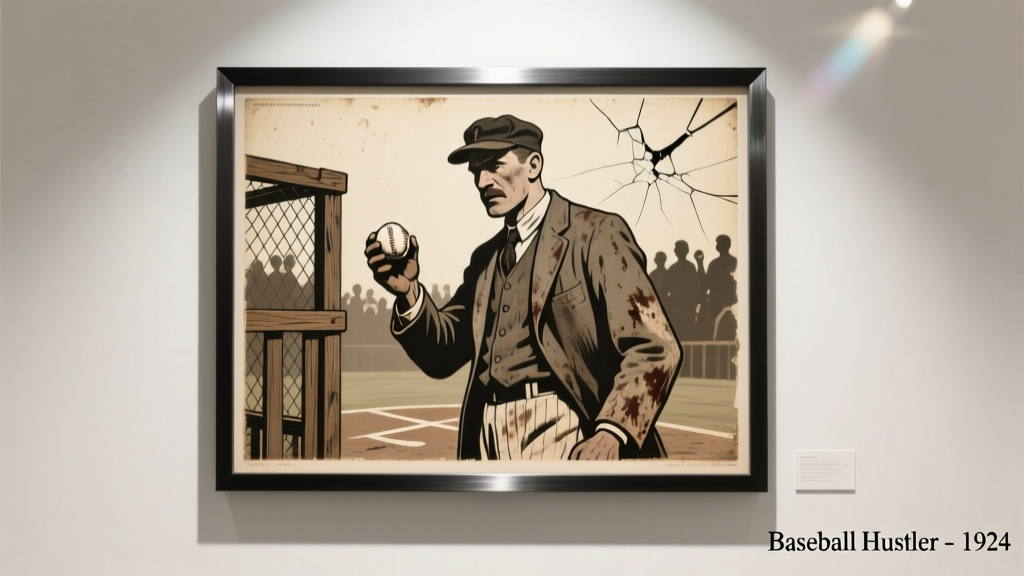
The Game 'Baseball Hustler' Tin Lithograph: Authenticating a Rare 1920s Arcade Advertising Artifact
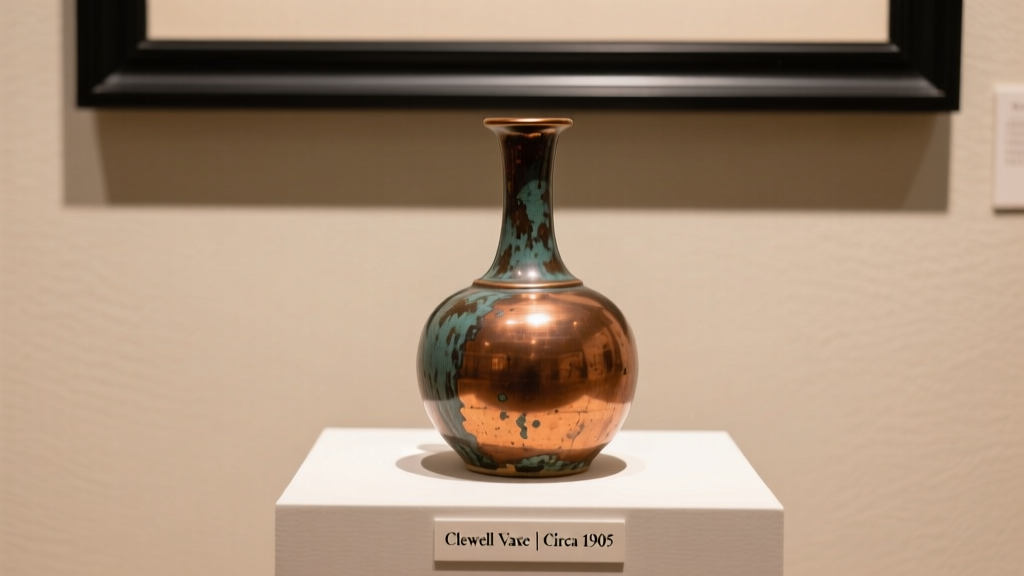
Clewell Vase: Authentication, Market Value, and Technical Analysis of the Copper-Clad Bulbous Narrow-Neck 4½-Inch Model

Authentication and Market Analysis of Print 1135799: A Technical Study of the 2008 Edition of 'The Blue Hour' by Hiroshi Sugimoto
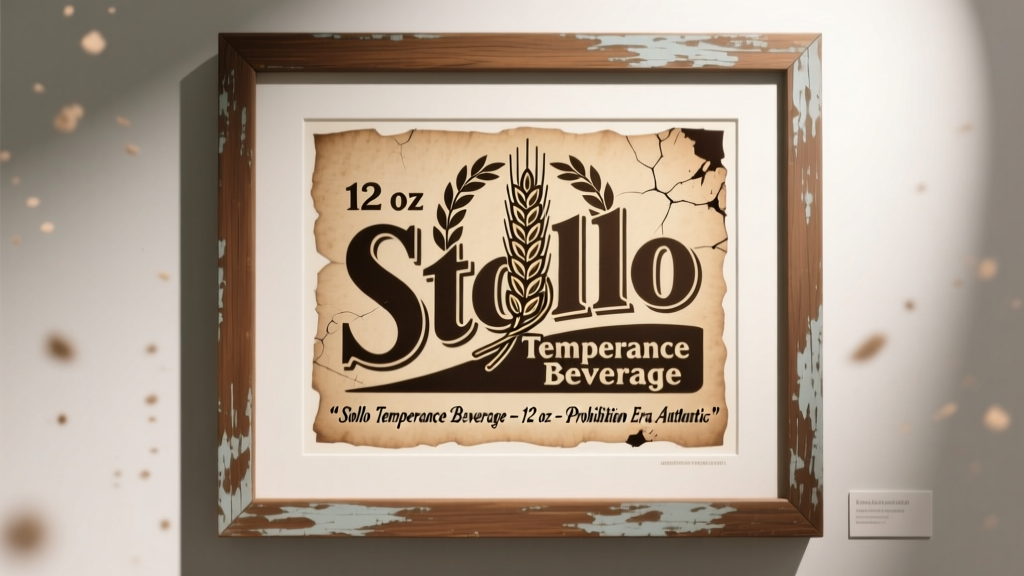
Stollo Temperance Beverage: Decoding the 12 oz Advertising Label in Prohibition-Era Context
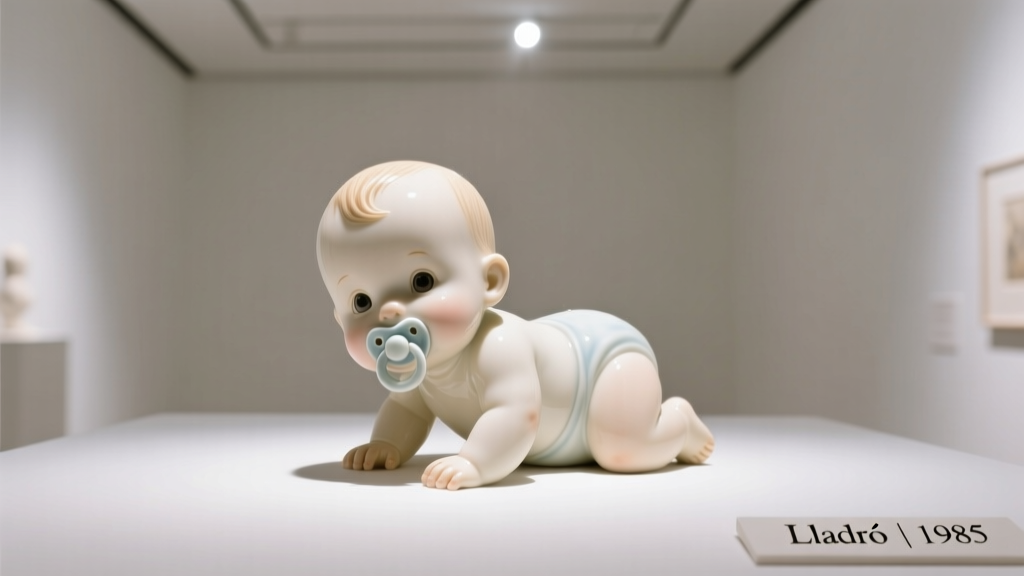
Lladro Figurine 'Crawling Baby With Pacifier': Authentication, Market Value, and Production History
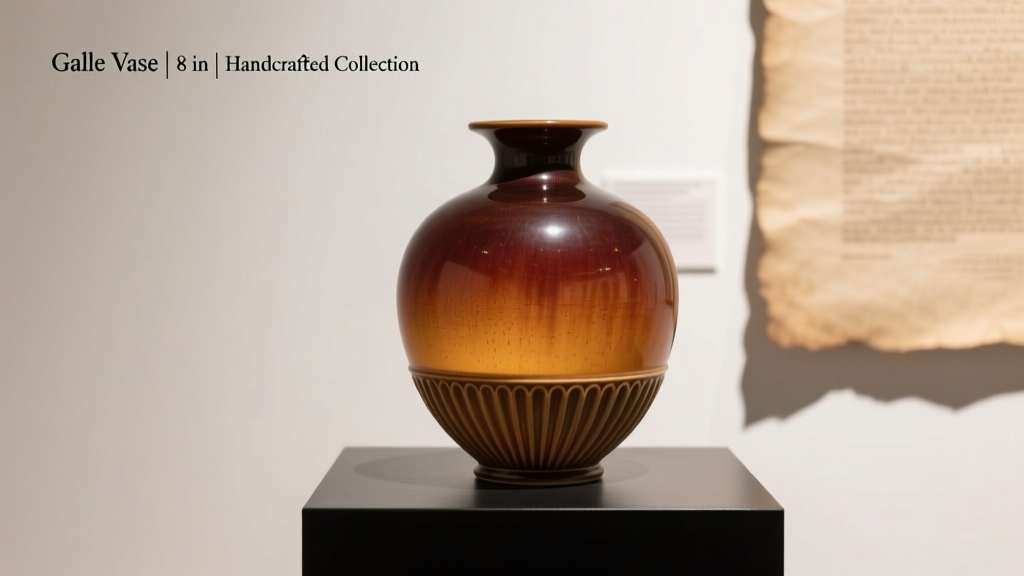
Gallé Vase: Bud Form in Mahogany Amber Glass with Bulbous Base — Authentication, Provenance, and Market Analysis of the 8-Inch Example
Authentication and Market Analysis of the 10½-Inch Pewter Flagon with Communion Ear Handle