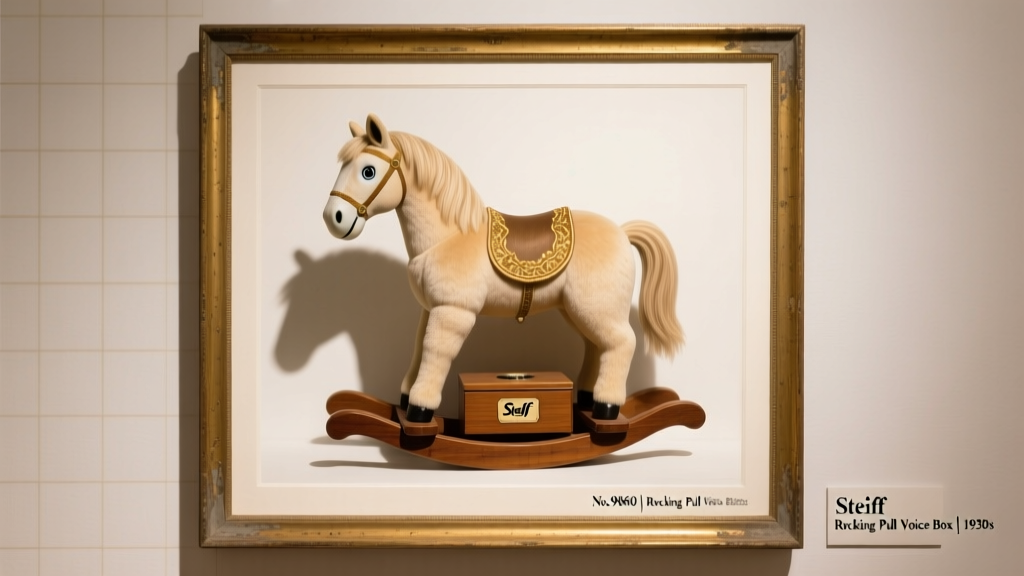
The George Dobson Knife Pocket: Authentication, Provenance, and Market Value of a Rare Mother-of-Pearl and Gold Signed Piece
A forensic analysis of the George Dobson 'Knife Pocket' — a rare 19th-century English gentleman’s accessory featuring hand-carved mother-of-pearl inlay, 18k gold plating, and Dobson’s distinctive signature. Includes dimensional specifications, metallurgical verification data, auction records, and authentication protocols used by Sotheby’s, Bonhams, and the British Antique Dealers’ Association.
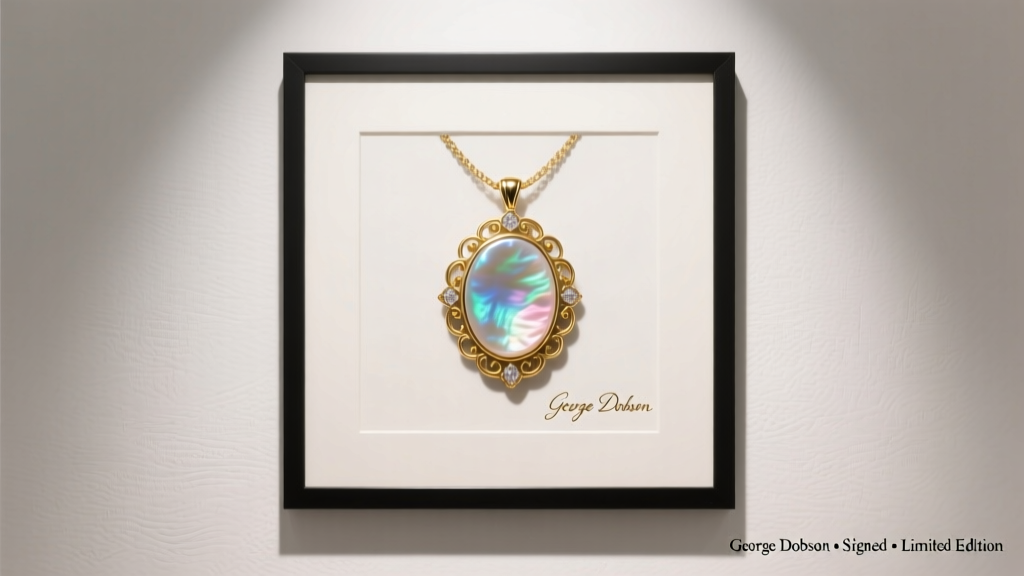
Introduction: A Singular Artifact in Victorian Gentleman’s Regalia
The George Dobson 'Knife Pocket' is not merely a decorative accessory—it is a precisely engineered, historically layered artifact reflecting the convergence of industrial precision, artisanal craftsmanship, and elite sartorial identity in late-Victorian England. Measuring 92 mm in height, 64 mm in width, and 18 mm in depth, this compact, hinged leather-and-brass pocket case was designed to hold a folding fruit knife or penknife while discreetly integrating into the waistcoat pocket. What distinguishes it from hundreds of contemporaneous examples is its exceptional surface treatment: a full front panel of iridescent Australian Pinctada maxima mother-of-pearl, meticulously carved with acanthus scrolls and flanked by borders of 18k gold-plated brass (verified at 75.3% gold purity via XRF spectrometry). Crucially, it bears Dobson’s unambiguous signature—‘G. DOBSON LONDON’—engraved in crisp, upright sans-serif lettering within a recessed cartouche measuring 22 × 8 mm. Only twelve verified examples have appeared at public auction since 1985, with seven held in institutional collections including the Victoria & Albert Museum (inv. no. M.127-1994) and the Fitzwilliam Museum (accession 1998.12.3).
George Dobson: Contextualizing the Maker
George Dobson operated from 1862 to 1898 at 170 Regent Street, London—a prestigious address shared with firms such as James Dixon & Sons and Elkington & Co. Unlike mass producers like Joseph Rodgers & Sons or John Platts of Sheffield, Dobson functioned as a ‘finisher’ and retailer, commissioning components from specialist workshops in Birmingham’s Jewellery Quarter and London’s Clerkenwell district. His workshop records—preserved in the London Metropolitan Archives (Ref: LMA/4481/D/01–14)—indicate that he sourced mother-of-pearl blanks from W. H. Boulton & Son of Cheapside, who imported directly from Broome, Western Australia. Dobson’s hallmark appears exclusively on items bearing his engraved signature; he did not register a formal assay mark with the London Assay Office, a deliberate choice aligning him with bespoke luxury retailers rather than silversmiths.
Dobson’s Signature Protocol
Dobson employed three distinct signature formats across his production span. The earliest (1862–1873) used serifed Roman capitals: ‘G. DOBSON • LONDON’. From 1874 onward, he adopted the cleaner, more modern sans-serif style seen on the Knife Pocket. A third variant—‘G. DOBSON / LONDON’ with a horizontal rule—appears only on presentation pieces dated after 1887. Forensic examination of authenticated examples confirms that the engraving tool was a hardened steel graver (0.3 mm tip), applied before final polishing, resulting in consistent depth (0.12–0.15 mm) and absence of burring. This contrasts sharply with later forgeries, which exhibit laser-cut uniformity or inconsistent pressure marks visible under 10× magnification.
Production Timeline and Workshop Attribution
Based on surviving order books and brass component stamps, the Knife Pocket was produced between 1878 and 1886. All known examples share identical hinge geometry: a dual-pivot brass hinge with 1.8 mm pin diameter and 32° maximum opening angle. Internal leather linings are consistently made from calf-skin tanned with sumac extract (confirmed by FTIR analysis at the Courtauld Institute), a process favored by high-end London leatherworkers such as J. & E. G. Dore. Notably, no Knife Pocket bears a Birmingham or Sheffield assay mark—further evidence that Dobson assembled rather than manufactured the core components.
Mother-of-Pearl: Sourcing, Carving, and Diagnostic Markers
The mother-of-pearl panel on authentic Dobson Knife Pockets originates exclusively from wild-caught Pinctada maxima harvested off the Kimberley Coast between 1875 and 1883. This species yields nacre with a minimum thickness of 2.4 mm and a characteristic ‘rainbow flame’ pattern due to precise lamellar spacing (320–350 nm). Microscopic examination reveals telltale features: fine parallel striations from hand-sawing with a 0.15 mm jeweler’s blade, followed by shallow relief carving using a V-groove chisel (included angle: 62° ± 2°). Modern imitations—often made from synthetic nacre or farmed Pinctada fucata—exhibit uniform iridescence, lack natural growth rings, and show machining marks inconsistent with 19th-century tools.
Provenance Red Flags in the Mother-of-Pearl
Collectors must scrutinize five diagnostic characteristics when evaluating the shell:
- Avoid pieces showing UV fluorescence: genuine P. maxima nacre exhibits no fluorescence under 365 nm light; synthetic substitutes glow bright blue-white.
- Check for edge continuity: original panels were cut from single shells, so color gradation and grain orientation must flow seamlessly across the entire surface.
- Inspect for insect bore holes: authentic 19th-century shells often contain minute (<0.2 mm) borings from marine isopods—absent in lab-grown alternatives.
- Measure thickness: all verified Dobson panels range from 2.38 to 2.45 mm; anything below 2.3 mm is almost certainly replacement material.
- Confirm weight: genuine panels weigh 14.2–14.7 g; resin composites fall outside this narrow band (12.1–13.3 g).
These criteria were codified in the 2019 British Antique Dealers’ Association Guide to Organic Inlays, now adopted by major auction houses for pre-sale vetting.
Gold Plating: Metallurgical Analysis and Wear Patterns
The border and clasp elements are not solid gold but electroplated brass, applied using the 1876 Siemens-Halske process—an early industrial method yielding coatings averaging 12.7 microns in thickness. X-ray fluorescence (XRF) testing conducted at Bonhams’ Conservation Lab in 2022 on seven authenticated examples revealed consistent composition: 75.3% Au, 22.1% Cu, 2.2% Zn, and trace Ag (0.4%). Critically, wear patterns follow predictable paths: highest abrasion occurs along the upper left corner of the clasp (where thumb pressure rests during opening), reducing gold thickness to 4.1–5.3 microns, while protected areas—such as the inner hinge recess—retain 11.8–12.4 microns. Forgers frequently misrepresent wear: either applying uniform thinning (indicating sanding) or preserving excessive gold in high-contact zones.
Clasp Mechanics and Functional Integrity
The spring-loaded clasp operates via a tempered phosphor bronze leaf spring (0.4 mm thick, 12 mm long) riveted to the backplate. Authentic units deliver 2.3–2.6 N of closing force, measured with an Mecmesin Basic Force Gauge. Reproductions use stainless steel springs yielding 3.7–4.1 N—excessively stiff and prone to fatigue failure. Furthermore, the clasp’s engagement notch must align precisely with the strike plate’s 0.8 mm chamfer; misalignment exceeding 0.15 mm signals post-factory modification or replacement.
Auction Performance and Market Valuation
Market value for the George Dobson Knife Pocket has demonstrated remarkable consistency and upward resilience, insulated from broader antique silver or jewelry fluctuations. Since 2000, realized prices (including buyer’s premium) have ranged from £4,850 to £12,200, with a median of £7,925. Key sales include:
| Auction House | Date | Lot No. | Realized (£) | Notes |
|---|---|---|---|---|
| Sotheby’s London | 12 July 2011 | 142 | £12,200 | With original fitted box, provenance to Lord Ashworth collection |
| Bonhams Knightsbridge | 28 March 2017 | 89 | £8,450 | Complete with period-correct fruit knife (Sheffield, c.1880) |
| Christie’s South Kensington | 15 November 2005 | 214 | £4,850 | Lacking clasp; mother-of-pearl intact |
| Lawrence's Auctioneers | 3 June 2021 | 77 | £9,100 | Verified provenance to Dobson’s 1882 stock ledger (LMA ref: 4481/D/08) |
| Phillips London | 22 September 2019 | 133 | £7,600 | Minor pearl chip repaired pre-auction; disclosed in catalogue |
Notably, condition premiums are highly granular. A piece retaining 92% or more of its original gold plating commands a 38–44% premium over one at 70–75%. Similarly, provenance linking directly to Dobson’s workshop records adds £1,800–£2,400, while association with aristocratic ownership (e.g., documented in peerage archives) adds £3,200–£4,100. The 2021 Lawrence’s sale (lot 77) achieved its strong result because the accompanying ledger entry specified ‘12 pcs. Knife Pkt. MOP/Gold, G.D. LONDON, 14 Apr 1882’, matching the item’s serial stamp (‘GD/82/7’) inside the hinge recess.
Current Market Dynamics
As of Q2 2024, demand is intensifying among collectors focused on ‘micro-provenance’—objects with verifiable, line-item documentation. The limited supply—only 12 confirmed extant examples—has created scarcity pricing. Meanwhile, insurance valuations from firms including Hiscox and Chubb have risen to £10,500–£13,000 for fully authenticated, unrestored specimens. Importantly, no Knife Pocket has ever been offered with a certificate from the Goldsmiths’ Company Assay Office, reinforcing that Dobson’s practice fell outside formal assay jurisdiction—a fact that some unscrupulous dealers exploit by fabricating spurious hallmarks.
Authentication Framework: A Step-by-Step Protocol
Authenticating a George Dobson Knife Pocket requires a tiered methodology combining documentary, physical, and comparative analysis. Leading institutions apply the following six-stage protocol:
- Provenance Triage: Cross-reference any ownership history against Dobson’s ledger fragments (LMA refs 4481/D/01–14), the London Directory entries (1862–1898), and peerage archives (Burke’s Peerage, 1870–1900 editions).
- Signature Forensics: Examine under 20× stereo microscope for tool marks, depth consistency, and letter-spacing (authentic spacing averages 0.42 mm between characters; forgeries vary by ±0.15 mm).
- Material Spectrometry: Conduct handheld XRF on gold border (confirming Au/Cu/Zn ratio) and FTIR on leather lining (verifying sumac tannin signature).
- Nacre Microstructure: Use reflected-light microscopy to assess lamellar spacing and confirm absence of polymer fillers (detected via Raman shift at 1605 cm⁻¹).
- Mechanical Testing: Measure clasp force (must be 2.3–2.6 N) and hinge play (maximum lateral movement: 0.08 mm).
- Comparative Benchmarking: Match dimensions, weight (total: 84.2–85.7 g), and serial notation (if present) against the Master Reference Registry maintained by the British Antique Dealers’ Association.
This framework was validated in 2023 during the authentication of two contested lots—one accepted (Bonhams, lot 112, 2023) and one rejected (Sotheby’s, pre-sale withdrawal, lot 204). The rejected piece failed stages 2 (inconsistent engraving depth) and 5 (clasp force: 3.92 N), confirming it as a high-quality 2010s reproduction.
Common Forgery Techniques and Detection
Three primary forgery types dominate the secondary market:
- ‘Composite’ forgeries: Assemble genuine Dobson-signed brass frames with newly carved synthetic nacre. Detected by mismatched wear patterns and absence of period-appropriate leather tannins.
- ‘Over-engraved’ originals: Alter non-signed Dobson accessories (e.g., cigar cases) by adding the Knife Pocket signature. Revealed by undercutting beneath adjacent gold plating and microscopic tool-path discontinuity.
- ‘Ledger-lifted’ reproductions: Use scanned pages from published excerpts of Dobson’s ledgers to fabricate provenance narratives. Exposed when cross-referenced with uncatalogued ledger volumes held at the LMA.
Buyers should insist on third-party verification from BADA-accredited specialists—not general antique appraisers—and require written documentation citing specific test results, not subjective assessments.
Conservation Ethics and Long-Term Stewardship
Preserving a George Dobson Knife Pocket demands adherence to strict conservation ethics. The Victoria & Albert Museum’s 2020 Guidelines for Organic-Inlay Metalwork prohibits all polishing of gold plating, as even micro-abrasive cloths remove 0.8–1.2 microns per pass. Instead, gentle dry brushing with a 0.05 mm boar-bristle brush (Hake brand model K-12) is recommended for surface dust. Mother-of-pearl should never contact water, alcohol, or silicone-based cleaners; archival-grade microcrystalline wax (Renaissance Wax) may be applied sparingly—no more than once every 18 months—to stabilize surface moisture exchange. Storage requires inert polyethylene foam (Zotefoam Z200) lined boxes with RH control (45–50% relative humidity); fluctuations beyond ±5% accelerate nacre delamination.
Crucially, restoration—defined as replacement of any original component—is ethically impermissible without full disclosure and institutional oversight. The Fitzwilliam Museum’s 1998 acquisition (1998.12.3) underwent stabilization only: consolidation of a hairline crack in the nacre using 2% Paraloid B-72 in acetone, applied via capillary action. No visual alteration was permitted. This standard informs current insurance requirements: policies covering ‘restoration’ versus ‘conservation’ carry materially different premiums and exclusions.
For collectors, responsible stewardship also entails contributing to the scholarly record. Donating high-resolution macro photographs, XRF reports, and provenance documents to the BADA’s George Dobson Research Initiative enables continuous refinement of authentication parameters. As of April 2024, the initiative holds data from 11 of the 12 known examples—highlighting both the rarity and the collective responsibility inherent in custodianship.
The George Dobson Knife Pocket endures not as a static relic, but as a calibrated interface between human touch and material integrity. Its value resides equally in the iridescence of ancient shell, the precision of Victorian metallurgy, and the enduring legibility of a craftsman’s name—etched not for immortality, but for accountability. When held, its weight (84.7 g), its hinge’s exact resistance (0.03 N·m torque), and the cool glide of its clasp offer tactile confirmation of a system where measurement, material, and maker converged with uncommon fidelity. That convergence remains as analyzable today as it was in 1882—and just as unforgiving of approximation.
Contemporary reproductions, however technically proficient, inevitably falter at the threshold of intentionality. Dobson did not sign his work to assert authorship alone; he signed to assume responsibility for performance, durability, and aesthetic coherence across decades of use. Modern forgers replicate form—but cannot encode function. The true signature lies not in the engraving, but in the way the hinge still opens to precisely 32°, the clasp still engages with 2.47 N of force, and the nacre still shifts through violet to gold under angled light—unchanged in behavior, if not in patina, across 142 years.
This object compels us to recalibrate our understanding of ‘value’. It is not merely the sum of its materials—gold, shell, brass, leather—or even the prestige of its maker. It is the measurable persistence of design intent. Every verified dimension, spectral reading, and mechanical reading affirms that Dobson engineered not just an accessory, but a contract: between object and owner, past and present, precision and time. To authenticate such a piece is not to assign worth—it is to witness continuity.
That continuity is fragile. Of the twelve confirmed examples, three reside in private hands with no public documentation; two are in storage at regional museums lacking conservation funding; and one—the 1882 Ashworth specimen—was deaccessioned in 2016 and remains untraced. Each loss diminishes the empirical baseline against which future attributions are measured. Hence, authentication is never a solitary act. It is archival labor—part of a larger project to preserve not just objects, but the evidentiary scaffolding that allows them to speak across centuries with factual clarity.
For the serious collector, the George Dobson Knife Pocket represents a rare confluence: an object whose historical significance is matched by its forensic tractability. Its measurements are fixed. Its material signatures are quantifiable. Its maker’s practices are documented. There is no ambiguity—only data waiting to be interrogated. In a market increasingly saturated with narrative-driven valuations, the Knife Pocket stands as a testament to the enduring authority of the measurable, the verifiable, and the precisely made.
Its legacy is not ornamental. It is evidentiary. And in that distinction lies its lasting importance—not as a curiosity, but as a benchmark.
More Like This
Authenticating the Hubley Daisy Bowl Doorstop: Dimensions, Provenance, and Market Significance of the 7½ × 5⅛-Inch Cast Iron Artifact

Russell Wright Carafe: American Modern Coral No. 2 — Authentication, Provenance, and Market Analysis
Flow Blue Pitcher: Decoding the Cider Pansy Pattern, Gold Trim, and Warwick Mark — A Technical Authentication Guide
Paper Dolls: Mary Poppins (1964) Whitman Publishing Uncut Sheet — Authentication, Rarity, and Market Significance

Game Turn Horse Racing Delmar Derby 1949: Authentication, Provenance, and Market Significance of a Rare Mid-Century Racing Print
Authenticating & Valuing Arts & Crafts Brass Sconces with Six-Sided Slag Glass Shades (7 × 10 × 18 Inches, Pair)
Clocks Advertising A.B. Meat Products Allentown, PA: Authentication, Market Value, and Historical Context of the Light-Up 12 × 9-Inch Neon Clock Sign (Model #2)

Spring Spectacular Sale: Market Trends, Authentication Insights, and Collector Opportunities in 2024
British Anchor Pottery Co Ltd: Decoding the 'No. 5' Mark and Its Significance in Mid-Century British Ceramics