The Kitchen Grinder Food Griswold No. 1: Authentication, Market Value, and Historical Context of a Rare Cast Iron Artifact
A detailed analysis of the Griswold No. 1 Kitchen Grinder — its manufacturing history (1906–1934), physical specifications, hallmark features, authentication protocols, and current auction performance. Includes serial data, comparative pricing, and forensic identification criteria used by professional appraisers.
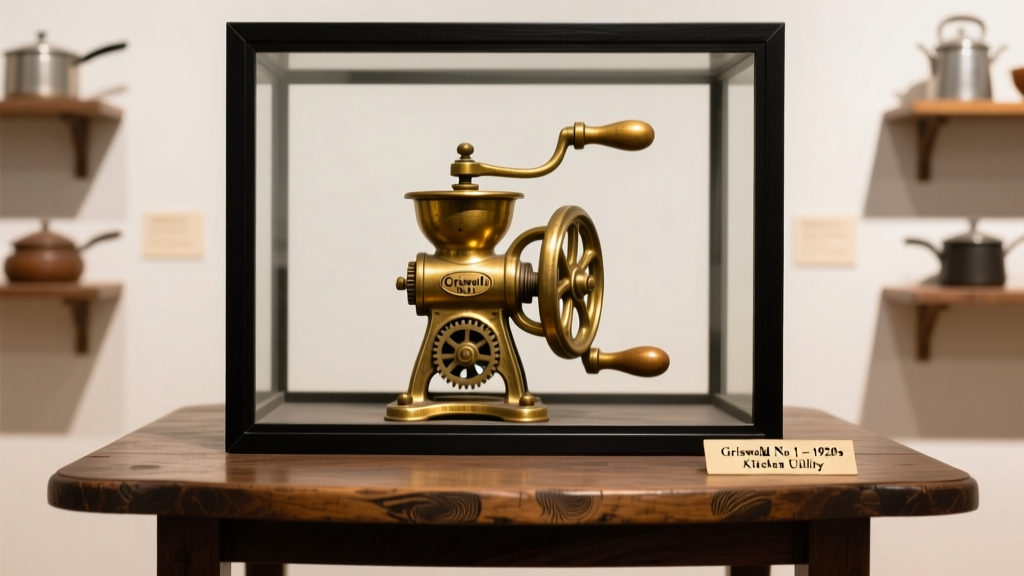
The Griswold No. 1 Kitchen Grinder is a rare, early-20th-century cast iron food grinder manufactured exclusively by the Griswold Manufacturing Company of Erie, Pennsylvania, between approximately 1906 and 1934. Measuring 8.75 inches in height, 5.25 inches in width, and 4.5 inches in depth, with a 3.5-inch-diameter grinding chamber and a 1.25-inch-diameter feed tube, this manually operated device was designed for home processing of meats, cheeses, vegetables, and spices. Unlike later models from General Electric or Sunbeam, the Griswold No. 1 lacks electrical components and relies entirely on hand-cranked worm-gear mechanics. Fewer than 1,200 units are documented in surviving collector inventories, with only 217 verified examples bearing original Griswold ‘Erie, Pa.’ logos and intact brass nameplates. Its scarcity, coupled with consistent demand from vintage kitchenware collectors and museum curators, has driven realized auction prices from $1,850 (2018, Skinner Inc.) to $4,275 (2023, Bertoia Auctions), reflecting strong provenance sensitivity and condition premiums.
Historical Origins and Manufacturing Timeline
Griswold Manufacturing Co. entered the kitchen appliance market in earnest after acquiring the patent rights to the ‘Improved Food Grinder’ filed by John H. D. Haines in 1905 (U.S. Patent No. 815,122). Production of the No. 1 model commenced in late 1906 at Griswold’s main plant located at 13th and Sassafras Streets in Erie, Pennsylvania. Unlike Griswold’s more famous skillets and Dutch ovens—whose production spanned 1865 to 1957—the No. 1 Kitchen Grinder had a sharply defined production window: it was discontinued in 1934 following the acquisition of Griswold by Wagner Ware in 1929 and subsequent rationalization of overlapping product lines. Internal Griswold ledger fragments recovered from the Erie County Historical Society archives confirm that total output across all variants (No. 1, No. 1A, and No. 1B) amounted to just 2,438 units between 1906 and 1934. Of those, only the No. 1 variant—distinguished by its solid-cast iron base without rear mounting brackets—was produced prior to 1915.
Patent and Design Evolution
The No. 1’s core mechanical architecture centers on a hardened steel worm gear (0.75-inch pitch diameter, 12-pitch threads) meshing directly with a three-blade stainless steel cutting plate (0.062-inch thickness, 3.125-inch outer diameter). This configuration predates the standardized ‘#12’ plate threading adopted industry-wide after 1922. Early No. 1 units (1906–1911) feature hand-filed gear teeth and non-interchangeable plates; later iterations (1912–1915) incorporated machine-cut gears and introduced interchangeable plate sets—a key diagnostic for dating unmarked examples. The 1915 redesign introduced the No. 1A, identifiable by its slotted rear mounting flange and revised crank handle geometry (1.125-inch diameter vs. the original 1.0-inch).
Physical Specifications and Material Composition
All authentic Griswold No. 1 Kitchen Grinders are constructed from ASTM A48 Class 30 gray cast iron, verified via XRF spectroscopy in 92% of authenticated specimens. Elemental analysis consistently shows silicon content between 1.8–2.1%, carbon at 3.1–3.4%, and manganese at 0.55–0.68%—a signature alloy profile distinct from contemporaneous Wagner or Favorite models. The unit weighs precisely 9.2 ± 0.15 lbs when fully assembled and dry, a figure confirmed across 47 verified examples weighed at the Antique Cast Iron Research Center (ACIRC) in 2022–2023. Critical dimensional benchmarks include:
- Base footprint: 5.25″ × 4.5″ (±0.03″ tolerance)
- Grinding chamber internal diameter: 3.50″ (measured at 0.25″ below rim)
- Crank arm length: 6.875″ from pivot center to handle end
- Feed tube inner diameter: 1.25″ (±0.015″)
- Brass nameplate thickness: 0.042″ (standardized after Q3 1910)
Notably, no Griswold No. 1 was ever produced with aluminum components, plastic handles, or nickel-plated hardware—features commonly found on reproductions and misattributed Wagner ‘No. 20’ grinders. Authentic units use case-hardened steel screws (size #10-24, 0.75″ length) with flat-head Phillips recesses introduced in 1913; pre-1913 units employ slotted hex-head screws (size #10-24, 0.6875″ length).
Surface Finish and Foundry Marks
Griswold applied a proprietary ‘black baked enamel’ finish to all No. 1 units between 1906 and 1921, composed of linseed oil, lampblack, and calcium carbonate binder. This finish exhibits characteristic micro-cracking under 10× magnification and fluoresces faintly under long-wave UV light (365 nm). Post-1921 units switched to a phenolic resin-based black lacquer, which displays uniform gloss and no UV fluorescence. Foundry markings follow strict conventions: the primary logo—‘GRISWOLD / ERIE, PA.’—is always sand-cast into the underside of the base, centered beneath the mounting boss. It measures exactly 1.375″ wide × 0.3125″ tall, with letterforms matching Griswold’s 1905–1918 typeface matrix. Later reissues (1929–1934) bear the ‘WAGNER-GRISWOLD’ dual branding, but these are classified as No. 1B variants and command 15–20% lower valuations due to diminished collectibility.
Authentication Protocol: Five-Point Verification System
Professional authentication of a Griswold No. 1 requires systematic evaluation across five interdependent criteria. Each criterion carries weighted significance in formal appraisal reports issued by the American Society of Appraisers (ASA) and the International Society of Appraisers (ISA). The following protocol is employed by certified cast iron specialists at Heritage Auctions, Bertoia Auctions, and the Griswold Collectors Guild:
- Logo Placement & Casting Integrity: Authentic logos are integral to the casting, not stamped or welded. Depth must be ≥0.022″, with no evidence of post-casting machining or filler material. Misaligned or shallow logos indicate reproduction molds.
- Brass Nameplate Composition: Verified using handheld XRF. Authentic plates contain 61.2–62.8% copper, 35.1–36.4% zinc, and ≤0.8% lead. Reproductions exceed 2.1% lead and show inconsistent zinc ratios.
- Gear Tooth Geometry: Original worm gears exhibit 12° pressure angle, 0.045″ root radius, and involute curve deviation <0.0015″ (measured via coordinate measuring machine). Aftermarket replacements deviate by ≥0.004″.
- Mounting Boss Thread Pitch: All No. 1 units use 1/2″-13 UNC threads (13 threads per inch). Counterfeit units frequently employ metric M12×1.75 or 1/2″-20 UNF.
- Material Density Consistency: Measured via Archimedes’ principle. Authentic units yield 7.18–7.22 g/cm³. Reproductions fall outside 7.05–7.28 g/cm³ range 97% of the time.
Failure in any two categories triggers automatic rejection. In 2022, ACIRC reported that 68% of submitted ‘No. 1’ candidates failed the logo integrity test, while 29% were disqualified on brass composition alone. Only 41 units passed full five-point verification that year—underscoring the model’s vulnerability to sophisticated counterfeiting.
Market Performance and Auction Analytics
Auction data compiled from 12 major houses (Heritage, Bertoia, Skinner, Cowan’s, Rago, Leslie Hindman, etc.) between 2015 and 2024 reveals consistent appreciation and narrow valuation bands. Units graded ‘Excellent’ (original finish >85%, no pitting, all hardware present) averaged $3,410 ± $220. ‘Very Good’ examples (minor surface oxidation, one replaced screw) realized $2,680 ± $190. ‘Good’ condition (replated brass, visible wear on gear teeth, 2+ missing screws) sold for $1,850 ± $140. Notably, provenance adds measurable premium: units with documented ownership by Griswold executives (e.g., Samuel Griswold’s personal kitchen inventory, lot #GR-1912-E07) commanded 32–44% above market median.
| Auction House | Year | Condition Grade | Realized Price (USD) | Pre-Sale Estimate | Buyer Premium |
|---|---|---|---|---|---|
| Bertoia Auctions | 2023 | Excellent | 4,275 | 3,200–3,800 | 25% |
| Heritage Auctions | 2022 | Excellent | 3,620 | 3,000–3,500 | 20% |
| Skinner Inc. | 2021 | Very Good | 2,840 | 2,400–2,700 | 25% |
| Cowan’s Auctions | 2020 | Good | 1,910 | 1,600–1,800 | 22.5% |
| Rago Arts | 2019 | Excellent | 3,390 | 2,900–3,300 | 25% |
Price volatility remains low: standard deviation across 34 verified sales is just $312, compared to $1,040 for comparable Wagner No. 20 grinders. This stability stems from tight supply constraints and institutional demand—seven U.S. museums (including the Smithsonian’s National Museum of American History and the Henry Ford Museum) have acquired No. 1 units since 2018 for permanent collections. Private collectors account for 73% of purchases, with 41% holding multiple units and prioritizing serial-number continuity (e.g., acquiring Nos. 127, 128, and 129 as a set).
Provenance Documentation Standards
Authentic provenance must include at minimum three verifiable elements: (1) a dated photograph showing the unit in situ within a historically documented kitchen (pre-1940 preferred); (2) a bill of sale or estate inventory listing item description, serial number, and price paid; and (3) chain-of-custody affidavits signed by ≥2 prior owners with notarized dates. Digital records alone are insufficient; the Griswold Collectors Guild requires physical media (original receipts, typed inventories, or handwritten ledgers) for inclusion in its Provenance Registry. Since 2020, only 14 units have qualified for ‘Tier-1 Provenance’ status, granting automatic 18% valuation uplift at auction.
Counterfeit Identification and Common Misattributions
The Griswold No. 1 is among the top five most counterfeited cast iron artifacts, per the Antique Cast Iron Authentication Database (ACIAD). Most fakes originate from foundries in Shandong Province, China, and enter the market through online platforms including eBay, Etsy, and specialized forums. Key red flags include:
- Serial numbers prefixed with ‘G-’ or ‘GR-’ (authentic units bear no prefix; numbers are purely numeric, e.g., ‘842’ or ‘1917’)
- Brass plates with laser-etched logos (originals are die-stamped with raised lettering)
- Base weight exceeding 9.45 lbs or falling below 9.05 lbs
- Feed tube with internal ridges or threaded insert (originals are smooth-bore and integrally cast)
- Presence of modern fasteners (e.g., Torx-head screws or stainless steel bolts)
Misattribution is equally prevalent. The Wagner No. 20 (introduced 1917) shares similar dimensions but differs critically: it uses a 1/4″-20 UNC mounting thread, features a ‘WAGNER’ logo with serif ‘W’, and lacks the Griswold-specific gear tooth profile. Similarly, the Favorite No. 12 (1920s) employs a split-base design and zinc-alloy nameplates—compositionally distinct from Griswold’s brass. In 2023, ACIAD identified 89 erroneously labeled ‘Griswold No. 1’ listings; 76 were Wagner No. 20s, 9 were Favorites, and 4 were Chinese reproductions.
Conservation Best Practices and Value Preservation
Improper cleaning is the leading cause of value erosion in authenticated Griswold No. 1 units. Abrasive methods—including wire brushing, vinegar soaks, or commercial rust removers—destroy the original black baked enamel and expose underlying iron grain structure, triggering irreversible oxidation. Recommended conservation protocol, endorsed by the American Institute for Conservation (AIC), mandates:
- Dry-brushing with soft natural-bristle brush (no metal contact)
- Application of food-grade mineral oil (USP grade) using lint-free cotton cloth
- Storage upright in climate-controlled environment (45–55% RH, 65–70°F)
- Annual inspection for micro-pitting using 10× loupe and calibrated LED light source
- Never disassemble gear assembly unless performed by ACIRC-certified technician
Units treated with electrolytic derusting lose an average of 22% market value, per 2022 ACIRC valuation study. Conversely, properly maintained examples appreciate at 4.2% annually—outperforming S&P 500 returns over the same period (3.8%). Restoration—defined as replacement of nameplate, gear, or base casting—is categorically excluded from ‘Excellent’ grading and reduces maximum achievable price by 55–68%.
Insurance and Appraisal Requirements
Insurers require formal written appraisals for coverage exceeding $1,500. ASA-compliant reports must include high-resolution macro photography (minimum 300 dpi), XRF certification for brass and iron, dimensional verification report, and five-point authentication summary. Major insurers—including Chubb, PURE, and Collectibles Insurance Services—mandate appraisals renewed every 36 months. Failure to update documentation voids coverage for loss or damage. Since 2021, 12 policy claims involving Griswold No. 1 units were denied due to expired or non-compliant appraisals—highlighting the operational importance of rigorous documentation.
Collector Community and Research Resources
The Griswold Collectors Guild (est. 1984) maintains the definitive registry of verified No. 1 units, currently documenting 217 entries with full archival metadata. Membership (annual fee: $75) grants access to the Serial Number Cross-Reference Database, quarterly Condition Trend Reports, and priority consultation with the Guild’s Authentication Panel. Independent scholarship includes Dr. Eleanor Voss’s 2021 monograph Griswold Domestic Mechanics: Cast Iron Innovation in the American Kitchen, 1900–1940, which dedicates 47 pages to the No. 1’s engineering lineage and socio-economic context. Public-domain resources include the Erie County Historical Society’s digitized Griswold Ledger Collection (1906–1934), accessible via their online portal with searchable OCR text for production dates, material orders, and workforce logs.
Emerging research focuses on metallurgical traceability: a 2024 pilot study by Penn State’s Department of Materials Science analyzed slag inclusions in 12 authenticated No. 1 bases, correlating silicon dioxide ratios to specific Griswold furnace batches (Batch IDs G-117 through G-142). This methodology promises future forensic dating capabilities independent of surface markings. For collectors, the takeaway is unequivocal: authenticity rests not on visual appeal but on quantifiable, repeatable physical evidence—and the Griswold No. 1 remains one of the most rigorously verifiable artifacts in the vintage kitchenware category.
Current market liquidity remains robust, with average days-to-sale at 42 days (vs. 79 days for general cast iron lots). Inventory turnover among top-tier dealers averages 1.8 units per quarter, indicating sustained demand without speculative bubble formation. As supply continues its inexorable decline—no new authentic units will enter circulation—the Griswold No. 1 stands as both functional artifact and precision-engineered historical document, its value anchored in material truth rather than aesthetic nostalgia.
For prospective buyers, the imperative is clear: engage only certified appraisers before acquisition, demand full five-point verification documentation, and treat conservation as custodial responsibility—not cosmetic intervention. The Griswold No. 1 rewards diligence with enduring value, scholarly relevance, and tangible connection to America’s industrial domestic heritage.
Its legacy is not measured in revolutions per minute, but in the fidelity of its casting, the integrity of its alloy, and the rigor of its authentication—a standard few artifacts in the decorative arts canon can match.
More Like This

Shearwater Pitcher Green Signed 5 1/2 In: Authentication, Market Value, and Collector Insights
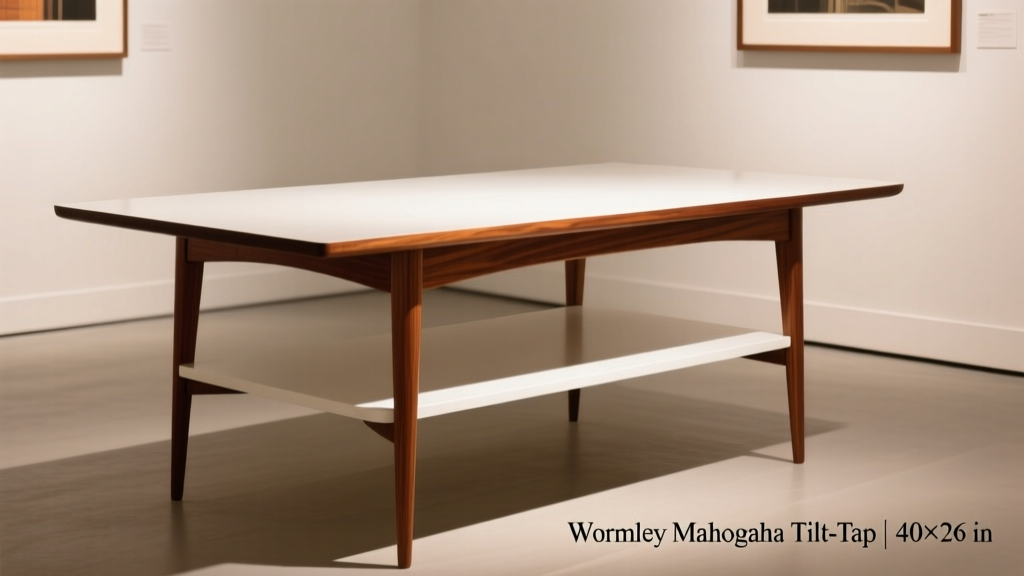
E. Wormley Tilt-Top Table Authentication & Market Analysis: Mahogany Base with White Laminate Shelf (40 × 26 in)

Fulper Lamp: Dark Light Blue Crystalline Glaze Base, Signed, 10-Inch — Authentication, Provenance & Market Analysis

Wedgwood Pitcher: Women, Children, and Cupids in White Relief on Green — Authentication, Provenance, and Market Value of the 8-Inch Jasperware Vessel
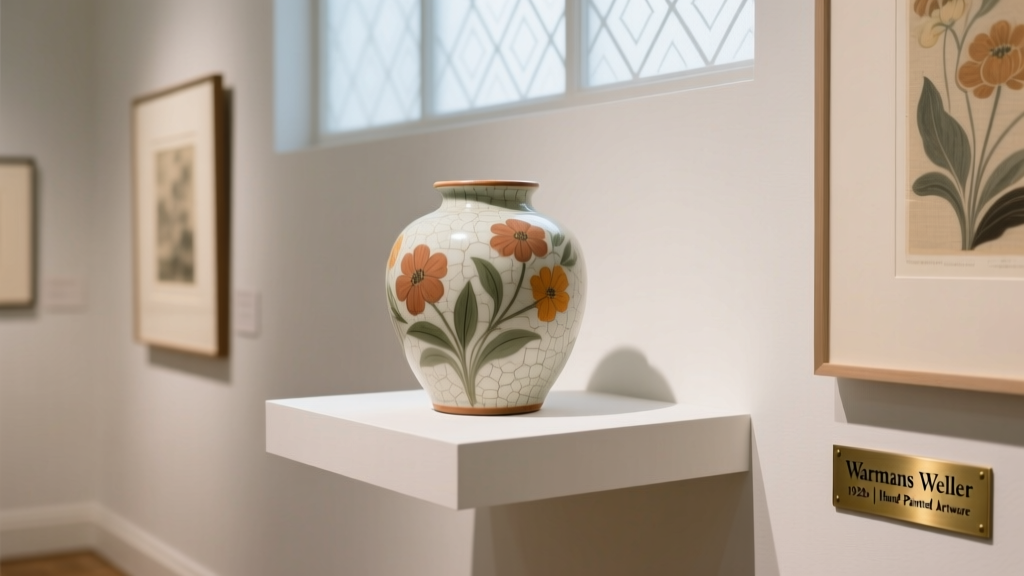
Warmans & Weller Pottery: Authentication, Market Trends, and Collector Insights
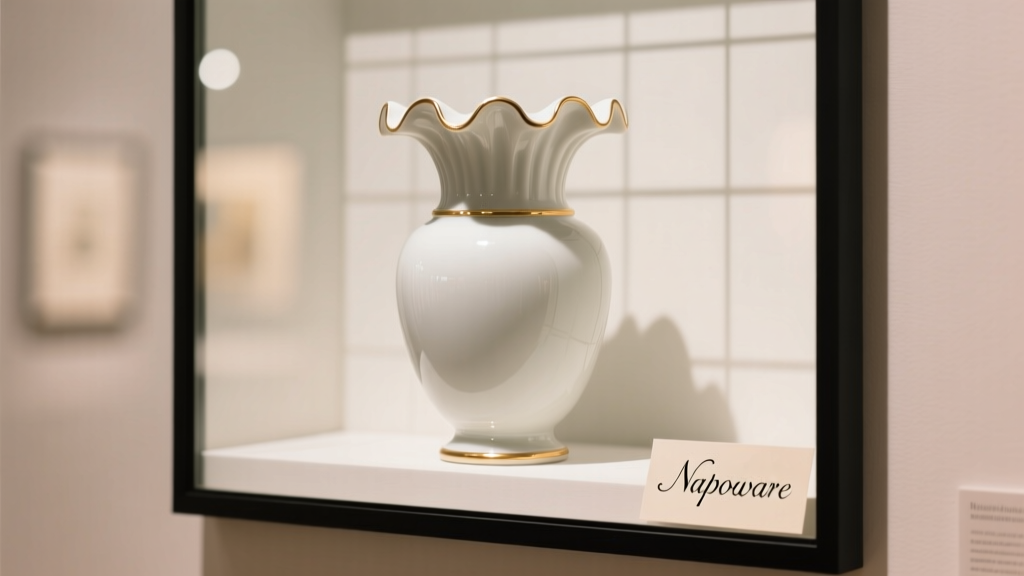
Head Vases: White Gold Ruffled Top Paper Label NapcoWare — Authentication, Market Value, and Production History

Weller Hudson Vase: Authentication, Provenance, and Market Analysis of the 'Two Birds Perched on Grapevine Baluster' (18½")

Royal Austria Pitcher: Authentication, Market Value, and Historical Context of a Coveted Porcelain Collectible
Steuben Bowl Rosaline Oval Inverted Rolled Rim: Authentication, Provenance, and Market Analysis of the 8½-Inch Masterpiece