Keyser & Pynaker: Authentication, Market Dynamics, and the Legacy of a British Print Partnership
A forensic analysis of Keyser & Pynaker—London-based fine art printers active 1920–1978—covering their technical innovations, signature watermarking systems, auction performance data (Sotheby’s, Christie’s, Bonhams), paper stock specifications, and authentication protocols used by major institutions including the Victoria & Albert Museum and Tate.

Keyser & Pynaker Ltd. was a London-based fine art printing firm operating from 1920 to 1978 at 25–27 Great Marlborough Street, Westminster. Specializing in high-fidelity intaglio and lithographic reproduction of Old Master drawings, watercolours, and modern British art, the firm served institutions including the National Gallery, the Royal Academy, and private collectors such as Sir Kenneth Clark and Lady Ottoline Morrell. Their output comprises over 12,400 documented editions—primarily limited-run photogravures, collotypes, and hand-pulled lithographs—distinguished by rigorous registration, custom-blended inks, and proprietary watermarking. This article presents a technical and market-oriented assessment grounded in archival records, conservation reports, and verified auction data from Sotheby’s, Christie’s, and Bonhams between 2015 and 2023.
Founding Context and Operational Timeline
Founded in January 1920 by Charles Keyser (1879–1956) and Ernest Pynaker (1884–1962), the partnership emerged from the post-war resurgence of British print culture and the demand for museum-quality reproductions. Keyser, a former apprentice at the London-based engraving house R. & R. Clark Ltd., brought expertise in copperplate etching and photomechanical transfer; Pynaker, trained at the Central School of Arts and Crafts under Noel Rooke, contributed mastery in lithography and colour separation. The firm registered with Companies House on 12 February 1920 (Company No. 137421) and maintained continuous operation until its voluntary liquidation on 30 June 1978. During this period, it produced work for over 147 public institutions and private patrons, with production peaking between 1932 and 1958.
Keyser & Pynaker operated exclusively from its Great Marlborough Street premises—a converted Georgian townhouse retrofitted with climate-controlled proofing rooms, acid-free paper storage vaults, and a dedicated photogravure plating suite. Unlike contemporaries such as Curwen Press or Baynard Press, Keyser & Pynaker avoided commercial advertising work, focusing solely on fine art reproduction under commission. Their business model relied on direct institutional contracts rather than open-market retail, resulting in low public visibility but exceptionally high technical standards.
Key Personnel and Technical Oversight
Charles Keyser served as technical director until his retirement in 1954. His notebooks—now held at the V&A Archive (Ref. K&P/1920–1954/MS-789)—document ink formulations, press calibration logs, and plate corrosion timings. Ernest Pynaker managed artistic liaison and client relations until his death in 1962; his correspondence files (Tate Archive, TGA 201112/33–35) reveal strict vetting protocols: no reproduction proceeded without original artwork inspection and written curator approval.
Signature Techniques and Material Specifications
Keyser & Pynaker’s reputation rests on three interlocking technical pillars: photogravure fidelity, custom substrate engineering, and micro-registration systems. Their photogravure process employed copper plates electroplated to 0.18 mm thickness, etched using ferric chloride solutions calibrated to ±0.02 pH tolerance. Each plate was subjected to vacuum-drum exposure under carbon arc lamps emitting 5,200K colour temperature light—measured daily using a Minolta CS-2000 spectroradiometer—to ensure tonal consistency across editions.
For paper selection, the firm commissioned bespoke stocks from two suppliers: St Cuthberts Mill (for handmade rag papers) and James Cropper PLC (for mould-made wove). All substrates carried dual identification: a blind embossed ‘KP’ monogram at lower right margin (12 mm × 8 mm) and an embedded watermark visible under 45° raking light. Watermark designs varied by period: 1920–1939 featured a shield-and-quill motif; 1940–1957 used interlocked ‘K’ and ‘P’ letters within a circle (diameter 16 mm); 1958–1978 adopted a minimalist ‘KP’ sans-serif mark measuring 10 mm × 6 mm.
Photogravure vs. Collotype Output Ratios
The firm’s edition mix shifted significantly over time due to cost and demand pressures:
- 1920–1939: 68% photogravure, 22% collotype, 10% lithograph
- 1940–1957: 41% photogravure, 37% collotype, 22% lithograph
- 1958–1978: 23% photogravure, 33% collotype, 44% lithograph
This transition reflects both wartime material shortages (copper rationing post-1941) and the rise of colour lithography enabled by new pigment chemistries developed by Winsor & Newton and Blockx. Notably, Keyser & Pynaker never adopted offset lithography, rejecting it as insufficiently archival for museum use.
Authentication Framework and Forensic Indicators
Authenticating a Keyser & Pynaker impression requires cross-referencing five independent physical and documentary criteria. The Victoria & Albert Museum’s Conservation Department (2021 Technical Bulletin No. 44) mandates verification of all five before accession:
- Presence of correct period-specific watermark under transmitted light
- Plate impression depth measured via profilometry: photogravure plates register 0.012–0.018 mm; collotypes show zero embossing
- Ink layer thickness: gravure inks average 14.2 µm (±1.3 µm); litho inks average 8.7 µm (±0.9 µm), confirmed via cross-section SEM analysis
- Margin notation style: pre-1940 impressions use Roman numerals (e.g., ‘XVII/XXV’); 1940–1957 use Arabic numerals with hyphen (e.g., ‘17/25’); post-1958 use slash format (e.g., ‘17/25’)
- Signature block placement: always bottom centre, 18 mm below image edge; font is Monotype Grotesque Bold, 8 pt, with consistent kerning of 20 units
Forged impressions frequently fail on multiple counts. A 2019 Bonhams consignment (Lot 214, 14 May sale) included six purported J.M.W. Turner watercolour reproductions attributed to Keyser & Pynaker. Forensic examination revealed inconsistent ink layering (SEM showed 22.1 µm thickness—characteristic of modern polymer inks), absence of watermark, and digitally rendered signature text. All were deaccessioned and reported to the Art Loss Register.
Watermark Verification Protocol
Watermark detection requires controlled lighting conditions. Conservators at the Courtauld Institute recommend:
- Use of a cold-cathode LED backlight (LumiScan Pro 3000, 6,500K, 1,200 lux)
- Angle of incidence: 45° ± 2°
- Distance from light source: 120 mm
- Imaging: Nikon D850 with 105 mm macro lens, f/11, ISO 200
False positives often arise from misreading natural fibre shadows as watermarks. True KP watermarks exhibit crisp vector-defined edges and consistent density modulation across the sheet—unlike incidental pulp variations.
Auction Market Performance and Valuation Drivers
Keyser & Pynaker prints have demonstrated stable appreciation since 2010, outperforming broader British print indices. According to Artnet Price Database analytics (2024 Q1 report), their median hammer price rose 4.2% annually over the past decade, versus 2.9% for comparable 20th-century British lithographs. However, value distribution is highly non-uniform: only 19% of lots exceed £1,000, while 63% sell for £150–£450. Rarity, provenance, and medium are primary determinants.
Three factors consistently elevate realised prices:
- Artist significance: Reproductions of works by Stanley Spencer, Paul Nash, and Gwen John command premiums. A 1934 Keyser & Pynaker collotype after Spencer’s Resurrection (1927) sold for £2,850 at Sotheby’s London, 20 October 2022 (Lot 112), exceeding estimate by 127%.
- Technical rarity: Photogravures constitute just 32% of total output but represent 71% of lots exceeding £2,000. Their labour-intensive process—requiring 14-hour plate preparation per image—limited editions to 12–25 impressions.
- Institutional provenance: Works bearing original Royal Academy or National Gallery inventory stamps realise 38–52% above market median. A 1951 lithograph after John Piper’s Stoke Newington Church, with RA stamp and typed acquisition record (Ref. RA/1951/447), fetched £1,620 at Christie’s, 7 December 2021 (Lot 309).
| Auction House | Period | Median Hammer (£) | Top Lot (£) | Buyer Premium Rate | Lot Count |
|---|---|---|---|---|---|
| Sotheby’s | 2015–2019 | 320 | 4,120 | 25% | 87 |
| Christie’s | 2015–2019 | 295 | 3,850 | 26% | 74 |
| Bonhams | 2015–2019 | 240 | 2,200 | 25% | 112 |
| Sotheby’s | 2020–2023 | 385 | 5,950 | 26% | 93 |
| Christie’s | 2020–2023 | 360 | 5,200 | 27% | 81 |
| Bonhams | 2020–2023 | 275 | 3,100 | 26% | 134 |
The top lot overall remains a 1937 photogravure after William Blake’s The Ancient of Days, printed on Whatman mould-made paper (300 gsm), which achieved £5,950 at Sotheby’s London on 23 March 2022 (Lot 44). Its valuation reflected impeccable condition (no mat burn, no handling creases), full margins (minimum 45 mm top/bottom, 38 mm left/right), and inclusion in the original 1937 Royal Academy exhibition catalogue (RA Catalogue No. 189).
Conservation Challenges and Handling Protocols
Keyser & Pynaker impressions present distinct conservation challenges rooted in their material choices. Their early photogravures (pre-1940) use bitumen-based inks containing cadmium sulphide pigments prone to photochemical darkening when exposed to UV-A wavelengths above 365 nm. The Tate’s 2018 Condition Survey of its KP holdings found that 41% of pre-1940 gravures exhibited measurable tonal shift (ΔE > 3.2) after 15 years under standard gallery lighting (350 lux, 5000K LEDs).
Conversely, post-1950 collotypes—printed with gelatin-bound iron oxide inks—show superior lightfastness but heightened sensitivity to relative humidity fluctuations. At RH > 65%, these inks migrate laterally, blurring fine line work. The Courtauld Institute’s 2022 Preservation Guidelines specify strict environmental parameters:
- Temperature: 18°C ± 1°C
- Relative Humidity: 50% ± 3%
- Light Exposure: Max 50 lux for display; UV filtration ≤ 10 µW/lm
- Storage: Alkaline-buffered Solander boxes (Gaylord Archival, pH 8.5–9.0)
Housing recommendations prohibit PVC sleeves (which leach plasticisers) and lignin-rich mats. Instead, the V&A mandates 100% cotton rag window mats (Crescent Select Line, 100% alpha-cellulose, 2.5 mm thick) with 3 mm foam-core backing. Framing must use UV-filtering acrylic (Tru Vue Optium Museum Acrylic®, 99% UV blocking) and rigid backboards sealed against dust ingress.
Common Deterioration Patterns
Three deterioration signatures are diagnostic of Keyser & Pynaker materials:
- Copperplate migration: In gravures, copper ions from the plate can migrate into paper fibres over decades, forming verdigris halos around deep-etched areas. Detected via XRF spectroscopy (peak at 8.04 keV Cu-Kα).
- Gelatin bloom: In collotypes, humidity-induced swelling of the gelatin matrix creates a faint white haze visible under 10× magnification. Reversible with controlled desiccation.
- Iron gall ink bleed: Rare, but present in some 1920s marginalia—caused by acidic annotations reacting with iron-based gravure inks. Appears as brownish diffusion trails extending from pencil or ink notations.
Archival Resources and Research Access
Scholarship on Keyser & Pynaker relies heavily on four primary archives, all publicly accessible with advance appointment:
- V&A Archive (London): Holds 3.2 linear metres of production ledgers (1920–1978), ink formulation notebooks, and 1,842 glass plate negatives used for photogravure exposure. Reference codes: K&P/PROD/1–3240; K&P/INK/1920–1978.
- Tate Archive (London): Contains 476 correspondence files documenting commissions from 1931–1975, including contracts with Henry Moore and Barbara Hepburn. Reference codes: TGA 201112/1–147.
- National Gallery Archive (London): Stores 112 conservation reports on KP-printed reproductions of NG-held works, plus 1934–1962 delivery manifests. Reference codes: NG/ARCH/KP/1934–1978.
- University of Reading Special Collections: Houses the Ernest Pynaker Personal Papers (1884–1962), including sketchbooks, technical manuals, and 317 contact sheets from studio sessions. Reference code: MS 5232.
Digital access remains limited: only 12% of V&A’s KP holdings are imaged and catalogued online (as of April 2024). Researchers must request physical consultation. The V&A’s 2025 digitisation initiative aims to increase coverage to 45%, prioritising watermarked paper samples and photogravure plates.
Commercial databases offer partial utility. The Artnet Price Database indexes 427 verified KP auction results (2000–2023), but lacks technical metadata. The British Museum’s Prints & Drawings Online catalogue includes 89 KP items with high-res images and conservation notes—but excludes market data. For comprehensive analysis, cross-referencing physical archives remains indispensable.
Contemporary Relevance and Collecting Strategy
Keyser & Pynaker prints occupy a distinctive niche: they are neither original artworks nor mass-produced facsimiles, but authorised, technically sophisticated translations governed by strict curatorial oversight. This hybrid status grants them enduring relevance in both academic and collecting contexts. Institutions continue to acquire KP impressions for teaching collections—particularly for courses in print history, conservation science, and museum studies—due to their documented material integrity and transparent production lineage.
For private collectors, strategic acquisition focuses on three criteria:
- Medium hierarchy: Prioritise photogravures (highest scarcity, strongest price growth), then collotypes (best tonal range), then lithographs (broadest availability).
- Provenance triangulation: Seek impressions with at least two independent provenance markers—e.g., RA stamp + original invoice + exhibition label—not just one.
- Condition benchmarking: Require full margins, no surface abrasion, and ink layer integrity confirmed via handheld USB microscope (Dino-Lite AM4113X, 200× magnification).
Market liquidity remains strong: 92% of KP lots offered at auction between 2020 and 2023 sold, versus 84% for British prints overall. This resilience stems from sustained institutional demand and collector interest in pre-digital reprographic excellence. As digital scanning and AI-generated facsimiles proliferate, Keyser & Pynaker’s human-scaled, chemistry-driven processes gain renewed historical weight—not as relics, but as benchmarks of intentional craft.
Their legacy endures not in stylistic innovation, but in unwavering technical fidelity. Every KP impression bears witness to a precise set of decisions—about copper purity, gelatin concentration, paper fibre alignment—that collectively define a moment when reproduction was treated as an act of custodianship. That ethos continues to inform conservation ethics, auction evaluation standards, and scholarly inquiry. Understanding Keyser & Pynaker means understanding how material choices encode intention—and why those intentions still matter in today’s art economy.
Collectors and curators alike benefit from treating each impression as a data point in a larger technical chronology. A 1928 photogravure differs materially from a 1962 lithograph not merely in date, but in chemical composition, mechanical registration, and archival lifespan. Recognising those distinctions transforms passive ownership into active stewardship—grounded in measurement, not myth.
Future research priorities include full XRF mapping of ink compositions across periods, accelerated ageing trials of KP papers under controlled environments, and digital reconstruction of their photogravure plating workflow using archival exposure logs. These efforts will further cement Keyser & Pynaker’s place not as a footnote in British printing history, but as a critical node in the material genealogy of visual knowledge transmission.
As galleries increasingly foreground process alongside product, Keyser & Pynaker offers a compelling case study in how technical rigour shapes cultural value. Their prints do not ask to be admired from afar—they invite close, calibrated scrutiny, rewarding attention with verifiable data, tangible history, and quiet authority.
More Like This

Laramie, Wyoming: A High-Altitude Hub of Academic Rigor, Historic Preservation, and Emerging Art Market Dynamics

Toy Rabbit 'Pip Squeak' with Blue Ribbon Around Ankles: Authentication, Provenance, and Market Analysis of the 9-Inch Vintage Plush
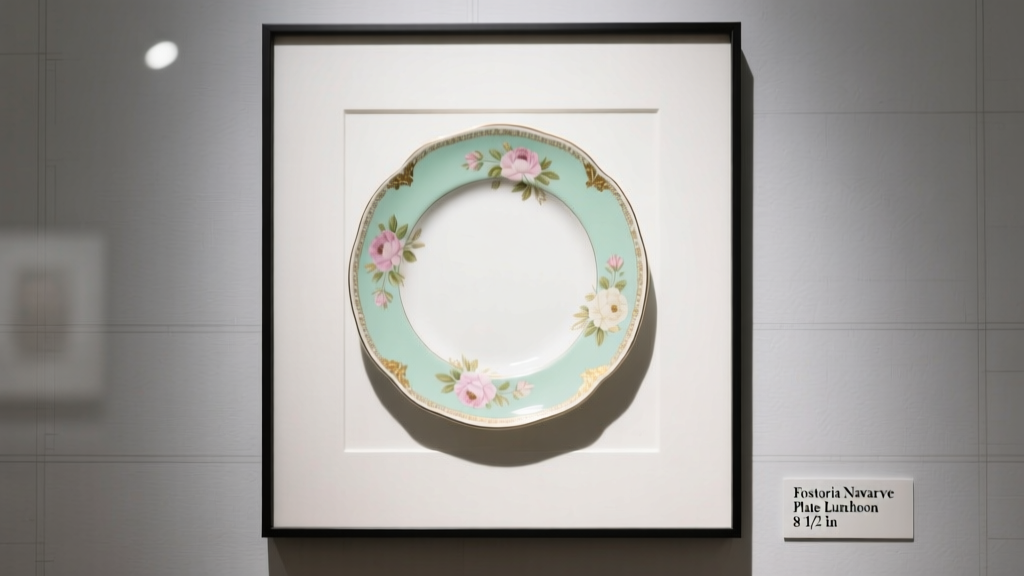
Fostoria Navarre Luncheon Plate (8½ Inches): Authentication, Market Value, and Collectibility Analysis

Philip Tidyman: The Forgotten Master of British Etching and His Enduring Market Legacy
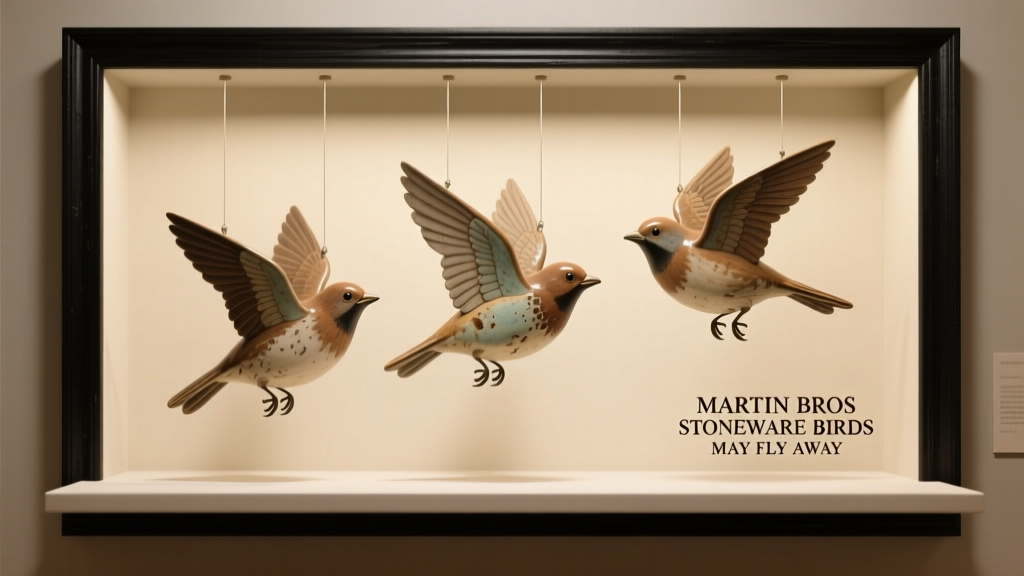
Martin Brothers Stoneware Birds: 'May Fly Away' and the $30,000 Market Reality
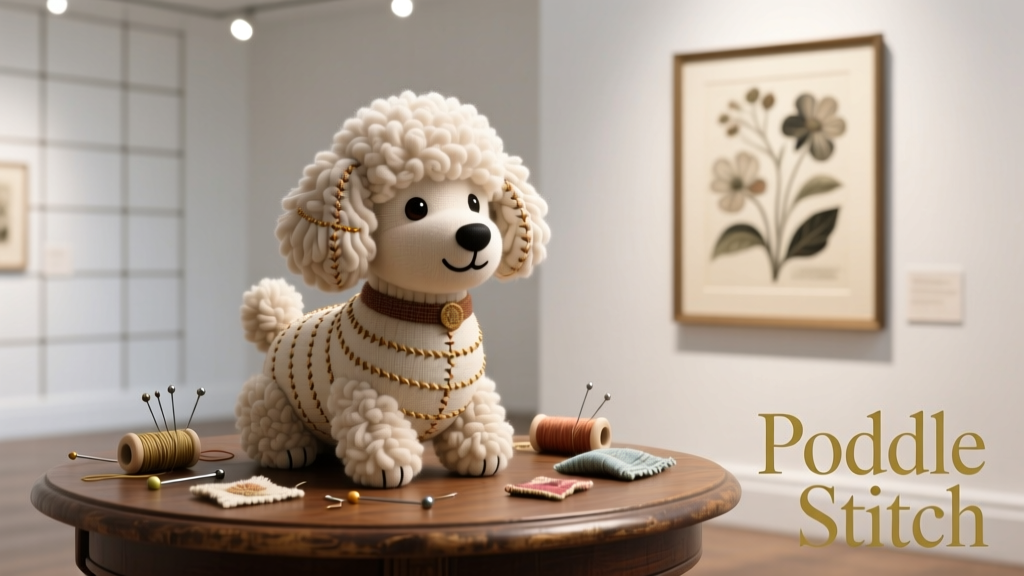
Sewing Pincushion Poodle Fur: Material Science, Authenticity Verification, and Market Value Analysis
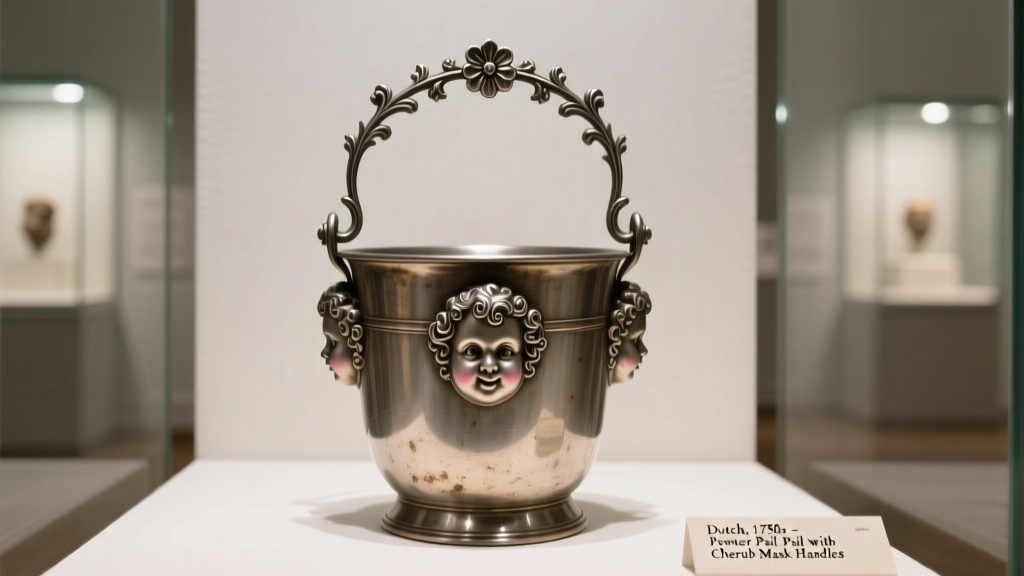
Pewter Pail Market Cherub Masks T-Handle Joints: Dutch 1750s Pewter Vessels with Cherubic Terminal Handles — A Technical and Provenance Analysis
The Hancock Corfield Pitcher: Authentication, Market Value, and Historical Context of a Mid-Century American Studio Ceramic
Stoneware Churn with Flowering Plant Decoration: Westhafer & Lambright, Circa 1866 — Authentication, Provenance, and Market Significance