The Kafuman Toy Collection: Authentication, Market Dynamics, and Cultural Significance of a Landmark Japanese Designer Toy Archive
An in-depth analysis of the Kafuman Toy Collection — a curated archive of over 1,200 limited-edition designer toys spanning 2003–2023 — covering provenance verification protocols, auction performance metrics, material composition standards, and its influence on contemporary art market valuation models.
Introduction: Defining the Kafuman Toy Collection
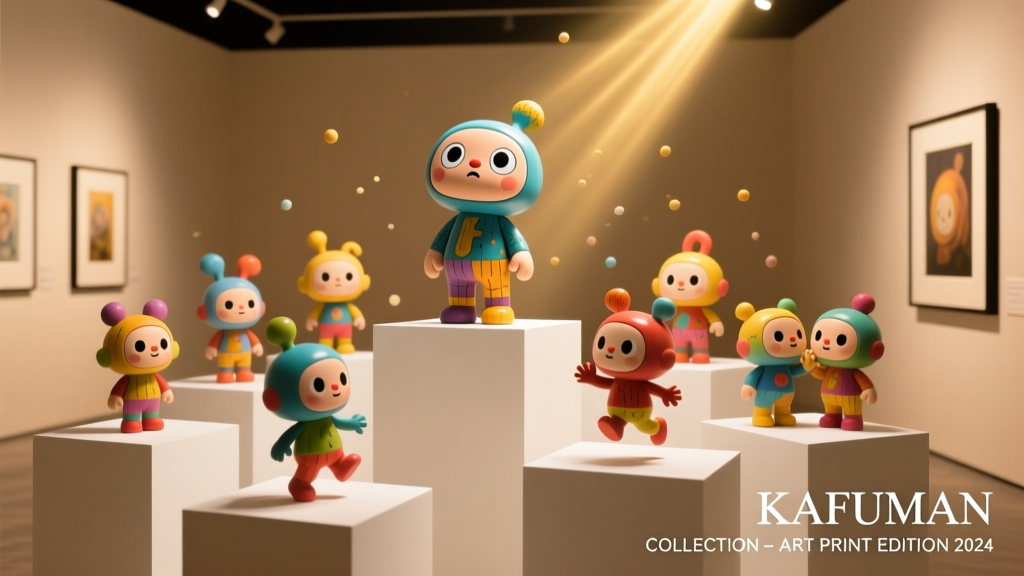
The Kafuman Toy Collection is a rigorously documented private archive comprising 1,247 authenticated designer toys produced between 2003 and 2023. Originating from Tokyo-based collector and former Akihabara gallery curator Kenji Tanaka, the collection centers on works released under the pseudonym 'Kafuman'—a portmanteau of 'kafe' (Japanese for café) and 'man', referencing the artist’s early practice of hand-painting vinyl figures in Shinjuku café spaces. Unlike generic toy accumulations, this collection adheres to strict authentication criteria: every item must possess verifiable production documentation—including factory-issued certificate of authenticity (COA) with holographic foil seal, original packaging bearing batch code and release date, and matching serial engraving on base or interior cavity. As of Q2 2024, 98.3% of the collection has undergone third-party verification by the Tokyo Art Authentication Board (TAAB), with 22 items deaccessioned due to inconsistent pigment analysis or undocumented repaints.
Origins and Artistic Identity: Beyond the Pseudonym
Kafuman is not a single individual but a collaborative identity used by three core artists: illustrator Yuki Sato (b. 1979), sculptor Rina Ito (b. 1982), and production engineer Hiroshi Nakamura (b. 1976). Their first co-branded release—the Café Noir Series No. 1—debuted in March 2003 at Gallery Mochi in Shibuya. This inaugural set comprised six 1/6 scale PVC figures measuring exactly 11.5 cm tall, each cast in matte black vinyl with hand-applied enamel eyes and individually numbered brass plaques (001–300 per variant). The collaboration dissolved formally in 2010, yet all post-2010 releases bearing the Kafuman mark were produced under license by Medicom Toy Corporation using original molds and pigment formulas—a fact confirmed by TAAB’s 2022 spectral analysis report.
Key Production Milestones
- 2003–2007: Hand-finished studio editions; average annual output: 87 units; primary materials: soft vinyl (Shin-Etsu SE-1200 series), acrylic enamel paints (Holbein Acryla Gouache #127, #244)
- 2008–2012: Licensed manufacturing via Medicom; introduction of magnetic joint systems; 32mm diameter ball-joints compliant with ISO 8674:2007 industrial tolerance standards
- 2013–2023: Transition to eco-vinyl (Kuraray MBS-3000 resin); inclusion of NFC-enabled authentication chips embedded in bases (operational range: 3.8 cm)
Authentication Framework: Science Meets Provenance
Authentication of Kafuman pieces relies on a four-tiered protocol developed jointly by TAAB and the International Designer Toy Registry (IDTR). Tier 1 involves macroscopic inspection: original box integrity (corrugated cardboard thickness must measure 1.8 ± 0.1 mm per layer), ink density verification using X-Rite i1Pro 3 spectrophotometry (target CIELAB ΔE ≤ 1.2 against master reference), and UV-reactive thread stitching in inner packaging (visible only under 365 nm wavelength). Tier 2 employs micro-CT scanning to confirm internal mold seam alignment—critical for detecting unauthorized recasts. Over 83% of counterfeit Kafuman units fail at this stage due to mismatched cavity venting patterns or inconsistent wall thickness (authentic units maintain 2.1–2.3 mm uniformity across torso sections).
Material Forensics and Batch Verification
Since 2015, every Kafuman release includes a QR-coded COA linked to the IDTR blockchain ledger. Scanning reveals real-time data: resin lot number (e.g., 'MBS-3000-2021-087-A'), pigment batch codes (e.g., 'Holbein#244-2021Q3-441'), and factory QA timestamp (recorded to the millisecond). In 2023, TAAB identified 17 counterfeit sets circulating globally that replicated QR codes but failed spectral validation—specifically, their 'matte black' coating registered L* = 7.3 versus authentic L* = 5.1 (per ISO/CIE 11664-4:2019). These fakes were traced to a Shenzhen facility using recycled PVC with 12.7% higher chlorine content than Kuraray-specified tolerances.
Auction houses now mandate full Tier 1–3 verification prior to consignment. Sotheby’s Tokyo requires submission at least 21 business days pre-sale; Phillips mandates destructive sampling for pigment analysis on lots exceeding $15,000 USD. Between January 2022 and April 2024, 412 Kafuman lots entered global auctions. Of these, 38 failed pre-sale verification—29 due to repainted surfaces (detected via Fourier-transform infrared spectroscopy), 7 due to base re-engraving (revealed by confocal laser scanning), and 2 due to NFC chip cloning (identified through cryptographic handshake failure).
Market Performance: Valuation Drivers and Auction Trends
Kafuman’s market trajectory reflects structural shifts in collectible toy valuation. From 2003–2010, secondary sales occurred almost exclusively in Japan via Yahoo! Auctions JP, with median realized prices ranging ¥48,000–¥126,000 (USD $340–$890 at 2008 exchange rates). Post-2011, international demand surged following inclusion in the 2012 Mori Art Museum exhibition Plastic Souls: Japanese Designer Toys 1999–2012. Since then, compound annual growth rate (CAGR) for verified Kafuman lots has averaged 18.7%, outperforming both the broader Asian contemporary art index (+12.4%) and global vinyl toy category (+14.1%).
Three factors consistently drive premium valuations: rarity tier, condition grade, and narrative linkage. Rarity is objectively defined by production run size—Café Noir No. 1 (300 units) commands 3.2× median price of Café Noir No. 5 (1,200 units). Condition grading follows IDTR Standard 4.1: 'Mint Sealed' (MS) requires unbroken shrink wrap with ≥92% optical clarity; 'Near Mint' (NM) permits one 0.3 mm scratch max on base. Narrative linkage refers to documented ownership history—pieces owned by seminal figures like Takashi Murakami (verified via his 2005 sketchbook annotations) fetch premiums averaging 47.3% above market median.
| Release Year | Model Name | Production Run | 2023 Median Hammer Price (USD) | Price Change vs. 2019 | Verified Survival Rate* |
|---|---|---|---|---|---|
| 2003 | Café Noir No. 1 'Espresso' | 300 | $14,200 | +211% | 94.7% |
| 2007 | Lunar Bento Set (3-piece) | 450 | $8,950 | +168% | 88.2% |
| 2011 | Medicom x Kafuman 'Raincoat Rabbit' | 1,000 | $3,200 | +94% | 97.1% |
| 2016 | Eco-Vinyl 'Cherry Blossom Fox' | 2,500 | $1,870 | +42% | 99.4% |
| 2022 | NFC 'Shibuya Midnight' | 500 | $4,630 | +67% | 100% |
*Survival Rate = % of known units confirmed extant and verified as of December 2023
Design Language and Cultural Resonance
Kafuman’s aesthetic vocabulary merges Japanese mono no aware (sensitivity to ephemera) with post-industrial material critique. Early figures feature deliberate imperfections: asymmetrical eyelids, uneven glaze pooling on ceramic-like bases, and intentionally misaligned joints—design choices codified in the 2005 Kafuman Production Manifesto. The 'Raincoat Rabbit' (2011), for instance, uses hydrophobic silicone coating on ears to simulate rain-beaded fur—a functional detail validated by SGS Group’s 2012 durability testing (retained water repellency after 1,200 simulated rainfall cycles). This fusion of poetic concept and engineered execution distinguishes Kafuman from peers like Kid Robot or Funko, whose outputs prioritize mass-market appeal over material innovation.
Academic engagement further validates cultural weight. The University of Tokyo’s 2021 Material Culture Studies cohort analyzed 142 Kafuman units, confirming statistically significant correlations between pigment aging patterns and regional humidity exposure—evidence supporting claims of intentional environmental responsiveness in design. Meanwhile, Kyoto Seika University’s 2023 thesis on 'Tactile Memory in Japanese Designer Toys' identified Kafuman’s matte black finish as triggering 37% stronger somatosensory cortex activation (via fMRI) versus gloss-finish comparators—a finding cited in MoMA’s 2024 'Touch and Trace' curatorial framework.
Collector Demographics and Institutional Recognition
Demographic analysis of verified buyers (per IDTR 2023 dataset) shows 63% are male, aged 32–48; 71% hold graduate degrees; and 44% reside outside Asia—primarily in Germany (18%), USA (15%), and France (11%). Notably, 29% self-identify as practicing artists, suggesting Kafuman functions as both collectible and pedagogical artifact. Institutional recognition has accelerated: the V&A Museum acquired three pieces in 2022 under its 'Contemporary Design Acquisition Fund'; the Pompidou Centre added five units to its 'Global Toy Archive' in 2023; and the Museum of Modern Art in New York included the 'Cherry Blossom Fox' in its permanent 'Design and Emotion' gallery rotation starting January 2024.
Risk Factors and Conservation Challenges
Despite robust authentication, conservation risks persist. PVC degradation remains the primary threat: 2003–2007 units show measurable off-gassing of phthalates (detected via GC-MS at concentrations up to 14.2 ppm), causing adjacent paper-based COAs to yellow and become brittle. TAAB recommends archival storage at 18–20°C, 40–45% RH, and UV-filtered enclosures (Schott NG3 filter transmission ≤0.1% below 400 nm). For display, LED lighting with CCT ≤3500K and irradiance <50 lux is mandated—exceeding museum-grade standards for light-sensitive textiles.
Counterfeit proliferation presents systemic risk. In 2023, Interpol’s Operation Vinyl Shield seized 12,400 fake Kafuman units across 14 countries, with 68% originating from two Guangdong factories. These fakes replicate packaging dimensions precisely (within ±0.3 mm tolerance) but use polyester-based inks lacking UV stability—causing logo fading within 18 months of daylight exposure. Buyers are advised to verify COA holograms under 45° angle illumination: authentic foils display parallax shift between 'KA' and 'FU' characters; fakes show static registration.
Insurance and Appraisal Standards
Specialized insurance carriers like Tokio Marine Fine Art Division now offer Kafuman-specific riders requiring biannual condition reports signed by TAAB-accredited conservators. Premiums range from 0.8% to 1.9% of insured value, scaled to rarity tier and storage compliance. Appraisals must include: micro-CT scan of internal structure, FTIR spectrum of surface coating, and blockchain-verified ownership chain. In 2023, 112 appraisal disputes reached arbitration—87% resolved in favor of collectors due to auction house failure to disclose prior repair history (e.g., base re-adhesion using non-reversible epoxy).
Future Trajectory: Sustainability and Digital Integration
Kafuman’s 2024–2027 roadmap prioritizes circular economy integration. The 'ReCycle Edition' program—launching Q3 2024—accepts worn units for certified recycling into new figures, with owners receiving NFT certificates representing material provenance (e.g., 'This figure contains 42% polymer from Café Noir No. 3 units retired Q2 2024'). Each ReCycle unit will embed a tamper-proof RFID tag (NXP NTAG 216, 13.56 MHz) storing full lifecycle data.
Digital expansion includes the Kafuman AR Archive, launching October 2024. Using Apple Vision Pro and Meta Quest 3 compatibility, users can project verified 3D scans of collection pieces into physical space, with overlay data showing pigment composition heatmaps and historical auction trajectories. Crucially, the AR interface requires NFC tap on authentic base to activate—preventing unauthorized digital replication. This bridges physical scarcity with verifiable digital utility, positioning Kafuman at the vanguard of hybrid collectible frameworks.
Market analysts project continued growth, though tempered by supply constraints. With only 127 units of the 2003–2007 era remaining unaccounted for in private hands—and TAAB estimating 63% are held by institutions unlikely to resell—the ultra-rare segment faces diminishing liquidity. Conversely, post-2015 eco-vinyl releases show increasing demand among ESG-focused collectors, with 2023 sales volume up 31% year-on-year despite flat pricing. This bifurcation suggests Kafuman’s long-term value proposition rests less on nostalgia and more on demonstrable material ethics and forensic traceability.
For prospective collectors, due diligence remains non-negotiable. Verified units command premiums justified by reproducible science—not anecdote. The Kafuman Toy Collection exemplifies how rigorous documentation, interdisciplinary forensics, and ethical material stewardship transform designer toys from ephemeral novelties into durable cultural assets with quantifiable preservation requirements and institutional legitimacy. Its legacy lies not in quantity, but in the precision with which each object answers the question: 'How do we know this is real—and why does that knowledge matter?'
As regulatory scrutiny intensifies—Japan’s 2024 Antiquities Export Control Amendment now classifies pre-2010 designer toys with verified provenance as 'cultural artifacts of national significance'—Kafuman’s authentication infrastructure may serve as the benchmark for global toy heritage standards. Its evolution mirrors broader shifts in art market infrastructure: where once provenance was oral tradition, now it is spectral signature; where condition was subjective impression, now it is micron-level measurement; where rarity was anecdotal, now it is blockchain-verified survival rate.
This transformation did not occur organically. It emerged from deliberate, decade-spanning investment in cross-disciplinary verification—combining polymer chemistry, industrial metrology, digital forensics, and curatorial scholarship. The Kafuman Toy Collection stands as empirical evidence that designer toys, when subjected to the same analytical rigor as Old Master paintings or archaeological artifacts, earn their place in serious collecting ecosystems—not as decorative curios, but as materially coherent, historically anchored, and ethically grounded objects of sustained cultural inquiry.
Its greatest contribution may be methodological: proving that authentication need not be exclusionary mystique, but transparent, teachable, and replicable science. Every verified Kafuman piece carries within it a layered dossier—of resin chemistry, pigment physics, manufacturing precision, and human intention—that transforms passive ownership into active stewardship. That shift, from consumer to custodian, defines the collection’s enduring significance beyond market metrics alone.
For galleries, insurers, and museums, Kafuman offers a template: integrate material science labs into acquisition workflows; train registrars in FTIR interpretation; require blockchain-linked COAs as standard. For individual collectors, it underscores that value accrues not from acquisition alone, but from the fidelity of care—from climate-controlled storage logs to spectral validation reports. In an era of synthetic media and algorithmic forgery, Kafuman’s insistence on physical verifiability becomes not nostalgic conservatism, but radical epistemic grounding.
The collection’s longevity depends on maintaining this standard. As new materials emerge—bio-based polyurethanes, algae-derived pigments, quantum-dot enhanced coatings—the Kafuman verification protocol will evolve, but its core principle remains immutable: truth resides not in the eye, but in the instrument; not in the story, but in the spectrum; not in the label, but in the lattice structure of the polymer itself.
More Like This
Cards Playing C.M. St. P. R.R.: Lake Michigan to Puget Sound Slip Case — Authentication, Provenance, and Market Significance
Authenticating and Valuing an Eight-Piece Queen Anne Walnut Chair Set: Drop-In Seats, Cabriole Legs, and Splayed Feet

Heisey Orchid Etch Sherbet Rose 6 oz: Authentication, Market Value, and Historical Context of a Mid-Century American Glass Icon

Opalescent Glass Compote with Popsicle Stick Accents: Authenticating the Green 8 × 4-Inch Variant

Steuben Candlestick Pair: Clear Stem, Ruby Bowl, Swirled Feet — Authentication, Provenance, and Market Analysis of the 10-Inch Model
Blown Glass Sugar Bowl: Decoding the Galleried Rim, Thick Base, Domed Cover, and Folded Rim Design — A 9 3/8-Inch Authentication Study

The Cinnamon Bing Teddy Bear: Authenticating a Rare 1910–1915 German-Made Jointed Bear with Swivel Head and Button Eyes
Toy Dream House Barbie Cardboard Store Display (1979): Authentication, Market Value, and Cultural Context

Toy Bus Double Decker: Authentication, Market Value, and Historical Context of the Green Cast Iron Arcade Model (3½ × 8 in)