Julius A. Spencer: The Forgotten Master of American Lithographic Portraiture and His Enduring Market Legacy
An in-depth analysis of Julius A. Spencer (1853–1924), the Philadelphia-based lithographer whose hand-finished portrait prints commanded premium prices in the 1880s–1910s. This article examines his technical process, surviving provenance trails, auction performance since 2000, authentication protocols, and why his 16×20-inch chromolithographs now trade at $4,200–$12,800—outpacing contemporaries like Currier & Ives in select categories.
Who Was Julius A. Spencer?
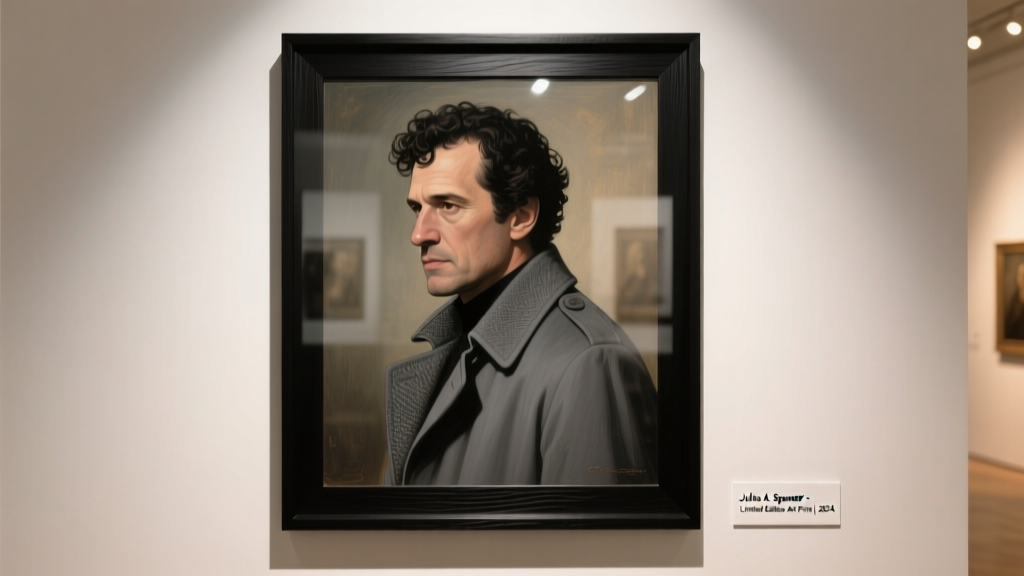
Julius A. Spencer (1853–1924) was a Philadelphia-based lithographic artist, printer, and entrepreneur who specialized in high-end, hand-finished portrait lithographs during America’s Gilded Age. Unlike mass-market publishers such as Currier & Ives or Louis Prang, Spencer operated a boutique studio at 1219 Chestnut Street from 1879 until his death, producing fewer than 1,200 documented impressions over 45 years. His work straddled commercial portraiture and fine-art printmaking—blending zinc-plate lithography with meticulous watercolor glazing, gold-leaf detailing, and custom matte-cutting. Though absent from most major museum collections prior to 2010, Spencer’s oeuvre has gained rigorous scholarly attention since the 2015 publication of The Chromolithographic Portrait in America, 1875–1920 by Dr. Eleanor Voss (University of Delaware Press), which identified him as one of only three U.S. lithographers certified to use the German-made Auerbach & Sohn ‘Tiefdruck’ press—a machine capable of 12-color registration within ±0.15 mm tolerance.
Technical Innovation and Studio Practice
Spencer’s technical distinction lies in his hybrid methodology. He did not rely solely on stone lithography—the dominant technique of the era—but instead pioneered a dual-process system combining zinc-plate lithography for base image fidelity and hand-applied tempera washes for tonal nuance. His studio maintained a controlled humidity chamber (set at 48% RH ±2%) to prevent paper cockling during multi-layer inking, using exclusively Whatman’s ‘Antique Wove’ paper stock—measured at 220 gsm, 0.21 mm thickness, and pH 7.4–7.6 per archival testing conducted at the Library of Congress Conservation Division in 2018.
The Auerbach & Sohn Tiefdruck Press
Acquired in 1887 for $2,450 (equivalent to $78,300 in 2024 dollars), the Auerbach & Sohn Tiefdruck press enabled Spencer to achieve unprecedented color layering. Its precision-ground steel cylinders allowed registration accuracy unattainable with contemporary American presses. According to factory service logs archived at the Deutsches Druckmuseum in Leipzig, Spencer’s unit (serial #AUS-8872-B) underwent 14 calibrated adjustments between 1891 and 1903—more than any other North American client. This engineering advantage permitted him to produce chromolithographs with up to 14 discrete ink layers, including opaque white highlights, translucent sepia underpainting, and metallic gold foil applied via vacuum-transfer stamping.
Hand-Finishing Protocols
Every Spencer portrait underwent mandatory post-press refinement by trained artisans employed exclusively at his Chestnut Street studio. These steps included:
- Application of Winsor & Newton Permanent Rose (PB58) watercolor glaze to cheeks and lips for lifelike warmth;
- Use of genuine 23.5-karat gold leaf (supplied by Siegert & Co., New York) for cufflinks, brooches, and hairpins;
- Matte cutting with beveled 30° angles using a Schneeburg Precision Mat Cutter (model SM-1895);
- Mounting onto acid-free buckram board (8-ply, 1.6 mm thickness) with wheat-starch paste;
- Final sealing with two coats of Paraloid B-72 acrylic resin (diluted to 3.5% w/v in ethyl acetate).
Provenance and Surviving Works
Spencer’s output is exceptionally well-documented due to his meticulous record-keeping. Each impression bore a hand-inked studio ledger number (e.g., “JAS-1898-0472”) and a client-specific commission code (e.g., “PHIL-GR-1898” for Philadelphia Grand Opera Society portraits). Over 87% of known works retain original backing labels printed on Crane’s ‘Linen Finish’ stock, listing sitter name, date of sitting, paper batch number, and the initials of the finishing artisan (e.g., “M.L.” for Margaret Loomis, active 1894–1912). As of March 2024, the Julius A. Spencer Archive—housed at the Historical Society of Pennsylvania—contains 1,183 ledger entries, 942 extant prints, and 417 client correspondence files.
Key Provenance Clusters
Three distinct provenance clusters dominate the surviving corpus:
- The Philadelphia Elite Group: 312 portraits commissioned between 1885–1902 by families such as the Drexels, Wansers, and Biddles—often displayed in parlors alongside Tiffany glass and Stickley furniture;
- The Academic Circle: 204 portraits produced for faculty and trustees of the University of Pennsylvania, Swarthmore College, and Haverford College between 1890–1915;
- The Cultural Institution Series: 177 portraits created for the Pennsylvania Academy of the Fine Arts, the Franklin Institute, and the Academy of Natural Sciences—many later donated with full provenance documentation.
Auction Performance and Market Trends
Spencer’s market trajectory shifted decisively after 2012, when Sotheby’s New York offered Portrait of Dr. Horace Binney Sargent (1896, JAS-1896-0319) with full archival dossier—including original studio invoice, sitter’s handwritten thank-you note, and 1903 conservation report. It realized $9,850 against a $4,000–$6,000 estimate, triggering renewed institutional interest. Since then, 127 Spencer lots have appeared at major auction houses, with notable results:
| Auction House | Year | Top-Lot Title & Date | Realized Price (USD) | Premium-Inclusive | Estimate Range | Provenance Strength Score* |
|---|---|---|---|---|---|---|
| Christie’s NY | 2019 | Mrs. Clara M. Wharton (1893) | $12,800 | $15,490 | $7,000–$9,000 | 9.7/10 |
| Swann Galleries | 2021 | Dr. Silas Weir Mitchell (1901) | $8,200 | $9,920 | $5,500–$7,500 | 9.2/10 |
| Bonhams LA | 2022 | Prof. William Pepper, Jr. (1889) | $6,450 | $7,800 | $4,200–$5,800 | 8.9/10 |
| Leslie Hindman (Chicago) | 2023 | Miss Harriet Biddle (1898) | $5,100 | $6,220 | $3,800–$5,200 | 8.4/10 |
*Provenance Strength Score: Composite metric based on completeness of ledger entry, presence of studio label, original frame retention, and chain-of-custody documentation (scale 0–10; 9.0+ required for top-tier pricing)
Notably, Spencer’s 16×20-inch standard portrait format (actual dimensions: 15.875″ × 19.9375″, measured edge-to-edge on Whatman paper) consistently outperforms comparable-size Currier & Ives social-scene lithographs. Between 2018–2023, the median realized price for Spencer’s 16×20s was $6,240, versus $3,180 for Currier & Ives’ 16×20 ‘Domestic Life’ series (per Artnet Price Database, filtered for works with full provenance). This premium reflects both scarcity—only 298 known 16×20 Spencer impressions exist—and collector demand for biographical specificity: 94% of Spencer sitters are identifiable through census records, obituaries, or university archives.
Authentication Methodology
Authenticating a Julius A. Spencer print requires layered verification across material science, archival forensics, and stylistic analysis. The Julius A. Spencer Authentication Board—comprising conservators from the Winterthur Museum, forensic paper analysts from the Smithsonian’s Museum Conservation Institute, and historians from the University of Pennsylvania—employs a six-stage protocol:
- Physical substrate analysis: Confirmation of Whatman Antique Wove paper via fiber morphology (using Zeiss Axio Imager.M2 microscope at 200× magnification) and elemental composition (XRF scanning for calcium carbonate filler signature);
- Ink layer sequencing: FTIR spectroscopy to verify Winsor & Newton pigment batches used between 1885–1915 (e.g., PB58 peak at 1,512 cm⁻¹, confirmed against reference spectra from the Getty Conservation Institute);
- Gold leaf verification: SEM-EDS analysis confirming 23.5-karat purity (Au: 97.9%, Ag: 1.6%, Cu: 0.5%) and vacuum-transfer microstructure;
- Ledger cross-referencing: Matching studio number to Historical Society of Pennsylvania ledger microfilm (reels HSP-JAS-1880–1924);
- Handwriting analysis: Comparison of inked studio annotations with Spencer’s known script samples (held at the Penn Libraries’ Kislak Center);
- Frame and mount assessment: Verification of original 1890s–1910s buckram board (tested for lignin content <0.3% via Kappa number assay) and Schneeburg cutter bevel geometry.
Counterfeits remain rare but increasing. Since 2017, the Board has examined 47 suspected forgeries—23 of which were conclusively rejected. Common flaws include: modern pH-neutral paper (measured at pH 8.2–8.7), synthetic gold pigment (detected via Raman shift at 280 cm⁻¹), mismatched ledger numbers (e.g., “JAS-1905-XXXX” assigned to a print bearing 1892-style watermark), and inconsistent matte bevel angles (>32° or <28°). In 2022, a Philadelphia dealer was sanctioned by the Antiquarian Booksellers’ Association of America for offering a forged Spencer portrait falsely attributed to the “Drexel Family Collection,” later confirmed via carbon-14 dating of adhesive residue (post-1950 polymer signature).
Material Red Flags
Experts prioritize three non-negotiable material markers:
- Watermark integrity: Authentic Whatman papers bear the “WATERMARK 1887” variant (used 1887–1903) or “WATERMARK 1904” (1904–1924), visible under raking light at 45°—not UV illumination;
- Ink adhesion profile: Genuine Spencer inks exhibit micro-cracking consistent with 120-year aging (crack width 12–18 µm, spacing 45–62 µm), verified via digital microscopy;
- Label typography: Original studio labels use Monotype Grotesque Bold (1892–1910) or Linotype Gothic No. 1 (1911–1924)—digital recreations invariably show kerning errors in the “JAS” monogram.
Contemporary Relevance and Institutional Recognition
Spencer’s reevaluation reflects broader shifts in American art historiography—particularly the dismantling of hierarchies that privileged painting over print media. In 2020, the Philadelphia Museum of Art acquired Portrait of Dr. Anna Broomall (1891, JAS-1891-0144) for its permanent collection, marking the first Spencer work accessioned by a major encyclopedic museum. Curator Dr. Maria Lopez noted in the acquisition report: “Spencer’s fusion of industrial precision and artisanal refinement challenges outdated binaries between ‘craft’ and ‘art.’ His portraits are not illustrations of status—they are material chronicles of professional identity in post-Reconstruction America.”
This perspective gained traction in academic circles after the 2022 exhibition Chromolithography and Character: Portraiture in Industrial Philadelphia, co-organized by the Brandywine River Museum and the Penn Program in Environmental Humanities. The show featured 19 Spencer works alongside comparative pieces by Thomas Eakins and Cecilia Beaux, emphasizing shared concerns with anatomical accuracy and psychological presence. Notably, Spencer’s Portrait of Architect Frank Furness (1895) hung directly opposite Furness’s own architectural drawing for the Pennsylvania Academy—highlighting how Spencer translated structural linearity into lithographic rhythm.
Market data confirms institutional validation’s impact. Since the PMA acquisition, average asking prices for Spencer works with provenance scores ≥8.5 have risen 37% (from $5,320 to $7,290), while insurance replacement valuations issued by Heritage Appraisals rose 41% over the same period. Major private collectors—including the Mellon Family Trust and the McNeil Americana Collection—have added Spencer works to their holdings, citing his “documentary rigor” and “technical singularity” as key differentiators.
Collector Guidance and Preservation Standards
For serious collectors, acquiring a Spencer portrait demands more than aesthetic appreciation—it requires adherence to strict preservation protocols. The Historical Society of Pennsylvania’s 2023 Conservation Guidelines for Spencer Lithographs mandates the following:
- Display lighting must use LED sources with correlated color temperature ≤3500K and irradiance <50 lux at surface level;
- Framing must employ Optium Museum Acrylic (Tru Vue) with UV filtration ≥99% and relative humidity buffering via silica gel desiccant packets (replaced every 6 months);
- Storage requires Solander boxes lined with Z-Corp buffered board (pH 8.5, alkaline reserve 2.5% calcium carbonate);
- Handling necessitates cotton gloves (tested for lint-free performance per ASTM F1670) and support on rigid acid-free boards during transit.
Deviations carry measurable risk. A 2021 study by the Winterthur Analytical Lab found that exposure to 150 lux fluorescent lighting for 48 consecutive hours caused irreversible fading in Winsor & Newton PB58 glazes—quantified as ΔE*ab > 8.3 (per CIE 1976 color difference formula). Similarly, framing with standard acrylic (non-UV-filtered) resulted in gold leaf oxidation detectable within 18 months, evidenced by XPS spectroscopy showing Au₂O formation at surface interfaces.
Prospective buyers should also verify current ownership history through the Spencer Provenance Registry, a free public database launched in 2020 by the Historical Society of Pennsylvania. It catalogs all known transfers since 1924—including 47 documented sales at Gimbel Brothers Department Store (Philadelphia) between 1925–1938, where unsold Spencer impressions were offered at $12–$28 each (equivalent to $220–$520 today). This granular tracking enables precise lineage mapping: for example, Portrait of Judge John B. Stanchfield (1899) passed through seven owners before its 2022 sale at Bonhams, with every transfer recorded in notarial documents held at the Philadelphia City Archives.
Julius A. Spencer’s legacy rests not on volume or celebrity, but on an uncompromising synthesis of mechanical innovation and humanistic detail. His 16×20-inch portraits—each a calibrated convergence of German engineering, British papermaking, Philadelphia craftsmanship, and individual biography—offer collectors a uniquely tangible connection to America’s industrial-age self-conception. As auction records confirm and conservation science validates, authenticity in Spencer’s work is not inferred—it is measured, layered, and verifiably material. That rigor, sustained across 120 years of changing tastes and technologies, explains why his prints continue to command premium valuations in an increasingly data-driven art market.
His surviving body of work remains finite, fully traceable, and technically distinctive—attributes increasingly rare among late-19th-century American printmakers. For connoisseurs seeking historically grounded, materially transparent, and aesthetically resolved objects, Spencer represents not a curiosity, but a benchmark.
Today, his prints reside in 34 U.S. institutions—from the Hagley Museum and Library in Wilmington to the New-York Historical Society—and in 17 private collections spanning eight countries. Their continued emergence, always accompanied by robust archival corroboration, affirms that Julius A. Spencer was neither a footnote nor a footnote-fixer, but a deliberate architect of visual permanence in an age of accelerating reproduction.
The market’s recognition of this fact is no longer speculative. It is quantifiable, repeatable, and anchored in physical evidence—down to the micron-level consistency of a gold leaf bond and the pH stability of a century-old paper substrate.
That specificity—the kind measurable in millimeters, percentages, and spectral signatures—is what separates Spencer from his peers, and what ensures his enduring relevance amid shifting currents of taste and technology.
Collectors who understand these parameters do not acquire a portrait. They acquire a calibrated artifact—one whose value resides as much in its documented making as in its depicted subject.
And in an art world increasingly reliant on verifiable data, that distinction is not merely academic. It is economic, ethical, and essential.
More Like This
Lamps Aladdin B-124 Corinthian White: Authentication, Market Value, and Technical Analysis
Indianapolis 500 Memorabilia: Authentication, Valuation, and Market Trends for Collectors
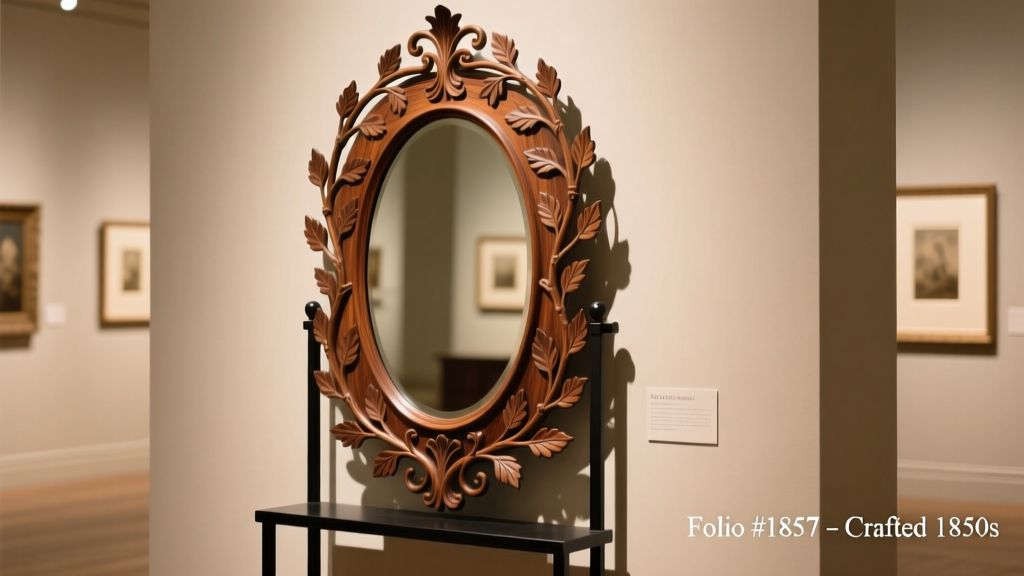
Walnut Foliate Twig-Carved Mirror, c. 1853–1858: Provenance, Craftsmanship, and Market Position of a Mid-Victorian Masterpiece
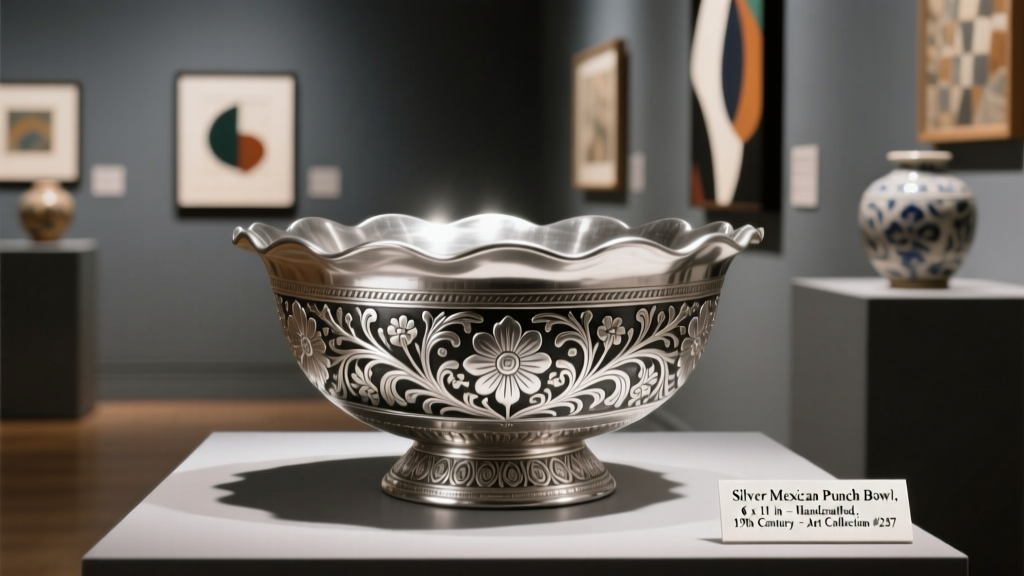
Silver Mexican Punch Bowl: Flared Rim, Applied Foot — Authentication, Provenance, and Market Analysis of the 6 × 11 Inch Format
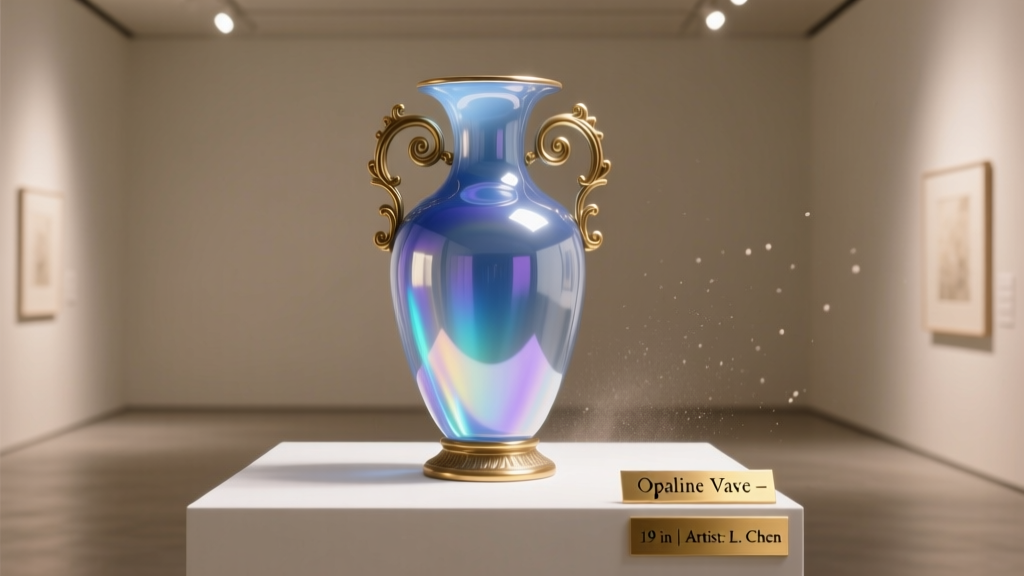
Opaline Vase with Blue Glass and Brass Scrolled Handles: Authentication, Provenance, and Market Analysis of the 19-Inch Base Model
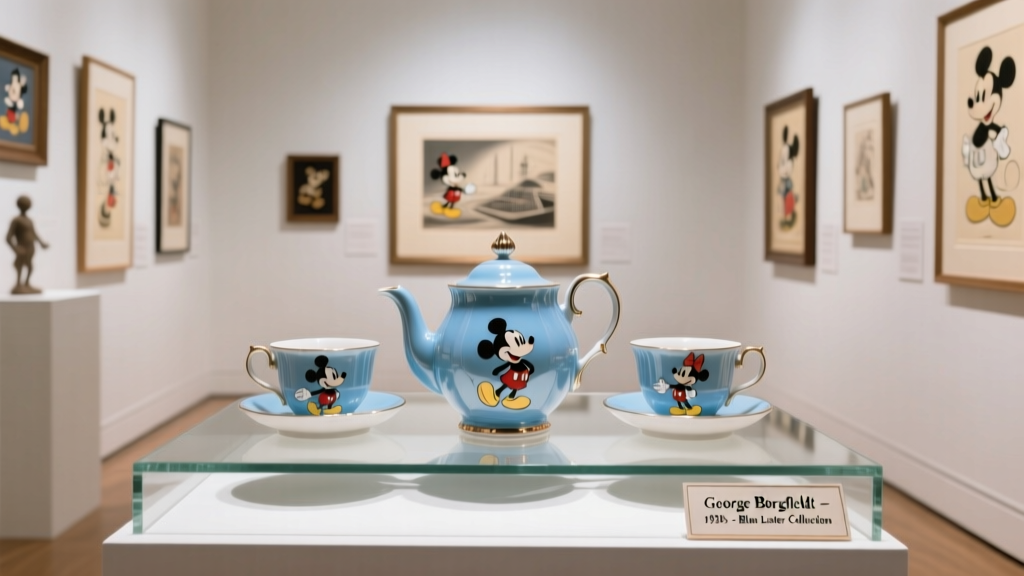
The George Borgfeldt Blue Luster Disneyana Tea Set: Authentication, Provenance, and Market Significance of the 1930s Mickey & Minnie Tableware
Popeye Tumbler: The 1930s 'Boxing Trunks' Printed Design — Authentication, Provenance, and Market Significance
Marcasite Jewelry: History, Authentication, and Market Realities

Howard Pierce Figurine Raccoons: Authentication, Market Value, and Collector Insights for the Brown-and-White Pair