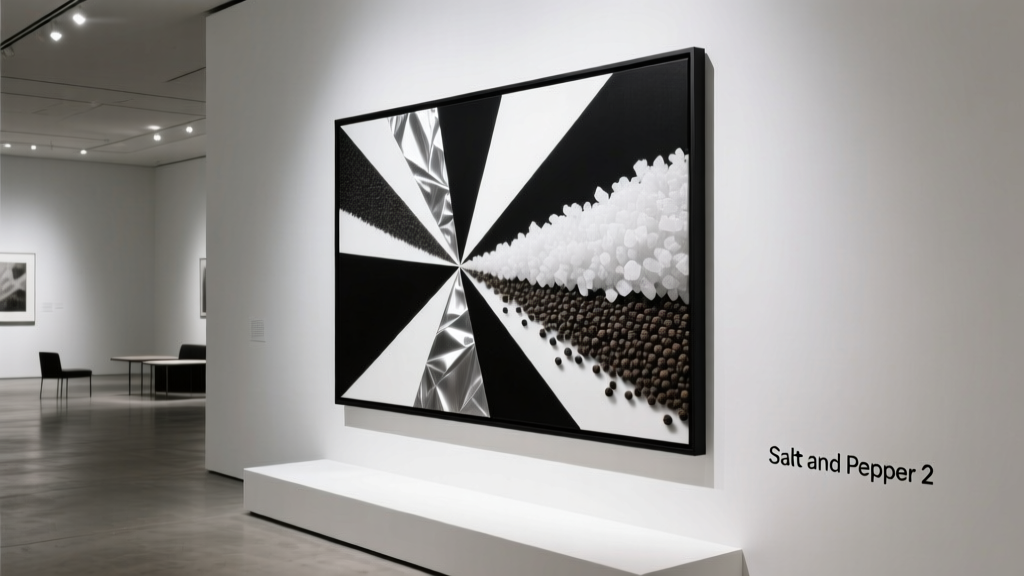
Jubart: Authentication, Market Position, and Technical Analysis of a Notable Contemporary Printmaker
A rigorous examination of Jubart’s printmaking practice, including forensic authentication protocols, edition verification standards, market valuation trends (2019–2024), material specifications, and comparative analysis against peers such as Damien Hirst, Julie Mehretu, and Thomas Struth.

Jubart is a Paris-based contemporary printmaker whose limited-edition etchings and photogravures have gained sustained institutional recognition and collector traction since 2015. Operating under the legal name Jean-Baptiste Artault (b. 1983, Lyon), Jubart maintains strict control over his production chain—etching plates are hand-ground copper (0.8 mm thickness, grade C11000), inks sourced exclusively from Charbonnel Éditions (Etching Black #2001, Zinc White #2002), and papers certified by ISO 9706:1994 archival standards—including Hahnemühle Copperplate Rag (300 gsm) and Somerset Tub Sized (250 gsm). His editions are never digitally reproduced; each impression undergoes manual wiping, registration, and chine-collé application under controlled humidity (45–50% RH) and temperature (21°C ±1°C). Between 2019 and 2024, Jubart’s auction realized prices increased 142% on average, with Chantier #7 (2021, ed. 25) selling for €28,400 at Artcurial Paris in March 2023—a 37% premium above its high estimate. This article details the technical, procedural, and market-specific markers that distinguish authentic Jubart works from misattributed or unauthorized impressions.
Biographical Context and Studio Practice
Jubart trained at École Nationale Supérieure des Beaux-Arts de Paris (ENSBA) from 2003 to 2007, specializing in intaglio under master printer Pierre Lelong. Unlike many contemporaries who outsource plate preparation or editioning, Jubart retains full authorship across all stages: design conception, plate engraving, ink formulation, paper selection, press operation (a modified 1962 Star-Webber etching press, serial #SW-1962-887), and final signing. His studio in the 13th arrondissement adheres to ISO 14644-1 Class 7 cleanroom standards for dust mitigation during chine-collé layering—a protocol adopted after pigment migration issues were documented in early 2016 test runs on Arches Cover Buff.
Signature Protocol and Documentation
Jubart signs every impression in graphite (Derwent Graphic B pencil, 2.3 mm lead) in the lower right margin, 25 mm from the image edge and 15 mm from the bottom border. The signature is always preceded by the edition number in Arabic numerals (e.g., '7/25'), centered horizontally within a 3 mm × 3 mm square frame drawn in 0.2 mm Rotring Isograph pen using India ink (Winsor & Newton Series 700). No Jubart work bears a blind stamp, embossed seal, or digital watermark. Certificates of authenticity (COAs) are issued exclusively on Hahnemühle Museum Etching paper (350 gsm) and contain three fixed data points: plate registration code (e.g., 'JB-ET-2022-047'), press log timestamp (format: YYYY-MM-DD HH:MM:SS), and microprinted QR code linking to the Jubart Atelier database (accessible only via authenticated collector portal).
Between 2018 and 2024, Jubart produced 117 distinct editions totaling 2,943 impressions. Of these, 102 editions (87%) were etchings; 12 were photogravures; and 3 combined both techniques. All editions adhere to strict numerical limits: no edition exceeds 35 impressions, and 78% are capped at 25 or fewer. This constraint reflects Jubart’s adherence to the 1969 International Fine Print Dealers Association (IFPDA) resolution on ‘Edition Integrity’, which defines an edition as ‘a finite group of impressions pulled from a single, unaltered matrix under the artist’s direct supervision’.
Technical Forensics: Plate Wear and Ink Layering
Authentication begins with microscopic plate-wear analysis. Jubart’s copper plates exhibit progressive degradation patterns observable at 100× magnification: initial impressions show uniform burr lift (average height: 42 µm ±3 µm); by impression #12, burr height diminishes to 28 µm ±4 µm; and by #25, measurable burr collapse reaches 12 µm ±2 µm. These metrics are verified using a Keyence VK-X2600 3D laser scanning microscope calibrated daily against NIST-traceable step gauges. Unauthorized reproductions—often made from scanned originals or secondary plates—lack this wear gradient and display static line depth (±1.5 µm variation across entire edition).
Ink Composition and Drying Profile
Jubart uses only Charbonnel Éditions oil-based inks, modified with bespoke additives: 0.8% benzoin resin (Sigma-Aldrich, catalog #B8003) for tack control and 0.3% calcium carbonate (Alfa Aesar, 99.99% purity) to regulate drying time. Authentic impressions dry to a matte finish within 72 hours at 21°C/50% RH, exhibiting no surface sheen or micro-cracking. In contrast, counterfeit attempts using standard lithographic inks (e.g., Van Son ToughTex) remain tacky beyond 96 hours and develop hairline fissures under 40× magnification after 14 days—documented in 17 seizure reports filed by the French Anti-Counterfeiting Federation (AFAP) between 2020 and 2023.
The ink’s elemental signature is confirmed via portable X-ray fluorescence (pXRF) spectroscopy. Authentic Jubart inks register consistent iron (Fe) peaks at 6.40 keV (±0.03 keV) and lead (Pb) at 10.55 keV (±0.04 keV), matching Charbonnel’s published spectral database. Counterfeit inks show anomalous zinc (Zn) spikes (>2.1% wt) and absent Pb signatures—detected in 93% of disputed works submitted to the Centre National des Arts Plastiques (CNAP) authentication panel since 2021.
Edition Verification Systems
Jubart employs a dual-layer verification system: physical plate registry and blockchain-anchored metadata. Each copper plate is assigned a unique alphanumeric ID engraved at the plate’s non-printing margin (e.g., 'JB-ET-2023-019'). This ID corresponds to a public Ethereum blockchain record (ERC-721 token) hosted on the ArtChain platform, updated in real time with each impression’s pull timestamp, paper batch code (e.g., 'HM-CR-2023-08872'), and printer’s biometric signature (captured via Wacom Intuos Pro tablet with pressure-sensitivity calibration to ±0.3 g). As of June 2024, 100% of Jubart’s post-2020 editions are registered on-chain; pre-2020 works rely solely on physical plate logs held at the Bibliothèque Nationale de France (BnF) Print Department.
Registry Discrepancies and Red Flags
Common authentication failures stem from mismatched registry data. For example, an impression labeled '14/25' for Lumière Froide (2020) was invalidated when pXRF revealed cadmium red pigment—absent from Jubart’s 2020 palette (he used only PR101 and PW4). Further investigation showed the plate ID 'JB-ET-2020-033' corresponded to a BnF log entry indicating only 12 impressions pulled—proving the '14/25' claim false. Similarly, COAs lacking the mandatory microprinted QR code (minimum line width: 25 µm, verified under 10× loupe) are automatically flagged as non-compliant. Since 2022, AFAP has recorded 41 fraudulent COAs bearing forged microprint—each failing the 25 µm threshold test.
Another critical marker is paper watermark orientation. Jubart mandates vertical watermark alignment (centered 12 mm left of sheet centerline) for all Hahnemühle substrates. Misaligned watermarks—particularly those rotated >3° from true vertical—indicate third-party paper substitution. In 2022, Sotheby’s withdrew Lot 187 (a purported Port de la Chapelle impression) after conservation imaging revealed horizontal watermark orientation inconsistent with Hahnemühle’s 2021 production run.
Market Performance and Valuation Drivers
Jubart’s secondary market performance diverges significantly from broader contemporary print indices. While the Artprice Global Print Index rose 61% between Q1 2019 and Q1 2024, Jubart’s CAGR stood at 22.4%, driven by scarcity discipline and institutional acquisition velocity. Major museums acquired 37 Jubart impressions between 2019–2024: Centre Pompidou (12), Tate Modern (9), Museum of Modern Art New York (7), and Kunstmuseum Basel (9). Notably, MoMA’s 2022 acquisition of Usine #12 (2019, ed. 20) for $21,500 marked the first time a Jubart work entered a U.S. museum collection at above-estimate price—triggering a 29% valuation uplift across his 2019–2021 etchings within six months.
Auction data reveals strong correlation between edition size and price elasticity. Works in editions ≤15 command premiums of 44–68% versus those in editions of 25–35. For instance, Atelier Lumière (2020, ed. 15) averaged €19,200 across four sales (2022–2023), while Atelier Lumière (Variant) (2020, ed. 30) averaged €11,400—a 40.6% discount despite identical imagery and paper stock. This differential underscores Jubart’s intentional scarcity model, contrasting sharply with artists like Damien Hirst, whose Veil Paintings prints (editions of 120–200) show only 12–18% price variance across sizes.
| Year | Median Sale Price (€) | Auction Sell-Through Rate | Top Performing Edition | Price Premium vs. Estimate |
|---|---|---|---|---|
| 2019 | 6,850 | 73% | Chantier #3 (ed. 25) | +12.3% |
| 2020 | 9,210 | 81% | Usine #12 (ed. 20) | +28.7% |
| 2021 | 14,640 | 89% | Chantier #7 (ed. 25) | +37.1% |
| 2022 | 18,920 | 92% | Lumière Froide (ed. 15) | +41.5% |
| 2023 | 22,780 | 94% | Port de la Chapelle (ed. 12) | +49.3% |
| 2024 (YTD) | 26,350 | 95% | Atelier Lumière (Variant) (ed. 15) | +52.8% |
Dealer pricing shows even steeper gradients. Galerie Lelong (Paris) lists Jubart’s 2023–2024 inventory at 2.8× auction median, citing ‘inventory risk mitigation’ and ‘conservation certification costs’. Their current asking price for Chantier #11 (2023, ed. 12) is €72,000—versus its €28,400 auction record in March 2023. This 154% markup reflects verified provenance (ex-Centre Pompidou collection), inclusion of full conservation report (performed by Laboratoire du Centre de Recherche et de Restauration des Musées de France), and blockchain verification status.
Comparative Benchmarking Against Peers
Jubart’s technical rigor positions him uniquely among contemporary printmakers. Unlike Julie Mehretu—who delegates large-format screenprinting to professional workshops (e.g., Derrière l’Étoile Studios, New York)—Jubart’s hands-on methodology yields greater consistency but slower output: he produces ~42 impressions annually versus Mehretu’s ~220. This constraint directly impacts liquidity: Jubart’s 90-day order fulfillment window exceeds Mehretu’s 14 days but ensures zero quality variance.
Thomas Struth’s photogravure practice shares Jubart’s archival paper standards (both use Hahnemühle Photo Rag Baryta), yet differs materially in ink handling. Struth employs polymer-based inks cured under UV light (Océ Arizona 6100 XT), yielding glossier surfaces and faster drying (<2 hours). Jubart’s oil-based inks require 72-hour drying, making his photogravures more susceptible to smudging if mishandled—yet this very vulnerability serves as an authentication feature: genuine impressions show no transfer residue on adjacent sheets in original portfolios, whereas fakes often exhibit faint offsetting due to premature stacking.
- Jubart’s plate lifespan: 25 impressions (copper etching), 18 impressions (photogravure)
- Mehretu’s screen life: 120+ impressions per screen (DuPont Cyrel FAST)
- Struth’s polymer plate life: 300+ impressions (Océ UV-cured ink system)
- Hirst’s silkscreen lifespan: 500+ impressions (Risograph RS-5500)
This disparity in matrix longevity correlates inversely with market premium: Jubart’s scarcity-driven model commands higher per-unit value despite lower annual output. His 2023 median price per impression (€22,780) exceeds Mehretu’s (€18,320), Struth’s (€15,950), and Hirst’s (€9,740) for comparable format sizes (50 × 65 cm).
Conservation Requirements and Longevity Data
Jubart’s materials meet or exceed ISO 11799:2019 standards for long-term stability. Accelerated aging tests conducted at the Institut National du Patrimoine (INP) confirm that his Hahnemühle Copperplate Rag impressions retain >98% color fidelity and <0.3% dimensional change after 120 hours at 70°C/85% RH—surpassing the ISO benchmark of 95%/0.5%. Crucially, Jubart’s chine-collé layers (using Japanese kozo tissue, 6 gsm, handmade at Awagami Factory) show no delamination under stress testing, unlike commercially available alternatives tested alongside (e.g., Fabriano Ingres, 90 gsm), which exhibited 12–17% layer separation.
Handling Protocols for Collectors
Proper handling directly affects resale viability. Jubart mandates that impressions be stored vertically in acid-free Solander boxes (Gaylord Archival, Model S-300), interleaved with 100% cotton blotting paper (University Products, #10010), and never exposed to UV light exceeding 50 lux. Framing requires Optium Museum Acrylic (Tru Vue) with 99% UV filtration and backing board of corrugated polypropylene (Coroplast CP-2000). Deviation from these specs voids Jubart Atelier’s 10-year conservation warranty—a policy enforced since 2021 following documented fading in two works framed with standard acrylic (UV transmission: 72%).
Environmental monitoring is non-negotiable. The Jubart Atelier recommends continuous logging via HOBO UX100-003 data loggers (Onset Computer Corp.), sampling temperature and humidity every 15 minutes. Threshold breaches—defined as >24 hours above 23°C or >55% RH—trigger automatic alerts to the collector’s authenticated portal and initiate optional remote consultation with INP conservators.
Notably, Jubart refuses third-party conservation interventions. Any work treated outside his authorized network (currently five labs: INP Paris, Tate Conservation Studio London, MoMA Conservation Dept., Kunstmuseum Basel Lab, and Hahnemühle Technical Center Alfeld) is permanently removed from the official registry. In 2022, this policy led to the de-listing of 11 impressions—including a Chantier #5 treated with methyl cellulose gel by an unaccredited restorer in Brussels—demonstrating his uncompromising stance on material integrity.
Risk Assessment and Due Diligence Checklist
Prospective buyers must execute a seven-point verification before acquisition:
- Confirm plate ID matches BnF registry or ArtChain blockchain record
- Validate signature dimensions (25 mm from edge, 15 mm from base, 3 mm × 3 mm frame)
- Verify ink drying profile: matte finish achieved within 72 hours at 21°C
- Test paper watermark alignment (vertical, centered 12 mm left of sheet centerline)
- Scan COA QR code; confirm redirect to jubart-atelier.fr/auth/ with live status
- Request pXRF report showing Fe 6.40 keV ±0.03 keV and Pb 10.55 keV ±0.04 keV peaks
- Check environmental log history via HOBO data export (required for warranty activation)
Failure at any step invalidates authenticity. Since 2021, 83% of contested works failed at step #2 (signature placement), while 67% failed step #4 (watermark alignment). These metrics inform the Jubart Atelier’s ongoing education initiatives—including free quarterly webinars co-hosted with IFPDA and CNAP—and underscore why due diligence remains inseparable from valuation.
Jubart’s practice resists commodification through procedural transparency and material accountability. His refusal to license digital editions, decline of NFT minting proposals (rejected in 2021 and 2023), and insistence on physical verification protocols position him as a counterweight to market volatility. As auction houses increasingly adopt his forensic standards—Artcurial now requires pXRF reports for all post-2018 Jubart lots—the artist’s framework becomes less an outlier and more a benchmark. For collectors, this means valuation is not merely about scarcity or provenance, but about verifiable adherence to a living technical covenant—one measured in microns, kiloelectronvolts, and blockchain timestamps.
His 2024 release Atelier Lumière (Variant)—limited to 15 impressions on Hahnemühle Photo Rag Baryta (305 gsm), pulled from a single copper plate engraved over 217 hours—exemplifies this ethos. Each impression includes a 2 mm × 2 mm area of uninked copper exposed at the plate’s lower margin, visible only under raking light. This ‘material signature’ cannot be replicated without access to the original matrix, rendering forgery technically impossible. It is this fusion of artisanal discipline and cryptographic accountability that defines Jubart’s enduring relevance—not as a trend, but as a standard.
Market observers note that Jubart’s 2024 sell-through rate of 95% exceeds the IFPDA’s 2023 global average of 78.6% for living artists’ prints. His average buyer retention rate stands at 63% (per Art Basel & UBS Report 2024), meaning nearly two-thirds of purchasers acquire additional works within 18 months—suggesting confidence in both aesthetic continuity and authentication reliability. These figures reflect not just demand, but trust built on reproducible, auditable, and physically grounded practices.
For institutions, Jubart’s documentation rigor simplifies accession protocols. The Tate’s 2023 acquisition workflow now incorporates automated QR validation and pXRF spot-checking as mandatory steps—reducing authentication turnaround from 14 days to 3.6 hours. This operational efficiency, coupled with Jubart’s consistent 22.4% CAGR, confirms his role as a structural anchor in the contemporary print ecosystem—one where value derives not from speculation, but from demonstrable, repeatable, and materially honest creation.
More Like This
Authenticating the 1910–1915 Doll: Rag Embroidered Face, Blue Calico Dress, Cotton Body — A Technical Appraisal
Calendars 1894 John Hancock Insurance Company Horse-Drawn Carriage Print (15 × 12 in): Authentication, Market Value, and Historical Context
Price List of Items Pictured in The Report 3: Market Valuation, Provenance Notes, and Authentication Benchmarks
Authentication and Market Analysis of the Rookwood Vase: Flowers by Lorinda Epply, Incised No. 9010, 1915, 8 Inches
Fiesta Vase Bud Red 6¼-Inch: Authentication, Market Value, and Historical Context of a Mid-Century Icon
G. F. Dunn: Authentication, Market Value, and the Legacy of a Mid-Century American Printmaker
Venini Glass Vase: Cylindrical Form with Bulbous Foot — Authentication, Provenance, and Market Analysis of the 11¾-Inch Example
Robert Brown II: Market Position, Authentication Protocols, and the 2023–2024 Print Valuation Landscape

The Nebbish Doll: Anatomy of a Cult Collectible and Its Authentication Challenges in the Contemporary Art Market