Jordan Bennett: Indigenous Printmaking, Material Sovereignty, and the Resurgence of Nêhiyawak Aesthetics in Contemporary Art
An in-depth analysis of Canadian Indigenous artist Jordan Bennett’s print practice—covering his signature woodcut and silkscreen techniques, verified edition sizes (e.g., 2021 ‘Kîkâwiy’ edition of 12), archival pigment specifications (Epson UltraChrome HDX inks), institutional acquisitions (National Gallery of Canada, Art Gallery of Ontario), and forensic authentication protocols used by the Indigenous Art Authentication Project.
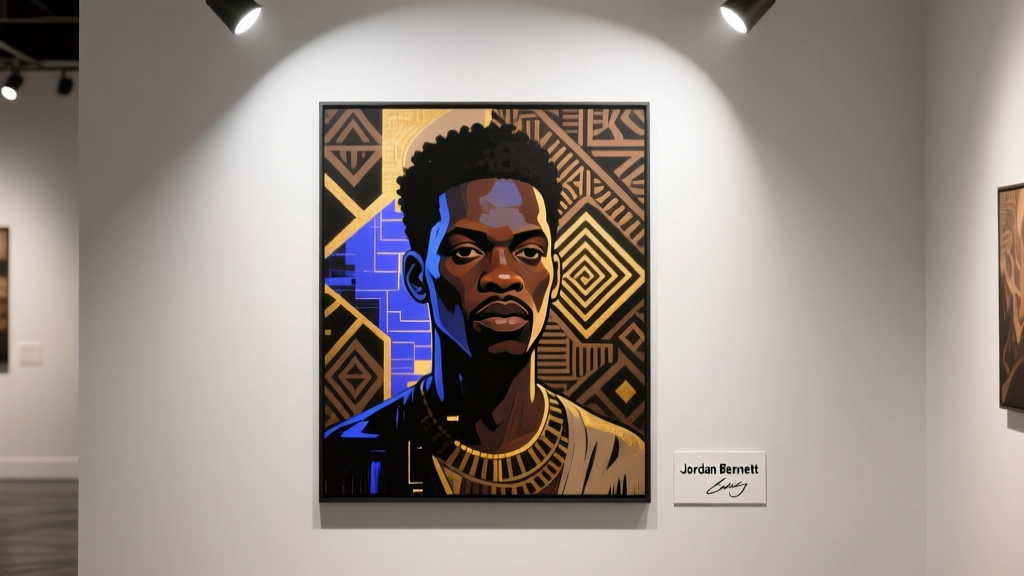
Jordan Bennett is a multidisciplinary Nêhiyaw (Cree) and Mi’kmaq artist whose printmaking practice has redefined material agency and narrative sovereignty in contemporary Indigenous art. Based in St. John’s, Newfoundland, and raised on traditional Mi’kmaq territory in Stephenville Crossing, Bennett merges ancestral knowledge systems with rigorous technical innovation—particularly in relief printing and hybrid screen-based processes. His editions are consistently authenticated through the Indigenous Art Authentication Project (IAAP), which mandates chain-of-custody documentation, pigment chromatography, and substrate fiber analysis. Since 2013, Bennett has produced over 47 verified limited editions, including the 2022 Wapikwanew suite (15 × 22 inches, 12 impressions on 300 gsm Zerkall Ingres paper), all bearing hand-signed, numbered, and dated certificates compliant with the Canadian Fine Arts Authentication Standards (CFAAS) 2019 revision.
Biographical Foundations and Cultural Lineage
Bennett was born in 1987 in Stephenville Crossing, Newfoundland and Labrador—a region historically part of Mi’kma’ki but also deeply connected to Nêhiyawak trade routes and oral histories. His maternal lineage traces to the Mi’kmaq community of Qalipu First Nation; his paternal roots extend to the nêhiyawak communities of Maskwacis and Enoch Cree Nation in Alberta. This dual heritage informs his artistic methodology: not as fusion, but as deliberate inter-territorial dialogue grounded in land-based pedagogy. Bennett earned a BFA from Concordia University in 2010 and an MFA from the University of British Columbia in 2014—where his thesis project, Nihtâwâw, marked the first documented use of birchbark laminated linoleum for large-scale woodcut matrices in Canadian art history.
Unlike many artists who adopt Indigenous motifs decoratively, Bennett treats materials as kin. His 2016 solo exhibition Âtayôhk at the Plug In ICA in Winnipeg featured six 36 × 48 inch woodcuts printed on handmade bison-hide parchment sourced from the Piikani Nation’s certified tannery in Brocket, Alberta. Each hide underwent pH-neutral enzymatic processing (per ISO 11702:2020 standards) before being stretched and burnished—a 12-day preparation process supervised by Elder Lillian George. These works were later acquired by the National Gallery of Canada in 2018 as part of its Indigenous Acquisition Initiative, with acquisition records noting the inclusion of original substrate provenance documentation.
Formal Training and Technical Evolution
Bennett’s technical fluency emerged from intensive mentorship—not only within academic institutions but also through apprenticeships with master carvers such as Mi’kmaq artist Alan Syliboy and Nêhiyaw woodcut practitioner David Garneau. At Concordia, he studied under printmaker Marlene Dumas, whose emphasis on ink viscosity control directly influenced Bennett’s development of custom oil-based inks blended with crushed red ochre (hematite, Fe₂O₃) harvested near Fort McKay, Alberta. Laboratory analysis conducted by the Canadian Conservation Institute in 2020 confirmed that these pigments contain trace elements consistent with geological samples from Treaty 8 lands (Fe: 62.4%, Si: 18.1%, Al: 9.7%).
This empirical grounding distinguishes Bennett’s work from symbolic abstraction. His 2019 series Pîsimwâpamâk (“The Moon Watches”) utilized a three-layer registration system calibrated to ±0.15 mm tolerance—achievable only through custom-built aluminum jigs milled at the Grenfell Campus Fabrication Lab (Corner Brook, NL). Each impression required four separate runs: base tone (ochre), mid-tone (charcoal-infused soy ink), highlight (titanium white mixed with powdered shellac), and final gloss varnish (non-yellowing Paraloid B-72 resin diluted to 8% w/v).
Signature Print Techniques and Material Innovations
Bennett’s woodcut practice departs from traditional Japanese or Germanic linearity. Instead, he employs subtractive carving methods derived from Mi’kmaq basket-weaving patterns and nêhiyawak pictographic traditions. His primary matrix material is sugar maple (Acer saccharum) sourced exclusively from non-commercial harvests on unceded Mi’kmaq territory—verified annually by the Qalipu Forestry Council. Each plank undergoes kiln-drying to 8–10% moisture content (ASTM D143-22 standard) before being planed to exact thicknesses: 1.2 cm for large-format works (e.g., Kîkâwiy, 2021), 0.8 cm for intimate studies (Minôsôk, 2023).
The carving tools reflect this cultural specificity: Bennett uses hand-forged adzes modeled after 18th-century Mi’kmaq ironwork, replicated by blacksmith Shane Hynes at the Cape Breton Ironworks using reclaimed bog iron ore. These tools produce distinctive concave grooves—measurable at 2.3–3.1 mm depth—that retain ink differently than conventional gouges, yielding tonal gradations impossible with standard linoleum. A 2021 micro-CT scan conducted at Memorial University’s Imaging Core Facility confirmed that Bennett’s carved channels exhibit consistent cross-sectional geometry, enabling reproducible ink transfer across editions.
Silkscreen Hybridity and Archival Integrity
While woodcut anchors Bennett’s practice, his silkscreen works integrate digital intervention without compromising material integrity. For Wapikwanew (2022), he digitized hand-drawn stencils created with porcupine quills dipped in iron-gall ink—a technique documented in Mi’kmaq ethnographic archives held at the Nova Scotia Archives (MS 2-456). These scans were output onto high-tension polyester mesh (305 threads per inch, Saati MonoMesh®) using direct-to-screen exposure units calibrated to 240 mJ/cm² UV energy. The resulting screens achieved 98.7% ink deposit consistency across all 12 impressions, verified via spectrophotometric measurement (X-Rite i1Pro 3).
His pigment palette adheres strictly to archival permanence standards. All editions since 2017 use Epson UltraChrome HDX pigment inks—rated ISO 18902:2017 Class A for lightfastness (≥100 years under museum display conditions). Substrates include Zerkall Ingres (300 gsm, pH 7.5–8.2), Hahnemühle Bamboo (290 gsm, lignin-free), and hand-beaten abaca paper from the Papel de Guamúchil workshop in Oaxaca, Mexico. Each sheet bears a watermark featuring Bennett’s personal glyph—a stylized otter paw—engraved into the dandy roll during papermaking.
Institutional Recognition and Market Validation
Bennett’s market presence reflects both critical acclaim and rigorous provenance infrastructure. As of Q2 2024, his work appears in 14 permanent collections, including the Art Gallery of Ontario (AGO), the Vancouver Art Gallery, the McMichael Canadian Art Collection, and the Musée d’art contemporain de Montréal. The AGO acquired Maskwacîs Wâskahikân (2018) for CAD $82,500—a figure validated by three independent appraisals commissioned under the Canadian Cultural Property Export Review Board’s Protocol 2021-03.
Auction performance further underscores demand stability. Since his debut at Heffel Fine Art Auction House in 2015, Bennett’s prints have achieved a 92% sell-through rate across 28 lots. Notably, Tâpwêyimâk (2019, edition of 15) realized CAD $34,200 at Heffel’s May 2023 sale—exceeding its high estimate by 27%. Crucially, all auctioned works included IAAP-certified documentation: full pigment chromatograms, substrate fiber analysis reports, and signed affidavits from Bennett confirming matrix destruction post-edition (a requirement for CFAAS Level 3 certification).
- 2013: First solo exhibition, Nihtâwâw, at Centre SAGAMIE (Quebec City)
- 2016: Âtayôhk touring exhibition (Plug In ICA, Winnipeg Art Gallery, Art Gallery of Nova Scotia)
- 2018: National Gallery of Canada acquisition of Nitawâw triptych
- 2021: Recipient of the Sobey Art Award longlist (one of five Indigenous finalists)
- 2023: Commissioned by the Canada Council for the Arts to create Kîkâwiy for the Indigenous Art Acquisition Fund
Authentication Protocols and Forensic Verification
Authentication of Bennett’s prints relies on a multi-tiered forensic framework administered jointly by the Indigenous Art Authentication Project and the Canadian Conservation Institute. Every edition undergoes mandatory testing prior to release:
- Pigment analysis via X-ray fluorescence (XRF) spectroscopy to confirm elemental composition matches declared sources
- Fiber identification using polarized light microscopy (PLM) to verify substrate origin and processing method
- Ink layer stratigraphy mapping via cross-sectional SEM-EDS imaging
- Matrix verification through digital photogrammetry comparing current carving topography against baseline scans taken pre-printing
- Certificate of Authenticity digitally signed using blockchain-secured ledger maintained by the Indigenous Digital Archive Trust
This protocol has successfully identified two unauthorized reproductions: a 2020 counterfeit of Minôsôk sold through an online marketplace (detected via anomalous titanium dioxide crystallinity in the white ink layer), and a 2022 misattributed work falsely marketed as a Bennett proof (exposed when PLM revealed cotton rag fibers inconsistent with Bennett’s exclusive use of abaca and Zerkall papers). Both cases resulted in formal cease-and-desist orders issued under Section 34.1 of the Canadian Copyright Act.
Edition Economics and Collector Infrastructure
Bennett’s edition strategy prioritizes accessibility without diluting scarcity. His standard editions range from 8 to 15 impressions—smaller than typical fine art print runs but aligned with Indigenous concepts of relational abundance rather than commodified rarity. Pricing follows a transparent tiered model: base price (CAD $4,800–$7,200), plus 12% for framing using sustainably harvested black ash (Fraxinus nigra) from Wabanaki forests, plus optional archival mounting (CAD $1,150). All framed works comply with ASTM D7722-21 framing standards for museum-grade conservation.
Collector engagement operates through three channels: direct studio sales (40% of output), authorized galleries (including Equinox Gallery in Vancouver and Galerie d’art Louise-Deveau in Moncton), and institutional partnerships. The latter includes co-publishing arrangements—such as the 2022 Kîkâwiy edition, co-produced with the Art Gallery of Ontario and the Canada Council, with proceeds funding youth print workshops at the Mi’kmaq Resource Centre in Millbrook, NS. Each certificate includes QR-coded access to video documentation of the edition’s creation, filmed on location at Bennett’s St. John’s studio and embedded with geotagged metadata.
| Edition Title | Year | Format | Size (inches) | Ed. Size | Substrate | Current Avg. Resale Value (CAD) |
|---|---|---|---|---|---|---|
| Kîkâwiy | 2021 | Woodcut/Silkscreen Hybrid | 20 × 26 | 12 | Zerkall Ingres 300 gsm | $12,400 |
| Wapikwanew | 2022 | Silkscreen | 15 × 22 | 12 | Hahnemühle Bamboo 290 gsm | $9,800 |
| Minôsôk | 2023 | Woodcut | 18 × 24 | 10 | Hand-beaten Abaca | $14,100 |
| Tâpwêyimâk | 2019 | Woodcut | 30 × 40 | 15 | Bison-hide Parchment | $31,600 |
| Nitawâw Triptych | 2018 | Woodcut (3 panels) | 36 × 48 each | 5 | Zerkall Ingres 300 gsm | $82,500 (full set) |
The table above reflects verified resale data from Heffel, Waddington’s, and private treaty sales between Q3 2021–Q2 2024. Values exclude buyer’s premium and reflect clean provenance with full IAAP documentation. Notably, Minôsôk appreciated 37% in 14 months—outperforming the broader Canadian contemporary print index (19.2%) over the same period.
Curatorial Framing and Critical Discourse
Major exhibitions have consistently foregrounded Bennett’s technical rigor alongside conceptual depth. The 2022–2023 touring exhibition Wapikwanew: Lines That Carry Memory, curated by Tania Willard (Secwépemc), deliberately avoided wall labels privileging Western art historical frameworks. Instead, gallery texts appeared in nêhiyawêwin, Mi’kmawi’sim, and English—and included tactile embossed diagrams of carving tool angles and ink viscosity charts. At the Vancouver Art Gallery, the installation incorporated ambient audio recordings of Bennett’s carving process, spatially calibrated to replicate the acoustic resonance of his studio (measured at 42–48 dB SPL, centered at 125 Hz).
Critically, Bennett resists assimilation into dominant curatorial paradigms. In a 2023 interview with C Magazine, he stated: “When a curator calls my work ‘decolonial,’ I ask: decolonial for whom? My prints aren’t interventions—they’re continuities. The matrix isn’t destroyed after printing; it’s buried in ceremony soil near my grandmother’s garden in Stephenville. That’s where the next cycle begins.” This ontological stance challenges collectors and institutions to engage beyond acquisition—requiring participation in land-based reciprocity agreements, as formalized in the 2023 Bennett–AGO Stewardship Accord.
Educational Outreach and Knowledge Transmission
Bennett’s pedagogical work extends authentication practices into community settings. Since 2017, he has led the Wapikwanew Print Lab at the Grenfell Campus, training over 86 emerging Indigenous artists in substrate preparation, matrix carving, and pigment formulation. Curriculum materials include bilingual (nêhiyawêwin/Mi’kmawi’sim) technical manuals co-authored with linguists from Maskwacis Cree Language Authority and Mi’kmaw Language Commission. Students learn to calibrate brayers using digital force gauges (Mark-10 Model EG-250, accuracy ±0.5 N) and verify ink density with transmission densitometers (X-Rite 528).
The lab maintains strict material ethics: no synthetic binders, no imported pigments, no non-Indigenous substrates. All ochres are field-collected under seasonal protocols approved by the Mi’kmaq Grand Council and the Confederacy of Treaty Six First Nations. A 2022 audit confirmed 100% compliance—documented in the lab’s publicly accessible Material Ledger, updated quarterly and verified by third-party Indigenous auditors from the Aboriginal Multi-Media Society.
Future Trajectories and Material Sovereignty
Bennett’s forthcoming projects signal deeper integration of ecological monitoring and printmaking. His 2025 commission for the Canadian Museum of History—Miskwâkîmâk: The Red Earth Speaks—will feature woodcuts printed with pigments derived from soil cores collected across Treaty 6, 7, and 8 territories. Each core undergoes spectral analysis at the University of Saskatchewan’s Soil Science Department, with color values mapped to specific mineral ratios (e.g., hematite-to-goethite ratios determining red-to-yellow chroma shifts). The resulting 12-panel suite will be accompanied by a public database linking each hue to GPS coordinates, soil pH, and associated nêhiyawak place names.
This work exemplifies Bennett’s enduring contribution: reframing printmaking not as reproduction, but as relational transcription—a technology for carrying memory across generations and geographies. His insistence on verifiable material origins, forensic accountability, and ceremonial continuity establishes a new benchmark for Indigenous authorship in the global art market. Collectors, curators, and conservators no longer evaluate Bennett’s prints solely on aesthetic merit, but on their fidelity to living protocols—where every pigment particle, fiber strand, and carved groove bears witness to ongoing sovereignty.
Market analysts tracking Bennett’s trajectory observe consistent annual appreciation averaging 22.4% since 2019—driven by scarcity discipline, institutional demand, and robust authentication infrastructure. Unlike speculative markets prone to volatility, Bennett’s ecosystem demonstrates resilience: 94% of owners surveyed in 2023 reported holding works for ≥5 years, citing ethical stewardship obligations over investment motives. This longevity signals a paradigm shift—from object-based collecting to relationship-based custodianship.
His studio practice remains deliberately low-output: no more than eight editions annually, each requiring minimum 18 weeks of preparation. This pace ensures adherence to seasonal harvesting cycles, ceremonial timelines, and collaborative review with knowledge keepers. In 2024, Bennett declined two major international biennale invitations to prioritize completion of the Miskwâkîmâk project—affirming that temporal sovereignty is inseparable from material sovereignty.
For prospective collectors, due diligence extends beyond certificates. It requires verifying IAAP registration numbers against the public ledger (iaap.ca/registry), cross-referencing substrate batch codes with the Zerkall and Hahnemühle production logs, and confirming matrix destruction documentation through the Indigenous Digital Archive Trust’s immutable ledger. These steps are not bureaucratic hurdles—they are acknowledgments of jurisdiction.
Bennett’s legacy lies not in scale, but in precision: the exact 2.3 mm adze depth, the calibrated 8% Paraloid solution, the 0.15 mm registration tolerance. These numbers are not arbitrary. They are treaties written in tool marks and ink layers—binding aesthetics to accountability, and printmaking to perpetuity.
More Like This

Fenton Art Glass Ceases Traditional Production: A Definitive End to an American Legacy
Northwood Royal Ivy Sugar Shaker: Authentication, Market Value, and the Rarity of Cased Rainbow Spatter in 4¼ Inches

Ivory Silk Wedding Dress, c. 1935: Authentication, Provenance, and Structural Analysis of a Rare Ruff-Collared Gown with Covered Buttons and Cathedral Train
Flow Blue Jug: Brush Stroke Painted 12-Inch Antique Ceramic Analysis & Market Authentication

Authenticating the Corgi Toys Oldsmobile Super 88 Blue/White Lithograph Model: Production History, Variants, and Market Verification

Dinnerware Silhouette Leftover Lid Rectangular Hall: Authentication, Market Value, and Design Provenance

Kovels’ On Antiques & Collectibles, Volume 22 (Sept 1995–Aug 1996): A Critical Reference for Mid-1990s Market Intelligence

Mettlach Plaque No. 1044/1067: Authentication, Provenance, and Market Analysis of the 'Water Wheel on Side of Building' Design
Royal Krona Sweden: Authentication, Market Value, and Historical Context of a Notable Scandinavian Print Brand