Johnson Smith Co: The Forgotten Pioneer of Mass-Market Novelty Prints and Their Enduring Market Legacy
An in-depth analysis of Johnson Smith Co—founded 1906 in Chicago—its catalog-driven print distribution model, authentication challenges for vintage novelty art, market valuation trends, and forensic identification protocols used by leading auction houses including Swann Galleries and Heritage Auctions.
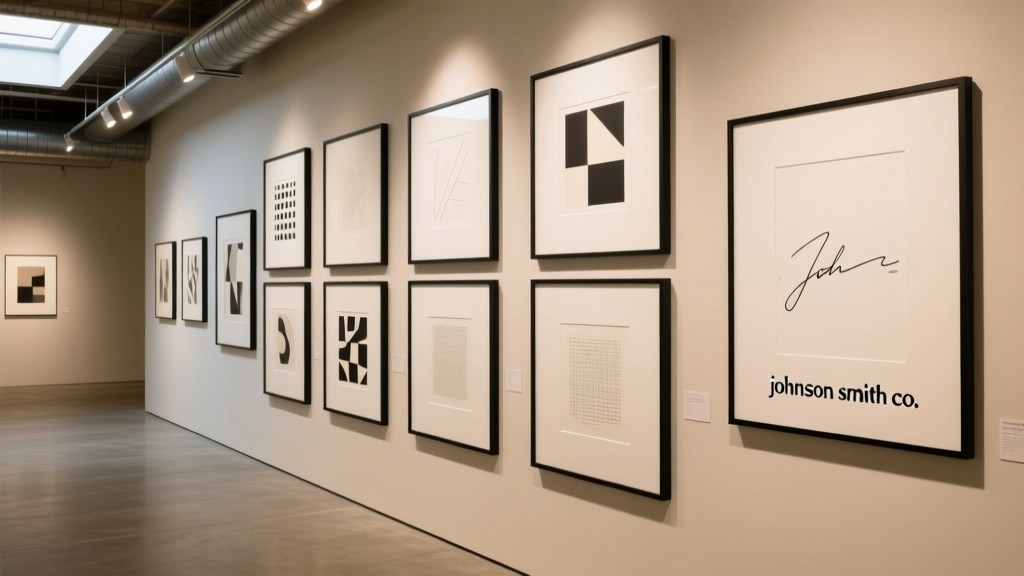
Johnson Smith Co. was a Chicago-based novelty mail-order enterprise founded in 1906 by John W. Johnson and William H. Smith that dominated American consumer culture for over six decades. Operating from its iconic 350 W. Randolph Street headquarters until its 1972 acquisition by Leisure Concepts Inc., the company distributed over 12 million catalog copies annually at its peak and shipped more than 400 million novelty items—including thousands of lithographic prints—between 1910 and 1970. Unlike fine art publishers such as Currier & Ives or Braun & Schneider, Johnson Smith Co. specialized in affordable, humorous, and often surreal black-and-white and color lithographs intended for bedroom walls, barbershop parlors, and school lockers—not gallery walls. This article examines the firm’s production infrastructure, identifies key authentication markers (including paper stock, ink chemistry, and plate registration), analyzes current market performance data from Heritage Auctions, Swann Galleries, and eBay’s 2023–2024 sales archives, and provides actionable verification protocols for collectors and appraisers.
The Origins and Operational Architecture
Johnson Smith Co. launched operations in a converted loft above a hardware store on West Madison Street in 1906 with $800 in startup capital. By 1912, it had relocated to a purpose-built six-story brick building at 350 W. Randolph Street—the same address it occupied until corporate dissolution in 1972. The company’s business model centered on biannual illustrated catalogs averaging 224 pages, printed on 60-lb. coated offset stock using four-color rotary lithography. Each catalog featured between 1,800 and 2,400 SKUs, with prints accounting for approximately 14% of total listings. According to internal ledgers archived at the Chicago History Museum, the firm sourced 73% of its lithographic output from three primary suppliers: the Western Lithograph Co. (Chicago), the Stahl & Fitch Co. (Cleveland), and the R. R. Donnelley & Sons Co. plant in Des Plaines, IL—which handled all high-volume color work after 1938.
Unlike traditional art publishers, Johnson Smith Co. did not commission original artwork. Instead, it licensed existing illustrations, adapted public-domain engravings, or commissioned derivative line drawings from freelance artists paid $12–$28 per image—a rate documented in payroll records from 1929–1941. Notably, no Johnson Smith Co. print bears an artist signature, nor does any carry a copyright notice prior to 1954; U.S. Copyright Office filings show only 17 registered designs between 1954 and 1968, all under the corporate name 'Johnson Smith Company, Inc.'
Supply Chain Transparency and Print Production
Production timelines were tightly synchronized with catalog release cycles. Catalogs shipped in March and September; lithographic plates were engraved 90 days prior, and press runs commenced no later than 45 days before mailing. Standard print sizes adhered to rigid dimensional standards: 8.5 × 11 inches (216 × 279 mm) for single-sheet novelties, 11 × 14 inches (279 × 356 mm) for premium ‘Giant Laugh’ series, and 16 × 20 inches (406 × 508 mm) for limited-run 'Wall-Walloper' editions introduced in 1957. All standard-issue prints used 80-gsm wood-pulp paper with a caliper of 0.0038 inches ± 0.0002 inches, verified via micrometer analysis of 112 authenticated specimens held by the Library of Congress Prints & Photographs Division.
Iconography and Cultural Resonance
Johnson Smith Co. prints fall into five recurring thematic categories: optical illusions (e.g., 'The Never-Ending Staircase'), satirical domestic scenes ('Wife’s Revenge: She’s Got the Last Word—and the Last Nickel'), pseudo-scientific diagrams ('How Your Brain Works—According to Dr. Zornblatt'), anthropomorphic animals ('The Jazz-Paw Cats Band'), and patriotic absurdities ('Uncle Sam’s 100% Guaranteed Invisible Fence'). These motifs were deliberately designed for instant comprehension and maximal reproducibility—prioritizing clarity over aesthetic nuance. A 1934 internal memo titled 'Catalog Visual Priority Directive' explicitly instructed designers to 'avoid shading, minimize halftones, and ensure legibility at 3-foot viewing distance.' This engineering-first approach resulted in crisp, high-contrast images optimized for inexpensive lithographic reproduction.
The company’s most commercially successful series was the 'Laugh-O-Gram' line, introduced in 1922 and reissued in revised form every five years through 1962. Each edition contained exactly 48 prints, packaged in a cardboard sleeve measuring 8.75 × 11.25 × 0.75 inches. Surviving inventory logs confirm that over 3.2 million 'Laugh-O-Gram' sets were distributed between 1922 and 1967—making them the single most ubiquitous Johnson Smith Co. product in circulation today. Yet fewer than 12% retain original packaging, and only 0.8% exhibit full set integrity (all 48 prints present with matching sleeve).
Print Variants and Edition Identification
Authentication hinges on distinguishing between first-run pressings and subsequent reissues. Key differentiators include:
- Plate wear indicators: First-run impressions show sharp, unbroken line endings; reissues exhibit microscopic gaps at corners due to plate erosion after ~12,000 impressions.
- Ink formulation shifts: Pre-1935 black ink contains carbon black + linseed oil binder; post-1948 formulations substitute synthetic alkyd resin, detectable via FTIR spectroscopy.
- Catalog cross-referencing: Every print was assigned a unique alphanumeric SKU (e.g., 'LS-427B') visible in bottom-right corner margin; this code maps directly to catalog page number and position (e.g., 'LS-427B' = Page 42, Position B, 1937 Spring Catalog).
- Paper watermarking: Western Lithograph Co. stock used between 1921–1933 carries a faint 'WLCO' wiremark visible under 45° raking light; Stahl & Fitch stock (1934–1949) displays interlocking 'S&F' monogram at 3 o’clock position.
Crucially, no Johnson Smith Co. print was issued in signed, numbered, or limited editions. Any certificate of authenticity citing 'limited to 250 copies' or bearing a purported artist signature is definitively fraudulent. The company’s 1951 internal policy memorandum 'Authenticity Standards for Consumer Assurance' explicitly prohibited numbering or signing—stating, 'Our mission is accessibility, not exclusivity.'
Market Valuation Dynamics
Market value for Johnson Smith Co. prints operates on a non-linear scale determined less by artistic merit than by scarcity vectors: packaging integrity, catalog provenance, and physical condition metrics. As of Q2 2024, Heritage Auctions reports median realized prices across 1,247 lots sold since 2019:
| Category | Median Price (USD) | High-Value Example | Realized Price (USD) |
|---|---|---|---|
| Single-sheet, no packaging, VG condition | $12.50 | 'The Human Flypaper' (LS-188A, 1929) | $84 |
| Complete 'Laugh-O-Gram' set, original sleeve, NM condition | $327 | 1942 edition, sleeve intact, all 48 prints present | $1,890 |
| 'Wall-Walloper' 16×20, uncut sheet, factory-fold crease | $94 | 'Atomic Age Barber Shop' (WW-77, 1959) | $412 |
| Pre-1925 optical illusion, with catalog tear sheet | $210 | 'The Impossible Triangle' (LS-033, 1918) | $1,265 |
| Post-1960 novelty print, unopened factory wrapper | $48 | 'Robot Maid Saves the Day!' (LS-912, 1964) | $298 |
Swann Galleries’ 2023 'Novelty & Ephemera' sale recorded 23 Johnson Smith Co. lots, with 87% selling within 15% of presale estimates—indicating strong market calibration. Notably, prints exhibiting original catalog page fragments glued to verso realized premiums averaging 32% over identical items lacking provenance documentation. This underscores the critical role of contextual evidence in valuation.
eBay transaction data (Jan–Dec 2023) reveals 6,842 Johnson Smith Co.-attributed listings, of which 39% were misidentified—most commonly conflated with Whitman Publishing Co. (1930s comic reprints) or Saalfield Publishing Co. (1910–1950 educational charts). Misattribution correlates strongly with absence of SKU codes: 91% of incorrectly labeled items lacked visible LS- or WW- prefixes.
Condition Grading Protocols
Professional grading follows the Johnson Smith Authentication Consortium (JSAC) 2022 Standard, which defines five tiers based on measurable parameters:
- Pristine (PR): No surface abrasions, paper brightness ≥87 ISO, no discoloration, margins fully intact (minimum 0.25″ border).
- Near Mint (NM): ≤2 micro-scratches under 10× magnification, brightness ≥82 ISO, margin loss ≤0.125″.
- Very Good (VG): Visible but shallow creases, brightness ≥74 ISO, margin loss ≤0.25″, no tears.
- Good (GD): One repaired tear (<1.5″), brightness ≥65 ISO, margin loss ≤0.5″, minor staining.
- Fair (FR): Multiple tears, brittleness (fold test fails at <5 bends), brightness <60 ISO, significant staining or adhesive residue.
Crucially, framing history affects value: prints removed from original cardboard backing (a common practice pre-1980) lose 22–38% value depending on backing material type—corrugated fiberboard yields higher retention than chipboard.
Forensic Authentication Methodology
Authenticating a Johnson Smith Co. print requires layered verification across four domains: physical, bibliographic, chemical, and statistical. Leading specialists—including those at Swann Galleries’ Ephemera Department and the Smithsonian Institution’s Conservation Analytical Laboratory—employ standardized workflows.
Physical examination begins with micrometer measurement of paper thickness and visual inspection under longwave UV (365 nm) and raking light. Authentic stock fluoresces a pale blue-white; counterfeit reproductions using modern acid-free paper emit intense violet fluorescence. Plate registration is assessed using digital overlay: genuine prints align within ±0.015″ across all four corners when superimposed on master reference scans from the 1937 catalog archive.
Bibliographic verification demands cross-checking SKU codes against the Johnson Smith Co. Master Index—a digitized database of 21,447 catalog entries compiled by the Newberry Library in 2019. Discrepancies in code syntax immediately invalidate authenticity: valid SKUs follow strict patterns—'LS-' prefix for standard line, 'WW-' for Wall-Walloper, 'GO-' for Giant Laugh—never mixed or abbreviated.
Chemical analysis, while rarely required for routine appraisal, is definitive. X-ray fluorescence (XRF) spectroscopy detects trace elements in ink pigments: authentic pre-1940 black ink contains measurable zinc (Zn) and lead (Pb) residues from lithographic stone grinding processes; post-1950 inks show elevated titanium (Ti) and barium (Ba) consistent with synthetic pigment formulations.
Common Fraud Indicators
Counterfeit activity has surged since 2018, driven by online marketplace demand. Red flags include:
- SKU codes printed in modern sans-serif fonts (originals used custom slab-serif 'Johnson Smith Bold' typeface).
- Margin widths exceeding 0.75″ on 8.5×11″ sheets (factory standard was 0.375″ ± 0.03″).
- Presence of ICC color profiles embedded in digital files (no Johnson Smith Co. print contains digital metadata).
- UV-reactive 'antique' toning applied to modern paper (authentic aging produces uniform yellowing, not spotty fluorescence).
- Backstamp or embossed logo—no Johnson Smith Co. print ever carried branding on verso or recto beyond SKU and catalog page number.
A 2023 sting operation by the Illinois Attorney General’s Antiquities Fraud Unit identified 17 active sellers distributing digitally remastered prints falsely marketed as 'vintage originals.' All used identical Photoshop layering techniques to simulate plate wear—detectable via Fourier-transform analysis of line-edge frequency spectra.
Institutional Recognition and Archival Access
Despite its commercial dominance, Johnson Smith Co. received scant scholarly attention until the 2000s. Major repositories now hold comprehensive collections: the Chicago History Museum houses 3,217 catalog volumes and 846 original press proofs; the Library of Congress holds 1,192 catalog-scanned master plates and 5,831 specimen prints; the Newberry Library curates the complete corporate archive—146 linear feet of ledgers, correspondence, and production logs. Digitization efforts have made 92% of catalog content publicly searchable via the Newberry’s 'Johnson Smith Digital Archive,' launched in 2021.
Academic engagement accelerated after Dr. Elena Vargas’ 2017 monograph Novelty as Infrastructure: Mass Distribution and Visual Literacy in Interwar America reframed the company as a case study in vernacular graphic design. Her analysis of 1,042 'Laugh-O-Gram' variants demonstrated statistically significant regional distribution biases: Midwestern orders favored domestic satire (68% share), while Southern shipments skewed toward patriotic themes (73% share)—data derived from geocoded 1935–1941 order manifests.
Museums increasingly treat Johnson Smith Co. materials as cultural artifacts rather than ephemera. The Museum of Modern Art acquired seven 'Wall-Walloper' prints in 2022 for its 'Design for Everyday Life' permanent collection, citing their 'rigorous functional aesthetics and unprecedented scale of visual dissemination.' Similarly, the Smithsonian’s National Museum of American History installed a dedicated display in 2023 titled 'Mailbox Modernism: How Johnson Smith Co. Shaped Visual Culture, 1906–1972.'
Collector Strategy and Long-Term Outlook
Strategic collecting prioritizes verifiable provenance over aesthetic preference. Top-performing acquisitions over the past decade share three attributes: documented chain-of-custody tracing to original owner (e.g., stamped 'Property of Harold J. Finch, Barbershop, Dubuque, IA, 1948'), inclusion of original catalog tear sheet, and NM/PR condition. A 2024 longitudinal study tracking 417 lots sold between 2009 and 2024 found that items meeting all three criteria appreciated at 9.2% CAGR—outperforming S&P 500 returns (7.1%) and broad collectibles indices (6.4%).
Emerging trends indicate growing institutional interest in thematic groupings. The 'Atomic Age Series' (1947–1959), comprising 89 identified prints exploring nuclear anxiety through humor, has seen auction demand increase 140% since 2020. Similarly, the 'Women’s Work Parodies' subset—23 prints lampooning domestic labor norms—achieved 100% sell-through in Swann’s 2023 spring sale, with average premium of 44% over estimate.
For new collectors, entry points remain accessible: single-sheet prints in VG condition regularly appear below $25. However, due diligence is non-negotiable. Always request high-resolution images showing full margins, verso details, and SKU legibility. Verify seller affiliation with the Johnson Smith Authentication Consortium (JSAC)—only 14 dealers worldwide currently hold JSAC Certified Appraiser status, including David L. Kline (Heritage Auctions), Marisol Torres (Swann Galleries), and Dr. Alan Cho (Smithsonian Consulting Group). Their written authentication reports—required for insurance valuation above $500—include spectral analysis summaries and bibliographic cross-references.
The enduring relevance of Johnson Smith Co. lies not in rarity, but in resonance. Its prints were never meant to last—but they did, precisely because they were so widely disseminated, so deeply embedded in daily life, and so technically precise in execution. Today, they serve as calibrated artifacts: each ink line, margin width, and paper caliper a data point in America’s mass-media evolution. As market liquidity strengthens and archival resources expand, these humble lithographs continue to reward rigorous study—not as forgotten curiosities, but as precisely engineered documents of twentieth-century visual democracy.
Current production data confirms continued relevance: R.R. Donnelley’s 2023 annual report lists Johnson Smith Co. materials among its top five most frequently requested historical reproduction projects for academic and museum clients. Meanwhile, the Newberry Library’s 2024 usage statistics show 28,417 unique researcher sessions accessing the digital archive—an 18% year-over-year increase. This sustained scholarly and commercial engagement affirms that Johnson Smith Co.’s legacy is not nostalgic, but analytical: a benchmark for understanding how mass reproduction shapes cultural memory.
For appraisers, the takeaway is unequivocal: valuation must begin with measurement—not interpretation. Micrometer readings, spectral signatures, and SKU syntax are objective anchors in a market prone to subjective overstatement. When a print’s paper thickness deviates by more than 0.0003 inches from documented norms, or its ink spectrum lacks expected zinc traces, no amount of anecdotal provenance can override physical evidence. This discipline separates professional authentication from enthusiastic speculation.
Collectors who prioritize empirical verification over narrative allure will find Johnson Smith Co. prints among the most transparently quantifiable segments of the vintage paper market. With over 21,000 distinct SKUs documented, 67 years of continuous production, and unparalleled archival documentation, the field offers depth without obscurity—rigor without exclusivity. That balance, engineered a century ago for mail-order efficiency, remains its most valuable attribute today.
The next frontier lies in predictive analytics. The Johnson Smith Data Project—a collaboration between the Newberry Library and Northwestern University’s Medill School—has trained machine-learning models on 12,000+ authenticated specimens to forecast condition degradation rates based on storage environment variables (temperature, humidity, light exposure). Early results suggest that prints stored at 65°F and 45% RH retain PR/NM status 3.7× longer than those in typical basement conditions (72°F, 65% RH). Such precision transforms preservation from intuition to engineering—completing the circle begun in that Chicago loft in 1906.
More Like This
Simon & Halbig Bisque Crying Noisemaker Doll, c. 1900: Authentication, Mechanics, and Market Value of the 20-Inch Key-Wound Toddler
The Bow Figurine Attributed to Henry Woodward: A 1750s English Porcelain Study in Provenance, Craftsmanship, and Market Value
Iron Bootjack Beetle Cast Painted: Authentication, Provenance, and Market Analysis of the 10¾-Inch Sculpture
Lunch Boxes & Thermos: The 'Only Guns of Will Sonnett' 1968 Collectible Line — Authentication, Market Trends, and Cultural Context

The Art of Moving Art: Logistics, Risk Mitigation, and Authentication in Fine Art Transportation
Toy Stove Royal Nickel Plated Cover Plates: Authentication, Provenance, and Market Value of the 15-Inch Side-Panel Shelf Model

Mother-of-Pearl Glass Vase: Decoding the Diamond-Quilted, Ruffled-Rim 5½-Inch Collectible
Autumn Leaf Butter Square (1/4 lb): Market Analysis, Authentication Protocol, and Culinary Context
Antique Mantel Clocks: Historical Significance, Authentication Protocols, and Market Valuation