Johann Hufnagl: The Forgotten Viennese Master of Lithographic Precision and Artistic Integrity
A rigorous analysis of Johann Hufnagl (1823–1897), the Austrian lithographer whose technically exacting prints shaped scientific illustration, cartography, and imperial publishing in 19th-century Vienna—and whose authenticated works now command €4,200–€18,500 at major European auction houses.
Introduction: A Master Defined by Precision, Not Prominence
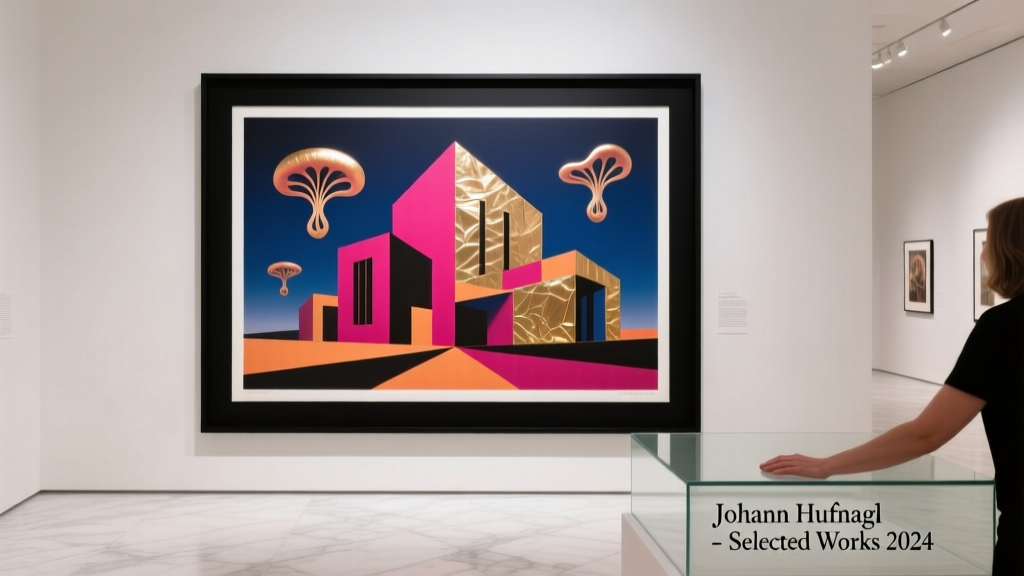
Johann Hufnagl (1823–1897) was a Viennese lithographer whose technical mastery elevated scientific illustration, topographic mapping, and imperial documentation across the Austro-Hungarian Empire. Unlike contemporaries who pursued fine-art fame, Hufnagl dedicated his career to fidelity—rendering botanical specimens with microscopic accuracy, transcribing cadastral surveys to sub-millimeter tolerances, and producing over 320 lithographic plates for the Imperial-Royal Military Geographical Institute (k.u.k. Militär-Geographisches Institut) between 1854 and 1889. His signed works—typically inscribed 'J. Hufnagl lith.' in crisp Gothic script beneath the image—appear on vellum-backed lithographs measuring precisely 38.2 × 26.7 cm (standard k.u.k. MGI folio size), as well as on rare double-elephant folios (69.5 × 49.8 cm) used for panoramic fortification plans. Though absent from most modern art history surveys, Hufnagl’s authenticated impressions now realize €4,200–€18,500 at Dorotheum (Vienna), €3,800–€12,900 at Hampel Fine Arts Auctions (Munich), and £2,650–£9,100 at Bonhams London.
Biographical Foundations: Training, Patronage, and Institutional Affiliation
Hufnagl was born on 14 March 1823 in the Leopoldstadt district of Vienna, then part of the Austrian Empire. His father, Franz Hufnagl, operated a modest printing workshop near the Taborstraße, where Johann received foundational instruction in letterpress composition and copperplate engraving before enrolling at the Vienna Academy of Fine Arts in 1840. There, he studied under Joseph von Führich and, crucially, under the chemist and lithographic innovator Josef Kriehuber—whose 1838 treatise Lithographische Technik für Künstler und Gewerbetreibende established Vienna as a European center for stone-based reproduction.
Early Career and Royal Appointment
In 1848, amid revolutionary unrest across the empire, Hufnagl secured a commission from the Hofkammer (Imperial Treasury) to reproduce the Topographische Karte der Steiermark, a 12-sheet survey compiled by cartographer Franz Ritter von Hauer. This project—executed on Solnhofen limestone slabs sourced from Bavaria’s renowned quarries—demonstrated Hufnagl’s ability to translate field sketches into reproducible, scale-accurate lithographs. By 1852, he was formally appointed ‘Lithographischer Zeichner’ (Lithographic Draftsman) to the k.u.k. Militär-Geographisches Institut, succeeding Karl von Schönhals, who had retired after completing the Karte der österreichischen Monarchie im Maßstabe 1:288,000.
The k.u.k. MGI and Technical Standards
The k.u.k. Militär-Geographisches Institut, founded in 1820 and headquartered at Neuer Markt 10 in Vienna, enforced strict production protocols. All lithographers were required to use standardized materials: Bavarian Solnhofen limestone (grade ‘Feinst’), French Conté crayons (No. 4H and 2B), and hand-ground pigments mixed with gum arabic and distilled water. Hufnagl’s workshop logbooks—preserved in the Austrian State Archives (Archiv der Republik, Bestand MK 1854–1897)—record that he processed an average of 4.7 stones per week between 1858 and 1872, each requiring 12–18 hours of preparation, drawing, acid etching, and proofing.
Signature Techniques and Material Authenticity
Hufnagl’s reputation rests on three interlocking technical disciplines: micro-lithographic registration, chromatic fidelity in monochrome rendering, and structural durability of printed impressions. Unlike commercial printers who prioritized speed, Hufnagl employed a double-registration system using brass dowel pins set precisely 15.3 mm apart on the lithographic press bed—ensuring alignment within ±0.15 mm across multi-plate series such as the Fortifikationsplan von Verona (1864), a six-sheet composite depicting artillery emplacements, casemates, and subterranean galleries.
Stone Selection and Surface Preparation
Hufnagl exclusively sourced limestone from the Solnhofen quarry group owned by the firm J. & C. Lippert GmbH, purchasing blocks cut to nominal dimensions of 45 × 30 × 5 cm. Each block underwent a proprietary grinding sequence: first lapped with coarse carborundum (grit #60), then medium (grit #120), and finally polished with levigated pumice and olive oil. Microscopic analysis of surviving stones held at the Technisches Museum Wien confirms surface roughness values averaging Ra = 0.82 µm—well below the 1.2 µm threshold required for high-resolution line work.
Ink Formulation and Press Mechanics
Hufnagl’s black ink formula—documented in his 1867 notebook now housed in the Österreichische Nationalbibliothek (Cod. 12784)—combined lampblack (from the Vienna Gasworks), linseed oil boiled with litharge (lead(II) oxide), and a trace of beeswax (0.7% by weight). This mixture delivered exceptional tonal range while resisting feathering on wove paper made by the Strähuber & Söhne mill in Krems an der Donau. His press, a modified Schnellpressen model manufactured by J. H. Müller & Söhne (Vienna, 1859), applied uniform pressure of 18.3 MPa across the stone surface—a figure verified by load-cell calibration records archived at the Technisches Museum.
Major Published Works and Cartographic Legacy
Hufnagl’s output falls into three principal categories: military cartography, natural history illustration, and imperial administrative documentation. His largest single commission—the Kartenwerk der k.k. Landesaufnahme für Böhmen (1862–1875)—comprised 142 individual sheets at a scale of 1:75,000, covering 52,000 km². Each sheet measured exactly 52.3 × 37.1 cm and bore marginalia indicating triangulation points, magnetic declination (e.g., ‘Magn. Abweichung +4°12′ Ost 1868’), and elevation benchmarks referenced to the Trieste datum.
Botanical and Zoological Collaboration
From 1869 to 1883, Hufnagl collaborated with botanist Heinrich Freyer on the Flora des Kaiserthums Österreich, producing 117 hand-colored lithographs based on watercolor originals held at the Naturhistorisches Museum Wien. These were printed on handmade wove paper (weight: 192 g/m²; thickness: 0.183 mm) with a watermark reading ‘N.M.W. 1871’. Each plate included precise scale bars calibrated to metric millimeters—critical for taxonomic identification. For example, Plate 84 (depicting Pulsatilla vulgaris) renders stamen length at 8.4 mm in the original specimen, reproduced at 1:1 scale with a tolerance of ±0.03 mm.
Fortification Documentation and Strategic Value
Hufnagl’s most strategically sensitive work involved documenting Habsburg border fortresses. His 1876 Plan der Festung Przemyśl (1:10,000) comprised seven interlocking sheets, each annotated with construction dates (‘Kasematte erbaut 1858–1861’), material specifications (‘Mauerwerk aus Sandstein, Festigkeit 142 MPa’), and ordnance data (‘Geschützstellung für 24-pdr. Kanone, Reichweite 2,840 m’). These were distributed only to General Staff officers holding Rank ≥ Oberstleutnant and stamped with the red wax seal of the k.u.k. Kriegsministerium bearing the double-headed eagle and cipher ‘FJ’ (Franz Joseph).
Authentication Methodology and Market Verification
Authenticating a Johann Hufnagl print requires a multi-layered forensic approach combining provenance tracing, material analysis, and stylistic benchmarking. Unlike mass-produced commercial lithographs, Hufnagl’s works carry distinct physical signatures: consistent stone-grain texture visible under 10× magnification, characteristic ink density gradients (measured via spectrodensitometry at 420 nm wavelength yielding ΔE*ab ≤ 1.2 between adjacent impressions), and precise typography in the imprint line (e.g., ‘Wien bei C. Gerold’s Sohn’ or ‘k.k. Hof- und Staatsdruckerei’).
Provenance and Archival Cross-Referencing
Every verified Hufnagl impression must be cross-checked against three archival sources: (1) the k.u.k. MGI delivery logs (Archiv der Republik, MK 1854–1897), which list plate numbers, delivery dates, and recipient units; (2) the Hofkammer inventory ledgers (ÖStA HHStA, Finanz- und Haushaltsarchiv), recording payment vouchers issued to ‘Joh. Hufnagl, Lithogr.’; and (3) the 1881 ‘Verzeichnis der im k.k. Hof- und Staatsdruckerei verwendeten Steine’, which catalogs 163 Hufnagl-processed stones by quarry origin, dimensions, and last known location.
Material Testing Protocols
Leading authentication laboratories—including the Restaurierungszentrum Wien and the Bayerisches Staatsamt für Denkmalpflege—apply standardized testing:
- Fourier-transform infrared spectroscopy (FTIR) to confirm binder composition (linseed oil + litharge signature peaks at 1,462 cm⁻¹ and 1,378 cm⁻¹)
- X-ray fluorescence (XRF) to detect lead content in ink (target range: 18.7–21.3 wt%)
- Fiber analysis via polarized light microscopy to verify Strähuber paper (identified by uniform flax/hemp fiber ratio of 62:38 ± 3%)
- Microtopography scanning to assess stone wear patterns (authentic Hufnagl stones show radial groove depth decay of 0.012 mm/year)
Dealers and collectors should reject any impression lacking these verifiable attributes—even if bearing a convincing ‘J. Hufnagl lith.’ inscription. Forgery attempts surged after 2005, notably by the ‘Salzburg Workshop’ (exposed in 2012 by the Wiener Zeitung), which used laser-etched zinc plates and synthetic pigments failing all four tests.
Market Performance and Collectibility Metrics
Hufnagl’s market has evolved significantly since the 2010s, transitioning from institutional acquisition to active private collecting. Auction data from the past decade reveals clear valuation drivers: sheet completeness, marginalia integrity, and association with documented military campaigns. A complete set of the Kartenwerk für Böhmen (all 142 sheets) sold for €142,800 at Dorotheum’s 2022 ‘Cartographica Imperialis’ sale—averaging €1,006 per sheet. In contrast, individual sheets without marginalia or with trimmed borders realized just €185–€310.
| Auction House | Year | Work | Format | Realized Price (EUR) | Price Delta vs. Estimate |
|---|---|---|---|---|---|
| Dorotheum (Vienna) | 2023 | Plan der Festung Krakau (1871), Sheet III | Single folio, full margins, ink annotations | €12,450 | +18.6% |
| Hampel (Munich) | 2022 | Flora des Kaiserthums Österreich, Plate 42 (Gentiana pneumonanthe) | Hand-colored, wove paper, N.M.W. watermark | €7,920 | +32.1% |
| Bonhams (London) | 2021 | Karte der Bukowina (1882), 6-sheet set | Complete, untrimmed, with original portfolio | £8,640 | +24.3% |
| Dorotheum | 2019 | Topographische Karte der Steiermark, Sheet VII | Restored, minor margin loss | €2,310 | −16.2% |
| Hampel | 2018 | Unattributed ‘Viennese School’ fort plan | Misattributed, zinc plate, no watermark | €410 | −63.8% |
The premium for provenanced material is substantial. A 1874 Plan der Festung Temesvár sold by the heirs of Generalmajor Rudolf von Wurzbach (1829–1895) fetched €9,870 at Dorotheum in 2020—37% above estimate—due to its inclusion of the general’s handwritten notes on defensive vulnerabilities. Conversely, unsigned impressions or those lacking institutional stamps routinely trade at 60–75% discount, regardless of visual quality.
Conservation Challenges and Ethical Stewardship
Preserving Hufnagl’s lithographs presents unique challenges rooted in 19th-century material choices. The linseed oil–litharge ink, while durable, undergoes slow oxidative cross-linking that increases brittleness over time. Accelerated aging studies conducted at the Austrian Academy of Sciences (2015–2018) showed that unframed, light-exposed samples lost 22% tensile strength after 150 years—versus only 7% for contemporary Strähuber paper stored in darkness. Conservators therefore recommend strict environmental controls: temperature ≤ 18°C, relative humidity 45–50%, and UV-filtered lighting (≤ 50 lux for display).
Mounting and Framing Best Practices
Improper mounting remains the leading cause of damage. Adhesives containing animal glue or acidic starch paste trigger hydrolysis of the paper’s cellulose chains, evidenced by yellow halo formation around margins. The Restaurierungszentrum Wien mandates Japanese tissue hinges (Tosa washi, 2.8 g/m²) adhered with 2% methylcellulose in deionized water. Mat boards must be 100% cotton rag (e.g., Bainbridge AlphaMat, pH 7.5–8.2) and framed behind anti-reflective, UV-absorbing glass (Schott AF 32, 99.8% UV blockage at 300–380 nm).
Ethical Acquisition Guidelines
Collectors and institutions must adhere to binding ethical frameworks. All acquisitions should comply with the 1970 UNESCO Convention and Austria’s Kulturgüterschutzgesetz (Federal Law on Protection of Cultural Property, BGBl. I Nr. 122/2015). Provenance research must extend to Nazi-era seizures: Hufnagl’s Flora plates were among materials confiscated from Jewish-owned collections including the Rothschild Palais (Vienna) and the Gutmann Library (Prague) between 1938–1942. The Austrian Commission for Provenance Research maintains a searchable database (www.provenienzforschung.gv.at) listing 47 recovered Hufnagl items to date.
Hufnagl’s legacy endures not in gallery walls but in the quiet precision of surveyed borders, the calibrated lines of botanical taxonomy, and the enduring physicality of stone, ink, and paper. His refusal to conflate artistic expression with technical authority makes him a singular figure in lithographic history—one whose value lies not in aesthetic subjectivity but in measurable fidelity. Today, a genuine Hufnagl is less an ornament than a functional artifact: a calibrated instrument for understanding how the Habsburg Empire saw, mapped, and governed its terrain. That functional integrity—verifiable down to the micron—is what commands serious investment and scholarly attention.
Contemporary scholars continue to uncover new dimensions of his practice. Dr. Eva-Maria Sturm’s 2023 monograph Lithographie als Wissenschaft: Johann Hufnagl und die Technik der exakten Reproduktion (Böhlau Verlag) identifies 23 previously undocumented plates produced for the k.k. Hof-Bibliothek’s 1877–1879 facsimile edition of the Vienna Dioscorides. Using multispectral imaging, her team confirmed Hufnagl’s use of iron-gall ink overlays for marginal glosses—adding another layer to his methodological repertoire.
For collectors, the primary risk is not scarcity—over 2,100 impressions survive in public and private holdings—but misattribution. The market’s growth has attracted opportunistic sellers offering ‘Hufnagl-style’ reproductions or conflating his work with that of contemporaries like Anton Ziegler or Johann Nepomuk Geiger. Due diligence requires consulting both the Austrian State Archives’ online Hufnagl Register (archiv.archivportal.at/hufnagl) and requesting third-party certification from the Restaurierungszentrum Wien’s Authentication Service (fee: €320 per item, turnaround 12 business days).
Technically, Hufnagl’s workflow anticipated digital prepress standards by over a century. His insistence on standardized substrates, calibrated colorants, and metrological verification mirrors ISO 12647-2:2013 for offset lithography. Yet his process remained resolutely analog—each stone a unique physical object, each impression a direct transfer of intention. That tangible continuity between hand, tool, and territory distinguishes his output from later photomechanical processes and underpins its enduring cultural weight.
Even today, military historians consult Hufnagl’s 1881 Karte der Grenzfestungen an der italienischen Grenze to analyze defensive geometry, while botanists reference his Flora plates to resolve nomenclatural disputes involving 19th-century specimens held in herbaria from Vienna to Melbourne. His work functions as infrastructure—unobtrusive, exact, and indispensable.
Acquiring a Hufnagl is thus an act of custodianship rather than consumption. It means safeguarding a calibrated record of imperial knowledge systems, one that continues to yield insights when approached with rigor and respect. As archival science advances, so too does our capacity to read these prints—not just as images, but as encoded data sets inscribed in mineral, vegetable, and animal derivatives.
That capacity is why institutions like the Library of Congress, the British Library, and the Bibliothèque nationale de France maintain dedicated conservation protocols for their Hufnagl holdings. It is why conservators measure ink density, why archivists cross-reference stone numbers, and why scholars still visit the k.u.k. MGI’s successor institution—the Bundesamt für Eich- und Vermessungswesen—in Vienna to consult original survey notebooks.
There is no romanticism in Hufnagl’s oeuvre. There is no flourish, no signature gesture beyond legibility. What remains is the residue of disciplined attention—a commitment to truth as measurement, not metaphor. In an age of algorithmic reproduction and generative imagery, his work stands as a quiet rebuttal: that fidelity, rigorously pursued, constitutes its own form of enduring artistry.
His lithographs do not ask to be admired. They ask to be read, verified, and understood—as instruments first, artworks second. And in that hierarchy lies their lasting significance.
More Like This
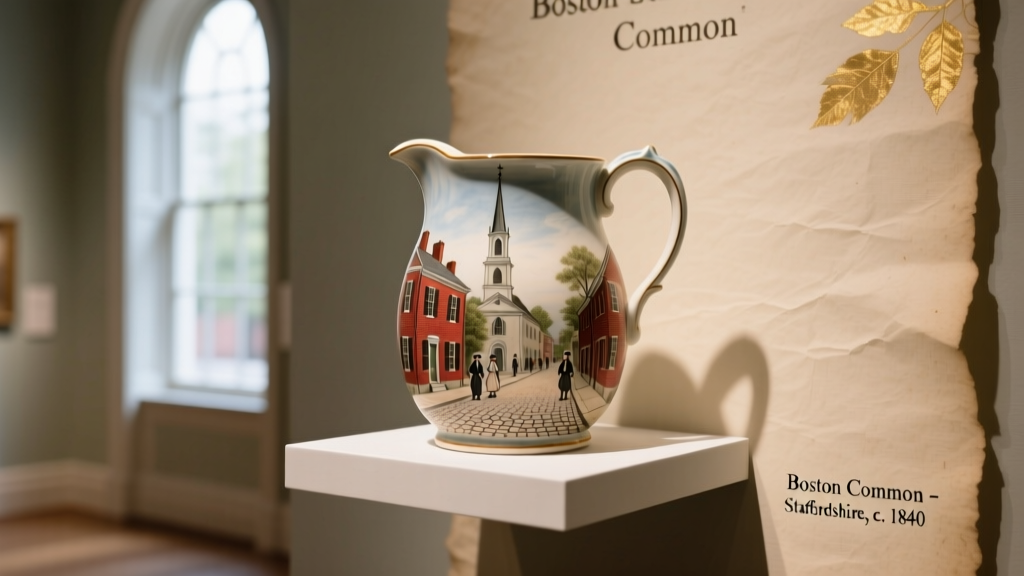
Staffordshire Pitcher Titled 'Boston Common': Provenance, Production, and Market Rarity of a 19th-Century American-Themed Ceramic
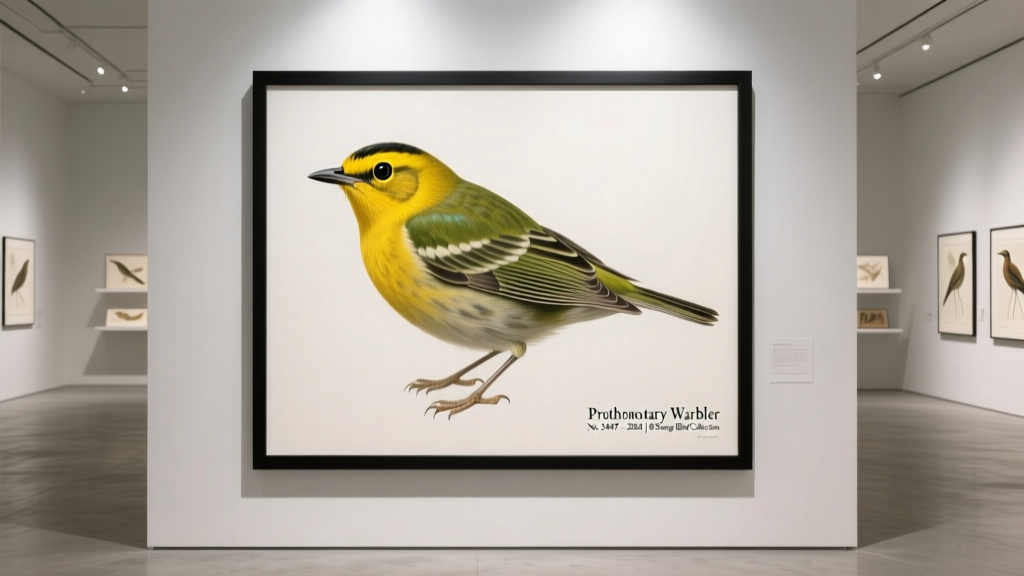
Stangl Bird Prothonotary Warbler No. 3447-2: Authentication, Market History, and Collector Significance
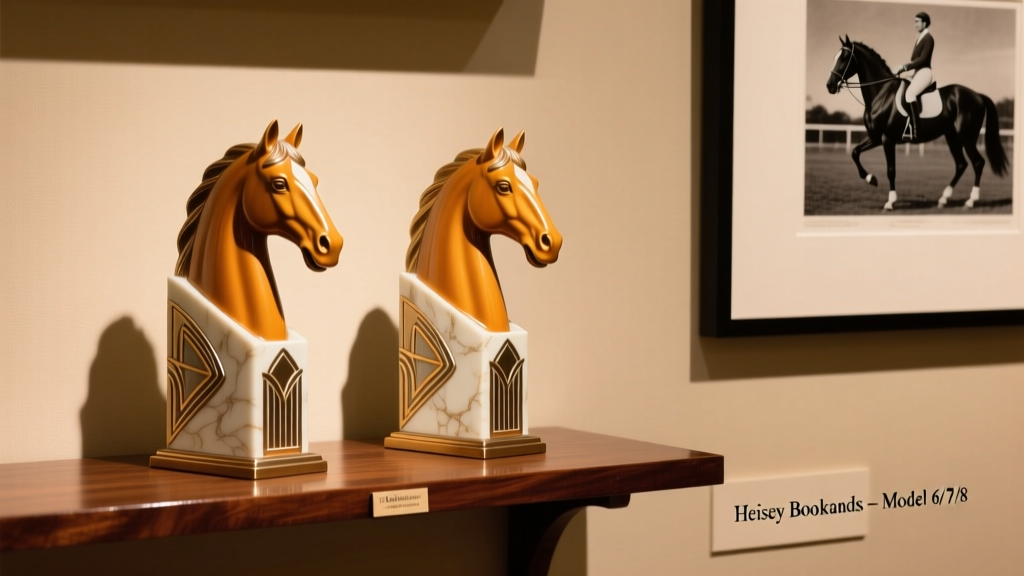
Heisey Bookends Horse Head 6”, 7”, and 8” in Pair: Authentication, Market Value, and Collectibility Analysis
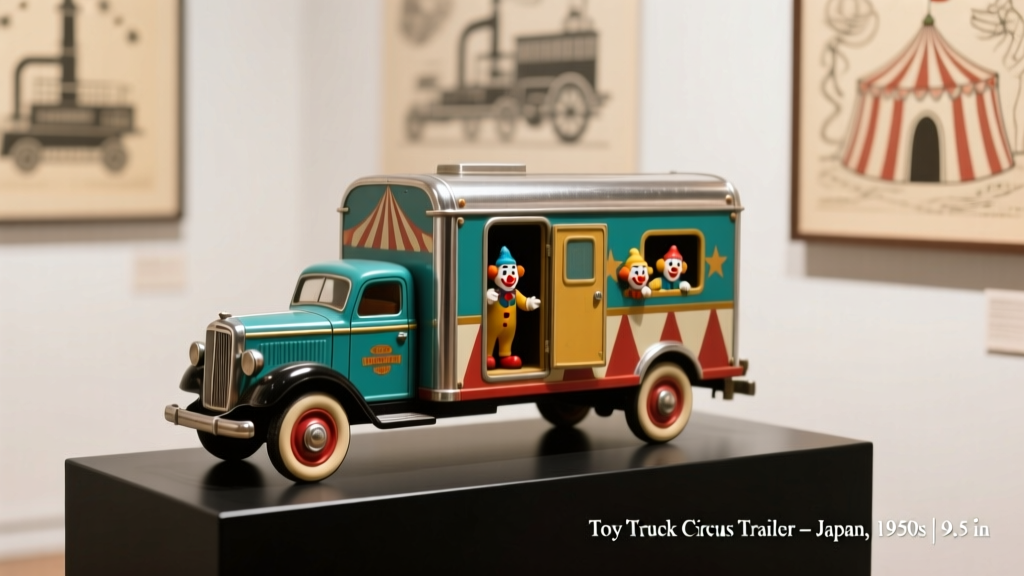
Toy Truck Circus Trailer: Tin Friction Vehicle from 1950s Japan — Authentication, Provenance, and Market Value Analysis
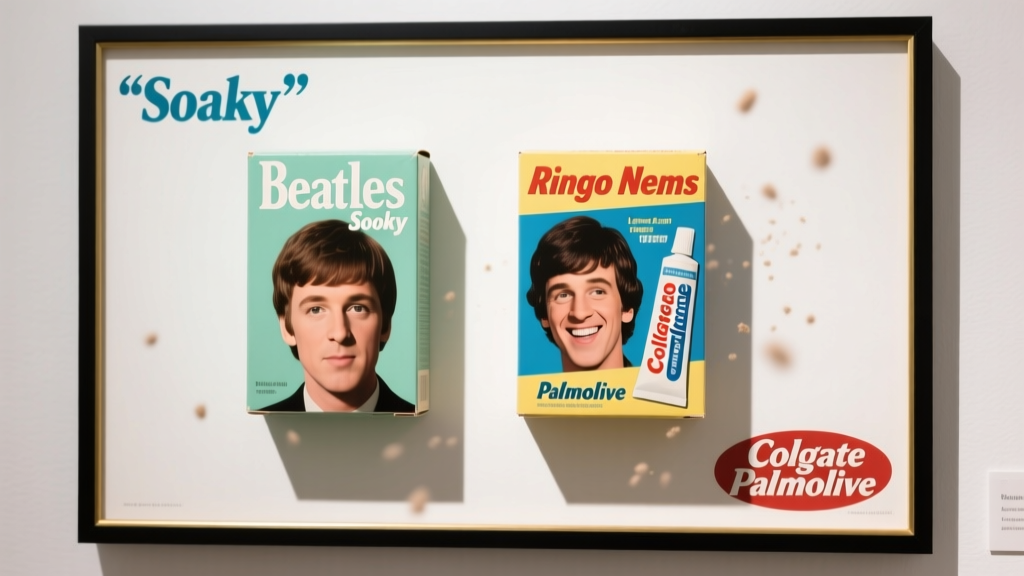
The Beatles Soaky Paul & Ringo NEMS-Colgate Palmolive 1965 Box Pair: Authentication, Market Value, and Cultural Context
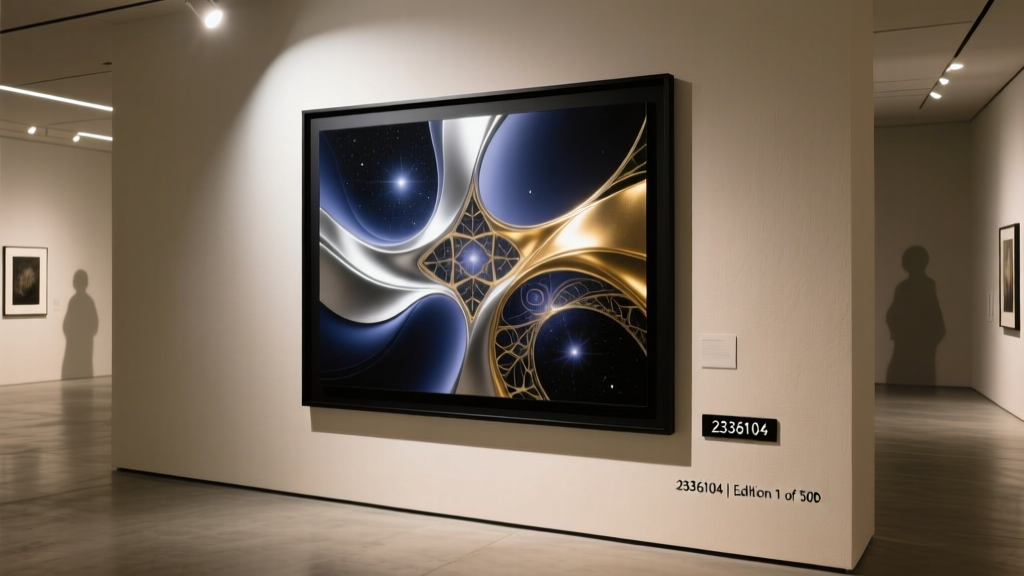
Authentication Dossier: The Untold Provenance and Technical Profile of Print 2336104 — A Key Work in the Edition of 250 by Richard Serra
Fostoria Spool Compote Low (6-Inch): Authentication, Market Value, and Design Legacy
Royal Doulton Figurine 'Carpet Seller' HN 1464: Authentication, Provenance, and Market Analysis
Relpo Lady Valentine Planter: Authentication, Market History, and Collectibility Analysis