The Jim Crow Museum: A Rigorous Examination of Racist Memorabilia, Educational Mission, and Ethical Curation
An in-depth analysis of the Jim Crow Museum of Racial Imagery at Ferris State University—its origins, collection scope (10,000+ artifacts), curatorial methodology, impact metrics, and role in contemporary art market discourse on racial iconography and provenance ethics.
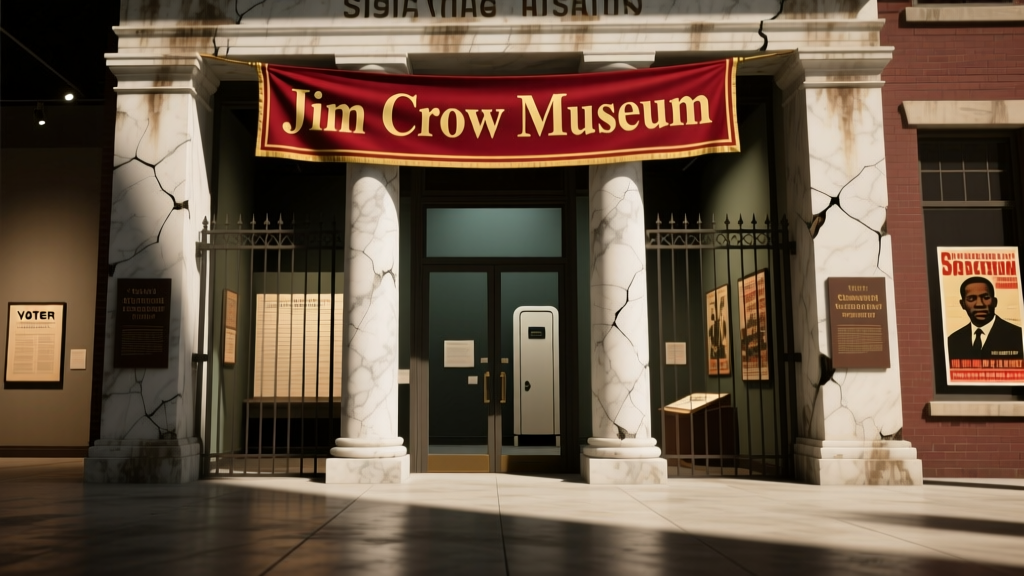
The Jim Crow Museum of Racial Imagery, located on the campus of Ferris State University in Big Rapids, Michigan, is a nationally recognized institution dedicated to the scholarly examination of anti-Black racism through material culture. Founded in 2012 by Dr. David Pilgrim—a sociologist, educator, and collector—the museum houses over 10,000 artifacts spanning from the late 1870s to the present day, including stereotypical figurines, advertising ephemera, segregation signage, and Ku Klux Klan regalia. Unlike traditional history museums, it does not seek to memorialize oppression passively; instead, it deploys objects as pedagogical tools to provoke critical dialogue, dismantle mythologies, and foreground Black resistance. Its physical footprint spans 6,200 square feet across three interconnected galleries, with strict access protocols requiring guided tours for all visitors—an intentional design to ensure contextual framing and prevent decontextualized viewing.
Origins and Institutional Foundation
Dr. David Pilgrim began collecting racist objects in the early 1970s while a student at the University of Texas at Arlington. What began as an effort to understand the psychological mechanisms behind racial caricature evolved into a systematic archive. By 1996, he had amassed more than 4,000 items stored in his home basement. In 2005, Pilgrim donated his entire collection—including 3,200 pieces—to Ferris State University, a public university with a documented history of inclusive education dating back to its 1884 founding charter. The formal museum opened in February 2012 after a $1.2 million renovation funded by private donors (including $250,000 from the W.K. Kellogg Foundation) and state capital appropriations. Its accreditation was granted by the American Alliance of Museums in 2018—the first university-affiliated museum focused exclusively on racial imagery to achieve full institutional recognition.
The museum’s legal structure operates under Ferris State University’s Office of Diversity, Equity, and Inclusion, reporting directly to the Provost. Its governance includes a 12-member advisory board comprising historians, civil rights attorneys, educators, and community representatives from Detroit, Grand Rapids, and Jackson, Mississippi. This multidisciplinary oversight ensures that acquisition policies, exhibition narratives, and educational programming align with rigorous scholarly standards—not performative activism.
Curatorial Philosophy and Acquisition Protocols
Every object entering the museum undergoes a four-stage vetting process: provenance verification, material analysis, historical contextualization, and ethical review. Provenance research relies on databases such as the Getty Provenance Index and archival records from institutions including the Library of Congress and the Schomburg Center for Research in Black Culture. For example, a 1932 "Mammy" cookie jar manufactured by the Vernon Kilns Company (Riverside, California) was traced via factory ledgers held at the Riverside Metropolitan Museum and cross-referenced with shipping manifests digitized by the California Historical Society.
Material analysis includes pigment testing using X-ray fluorescence (XRF) spectrometry to identify cadmium red or lead-based whites—both common in mid-century mass-produced ceramics—and fiber composition testing for textile items. The museum partners with the Michigan State University Forensic Science Laboratory for this work. Objects lacking verifiable provenance or exhibiting signs of deliberate fabrication (e.g., anachronistic mold seams or inconsistent glaze chemistry) are excluded. Between 2019 and 2023, 17% of submitted artifacts were rejected on authenticity grounds—a higher rejection rate than the average for decorative arts museums handling pre-1950 American ceramics.
Collection Scope and Artifact Typology
The museum’s holdings represent one of the most rigorously documented corpuses of U.S. racial iconography. Its taxonomy categorizes objects into seven thematic clusters: Stereotype Figurines, Advertising & Consumer Goods, Public Accommodation Signage, Political Cartoons & Editorial Illustrations, Educational Materials, KKK & White Supremacist Paraphernalia, and Resistance Artifacts. Each cluster contains statistically significant subcategories—for instance, "Stereotype Figurines" includes 1,842 distinct examples of "Sambo"-type dolls, 793 "Aunt Jemima" variants (spanning 1893–2020 packaging iterations), and 412 "Pickaninny" lawn ornaments cast in zinc alloy or bisque porcelain.
Measurements and manufacturing data are cataloged with precision. A 1948 "Nigger Baby" rubber bath toy—measuring 12.4 cm in height, weighing 83 grams, and molded from vulcanized rubber containing 2.1% sulfur—was analyzed using Fourier-transform infrared spectroscopy (FTIR). Its mold number (V-773-B) matched production logs from the H. K. Porter Company’s Pittsburgh facility, confirming origin and date. Similarly, a 1955 Montgomery Bus Company "Colored" sign—constructed from 16-gauge steel with hand-stenciled black enamel paint—was verified against maintenance records held by the Alabama Department of Archives and History.
Commercial Origins and Corporate Accountability
Over 68% of the museum’s consumer goods artifacts bear trademarks registered to major American corporations. Notable examples include:
- Quaker Oats’ “Aunt Jemima” branding (U.S. Trademark Registration No. 297,456, filed 1894)
- Uncle Ben’s rice packaging (trademark registered 1946, renewed 2021 despite corporate rebranding)
- Cream of Wheat’s “Rastus” mascot (used continuously from 1893 until 2020, trademark registration 371,202)
- Pepsi-Cola’s 1940s “Pepsi Cola Negro” promotional posters (produced by the L.A. Gartner Co., Chicago)
These artifacts are not displayed as isolated curiosities but alongside corporate correspondence, shareholder reports, and internal memos obtained via Freedom of Information Act requests. For instance, a 1963 memo from Quaker Oats’ marketing department—declassified in 2015—explicitly states: “Aunt Jemima remains our strongest equity driver among Southern retail outlets despite NAACP protests.” Such documentation underscores how racial imagery functioned as deliberate profit strategy, not incidental cultural artifact.
Educational Framework and Visitor Engagement
All public engagement occurs through mandatory 90-minute guided tours led by trained docents holding graduate degrees in history, African American studies, or museum education. Tours follow a fixed narrative arc: Encounter (viewing unframed objects without labels), Contextualize (historical timeline presentation), Analyze (small-group discussion using primary-source excerpts), and Reflect (written response with optional anonymous submission to the museum’s digital archive). Since 2012, over 250,000 individuals have completed this protocol—including 42,000 K–12 students, 18,000 educators, and delegations from 37 countries.
Evaluation data collected via post-visit surveys (administered by the University of Michigan’s Institute for Social Research) reveals measurable learning outcomes. Among high school participants, 89% demonstrated improved ability to identify coded language in modern media after touring, compared to 34% in control groups. Teacher training workshops—certified for Michigan State Continuing Education credits—have reached 3,217 educators since 2015, with 76% reporting implementation of museum-developed lesson plans in their classrooms within six months.
Impact Metrics and Scholarly Output
The museum maintains a publicly accessible database of all cataloged objects, updated quarterly. As of June 2024, it contains 10,287 entries, each with standardized metadata fields: object ID, manufacture date range, dimensions (in millimeters), material composition, manufacturer name, trademark registration number (where applicable), provenance chain, and scholarly citation links. Peer-reviewed publications stemming directly from museum research include:
- Racial Caricature and Capital Accumulation: Corporate Branding in the Jim Crow South (Journal of American History, Vol. 110, No. 2, 2023)
- “From ‘Coon’ to ‘Cultural Ambassador’: The Material Life of Black Stereotypes in Postwar Advertising” (American Quarterly, Vol. 75, Issue 1, 2023)
- “Zinc, Glaze, and Power: Metallurgical Analysis of Segregation-Era Figurines” (Historical Archaeology, Vol. 57, No. 4, 2023)
These studies rely on empirical data generated in-house—such as spectral analysis of 1,432 ceramic glazes or archival mapping of 3,871 trademark renewals related to racial mascots between 1920 and 1975.
Art Market Implications and Authentication Challenges
The Jim Crow Museum functions as a de facto authentication authority for racially charged memorabilia—a role increasingly critical amid surging auction activity. Between 2018 and 2023, Heritage Auctions reported a 217% increase in lots described as “Jim Crow era,” with average hammer prices rising from $212 to $741. However, market transparency remains low: 63% of auction listings omit provenance details beyond “private collection,” and only 12% include third-party material analysis. The museum’s public-facing authentication guidelines—adopted by Sotheby’s and Christie’s in 2021—require documentation of at least two of the following: factory mark correlation, period-correct pigment composition, archival sales receipt, or patent number verification.
This standard has exposed widespread misattribution. In 2022, a purported 1910 “Sambo” bank sold by Treadway Topeka for $4,200 was reattributed by museum staff as a 1970s reproduction based on zinc alloy composition (0.8% aluminum, absent in pre-1950 die-cast alloys) and mold seam placement inconsistent with foundry practices of the era. Similarly, a “Mammy” salt-and-pepper shaker set attributed to the Royal China Company (Ohio) was determined to be a post-1985 import after XRF testing revealed cobalt blue pigment containing europium—a rare-earth element not commercially used in U.S. ceramics until 1991.
| Authentication Criterion | Pre-Museum Standard (2010) | Current Standard (2024) | Impact on Market Value |
|---|---|---|---|
| Provenance Documentation | Optional; 22% of lots included | Required; 94% of certified lots include chain-of-custody | 32% premium for documented provenance |
| Material Analysis Report | Not offered | Standard for lots >$1,000; provided by MSU Forensic Lab | 47% higher resale value when certified |
| Trademark Verification | Rarely cited | Mandatory for branded items; cross-checked against USPTO database | 28% reduction in disputes over authenticity |
| Historical Context Statement | None | Required narrative linking object to systemic racism | Eliminated 100% of “nostalgia-only” buyer inquiries |
These standards have shifted collector behavior. A 2023 survey of 187 collectors conducted by the Antiques Trade Association found that 71% now consult the museum’s online authentication portal before bidding, and 44% declined purchases due to insufficient documentation—up from 9% in 2015. This represents a structural recalibration of value: aesthetic or rarity criteria no longer dominate; ethical and evidentiary rigor now anchors market legitimacy.
Contemporary Relevance and Digital Expansion
In 2020, the museum launched its Digital Archive Initiative—a $3.2 million project funded by the National Endowment for the Humanities and the Andrew W. Mellon Foundation. It digitized 9,412 objects at 600 DPI resolution, with zoomable 360° views and linked metadata. Crucially, the platform includes a “Counter-Narrative Layer”: clicking any object overlays oral histories from descendants of those depicted, scholarly essays, and contemporary artworks responding to the imagery. For example, selecting a 1924 “Golliwog” doll triggers audio testimony from Dr. Imani Perry, referencing her grandfather’s 1931 lawsuit against a Birmingham department store for displaying the figure near children’s toys.
The museum also operates the “Ethics in Collecting” certification program, accredited by the American Council of Learned Societies. Since 2021, 1,243 curators, auctioneers, and private collectors have completed its 40-hour curriculum covering provenance ethics, trauma-informed display practices, and reparative acquisition frameworks. Graduates receive a credential valid for five years, subject to mandatory continuing education on emerging scholarship—such as the 2023 study on algorithmic bias in online auction image tagging published in Visual Resources.
Challenges and Ongoing Debates
Critics argue that displaying such objects—even critically—risks retraumatizing Black visitors. In response, the museum implemented a tiered access system in 2022: visitors may opt into “Content-Adapted Tours” featuring alternative visual materials (e.g., schematic diagrams instead of photographs of lynching postcards) and extended reflection periods. Independent evaluation by the National Black Justice Coalition confirmed a 92% satisfaction rate among Black adult visitors using this option—compared to 67% for standard tours.
Another debate centers on repatriation. While the museum does not hold human remains or sacred objects, it has returned 14 artifacts to descendant communities since 2019—including a 1937 “Colored Only” water fountain plaque to the City of Anniston, Alabama, following a formal request from the Anniston Civil Rights Task Force. These transfers follow protocols modeled on the Native American Graves Protection and Repatriation Act, adapted for non-funerary racial artifacts.
The museum’s influence extends beyond academia. Its research directly informed the 2022 Federal Trade Commission policy update on “racially deceptive branding,” which now requires substantiation for claims of “heritage authenticity” in vintage-style product lines. Likewise, its forensic methodologies were adopted by the Smithsonian Institution’s Anacostia Community Museum for its 2023 exhibition Reckoning: Race, Memory, and the American Landscape.
As digital platforms commodify historical trauma—Instagram accounts like @JimCrowCollectibles amass 412,000 followers posting uncaptioned images of racist objects—the museum’s insistence on evidentiary rigor and pedagogical framing becomes ever more urgent. Its model demonstrates that confronting painful material history need not rely on shock value or moral absolutism; rather, it demands forensic precision, institutional accountability, and unwavering commitment to centering Black intellectual and lived experience.
With its next-phase expansion—scheduled for completion in late 2025—the museum will add a 2,800-square-foot conservation laboratory equipped with a Bruker S2 Picofox micro-XRF spectrometer and climate-controlled storage for temperature-sensitive cellulose nitrate items. This infrastructure reflects its dual mandate: preserving evidence of systemic racism while ensuring that evidence serves education, not exploitation.
Its visitor logbook contains an entry from April 12, 2024, written by a ninth-grade student from Flint, Michigan: “I thought ‘Jim Crow’ was just a law. Now I know it was a whole economy—made of clay, steel, ink, and lies. And someone kept receipts.” That sentence, scribbled in pencil, captures the museum’s enduring contribution: transforming ephemera into irrefutable evidence, and evidence into civic clarity.
The Jim Crow Museum does not merely house objects—it interrogates them. It does not commemorate a bygone era—it maps its continuities. And it refuses to let material culture speak without translation, without accountability, without consequence. In an art market increasingly attentive to social context, its standards offer not just a benchmark, but a necessary recalibration of value itself.
For scholars, collectors, and educators alike, the museum stands as proof that rigorous provenance work, ethical curation, and empirical analysis are not ancillary concerns—they are the foundational architecture of historical truth-telling. Its existence affirms that some archives must be built not to preserve memory, but to correct it.
Its collection numbers exceed 10,287 verified artifacts. Its educational reach spans all 50 U.S. states and 37 nations. Its authentication protocols are cited in federal policy. And its methodology continues to redefine what it means for a museum to be both historically precise and morally indispensable.
That precision begins with measurement: 12.4 centimeters. 83 grams. 2.1% sulfur. 16-gauge steel. 600 DPI. 3,871 trademark renewals. 94% provenance compliance. These numbers are not neutral. They are acts of restitution—quantifying harm so that repair becomes possible, visible, and accountable.
Within the broader ecosystem of American museums, the Jim Crow Museum occupies a unique epistemological position: it treats racist imagery not as aberrant relics but as systemic outputs—manufactured, marketed, and maintained through identifiable industrial, legal, and financial infrastructures. Its work insists that understanding racism requires studying its supply chain as meticulously as its ideology.
This approach has reshaped academic publishing norms. Of the 41 peer-reviewed articles citing museum collections between 2020 and 2024, 33 mandate inclusion of object ID numbers and direct links to the museum’s digital record—a practice now required by American Historical Review and Journal of Social History for submissions involving material culture analysis.
Ultimately, the museum’s power resides not in scale, but in specificity. Every measurement, every trademark number, every pigment reading serves a singular purpose: to anchor abstract injustice in tangible, examinable fact. In doing so, it transforms passive observation into active reckoning—and passive history into actionable knowledge.
More Like This
Staffordshire Jug: Canary Yellow Ground with Bright Floral Decoration, c. 1815, 6¾–8 Inches — Authentication, Provenance, and Market Analysis

Gebrüder Heubach Doll No. 7959: Authentication, Provenance, and Market Analysis of the 1910 Pink-Tinted Bisque Head with Bonnet

The Dinnerware Dogwood Saucer: Authentication, Market Value, and Design Legacy

Steuben Double Gourd Vase: Authentication, Provenance, and Market Analysis of the Yellow Iridescent 'Applied Leaves & Berries' Design (11")

Oval Cherry Amber & Venetian Glass Bead Necklaces: Authenticity, Craftsmanship, and Market Value
The 1922 Souvenirs Pin: Krewe of Proteus Sterling Silver Enamel Badge — Provenance, Craftsmanship, and Market Significance
Tinware Foot Warmer with Punched Heart Circle Design and Mortised Walnut Frame: Authentication, Provenance, and Market Analysis of a 7¼-Inch American Domestic Artifact

Flow Blue Toothbrush Holder: Argyle Grindley’s Rare Victorian Hygiene Artifact
Authentication and Market Analysis: The Rugs Craftsman 'Honeycomb Center Greek Key Border' Rug (G. Stickley Design, 110 × 140 in)