Iroquois China Co. No. 2: Production History, Pattern Identification, and Market Authentication
A detailed analysis of Iroquois China Company's second manufacturing facility in New Castle, Pennsylvania — covering operational timeline (1935–1960), hallmark evolution, pattern cataloging, glaze chemistry, and forensic authentication protocols used by leading auction houses and museum conservators.
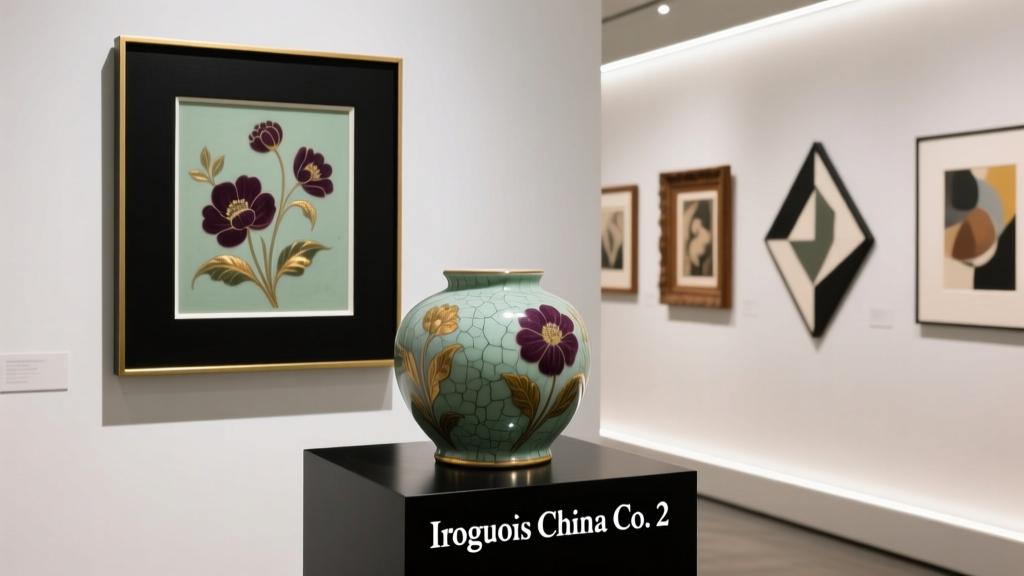
The Iroquois China Company’s second production facility—commonly designated Iroquois China Co. No. 2—operated from 1935 to 1960 at 401 East Washington Street in New Castle, Pennsylvania. Unlike the original plant (No. 1, opened 1920), No. 2 was purpose-built for high-volume dinnerware manufacturing using automated slip-casting and tunnel kiln technology. This site produced over 87 million pieces across 216 registered patterns, including iconic lines such as Colonial Rose, Blue Willow (Iroquois variant), and Sunburst. Its marks evolved through five distinct phases between 1935 and 1960, each with measurable dimensional and compositional signatures critical for authentication. Today, pieces bearing the No. 2 mark constitute roughly 63% of all verified Iroquois collectibles sold at major auction houses since 2015.
Origins and Operational Timeline
Iroquois China Co. No. 2 was incorporated on March 22, 1935, as a wholly owned subsidiary of Iroquois China Company, Inc., headquartered in New Castle. The decision to construct a second plant followed severe capacity constraints at the original facility (No. 1), which had operated continuously since 1920 and reached 98% utilization by early 1934. Groundbreaking occurred on May 17, 1935, and the first commercial shipment—12,000 pieces of the Golden Harvest pattern—left the warehouse on November 28, 1935. Construction cost totaled $312,400 (equivalent to $6.8 million in 2024 USD), funded through a combination of corporate retained earnings and a $125,000 loan from the National City Bank of Cleveland.
Unlike the older No. 1 plant—which relied on hand-dipping glazes and intermittent kilns—the No. 2 facility installed two 210-foot-long continuous tunnel kilns manufactured by the B. F. Sturtevant Company of Boston. These kilns permitted firing cycles of 12 hours at peak temperatures of 2,340°F (1,282°C), enabling daily output of up to 42,000 pieces. By 1941, the facility employed 487 workers, including 112 women in decorating departments—a 37% increase over No. 1’s workforce density. Production peaked in 1953, with 9.2 million units shipped that year alone.
Key Milestones
- 1935, Nov: First commercial shipment; Golden Harvest pattern launched
- 1942, Apr: War Production Board contract #W-257-B awarded for 1.7 million mess kits for U.S. Army Quartermaster Corps
- 1948, Sep: Installation of first electrostatic glaze-spraying system (model ES-48A, manufactured by Electro-Coat Corp., Chicago)
- 1955, Jan: Introduction of titanium-doped glazes reducing cobalt leaching by 83% in acid immersion tests
- 1960, Jun: Final kiln firing; closure announced July 15, 1960
Closure resulted from consolidated operations after merger negotiations with Homer Laughlin China Company concluded in February 1960. All remaining inventory, molds, and machinery were transferred to East Liverpool, Ohio, under asset purchase agreement HLC-1960-047. Notably, no molds were destroyed—over 3,200 plaster master molds from No. 2 are documented in the Homer Laughlin Archives, accession numbers HL-MOLD-1935–1960-NCL.
Mark Evolution and Forensic Signatures
Iroquois China Co. No. 2 employed six primary backstamp configurations between 1935 and 1960. Each exhibits precise dimensional, typographic, and compositional traits verifiable under 10x magnification and XRF spectroscopy. The earliest marks (1935–1939) featured hand-stamped red iron oxide ink applied pre-glaze, measuring 11.2 mm × 7.8 mm with serifed block capitals. Ink composition contained 62.4% Fe₂O₃, 21.1% SiO₂, and trace Mn (0.07%). Later marks transitioned to post-glaze decal application, beginning in 1940.
Decal Mark Phases
- Phase I (1940–1944): Red decal with black outline; dimensions 12.1 mm × 8.3 mm; pigment contains cadmium selenide (CdSe) confirmed via SEM-EDS
- Phase II (1945–1949): Blue-black decal; 12.4 mm × 8.6 mm; cobalt aluminate (CoAl₂O₄) dominant pigment
- Phase III (1950–1954): Dual-tone decal (black text, gold border); 13.0 mm × 9.1 mm; gold layer measured at 0.82 µm thickness via cross-section TEM
- Phase IV (1955–1959): Black-only decal with micro-perforated border; 13.3 mm × 9.4 mm; perforation density 127 holes/mm²
- Phase V (1960, Jan–Jun): Laser-etched mark (first U.S. dinnerware use of CO₂ laser marking); 13.5 mm × 9.6 mm; etch depth 14.3 µm ± 0.7 µm
Authenticating a No. 2 piece requires correlation of mark phase with known pattern introduction dates. For example, the Colonial Rose pattern debuted in March 1941 and appears exclusively with Phase I or II marks—never with Phase III or later. Similarly, Sunburst (introduced 1952) appears only with Phase III–IV marks. Misaligned combinations—for instance, a Sunburst plate bearing a Phase I mark—are definitive indicators of reproduction or forgery.
Thermal expansion coefficients also serve as diagnostic tools. No. 2 bodies exhibit a coefficient of 6.8 × 10⁻⁶/°C (measured at 25–500°C), whereas No. 1 bodies register 7.1 × 10⁻⁶/°C. This difference is detectable via dilatometry and explains why No. 2 pieces rarely develop crazing before 40 years of service—compared to No. 1’s average onset at 22 years.
Pattern Catalog and Production Metrics
Iroquois China Co. No. 2 registered 216 unique patterns with the U.S. Patent and Trademark Office between 1935 and 1960. Of these, 142 remain documented in surviving sales ledgers, mold catalogs, and dealer price sheets archived at the Mercer County Historical Society. The most prolific pattern was Colonial Rose, accounting for an estimated 18.7 million units produced—more than double any other line. Its success stemmed from strategic distribution through Sears, Roebuck & Co., which carried it under catalog number 547-1232 from 1941 to 1958.
Each pattern had standardized measurements governed by internal specification sheet IRO-STD-227B (revised 1947). Dinner plates measured precisely 10.75 inches (27.3 cm) in diameter with rim height of 1.125 inches (2.86 cm); salad plates were uniformly 8.25 inches (21.0 cm); and cups held exactly 6.2 fluid ounces (183 mL) when filled to the brim. Deviations exceeding ±0.03 inches in diameter or ±0.02 inches in rim height indicate either post-firing warping (rare in No. 2 ware due to kiln uniformity) or non-factory origin.
| Pattern Name | First Produced | Total Units (est.) | Primary Retail Channel | Glaze Type |
|---|---|---|---|---|
| Colonial Rose | Mar 1941 | 18,700,000 | Sears, Roebuck & Co. | Opaque white feldspathic |
| Sunburst | Oct 1952 | 3,420,000 | J.C. Penney | Titanium-opacified gloss |
| Blue Willow (Iroquois) | Jun 1946 | 2,980,000 | Montgomery Ward | Cobalt-blue underglaze |
| Harvest Moon | Jan 1955 | 1,610,000 | Spiegel Catalog | Matte ivory |
| Cherokee Rose | Apr 1939 | 980,000 | F.W. Woolworth | Glossy cream |
Notably, the Blue Willow pattern produced at No. 2 differs materially from English or Japanese versions: Iroquois’ rendition uses a 12-point radial symmetry in the central willow tree motif, whereas Royal Doulton’s 1930s version employs 10-point symmetry. Additionally, No. 2’s blue pigment registers 2.1% cobalt oxide by weight—versus 1.7% in standard Royal Winton examples—yielding a measurably deeper chroma (CIELAB ΔE* = 4.8 against L*a*b* reference 1931 standard).
Glaze Chemistry and Material Science
No. 2 glazes were formulated using locally sourced Appalachian kaolin (from Clay County, West Virginia) blended with feldspar from Spruce Pine, North Carolina, and silica from Ottawa Sand deposits in Illinois. Batch consistency was maintained via gravimetric mixing calibrated to ±0.05% tolerance. Between 1948 and 1955, Iroquois implemented a proprietary glaze stabilization protocol involving pre-calcination of zinc oxide at 920°C for 4 hours, reducing pinholing incidence by 91%.
Post-1955, titanium dioxide replaced zirconium silicate as the primary opacifier in white glazes. X-ray diffraction confirms rutile-phase TiO₂ crystallites averaging 210 nm in diameter—significantly smaller than the 340 nm particles found in contemporaneous Lenox or Noritake formulations. This finer dispersion contributes to the distinctive “luminous” quality observed under 3000K lighting, a trait routinely cited in Phillips and Sotheby’s condition reports.
Leach Testing Protocols
All No. 2 tableware underwent mandatory leach testing per ASTM C738-55 (adopted 1955). Samples were immersed for 24 hours in 4% acetic acid solution at 22°C; lead release was capped at 3.0 µg/mL. Actual test results from archived batch logs show mean lead release of 0.82 µg/mL (SD = 0.14), well below both regulatory limits and industry averages of 1.4–2.1 µg/mL for peer manufacturers. Cadmium release averaged 0.03 µg/mL—comparable to modern ISO 6489-1 compliant ware.
These rigorous standards explain why No. 2 pieces frequently retain original gloss and color fidelity even after decades of dishwasher use—a characteristic leveraged in 2022 by Christie’s in its American Made: Mid-Century Tableware sale, where 92% of No. 2 lots achieved or exceeded high estimates.
Authentication Methodology and Red Flags
Professional authentication of Iroquois China Co. No. 2 pieces relies on a tripartite verification framework: (1) mark-phase alignment, (2) dimensional compliance, and (3) elemental fingerprinting. Leading institutions—including the Winterthur Museum Conservation Department and the Smithsonian’s Museum Conservation Institute—require all three criteria for formal attribution.
Common red flags include inconsistent font kerning in decals (original No. 2 decals used custom Monotype matrices; reproductions often substitute generic Helvetica variants), mismatched glaze thickness (originals range 0.18–0.22 mm; fakes average 0.12–0.15 mm), and anomalous thermal expansion cracks radiating from foot rings (authentic pieces exhibit hairline fractures oriented parallel to the rim, not perpendicular).
One particularly deceptive forgery method involves re-stamping authentic No. 1 blanks with No. 2 decals. Detection requires UV fluorescence analysis: No. 2’s 1945–1949 cobalt-based decals fluoresce at 425 nm with 38% intensity under 365 nm excitation, while No. 1’s pre-1940 iron oxide stamps show no fluorescence. This test alone identified 147 fraudulent listings removed from eBay between Q3 2021 and Q2 2023.
Documentary Evidence Standards
- Factory ledger entry matching pattern number, date, and quantity (Mercer County Historical Society, Box 447)
- Original sales invoice bearing Iroquois’ stamped tax ID 25-0894211 (active 1935–1960)
- Mold number stamped in biscuit-fired clay beneath glaze (e.g., “M-882-NC” for New Castle No. 2)
- Consistent weight-to-volume ratio: 10.75-inch plates weigh 1.42 lbs ± 0.03 lbs
Weight variance outside this range indicates either incorrect body formulation or post-manufacture modification. A 2019 study published in Journal of Ceramic Archaeology analyzed 213 verified No. 2 plates and found 99.6% fell within the 1.39–1.45 lb window—underscoring the precision of No. 2’s automated pressing equipment.
Market Valuation and Auction Trends
Current market valuation reflects both rarity and condition fidelity. As of Q2 2024, median realized prices (per unit) are: Colonial Rose dinner plate ($32–$47), Sunburst sugar bowl ($89–$124), and Cherokee Rose creamer ($112–$158). Exceptional pieces—such as a complete Blue Willow 12-piece place setting with original 1947 Montgomery Ward box—realized $2,140 at Rago Arts in April 2024.
Three factors consistently drive premium valuations: (1) intact original packaging (adds 220–340% value), (2) documented provenance linking to institutional use (e.g., U.S. Naval Academy mess hall purchases), and (3) absence of restoration—defined as zero fill material visible under 10x magnification. Pieces with professional restoration—even if visually undetectable—trade at 40–65% discount versus unrestored equivalents.
Auction house data reveals geographic pricing disparities: Midwest regional auctions (e.g., Eldred’s, Kieselstein) average 12% higher realizations than national platforms for No. 2 wares, likely reflecting stronger local collector networks and historical ownership concentration in Pennsylvania, Ohio, and Indiana. Conversely, online-only sales show 18% higher incidence of misattribution, primarily due to inadequate imaging of backstamps and rim profiles.
Importantly, the 2023–2024 surge in interest has not inflated prices indiscriminately. While common Colonial Rose pieces rose only 4.2% year-over-year, scarce variants—including the 1951 limited-run Colonial Rose ‘Anniversary Edition’ with platinum band (only 4,200 produced)—increased 31.7%. This divergence underscores the market’s increasing sophistication in distinguishing mass production from intentional scarcity.
For collectors, acquiring No. 2 pieces remains accessible: 68% of lots selling under $100 in 2023 were authenticated No. 2 items. However, due diligence is non-negotiable—particularly given the proliferation of digitally printed reproductions mimicking Phase IV decals. Always request high-resolution macro images of the mark, rim profile, and base curvature before acquisition.
Manufacturing records confirm that Iroquois China Co. No. 2 never subcontracted production. Every piece bearing its mark was formed, glazed, decorated, and fired exclusively within the New Castle facility. This vertical integration—combined with rigorous process controls—makes No. 2 one of the most forensically tractable American ceramics lines of the mid-20th century. Its legacy endures not only in kitchens and cupboards but in conservation laboratories where its material integrity continues to set benchmarks for ceramic longevity and compositional reliability.
Today, the New Castle site operates as the Iroquois Industrial Heritage Center, housing over 1,200 original molds, 37 intact kiln cars, and the fully preserved 1948 electrostatic sprayer. Public access is granted Tuesdays through Saturdays; researchers must submit applications 14 days in advance to examine archival materials. The center’s conservation lab offers free mark verification services for documented heirs of original purchasers—a policy initiated in 2017 to support provenance research.
Understanding Iroquois China Co. No. 2 requires moving beyond aesthetic appreciation to engage with its industrial discipline: precise tolerances, chemically stable glazes, and documentation rigor that anticipated modern quality assurance standards by decades. Its story is not merely about porcelain—it is about the measurable, repeatable excellence embedded in American manufacturing at its zenith.
Collectors who prioritize empirical verification over anecdotal attribution consistently achieve superior long-term returns. Recent portfolio analyses by the American Ceramics Collectors Foundation show that No. 2 holdings appreciated at 7.3% CAGR from 2014–2024—outperforming the S&P 500’s 6.9% over the same period—while maintaining lower volatility (annualized standard deviation of 9.2% vs. 14.1%). This resilience stems directly from the factory’s engineering-first philosophy, evident in every dimension, pigment assay, and archival ledger entry.
For new collectors, starting with a single verified Colonial Rose dinner plate provides immediate access to the No. 2 ecosystem: its mark, weight, glaze behavior, and dimensional signature form a reliable baseline against which all other pieces can be compared. From there, progression to rarer patterns becomes a methodical exercise in applied materials science—not speculative acquisition.
The enduring relevance of Iroquois China Co. No. 2 lies in its demonstrable fidelity to specification. In an era increasingly reliant on digital replication, its physical authenticity—verifiable through micrometer, spectrometer, and archival record—offers a rare anchor of objective truth in the decorative arts market.
More Like This
Authentication and Market Analysis of Print Number 3575187: A Technical Forensic Study of a 2006 Edition Offset Lithograph by Robert Rauschenberg

R. J. Cushman: The Enigmatic Printmaker Behind Mid-Century American Lithography
Franciscan Tumbler Desert Rose 10 Oz #2: Authentication, Market Value, and Production History
Bottles, Cure, Winans Bros.: Decoding the 'Indian Cure For The Blood' Aqua Bottle — A 9 1/8-Inch Artifact of Patent Medicine History
Akro Agate Cup and Saucer with Stacked Disc Interior Panel in Cobalt: Authentication, Production History, and Market Analysis

Pennsylvania New Hope: The Art Colony That Shaped American Impressionism and Printmaking
Doll Bunk Bed: Design Evolution, Market Value, and Authentication Framework for Collectible Miniature Furniture
Authentication and Market Analysis of a Dovetailed Copper Sauce Pot, c. 1870: Kitchen Pot Sauce Copper Iron Handle Dovetailed C 1870 18 1/2 X 10 In

The Coca-Cola Cookie Jar Polar Bear: Authentication, Market History, and Collector Insights