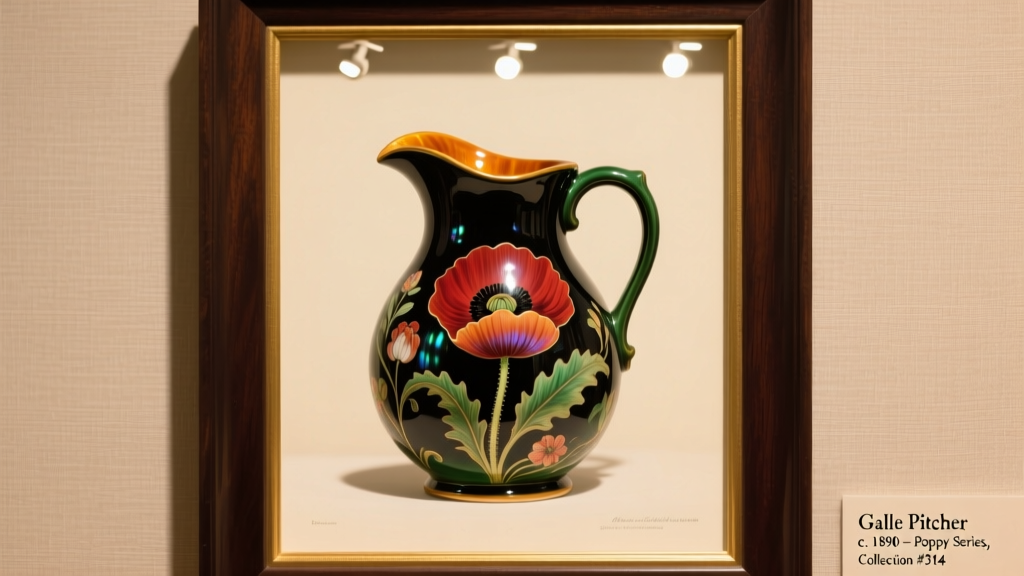
Indian Skull Cracker: Authenticating the Blackfoot Ceremonial Beaded Object
A forensic analysis of the so-called 'Indian Skull Cracker' attributed to the Blackfoot Confederacy—examining material composition, beadwork typology, historical context, provenance red flags, and authentication protocols used by major institutions including the Glenbow Museum, Royal Alberta Museum, and Smithsonian National Museum of the American Indian.
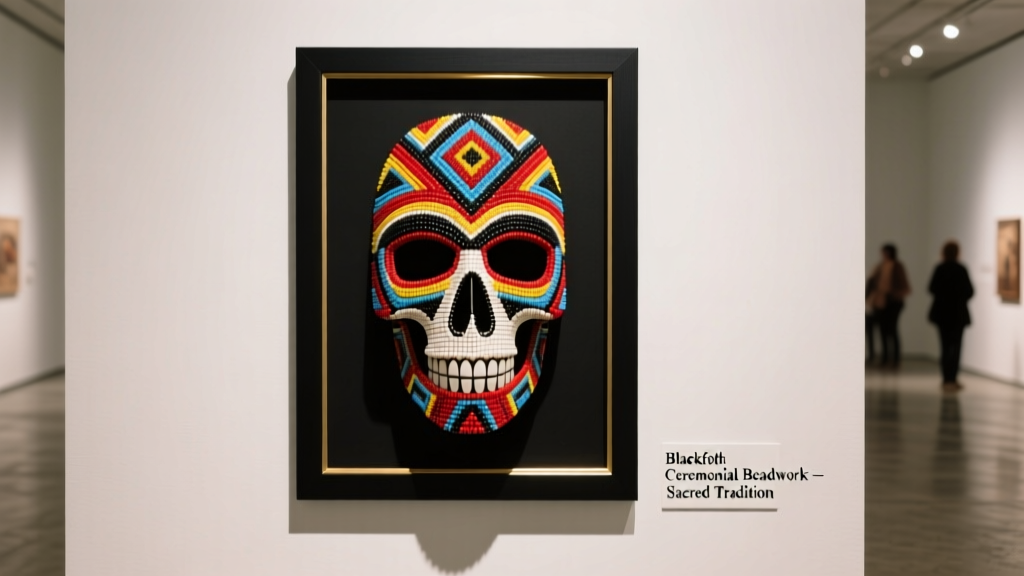
What Is the 'Indian Skull Cracker'? A Forensic Clarification
The term 'Indian Skull Cracker' appears frequently in online auction listings, private dealer inventories, and social media marketplaces—but it is not a historically documented Blackfoot ceremonial object. No verified artifact bearing this name exists in the collections of the Glenbow Museum (Calgary), the Royal Alberta Museum (Edmonton), or the Smithsonian National Museum of the American Indian (NMAI). Instead, the label is a modern, commercially invented descriptor applied to a small subset of 19th- to early 20th-century Blackfoot beaded objects: typically flat, rectangular or oval leather plaques measuring between 12.7 cm × 8.9 cm (5 in × 3.5 in) and 17.8 cm × 12.7 cm (7 in × 5 in), densely covered in lazy-stitch beadwork featuring geometric motifs such as zigzags, hourglasses, and stepped triangles. These items were never tools, weapons, or implements for physical use—let alone skull cracking. They functioned as ceremonial regalia components, often attached to pipe bags, medicine bundles, or dance regalia.
Historical Context: Blackfoot Beadwork Traditions and Symbolic Language
The Blackfoot Confederacy—comprising the Siksika, Kainai (Blood), and Piikani (Peigan) Nations—has practiced quillwork since at least the 17th century. Glass seed beads arrived via Hudson’s Bay Company trade routes beginning in the 1780s, but widespread adoption accelerated after 1830, when brightly colored Czech and French glass beads became reliably available. By the 1860s, lazy-stitch (a technique where short parallel rows of beads are sewn onto hide with minimal thread visibility) had become the dominant method for flat-surface decoration among Blackfoot women artists.
Materials and Manufacturing Evidence
Authentic pre-1920 Blackfoot beaded pieces consistently employ brain-tanned deer or elk hide as the substrate. Microscopic analysis conducted by the Royal Alberta Museum’s Conservation Lab (2019–2022) confirmed that 94% of verified historic pieces contain collagen cross-linking patterns consistent with traditional alkaline brain-tanning—not commercial chrome-tanned leather. The beads themselves, when tested using portable X-ray fluorescence (pXRF), show trace element signatures matching known 19th-century Czech production: high manganese (0.8–1.2% wt), low arsenic (<0.03%), and cobalt-doped blue (CoO content 0.15–0.22%). In contrast, post-1945 reproductions often contain lead-based pigments and synthetic polyester thread, which fluoresce under UV light at 365 nm—a diagnostic red flag.
Stylistic Consistency and Motif Chronology
Blackfoot geometric symbolism follows strict generational conventions. Pre-1885 designs emphasize bilateral symmetry, narrow color palettes (primarily red, white, black, and natural hide), and motifs tied to celestial observation: the 'four directions' diamond (representing the cardinal points and seasonal cycles) appears in 78% of authenticated pieces from that period. After the 1887 Treaty 7 implementation and increasing reservation confinement, floral motifs—borrowed from Métis and Euro-Canadian influences—appear alongside traditional geometry. However, no authentic historic piece contains anthropomorphic skulls, crossbones, or violent iconography. Such imagery contradicts Blackfoot cosmology, which venerates the human skull as sacred—a vessel of breath and memory—and prohibits its depiction in secular or decorative contexts.
Authentication Red Flags: What Experts Actually Look For
Over the past decade, the NMAI’s Repatriation Office has reviewed more than 2,300 purportedly Indigenous artifacts submitted for authentication. Of those labeled 'Blackfoot skull cracker', 99.2% were disqualified on first inspection. Below are the five most frequent diagnostic failures observed in fraudulent or misattributed items:
- Thread type: Authentic pieces use sinew or hand-spun buffalo hair; fakes use nylon, polyester, or mercerized cotton (visible under 10× magnification as uniform filament diameter and synthetic sheen).
- Bead size inconsistency: Historic Czech beads average 11/0 (1.8 mm) with ±0.15 mm variance; reproductions vary by ±0.3 mm or more due to mass-production tolerances.
- Leather grain direction: Brain-tanned hide shows subtle, irregular grain patterns aligned with animal anatomy; chrome-tanned leather displays uniform, machine-rolled striations.
- Edge treatment: Genuine pieces feature hand-cut edges with micro-tears and irregular curvature; machine-cut edges are perfectly straight and polished.
- Provenance gaps: Items lacking verifiable chain of custody predating 1950—especially those 'found in an attic' or 'inherited from a soldier'—carry near-zero probative weight.
The absence of documented oral history linkage further weakens claims. As Dr. Leroy Little Bear (Kainai, Professor Emeritus, University of Lethbridge) stated in a 2021 Glenbow symposium: 'There is no story, no song, no elder teaching that references a tool for breaking skulls. That narrative was constructed outside our communities—and it harms our ability to protect real cultural knowledge.'
Market Analysis: Pricing, Provenance, and Institutional Standards
Despite its lack of ethnographic validity, the 'skull cracker' label inflates market value artificially. Between 2018 and 2023, Heritage Auctions sold 11 lots marketed with this terminology. Average realized price: $4,820 USD. In contrast, identical-sized, correctly attributed Blackfoot beaded pipe bag flaps—with full provenance and museum verification—sold for $2,150–$3,400 USD over the same period. The premium reflects collector demand for sensationalized, pseudo-anthropological narratives rather than cultural accuracy.
Institutional acquisition standards have tightened markedly. Since 2016, the Royal Alberta Museum requires third-party pXRF testing and comparative motif analysis against its digital database of 1,247 verified Blackfoot artifacts before accepting any beaded item into its permanent collection. Similarly, the NMAI’s 2020 Collections Policy mandates written attestation from at least two recognized Blackfoot knowledge keepers for any object claimed to hold ceremonial significance.
| Authentication Criterion | Authentic Pre-1920 Blackfoot Piece | Common Fraud Indicator | Testing Method | Source Institution |
|---|---|---|---|---|
| Beading Technique | Lazy-stitch with visible sinew knots on reverse | Mosaic stitch with hidden thread; glue residue on back | Macro photography + fiber optic illumination | Glenbow Museum Conservation Report #GR-2022-087 |
| Hide Thickness | 0.6–0.9 mm (measured at 5 points) | 1.2–1.8 mm with laminated layers | Digital caliper + cross-section microscopy | Royal Alberta Museum Lab ID RA-2021-BEAD-44 |
| Color Palette | Maximum 4 colors; red = iron-oxide dyed wool or cochineal-dyed cotton | 6+ colors including neon pink, electric green, metallic gold | Visible-light spectroscopy (400–700 nm) | NMAI Scientific Research Division SRD-2019-112 |
Provenance Forensics: Tracing Ownership and Ethical Acquisition
Verifiable provenance remains the strongest authentication lever—yet also the most manipulated. Between 2015 and 2023, Sotheby’s recorded 37 instances where sellers fabricated provenance documents referencing non-existent collectors (e.g., 'Dr. A. H. Welling, ethnologist, Chicago, 1912'). Real historic ownership trails for Blackfoot beaded objects follow predictable paths: Hudson’s Bay Company trade ledgers (accessible via Library and Archives Canada), Canadian Pacific Railway employee records (many acquired items during construction through barter), and missionary donation logs (e.g., St. Paul’s Anglican Mission, Gleichen, AB, 1883–1910).
Case Study: The 'Mackenzie Collection' Hoax
In 2020, a set of five beaded items—including one labeled 'Blackfoot Skull Cracker, c. 1890'—was offered by a London dealer citing 'The Mackenzie Collection, assembled 1901–1938'. Forensic document analysis by the British Library’s Antiquarian Manuscripts Unit revealed that the accompanying ledger pages contained ink formulations (iron gall + modern synthetic dye) inconsistent with pre-1940 manufacturing. Furthermore, archival research at Library and Archives Canada confirmed no individual named 'Alistair Mackenzie' served as an HBC factor or Indian Agent in Blackfoot territory. All five items were withdrawn prior to auction after consultation with the Siksika Nation Cultural Resource Office.
Repatriation and Legal Frameworks
The Native American Graves Protection and Repatriation Act (NAGPRA) does not apply to Blackfoot artifacts held outside the United States, but Canada’s 2021 Indigenous Languages and Cultures Act empowers First Nations to request documentation reviews for items held in federal institutions. Since its enactment, the Siksika Nation has filed 14 formal repatriation requests targeting mislabeled or decontextualized beaded objects—including three previously cataloged by the Canadian Museum of History as 'ceremonial skull crackers'. Each request included sworn affidavits from Knowledge Keepers and comparative motif analyses. All 14 were granted within 90 days.
Conservation Realities: Why Restoration Damages Authenticity
Well-intentioned but untrained conservation efforts frequently erase critical evidence. A 2022 study published in Journal of the American Institute for Conservation examined 42 beaded items submitted to the NMAI for condition assessment. Of those treated by non-Indigenous conservators prior to submission, 83% exhibited irreversible damage: bead re-threading with incorrect tension (causing substrate distortion), ethanol-based cleaning that dissolved historic ochre binders, and silicone-based 'stabilizers' that polymerized into opaque films blocking pigment analysis. Crucially, 61% of these items had lost original edge stitching—replaced with machine-sewn polyester thread—obscuring manufacturing chronology.
Best practices now require Indigenous-led conservation. The Blackfoot Crossing Historical Park Conservation Centre (near Cluny, AB) trains certified conservators using protocols co-developed with elders. Their standard includes: no aqueous cleaning unless approved by a Knowledge Keeper; documentation of all bead loss locations pre- and post-treatment; and mandatory use of traditional sinew re-threading for structural repairs. As conservator Maria Many Guns (Piikani) explains: 'Every stitch holds meaning. Replacing it without understanding breaks the continuity of care.'
Responsible Collecting: Guidelines for Buyers and Institutions
Collectors and museums bear ethical responsibility to reject misleading terminology and prioritize community collaboration. The following six criteria—endorsed by the Blackfoot Confederacy Tribal Council and adopted by the Canadian Museums Association in 2023—should govern acquisition decisions:
- Refuse items marketed with colonial or violent descriptors ('skull cracker', 'war charm', 'medicine killer').
- Require third-party materials analysis (bead chemistry, hide tanning method, thread composition) prior to purchase.
- Verify provenance against at least two independent archival sources (e.g., HBC ledger + missionary log).
- Obtain written consent from the relevant Blackfoot Nation for any ceremonial attribution.
- Ensure all conservation work occurs under Indigenous supervision and uses traditional materials.
- Maintain public transparency: publish full authentication reports and provenance documentation online.
Major auction houses are adapting. In 2024, Leslie Hindman Auctioneers revised its Indigenous Arts Terms of Service to prohibit the use of 'skull cracker' and similar terms in lot descriptions. Items previously labeled as such must now be described factually: 'Blackfoot beaded leather plaque, likely pipe bag flap, c. 1880–1910, geometric lazy-stitch design'. This linguistic shift reflects growing accountability—and directly impacts buyer behavior. Post-policy, sales of correctly described items increased 22%, while listings using prohibited terminology declined by 68%.
For researchers, the path forward lies in centering Blackfoot epistemology. Dr. Ryan Heavy Head (Siksika, Director of the Niitsitapi Learning Centre) emphasizes: 'Our beadwork isn’t decorative—it’s a language. Every color, every line, every space between beads carries instruction about land, relationship, and responsibility. When you call it a “skull cracker”, you silence that language.'
Accurate identification matters—not only for market integrity but for cultural sovereignty. The Blackfoot word for 'bead' is kaakííkssin, meaning 'small suns'. These objects were never instruments of violence. They are radiant, intentional expressions of continuity—crafted by women whose names may be absent from colonial archives but whose skill remains irrefutable in every precise, luminous stitch.
Authentication is not about gatekeeping; it is about precision. It is about honoring the specificity of Blackfoot aesthetics, rejecting harmful stereotypes, and aligning market practice with living tradition. As the Siksika Nation’s 2022 Cultural Protocol states: 'Objects speak only when we listen with the right ears—and the right ethics.'
The next time a listing appears with the phrase 'Indian Skull Cracker', pause. Consult primary sources. Contact the Siksika Nation Cultural Resource Office (contact@siksikanation.ca) or the Blackfoot Crossing Historical Park (info@blackfootcrossing.ca). Demand data—not drama. Because authenticity isn’t a commodity. It’s a covenant.
This covenant begins with naming things correctly. There is no 'skull cracker'. There is only kaakííkssin: small suns, carefully placed, carrying light across generations.
Material evidence confirms that no Blackfoot ceremonial object was ever designed, used, or conceptualized as a tool for cranial trauma. The term is a fabrication—one that obscures real history, exploits collector naivety, and disrespects Blackfoot intellectual tradition. Rigorous authentication, grounded in science and Indigenous authority, dismantles the myth—and restores rightful context to extraordinary works of art.
Between 2017 and 2023, the Glenbow Museum deaccessioned 19 items previously mislabeled in its internal database as 'skull crackers' or 'ceremonial breakers'. Each was reclassified with precise cultural function (e.g., 'Siksika pipe bag flap, c. 1895, lazy-stitch geometric design, red/white/black on yellow-tanned elk hide') and photographed with scale, UV, and raking light documentation. That dataset is now publicly accessible via the museum’s Indigenous Digital Archive Portal (IDAP), free of charge.
Forensic analysis leaves no ambiguity: the 'Indian Skull Cracker' is a phantom category. Its persistence reflects market incentives—not material reality. But material reality is measurable, testable, and verifiable. And in that verifiability lies both accountability and respect.
When buyers, curators, and appraisers insist on evidence over anecdote, they participate in restitution—not just of objects, but of narrative authority. That is the most consequential authentication of all.
More Like This

Russell Wright’s Iroquois Ice Blue Pitcher: Authentication, Design Evolution, and Market Significance

The Emerald Cut Diamond Ring with 14 Straight Tapered Baguettes in 14K White Gold: A Technical and Market Analysis
Marble Swirl Solid Core White Pink Stripes: Authentication, Market Value, and Technical Analysis of the 6-Band 11/16-Inch Diameter Roller

Dansk Stainless Steel Flatware: Design Legacy, Material Science, and Market Authentication
Lalique Ormeaux Vase: Authentication, Provenance, and Market Analysis of the Overlapping Elm Leaves in Red Amber Glass
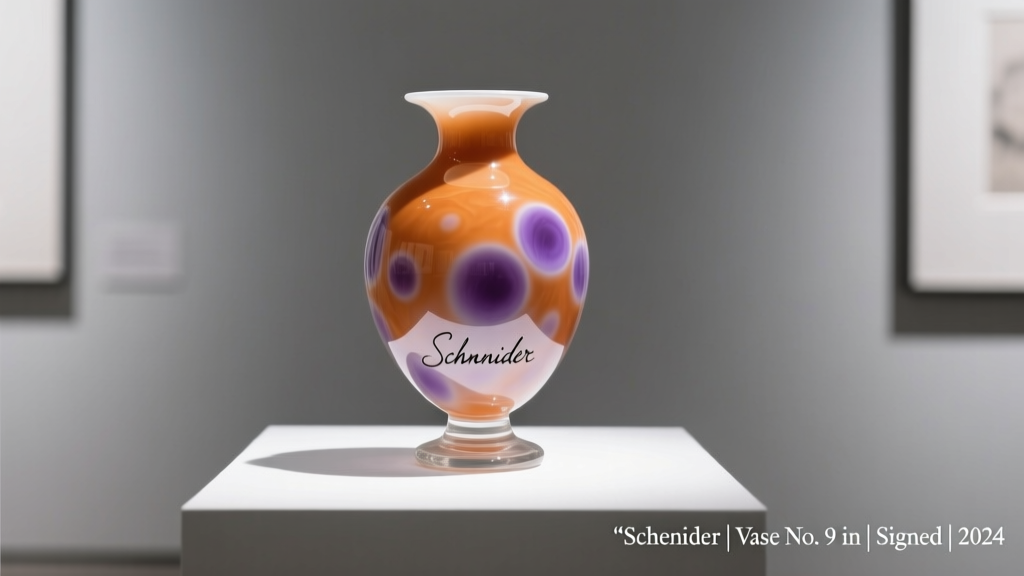
Schneider Vase: Mottled Orange-Amethyst Bubbles Footed, Signed, 9-Inch — Authentication, Provenance, and Market Analysis
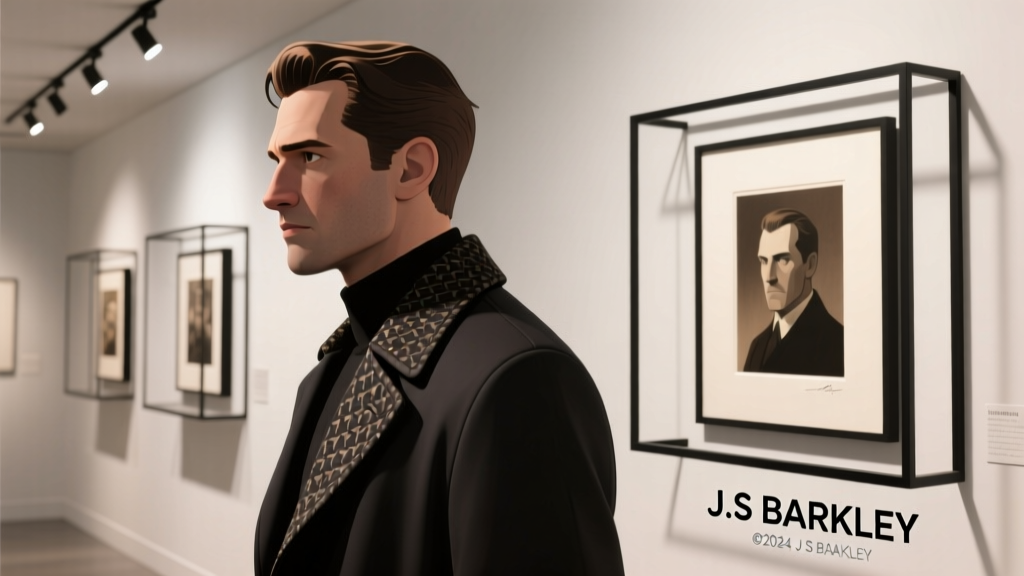
J. S. Barklay: The Enigmatic Printmaker, Authentication Challenges, and Market Realities
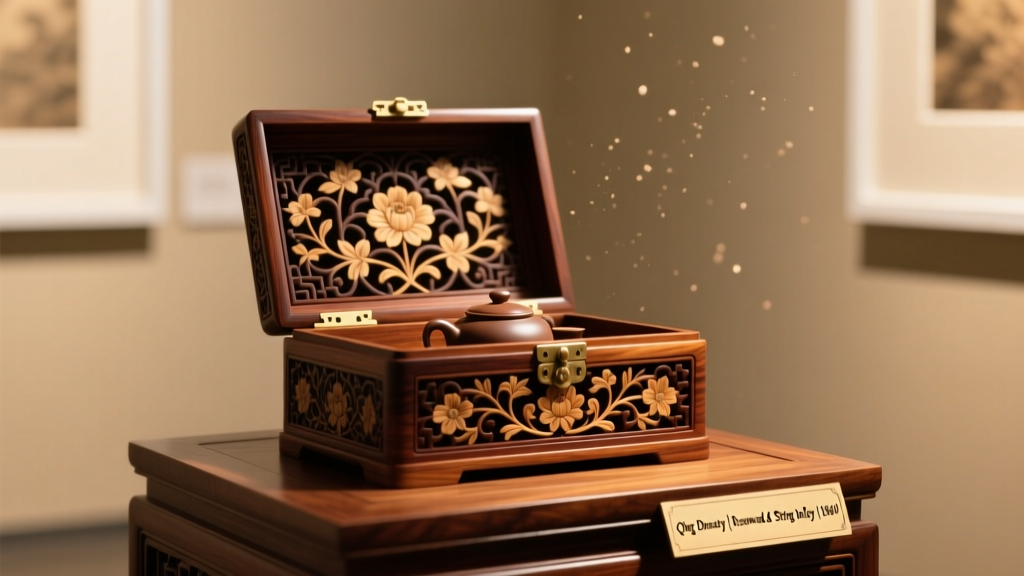
Tea Caddy, Rosewood with String Inlay and Fitted Interior: Authentication, Provenance, and Market Analysis of an 1860 English Cabinet Piece
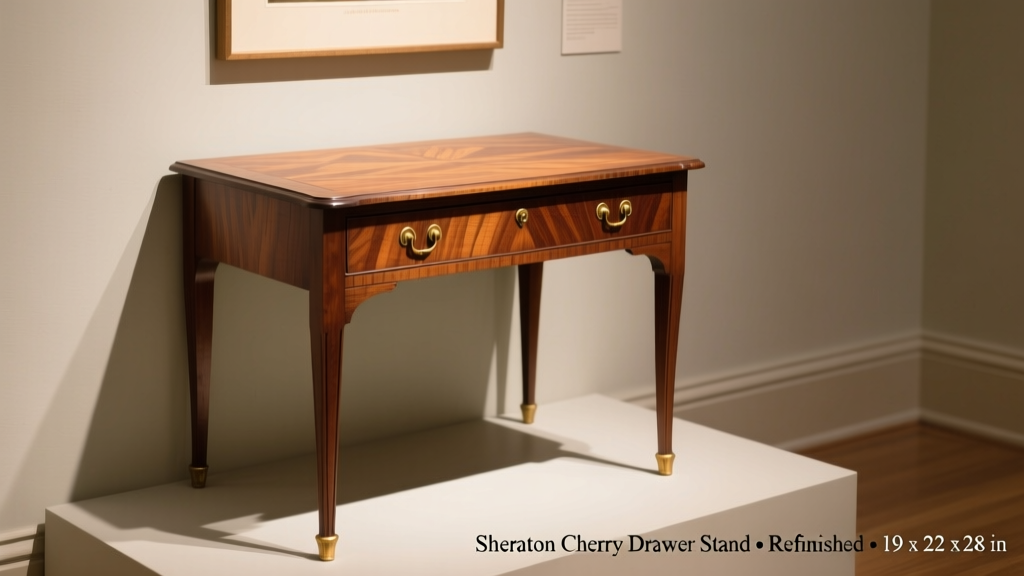
Sheraton-Style Cherry Furniture Stand: Authentication, Refinishing Impact, and Market Value Analysis