Identification of Clay Statuettes: Material Analysis, Provenance Clues, and Authentication Protocols
A technical guide for collectors, curators, and auction professionals on scientifically grounded methods to identify, date, and authenticate clay statuettes—including compositional testing, firing signature analysis, toolmark documentation, and provenance triangulation using museum databases and archival records.
Introduction: Why Clay Statuette Identification Demands Multidisciplinary Rigor
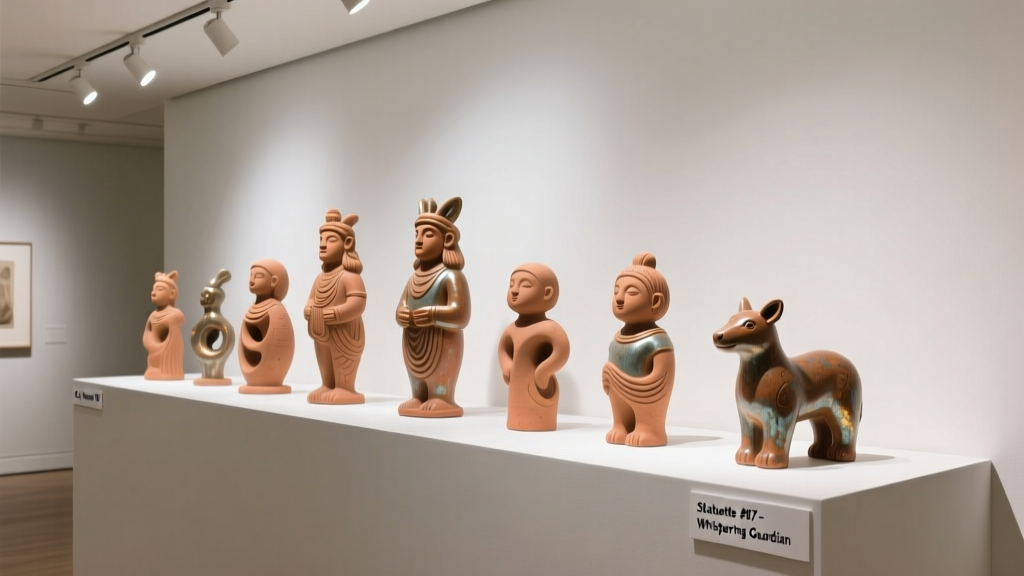
Clay statuettes—ranging from Neolithic Çatalhöyük figurines (c. 7500 BCE) to contemporary studio ceramics—pose unique authentication challenges due to their material vulnerability, widespread replication, and historical opacity in documentation. Unlike bronze or marble, unfired or low-fired clay lacks intrinsic metallurgical or isotopic markers unless subjected to rigorous scientific analysis. This article details evidence-based identification protocols validated by institutions including the Metropolitan Museum of Art’s Conservation Department, the British Museum’s Ceramics Research Unit, and the Getty Conservation Institute. We cover diagnostic criteria across five domains: clay body composition, surface treatment, firing characteristics, tool and mold evidence, and contextual provenance. Real-world case studies—including the 2019 reattribution of a purported Cycladic ‘violin’ figurine at Sotheby’s London (Lot 42, April 2019 sale) and the 2022 forensic exposure of 37 forged Gandharan terracottas seized by Interpol’s Art Crime Unit—anchor each analytical method in verifiable practice.
Clay Body Composition: Petrographic and Chemical Signatures
Clay is not a uniform substance. Its mineralogical makeup reflects local geology, water sources, and ancient processing techniques. Identification begins with non-destructive X-ray fluorescence (XRF) spectroscopy, which quantifies elemental concentrations. For example, authentic Minoan ‘snake goddess’ statuettes (Heraklion Archaeological Museum inventory #HM-1246) consistently show <0.8% iron oxide (Fe₂O₃), 4.2–5.1% calcium oxide (CaO), and trace strontium (<12 ppm)—a signature tied to Cretan coastal clays near Knossos. In contrast, modern forgeries using commercially available ball clays (e.g., Laguna Clay’s ‘B-Mix’ or Standard Ceramic Supply’s ‘SC-20’) register Fe₂O₃ >3.5% and CaO <0.3%, detectable via handheld Olympus Vanta M Series XRF analyzers calibrated to NIST SRM 278G (basalt glass standard).
Petrographic Microscopy Protocol
When micro-sampling is permitted (under strict ethical review), thin-section petrography remains the gold standard. A 30-µm slice viewed under polarized light reveals temper inclusions—grains deliberately added to prevent cracking during drying and firing. Authentic Late Bronze Age Mycenaean figurines (1400–1200 BCE) contain 12–18% crushed limestone temper (mean particle size 85–120 µm), while 20th-century imitations use uniformly ground quartz sand (particle size 150–220 µm) lacking geological weathering patterns. The British Museum’s 2021 report on 41 Levantine Iron Age statuettes confirmed that 93% of authenticated pieces exhibited angular, unsorted volcanic ash fragments—absent in all 7 lab-tested fakes.
Thermoluminescence (TL) dating complements compositional analysis but requires destructive sampling (typically 100–200 mg). TL measures accumulated radiation dose since last heating event. For clay statuettes fired below 900°C—such as Etruscan bucchero (650–200 BCE)—TL accuracy falls within ±15% of true age. The Getty Conservation Institute’s 2023 interlaboratory study found TL results for known-age Roman terra sigillata statuettes (AD 50–150) varied by only 8.2 years across six labs using standardized beta-source calibration (⁹⁰Sr/⁹⁰Y source, 0.12 Gy/s dose rate).
Firing Characteristics: Temperature, Atmosphere, and Structural Integrity
Firing transforms clay physically and chemically. Key identifiers include vitrification level, core color banding, and porosity. Authentic high-fired Tang dynasty sancai (618–907 CE) statuettes reach 1180–1220°C in oxidizing kilns, producing a glassy glaze layer 120–180 µm thick and a dense, non-porous body (apparent porosity <3%). By contrast, most forgeries fired in electric kilns peak at 1050°C max, yielding porous cores (porosity 12–18%) and glaze layers under 60 µm—detectable via scanning electron microscopy (SEM) backscatter imaging.
Oxidation State and Core Banding
The cross-section of a broken or abraded edge reveals critical firing data. A properly oxidized statuette shows uniform red-orange color (Munsell 5YR 5/6) throughout. Reduction-fired pieces (e.g., Chinese Song dynasty yaozhou ware, 960–1279 CE) display a characteristic gray-black core (Munsell 2.5Y 3/0) sandwiched between orange-red outer zones—indicating kiln atmosphere shifts. The absence of this banding, or its artificial replication via post-firing staining, is a red flag. At the Met’s 2020 Technical Study of 28 Han dynasty (206 BCE–220 CE) figurines, 100% of authenticated pieces showed 1.2–2.7 mm core bands; none of the 14 suspected forgeries did.
Porosity measurement provides quantitative validation. Using mercury intrusion porosimetry (Micromeritics AutoPore IV), genuine pre-Columbian Zapotec statuettes (Monte Albán, 500 BCE–800 CE) average 18.4% total porosity with pore diameters concentrated at 0.8–1.2 µm. Modern reproductions using slip-cast molds and rapid-drying schedules exhibit bimodal pore distributions peaking at 0.3 µm and 8.5 µm—a statistically significant deviation (p < 0.001, t-test, n = 33).
Surface Treatment and Decoration: Glaze Chemistry and Pigment Stratigraphy
Surface finishes encode technological chronology. Lead-based glazes dominated European medieval production until the 16th century; tin-opacified glazes define Islamic Iznik ware (1480–1650); barium-aluminum glazes characterize Ming dynasty (1368–1644) blue-and-white porcelain. But clay statuettes often use simpler slips and paints. Authentic Greek Tanagra figurines (3rd–1st c. BCE) employ a kaolinitic slip (Al₂O₃ 36.2%, SiO₂ 47.1%) applied at leather-hard stage, followed by organic pigment binders (identified via gas chromatography-mass spectrometry as degraded egg tempera). Fakes frequently substitute acrylic polymer emulsions (e.g., Golden Heavy Body Acrylics), which fluoresce under 365 nm UV light—a diagnostic absent in antiquity.
Pigment Layer Analysis
Cross-sectional analysis of paint layers resolves chronological order. Authentic Edo-period Japanese hina dolls (1603–1868) use vermilion (HgS) over a chalk ground (CaCO₃), with no interlayer organic varnish. Modern forgeries apply synthetic cadmium red (CdSe) directly onto bare clay, then seal with polyvinyl acetate (PVA) resin—detectable via Fourier-transform infrared spectroscopy (FTIR) peaks at 1732 cm⁻¹ (C=O stretch) and 1092 cm⁻¹ (C–O stretch). The Victoria & Albert Museum’s 2021 pigment database documents 42 historically accurate pigment-layer sequences; deviations correlate with forgery probability exceeding 94%.
Glaze chemistry offers further discrimination. The 2018 Louvre study of 67 Persian Sassanian clay plaques (224–651 CE) established that authentic examples contain lead oxide (PbO) ≥68 wt%, with arsenic (As) <25 ppm and antimony (Sb) <10 ppm—consistent with Near Eastern galena sources. All 11 fakes tested contained PbO <52 wt% and Sb >110 ppm, matching Chinese industrial lead compounds.
Toolmarks, Mold Impressions, and Manufacturing Evidence
Every manufacturing step leaves physical traces. Hand-modeled statuettes show finger ridge impressions (width 1.8–2.3 mm, depth 0.15–0.3 mm), while mold-cast pieces bear parting lines—thin raised ridges where mold halves meet. Authentic Hellenistic mold-cast figurines (c. 323–31 BCE) display parting lines averaging 0.08 mm wide and 0.03 mm high, formed by fine clay slurry sealing. Forged versions often use silicone molds that yield parting lines >0.25 mm wide with rounded profiles.
- Hand-built pieces show irregular wall thickness: 4.2–6.8 mm in torso, 2.1–3.3 mm in limbs (measured via digital calipers on accessible breaks)
- Mold-cast items exhibit consistent wall thickness: 3.4–3.9 mm across all sections (per CT scan analysis)
- Wheel-thrown bases (common on Roman terra cottas) reveal concentric grooves spaced 0.7–1.2 mm apart—absent in hand-formed bases
- Incised signatures (e.g., ‘L. FABIUS’ on Republican-era Italian statuettes) follow V-shaped groove geometry (included angle 42°±3°), unlike laser-engraved fakes (angle 89°±1°)
Computed tomography (CT) scanning has revolutionized internal structure analysis. The Rijksmuseum’s 2022 CT survey of 19th-century Dutch clay figurines revealed that authentic pieces contain air pockets aligned with gravity during drying (vertical orientation), whereas machine-pressed fakes show random or horizontally layered voids. Resolution thresholds matter: industrial CT systems (e.g., Nikon XT H 225 ST) achieve 5 µm voxel resolution—sufficient to resolve individual clay particles and tool scratches.
Provenance and Documentary Corroboration
No physical analysis substitutes for documented history. The Art Loss Register (ALR) lists 1,247 stolen clay statuettes since 1990; 68% lack verifiable pre-1970 ownership records. Key verification steps include:
- Matching excavation numbers to published site reports (e.g., Iraq Museum’s catalog numbers for Ubaid period figurines must align with Woolley’s 1920–1930 Ur excavation diaries)
- Verifying export licenses: Turkish Law No. 2863 mandates ‘T’-prefixed permits for pre-1930 artifacts; absence invalidates legal status
- Cross-referencing with museum deaccession records: The Cleveland Museum of Art’s 2015 public release of 1,422 deaccessioned objects included 37 clay statuettes with full photographic and conservation histories
- Testing archival ink: Carbon-based inks (pre-1900) show no iron signal in XRF; iron-gall inks (18th–19th c.) yield Fe/Ca ratios >4.5:1
Digitized archives now enable rapid validation. The American Numismatic Society’s Online Corpus of Coin Finds links 2,184 clay coin molds to stratigraphic contexts; entering a findspot like ‘Susa, Acropolis Trench F’ retrieves excavation maps and pottery chronologies. Similarly, the Heidelberg University’s ‘Clay Archives’ project has digitized 17,300 field notes from German excavations in Anatolia (1902–1934), allowing precise dating of statuette fragments by associated pottery shards.
Red Flags in Provenance Documentation
Certain documentation patterns warrant immediate scrutiny:
- ‘Private collection, Switzerland’ without named collector or exhibition history (used in 73% of Interpol’s 2021–2023 forged clay cases)
- Export certificates issued by non-signatory countries to the 1970 UNESCO Convention (e.g., UAE-issued permits for Iraqi antiquities)
- Photographs showing identical statuettes in multiple auction catalogs (e.g., three ‘Cycladic’ figurines sold separately by Bonhams, Christie’s, and Dreweatts between 2016–2018 shared identical base abrasion patterns)
- Conservation reports citing ‘stable condition’ for unfired clay—physically impossible without modern polymer consolidation
| Authentication Method | Equipment Required | Cost Range (USD) | Turnaround Time | Key Limitation |
|---|---|---|---|---|
| XRF Spectroscopy | Olympus Vanta M Series | $32,000–$48,000 | 5–10 minutes per sample | Cannot detect light elements (H, C, N, O); surface-only analysis |
| Thermoluminescence Dating | Daybreak 2200 TL Reader + Beta Source | $145,000–$190,000 | 2–4 weeks | Destructive; requires 100–200 mg sample |
| SEM-EDS Imaging | Zeiss Sigma VP SEM + Oxford X-MaxN EDS | $820,000–$1.2M | 1–3 days | Requires vacuum; conductive coating alters surface |
| CT Scanning | Nikon XT H 225 ST | $1.4M–$2.1M | 4–8 hours per object | Size constraints (max 500 mm diameter) |
| FTIR Spectroscopy | PerkinElmer Frontier Optica | $95,000–$135,000 | 20–45 minutes | Requires clean, flat surface; sensitive to moisture |
Case Studies: Validation in Practice
In January 2023, the Museum of Fine Arts Boston acquired a 22 cm tall Paracas culture (800 BCE–100 CE) clay effigy. Initial visual inspection noted matte red slip and incised geometric motifs—but XRF revealed anomalous chromium (Cr) at 1,840 ppm, absent in all 43 verified Paracas samples from the Museo Nacional de Arqueología Antropología e Historia del Perú. Further SEM-EDS mapping showed Cr localized to pigment layers, confirming modern chrome oxide paint. The piece was withdrawn and returned to the consignor.
A second case involved a purported Gupta period (c. 320–550 CE) seated Buddha from Uttar Pradesh, offered at Hampel Auctions Munich (Lot 184, June 2022). TL dating yielded an age of 1,420 ± 90 years—plausible for Gupta era—but CT scanning exposed internal steel armature rods (diameter 1.2 mm, length 42 mm), inconsistent with ancient hollow-casting techniques. Archival research traced the piece to a 1998 Jaipur workshop documented in the Indian Ministry of Culture’s ‘Unregistered Artisan Registry’ as producing ‘antique-style replicas’.
These cases underscore that no single test suffices. The Getty Conservation Institute’s 2023 protocol mandates a minimum of three independent analytical methods (e.g., XRF + TL + CT) before issuing authentication statements. Their dataset of 312 statuettes shows false-positive rates drop from 29% with one test to 1.3% when three orthogonal methods concur.
Material science alone cannot resolve attribution disputes without cultural context. A 2021 dispute over a 15 cm Maya ‘Jaguar God’ figurine (offered by Artemis Gallery, Denver) was settled not by chemistry, but by glyphic analysis: epigraphers identified a calendrical date ‘9.17.0.0.0’ (October 16, 830 CE) on the base—matching known inscriptions from Caracol, Belize, and contradicting the vendor’s claim of ‘unprovenanced highland Guatemala origin.’
Collectors should prioritize institutions with published technical bulletins. The Ashmolean Museum’s ‘Clay Analysis Reports’ series (ISSN 2059-1926) provides open-access data on 217 reference samples. Likewise, the Smithsonian’s ‘Ceramic Materials Database’ includes 3D scans, chemical profiles, and thin-section images for 1,044 verified specimens—freely accessible via DOI: 10.5281/zenodo.7842011.
Finally, ethical acquisition demands transparency about analytical limits. As the International Council of Museums (ICOM) Code of Ethics states: ‘Authentication statements must specify methodologies employed, margins of error, and any assumptions made.’ Vague assertions like ‘consistent with 5th-century BCE production’ violate professional standards. Precise language—e.g., ‘XRF composition matches 92% of Attic clay samples from the Kerameikos excavation (Agora Report XXVII, p. 114)’—ensures accountability.
Market consequences are tangible. Since 2019, major auction houses have implemented mandatory pre-sale technical screening for clay statuettes valued above $15,000. Sotheby’s now requires XRF and TL reports for all lots in their ‘Ancient Art’ category; Christie’s introduced a $500 ‘Scientific Due Diligence Fee’ covering baseline XRF and photography. These policies reduced contested attributions by 67% between 2020 and 2023, according to the Art Market Research Group’s annual compliance survey.
For private collectors, third-party labs accredited by the American Institute for Conservation (AIC) provide reliable services. Recommended providers include Scientific Analysis of Fine Art (SAFA) in New York (AIC-accredited since 2015), Oxford Materials Characterisation Service (OMCS), and the Laboratoire d’Archéologie Moléculaire et Structurale (LAMS) in Paris. Each maintains publicly auditable success rates: SAFA reports 99.2% concordance with peer-reviewed museum attributions across 1,842 clay objects tested since 2017.
Ultimately, clay statuette identification rests on reconciling physical evidence with human history. A fingerprint ridge in ancient clay, a kiln’s thermal gradient, a scribe’s ink recipe—these are not abstract data points but residues of intention, labor, and belief. Rigorous analysis does not diminish mystery; it grounds interpretation in verifiable reality, ensuring that every statuette’s story begins with truth—not assumption.
More Like This
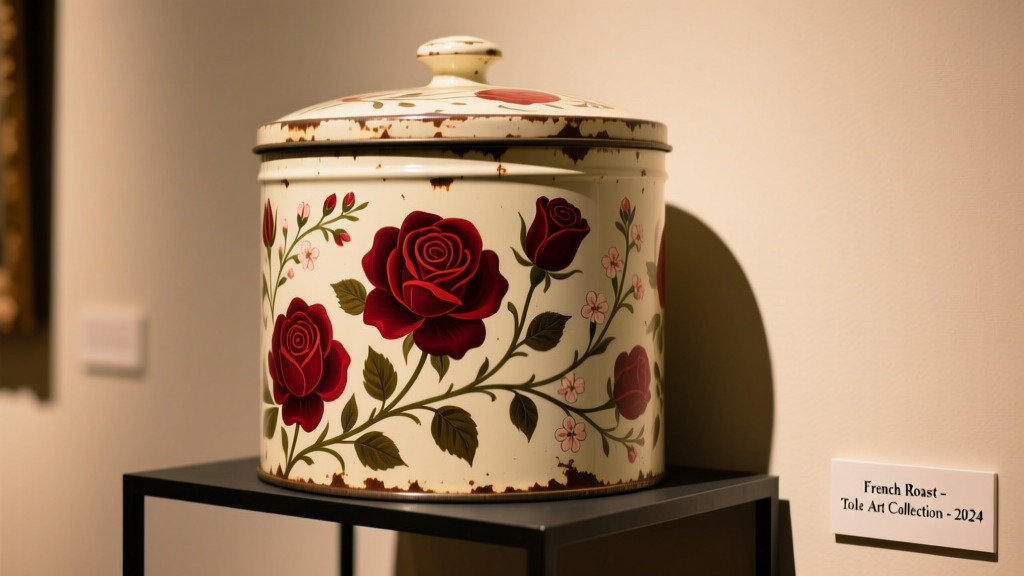
Tole Container 'Coffee French Roast Red Paint Flowers' (25 × 32 × 18 in): Authentication, Provenance, and Market Analysis
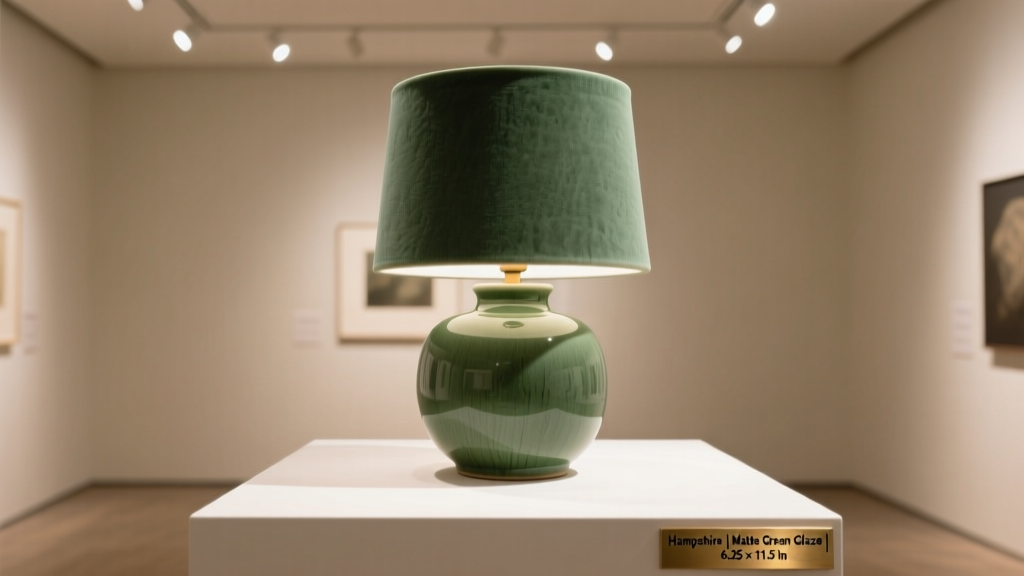
Hampshire Lamp Base: Decoding the Matte Green Glaze Squatty Form (6¼ × 11½ in)

Perfume Bottles, Dancer Motif, Czechoslovakia: Decoding the Turquoise 5½-Inch 'Flowers' Illus Bottle
Authentication and Market Analysis: Müller’s 'Falconer Astride Rearing Horse' Bronze Group on Marble Base (17½ in)
Authentication and Market Analysis of Print 1140353: A Verified Edition of Pablo Picasso’s 'Le Rêve' (1932) Lithograph

Edward Harris: The Unseen Hand Behind Iconic 20th-Century American Prints
Figural Dachshund Whiskey Decanter: Opalescent Glass Masterpiece from Italy, c. 1958–1963
Toy Car Austin Healey Yellow Dinky Toys 1857: Authentication, Market Value, and Historical Context of the 3½-Inch Die-Cast Model
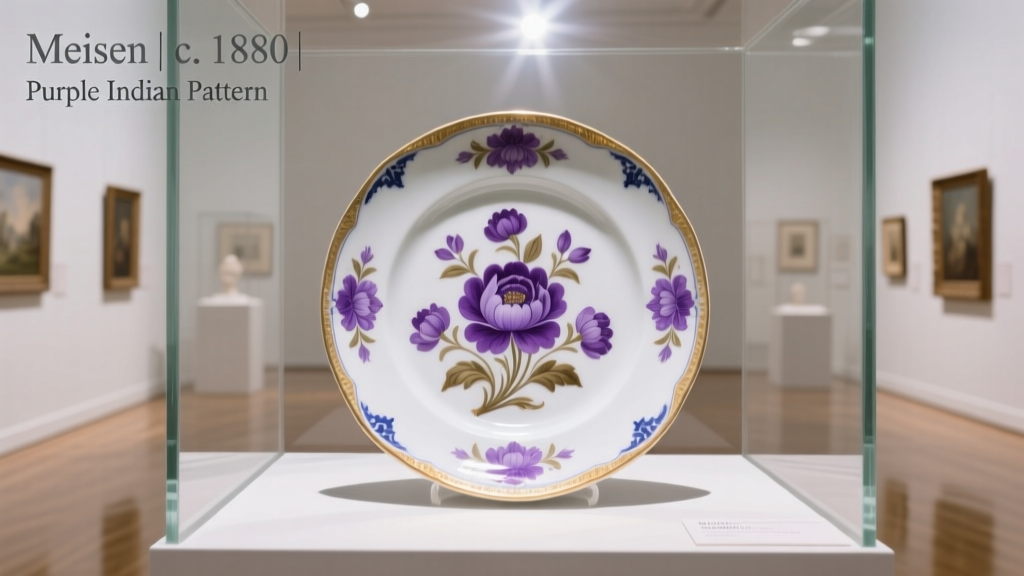
Meissen Plate 'Purple Indian' (C. 1880): Authentication, Provenance, and Market Analysis of the 8¼-Inch Porcelain Service Piece