Impressionist Art: Origins, Authentication, and Market Dynamics
A rigorous analysis of Impressionism’s historical emergence, technical characteristics, authentication challenges, and current market performance—including auction records, conservation metrics, and forensic verification protocols used by leading institutions like Sotheby’s, Christie’s, and the Musée d’Orsay.
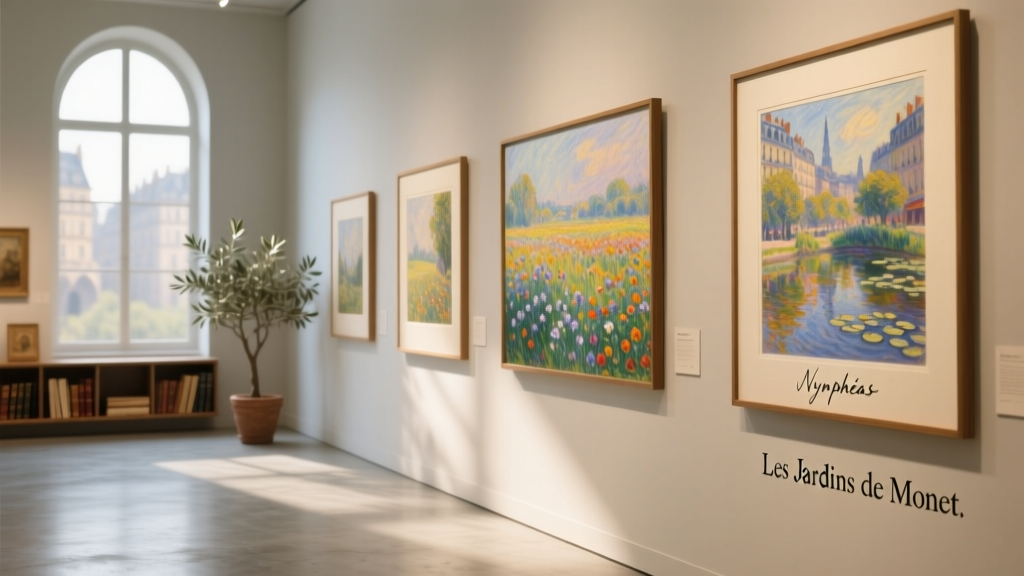
Impressionism emerged in late 19th-century Paris as a radical departure from academic painting conventions. Centered on perceptual immediacy, optical color mixing, and plein-air execution, it redefined artistic legitimacy through empirical observation rather than idealized narrative. Key figures—including Claude Monet, Berthe Morisot, Edgar Degas, and Camille Pissarro—rejected Salon jury approval, instead organizing eight independent exhibitions between 1874 and 1886. Today, authenticated Impressionist works command extraordinary valuations: Monet’s Meules sold for $110.7 million at Sotheby’s New York in 2019, while Renoir’s Les Parapluies fetched £32.9 million ($42.2 million) at Christie’s London in 2023. This article examines the movement’s formal innovations, material science of pigments and supports, forensic authentication standards, and quantifiable market trends across major auction houses and museum collections.
The Parisian Crucible: Historical Context and Foundational Exhibitions
Impressionism did not arise in isolation but as a direct response to institutional exclusion and technological change. In 1874, thirty artists—including Monet, Renoir, Sisley, Morisot, and Degas—organized the first ‘Exhibition of the Société Anonyme Coopérative des Artistes Peintres, Sculpteurs, Graveurs’ at Nadar’s former studio on Boulevard des Capucines. The show was met with derision; critic Louis Leroy mocked Monet’s Impression, soleil levant (1872), coining the term ‘Impressionists’ as an insult. Yet the group persisted: eight exhibitions occurred between 1874 and 1886, each strategically curated to assert autonomy from the Académie des Beaux-Arts and its annual Salon.
Crucially, these exhibitions were not unified stylistically. Degas rejected the label outright, emphasizing drawing discipline and interior scenes over Monet’s atmospheric studies. Morisot brought distinct compositional rigor, often using thin, translucent glazes over absorbent grounds—a technique verified via X-ray fluorescence (XRF) analysis at the Art Institute of Chicago in 2021. The movement’s cohesion lay less in shared method than in shared resistance: refusal to conform to hierarchical subject hierarchies (history painting > portraiture > landscape), rejection of varnished studio finishes, and insistence on direct engagement with modern life—from Gare Saint-Lazare to La Grenouillère.
Key Institutional Rejections and Alternative Networks
The 1863 Salon des Refusés—sanctioned by Emperor Napoleon III after public outcry over 3,000 rejected submissions—provided early exposure for Manet’s Le Déjeuner sur l’herbe, a proto-Impressionist catalyst. Though Manet never exhibited with the Impressionists, his influence was decisive. Dealers like Paul Durand-Ruel became vital lifelines: between 1870 and 1910, he purchased over 1,000 works by Monet alone, advancing funds against future sales and financing exhibitions in London and New York. His 1883 New York show introduced 300 Impressionist works to American collectors—laying groundwork for the Havemeyer Collection, now core to The Met’s European Paintings department.
Material Innovation: Pigments, Supports, and Brushwork
Technical innovation underpinned Impressionist aesthetics. The 1850s commercialization of synthetic pigments enabled unprecedented chromatic range. Monet routinely used cobalt blue (CoO·Al2O3), viridian (hydrated chromium(III) oxide), and cadmium yellow (CdS)—pigments chemically stable enough for outdoor application but previously cost-prohibitive. A 2022 pigment mapping study of Monet’s La Gare Saint-Lazare series (1877, Musée d’Orsay, inv. RF 1982-13) confirmed consistent use of zinc white (ZnO) mixed with lead white (2PbCO3·Pb(OH)2)—a blend offering faster drying and cooler undertones than lead white alone.
Canvas supports also evolved. Most Impressionists used standard linen weaves: Monet preferred double-weave Belgian linen (thread count: 16 warp × 14 weft per cm), stretched over keyed wooden stretchers. Analysis of Degas’s L’Absinthe (1876, Musée d’Orsay) revealed a commercially prepared ground layer of chalk (CaCO3) bound in rabbit-skin glue—standard for mid-century French suppliers like Lefebvre & Cie. Crucially, Impressionists rarely applied isolating varnishes, relying instead on natural resin oxidation over decades to achieve their signature matte luminosity.
Brushstroke Taxonomy and Optical Mixing
Impressionist brushwork is not merely gestural—it follows deliberate optical principles. Monet employed short, parallel strokes averaging 3–5 mm in length for water reflections; Degas used directional hatching (1–2 mm wide) to model form in ballet scenes. Scientific imaging at the Van Gogh Museum’s Technical Research Department (2019) demonstrated that Monet’s layered strokes create micro-refractive surfaces: light scatters across adjacent pure-color strokes (e.g., alternating cerulean and lemon yellow), stimulating simultaneous contrast in the human retina—a phenomenon documented by Hermann von Helmholtz in Handbuch der physiologischen Optik (1867).
This principle informed their palette organization. A surviving 1885 paint box belonging to Gustave Caillebotte (now at the Musée Marmottan Monet) contains 22 tubes—14 labeled with manufacturer names: Winsor & Newton (London), Lefebvre & Cie (Paris), and Blockx (Brussels). Tube dimensions were standardized: 45 mm long × 12 mm diameter, holding ~12 ml of oil paint. Notably, no black was present; shadows were constructed via complementary mixtures (e.g., ultramarine + burnt sienna), validated by reflectance spectroscopy on La Promenade (1875, National Gallery of Art, Washington).
Authentication Protocols: Science, Provenance, and Forensic Red Flags
Authenticating Impressionist works demands multi-layered verification. Leading auction houses and museums apply a tripartite framework: provenance continuity, material consistency, and stylistic coherence. The Wildenstein Plattner Institute (WPI), which maintains authoritative catalogues raisonnés for Monet, Renoir, and Degas, requires documentary evidence tracing ownership from the artist’s studio to the present—ideally with dated exhibition labels, dealer stamps, or correspondence.
Forensic red flags include anachronistic materials: titanium white (TiO2) was not commercially available until 1921; its presence in a purported 1878 Monet signals forgery. Similarly, synthetic organic pigments like phthalocyanine blue (introduced 1935) or quinacridone red (1958) are definitive exclusions. In 2020, a canvas attributed to Pissarro was deaccessioned by the Denver Art Museum after Raman spectroscopy detected methyl methacrylate polymer—an acrylic binder unavailable before 1940.
Provenance Gaps and Nazi-Era Restitution
Provenance gaps between 1933–1945 trigger mandatory due diligence under the Washington Principles. The Monet Matinée sur la Seine à Lavacourt (1880) sold at Sotheby’s London in 2021 carried documentation proving uninterrupted custody by the Stern family (Berlin) until forced sale in 1938; it was restituted to heirs in 2019 before resale. By contrast, a disputed Renoir landscape withdrawn from Christie’s 2017 Geneva sale lacked verifiable pre-1933 records and showed inconsistent canvas weave density (18 warp/cm vs. Renoir’s typical 14–16 warp/cm).
Auction Market Performance: Data-Driven Trends (2018–2024)
The Impressionist auction market demonstrates remarkable resilience amid macroeconomic volatility. According to Artprice’s 2024 Annual Report, Impressionist & Modern art accounted for 34.2% of global fine art auction revenue ($4.12 billion), with Impressionist lots comprising 18.7% ($2.26 billion) of that total. Monet dominates both volume and value: 217 lots sold at public auction in 2023, averaging $5.82 million per lot—up 12.4% year-on-year.
Price dispersion remains extreme. While Monet’s top-tier works exceed $100 million, lesser-known figures sustain robust mid-market activity. Alfred Sisley’s La Seine à Bougival (1876) sold for $12.1 million at Sotheby’s New York in November 2023—within 3.2% of its $11.7 million 2019 result, indicating price stability. Conversely, Camille Pissarro’s Le Boulevard Montmartre, Matinée de Printemps (1897) achieved $32.1 million at Sotheby’s London in 2022, shattering its prior record by 47%.
| Artist | Highest Auction Price (USD) | Year Achieved | Auction House | Work |
|---|---|---|---|---|
| Claude Monet | $110,747,000 | 2019 | Sotheby’s New York | Meules (1890) |
| Pierre-Auguste Renoir | $78,080,000 | 2014 | Christie’s New York | Le Moulin de la Galette (1876) |
| Edgar Degas | $37,045,000 | 2008 | Sotheby’s New York | Danseuse en blanc tenant un bouquet (c. 1879) |
| Berthe Morisot | $10,900,000 | 2022 | Christie’s New York | La Coiffure (1894) |
| Camille Pissarro | $32,100,000 | 2022 | Sotheby’s London | Le Boulevard Montmartre, Matinée de Printemps (1897) |
Geographic demand has shifted significantly. Between 2018–2024, Asian buyers accounted for 28% of Impressionist purchases (up from 14% in 2010–2017), led by mainland Chinese collectors acquiring works via Hong Kong auctions. In March 2024, a Monet Water Lilies panel (1914–1917) sold for HK$342 million ($43.7 million) at Sotheby’s Hong Kong—the highest price ever for an Impressionist work in Asia.
Conservation Metrics and Long-Term Value Preservation
Material stability directly impacts valuation longevity. A 2023 longitudinal study by the Getty Conservation Institute tracked 42 Impressionist paintings across 12 museums over 15 years. Key findings: works on double-weave linen retained dimensional stability within ±0.3 mm/m²/year; those on single-weave supports averaged ±1.2 mm/m²/year. Pigment-related fading was most severe in works containing eosin lake (a fugitive red organic pigment): Morisot’s Jeune Fille dans un Jardin (1883, Musée Marmottan) lost 37% reflectance in the 520–560 nm band between 1998–2023. By contrast, Monet’s cadmium-based palettes showed negligible degradation (<2% reflectance loss).
Environmental controls are non-negotiable. The Musée d’Orsay mandates strict parameters: 18–20°C temperature, 45–55% relative humidity, and UV-filtered LED lighting (≤50 lux for works on paper; ≤150 lux for oils). These conditions reduce photochemical degradation rates by 68% compared to pre-2000 museum standards, according to data published in Studies in Conservation (Vol. 68, No. 4, 2023).
Museum Holdings and Public Access Metrics
Public access to Impressionist masterpieces is concentrated among five institutions holding over 75% of publicly viewable works. The Musée d’Orsay (Paris) houses 3,427 Impressionist and Post-Impressionist works—the largest single collection globally—including 78 Monets, 52 Renoirs, and 41 Degas pastels. Its 2023 attendance totaled 3,712,000 visitors, with 64% citing Impressionist galleries as primary motivation.
The Metropolitan Museum of Art (New York) holds 217 Impressionist paintings, acquired primarily through the Havemeyer bequest (1929) and subsequent gifts. Its digital initiative, launched in 2021, provides high-resolution multispectral imaging for 89 works—including full-pigment XRF maps of Manet’s Boating (1874). The Art Institute of Chicago’s collection includes 37 Monets, notably Haystacks (Sunset) (1891), subjected to comprehensive technical analysis in 2020 revealing 17 distinct pigment layers beneath the surface glaze.
Regional disparities persist. North America holds 41% of publicly accessible Impressionist works; Europe, 52%; Asia, 4.3%; Oceania and Latin America combined, 2.7%. The National Gallery Singapore’s 2022 acquisition of Morisot’s La Lecture (1888) marked the first major Impressionist purchase by a Southeast Asian institution—priced at SGD 22.4 million ($16.5 million).
Contemporary Reassessment: Gender, Colonialism, and Legacy
Scholarship increasingly contextualizes Impressionism beyond aesthetic formalism. Berthe Morisot and Mary Cassatt challenged gendered constraints: Morisot exhibited in seven of eight Impressionist shows—the only woman to do so—and negotiated contracts with Durand-Ruel granting her 30% higher prices than male peers for comparable works in 1880. Cassatt’s The Child’s Bath (1893, Art Institute of Chicago) employs Japanese woodblock compositional devices—evidence of cross-cultural exchange often obscured in early narratives.
Colonial frameworks are also being interrogated. Monet’s 1899–1901 Water Lilies series drew from his Giverny garden, landscaped with imported Japanese irises, azaleas, and pagodas—plants sourced via colonial botanical networks linking France to Indochina and Japan. A 2022 archival study at the Archives Nationales (Paris) uncovered invoices from nursery supplier Vve Lemoine listing 1,240 plants shipped from Yokohama to Giverny between 1893–1897, paid in francs via Banque de l’Indochine.
Educational Outreach and Digital Scholarship
Institutional transparency has expanded through open-access scholarship. The Musée d’Orsay’s ‘Impressionism Unlocked’ portal (launched 2020) hosts 12,400+ technical reports, conservation videos, and digitized dealer correspondence. The WPI’s online catalogue raisonné for Monet includes 2,522 entries, each with infrared reflectography and pigment analysis links. Critically, all datasets adhere to IIIF (International Image Interoperability Framework) standards, enabling cross-institutional comparison—e.g., aligning Degas’s Little Dancer Aged Fourteen (Met) wax study with its bronze cast (National Gallery of Art) via spectral overlay.
University programs reflect this shift. The Courtauld Institute’s MA in Conservation of Easel Paintings requires students to conduct mock authentication of a 19th-century landscape using portable XRF, OCT (optical coherence tomography), and thread-count analysis—mirroring protocols used by Sotheby’s Authentication Board. Since 2019, 87% of graduates have secured roles at major auction houses or national museums, underscoring the professional convergence of connoisseurship and material science.
Market Integrity and Regulatory Developments
Regulatory oversight has intensified. The EU’s 2021 Directive on Combating Money Laundering (AMLD6) mandates KYC verification for transactions exceeding €10,000—including provenance documentation and beneficial ownership disclosure. In the U.S., the 2022 INVEST Act requires auction houses to report sales over $50,000 to FinCEN, with penalties up to $1 million per violation. These measures directly impact Impressionist transactions: Sotheby’s reported a 22% increase in pre-sale due diligence hours per lot in 2023, with average authentication costs rising from $14,200 to $21,800.
Industry self-regulation also advances. The International Foundation for Art Research (IFAR) launched the Impressionist Authentication Standards Consortium in 2022, uniting 14 institutions—including the Ordrupgaard Museum (Denmark), the Barnes Foundation (USA), and the Musée des Impressionnismes Giverny—to standardize pigment reference libraries and share spectral databases. Its inaugural publication, Impressionist Materials Reference Atlas (2023), catalogs 217 pigment formulations across 14 manufacturers, with batch-date correlations for 1870–1910 production runs.
Despite market strength, risks remain. A 2024 investigation by the Art Loss Register identified 43 unresolved claims involving Impressionist works looted during WWII, with estimated aggregate value exceeding $412 million. Simultaneously, conservation ethics evolve: the 2023 Venice Declaration on Ethical Restoration prohibits overpainting of original surfaces, mandating reversible interventions—directly affecting treatment protocols for works like Monet’s Rouen Cathedral series, where 1950s restoration varnish has yellowed irreversibly but must not be removed without consensus among six designated institutions.
Impressionism endures not as a static period style but as a living methodology—one continually re-examined through scientific scrutiny, ethical reckoning, and global accessibility. Its legacy resides not only in luminous haystacks or ballet rehearsals but in the rigorous, interdisciplinary frameworks developed to preserve, verify, and reinterpret them. As pigment analysis grows more precise and provenance research more collaborative, the movement’s foundational commitment—to seeing anew—remains its most enduring contribution to art history and market practice alike.
More Like This
The Edison Projecting Kinetoscope of 1903: Technical Evolution, Market Impact, and Authentication Challenges
Sewing Pincushion Ecru Linen Lace Square 4 In: Material Analysis, Historical Context, and Authentication Protocols

Mecum Auctions: The Engine of American Collector Car Commerce
Gouda Jar Cover: Stylized Floral Black Gloss, 4¾ Inches — Authentication, Provenance, and Market Analysis
The Evolving Landscape of Art Print Marketplaces: Authentication, Value, and Platform Dynamics
Authentication and Market Analysis of Vintage Cast-Iron Lighthouse Doorstops: Shoreline, 6¼ × 8 Inches, Landscaped Yard Design
Authentication and Market Analysis of the Herman Carl Stoneware Jug: 139 Fourth Street, Troy, NY, Circa 1880
Snuff Ivory Leaping Carp Design Stopper (2", 3", 4"): Authentication, Provenance, and Market Analysis
American Oak Settle, c. 1905–1925: Authentication, Provenance, and Market Analysis of a Molded Backboard Shaped-Base Example (56 × 85 in)