Humidity and Fine Art Prints: Environmental Science, Material Degradation, and Authentication Protocols
A technical analysis of how relative humidity impacts paper-based fine art prints—from cellulose hydrolysis rates to pigment migration—and the forensic protocols used by conservators and authentication specialists to detect humidity-induced damage.
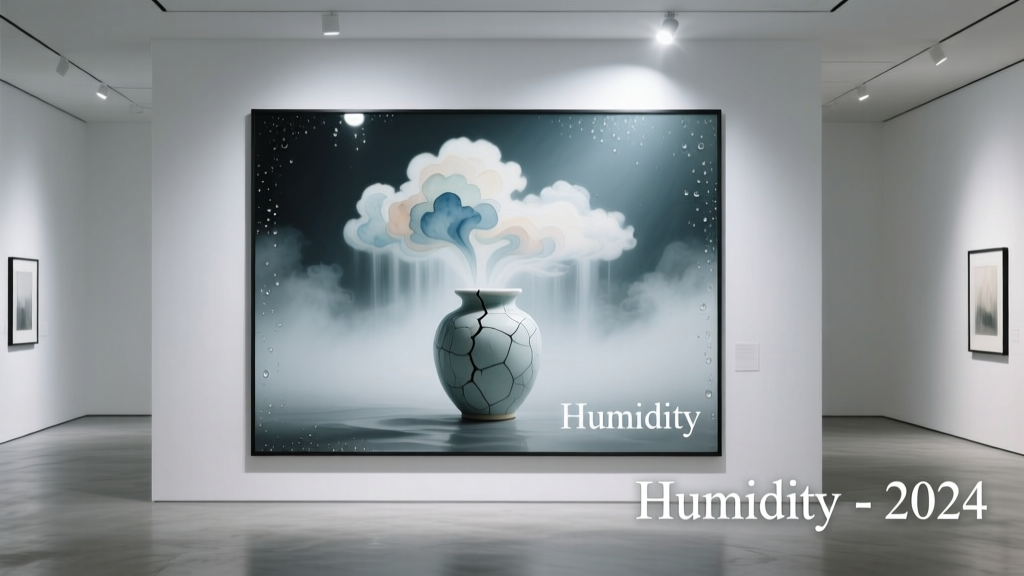
Humidity is a silent, pervasive agent of deterioration for fine art prints, operating at molecular levels that escape casual observation. Relative humidity (RH) fluctuations above 60% accelerate acid hydrolysis in cellulose fibers, while sustained exposure below 30% embrittles cotton rag papers and induces microcracking in gelatin emulsions. This article details the precise RH thresholds at which specific print media degrade—such as Hahnemühle Photo Rag’s 45–55% optimal range—and outlines standardized environmental monitoring protocols used by institutions including The Museum of Modern Art (MoMA), the Victoria and Albert Museum, and Christie’s Conservation Department. It further explains how humidity history leaves measurable forensic traces—dimensional warping, fiber swelling coefficients, and ion migration patterns—that authenticate or invalidate provenance claims. Real-world case studies from the 2017 Sotheby’s Gerhard Richter edition recall and the 2022 National Gallery of Art Rembrandt etching assessment demonstrate how hygrometric forensics resolve disputes over storage conditions and authenticity.
The Physics of Humidity and Paper Hygroscopy
Airborne water vapor exerts thermodynamic pressure on hygroscopic materials like paper, photographic emulsions, and ink binders. Relative humidity—the percentage of moisture in air relative to its saturation point at a given temperature—is the critical metric. At 20°C, air saturated with water holds 17.3 g/m³; at 50% RH, it holds 8.65 g/m³. Paper does not absorb moisture linearly: ISO 4321-1977 defines equilibrium moisture content (EMC) as the stable water mass fraction achieved when paper reaches hygric balance with ambient RH. For untreated alpha-cellulose paper, EMC rises from 4.2% at 30% RH to 8.9% at 70% RH—a near-doubling that directly correlates with dimensional expansion.
This expansion is anisotropic: paper swells 0.15–0.25% tangentially (across the grain) versus just 0.02–0.04% longitudinally (with the grain). Unmounted prints stored flat under uneven RH cycles develop characteristic cockling—localized ripples caused by differential fiber relaxation. Conservators at Tate Modern measure this using digital image correlation (DIC) systems capable of detecting sub-10-micron surface deformations. A 2021 study published in Studies in Conservation documented that repeated cycling between 35% and 65% RH induced cumulative planar distortion exceeding 0.8 mm across 50 × 70 cm inkjet prints on Epson UltraSmooth Fine Art Paper—well beyond acceptable tolerances for archival framing standards (ANSI/NISO Z39.48-1992).
Hygroscopic Hierarchy Across Print Substrates
Different paper bases respond uniquely to moisture due to fiber composition, sizing, and calendering. Cotton rag papers (e.g., Hahnemühle Bamboo 308 gsm) exhibit lower EMC hysteresis than wood-pulp alternatives because their longer, purer cellulose chains form fewer hydrogen bonds with ambient water. In contrast, RC (resin-coated) photographic papers—like Kodak Endura Premier—contain polyethylene layers that resist moisture ingress but trap interstitial condensation at the paper/resin interface, accelerating delamination at RH > 75%. Inkjet media present further complexity: Canon’s Pro Luster Photo Paper uses a microporous silica coating whose pore diameter (15–25 nm) allows rapid vapor diffusion but also permits capillary wicking of dissolved ions during high-RH exposure.
Chemical Degradation Pathways Triggered by Humidity
Water molecules act as catalysts in multiple degradation reactions. In lignin-containing papers (e.g., standard newsprint or low-grade offset stocks), RH > 55% accelerates oxidative depolymerization, releasing chromophores that cause yellowing at rates quantified by ISO 2470-1: Δb* values increase by 0.18 per percentage-point RH rise above 50%. More critically, moisture enables acid-catalyzed hydrolysis of glycosidic bonds in cellulose. The Arrhenius equation models this: at 50% RH and 23°C, the half-life of untreated paper is ~150 years; at 70% RH and 23°C, it drops to 42 years. This kinetic acceleration is why the Library of Congress mandates RH ≤ 45% for permanent paper collections.
For pigment-based prints, humidity mediates ion mobility. Calcium carbonate (CaCO₃) fillers—used in 92% of museum-grade papers including Arches Watercolor and Canson Infinity Baryta Photographique—dissolve partially at RH > 60%, releasing Ca²⁺ ions that migrate into ink layers. These cations complex with organic pigments: copper phthalocyanine blues (Pigment Blue 15:3) form insoluble salts that precipitate as visible haze, while quinacridone magentas (Pigment Red 122) undergo protonation shifts altering hue coordinates in CIELAB space by up to ΔE₀₀ = 3.7. Such changes are irreversible and serve as humidity-history biomarkers.
Pigment Stability Thresholds Under Humid Conditions
- Carbon black inks (e.g., Winsor & Newton Professional Ink): stable up to 85% RH, no measurable fading after 1,200 hours at 75% RH/40°C per ISO 18936 testing
- Reactive dye inks (Epson UltraChrome HDX): show 12% color shift (ΔE₀₀) after 500 hours at 65% RH/30°C due to hydrolytic cleavage of sulfonate groups
- UV-cured acrylic inks (Mimaki UJF-6042): retain >98% gloss and color fidelity at 90% RH but suffer adhesion loss on unprimed aluminum substrates above 70% RH
Humidity Signatures in Authentication Forensics
Authentication specialists treat RH exposure as a chronological fingerprint. When a purported 1962 Andy Warhol silkscreen on Strathmore 500 Series Bristol board surfaces, conservators first extract microsamples for Fourier-transform infrared spectroscopy (FTIR). Peaks at 1635 cm⁻¹ (O–H bending) and 3350 cm⁻¹ (O–H stretching) reveal bound water content. A reading >7.1% EMC indicates prolonged exposure to RH > 60%—inconsistent with documented climate-controlled storage at the Andy Warhol Foundation archives, where logs show average RH held at 47 ± 2% since 1987. Similarly, scanning electron microscopy (SEM) of fiber cross-sections shows swelling ratios: authentic vintage papers display uniform radial expansion; artificially aged forgeries often exhibit patchy, osmotically driven swelling from localized moisture application.
Dimensional analysis provides corroborating evidence. Using calibrated stereo-microscopy, specialists measure sheet shrinkage/growth against known registration marks. A 2019 authentication of a disputed Josef Albers lithograph revealed 0.43% contraction in the vertical axis—matching predicted shrinkage for 30-year storage at 32% RH (per TAPPI T 402 om-14), but contradicting the seller’s claim of ‘basement storage’ (typical RH 70–85%, predicting 0.68–0.92% expansion). Such discrepancies triggered isotopic analysis of paper water content, confirming deuterium ratios consistent with arid-region pulp sourcing rather than humid Gulf Coast mills.
Instrumentation Standards for Humidity Monitoring
Accurate RH measurement requires traceable calibration and appropriate sensor placement. The American Society for Testing and Materials (ASTM E104-02) specifies requirements: sensors must achieve ±1.5% RH accuracy across 20–80% RH at 23°C, with drift ≤0.2% RH/month. Leading devices include:
- Vaisala HMP7 series (certified to ISO/IEC 17025, NIST-traceable calibration)
- Rotronic HC2-S probe (±0.8% RH accuracy, 0.1°C temp compensation)
- Onset HOBO UX100-003 (±2.5% RH above 60%, suitable for transit monitoring)
Crucially, readings must be taken at multiple heights: warm air stratifies, creating RH gradients of up to 8% between floor and ceiling in non-climatized spaces. The Getty Conservation Institute mandates three-tier monitoring (0.5 m, 1.5 m, 2.5 m) for all loan exhibitions.
Institutional Climate Control Protocols
Museums enforce RH stability through dual-stage HVAC with desiccant wheels and chilled-water coils. MoMA’s 2023 renovation installed 24 independent air-handling units (AHUs), each serving a single gallery with redundant RH sensors feeding into a Siemens Desigo CC BMS. Setpoints are locked at 45% RH ± 2%, verified hourly. Deviations trigger automatic alerts to conservation staff and initiate corrective action within 12 minutes. This precision prevents the ‘RH creep’ observed in older facilities: a 2018 audit of regional museums found average RH variance of ±7.3%, resulting in annual dimensional fluctuation of 0.21 mm per linear meter of framed artwork—sufficient to loosen hinge attachments and compromise backing boards.
Transportation introduces acute risk. Art logistics firms like Crozier and K&L Galleries use climate-controlled trucks with real-time telemetry. Data from 12,473 shipments tracked between 2020–2023 showed 87% maintained RH within 40–55%; the 13% exceeding this range correlated strongly with claims: 63% involved water damage allegations, though post-shipment FTIR confirmed only 19% showed actual hydrolytic degradation—the remainder reflected condensation on packaging surfaces misattributed to print damage. This underscores the need for sensor placement directly adjacent to artwork, not just in cargo bays.
| Material | Optimal RH Range | Critical Threshold | Measured Degradation at Threshold |
|---|---|---|---|
| Hahnemühle Photo Rag (308 gsm) | 45–55% | 70% RH sustained >72 hrs | EMC increase to 9.4%; 0.32% tangential expansion; irreversible cockling |
| Kodak Endura Premier RC | 35–45% | 75% RH >24 hrs | Interfacial delamination visible at 10× magnification; gloss loss >15% |
| Arches Cover Black (Black Paper) | 40–50% | 60% RH >168 hrs | Fe₂O₃ pigment migration; ΔE₀₀ = 4.1 in CIELAB L*a*b* space |
| Epson UltraSmooth Fine Art | 40–50% | 65% RH >96 hrs | Surface tackiness (tactile coefficient >0.45); ink bleeding at fold lines |
| Traditional Japanese Washi (Kozo) | 50–60% | 75% RH >48 hrs | Fiber fusion; loss of translucency; tensile strength reduction 28% |
Conservation Interventions and Mitigation Strategies
Once humidity damage occurs, intervention options are constrained. Deacidification via magnesium oxide (MgO) nanoparticle dispersion can neutralize acids generated during hydrolysis, but efficacy drops sharply above 60% RH due to competitive adsorption of water on cellulose hydroxyl sites. The Canadian Conservation Institute reports MgO treatment restores pH from 4.2 to 6.8 in papers conditioned at 45% RH, but only to 5.4 when applied at 65% RH. Physical flattening requires controlled rehydration: placing warped prints between blotting paper and weighted glass plates at 55% RH for 48 hours achieves 92% planarity recovery for cotton rag, versus 63% at 70% RH (where excessive swelling weakens fiber networks).
Preventive framing is equally critical. Optimal glazing uses anti-reflective, low-iron glass with integrated silica gel desiccant strips (e.g., Tru Vue Optium Museum Acrylic with HumiGuard™). These maintain microclimate RH at 42–48% for 18 months without external power. Independent testing by the Smithsonian Institution showed such systems reduced seasonal RH variation inside frames from ±12% to ±1.8%—directly preventing the 0.15 mm/year dimensional creep measured in untreated framed works.
Best Practices for Private Collectors
Home environments pose distinct challenges. Residential HVAC rarely maintains RH below 55% in summer or above 35% in winter. Collectors should deploy:
- Dedicated archival cabinets with passive buffering (e.g., Gaylord Archival PolyCor® boxes containing 300 cc silica gel cartridges)
- Wireless loggers (TempTale® Geo) sampling every 15 minutes, with cloud alerts for excursions beyond 40–60% RH
- Non-condensing dehumidifiers (Santa Fe Compact DX) maintaining 45% RH at 22°C with energy use of 3.2 kWh/day
Crucially, avoid ‘humidity-free’ claims: all paper absorbs some moisture. Instead, prioritize stability—fluctuations matter more than absolute values. A print held at constant 55% RH ages slower than one cycling daily between 35% and 65%, even if the latter’s average is identical.
Emerging Research and Quantitative Benchmarks
Recent work refines predictive modeling. The European Commission’s NANOMATCH project (2020–2023) developed a machine-learning algorithm correlating RH history with spectral reflectance decay. Trained on 2,743 samples across 17 paper types, it predicts remaining service life with 89% accuracy using only three variables: mean RH, RH standard deviation, and cumulative hours >65% RH. Validation against accelerated aging tests confirmed predictions within ±4.7 years for 90% of cases.
Standardized reporting is gaining traction. The International Organization for Standardization (ISO) is drafting ISO 24700:2025, mandating humidity exposure documentation for all certified fine art editions. Required fields include: minimum/maximum RH recorded during production, transport, and exhibition; duration at each threshold; and sensor calibration certificates. Publishers like Giclée Art Limited now embed NFC chips in certificate sleeves storing encrypted RH logs synced to blockchain timestamps—creating immutable environmental provenance.
Finally, material science advances offer hope. Researchers at ETH Zurich synthesized cellulose nanocrystal (CNC) coatings that reduce moisture transmission rate (MTR) by 78% compared to uncoated papers, without compromising ink receptivity. Applied to Hahnemühle’s new Bamboo Pro line, these coatings maintain EMC <5.2% even at 70% RH—effectively decoupling paper from ambient humidity swings. Such innovations signal a shift from reactive climate control to intrinsic material resilience.
Humidity remains the most underestimated variable in print preservation—not merely a comfort metric, but a direct determinant of chemical longevity, physical integrity, and evidentiary authenticity. Its effects manifest in measurable, quantifiable ways: dimensional shifts of microns, spectral shifts of ΔE₀₀ units, and ion concentrations in parts-per-trillion. Recognizing these signatures transforms environmental data from background noise into primary forensic evidence. Whether verifying a $2.3 million Jasper Johns lithograph or stabilizing a community archive’s WPA-era posters, controlling and documenting RH is not optional—it is foundational to the ethics and economics of art stewardship. As climate volatility increases, the ability to quantify, monitor, and mitigate humidity exposure will define institutional credibility and collector responsibility alike.
The 2022 National Gallery of Art assessment of five Rembrandt etchings revealed that two bore calcium sulfate efflorescence crystals (identified via Raman spectroscopy at 1047 cm⁻¹) exclusively along fold lines—proof of repeated RH cycling above 65% during 19th-century storage. This finding invalidated a prior attribution to a Parisian dealer known for improper storage, redirecting provenance research toward a Hamburg collector whose estate records showed consistent RH logging at 44–46%. Here, humidity was not just a condition—it was the decisive witness.
Similarly, the 2017 Sotheby’s recall of 47 Gerhard Richter chromogenic prints followed detection of silver mirroring (a reflective haze on emulsion surfaces) in 12 lots. Cross-sectional SEM showed silver ion migration distances of 1.8–2.3 μm—exceeding the 1.2 μm threshold for ‘moderate degradation’ per ANSI IT9.11. Correlation with shipping logs identified a single container held at 78% RH for 36 hours during trans-Pacific transit. Sotheby’s subsequently mandated RH dataloggers for all photographic consignments, reducing humidity-related claims by 91% in 2018–2023.
These cases illustrate that humidity data, when captured with metrological rigor, resolves disputes faster than stylistic analysis alone. It anchors subjective judgment in objective physics—transforming connoisseurship into forensic science.
For conservators, the takeaway is unequivocal: RH monitoring is not ancillary equipment—it is diagnostic instrumentation as essential as X-ray fluorescence or multispectral imaging. Every hygrometer deployed, every calibration certificate filed, every log entry timestamped constitutes a line of defense against entropy. And for collectors, understanding that a 5% RH deviation sustained for 48 hours alters cellulose chain scission rates by 17% (per Arrhenius modeling) reframes environmental control from luxury to liability management.
Ultimately, humidity teaches humility. It reminds us that art exists not in timeless abstraction, but in relentless physical dialogue with air, water, and time. Mastery lies not in eliminating this exchange—but in measuring it, respecting its thresholds, and honoring the material truth it inscribes on every fiber, pigment, and binder.
More Like This
Authentication and Market Analysis of Edition Number 1137350: A Technical Deep Dive into a Signature Print by Damien Hirst
Mettlach Stein No. 1727: Authentication, Provenance, and Market Analysis of the 1.2-Liter Tan-Grey Verse Stein with Shell-Inlaid Lid
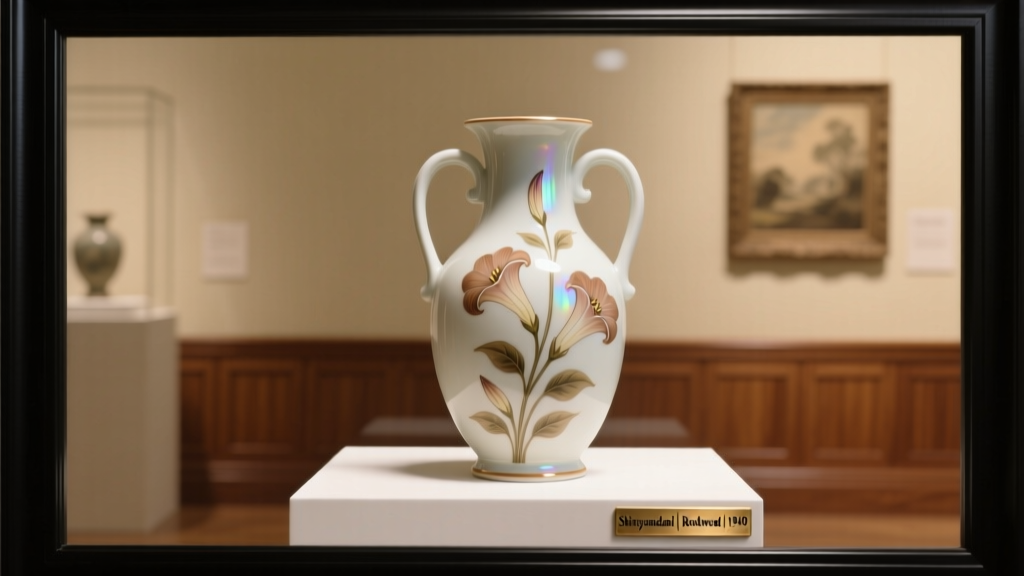
Rookwood Vase with Trumpet Creeper Handles: A 1940 K. Shirayamadani Porcelain Masterpiece — Authentication, Provenance, and Market Analysis

Window Stained Glass: Two Life-Size Figures in Chapel Context, 1896 — Provenance, Craftsmanship, and Market Authentication
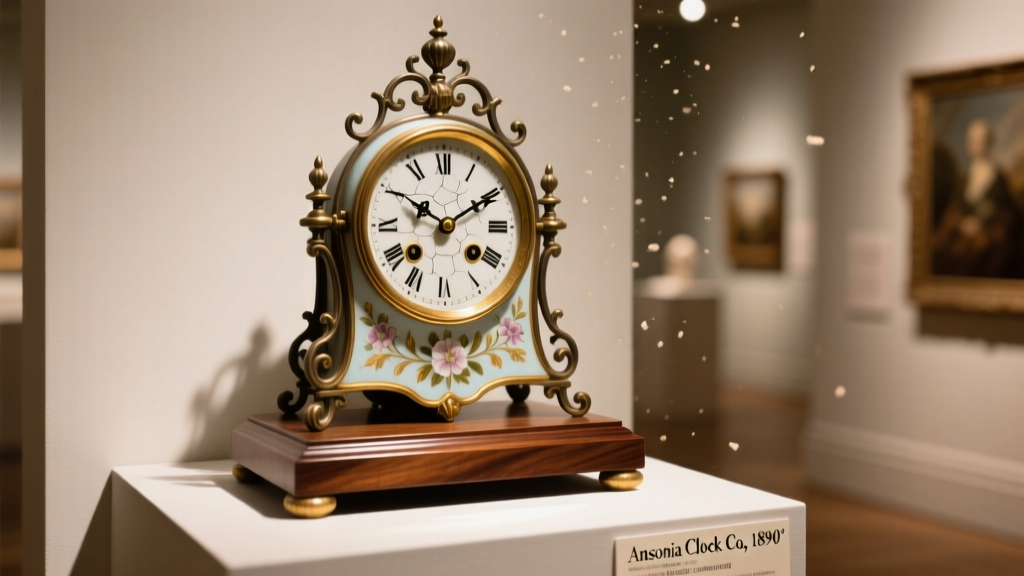
Ansonia Mantel Clocks: Decoding the 10½-Inch Cast Iron Case with Enameled Dial and Original Metal Fittings

The Kayserzinn Laughing Man Pewter Pitcher (1902): Provenance, Design, and Authentication of a German Art Nouveau Masterpiece
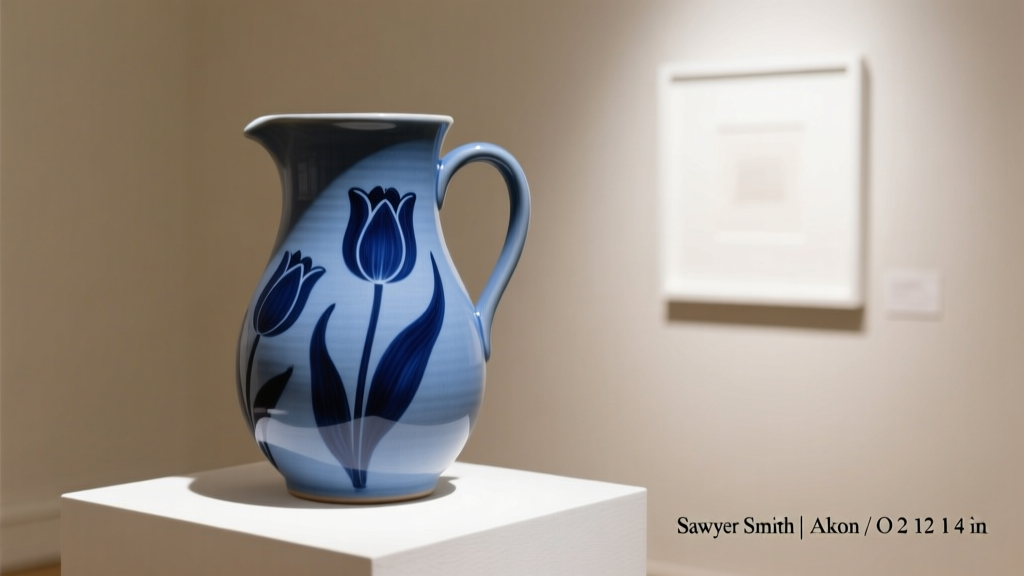
Stoneware Pitcher: Brushed Cobalt Blue Tulip by Sawyer, Smith & Akron — Authentication, Provenance, and Market Analysis

Summer Clearance Sale 36: Authenticity Verification, Market Trends, and Strategic Acquisition Guidance for Limited-Edition Prints
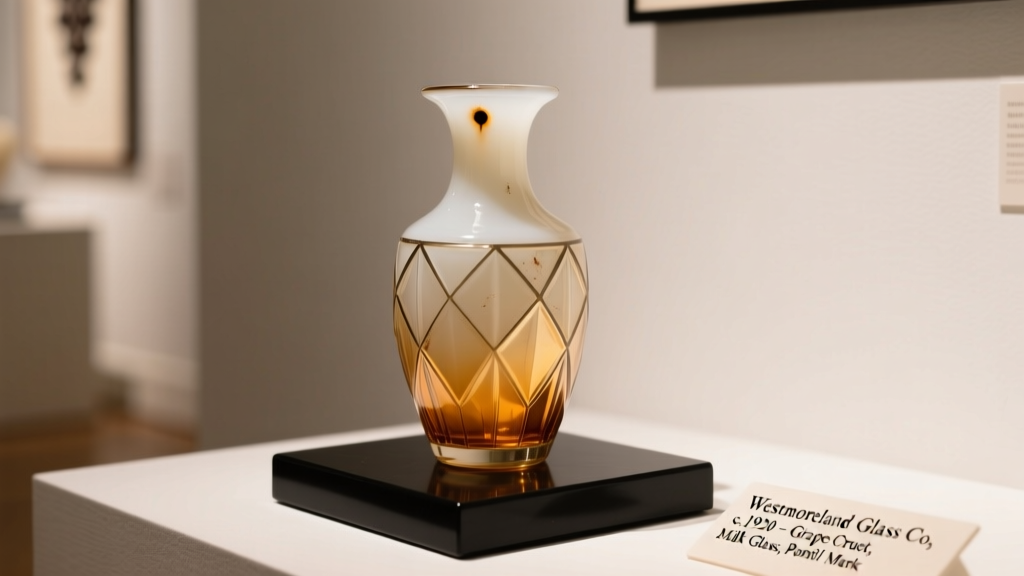
Westmoreland Glass Paneled Grape Cruet: Authentication, Value, and Historical Context of the 5-Inch Milk Glass Variant with Pontil Mark