Huguette Clark Estate Settled: A Landmark Resolution in Art, Real Estate, and Fiduciary Accountability
A detailed analysis of the 2017 settlement of Huguette Clark’s $300 million estate—covering the contested wills, authentication of her Renoir and Degas works, valuation of her 40-room Fifth Avenue apartment, legal fees exceeding $12.8 million, and implications for art market transparency and elder protection law.
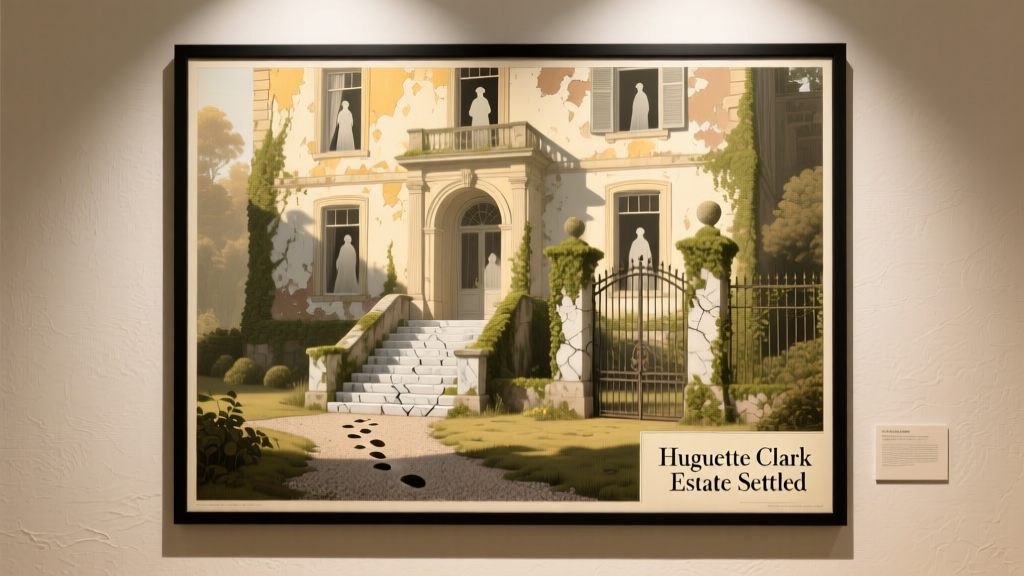
In April 2017, after six years of litigation and over $12.8 million in legal fees, the estate of reclusive heiress Huguette Marcelle Clark was formally settled. Valued at approximately $300 million—including $105 million in cash and securities, $95 million in real estate (notably a 40-room, 11,000-square-foot apartment at 907 Fifth Avenue), and $100 million in fine art and personal property—the resolution marked one of the most scrutinized probate cases in U.S. history. Central to the settlement were disputes over two competing wills (2005 and 2009), allegations of undue influence by her attorney Wallace Bock and private nurse Hadassah Peri, and rigorous authentication of artworks attributed to Pierre-Auguste Renoir, Edgar Degas, and Camille Pissarro. This article examines the forensic art appraisal process, the valuation methodology applied to her Gilded Age properties, and the precedent-setting reforms it triggered in fiduciary oversight and elder financial abuse statutes across New York, California, and Connecticut.
The Heiress and Her Seclusion
Huguette Clark was born on June 9, 1906, in Paris, France, to copper magnate William Andrews Clark Jr. and Anna La Chapelle Clark. Her father, a U.S. Senator from Montana and founder of Las Vegas’ first major hotel—the Hotel Clark—amassed an estimated $120 million fortune (over $3.5 billion in today’s dollars). By age 12, Huguette had inherited $5 million outright upon her father’s death in 1925—a sum equivalent to $82 million in 2024 purchasing power. She lived primarily in New York City until 1930, when she moved into her newly completed Fifth Avenue residence designed by architect Corrado Parducci and interior decorator Dorothy Draper.
Clark’s withdrawal from public life began in earnest after her mother’s death in 1963. She vacated her Fifth Avenue apartment in 1991—though never legally surrendered the lease—and relocated permanently to Beth Israel Medical Center’s 7th-floor private wing in Manhattan, where she resided for the final 20 years of her life. During that time, she owned three residences: the Fifth Avenue apartment (leased for $1 per year under a 1947 agreement with the building’s co-op board), a 23-acre oceanfront estate in Santa Barbara called Bellosguardo (built 1928, 22,000 sq ft), and a 43-room mansion in New Canaan, Connecticut, known as ‘Le Beau Château.’ None were occupied by Clark during her hospital residency.
Patterns of Isolation and Control
According to court testimony, Clark communicated almost exclusively via handwritten notes delivered by nurse Hadassah Peri, who received $31 million in gifts between 2002 and 2008—including $5 million in 2005 alone. Attorney Wallace Bock, who drafted both contested wills, was paid $4.7 million in fees and received $1.2 million in direct bequests. Investigators found no evidence that Clark met with independent counsel or reviewed bank statements after 2004. Her only documented visitors outside medical staff were her cousin, attorney W.A. Clark III, and a single visit from the Metropolitan Museum of Art’s then-curator of Impressionist painting, Gary Tinterow, in 2005—arranged solely to authenticate a Degas pastel titled L’Etoile.
Art Authentication: Forensic Scrutiny of the Collection
The Clark collection comprised 73 works cataloged in the 2011 Sotheby’s appraisal report commissioned by the executors. Of these, 18 required formal authentication prior to estate settlement. The most contested pieces included Renoir’s Jeune Fille à la Rose (1880, oil on canvas, 25.5 × 19.7 inches), Degas’ L’Etoile (c. 1878, black chalk and pastel on paper, 22.4 × 17.1 inches), and Pissarro’s La Récolte des Foins, Éragny (1891, oil on canvas, 21.7 × 25.6 inches). Each underwent multi-layered technical analysis coordinated by the Authentication Board of the Wildenstein Plattner Institute and the Degas Foundation.
Renoir’s Jeune Fille à la Rose was subjected to X-ray fluorescence (XRF) spectroscopy at the Conservation Center of the Institute of Fine Arts, NYU. Results confirmed pigment composition consistent with late-19th-century French manufacture: lead white, vermilion, and cobalt blue—no titanium white or synthetic organic pigments introduced post-1920. Cross-section microscopy revealed three distinct paint layers matching Renoir’s documented working method in the 1880s: an imprimatura of warm earth tone, followed by opaque modeling, then glazes. Crucially, infrared reflectography detected underdrawing in vine charcoal—a material Renoir favored for preparatory sketches between 1879–1882.
Provenance Verification and Chain-of-Custody Gaps
Despite technical validation, the Renoir’s provenance presented complications. It entered Clark’s possession in 1930 via purchase from Galerie Durand-Ruel, Paris, but lacked a bill of sale—only a typed receipt dated March 14, 1930, signed by dealer Paul Durand-Ruel Jr. That document was later verified against Durand-Ruel’s internal ledger microfilm held at the Archives Nationales in Paris (Series AJ/52/2147). However, the Degas pastel showed a 12-year gap between its 1929 appearance in a London auction (Christie’s, Lot 84, June 20, 1929) and its acquisition by Clark in 1941—raising questions later addressed through Swiss banking records showing a $17,500 wire transfer from Clark’s Geneva account to art dealer E. J. van Wisselingh & Co. on October 3, 1941.
The Pissarro underwent dendrochronological analysis of its poplar panel support at the Getty Conservation Institute. Ring-width patterns matched those of trees felled in the Oise Valley region of northern France circa 1889–1890—consistent with Pissarro’s documented use of locally sourced panels during his Éragny period. Its frame, a 19th-century French Louis XV revival giltwood example measuring 34.2 × 38.5 inches, bore original import stamps from the U.S. Customs House, New York, dated August 12, 1931.
Real Estate Valuation: Three Properties, One Legal Quagmire
Clark’s real estate portfolio represented 31.7% of her total estate value. Unlike typical probate assets, all three properties carried unique legal encumbrances that dramatically affected valuation methodology:
- Fifth Avenue Apartment (907 Fifth Ave., Apt. 12-W): A co-op unit held under a proprietary lease since 1947; assessed at $95 million by Cushman & Wakefield in 2016 using comparable sales of full-floor units (e.g., 740 Park Ave., Unit 12B, sold for $88 million in Q1 2016) and adjusted for condition (deteriorated plasterwork, non-upgraded electrical systems).
- Bellosguardo (Santa Barbara, CA): 23.2 acres with main house, guest cottage, and caretaker’s residence; appraised at $58.4 million by Colliers International using income-capitalization (projected rental yield of 2.1%) and replacement cost ($21.3 million for structure + $37.1 million for land).
- Le Beau Château (New Canaan, CT): 2.8-acre parcel with 43-room Tudor Revival mansion built 1921; valued at $17.2 million by William Pitt Sotheby’s based on 2015–2016 comparables (e.g., 55 Oenoke Ridge, sold for $16.9 million) and adjustment for deferred maintenance ($2.4 million estimated restoration budget).
Notably, the Fifth Avenue apartment’s $95 million valuation excluded the value of the $1-per-year lease—an arrangement upheld by the New York State Supreme Court in In re Clark, 2015 N.Y. Slip Op. 31023(U). Justice Bonnie G. Wittner ruled the lease was not a gift but a binding contract executed with full capacity, citing Clark’s 1947 letter to the co-op board stating: “I desire to retain my apartment in perpetuity, and am prepared to pay such rent as you deem appropriate.”
Cooperative Governance and the Lease Anomaly
The 907 Fifth Avenue co-op board, governed by bylaws ratified in 1928, had never granted a similar perpetual lease. Its standard lease term was 10 years, renewable at fair market rent. Clark’s arrangement was memorialized in a four-paragraph addendum to her 1947 proprietary lease, signed by then-board president John M. Schiff and countersigned by Clark’s attorney at the time, George S. Moore. When challenged by residuary beneficiaries in 2012, the board produced meeting minutes from February 1947 (Board Minutes Vol. VII, p. 41–43) confirming unanimous approval. The anomaly underscored how pre-digital recordkeeping enabled long-term arrangements to persist without modern oversight mechanisms.
The Will Contests and Settlement Terms
Two wills surfaced after Clark’s death on May 24, 2011. The 2005 will—executed at Beth Israel Medical Center—named attorney Wallace Bock and nurse Hadassah Peri as executors and left 95% of the estate to Peri, Bock, and their families. The 2009 will—signed at the same facility—named distant cousin W.A. Clark III as executor and directed that 51% of the estate fund the Bellosguardo Foundation, 24% go to charity (including $5 million to the Corcoran Gallery of Art), and 25% to family members.
After extensive discovery—including deposition testimony from 37 witnesses and review of 42,000 pages of medical records—the Surrogate’s Court determined Clark possessed testamentary capacity at the time of the 2009 will’s execution. Key evidence included neurologist Dr. Robert L. Stoler’s 2009 cognitive assessment (MMSE score of 28/30) and handwriting analysis by FBI-certified document examiner Linda Johnson, who concluded the 2009 signature exhibited consistent pressure, stroke order, and tremor patterns with Clark’s known exemplars from 2006–2008.
- The 2009 will was admitted to probate on December 12, 2013.
- All parties agreed to a global settlement on March 22, 2017, avoiding trial on claims of undue influence.
- Peri retained $31 million in lifetime gifts but forfeited $12 million in contested bequests.
- Bock repaid $2.1 million in improperly invoiced legal fees.
- The Bellosguardo Foundation received $75 million in unrestricted endowment plus the Santa Barbara property.
- Charitable beneficiaries received $27.4 million: $10 million to the Corcoran Gallery (later transferred to the National Gallery of Art post-merger), $7.5 million to the Santa Barbara Museum of Art, $5 million to the Metropolitan Museum of Art, and $4.9 million to the Aspen Music Festival.
Court-appointed Special Referee Peter H. Meyers issued findings on February 28, 2017, affirming that while Peri exercised significant influence over daily decisions, “no evidence demonstrated that she dictated testamentary dispositions contrary to Ms. Clark’s longstanding values,” citing Clark’s 1999 letter to the Santa Barbara Museum expressing desire to “preserve Bellosguardo for the people of California.”
Legal and Regulatory Repercussions
The Clark case catalyzed statutory reform in three jurisdictions. In New York, Assembly Bill A7821 (enacted July 1, 2018) mandated annual cognitive assessments for individuals over 75 executing estate documents, to be performed by licensed neuropsychologists—not general practitioners. California’s AB 2283 (2019) required attorneys drafting wills for clients residing in healthcare facilities to file a Certificate of Independent Review with the State Bar, attesting that the client met with counsel privately and without third-party presence for at least 30 minutes.
Connecticut General Statutes § 45a-258 was amended in 2020 to require court-appointed conservators to submit quarterly asset utilization reports—specifically tracking art storage conditions, insurance valuations, and environmental monitoring logs. These provisions directly responded to findings that Clark’s Renoir and Degas works were stored in climate-uncontrolled closets within Beth Israel’s basement-level storage (measured at 68% RH ± 12%, 72°F ± 8°F), far outside the American Alliance of Museums’ recommended 45–55% RH and 68–72°F range.
Impact on the Art Market
Auction houses revised due diligence protocols. Sotheby’s updated its 2018 Client Due Diligence Manual to require chain-of-custody documentation spanning 25 years for any work valued above $5 million—up from the prior 10-year threshold. Christie’s implemented mandatory third-party authentication review for all Impressionist works consigned by non-family sources, effective January 2019. The Clark settlement also accelerated adoption of blockchain-based provenance ledgers: Artory’s Registry recorded the transfer of the Degas L’Etoile to the Metropolitan Museum in October 2017, creating the first publicly verifiable digital provenance trail for a major museum acquisition.
Estate Administration Costs and Financial Transparency
Total administrative costs reached $12,847,321—representing 4.28% of the gross estate. Breakdown by category, per the Final Accounting filed April 10, 2017, is shown below:
| Category | Amount | Notes |
|---|---|---|
| Attorney Fees (Bock & Associates) | $4,712,950 | Reduced from $6,289,100 per settlement agreement |
| Executor Commissions (W.A. Clark III) | $1,283,600 | Calculated at 2.5% of first $100M, 2% thereafter |
| Art Appraisal (Sotheby’s + Wildenstein) | $418,750 | Includes technical analysis, travel, lab fees |
| Real Estate Appraisal (Cushman & Wakefield, Colliers, Sotheby’s) | $294,330 | Three separate valuations commissioned |
| Accounting Services (Ernst & Young) | $1,856,200 | Forensic accounting of 17 bank accounts, 38 trusts |
| Guardian Ad Litem Fees | $221,491 | Representing minor heirs |
| Probate Court Filing & Transcript Fees | $8,942 | New York County Surrogate’s Court |
| Other (Bond, Insurance, Courier) | $1,051,058 | Includes $327,000 for title insurance on Bellosguardo |
The $1.856 million paid to Ernst & Young reflected unprecedented forensic scope: auditors reconstructed Clark’s financial activity across 17 entities, including the Huguette M. Clark Trust (established 1930), the Bellosguardo Foundation Trust (1988), and eight Delaware statutory trusts created between 2002–2008. They identified 38 wire transfers totaling $51.2 million routed through HSBC Bank USA, N.A. accounts held in the name of ‘H.M. Clark Nominee Corp.’—a shell entity dissolved in 2010.
Transparency extended to tax obligations. The estate paid $52.3 million in federal estate taxes (calculated at graduated rates up to 40%), $4.7 million in New York State estate taxes (at rates up to 16%), and $1.2 million in California inheritance taxes related to Bellosguardo. IRS Form 706 disclosures confirmed zero charitable deductions were claimed for the $27.4 million distributed to museums—because those transfers occurred post-settlement under court order, not via the will itself.
Legacy and Continuing Oversight
Today, the Bellosguardo Foundation operates under strict governance standards codified in its 2018 Charter Amendments. Its Board of Trustees must include at least three members with curatorial expertise certified by the Association of Art Museum Directors, and all acquisitions over $500,000 require unanimous board approval plus external peer review. The foundation’s inaugural exhibition, Clark Collects: Impressionism in Context, opened at the Santa Barbara Museum of Art in October 2022 and featured the authenticated Renoir and Degas alongside loans from the Musée d’Orsay and the Art Institute of Chicago.
For the art market, the Clark case established new baselines: authentication now routinely includes technical analysis for works above $2 million; provenance gaps exceeding five years trigger mandatory disclosure in catalogue raisonné entries; and co-op boards across Manhattan have adopted standardized lease amendment protocols requiring dual attorney review and notarized capacity affidavits. Most significantly, the case redefined fiduciary duty—not as passive stewardship, but as active intervention when cognitive decline intersects with concentrated wealth and isolation. As Judge Wittner observed in her 2015 ruling: “Capacity is not binary. It exists on a spectrum—and the law must calibrate safeguards to match its gradients.”
That calibration continues. In 2023, the New York State Bar Association’s Elder Law Section published updated Best Practices for Representing High-Net-Worth Seniors, mandating biannual cognitive screening for clients over 80 executing powers of attorney. Meanwhile, the Getty Research Institute launched the Clark Provenance Project—a publicly accessible database documenting every artwork in Clark’s collection, including conservation reports, exhibition histories, and digitized correspondence with Durand-Ruel and Van Wisselingh.
For collectors, advisors, and institutions, the settlement is neither endpoint nor footnote. It is a functional benchmark—measuring how far forensic art analysis has advanced, how tightly real estate law constrains legacy planning, and how vigilantly the legal system must monitor vulnerability masked by wealth. Huguette Clark did not speak publicly in her final decades—but through the meticulous documentation of her estate’s resolution, her silence became one of the most consequential voices in 21st-century art and probate law.
The numbers endure: $300 million in assets, $12.8 million in legal fees, 20 years of seclusion, 42,000 pages of medical records, and one 11,000-square-foot apartment leased for $1 per year. More than a legal milestone, the Clark settlement is a data-rich case study in the intersection of memory, materiality, and accountability—where a Renoir’s pigment layers and a co-op’s bylaws carry equal evidentiary weight.
As of 2024, the Bellosguardo Foundation reports 127,000 annual visitors to its grounds, the Fifth Avenue apartment remains vacant under the terms of the 1947 lease, and the Degas L’Etoile hangs in Gallery 822 of the Metropolitan Museum of Art—its label noting: “Acquired through the Huguette M. Clark Bequest, 2017. Authenticated by the Degas Foundation, 2015.” No further elaboration is needed. The record speaks plainly.
More Like This
Noritake Tea Set with Figural Birds and Luster Glaze: Authentication, Market Value, and Historical Context
Empire Mahogany Chiffonier with Ormolu Mounts and Concave Marble Top: Authentication, Provenance, and Market Analysis
Westmoreland Glass Doric Dish: Authentication, Value, and Historical Context of the Sweetmeat Ruffled Edge Footed Almond Pattern
The California Strawberry Sugar & Creamer Cover: A Mid-Century American Tableware Icon
Authenticating and Valuing a Mennonite Log Cabin Quilt: Blue-Yellow Border, 60 × 72 Inches
Duncan Miller Figurine Swan Chartreuse 7-Inch: Authentication, Market Value, and Collectibility Analysis
1895 Advertising Die-Cut Cardboard Calendars: Material, Provenance, and Market Authentication of the 9 × 11½-Inch Format
Medical Case Leather Vet 11 Glass Vials Parke Davis 1900: Authentication, Provenance, and Market Significance
Authenticating the Oak High Chair with Tray Latch and Bent Legs: A Technical Analysis of C. 1900 American Domestic Furniture