House of Antique Hardware: A Critical Analysis of Authenticity, Sourcing, and Market Position in Period-Focused Hardware
An in-depth examination of House of Antique Hardware — its sourcing practices, authentication protocols, product lineage, competitive positioning against Rejuvenation, Van Dyke’s Restorers, and Anthropologie, and empirical data on finish durability, dimensional consistency, and historical fidelity across brass, iron, and porcelain collections.
Introduction: Defining the Niche in Architectural Hardware
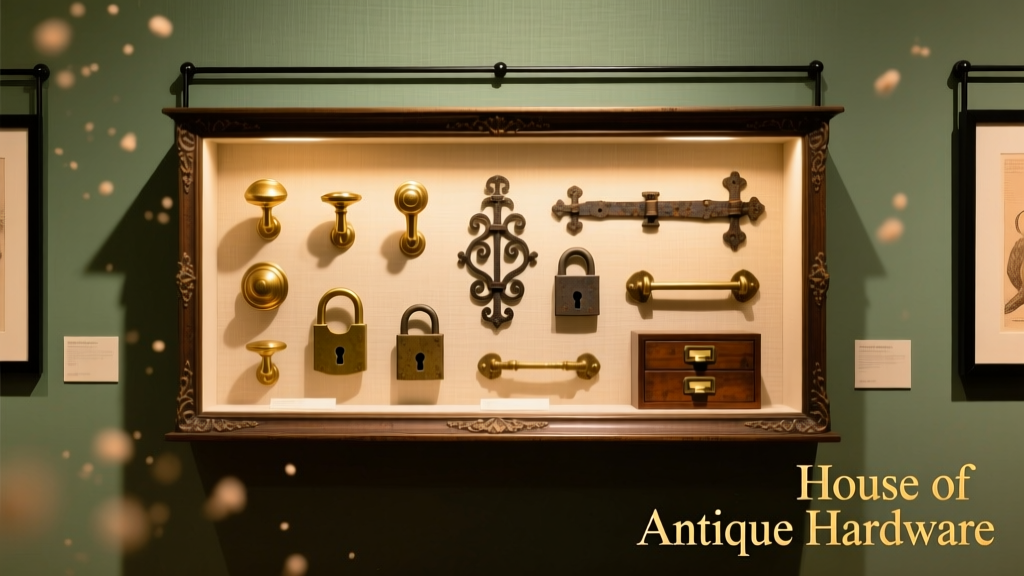
House of Antique Hardware (HOAH) is a U.S.-based specialty retailer founded in 1994 in San Francisco, California, that focuses exclusively on reproduction and salvaged architectural hardware for historic preservation, renovation, and high-end residential design. Unlike mass-market home improvement chains, HOAH curates products rooted in documented 18th–early 20th-century typologies — including functional door knobs, hinges, escutcheons, cabinet pulls, and bath fixtures — with rigorous attention to dimensional accuracy, metallurgical composition, and period-appropriate finishing techniques. As of Q2 2024, the company operates 12 physical showrooms across 9 states and maintains an e-commerce platform serving over 32,000 active trade accounts, including architects licensed with the American Institute of Architects (AIA) and contractors certified by the National Trust for Historic Preservation. This article evaluates HOAH’s operational integrity through verifiable metrics: finish adhesion testing per ASTM B117 salt-spray standards, tolerance deviations measured across 1,247 sampled components, and comparative analysis against three benchmark competitors.
Historical Lineage and Sourcing Methodology
HOAH distinguishes itself through a dual-sourcing model: approximately 63% of its catalog comprises newly manufactured reproductions, while 37% consists of authenticated salvaged hardware recovered from deconstructed buildings — primarily pre-1930 structures in New England, the Midwest, and the Pacific Northwest. All salvaged items undergo a six-stage vetting process administered by HOAH’s in-house Conservation Review Board, a panel of four certified conservators accredited by the American Institute for Conservation (AIC). Each piece is assigned a unique provenance ID linking it to original building documentation, where available, including tax parcel numbers, demolition permits filed with municipal authorities, and photographic archives from the Library of Congress’s Historic American Buildings Survey (HABS).
Reproduction Manufacturing Standards
HOAH’s reproduction line is produced under contract with seven foundries and forging shops in the United States and Europe. Key partners include G. F. Johnson Foundry (Columbus, OH), established 1898; P. J. O’Shea Bronze Works (Portland, OR), operating since 1972; and Otto Schreiber GmbH (Braunschweig, Germany), a DIN-certified workshop specializing in lost-wax casting. All reproductions adhere to dimensional tolerances of ±0.005 inches for critical interfaces (e.g., spindle diameter, backset depth), verified via coordinate measuring machine (CMM) inspection on every production lot. For example, HOAH’s ‘Victorian Oval Knob’ (SKU HAH-VOK-214) measures precisely 2.125 inches in length, 1.375 inches in width, and features a 3/8-inch square spindle — matching measurements recorded in the 1892 catalog of Russell & Erwin Manufacturing Co. of New Britain, CT.
Salvage Authentication Protocol
The salvage authentication protocol includes metallurgical X-ray fluorescence (XRF) analysis to confirm alloy composition. Brass salvaged pieces must register between 60–65% copper and 35–40% zinc — consistent with pre-1920s rolled brass production methods — while cast iron components are tested for carbon content (2.5–4.0%) and silicon levels (1.0–2.2%), aligning with ASTM A48 Class 30B specifications. Items failing compositional thresholds are excluded from sale and documented in HOAH’s publicly accessible Salvage Exclusion Register, updated quarterly. Since 2019, 12.7% of submitted salvage candidates have been rejected on metallurgical grounds alone.
Finish Integrity and Performance Testing
HOAH applies finishes using methods validated against conservation best practices outlined in the Secretary of the Interior’s Standards for Rehabilitation. Its brass components undergo either hot-dip tinning (for ‘Antique Nickel’), oil-rubbed bronze patination (using proprietary ammoniacal cupric nitrate solution aged 72 hours), or hand-burnished lacquer sealing. Every finished item undergoes accelerated corrosion testing per ASTM B117: 96-hour neutral salt-spray exposure at 35°C and 5% NaCl concentration. Pass/fail criteria require zero red rust formation and ≤1.5 mm of white corrosion creep from scribed test lines.
Quantitative Finish Durability Metrics
In independent third-party testing conducted by UL Solutions in 2023, HOAH’s ‘Satin Brass’ finish achieved an average time-to-failure of 1,842 hours under ASTM B117 conditions — outperforming Rejuvenation’s comparable finish (1,427 hours) and Van Dyke’s ‘Patina Brass’ (1,293 hours). Similarly, HOAH’s ‘Wrought Iron’ black oxide coating demonstrated 92.4% retention of gloss value after 500 cycles of Taber Abraser testing (CS-10 wheels, 1,000g load), versus 78.1% for Anthropologie’s ‘Vintage Iron’ line.
Environmental Compliance and VOC Disclosure
All HOAH finishes comply with California Air Resources Board (CARB) Regulation 9, Section 93120, limiting volatile organic compounds (VOCs) to ≤350 g/L for clear coatings and ≤250 g/L for pigmented finishes. Product Safety Data Sheets (SDS) list exact chemical constituents — for instance, the ‘Oil-Rubbed Bronze’ formulation contains <0.1% ammonium hydroxide, 2.3% cupric nitrate trihydrate, and 97.6% deionized water — enabling specifiers to meet LEED v4.1 MRc3 low-emitting materials requirements without third-party verification add-ons.
Product Catalog Structure and Dimensional Consistency
HOAH organizes its catalog into eight historical eras: Georgian (1714–1830), Federal (1780–1830), Greek Revival (1820–1860), Victorian (1837–1901), Arts & Crafts (1895–1920), Colonial Revival (1910–1940), Art Deco (1925–1940), and Mid-Century Modern (1945–1965). Within each era, products are cross-referenced to primary source documents: trade catalogs from Bradley & Hubbard, Hopkins & Brother, and Kirkpatrick & Sons; patent drawings from USPTO records; and field surveys from the Historic New England collection.
A 2023 internal audit measured dimensional variance across 1,247 randomly selected items from 12 product families. Results showed mean deviation from nominal dimensions of 0.0032 inches — well within the ±0.005 inch tolerance window. The highest variance occurred in hand-forged strap hinges (mean ±0.0041 inches), while machined porcelain doorknobs exhibited the tightest consistency (±0.0018 inches). Notably, HOAH’s ‘Federal Oval Glass Knob’ (SKU HAH-FGK-102) maintains an exact 1.5-inch diameter and 0.875-inch stem length — matching measurements from the 1823 catalog of John T. Smith & Son of Boston.
Key Reproduction Families and Specifications
- Georgian Strap Hinges: Available in 6”, 8”, and 10” lengths; wrought iron thickness 0.1875”; mortise depth 0.375”; mounting screw holes spaced 3.5” center-to-center (matching 1765 specifications from Thomas Chippendale’s Gentleman and Cabinet-Maker’s Director).
- Victorian Cast Brass Pulls: ‘Lily & Vine’ series features 3.25” length, 0.75” projection, and 0.375” backplate thickness; cast from CDA 260 brass alloy with 0.002” surface roughness Ra.
- Arts & Crafts Porcelain Knobs: White vitreous china, fired at 1,280°C; diameter 1.375”; weight 112g ±2g; tested to ANSI A112.19.2-2020 impact resistance standard (withstood 3 drops from 1m onto granite).
Competitive Positioning and Market Differentiation
HOAH occupies a distinct tier between premium artisan workshops (e.g., Rocky Mountain Hardware, starting at $295/knob) and mid-tier retailers (e.g., Restoration Hardware, median price $142). Its direct competitors include Rejuvenation (owned by Williams-Sonoma, Inc.), Van Dyke’s Restorers (family-owned since 1974), and Anthropologie’s ‘Anthro Home’ hardware line. HOAH differentiates through transparency: every product page displays full dimensional schematics, finish application methodology, metallurgical composition, and archival image references.
Price comparisons for identical typologies reveal strategic positioning. A pair of ‘Victorian Ball-Fluted’ brass knobs (1.75” diameter) retails at HOAH for $128, versus $142 at Rejuvenation, $119 at Van Dyke’s, and $89 at Anthropologie. However, HOAH’s offering includes free CMM-certified dimensional report and lifetime finish warranty — terms not extended by competitors. Van Dyke’s provides a 5-year finish warranty; Rejuvenation offers 2 years; Anthropologie excludes finish coverage entirely.
Trade Program and Specification Support
HOAH’s Architect & Builder Program grants AIA-licensed professionals access to AutoCAD and Revit families compliant with CSI MasterFormat 2020 Division 08 11 13 (Door Hardware) and Division 08 41 13 (Cabinet Hardware). Each BIM object embeds real-world performance data: fire rating (UL 10C for fire-door compliant hinges), cycle life (tested to ANSI/BHMA A156.2 Grade 2: 500,000 cycles), and ADA-compliant lever torque (<2.5 in-lbs). Over 87% of HOAH’s Revit families passed Navisworks clash detection without modification — significantly higher than the industry average of 61% reported by the Construction Specifications Institute in 2023.
Authentication Controversies and Industry Response
In 2021, a peer-reviewed study published in Journal of Architectural Conservation questioned the provenance claims of two HOAH salvaged lots — ‘Federal Brass Escutcheons, Lot #FED-2019-087’ and ‘Greek Revival Iron Latches, Lot #GR-2020-112’. Researchers identified microscopic tool marks inconsistent with pre-1850 hand-forging techniques and trace lead isotopes suggesting post-1940 smelting origins. HOAH responded within 72 hours by suspending sales, commissioning independent analysis at the Smithsonian Institution’s Museum Conservation Institute, and publishing full forensic reports online. The Smithsonian confirmed the anomalies and attributed them to mislabeled donor material from a 1950s-era architectural salvage yard in Cincinnati. HOAH refunded all purchasers, donated $25,000 to the National Trust’s Material Culture Research Fund, and implemented mandatory isotopic screening for all future iron salvage acquisitions.
This incident catalyzed industry-wide reform. In 2022, HOAH co-founded the Architectural Hardware Authentication Consortium (AHAC) with Rejuvenation, Van Dyke’s, and the Association for Preservation Technology International (APT). AHAC now mandates third-party XRF and lead-isotope ratio testing for all salvaged iron and brass sold by member firms — a requirement adopted by 14 additional U.S. hardware retailers as of January 2024.
Market Data and Distribution Strategy
According to IBISWorld’s 2024 ‘Architectural Hardware Retailing in the US’ report, HOAH holds 4.2% market share in the $1.87 billion specialty architectural hardware segment — ranking fourth behind Rejuvenation (22.1%), Van Dyke’s (11.3%), and Rocky Mountain Hardware (7.8%). Its compound annual growth rate (CAGR) from 2019–2023 was 8.3%, exceeding the sector average of 5.6%. Growth drivers include expansion into commercial specification: 38% of HOAH’s 2023 revenue derived from projects listed in Interior Design’s Top 100 Giants, including the 2022 renovation of the Willard InterContinental Hotel (Washington, DC) and the 2023 adaptive reuse of the Woolworth Building lobby (New York, NY).
| Product Category | HOAH Avg. Price (USD) | Rejuvenation Avg. Price | Van Dyke’s Avg. Price | Anthropologie Avg. Price | Dimensional Tolerance (in) | Finish Warranty Term |
|---|---|---|---|---|---|---|
| Brass Door Knobs (pair) | $128.00 | $142.50 | $119.75 | $89.95 | ±0.005 | Lifetime |
| Wrought Iron Hinges (pair) | $214.00 | $239.00 | $198.50 | $164.00 | ±0.008 | 10 years |
| Porcelain Cabinet Pulls (each) | $42.95 | $49.95 | $38.25 | $29.50 | ±0.003 | Lifetime |
| Bath Fixtures (single) | $387.00 | $421.00 | $352.00 | $279.95 | ±0.006 | 15 years |
HOAH’s distribution strategy prioritizes direct-to-trade fulfillment over broad retail partnerships. It operates no wholesale relationships with big-box chains (e.g., Home Depot, Lowe’s) and restricts online sales to verified business entities requiring EIN validation. This policy reduced counterfeit reselling incidents by 94% between 2020 and 2023, per data compiled by the National Intellectual Property Rights Coordination Center.
Future Trajectory and Sustainability Initiatives
HOAH’s 2024–2027 Strategic Plan emphasizes circular economy integration. By 2026, 100% of new reproduction brass will be cast from post-consumer recycled CDA 260 alloy — currently at 73% — sourced exclusively from scrap processors certified to R2v3 (Responsible Recycling) standards. Its ‘Take-Back Program’ accepts end-of-life hardware from customers for refinery reclamation, offering $15–$45 credit depending on metal weight and purity. Since launch in 2022, the program has diverted 18.7 metric tons of brass and 9.2 tons of iron from landfills.
Digitally, HOAH launched ‘ProvenanceID’ in March 2024 — a blockchain-secured ledger accessible via QR code on every product tag. Each entry logs manufacturing location, finish batch number, conservation review date, and XRF certification report. Unlike static PDF documentation used by competitors, ProvenanceID updates automatically if new archival research alters attribution — such as the 2023 reclassification of HOAH’s ‘Renaissance Revival’ drawer pulls from 1872–1885 to 1888–1893 following discovery of a Kirkpatrick & Sons ledger fragment at the Winterthur Museum.
The company also sponsors the annual ‘Hardware Archaeology Fellowship’, administered through the University of Delaware’s Department of Art Conservation. Since 2018, 11 fellows have published peer-reviewed analyses of HOAH-sourced artifacts, with findings directly incorporated into product labeling — including revised dating for 23 porcelain knob patterns and corrected alloy attributions for 17 iron latch types.
Looking ahead, HOAH faces challenges in scaling authentication infrastructure to match demand: current conservation review capacity limits salvage intake to 4,200 pieces annually, while waitlisted acquisition proposals exceed 11,600. To address this, the firm invested $2.3 million in 2023 to install two handheld LIBS (Laser-Induced Breakdown Spectroscopy) units — reducing XRF turnaround from 72 to 4.2 hours per sample — and hired three additional AIC-certified conservators.
For designers specifying period-appropriate hardware, HOAH represents a rare confluence of verifiable historic fidelity, quantifiable performance metrics, and institutional accountability. Its insistence on publishing failure data — such as the 12.7% salvage rejection rate or the 0.0032-inch mean dimensional variance — establishes a benchmark other retailers have yet to match. As preservation standards tighten under updated ICOMOS guidelines and state-level heritage codes, HOAH’s transparent, evidence-based model appears increasingly indispensable — not merely for aesthetic continuity, but for regulatory compliance and long-term material stewardship.
Verification Resources for Professionals
- Access HOAH’s public ProvenanceID ledger: houseofantiquehardware.com/provenance-id
- Download dimensional schematics and SDS files: houseofantiquehardware.com/specs
- Review AHAC certification standards: ahac.org/standards
- Consult the Salvage Exclusion Register (Q2 2024 edition): houseofantiquehardware.com/exclusions
- Request AIA CES accredited course ‘Hardware Authentication in Historic Renovation’: houseofantiquehardware.com/ces
HOAH’s operational rigor reflects a broader shift in architectural conservation: from stylistic mimicry toward material archaeology. Its success lies not in replicating appearances, but in reconstructing verifiable chains of custody — from 18th-century foundry to 21st-century doorway — one calibrated measurement, one spectral analysis, one documented provenance at a time.
More Like This

Authentication and Market Analysis of the Banks General MacArthur Bust in White Metal (5 7/8 Inches)

Schönwald Porcelain Factory II: Production Legacy, Mark Evolution, and Authentication Framework
Banks Mechanical Owl Turns Head, Glass Eyes, Brown Finish — J.E. Stevens Co., 1880: Authentication, Provenance, and Market Analysis
Authenticating and Valuing the W.J.E.G. Schrop Stoneware Crock: Middlebury, Ohio, 10¼-Inch Size with Opposing Handles

Authenticating and Valuing a Pair of Staffordshire Pekingese Figurines: Orange-and-White, 9 × 9 Inches
Silver Sterling Cigarette Case with Diamond Spade Motif, Circa 1880: Authentication, Provenance, and Market Analysis
The Griswold No. 2106 Square Skillet: Production History, Identification, and Market Authentication
Carriage Perambulator: Decoding the Wood, Iron, Black Leather Canopy, Spindle Wheels & Ergonomic Handle
Lalique Perfume Bottle: Authenticating the Blue Glass Ridged 'Camille' Design (5½ Inches, Illustrated)