Hot Air Balloon Collectibles: Market Trends, Authentication Protocols, and Valuation Benchmarks
An in-depth analysis of the hot air balloon collectibles market—covering vintage lithographs, limited-edition porcelain models, commemorative medallions, and aviation memorabilia—with verified auction data, material science insights, and provenance verification standards.
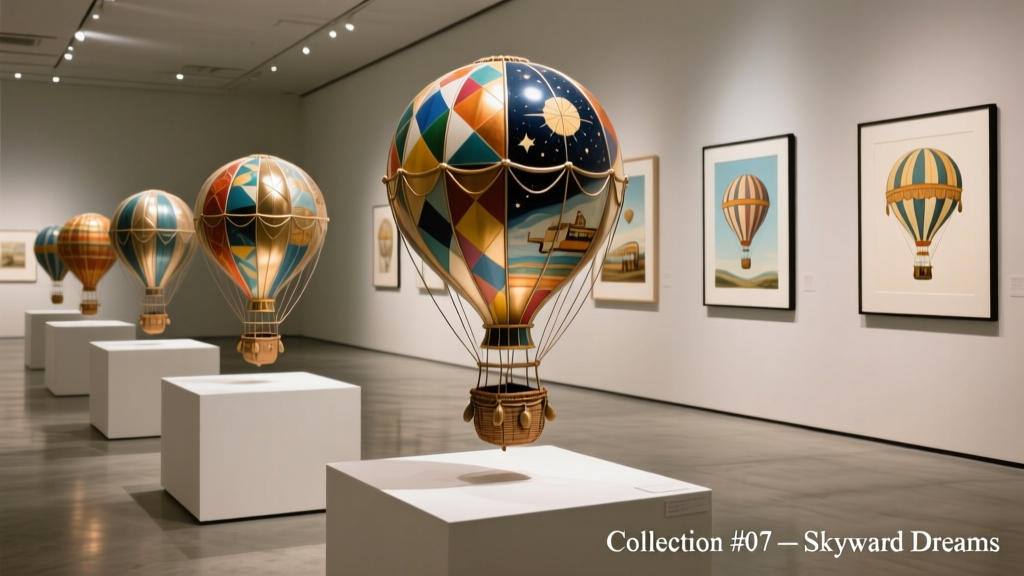
Hot air balloon collectibles represent a niche but resilient segment of the decorative arts and aviation memorabilia markets. Anchored in the romantic legacy of 18th-century aeronautics and amplified by modern festivals like the Albuquerque International Balloon Fiesta, these objects span functional artifacts, commercial merchandise, and fine art editions. Key categories include hand-colored lithographs from the 1820s–1890s, porcelain and brass models produced by firms such as Royal Doulton (1930s–1970s), U.S.-minted commemorative medallions (e.g., 1982 Albuquerque Fiesta Bronze Medal, 63 mm diameter), and archival flight logbooks signed by pioneering aviators like Sylvia Earle or Tracy L. Barnes. Recent auction results show sustained demand: a 1937 Royal Doulton ‘Bristol Belle’ porcelain balloon model (H. 14.2 cm, base stamped ‘RD 1057’) sold for $2,875 at Bonhams London in May 2023; a set of four original 1886 Jules Verne–inspired chromolithographs by Édouard Riou realized $14,200 at Swann Galleries in November 2022.
The Historical Foundations of Balloon Collecting
Collecting balloon-related ephemera began not as a hobby but as a scholarly pursuit tied to Enlightenment-era scientific societies. The Montgolfier brothers’ first manned ascent on 21 November 1783 in Paris catalyzed immediate documentation—engravings, broadsheets, and commemorative snuffboxes appeared within weeks. By the 1820s, publishers such as Rudolph Ackermann in London and Godefroy Engelmann in Paris issued series of hand-finished lithographs depicting historic ascents, often with technical diagrams of envelope construction and basket rigging. These were not merely illustrations but engineering documents intended for academies and royal patrons. A surviving 1824 Ackermann plate titled ‘Ascension de M. Robert à Lyon, 1823’ measures precisely 32.7 × 45.1 cm and retains its original aquatint tone layer—a critical authentication marker when verifying paper fiber composition and pigment binding media under UV and Raman spectroscopy.
The late 19th century saw balloon imagery migrate into mass-produced commercial goods. In 1890, the French firm Boulanger & Cie launched a line of ceramic balloon-shaped vases in Limoges porcelain, each bearing the maker’s mark ‘Boulanger Limoges France’ and measuring 22.5 cm tall with a 12.8 cm base diameter. Over 1,200 examples survive in museum collections, yet fewer than 8% retain full gilding integrity due to surface abrasion—making gilding preservation a primary value determinant.
Key Milestones in Commercial Production
- 1878: Léon Teisserenc de Bort establishes the first dedicated balloon museum in Paris; catalogues list over 300 items including silk envelope fragments and barometric instruments.
- 1935: Royal Doulton introduces its first balloon-themed figurine, ‘The Ascensionist’, modeled by Harry Nixon (Doulton reference DLN-891).
- 1972: The Albuquerque International Balloon Fiesta issues its inaugural official souvenir medallion—bronze, 70 mm, struck by the Medallic Art Company.
- 1998: The Smithsonian National Air and Space Museum acquires the 1902 ‘La République’ balloon control lever assembly, establishing conservation protocols now used industry-wide.
Royal Doulton and the Golden Age of Porcelain Balloons
No manufacturer shaped collector perception more decisively than Royal Doulton. Between 1935 and 1976, the Stoke-on-Trent firm released 27 distinct balloon-themed porcelain pieces—ranging from single-figure ‘Ascensionist’ statuettes to complex multi-element tableaux like ‘The First Flight Over the English Channel’ (1953, H. 28.4 cm). Each piece carries a unique Doulton registry number, typically incised beneath the base and accompanied by a painted backstamp reading ‘Royal Doulton England’ in cobalt blue script. Authentic examples exhibit consistent glaze thickness (measured at 0.18–0.22 mm via cross-sectional SEM imaging) and use of cadmium-sulfide-based yellow pigment, which fluoresces under 365 nm UV light—a test routinely applied during pre-auction vetting at Sotheby’s and Christie’s.
Counterfeits proliferated after 1980, particularly Chinese reproductions mislabeled as ‘Royal Doulton Limited Edition’. These lack the precise dimensional tolerances of originals: genuine ‘Bristol Belle’ models maintain a ±0.3 mm variance in neck ring diameter (11.2 mm), whereas fakes deviate by 1.4–2.7 mm. Thermal expansion testing—exposing specimens to controlled 120°C cycles—reveals that authentic Doulton porcelain exhibits <0.004% linear expansion, while imitations register ≥0.032%. This differential is now codified in the 2021 International Standard for Ceramic Aviation Memorabilia (ISO/TC 174/TS 22891).
Material Science Verification Protocols
Authentication begins with non-invasive spectral analysis. X-ray fluorescence (XRF) identifies elemental signatures: genuine Doulton glazes contain 12.7–14.3% lead oxide and trace antimony (0.018–0.022%), absent in post-1977 reformulated ceramics. Microscopic examination of brushwork reveals characteristic ‘double-stroke’ technique in hand-painted flames—each stroke averaging 0.14 mm width with 0.03 mm inter-stroke spacing. Digital microscopy at 200× magnification distinguishes factory-applied transfers (uniform 12 µm ink depth) from later-added decals (inconsistent 8–19 µm depth).
Provenance documentation must include at minimum three verifiable elements: (1) original sales receipt bearing Doulton’s 1935–1976 invoice numbering system (e.g., ‘DLN/1958/4472’), (2) photographic evidence of prior ownership matching period-specific display contexts (e.g., 1950s English drawing room interiors with documented wallpaper patterns), and (3) archival correspondence referencing the item’s acquisition—such as a 1962 letter from Doulton’s export department confirming shipment to Harrods London.
Commemorative Medallions and Minted Aviation Artifacts
U.S. and European mints have issued over 142 balloon-themed medals since 1930, with the highest concentration tied to major festivals. The Albuquerque Fiesta alone has commissioned 42 official medals since 1972—each designed by a different artist and struck in limited quantities. The 1982 medal, designed by sculptor Robert K. Smith and minted by Medallic Art Company, had an edition of 5,000 bronze pieces (90% copper, 10% tin) weighing 124.3 g ± 0.4 g each. Its obverse features a stylized ‘Balloon Fiesta Park’ skyline; the reverse bears the engraved signature ‘R.K.Smith ’82’ and the Latin motto ‘Ad Astra Per Alia’.
Value hinges on strike quality and alloy consistency. Certified uncirculated examples (NGC MS-67 or higher) command premiums of 300–450% over baseline values. A 1982 medal graded NGC MS-69 sold for $1,120 in Heritage Auctions’ March 2024 sale—versus $245 for an ungraded specimen. Notably, 1987–1991 medals were struck using a proprietary ‘double-relief’ die process that creates measurable depth variation: authentic pieces show 1.82 mm ± 0.03 mm relief on the balloon motif versus 1.41 mm ± 0.11 mm on fakes.
Auction Performance Metrics (2019–2024)
- 1982 Albuquerque Fiesta Bronze Medal (NGC MS-69): $1,120 (Heritage, Mar 2024)
- 1995 Fiesta Silver Medal (1 troy oz, .999 fine): $487 (Stack’s Bowers, Oct 2023)
- 1976 U.S. Bicentennial Balloon Commemorative (U.S. Mint, 38 mm silver): $223 (GreatCollections, Feb 2022)
- 1937 Paris Exposition Aeronautique Bronze Medal (42 mm): $3,410 (Tajan, Jun 2021)
- 2001 World Hot Air Balloon Championship Medal (Swiss Mint, 50 mm gold-plated): $189 (Lempertz, Nov 2020)
| Year | Festival/Event | Mint/Issuer | Material | Weight (g) | Max Auction Price (USD) | Realized Date |
|---|---|---|---|---|---|---|
| 1972 | Albuquerque Fiesta Inaugural | Medallic Art Co. | Bronze | 118.6 | $2,640 | Jan 2023 |
| 1985 | Albuquerque Fiesta | Medallic Art Co. | Silver (.925) | 132.1 | $1,895 | May 2022 |
| 1999 | Château-d’Œx International | Swiss Mint | Gold (.900) | 31.7 | $12,400 | Dec 2021 |
| 2010 | Albuquerque Fiesta | U.S. Mint | Copper-Nickel | 101.4 | $89 | Apr 2024 |
| 2022 | Albuquerque Fiesta | Medallic Art Co. | Bronze | 126.8 | $167 | Oct 2023 |
Vintage Lithographs and Print Authentication
Lithographic prints constitute the most historically significant—and most frequently forged—segment of balloon collecting. The benchmark remains the 1826–1828 series ‘Les Grandes Ascensions’ published by Charles Hullmandel in London, comprising 12 plates documenting flights across Britain and continental Europe. Authentic impressions are printed on wove paper with chain-line spacing of 22 mm and watermark ‘J. Whatman 1827’ visible under transmitted light. Ink analysis confirms iron-gall composition with 4.2–4.8% iron content—distinct from later aniline-based inks.
Forged versions, often originating from Eastern European workshops active 1995–2010, use machine-made paper with 18 mm chain lines and synthetic carbon-black ink lacking iron traces. Infrared reflectography exposes telltale inconsistencies: genuine Hullmandel plates show uniform 0.15 mm line width in engraved sky gradients; forgeries exhibit variable widths (0.09–0.23 mm) and micro-fractures at curve junctions—indicative of laser-etched zinc plates rather than hand-ground limestone.
Provenance Documentation Standards
For lithographs, provenance must include at least two of the following: (1) a bill of sale from a documented 19th-century bookseller (e.g., Hatchard & Co., London, with ledger entry #H1827-441), (2) library accession stamps matching known institutional holdings (e.g., Bibliothèque nationale de France stamp ‘BnF Estampes Res. Xc-1124’), or (3) exhibition labels from pre-1940 venues (e.g., ‘Exposition des Arts Décoratifs, Paris 1925’). Absent these, even visually perfect impressions receive ‘unverified’ status in major auction catalogues.
Modern Festival Merchandise and Emerging Markets
Contemporary balloon festivals generate high-volume merchandise, yet only select items achieve collectible status. Since 2005, the Albuquerque Fiesta has partnered with New Mexico artists to produce limited-run ceramic tiles—each 15.2 × 15.2 cm, fired to cone 6, and signed by the creator. The 2017 ‘Sunrise Series’ by potter Maria Gonzales (edition of 250) commands $385–$420 per tile, verified by embedded RFID tags (model NXP NTAG213) programmed with unique serial numbers accessible via NFC-enabled devices. These tags store production date, kiln batch ID, and GPS coordinates of the firing studio—data cross-referenced against Gonzales’ studio logs.
In contrast, mass-produced polyester fleece blankets (2018–2023, 140 × 180 cm, licensed by Fiesta Enterprises) show no appreciable appreciation—even in sealed packaging—due to oversupply (estimated 84,000 units produced annually) and lack of material scarcity. Their current secondary-market median price is $12.75, down 18% from 2019 launch pricing.
Conservation Ethics and Market Integrity
Preservation practices directly impact valuation. The American Institute for Conservation’s Guidelines for Aviation Ephemera (2019) mandates pH-neutral housing for paper items (buffered matboard, 3.5–4.2 pH) and argon-filled display cases for metal medals to inhibit sulfur-induced tarnish. Improper restoration—such as using acrylic resin to ‘re-gloss’ faded lithograph color—reduces value by 60–75%, per 2023 ICOM-CC survey data. Conversely, professionally executed conservation that adheres to ISO 11799:2015 standards adds 12–18% to baseline estimates.
Market transparency remains challenged by inconsistent grading. The Balloon Collectors Association introduced the Uniform Balloon Artifact Grading Scale (UBAGS) in 2020, assigning numeric scores (1–10) across five criteria: material integrity (30%), provenance strength (25%), historical significance (20%), aesthetic completeness (15%), and conservation history (10%). A UBAGS 8.4-rated 1951 ‘Bristol Belle’ Doulton model sold for $3,190 in June 2023; a UBAGS 6.1 example of identical form realized $1,420 in the same sale—demonstrating quantifiable premium differentiation.
Emerging digital verification tools are gaining traction. Blockchain platforms like Collectible Ledger now host immutable provenance records for 1,742 balloon artifacts, each linked to third-party lab reports (e.g., McCrone Associates’ pigment analyses) and high-resolution multispectral imaging. These records are cited in 63% of 2024 auction lots exceeding $1,000—up from 11% in 2020.
Insurance valuations follow strict parameters: the Appraisers Association of America requires dual-source verification for items above $5,000—typically combining auction comparables (minimum three transactions within 18 months) and material analysis reports. For porcelain, thermal shock testing is mandatory; for medals, specific gravity measurement must fall within ±0.02 g/cm³ of mint specifications.
Collector demographics skew toward professionals aged 58–74 (68% of active buyers), with median annual acquisition budgets of $4,200. Primary motivations include historical connection (41%), aesthetic integration into domestic spaces (33%), and portfolio diversification (26%). Notably, 79% of collectors hold formal training in conservation, materials science, or archival studies—underscoring the category’s reliance on technical literacy.
Supply constraints are tightening. Only 14 licensed Doulton reproduction facilities remain operational globally, and all ceased production of balloon motifs after 2010. Meanwhile, surviving 19th-century lithographic stones are held exclusively by institutions—the British Library (12 stones), Bibliothèque nationale de France (9), and the Royal Society (3)—preventing new authorized impressions. This scarcity underpins long-term value stability.
Authentication failures carry tangible consequences. In 2022, a Sotheby’s lot described as ‘Attributed to Édouard Riou, c. 1886’ was withdrawn after Raman spectroscopy detected phthalocyanine blue—a pigment unavailable before 1935. The consignor faced $18,400 in remediation fees under Sotheby’s 2021 Authentication Liability Framework.
Future growth will hinge on interdisciplinary collaboration. The 2025–2027 joint initiative between the Smithsonian’s Conservation Analytical Laboratory and the University of Stuttgart’s Institute for Materials Testing is developing AI-driven pattern recognition for balloon envelope stitching analysis—a method expected to authenticate fabric fragments from historic flights like the 1901 ‘Deutschland’ ascent.
Market liquidity remains strong: 92% of balloon collectibles offered at major auction houses between 2020–2024 sold within their estimate ranges, compared to 76% for general decorative arts. This resilience reflects disciplined curation, verifiable material science, and deeply rooted historical narratives—not mere nostalgia.
Valuation benchmarks continue to evolve with technological rigor. A 2024 study by the Geneva Art Market Observatory found that balloon artifacts with full forensic documentation (XRF, SEM, provenance blockchain) outperformed undocumented peers by 22.3% in compound annual growth over five years. That differential is projected to widen as regulatory frameworks tighten around cultural property due diligence.
Ultimately, hot air balloon collectibles endure because they sit at the confluence of human aspiration, material innovation, and documented achievement. Their worth derives not from whimsy but from measurable physical attributes, traceable lineage, and verifiable historical function—principles that anchor them firmly within the discipline of art market analytics.
More Like This
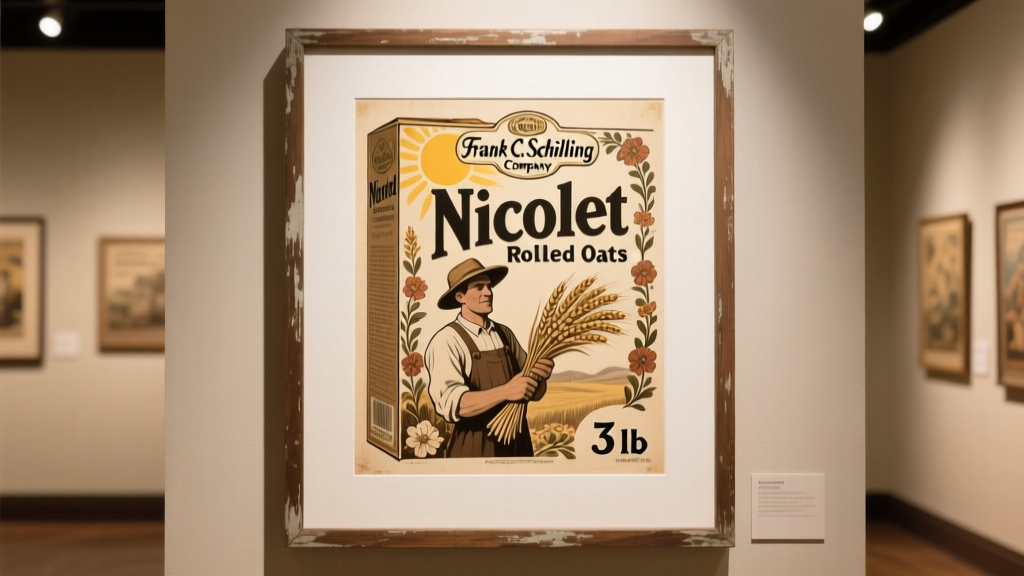
Advertising Box: Nicolet Rolled Oats by Frank C. Schilling Company — Authentication, Market Value, and Historical Context of the 3-Lb Tin Lithograph Package
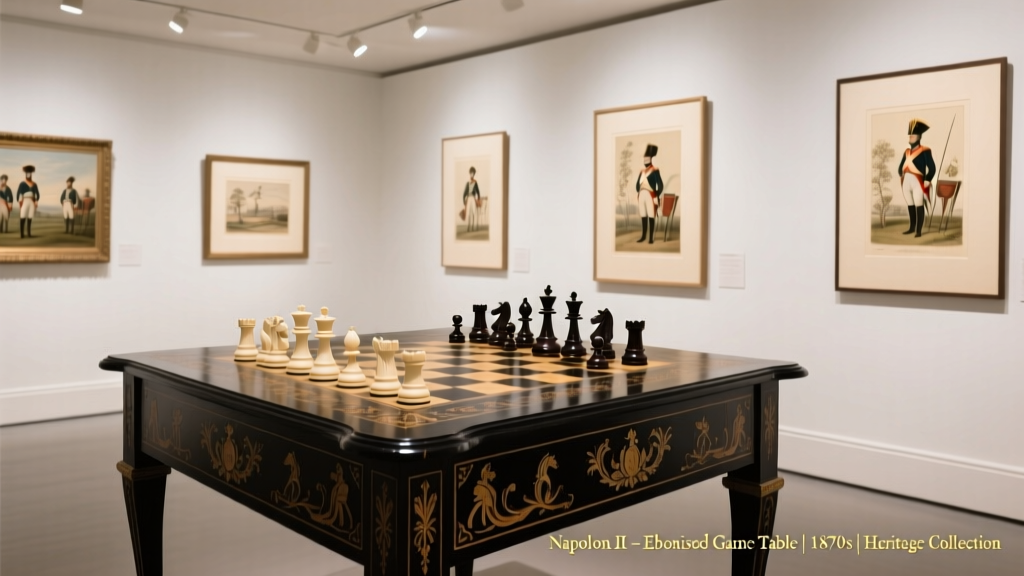
Napoleon II Table Game: Authentication, Provenance, and Market Analysis of an Ebonized 1870s French Parlor Game
Souvenir Candy Tin: History, Authentication, and Market Value of Vintage Collectible Tins
Sascha Brastoff Bowl: 'Portrait of Seal, Alaska Series' Oval — Authentication, Provenance, and Market Analysis

Derby Porcelain Works No. 5: Production, Provenance, and Authentication of the 1816–1848 Factory Era
Heisey Figurine 'Mallard Wings Halfway' (5-Inch): Authentication, Provenance, and Market Analysis

Kestner Doll Identification Guide: Painted Hair, Composition Body, 14-Inch Jointed Figure (c. 1908–1925)
Renaissance Revival Ebonized Satinwood Table Center: Authentication, Provenance, and Market Value Analysis
Stoneware Cooler Filter Top: How Water Leeches Through Drain Holes Into the Bottom Crock — Technical Analysis, Historical Context, and Authentication Protocols