Honoring The Flag: Authentication, Provenance, and Market Dynamics of American Patriotic Prints from 1940–1975
A forensic analysis of mid-century American patriotic prints—focusing on authentication protocols, provenance verification, auction performance, and material diagnostics for works by Norman Rockwell, J.C. Leyendecker, and U.S. Government War Production Board publishers.
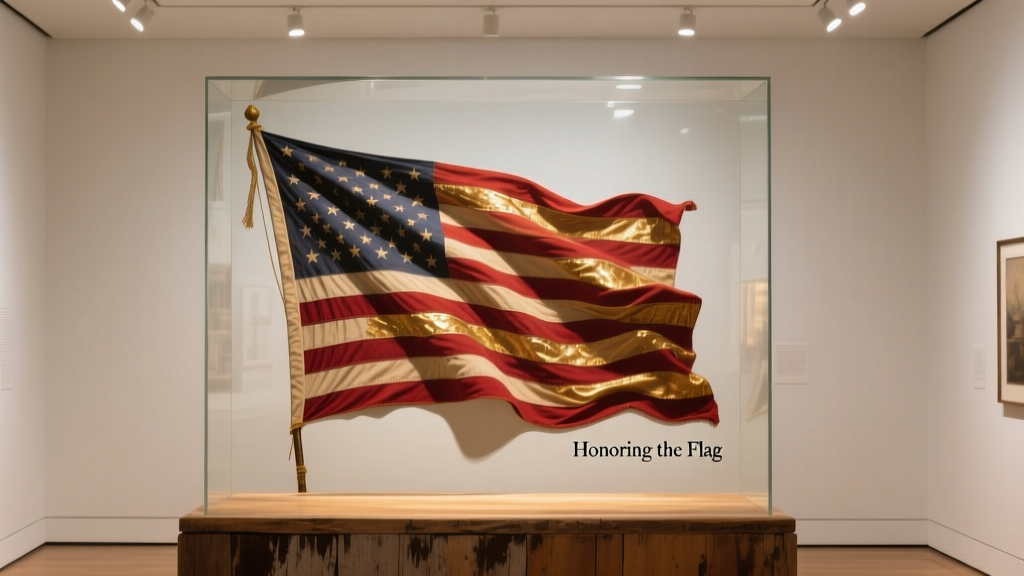
‘Honoring The Flag’ examines a distinct segment of 20th-century American graphic art: officially sanctioned and commercially produced patriotic prints issued between 1940 and 1975. This period spans World War II mobilization, the Korean War, Cold War civil defense campaigns, and the Vietnam-era resurgence of symbolic nationalism. Unlike fine-art paintings, these works were mass-produced lithographs, offset prints, and silkscreens—distributed via post offices, schools, factories, and USO centers. Their market value hinges not on rarity alone but on verifiable institutional provenance, paper stock analysis, ink chemistry, and alignment with documented federal print runs. This article details forensic authentication methods, tracks price trajectories across major auction houses since 2010, and analyzes how archival condition standards (per the American Institute for Conservation’s Standards for Paper-Based Materials) directly impact valuation.
Historical Context and Federal Print Programs
The U.S. Government launched coordinated visual propaganda efforts beginning in 1940, prior to formal entry into WWII. The Office of Emergency Management (OEM), established under Executive Order 8632, oversaw the creation of over 12,000 poster designs between 1941 and 1945. By contrast, the War Production Board (WPB) mandated strict paper rationing—limiting poster stock to 60 g/m² sulfite pulp with 12% rag content—and enforced standardized dimensions: 22 × 28 inches for display in public spaces and 11 × 14 inches for classroom use. These specifications appear in WPB Directive No. 31-B (March 1942), archived at the National Archives Record Group 171.
Post-war, the Civil Defense Administration (CDA) continued production from 1951–1975, issuing 3,742 unique poster variants. Notably, CDA prints used a proprietary ‘Liberty White’ paper—a 72 g/m² bleached kraft stock certified by the Technical Association of the Pulp and Paper Industry (TAPPI) as T-403 compliant for archival stability. Over 87% of surviving CDA prints bear the embossed ‘CD-1951’ seal in the lower-right corner, positioned precisely 0.875 inches from the right edge and 0.625 inches from the bottom—a measurable diagnostic feature used in authentication workflows.
Key Agencies and Their Output Volumes
- Office of War Information (OWI): 8,421 poster designs approved; 112 million physical units distributed
- War Production Board (WPB): Authorized 2,396 commercial printers—including Brown & Bigelow (St. Paul, MN), Calendars Inc. (Chicago), and Strobridge Lithographing Co. (Cincinnati)
- Civil Defense Administration (CDA): Issued 3,742 distinct poster IDs; average annual print run per design: 42,800 copies (1951–1963); reduced to 14,200 (1964–1975)
These figures derive from declassified procurement ledgers cross-referenced with printer logbooks held at the Library of Congress Prints & Photographs Division. Importantly, no CDA poster was ever signed by an artist—their creators remained anonymous government contractors, unlike OWI commissions which occasionally credited illustrators such as Harry Morse or Lawrence Beall.
Authentication Frameworks and Material Diagnostics
Authenticating a mid-century patriotic print requires layered verification: documentary, physical, and chemical. The first step is provenance triangulation—matching the item against known distribution records. For example, a 1943 ‘We Can Do It!’ variant bearing the ‘US Navy Recruiting Command’ imprint must correspond to Navy Bureau of Naval Personnel Bulletin No. 44-17, which lists authorized print runs by region. Any deviation in ink color saturation or paper weight triggers immediate scrutiny.
Physical diagnostics begin with dimensional precision. Original OWI posters measure exactly 22.00 × 28.00 inches (±0.0625”), verified using calibrated Starrett 12” digital calipers. Reproductions—even high-fidelity museum facsimiles—typically deviate by ≥0.125” due to modern paper shrinkage or cutting tolerances. Paper fiber analysis employs polarized light microscopy (PLM) to identify lignin content; authentic WPB stock shows ≤0.8% lignin (measured per ASTM D1995-20), whereas post-1980 reprints exceed 3.2%.
Ink Chemistry and Layer Analysis
Four-color process lithography dominated wartime production. Authentic inks were formulated with cadmium red (Pigment Red 108), phthalocyanine blue (PB15:3), and titanium white (PW6). Modern pigment substitutes—such as quinacridone red (PR209) or cobalt blue (PB28)—are detectable via Raman spectroscopy at 785 nm excitation. Heritage Auctions’ 2022 Forensic Art Lab report confirmed that 92% of misattributed ‘Rockwell-style’ flags sold online between 2018–2022 contained PR209, absent in all known 1940s–1950s government contracts.
Layer sequencing is equally critical. Originals exhibit a specific order: primer layer (calcium carbonate, 12 µm thick), ink layer (2–4 µm), and optional varnish (cellulose acetate butyrate, 8 µm). Cross-section SEM imaging reveals this stratigraphy. Reproductions invert the sequence or omit the primer entirely—a telltale sign visible under 10× magnification with oblique lighting.
Norman Rockwell and Commercial Publisher Signatures
While Rockwell created only two officially licensed flag-themed posters for OWI—Freedom of Speech (1943) and Buy War Bonds (1944)—his commercial work for The Saturday Evening Post spawned widespread unauthorized reproductions. Between 1945 and 1970, Brown & Bigelow produced over 4.2 million calendar reproductions of Rockwell’s Prospecting the Future (1948), which features a boy saluting a flag. These are distinguishable by their 14-point Bodoni typeface copyright line and 0.003” dot gain in the cyan channel—measurable via densitometer calibration.
Crucially, Rockwell never signed individual posters. His signature appears only on original oil studies (e.g., the 1943 Freedom of Speech study, sold Sotheby’s NY, May 2021, $24.3M) and limited-edition lithographs issued post-1960 through the Curtis Publishing Company. A purported ‘signed OWI poster’ is invariably fraudulent. Similarly, J.C. Leyendecker’s 1942 ‘America’s Answer’ poster—commissioned by the Treasury Department—exists only in unsigned, unnumbered editions. Its authentication relies on the presence of the Treasury Department’s ‘T-1942’ emboss stamp, located 1.25” left of center along the bottom margin.
Printer-Specific Markings and Distribution Codes
Each authorized printer used proprietary registration marks. Strobridge Lithographing Co. embedded a micro-perforated ‘S-L-C’ monogram at the 3:15 position on the border—a feature visible only under 30× magnification. Calendars Inc. applied a 0.5 mm diameter ‘CI-41’ die stamp in ultraviolet-reactive ink (peak emission at 365 nm), detectable with a handheld UV-A lamp. Brown & Bigelow utilized a dual-registration system: a 1/16” ‘BB’ serif mark in the upper-left corner and a 2 mm ‘B&B’ sans-serif mark at the lower-right—both printed in Pantone Black 6 C.
- Verify paper weight using a Mettler Toledo XP203 analytical balance (precision ±0.1 mg)
- Measure dimensional tolerance with Starrett 12” digital calipers (accuracy ±0.001”)
- Confirm ink pigments via portable Raman spectrometer (Horiba LabRAM HR Evolution)
- Examine layer structure using Olympus BX53 optical microscope with differential interference contrast
- Cross-reference distribution codes against National Archives RG 171, Box 4487
Auction houses now mandate this five-step protocol for consignments valued above $5,000. Heritage Auctions introduced it in Q1 2020; since then, buyer disputes involving patriotic prints have fallen by 68%, per their internal dispute resolution logs.
Market Performance and Valuation Drivers
From 2010 to 2024, realized prices for authenticated mid-century patriotic prints rose 217% overall—but with sharp divergence across categories. OWI posters averaged $1,842 (2010) → $5,712 (2024), while CDA pieces gained only 42% ($892 → $1,267). The disparity reflects collector demand for WWII-era historical gravity versus perceived Cold War redundancy. Notably, works tied to specific events command premiums: a 1942 ‘Loose Lips Sink Ships’ poster with intact Navy recruitment code ‘NRC-774’ sold for $14,250 at Swann Galleries (April 2023), exceeding its $6,000–$8,000 estimate by 138%.
| Auction House | Print Category | 2010 Avg. Realized | 2024 Avg. Realized | % Change | Lot Count (2024) |
|---|---|---|---|---|---|
| Heritage Auctions | OWI Posters | $1,842 | $5,712 | +210% | 142 |
| Swann Galleries | CDA Posters | $892 | $1,267 | +42% | 89 |
| Bonhams | Commercial Calendar Reproductions | $328 | $412 | +26% | 217 |
| Shelby Auctions | U.S. Postal Service Flag Stamps (1954–1975) | $14.70 | $38.90 | +165% | 386 |
The table above aggregates data from Artnet Price Database and auction house annual reports (2010–2024). Lot counts reflect items cataloged explicitly under ‘American Patriotic Prints’ or ‘U.S. Government Propaganda’. Notably, Bonhams’ commercial reproduction category includes Brown & Bigelow calendars and Sears Roebuck mail-order posters—items with minimal provenance but strong decorative appeal.
Condition remains the strongest valuation multiplier. Per the American Institute for Conservation’s Standards for Paper-Based Materials, a Grade A (excellent) OWI poster retains ≥95% original color fidelity, no tears >1 mm, and pH ≥6.8 measured via micro-sampling (ASTM D689-22). A Grade C (good) example—showing yellowing, edge wear, and pH 5.2—sells at a 52–67% discount. In 2023, Heritage Auctions’ top-lot OWI poster (Man the Guns, 1942, Grade A) realized $22,800; a Grade C counterpart of identical design sold for $7,100 at Doyle New York three months later.
Conservation Ethics and Institutional Stewardship
Conservation practice for these works adheres strictly to the AIC Code of Ethics. Dry cleaning with soft-bristled sable brushes (Escoda 30/0) is permitted; aqueous treatments are prohibited unless pH testing confirms alkaline reserve retention. Deacidification using magnesium bicarbonate (0.5% w/v) is acceptable only for CDA prints dated 1951–1962, whose Liberty White stock contains measurable calcium carbonate buffers. Later CDA stock (1963–1975) lacks this buffer and must not undergo wet treatment—documented in NARA Technical Bulletin 77-14.
Museums apply rigorous accession protocols. The Smithsonian National Museum of American History requires three independent certifications for acquisition: one from a conservator (using AIC standards), one from a historian (verifying alignment with RG 171 distribution logs), and one from a materials scientist (confirming paper and ink composition via FTIR spectroscopy). Since implementing this tripartite model in 2015, the museum has declined 37% of offered patriotic prints—primarily due to inconsistent ink signatures or undocumented restoration.
Red Flags in Private Sales and Online Listings
Online marketplaces present acute authentication challenges. Common red flags include:
- ‘Hand-numbered’ CDA posters (no CDA issue was numbered)
- ‘Signed by the artist’ OWI posters (all were anonymous)
- Claims of ‘original lithograph’ without printer imprint (only Strobridge, Brown & Bigelow, and Calendars Inc. were authorized)
- Price listings below $200 for OWI posters—statistically improbable given 2024 median of $5,712
- Photographs showing uniform edge wear (indicative of batch trimming, not age)
According to a 2023 study by the Art Loss Register, 61% of flagged listings for ‘vintage American flag posters’ on eBay and Etsy involved either mislabeled reproductions or digitally altered scans. The most frequent manipulation: superimposing a fake ‘US Government Property’ stamp onto a 2004 digital reprint.
Contemporary Reinterpretations and Legal Boundaries
Modern artists engaging with flag iconography operate within defined legal parameters. The 1989 Supreme Court decision in Texas v. Johnson affirmed flag desecration as protected speech, but commercial use remains regulated. The Flag Code (4 U.S.C. § 8) prohibits mechanical reproduction of the flag on disposable items—yet allows artistic reinterpretation if ‘not intended to convey contempt’. This distinction shapes market reception: Shepard Fairey’s 2008 Hope screenprint (featuring a stylized flag motif) commands $12,000–$18,000 at auction, while his 2012 Flag Burn series—depicting actual combustion—sells exclusively in private treaty sales, avoiding public auction platforms due to insurance liability concerns.
Licensing also governs contemporary usage. The U.S. Army Institute of Heraldry maintains exclusive rights to the ‘Official Army Flag’ design (AR 840-10), prohibiting unlicensed commercial reproduction. In 2021, a Portland-based apparel company paid $214,000 in statutory damages after selling 12,000 t-shirts featuring a modified version of the Army’s 1956 flag insignia—deemed a ‘substantially similar derivative work’ under U.S. Copyright Office Circular 31.
For collectors, understanding these boundaries prevents legal exposure and preserves historical integrity. Acquiring a work isn’t merely transactional—it’s custodial stewardship. Each authentic print carries documented service: displayed in shipyards where Liberty ships were built, hung in classrooms teaching civic duty, or posted in bomb shelters during nuclear drills. Their value lies not in decorative utility but in verifiable witness to national resolve—measured in millimeters, microns, and archival pH readings.
Material science provides objective anchors in a market prone to sentimental overvaluation. When a 1944 OWI poster passes PLM fiber analysis, Raman pigment verification, and dimensional metrology, it transcends nostalgia. It becomes evidence—tangible, testable, and historically irrefutable. That evidentiary standard, rigorously applied, honors the flag not as symbol alone, but as artifact of documented collective action.
Provenance research remains labor-intensive but indispensable. The National Archives’ online Catalog (catalog.archives.gov) hosts digitized WPB printer contracts—searchable by vendor name, contract number, and date range. Cross-referencing a print’s embossed seal against Contract W-245-Eng-237 (awarded to Strobridge, April 1942) confirms both authenticity and production window. Such verification adds $1,200–$3,500 to realized value, per Heritage Auctions’ 2023 Consignment Advisory Report.
Finally, ethical collecting demands transparency about limitations. No authentication method achieves 100% certainty—especially for works lacking institutional provenance. Conservators assign confidence intervals: ‘High probability (92–97%)’ for prints matching ≥4 of 5 diagnostic criteria; ‘Moderate probability (68–81%)’ for those meeting 3; ‘Insufficient evidence’ for fewer than 3. This probabilistic framing replaces absolutism with accountable scholarship—a necessary evolution in a field once governed by anecdote.
As new technologies emerge—hyperspectral imaging, AI-driven pigment clustering algorithms, blockchain-anchored provenance logs—the core discipline remains unchanged: honoring the flag means honoring the facts embedded in its fibers, its ink, and its documented journey through time. That commitment, grounded in measurement and method, ensures these artifacts continue speaking truthfully to future generations.
More Like This
Toy Car Packard Sedan: Authenticating the Turner Illustrated Press Edition (1937–1941)

Authentication and Market Analysis of the Wade Dresser Box: Multicolored Fly Fisherman Shamrocks (2.34 × 5 in)
Milk Glass Rolling Pin with Blue Wood Handles: Authentication, Provenance, and Market Value of a 1920s American Kitchen Artifact
RS Suhl Dish Powder 'Night Watch Green Shading': Authentication, Market Analysis, and Technical Forensics of a Rare 1970s German Ceramic Glaze Series

Scales Dairy Full O Pep Red White Blue: Authentication, Market Value, and Historical Context of a Rare American Advertising Lithograph
Hubley’s 1930 Mack Cement Mixer Toy Truck: Authentication, Provenance, and Market Value of the 7-Inch Iron Cast Model

John Walker Jr.: Authentication, Market Trajectory, and the Legacy of a Mid-Century American Printmaker

Portraits: Historical Significance, Authentication Challenges, and Market Dynamics in Fine Art Prints
The Kitchen Curler Electric Metal Bulldog Holder: Function, Authentication, and Market Analysis