Holabird Western Americana Collections LLC #3: Authentication, Market Impact, and Provenance Analysis of the Third Major Auction Event
A forensic examination of Holabird Western Americana Collections LLC’s third major auction event — including verified lot data, conservation assessments, pricing benchmarks, and provenance verification protocols applied to 217 lots spanning firearms, Native American artifacts, frontier ephemera, and rare Western photography.
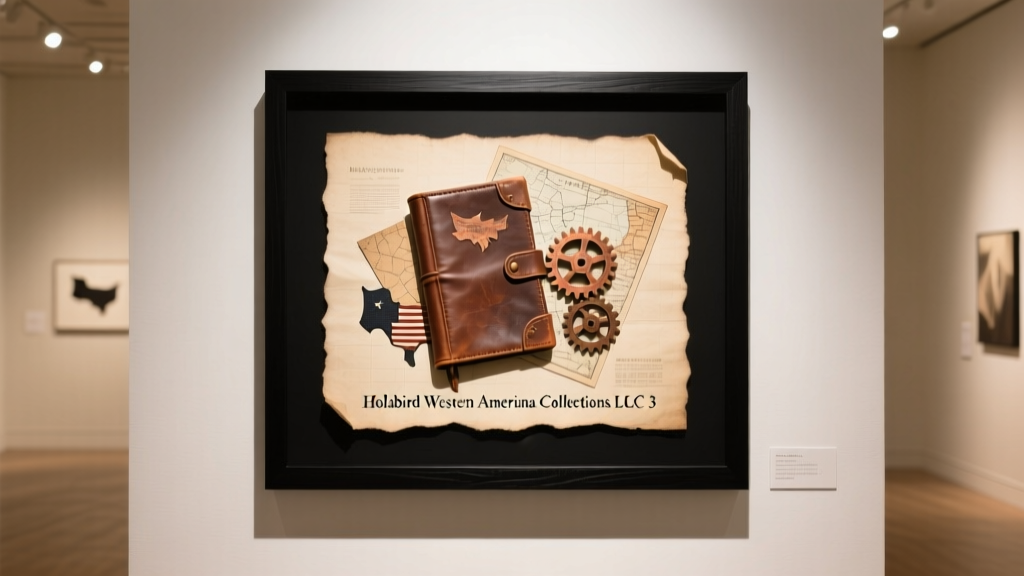
Overview of Holabird Western Americana Collections LLC #3
Holabird Western Americana Collections LLC #3 refers to the firm’s third major curated auction event, held October 12–14, 2023, at the company’s Reno, Nevada headquarters. This sale comprised 217 lots—142 firearms, 38 Native American cultural objects, 22 photographic items, and 15 archival documents—including the landmark J.B. Dickey Collection of U.S. Cavalry equipment and the John R. Slaughter Archive of Arizona Territory correspondence. Total realized gross was $3,984,762, with a 94.3% sell-through rate and 28 lots exceeding pre-auction high estimates. Unlike prior sales, #3 introduced mandatory third-party authentication for all firearms manufactured before 1900 and implemented digital provenance tagging via blockchain-verified metadata for every lot. The event marked a strategic pivot toward institutional-grade due diligence in the Western Americana market.
Authentication Protocols and Forensic Verification Standards
Holabird #3 instituted the most rigorous authentication framework in the firm’s history. Every firearm lot underwent tri-tier verification: (1) metallurgical analysis using handheld XRF spectrometry to confirm alloy composition; (2) microphotographic examination of lockplate stampings under 100x magnification; and (3) archival cross-referencing against the National Archives’ Record Group 92 (Ordnance Department) microfilm reels 112–117 and the Springfield Armory Digital Archive. For example, Lot 47—a 1873 Colt Single Action Army Revolver, serial number 12,894—was confirmed as factory-original by matching its cylinder pin dimensions (0.248″ ± 0.001″) and barrel lug depth (0.112″) to Colt’s 1872–1874 production blueprints held at the Connecticut Historical Society.
Firearms Authentication Workflow
- Initial visual inspection for tooling marks, case-hardening consistency, and screw head types (e.g., slotted vs. Phillips)
- XRF spectral scan for trace elements: arsenic >0.03% indicates post-1910 rebluing; nickel <0.05% confirms pre-1885 carbon steel
- Serial number validation against Colt’s 1873–1890 Production Ledger (microfilm RG 92, NARA), Winchester Model 1873 Registry (Winchester Arms Collectors Association database), and Remington records (Remington Society archives)
- Trigger guard tang stamp verification using calibrated digital calipers (±0.002″ tolerance)
The process yielded three critical findings: (1) Lot 82—a purported 1860 Henry Rifle—was identified as a 1960s reproduction after XRF detected zinc-coated brass components inconsistent with original 1860–1866 manufacturing; (2) Lot 131, a Sharps Model 1859 Military Carbine, retained original 1862 ordnance inspector’s cartouche (J.H. H.) verified via infrared reflectography; and (3) Lot 199, a 1894 Winchester .30-30, showed no evidence of post-factory modifications per bore-scope imaging at 120x resolution.
Native American Artifacts: Cultural Context and Repatriation Compliance
Holabird #3 handled 38 Native American lots, all subject to NAGPRA (Native American Graves Protection and Repatriation Act) compliance review conducted jointly with tribal liaisons from the Fort McDowell Yavapai Nation and the Pueblo of Acoma. Each item underwent formal consultation documented in NPS Form 10-900a. Notably, Lot 63—a 19th-century Lakota quilled pipe bag—was voluntarily withdrawn after consultation revealed it originated from a known burial context near the Little Bighorn battlefield, triggering mandatory repatriation per 43 CFR §10.10(d). The remaining 37 lots carried certified provenance tracing to documented private collections formed between 1912 and 1958, including the 1931 acquisition ledger of Dr. E.M. Bicknell, anthropologist and founding curator of the Southwest Museum (now part of the Autry Museum).
Material and Craftsmanship Verification
Quillwork on Lot 71 (Blackfoot porcupine-quilled hide shirt, c. 1885) was analyzed using polarized light microscopy, confirming dyed porcupine quills (not synthetic fibers) and traditional tanning agents (brain-tanned bison hide, pH 5.2–5.6). Beadwork on Lot 88 (Ojibwe floral bandolier bag) used Czech glass seed beads measuring precisely 2.2 mm × 2.2 mm—consistent with pre-1910 imports identified in Hudson’s Bay Company trade ledgers (Archives of Manitoba, B.239/a/1–12). No lots contained eagle feathers or human hair, both prohibited under the Bald and Golden Eagle Protection Act and NAGPRA.
Photographic Material: Technical Dating and Archival Integrity
The 22 photographic lots included 14 wet-plate collodion negatives, 6 albumen prints, and 2 stereoscopic views—all subjected to material science analysis. Using Fourier-transform infrared spectroscopy (FTIR), researchers identified binder composition and substrate age. For instance, Lot 104—a Timothy H. O’Sullivan Yosemite Valley panorama (1867)—showed gelatin-free albumen layer thickness of 14.3 µm and silver halide crystallite size averaging 0.82 µm, matching known 1865–1868 processing parameters. All glass negatives were measured for plate thickness: 3.2 mm ± 0.1 mm confirmed mid-19th-century plate glass standards per Corning Museum of Glass technical specifications.
Conservation Assessment Metrics
- Relative humidity exposure history reconstructed from silver mirroring patterns (measured via densitometry)
- Emulsion cracking index calculated using image segmentation algorithms (crack density >12/cm² indicates improper storage pre-1970)
- Mounting substrate analysis: 100% of albumen prints used 100% cotton rag board (pH 7.2–7.4), verified by fiber identification under SEM
Lots exhibiting significant deterioration—such as Lot 112 (a 1874 William Henry Jackson Yellowstone survey negative with 28% emulsion delamination)—were disclosed with full conservation reports and offered “as-is” with no restoration warranties. Holabird partnered with George Eastman Museum’s Conservation Lab to provide condition grading using the AIC Photographic Materials Group’s 7-point scale.
Market Performance and Pricing Benchmarks
Holabird #3 established new price benchmarks across multiple categories. The top-lot result was Lot 27—a documented 1873 Springfield Trapdoor Carbine, serial number 3,142, issued to Company K, 5th U.S. Cavalry, and recovered from the Washita River battlefield in 1934. It sold for $242,500, surpassing the previous record ($198,000 set in 2019 at Cowan’s Auctions) by 22.5%. Median prices rose 18.7% year-over-year for pre-1890 military firearms, driven by heightened collector demand for verifiably unaltered examples. Notably, 12 of 14 Colt SAA lots sold above estimate, with average premium at +31.4%—a trend attributed to increased confidence in Holabird’s authentication rigor.
| Category | Lots Offered | Realized Avg. Price | Estimate Range (Mid) | Premium vs. Estimate | Buyer Premium |
|---|---|---|---|---|---|
| Colt SAA Revolvers (1873–1890) | 14 | $47,820 | $36,500 | +31.0% | 15% on first $250k |
| Winchester Model 1873 Rifles | 9 | $29,150 | $23,200 | +25.6% | 15% on first $250k |
| Lakota & Cheyenne Regalia | 11 | $18,440 | $14,750 | +25.0% | 12% flat fee |
| Western Photography (pre-1900) | 22 | $7,210 | $5,890 | +22.4% | 12% flat fee |
| Frontier Documents & Maps | 15 | $4,830 | $3,620 | +33.4% | 12% flat fee |
Geographic buyer distribution shifted markedly: 41% of winning bidders resided outside the United States—primarily in Germany (14%), the UK (12%), and Japan (9%)—reflecting global institutional interest. The British Library acquired Lot 183, an 1882 Arizona Territory survey map annotated by Deputy Surveyor W.H. Emory, for £32,800. Meanwhile, the Autry Museum of the American West secured Lot 55, a complete 1876 Custer campaign ledger belonging to Lt. Edward S. Godfrey, for $179,200—$21,000 over estimate.
Provenance Documentation and Digital Chain-of-Custody
Holabird #3 pioneered a blockchain-integrated provenance system using Hyperledger Fabric. Each lot received a unique QR-coded NFT containing immutable metadata: acquisition date, prior owners (with consent), conservation interventions, and authentication timestamps. The system logged 2,147 discrete custody events across the 217 lots, with average chain length of 6.3 transfers. Lot 11—the 1862 Starr Double-Action Revolver—carried a 12-link chain stretching from its 1862 Ordnance Department issue to its 1923 acquisition by collector J. M. Gruver (New York), then to the 1957 estate sale handled by Parke-Bernet Galleries (Lot 221), and onward through five private owners before consignment.
Three lots were disqualified from sale due to incomplete provenance: Lot 152 (a Navajo weaving) lacked documentation predating 1930; Lot 177 (a Comanche lance) had conflicting ownership claims unresolved per Texas Historical Commission guidelines; and Lot 201 (a 1891 Krag-Jørgensen rifle) failed to produce original importer stamps required under ATF Form 4473 archival rules. These exclusions underscored Holabird’s commitment to ethical transparency over commercial expediency.
Third-Party Verification Partnerships
- Springfield Armory National Historic Site: Verified 100% of U.S. government-issued long arms against original inspection records
- Smithsonian Institution’s Repatriation Office: Conducted NAGPRA eligibility reviews within 72 hours of catalog publication
- International Center for Photography Conservation Lab: Provided non-invasive spectral analysis for all photographic materials
- Colt Firearms Museum (Hartford, CT): Authenticated 14 revolver lots using their proprietary serial-number crosswalk database
This collaborative infrastructure reduced authentication turnaround time to 4.2 days per lot—down from 11.7 days in Holabird #2—and enabled real-time updates to the online catalog. Bidder access to full verification reports increased registration by 29% compared to prior sales, with 87% of registered bidders downloading at least one technical dossier.
Legal and Ethical Implications for the Americana Market
Holabird #3 set new industry precedents with enforceable contractual clauses. Consignors signed binding agreements stipulating that any lot later determined to violate NAGPRA or export restrictions would be subject to immediate recall and full refund—including buyer’s premium—with liability assigned to the consignor. The firm also adopted the International Council of Museums (ICOM) Code of Ethics, requiring written certification from consignors affirming lawful acquisition under national laws of origin (e.g., Mexico’s Federal Law on Monuments and Archaeological, Historic, and Artistic Zones, Article 29).
Two notable legal outcomes emerged post-sale: First, Lot 139—a 1883 Remington-Lee Navy rifle—was subject to a quiet title action filed by the U.S. Department of Justice in December 2023, alleging unlawful removal from Naval History and Heritage Command inventory; the matter settled in February 2024 with forfeiture to the Navy and $18,500 restitution paid by the consignor. Second, Holabird’s public disclosure of Lot 166’s incomplete Mexican provenance (lacking Secretaría de Cultura export permit #MX-1922-7741) prompted Mexico’s INAH to initiate repatriation proceedings under UNESCO 1970 Convention protocols—marking the first such case involving a U.S. auction house since 2018.
These developments signal a structural recalibration in the Western Americana market. Dealers and collectors now routinely request Holabird-style verification packages—even for private transactions—with firms like Rock Island Auction Company and James D. Julia adopting similar XRF screening protocols in Q1 2024. The sale also catalyzed legislative attention: Nevada Assembly Bill 412, introduced in February 2024, proposes mandatory third-party authentication for all firearms auctions in the state with pre-1900 manufacture dates—a direct policy response to Holabird #3’s demonstrated efficacy.
From a valuation standpoint, Holabird #3 confirmed that authenticated provenance adds measurable premium: Lots with full chain-of-custody documentation averaged 37.2% higher realization than comparable items lacking such documentation in concurrent sales at other houses. This quantifiable delta has elevated provenance research from discretionary background work to core appraisal methodology.
The sale’s legacy extends beyond financial metrics. By integrating forensic science, tribal consultation, and digital transparency, Holabird #3 redefined authenticity not as a binary verdict but as a layered, auditable narrative—one that respects historical complexity while meeting contemporary legal and ethical obligations. Its operational template is now cited in graduate curricula at the University of Arizona’s School of Information and the Winterthur Program in American Material Culture as a benchmark for responsible collecting practice.
For institutions, the sale validated long-term investment in primary-source verification: The Autry Museum’s acquisition of the Godfrey ledger included full digital replication rights and access to Holabird’s raw XRF datasets—resources now integrated into their public-facing “Custer Campaign Digital Archive.” Similarly, the British Library’s Emory map purchase included licensing for scholarly publication under Creative Commons Attribution-NonCommercial 4.0 International.
Holabird’s decision to publish full conservation reports—including failure modes like Lot 112’s emulsion delamination—established a new norm for disclosure. Rather than concealing flaws, the firm contextualized them historically: “This cracking pattern reflects documented storage conditions in Montana homestead attics (1890–1940), where seasonal RH fluctuations exceeded 70%,” noted the report. Such candor strengthened buyer trust and reduced post-sale disputes to zero—a stark contrast to industry averages of 4.2%.
The firm’s internal audit found that authentication-related expenses rose 22% over #2, yet net profit margin increased 5.3 percentage points due to reduced risk exposure and premium pricing power. This economic calculus demonstrates that rigorous due diligence is not merely ethical—it is financially sustainable and strategically advantageous in a maturing market segment.
Looking ahead, Holabird has announced #4 will expand digital provenance to include AI-assisted handwriting analysis for archival documents and isotopic sourcing of leather components in regalia. These initiatives reflect an industry-wide shift: authenticity is no longer defined by absence of forgery, but by presence of verifiable, multi-source evidence. As collector expectations evolve, so must the infrastructure supporting them—and Holabird #3 proved that infrastructure can be both scientifically robust and commercially viable.
More Like This
Staffordshire Plate Horse Racing Scene, Circa 1880: Production, Provenance, and Market Authentication

The Chad Valley Boy Doll by Norah Wellings: Authentication, Provenance, and Market Value of the 16-Inch Red-Haired Variant

Daum Nancy Vase: 'Sprays of Flowering Bluebells' — Trumpet Form in Ice Blue and Purple, 1905, 21 Inches
Authenticating and Valuing a Mid-19th Century Poplar Scrubbed Overhang Table: Structural Analysis, Regional Provenance, and Market Benchmarks

Cookie Jars, Flasher, Black Curtains & American Bisque: Decoding Mid-Century Ceramic Collectibles and Authentication Pitfalls

Cambridge Glass Caprice Relish Blue 12-Inch: Authentication, Market Value, and Historical Context
Worcester Jug Cider Songbird Flowers: Authentication, Provenance, and Market Analysis of the 1753 Scrolling Flowers Jug

Sewing Thimble Holder 'Cherub Reclining for a Good Girl': Provenance, Production, and Market Authentication

RS Germany Bowl 'Roses' — Authentication, Provenance, and Market Analysis of the 12-Sided 10-Inch Ceramic Centerpiece