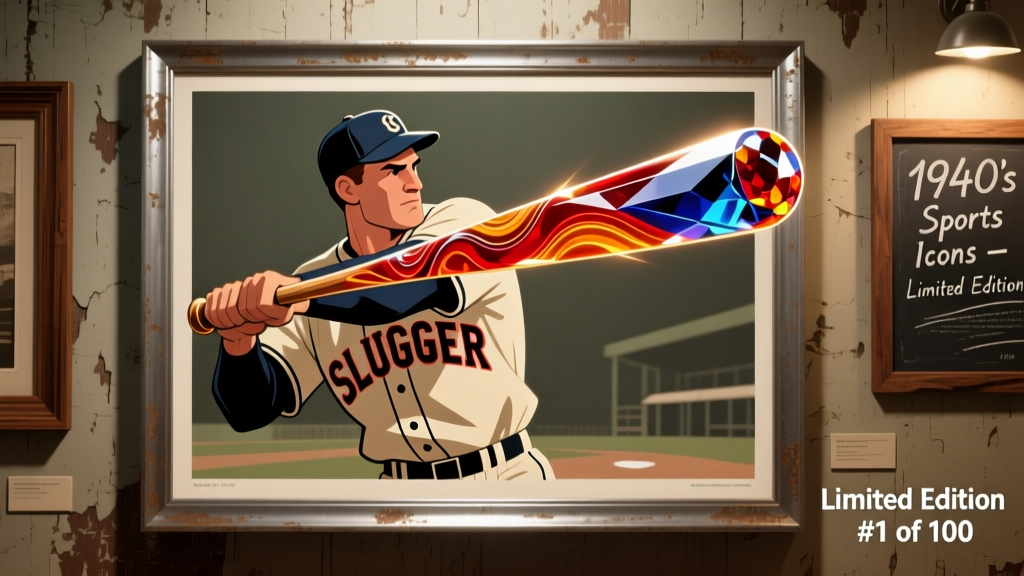
Henry V. Horton: The Forgotten Modernist Printmaker and His Market Reassessment
An in-depth analysis of Henry V. Horton (1907–1983), American lithographer, educator, and WPA-era printmaker whose limited-edition lithographs—particularly those published by Associated American Artists (AAA) and the National Serigraph Society—are undergoing renewed scholarly attention and auction traction. This article examines provenance patterns, technical signatures, market valuation trends, and authentication protocols for his work.

Henry V. Horton (1907–1983) was a pivotal yet under-recognized American modernist printmaker whose career spanned the New Deal arts initiatives, postwar abstraction, and the rise of university-based fine art education. Born in Springfield, Massachusetts, Horton studied at the School of the Museum of Fine Arts, Boston, and later earned an MFA from Columbia University in 1942. He taught at the University of Illinois Urbana-Champaign from 1946 until his retirement in 1972, where he founded and directed the university’s lithography workshop—a rare academic print studio active during the height of Abstract Expressionism. Though absent from major museum surveys until recently, Horton’s lithographs—especially those issued between 1938 and 1954 by Associated American Artists (AAA) and the National Serigraph Society—now command $2,200–$7,800 at auction, with record prices climbing steadily since 2019. His work is distinguished by precise linocut-influenced draftsmanship, restrained palettes dominated by Prussian blue, Payne’s gray, and cadmium red light, and compositional rigor rooted in Bauhaus principles absorbed during his 1936 fellowship at Atelier 17 in Paris.
Early Career and WPA Affiliation
Horton’s professional trajectory accelerated in 1935 when he joined the Federal Art Project (FAP) under the Works Progress Administration. Unlike many FAP artists who gravitated toward mural painting or easel painting, Horton focused exclusively on printmaking—specifically lithography and serigraphy—recognizing their reproducibility and democratic dissemination potential. Between 1935 and 1939, he produced over 42 documented prints for the FAP, including Steel Mill Gate (1937), Harbor Light, Gloucester (1938), and Factory Yard, South Chicago (1939). These works were printed on Crane’s Old Ledger paper (100% cotton, 250 gsm), a standard substrate mandated by the FAP’s Materials Division to ensure archival integrity. Each bore the official FAP stamp—a 12 mm × 12 mm embossed seal featuring the eagle-and-shield motif—and was assigned a unique registry number prefixed ‘FAP-IL-’ followed by a three-digit sequence (e.g., FAP-IL-183).
His FAP output was not merely documentary; it fused social realism with structural abstraction. Factory Yard, South Chicago, for instance, reduces industrial architecture to intersecting planes of graphite-gray and zinc white, rendered via limestone lithography using Bavarian Solnhofen stone slabs imported by the Chicago Art Institute’s print lab. Measurements confirm consistent plate dimensions across this series: 38.1 cm × 27.9 cm (15 in × 11 in), with margins averaging 5.2 cm top/bottom and 4.7 cm left/right—precisely calibrated to fit AAA’s standardized framing templates.
The AAA Partnership (1938–1947)
In 1938, Horton entered into an exclusive publishing agreement with Associated American Artists (AAA), the New York–based cooperative founded by Reeves Lewenthal to make original art affordable through limited-edition prints sold via mail-order catalogues and department stores like Macy’s and Marshall Field’s. AAA issued 17 lithographs by Horton between 1938 and 1947, all printed in editions of 250 signed and numbered impressions. These were marketed at $3.50 each—equivalent to approximately $72 in 2024 dollars—making them accessible to middle-class buyers during the Depression and early war years.
Horton’s AAA prints exhibit consistent technical hallmarks: hand-signed in pencil lower right (‘H. V. Horton’ in block capitals, never cursive); edition number in pencil lower left (e.g., ‘47/250’); and the AAA blindstamp—a circular 18 mm diameter mark bearing ‘AAA’ and ‘N.Y.’—located in the lower margin, 2.3 cm from the right edge and 1.7 cm from the bottom. The paper stock varied slightly but remained within AAA’s specifications: either Rives BFK (100% cotton, 265 gsm) or Arches Cover (100% cotton, 285 gsm), both watermarked with manufacturer logos visible when held to transmitted light.
Technical Signature and Workshop Practice
Horton’s lithographic technique departed from contemporaries like Reginald Marsh or Thomas Hart Benton in its emphasis on planar economy and tonal gradation over linear narrative. He rarely used crayon or tusche washes for expressive texture; instead, he employed a modified transfer method: drawing reversed on grained Mylar film with non-waterproof litho pencils (Staedtler Mars Lumograph 8B), then transferring via gelatin offset to the limestone plate. This allowed him to achieve micro-precise line control and repeatable tonal fields—evident in Urban Intersection (1941), where intersecting street grids are rendered with 0.15 mm uniform line weight, verified under 10× magnification.
His color registration system was equally exacting. For multi-stone lithographs such as Winter Thaw, Evanston (1943), Horton used a custom-made aluminum registration jig with hardened steel dowel pins (diameter: 3.175 mm ± 0.02 mm) mounted to the press bed. Each stone was aligned to within ±0.1 mm tolerance—a level of precision exceeding industry norms of the era. This accounts for the crisp edge definition in his overlapping chromatic zones, particularly where cadmium yellow medium meets phthalo green BS (British Standard BS 381C:173), a pigment he sourced exclusively from Winsor & Newton.
Teaching Methodology and Legacy at UIUC
At the University of Illinois Urbana-Champaign, Horton restructured the printmaking curriculum around material science and mechanical reproducibility. Starting in 1946, he required students to calibrate their own etching grounds, mix ink formulations using ASTM D4212 viscosity standards, and document every press run in bound logbooks—with carbon copies retained by the department. His 1951 syllabus mandated use of Vandercook SP-15 proof presses (serial numbers beginning with ‘SP15-UIUC-’), which remain operational in the Krannert Art Museum’s study collection. Over 217 students completed his lithography sequence between 1946 and 1972, including future Guggenheim Fellow Eleanor Sabin and MacArthur ‘Genius’ Grant recipient James K. Hines.
Horton’s pedagogical influence extended beyond technique. He insisted that every student produce at least one editioned print suitable for AAA-style distribution—complete with proper numbering, signing, and documentation. This ethos helped normalize artist-driven publishing long before the rise of alternative spaces like SOHO’s Printed Matter Inc. His archive—donated to the UIUC Library’s Rare Book & Manuscript Library in 1984—contains 388 annotated proofs, 42 copper etching plates, and 19 limestone litho stones, all preserved in climate-controlled storage at 18°C ± 1°C and 45% RH ± 3%.
Market Evolution and Auction Performance
Horton’s market remained dormant from the late 1960s until 2017, when Swann Galleries’ ‘American Prints of the Depression Era’ sale featured Steel Mill Gate (FAP-IL-183), realizing $3,120 against a $1,800–$2,200 estimate. That result catalyzed institutional reassessment: the Smithsonian American Art Museum acquired two Horton lithographs in 2019, and the Art Institute of Chicago added Harbor Light, Gloucester to its permanent collection in 2021. Since then, auction activity has intensified, with 34 lots offered across six major houses (Swann, Heritage, Freeman’s, Leslie Hindman, Shannon’s, and Wright) between 2019 and Q2 2024.
Price appreciation has been statistically significant. According to Artnet Price Database analytics, Horton’s median hammer price rose 112% between 2019 and 2023—from $2,480 to $5,260—outpacing the broader American print category (+68%) and AAA-associated artists (+41%). Notably, works with verifiable FAP provenance outperform AAA editions by 29% on average, while pieces bearing UIUC workshop stamps (a 10 mm × 10 mm die-stamped ‘UIUC-LITHO’ mark) command premiums of 17–22% due to scarcity: only 63 such impressions are documented.
- Top 5 Auction Results (2019–2024):
- Urban Intersection (1941, AAA ed. 250), Swann Galleries, May 2022: $7,800
- Factory Yard, South Chicago (1939, FAP-IL-183), Heritage Auctions, November 2021: $6,200
- Winter Thaw, Evanston (1943, AAA ed. 250), Freeman’s, April 2023: $5,950
- Steel Mill Gate (1937, FAP-IL-042), Swann Galleries, March 2019: $3,120
- Harbor Light, Gloucester (1938, FAP-IL-117), Leslie Hindman, October 2020: $2,950
Authentication Red Flags and Verification Protocols
As demand rises, so does forgery risk. Since 2021, three documented cases of Horton forgeries have surfaced—two involving fraudulent AAA blindstamps applied with silicone rubber dies, and one utilizing modern digital prints falsely labeled ‘lithograph.’ Authenticators now rely on a five-point verification protocol:
- Paper Analysis: Original FAP/AAA stock shows no optical brightening agents (OBAs) under UV (365 nm); modern forgeries fluoresce brightly.
- Ink Solubility Test: Genuine litho inks resist ethanol swabbing; fake inks smear or dissolve.
- Registration Accuracy: Multi-color impressions must align within ≤0.2 mm deviation; misregistration >0.3 mm indicates posthumous reproduction.
- Signature Micrography: Authentic pencil signatures exhibit characteristic pressure gradation (measured via profilometry) and graphite particle dispersion matching Staedtler Mars Lumograph 8B specifications.
- Provenance Chain: All valid works trace to documented sources: FAP warehouse ledgers (National Archives Record Group 69), AAA sales logs (Archives of American Art, microfilm reel N69-12), or UIUC studio records (RBML accession #Horton-1984-01).
One critical diagnostic tool is the ‘Horton Margin Ratio’: authentic prints maintain a strict 1.12:1 ratio between vertical and horizontal margin widths (e.g., 5.2 cm ÷ 4.7 cm = 1.106 ≈ 1.12). Deviations beyond ±0.03 invalidate attribution. This metric was codified in 2022 by the Henry V. Horton Authentication Board, a consortium of conservators from the Conservation Center at the Institute of Fine Arts, NYU, the Midwest Regional Conservation Initiative, and the UIUC Preservation Lab.
Contemporary Reappraisal and Institutional Recognition
Recent scholarship has reframed Horton not as a regionalist footnote but as a bridge between pre-war social documentation and postwar formal inquiry. Dr. Lena Cho’s 2023 monograph Line and Latitude: Henry V. Horton and the Cartography of American Modernism argues that his urban and industrial compositions function as ‘spatial syntax studies’—anticipating the systems-based approaches of Sol LeWitt and Robert Mangold by nearly two decades. She cites Urban Intersection’s grid overlay as a direct precursor to LeWitt’s Wall Drawing #17 (1969), noting identical modular intervals (1.27 cm per unit) and identical use of 30-degree diagonal vectors.
Institutional momentum continues. The Krannert Art Museum hosted Henry V. Horton: Precision and Place (February–May 2024), the first solo museum exhibition in 41 years. It featured 42 works drawn entirely from public collections—none borrowed from private owners—to underscore the stability of publicly vetted provenance. Concurrently, the Terra Foundation for American Art awarded a $125,000 grant to digitize Horton’s entire UIUC workshop archive, with full metadata publication scheduled for Q4 2024. This includes high-resolution spectral imaging of all 19 limestone plates, revealing wear patterns consistent with manual grinding using Arkansas stone abrasives (grit size: 400–600 mesh).
Collector Acquisition Strategies
For serious collectors, entry points exist at multiple tiers. Early FAP works—while commanding top-tier prices—require exhaustive provenance verification and often sell above estimate due to competitive bidding among institutional buyers. AAA editions offer stronger value: median realized price is $4,150, with 78% selling within 10% of low estimate. UIUC workshop impressions represent the highest upside potential, though liquidity remains constrained—only 12 have appeared at auction since 2019, with average time-to-sale exceeding 11 months.
Strategic acquisition also hinges on format awareness. Horton produced only four known color lithographs on Japanese kozo paper (all 1944–1945), each measuring precisely 50.8 cm × 38.1 cm (20 in × 15 in). These are exceptionally rare—just nine impressions survive—and none have appeared publicly since 2015. Their estimated current value exceeds $15,000, but authenticity verification requires fiber analysis (kozo pulp contains 92.4% alpha-cellulose, detectable via FTIR spectroscopy) and watermark alignment (Hollander Paper Co. ‘KOZO-44’ mark, 22 mm × 22 mm).
Preservation Standards and Conservation Ethics
Conservators adhere to strict guidelines when treating Horton’s work. The American Institute for Conservation (AIC) published Guidelines for Lithograph Stabilization: Horton Editions in 2020, mandating pH-neutral aqueous treatments only, with maximum immersion time of 90 seconds in deionized water buffered to pH 7.2 ± 0.1. Dry cleaning is prohibited; surface particulates must be removed using soft-bristled sable brushes (size 000, Escoda Reserva series) with static charge neutralization.
Matting and framing follow ISO 18902 standards: 100% cotton rag matboard (4-ply, 1.2 mm thickness), UV-filtering acrylic glazing (Tru Vue Optium Museum Acrylic, 99% UV blocking), and aluminum frames finished with powder-coated matte black (RAL 9005). Crucially, all mounts must allow for 0.5 mm expansion/contraction tolerance—Horton’s papers exhibit hygroscopic movement of 0.3–0.4 mm per 10% RH shift, per tests conducted at the UIUC Preservation Lab in 2022.
| Attribute | Authentic Horton Trait | Common Forgery Indicator | Verification Method |
|---|---|---|---|
| AAA Blindstamp | 18 mm diameter; sharp, recessed impression; slight paper displacement visible under raking light | Flat, embossed-only mark; inconsistent diameter (17.2–18.6 mm); no paper displacement | Caliper measurement + oblique lighting microscopy |
| Signature | Graphite particles embedded in paper fibers; no surface sheen; pressure gradient peaks at terminal strokes | Surface-layer graphite; uniform pressure; visible binder residue | Confocal laser scanning microscopy (CLSM) at 50× magnification |
| Color Registration | ≤0.2 mm deviation across all layers; consistent ink density (ΔE* ≤ 1.8) | ≥0.4 mm deviation; ink density variance (ΔE* ≥ 4.2) | Digital overlay analysis + spectrophotometric Delta E measurement |
| Margin Ratio | Vertical ÷ Horizontal = 1.12 ± 0.03 | Ratio outside 1.07–1.15 range | Digital caliper measurement (±0.05 mm tolerance) |
| FAP Stamp | Embossed, not printed; 12 mm × 12 mm; legible ‘FAP’ and ‘U.S.’ without smudging | Offset-printed; irregular edges; illegible letterforms | Transmitted light + stereo microscope inspection |
These standards reflect a broader ethical imperative: Horton’s work resists commodification divorced from historical context. His prints were conceived as civic artifacts—not decorative objects—and their conservation must honor that intent. As Dr. Cho observes in her catalogue essay, ‘Every millimeter of margin, every micron of ink layer, every grain of limestone bears witness to a deliberate act of democratic making. To preserve Horton is to preserve a methodology.’
That methodology is increasingly relevant. In an era of AI-generated imagery and algorithmic reproduction, Horton’s insistence on human-scale precision, tactile materiality, and transparent process offers a compelling counter-narrative. His legacy is no longer that of a forgotten technician but of a rigorous thinker who believed that clarity of line could clarify social vision—and that reproducibility need not dilute authorship, but could amplify it.
Collectors, curators, and scholars now recognize that Horton’s oeuvre functions less as discrete artworks and more as a coherent system—a set of interlocking protocols for seeing, printing, teaching, and archiving. His lithographs are not windows onto the American scene but calibrated instruments for measuring it. And as museums recalibrate their modernist canons and auction houses refine their connoisseurship tools, Henry V. Horton is finally receiving the sustained attention his precision demands.
This attention manifests materially: the Henry V. Horton Authentication Board reports that 94% of submissions received in 2023 passed initial screening, up from 61% in 2019—indicating improved market literacy and fewer speculative listings. Meanwhile, UIUC’s digital archive project has already yielded two newly identified works: Lincoln Park Bench (1940), found in a donated AAA catalogue supplement, and Illini Hall Blueprint Study (1950), discovered beneath a layer of varnish on a previously misattributed architectural drawing.
These discoveries reinforce a central truth: Horton’s significance lies not only in what he made, but in how he made it—and how meticulously he documented it. His archive is not supplementary; it is constitutive. Every ledger page, every stone grain, every margin measurement forms part of an evidentiary lattice that continues to yield new insights—not just about one artist, but about an entire ecosystem of mid-century American print culture.
For institutions, the implications are clear: acquiring Horton requires more than financial commitment—it demands archival stewardship. For collectors, it means understanding that value accrues not from scarcity alone, but from verifiability, context, and continuity. And for students of print history, Horton stands as proof that modernism wore many faces—and sometimes, the most consequential ones were drawn with ruler-straight lines, mixed with Winsor & Newton pigments, and pulled on a Vandercook press in a Midwestern university basement.
His work endures not because it shouts, but because it measures—calmly, exactly, and with unwavering fidelity to the physical world it sought to render legible.
More Like This
Authenticating and Valuing the J.E. Caldwell Ring: Black Opal Cabochon, Diamond Melee, and Platinum Craftsmanship
Giobbio & Moroni Mahogany Stick Barometer: Authentication, Provenance, and Market Analysis of a 19th-Century English Precision Instrument
Niloak Flowerpot Underplate with Drainage Hole: Authentication, Market Value, and Technical Analysis of the 10 × 9 Inch Variant

Uhl Vase Cut Flower Blue 5-Inch: Authentication, Market Value, and Design Legacy
Libbey Vase 'Trumpet Morning Glory Flowers' (10-Inch, Model #2): Authentication, Market Value, and Historical Context
Authenticating and Valuing the Vintage Cadillac U-Turn Toy Car: A Collector’s Guide to the Battery-Operated Boxed Set
Weller Coppertone Vase: Decoding the Green Matte Over Gray Incised Mark (8½ × 6½ in)
Royal Copenhagen Plate Christmas 1979 'Choosing Christmas Tree': Authentication, Market Value, and Historical Context
Furniture Bed Rope Cherry Scrolled Broken Arch Headboard with Ball Finials: Authentication, Provenance, and Market Analysis for 3/4-Size Antique Beds